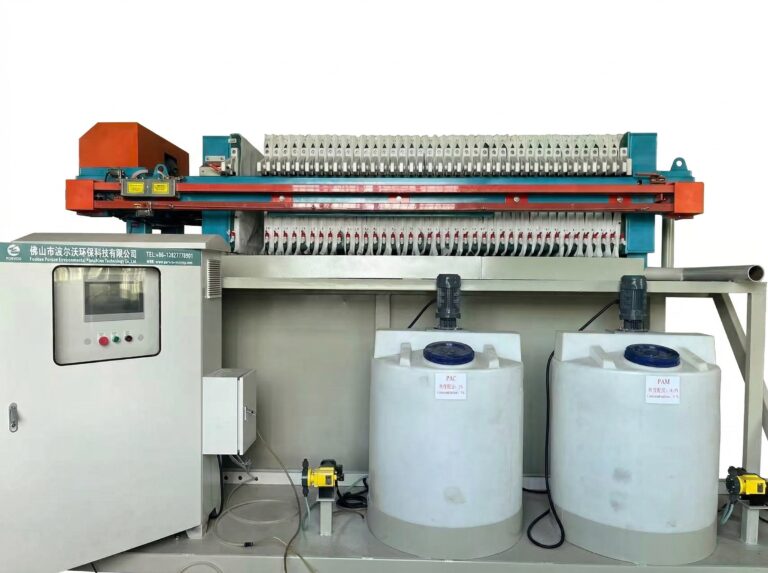
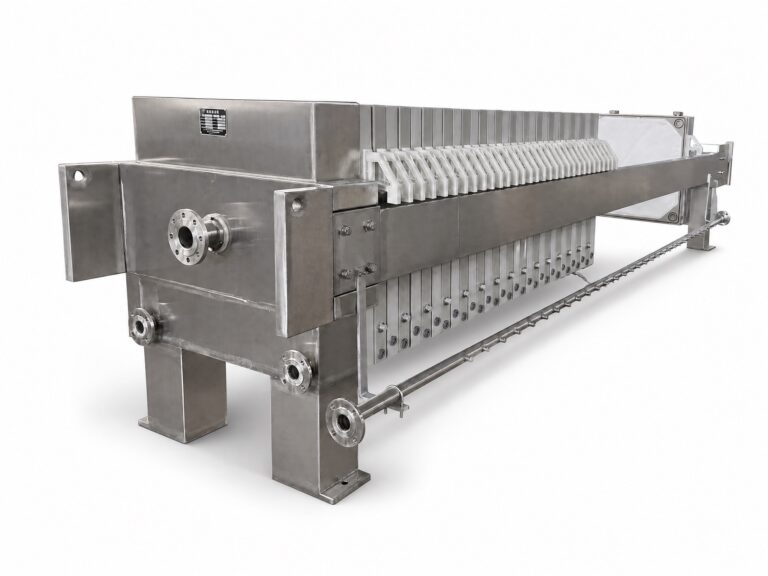
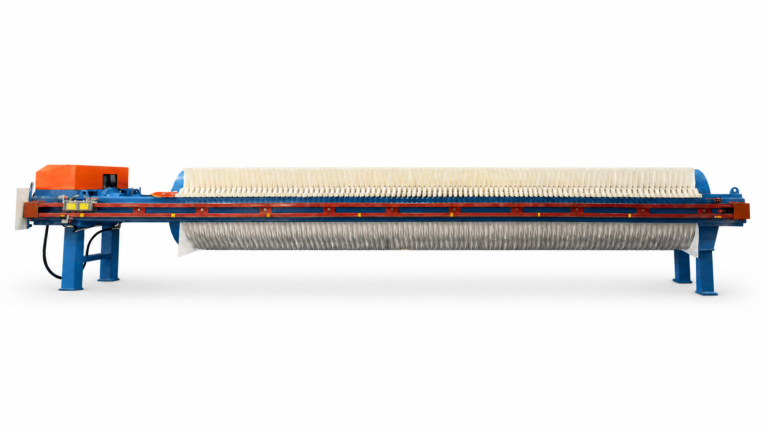
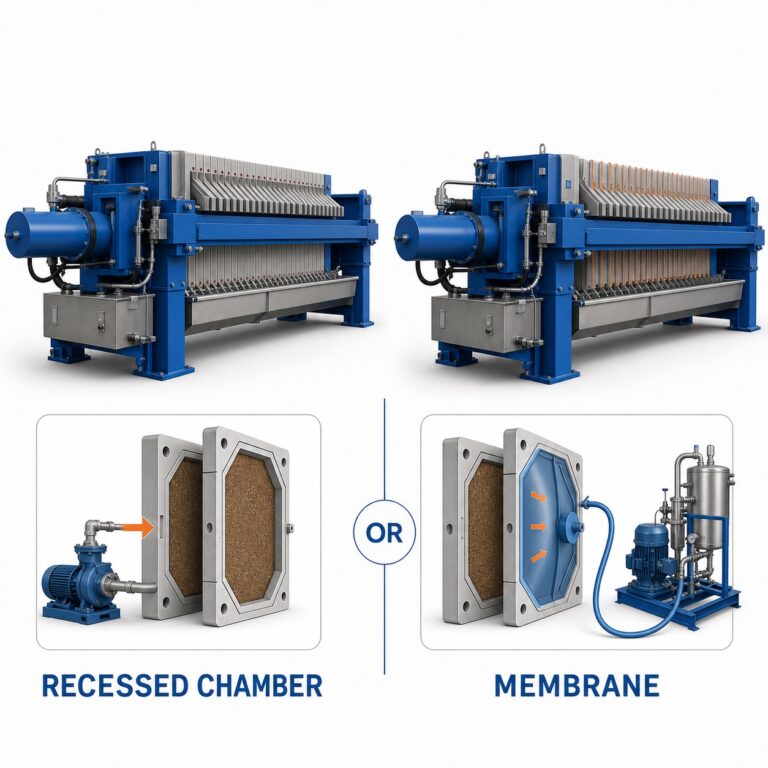
Does cake washing belong before the membrane squeeze step, or after it? The answer changes with the slurry, and treating one sequence as the default risks locking in a yield loss or a contamination carryover that a short trial would have caught. A мембранный фильтр-пресс can run either order mechanically, so the decision rests on what the recovery task actually requires, not on which sequence is more familiar.
Recovery Objective Before Any Sequence Is Chosen
Before comparing wash-first and squeeze-first trials, the project needs a stated recovery objective: what must leave the cake in the wash liquor, what must stay in the cake, and which liquid streams require separate collection rather than combined handling. Without this objective written down, a trial result has nothing to be judged against. A cake that looks dry and uniform after one sequence says little if the project actually needed a specific component removed from it, or needed that component retained rather than washed out.
This objective differs by slurry and by what the downstream step does with the cake and with the liquid fractions. Where the cake itself is the product and the liquid fractions are waste, the priority runs toward keeping losses to the wash liquor at an acceptable level while clearing unwanted material from the cake. Where the recovered liquid is the valuable stream, the priority shifts toward maximizing what reports to filtrate or wash liquor without carrying cake solids or contamination into it. The same physical sequence can be the right or wrong choice for two slurries that look similar, because the recovery target is opposite.
The objective also has to specify which liquid streams cannot be mixed. If the filtrate from the initial dewatering step and the liquor from the wash step cannot be combined in the same collection tank without defeating the purpose of running a wash at all, the project needs that constraint stated before any trial begins, not discovered afterward when the tank is already collected. A favorable-looking cake can result from either sequence while the collected liquid underneath has quietly mixed streams that needed to stay apart.
Setting the objective also determines what a trial is testing for. A wash-first trial and a squeeze-first trial answer different questions only if the project knows, going in, which answer it needs: lower residual in the cake, lower carryover in the liquor, or a defined split between the two. Skipping this step turns the sequence comparison into a cake-appearance comparison, which is not the same evaluation.
Liquid-Stream Segregation for Filtrate and Wash Fractions
| Liquid result | Keep visible as | Значение решения |
|---|---|---|
| Фильтрат | A separate filtrate fraction | Prevents the filtrate result from being obscured by combined collection. |
| Wash liquor | Separate wash fractions | Shows what leaves the cake in the wash liquor. |
| Overall liquid outcome | An agreed mass balance across the separately tracked fractions | Reveals product loss or contamination that a favorable cake result alone could conceal. |
Once the recovery objective is set, the trial plan has to keep the liquid fractions visibly separate rather than allowing them to settle into one tank. Filtrate generated before any wash step and wash liquor generated during or after it carry different information: filtrate reflects what leaves the cake under the initial pressure and dewatering conditions, while wash liquor reflects what the wash step specifically displaces or dissolves out of the cake structure. Combining them erases that distinction and removes the evidence a mass balance would need.
This segregation matters most when the result looks acceptable on the cake side. A cake that discharges with the expected structure and moisture can still represent a net loss if the material that should have stayed in the cake reported instead to a combined liquid tank, or a contamination problem if material that should have stayed out of the recovered liquid ended up mixed into it. Neither failure shows up by inspecting the cake. Both show up only if the filtrate and wash fractions are tracked and reconciled against each other and against the feed.
Where the project has already established a basis for returning or reusing press water, as covered in filtrate return practices for ceramic wastewater systems, the same segregation discipline applies to filter press trials: a return or reuse decision needs the fraction-level identity of the liquid, not a combined stream that cannot be traced back to its source step. The same logic connects to the broader filter press and filtrate handling considerations relevant to ceramic water-recycling layouts, where cake and filtrate logic are treated as an integrated design question rather than an afterthought to cake handling alone.
Keeping fractions visible changes what the trial can conclude. A single blended result only tells the project that the combination met or missed the overall target. Separately tracked fractions tell the project which step contributed what, which is the information needed to adjust a sequence, a wash-liquor-to-cake ratio, or a cycle time, rather than discarding the whole trial and starting over.
Wash-First Trial and the Evidence to Capture
A wash-first trial introduces the wash step before the final squeeze or compression step is complete, intending to displace or rinse unwanted material out of the cake while it still has an open, less compacted structure. This generally favors situations where the material to be removed is held loosely enough that wash liquor can reach it before the cake consolidates further, and where a more porous cake structure improves contact between the wash liquor and the retained solids.
The evidence to capture from this trial includes the wash liquor composition and volume relative to the feed, the condition of the cake immediately after washing and again after the subsequent squeeze, and whether the final squeeze step redistributes or reabsorbs anything the wash already removed. A wash applied too early, before the cake has formed enough structure to resist channeling, risks the wash liquor finding preferential paths through the cake rather than passing evenly across it, which would show up as inconsistent removal from one region of the cake relative to another rather than a representative result.
This trial also needs to record what happens to the cake’s compressibility after washing. If the wash step changes the cake’s structure in a way that affects how it responds to the subsequent membrane squeeze, the final moisture or density result cannot be attributed to the squeeze step alone. That interaction is specific to the slurry and the conditioning used, so a wash-first result from one trial does not establish how the same sequence performs on a different feed composition without a separate representative trial on that feed.
Where the recovery objective calls for maximizing what leaves in the wash liquor, a wash-first sequence gives that removal the earliest opportunity to happen, before the cake consolidates under the final squeeze. Whether that opportunity converts into an actual improvement depends on whether the targeted material is still accessible at that point in the cycle, which is exactly what the trial evidence needs to confirm rather than assume.
Squeeze-First Trial and the Evidence to Capture
A squeeze-first trial applies the membrane compression step before introducing the wash, consolidating the cake into a denser structure first and washing it afterward. This generally favors situations where a more consolidated cake improves the mechanical integrity needed for the wash step to pass through without disturbing the cake, or where the material to be retained would be lost prematurely if washed before the cake has set.
The evidence to capture here includes the cake’s density and structure before the wash is introduced, how much of the wash liquor actually penetrates a cake that has already been compressed, and whether the post-wash cake condition still meets the downstream handling target. A cake compressed before washing can resist liquor penetration more than an open, unsqueezed cake, so the wash step may need a longer contact period or a different liquor volume to reach comparable material removal, and the trial needs to record whether that removal target is reached at all under the sequence as run, not assumed from the wash-first trial’s result.
This sequence also needs its own check on cake release and discharge behavior, since a cake washed after compression carries a different surface condition into the discharge step than a cake washed before compression. If the wash step reopens or loosens the surface that the squeeze had just consolidated, the project gains the wash benefit at the cost of the structural benefit the squeeze was meant to deliver, and that trade-off only shows up by comparing the discharge condition after each full sequence, not by inspecting either step in isolation.
Where the recovery objective calls for retaining material in the cake while still rinsing loosely attached contamination from its surface, a squeeze-first order gives the retained material less direct exposure to the wash liquor’s full duration and volume, since the cake has already consolidated before the wash begins. Whether this protects the retained fraction in practice, or simply moves the loss to another point in the cycle, is what the paired trial evidence against the wash-first result establishes.
Cake Structure, Release, and Final Handling Checks
Beyond the liquid-fraction results, both sequence trials need a direct check on the cake itself: its internal structure, how cleanly it releases from the membrane plates, and whether its condition matches what the downstream handling step requires. A sequence that produces an acceptable mass balance on paper still has to produce a cake that discharges without excessive sticking, cracking in a way that complicates handling, or carrying a texture that the downstream process cannot accept.
Cake structure responds to the order of operations because washing and squeezing each affect the solids matrix differently. A wash step applied to an unconsolidated cake can leave voids or channels where liquor passed through unevenly, and those voids affect how the cake behaves when the membrane squeeze is finally applied, since compression acts on whatever structure is already present rather than on an idealized uniform cake. A squeeze step applied first locks in a density and pore structure that the following wash then has to work against, which changes how evenly the wash liquor distributes across the cake face.
Release behavior is a separate check from structure, though the two are related. A cake that has the right internal condition but adheres to the membrane or support material at discharge creates a handling problem independent of whatever the mass balance shows. This is where the final membrane step has to be evaluated as conditional: the trial needs to confirm that whichever order is chosen still produces a cake that releases predictably, because a sequence that improves the recovery numbers while degrading release consistency has traded one problem for another.
The downstream handling target also needs to be stated before these checks are run, since “acceptable cake condition” depends on what happens to the cake next. A cake destined for further processing has different structural requirements than one destined for disposal or storage, and the same trial result can be a pass under one handling target and a fail under another. The Информационный бюллетень Агентства по охране окружающей среды США (EPA) о фильтр-прессе с утопленной пластиной treats representative testing as the basis for comparing pressure-filtration configurations rather than relying on general mechanics alone, which applies directly here: the cake-structure and release checks from an actual trial on the project’s own conditioned cake carry more decision weight than reasoning from the mechanism alone.
Mass-Balance Decision for the Agreed Operating Order
| Decision evidence | Evidence required from both sequence trials | How it affects the operating order |
|---|---|---|
| Material leaving in the wash liquor | Compare what leaves the cake under wash-first and squeeze-first conditions using the agreed mass balance. | Select an order only after checking it against the agreed wash-liquor recovery objective. |
| Material remaining in the cake | Compare what remains in the cake for both sequences on the same conditioned cake. | Confirm the retained-material objective instead of inferring it from a favorable cake result. |
| Filtrate and wash fractions | Compare the separately tracked liquid fractions for both sequences. | Check whether product loss or contamination would be concealed by combined collection. |
| Cake structure and release | Compare the observed cake condition and release result after each sequence. | Use the trial result to judge whether the final membrane step fits the resulting cake. |
| Downstream handling target | Compare each cake result with the same agreed handling target. | Keep the final membrane step and operating order conditional on the representative trial result. |
The final operating-order decision rests on comparing both trials against the same agreed mass balance, not on picking whichever sequence produced the more visually favorable cake. This means checking what left in the wash liquor under each sequence against the stated recovery objective, checking what remained in the cake under each sequence against the same objective, and confirming that the separately tracked filtrate and wash fractions do not show a loss or contamination that the cake result alone concealed.
Where the two trials produce comparable cake conditions but different liquid-fraction outcomes, the liquid-fraction evidence should carry the decision, since the recovery objective was defined in terms of what leaves in the wash liquor and what remains in the cake, not in terms of cake appearance. Where the two trials produce comparable liquid-fraction outcomes but different cake structure or release results, the downstream handling target becomes the deciding factor, since a cake that fails to release consistently undermines whatever liquid-fraction result it achieved.
This is also where the trade-off between the two sequences becomes concrete for a specific slurry: where the targeted material is accessible only before the cake consolidates, a wash-first order gives it the needed exposure, at the cost of relying on the cake’s post-wash response to the subsequent squeeze; where the cake’s integrity depends on consolidating first, a squeeze-first order protects that structure, at the cost of the wash liquor needing to penetrate an already-denser cake to reach the same material. Neither condition is universal, and the project’s own trial evidence on its own conditioned cake is what distinguishes which condition actually applies.
The project team supplying its recovery objective, feed characteristics, and representative cake samples into this comparison is also what a configuration or quotation review for a membrane filter press needs as a starting point, since the press configuration, wash provisions, and cycle arrangement follow from the operating order the trials support rather than being fixed in advance of it. Once that order is agreed, it becomes the basis the project carries forward into equipment configuration rather than a provisional choice to be revisited each cycle, unless a change in feed or recovery objective reopens the comparison.
Часто задаваемые вопросы
Q: Can the operating sequence be chosen from the driest-looking cake result?
A: No. A favorable cake result can still conceal product loss or contamination if the liquid fractions are combined. Choose the order only after the agreed mass balance, material remaining in the cake, separately tracked filtrate and wash fractions, cake condition and release, and the downstream handling target have been considered together.
Q: What makes a wash-first and squeeze-first trial a fair comparison?
A: Run both sequences on the same conditioned cake and judge them against the same recovery and downstream handling objectives. Keep the filtrate and wash fractions identifiable in each trial so differences can be attributed to the sequence instead of being obscured by changing cake conditions or combined collection.
Q: What if the sequence that better supports recovery produces a less suitable cake for downstream handling?
A: Treat that result as a project trade-off rather than selecting a winner from one measure. Agree which recovery and handling outcomes matter before the trials, then compare the mass balance with the observed cake structure and release; leave the operating order unresolved until those priorities can be met or explicitly reconciled.
Q: Do filtrate and wash liquor always need separate collection in normal operation?
A: Keep them separate during representative sequence trials and until their recovery and contamination implications are understood. The operating collection plan should then follow which streams must remain recoverable or isolated for the actual process, rather than assuming that combined collection is acceptable.
Q: What should a buyer prepare before requesting a sequence recommendation?
A: Define what must leave in the wash liquor, what must remain in the cake, which liquid streams may need separate collection, and the required downstream handling result. Also provide a representative conditioned cake and an agreed way to account for the separate liquid fractions so both sequences can be assessed on the same basis.