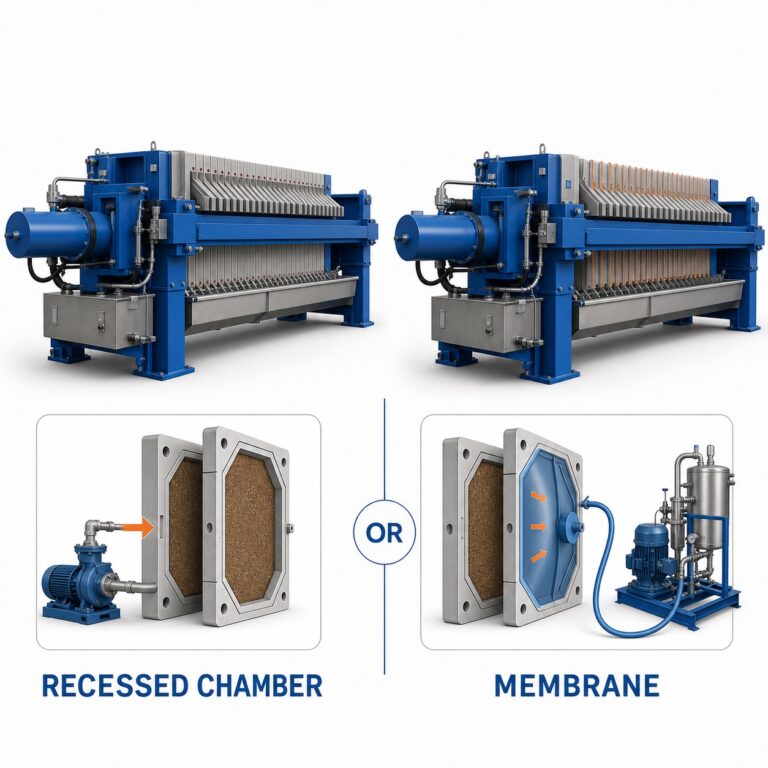
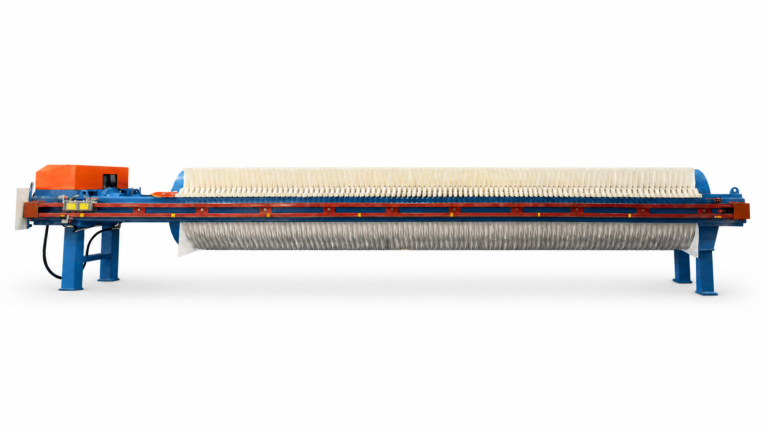
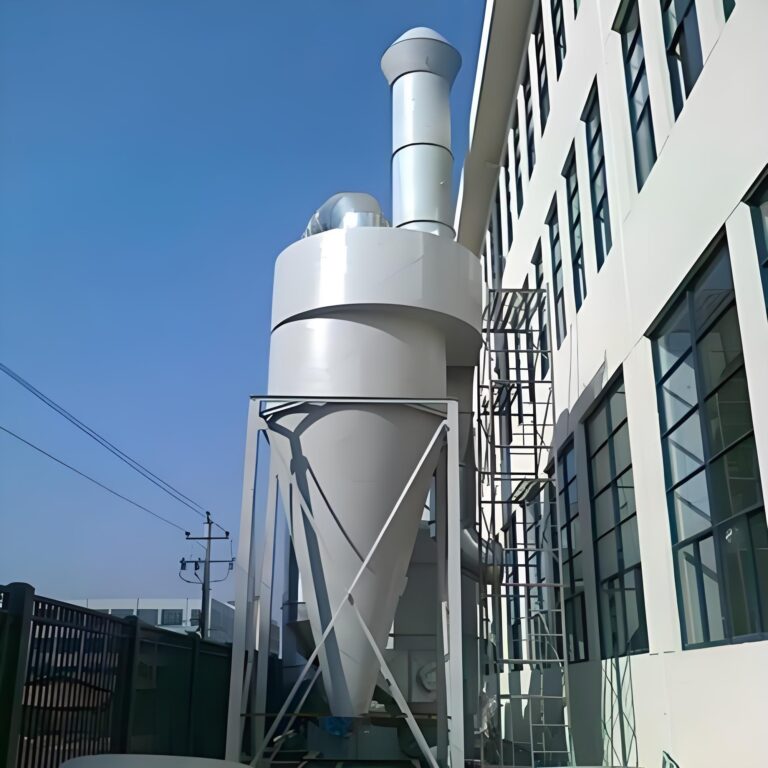
A пластинчато-рамный фильтр-пресс RFQ is only as useful as the comparability of the bids it produces. When slurry characteristics, cake handling, controls, and site interfaces are left to each bidder’s assumptions, the quotations that come back may price different equipment packages against the same request, and the buyer ends up comparing numbers rather than scope.
Scope boundaries that make filter press quotations comparable
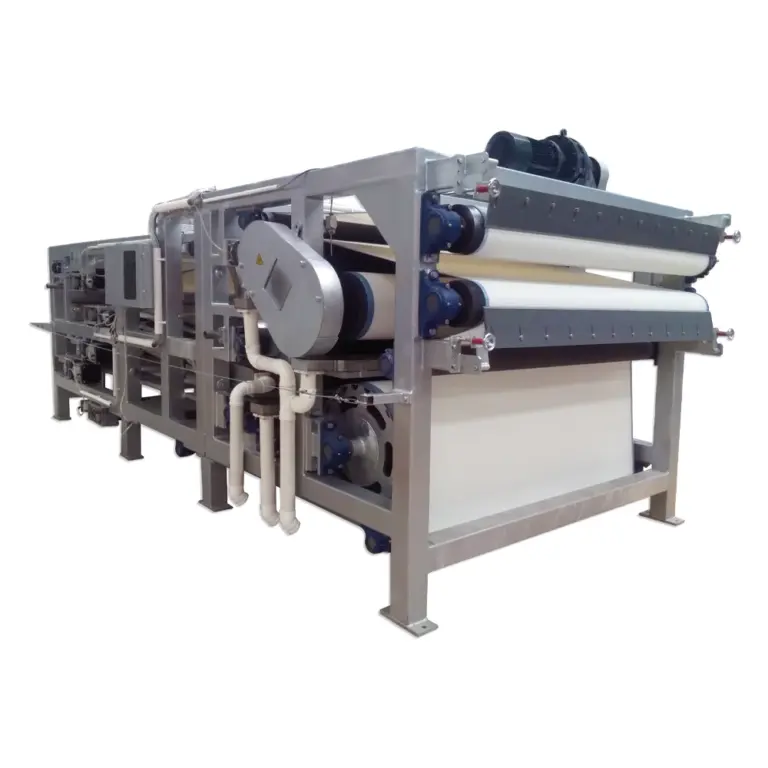
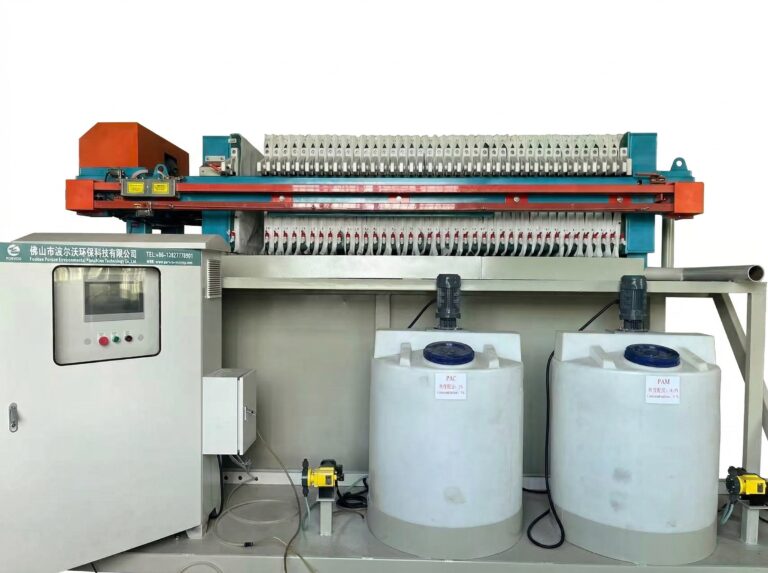
A filter press RFQ is a request for a package, not a single machine. The press itself performs the solid-liquid separation step, but the result the buyer experiences on site depends on how the feed is delivered, how filtrate and cake are handled once they leave the press, and how the control system coordinates the cycle. Where the RFQ states only a press size or plate count, bidders are free to set their own boundary around feed pumping, conditioning, or discharge handling, and two proposals that look similar on a line-item total may represent different installed scopes.
The practical effect of an undefined boundary shows up most clearly at the handoff points: where the feed package meets the press, where filtrate leaves the system, and where cake is discharged and conveyed onward. If upstream conditioning is needed to make the slurry filterable at the targeted rate, that conditioning step either sits inside the bid or it does not, and the RFQ should force that choice to be explicit rather than discovered after award. The same applies to access provisions for plate removal and cake drop, and to the utilities the press and its auxiliaries draw on. None of these are separate purchasing decisions from the press itself; they are extensions of the same equipment boundary, and a quotation that is silent on them has not actually quoted a complete system.
Setting this boundary is what allows the rest of the RFQ to function as a comparison tool rather than a wish list. Once the scope lines are fixed, the slurry data and operating targets that follow can be read against a known equipment boundary, and the deliverables and bid-comparison steps later in the process have a stable reference point rather than a moving one. A buyer who treats scope definition as the first task, before specifying numbers or asking for drawings, avoids the more common failure mode of an RFQ that generates compliant-looking bids for non-equivalent packages.
Process data and performance targets to attach
| RFQ input | What the bid package should state | How it should be used |
|---|---|---|
| Representative slurry data | The representative slurry information supplied for the project | Basis for bidders to prepare and compare their proposals |
| График работы | The operating schedule the proposed package must address | Common operating basis for quotation comparison |
| Measurable project targets | The measurable outcomes used for the request | Bid basis until an acceptance plan is agreed |
| Acceptance plan | The agreed method for evaluating the project targets | Acceptance basis only after it has been agreed for the project |
The slurry and schedule information attached to an RFQ serves a different purpose than the performance targets stated alongside it, and conflating the two weakens both. Representative slurry data describes what the equipment must process: the material’s filterability, its solids behavior, and the conditions under which it was characterized. This information is a basis for bidders to size plates, select cloth, and propose cycle arrangements. It is not itself a target, and it does not represent a guarantee of how the material will behave at full scale or under feed variability the sample did not capture.
Operating schedule information establishes the common conditions bidders must design against, such as how the proposed package is expected to run. This turns potentially incompatible proposals into comparable ones, because a press sized against one implicit duty cycle cannot be fairly set beside a press sized against another.
Measurable project targets are a different category again. A target such as cake dryness, cycle time, or throughput is what the buyer wants the system to achieve, but stating it in an RFQ does not make it an agreed acceptance condition. Where the project has not yet defined how a target will be measured, under what feed conditions, and against what tolerance, that target remains a bid basis: something bidders design toward, not something a supplier has committed to deliver. The distinction matters because a target can be stated in good faith by a bidder working from representative data, while actual performance depends on feed variability the sample did not fully capture. An RFQ that treats stated targets as already-accepted criteria invites disputes later, while one that keeps the acceptance plan as a separate, later agreement gives both sides a basis for resolving deviations without rewriting the contract. This sequencing question is explored further in the discussion of moving from process data to performance acceptance, which addresses how a bid basis is converted into an agreed verification method once a project reaches that stage.
Where the buyer’s project data feeds into a supplier’s configuration process, as happens when slurry and schedule information is submitted for quotation review, the completeness of that data directly affects how closely the proposed press size and auxiliary selection match the actual duty. Thin or unrepresentative sampling produces a press configuration that fits the sample, not necessarily the plant.
Machine, auxiliaries, controls and utility responsibilities
| Зона действия | Boundary to make explicit in the quotation |
|---|---|
| Фильтр-пресс | Extent of the press package |
| Feed package | Extent of the feed system and its interface with the press |
| Upstream conditioning | Whether conditioning is inside or outside the proposed package |
| Filtrate and cake handling | Where the proposed scope begins and ends for each handling route |
| Контролирует | Extent of the controls package and its interfaces |
| Access | Access included in the proposed equipment boundary |
| Коммунальные услуги | Utility responsibilities included in the bid and those left to the site |
Once the RFQ has established what performance basis is being quoted against, the remaining question is which physical and control elements each bidder is actually proposing to supply. A press package can be described at very different levels of completeness, and the gap between “a press” and “a working system” is filled by feed pumps, piping, instrumentation, and control logic that may or may not appear in the quoted scope.
The feed package is the clearest example. A filter press depends on the feed system to deliver slurry at the pressure and flow the cycle requires, and the interface between feed package and press is where cycle time and cake formation are actually determined. If the RFQ does not specify whether the feed pump, piping, and associated instrumentation are included, bidders may each assume a different split, and a low-priced proposal may simply have excluded a feed package the buyer assumed was included.
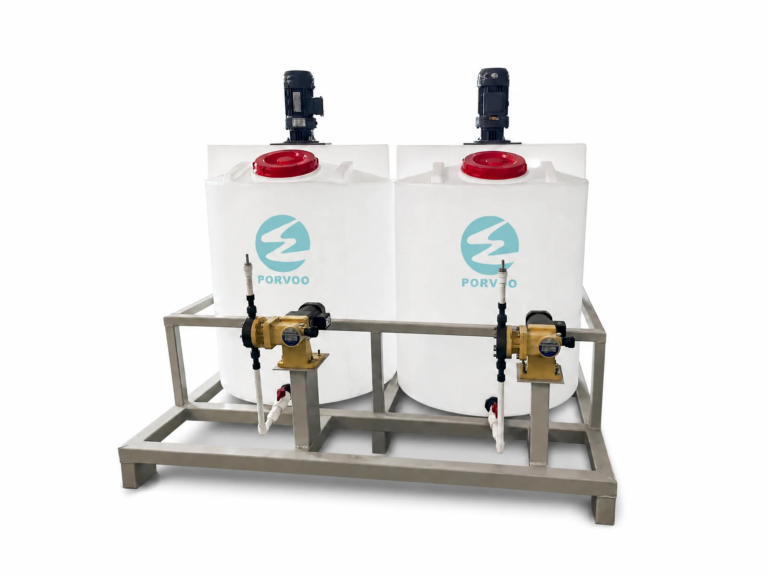
Upstream conditioning sits in a similar position. Where a slurry requires conditioning to filter effectively, that step can be proposed as part of the equipment package or left as a separate process the buyer must provide. Neither position is inherently wrong, but the RFQ must force the bidder to state which one applies, because the omission is invisible in a line-item price and only becomes apparent once the system is operating.
Controls present a different kind of boundary question. A press control package can range from basic cycle sequencing to full integration with plant-level monitoring, and the extent of that package changes both the commissioning effort and the operator’s ongoing interface with the equipment. Access provisions, meanwhile, affect maintenance long before they affect commissioning: the space and arrangement provided for plate shifting, cloth washing, or cake discharge determines how routine servicing is actually performed, and a press that is compact on the quotation sheet may be awkward to service in practice if access was not part of the proposed design.
Utilities close the boundary. Compressed air, electrical supply, and water for cloth washing are often treated as “by others” in a bid, but unless the RFQ requires this to be stated explicitly, the buyer cannot tell which utilities the site must provide versus which are part of the supplied package. Each of these scope areas functions as a boundary line that a bidder can draw differently, and the RFQ’s task is to make every one of those lines explicit rather than assumed.
Drawings, documents, inspections and site-service deliverables
| Deliverable group | Items to state in the RFQ |
|---|---|
| Engineering information | Required drawings and data sheets |
| Operating information | Required manuals |
| Spare-parts information | Required spare-parts list |
| Inspection evidence | Required inspection records |
| Обучение | Required training support |
| Ввод в эксплуатацию | Required commissioning support |
A filter press quotation can be accurate on equipment and still leave the buyer short of what is needed to install, operate, and maintain the system. The deliverables accompanying the equipment are a distinct part of the scope, and treating them as an afterthought in the RFQ produces the same comparability problem as an undefined equipment boundary: bidders include different levels of documentation and support without the difference being visible in the price.
Engineering information, primarily drawings and data sheets, is what allows the buyer’s own engineering or EPC team to integrate the press into the surrounding plant: foundations, piping tie-ins, electrical routing, and structural interfaces all depend on this information being available before installation planning can proceed. Operating information, delivered as manuals, is the reference the operating team uses once the system is running, and its absence shifts the burden of understanding the equipment’s intended operation onto trial and error.
Spare-parts information serves a planning function rather than an immediate operating one. A spare-parts list tells the buyer what the ongoing maintenance burden looks like in terms of replaceable components, which matters most for cloth and seal items that see cycle-by-cycle wear. Inspection records serve as the documented basis for confirming that the equipment supplied matches what was quoted, which becomes relevant if a dispute arises about conformity later.
Training and commissioning support address the transition from delivered equipment to operating system. Where a press cycle involves sequencing logic, cloth handling, or discharge procedures specific to the supplied design, training determines how quickly the operating team can run the system without supplier involvement, while commissioning support determines who is responsible for the equipment functioning correctly at startup. An RFQ that does not specify the extent of this support leaves open whether the supplier’s responsibility ends at delivery or extends through a startup period, and that ambiguity surfaces exactly when the buyer has the least leverage to resolve it, after the equipment has already arrived on site.
Bid exceptions and exclusions to resolve before award
| Comparison factor | What to compare across bids | Decision use before award |
|---|---|---|
| Deviations | Each departure from the stated bid basis | Determine whether the proposed scope still addresses the project basis |
| Исключения | Supply, freight, installation, utilities, site works, or other scope left out | Keep omitted responsibilities visible before award |
| Расходные материалы | Consumables identified by each bidder | Compare ongoing needs alongside the initial offer |
| Доступ для технического обслуживания | Access provided for maintenance in the proposed arrangement | Compare how the proposals address maintenance access |
| Lifecycle support | Support offered over the equipment lifecycle | Compare support alongside equipment scope and price |
| Purchase price | Quoted purchase price | Evaluate initial price with the other bid differences rather than in isolation |
The final step in an RFQ process is reading the returned bids against each other, and this is where the scope and deliverable groundwork either pays off or fails to. A set of bids that responded to a well-defined RFQ can be compared on substance; a set responding to a loosely defined one will show differences that look like price gaps but are actually scope gaps.
Deviations are the first thing to resolve, because a bidder who departs from the stated bid basis, whether in slurry assumptions, operating schedule, or targeted outcome, may be proposing a package that no longer addresses the project as defined. A deviation is not automatically disqualifying, but it requires the buyer to judge whether the revised basis is still acceptable, and that judgment is only possible if the RFQ made the original basis explicit enough to deviate from.
Exclusions carry a different kind of risk. Where one bidder’s price excludes installation, freight, or specific utility connections and another’s includes them, the headline prices are not describing the same purchase, and ranking bids on price before normalizing exclusions produces a comparison between incompatible offers. The scope boundaries established earlier in the RFQ process exist precisely to make these exclusions visible rather than buried in fine print.
Consumables and maintenance access extend the comparison beyond the purchase transaction into the equipment’s operating life. A press with a lower purchase price but higher ongoing cloth or seal consumption, or with a design that constrains maintenance access, carries a different ownership profile than one priced higher with lower consumable turnover or more generous access. Neither condition is visible from a purchase-price comparison alone, which is why consumables and access need to be compared as separate line items rather than folded into an overall price judgment.
Lifecycle support closes the comparison. Where a project’s priorities favor a lower initial price, exclusions and limited support may be acceptable trade-offs the buyer is equipped to manage internally. Where a project’s priorities favor long-term operating continuity, a bid with broader support and clearer consumable disclosure may represent the better basis for award even at a higher initial price. The equipment and interface scope defined earlier in the RFQ, including where the press package, feed system, and controls boundary sit, is what a prospective supplier uses to configure and quote a proposal, and the completeness of that scope definition is what ultimately determines whether the resulting bids can be judged on these terms at all rather than reconstructed after the fact.
Часто задаваемые вопросы
Q: What should we do if some process data is still uncertain when the RFQ is issued?
A: Identify each unknown instead of letting bidders fill the gap silently. Give every bidder the same available slurry data, operating schedule, and project targets, then require them to list the assumptions used in their proposal so the resulting quotations can still be compared on a common basis.
Q: How can we prevent equipment interfaces from becoming unpriced gaps after award?
A: Ask each bidder to mark every interface as included, excluded, or assigned to the site. Apply that check to the press, feed package, upstream conditioning, filtrate and cake handling, controls, access, and utilities, and resolve any unassigned boundary before supplier selection.
Q: Does stating a performance target in the RFQ make it an acceptance requirement?
A: No. Treat the stated target as a bid basis until the project parties agree how it will be evaluated. Before award, define the proposed acceptance method, the project information it relies on, and which measurable result will be used for the decision.
Q: When should drawings, manuals, inspection records, training, and commissioning support be requested?
A: State both the required item and when it must be delivered. Separate information needed with the bid from post-award engineering documents, operating records, and site-support milestones so a bidder cannot satisfy the list at a time that is too late for the buyer’s next decision.
Q: Can we compare filter press bids by purchase price alone?
A: No. First place each bid on the same scope basis by identifying deviations, exclusions, and responsibilities left to the buyer. Then compare purchase price together with consumables, maintenance access, and lifecycle support, and resolve any material difference before award.