Une station de meulage de pierre peut passer avec succès un examen sur dossier — débit de captage (CFM) adéquat, classe de filtration appropriée, tracé des conduits raisonnable — et pourtant ne pas parvenir à contrôler la poussière là où cela compte vraiment. Cette défaillance n’apparaît généralement qu’au moment de la mise en service, lorsqu’un balayage au tube de Pitot à l’avant de la hotte révèle une vitesse de captage bien inférieure à l’objectif de conception, et que la cause s’avère être des pertes dans les conduits et la résistance des filtres qui n’ont jamais été déduites du débit d’air nominal. Y remédier à ce stade implique généralement de revoir la conception des conduits, d’augmenter la puissance du ventilateur, voire les deux — autant de mesures qui n’avaient pas été prévues au budget. Pour résoudre ce problème dès le départ, il faut considérer la vitesse de captage, la pression statique et la vitesse de transport dans les conduits comme trois grandeurs distinctes à spécifier, et non comme les conséquences d’un seul chiffre de débit (CFM), et exiger que ces trois éléments figurent explicitement dans le devis avant l’émission d’un bon de commande.
Définir la distance de la source de poussière et l'ouverture de captage
La vitesse de captage est une propriété du flux d’air en un point précis de l’espace — l’endroit où la poussière commence à se mettre en suspension — et non une propriété du collecteur. La spécifier sans définir la géométrie de référence rend cette valeur invérifiable. Pour une table de meulage à aspiration vers le bas, la distance pertinente est celle qui sépare la surface de travail de la face de la hotte ou de l’ouverture grillagée de la surface de travail ; pour une configuration de hotte à aspiration latérale ou arrière, il s’agit de la distance perpendiculaire entre le point de contact de la meule et le plan d’ouverture de la hotte. La distance et la surface d’ouverture doivent toutes deux être indiquées pour que la valeur de la vitesse ait une signification en matière de conception.
Les recommandations destinées aux professionnels formulées par l'ACGIH et le document HSG258 du HSE définissent deux plages cibles distinctes, et l'écart entre celles-ci n'est pas une erreur : il reflète la différence entre les procédés d'abrasion à faible énergie et les procédés de meulage à haute énergie.
| Standard | Type de procédé/de hotte | Vitesse de capture recommandée |
|---|---|---|
| ACGIH | Capot de protection pour outils, meulage et découpe de la pierre | 100 à 200 pieds par minute |
| HSE HSG258 | Grandes surfaces de capot, broyage à haute énergie | 2,5 à >10 m/s (≈492–1968 fpm) |
Pour la plupart des opérations de meulage et de découpe de la pierre réalisées à l’aide d’outils portatifs ou fixés sur un établi équipé d’une table à aspiration par le bas, la plage de 100 à 200 fpm définie par l’ACGIH s’applique à la face de la hotte lorsque la source est située au niveau de la surface de travail ou à proximité de celle-ci. La plage supérieure du guide HSE HSG258 — jusqu’à 492 fpm et au-delà — s’applique lorsque le processus lui-même génère des turbulences qui déplacent la poussière latéralement avant qu’elle ne puisse se déposer dans la zone de captage. Les meuleuses d’angle sur pierre dure, les disques de coupe à grande vitesse et les opérations produisant des panaches visibles en suspension dans l’air plutôt que des copeaux dirigés relèvent de la limite supérieure de cette plage. Il appartient au prescripteur de classer le processus dans la bonne catégorie, car sous-estimer la vitesse requise pour une source turbulente signifie que la géométrie de la hotte, bien que correcte sur le papier, risque de s’avérer inefficace dans la pratique.
Le chapitre 33 du Manuel ASHRAE fournit des principes de référence utiles concernant la géométrie des hottes et la distance de captage effective — notamment, que la vitesse de captage diminue fortement avec la distance par rapport à une ouverture simple, et que même de faibles augmentations de la distance entre la source et la hotte peuvent nécessiter des augmentations disproportionnées du débit d'air pour maintenir la même vitesse au niveau de la source. C'est pourquoi la détermination de la distance par rapport à la source avant le calcul du débit d'air est une condition préalable, et non une simple précision.
Calculer le débit d'air après prise en compte des pertes dans les conduits et les filtres
Le débit nominal au collecteur (en CFM) correspond au débit d'air que le ventilateur est capable de faire circuler contre une pression statique donnée — généralement la résistance du filtre dans une condition de charge donnée. Une fois que ce débit d'air pénètre dans un réseau de conduits réel comportant des coudes, des transitions, une certaine longueur et des dérivations, le débit qui arrive à l'avant de la hotte est toujours inférieur. La question est de savoir de combien il est inférieur, et si le débit restant satisfait toujours à l'exigence de vitesse de captation.
Trois paramètres représentent l'essentiel du risque lié à la conception et doivent être calculés conjointement, en tant que système, plutôt que d'être appliqués séparément.
| Paramètres | Exigences minimales | Risque en cas de négligence |
|---|---|---|
| Vitesse d'écoulement dans les conduits | >20 m/s pour les poussières de meulage | La poussière s'accumule dans les conduits, ce qui augmente le risque d'incendie et réduit le débit d'air |
| Résistance du filtre (HEPA) | Prendre en compte la perte de charge du filtre HEPA (99,97% à 0,3 μm) dans le calcul de la pression statique | Le débit d'air du système au niveau de la hotte est insuffisant ; la valeur nominale en CFM devient trompeuse |
| Dimensionnement des gaines | Dimensionner de manière à minimiser les pertes par frottement au niveau des dérivations | Vitesse de captage insuffisante aux postes de travail éloignés malgré la capacité nominale du collecteur |
La contrainte liée à la vitesse de transport dans les conduits crée un dilemme de conception qu’il convient de mentionner explicitement : le dimensionnement de conduits suffisamment larges pour réduire les pertes par frottement — et ainsi préserver un débit d’air plus important pour la captation — peut faire chuter la vitesse de transport en dessous du seuil d’environ 20 m/s nécessaire pour maintenir la poussière de broyage en suspension dans le flux du conduit. En dessous de ce seuil, les particules les plus lourdes commencent à se déposer dans les points bas et les coudes, rétrécissant progressivement la section effective du conduit et réduisant encore davantage le débit. Dans le pire des cas, la poussière sèche contenant de la silice qui s’accumule dans les tronçons horizontaux des conduits représente également un risque d’incendie et de déflagration. Il en résulte que le diamètre des conduits ne peut pas être choisi librement en fonction des pertes par frottement ; la vitesse de transport et les pertes par frottement doivent toutes deux être respectées simultanément, ce qui restreint l’espace des solutions bien plus que ne le laisserait supposer l’un ou l’autre de ces critères pris isolément.
Pour les applications impliquant de la poussière de silice, une filtration de type HEPA — généralement spécifiée avec une efficacité de 99,97% à 0,3 µm — constitue l’objectif de conception approprié, compte tenu de la fraction respirable fine en présence. En termes de planification, cela implique que la résistance du filtre HEPA doit être prise en compte dès le départ dans le bilan de pression statique totale. Un filtre en bon état présente une certaine perte de charge initiale ; un filtre approchant de son seuil de remplacement présente une perte de charge nettement plus élevée. Dimensionner le ventilateur uniquement en fonction des conditions d’un filtre neuf signifie que le système perdra progressivement en performance à mesure que le filtre s’encrasse, et que la vitesse de captation au niveau de la hotte diminuera entre les intervalles d’entretien. L’approche de conception prudente consiste à dimensionner le système en fonction de la résistance d’un filtre partiellement encrassé et à vérifier que la courbe du ventilateur fournit toujours un débit d’air adéquat à cette résistance.
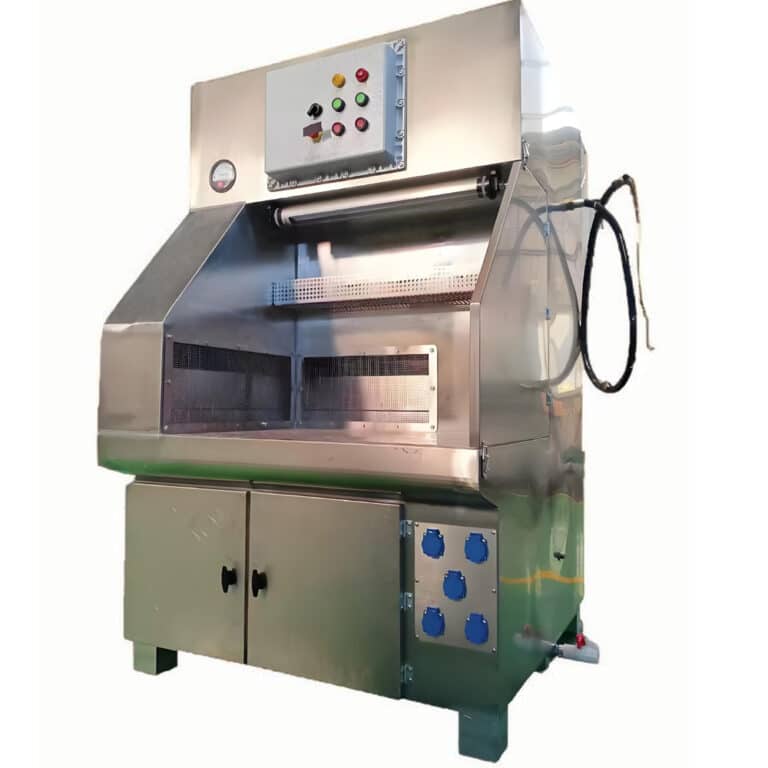
Pour les acheteurs qui envisagent d'acheter un table de broyage à courant descendant associé à un collecteur dédié, le calculateur de dimensionnement mentionné à l'adresse Calculateur de débit (en CFM) pour tables de meulage à aspiration par le bas fournit un cadre de référence basé sur les dimensions de la pièce à usiner et le type de matériau pour déterminer une valeur initiale de débit d'air — mais il faut encore soustraire les pertes au niveau des conduits et des filtres décrites ici avant que cette valeur ne puisse être convertie en vitesse à la face de la hotte.
Vérifier les courants d'air transversaux, les dimensions de la pièce à usiner et la position de l'opérateur
Un système qui atteint une vitesse de captage adéquate dans un point d'essai statique — sans opérateur, avec une pièce standard et en l'absence de flux d'air ambiant — peut néanmoins ne pas parvenir à maîtriser la poussière dans des conditions réelles d'exploitation. Il ne s'agit pas d'une défaillance du système, mais d'une lacune dans les spécifications qui n'apparaît que lorsque les conditions d'essai s'écartent de celles d'une utilisation réelle.
Les courants d’air transversaux constituent le facteur environnemental le plus courant. Les mouvements d’air provenant de portes ouvertes, de diffuseurs d’alimentation des systèmes CVC, d’équipements adjacents ou de la circulation des chariots élévateurs, même à des vitesses aussi faibles que 30 à 50 fpm, peuvent dévier le panache de poussière hors de la zone de captage avant que la vitesse sous la hotte ne l’atteigne. Cet effet est amplifié lorsque l’opération de meulage génère des jets turbulents : la meule elle-même projette la poussière vers l’extérieur, et un courant d’air transversal latéral l’intercepte à une distance que la hotte n’a pas été conçue pour atteindre. Spécifier la vitesse de captation sans documenter les mouvements d’air ambiant au niveau du poste de travail revient à laisser cette variable hors de contrôle.
La taille de la pièce à usiner influe directement sur la distance effective de la source. Une petite pièce placée près de la surface d’aspiration descendante place le point de contact de meulage dans la zone de captage prévue. Une grande dalle ou une pierre de forme irrégulière qui dépasse du périmètre de la table peut éloigner considérablement le point de meulage actif de la surface d’aspiration — parfois suffisamment pour que la vitesse à cette distance soit déjà tombée en dessous du seuil de captage. Il s’agit là d’une condition limite dimensionnelle qui doit figurer dans le cahier des charges, et non d’un élément que l’opérateur doit gérer au cas par cas.
La position de l'opérateur est plus importante pour les hottes à aspiration latérale et arrière que pour les tables à aspiration vers le bas, mais elle reste un facteur pertinent dans toutes les configurations. Lorsque le torse d’un opérateur se trouve entre la source de poussière et la face de la hotte, il crée une zone de sillage qui perturbe le flux d’air de captage, repoussant la poussière latéralement au lieu de l’aspirer. Cet effet est intermittent et rarement imputable à la conception initiale ; il se manifeste sous la forme d’une variabilité inexpliquée de l’exposition lors des contrôles d’hygiène et est difficile à corriger sans revoir l’emplacement de la hotte.
Un autre risque est celui de la poussière remise en suspension provenant des boues séchées ou des débris de broyage déposés sur les sols et les surfaces horizontales. Même lorsque le système de captage actif fonctionne correctement, la circulation piétonne et les courants d’air peuvent projeter les particules fines déposées vers la zone de respiration, augmentant ainsi la concentration de silice en suspension dans l’air sans aucun lien direct avec l’opération de broyage elle-même. Les protocoles d’entretien et la suppression par voie humide au niveau de la surface de travail constituent des contrôles opérationnels que le système de captage ne peut pas remplacer. Considérer ces éléments comme hors du champ d’application du cahier des charges peut compromettre les performances de captage mesurées.
Concevoir le collecteur de ventilateur et le réseau de conduits comme un ensemble unique
Dans une configuration à poste unique — un meuleur, un collecteur, un court tronçon de conduit —, le dimensionnement du ventilateur et des conduits est relativement simple. Le modèle d'aménagement le plus courant dans les ateliers de fabrication consiste en plusieurs postes de meulage reliés à un système central commun, et cette configuration implique une coordination de conception qui est souvent considérée comme un détail plutôt que comme une contrainte déterminante.
Le débit d’air total d’un système centralisé est fixé au niveau du ventilateur. La manière dont ce débit d’air se répartit entre les postes fonctionnant simultanément dépend de l’équilibre des résistances du réseau de conduits de dérivation — et non du débit nominal en CFM du collecteur. Si les conduits de dérivation sont dimensionnés pour le débit d’air de chaque poste individuellement sans tenir compte de la demande simultanée, l’ouverture de plusieurs postes à la fois réduit le débit d’air disponible à chaque poste en dessous de sa valeur de conception. Les postes qui subissent la plus forte baisse sont généralement ceux situés le plus loin du ventilateur, là où la résistance des conduits de dérivation est la plus élevée et où la diminution de la vitesse est la plus marquée.
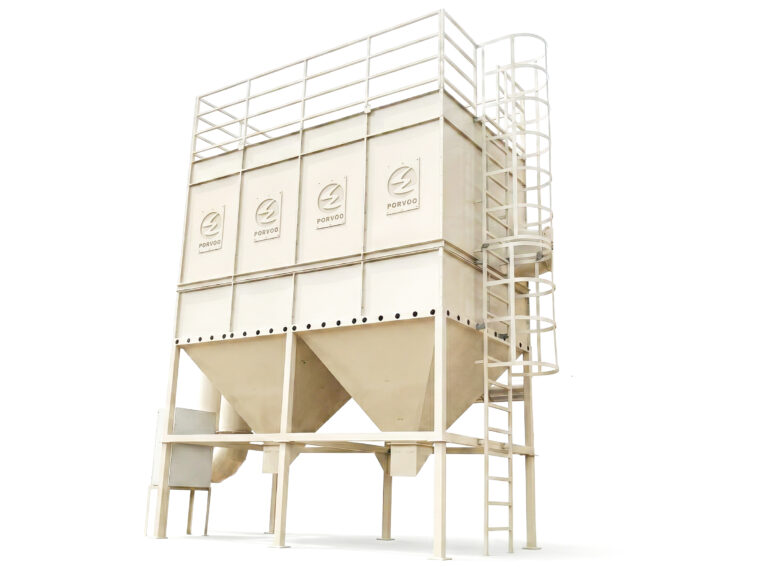
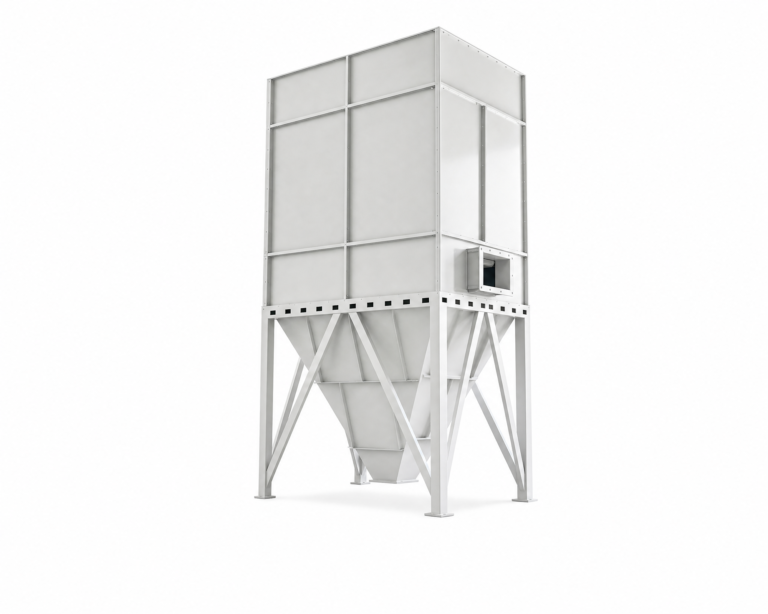
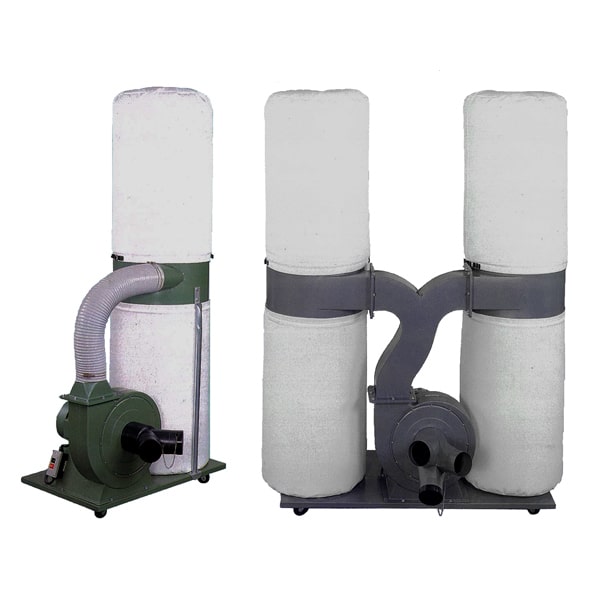
L'approche de conception corrective consiste à considérer le fonctionnement simultané comme la condition de référence, et non comme une situation d'urgence. Le dimensionnement des conduits doit permettre de maintenir une vitesse de transport adéquate et une vitesse de captation adéquate au niveau de la face de la hotte sur l'ensemble des postes actifs simultanément, dans le cadre de la combinaison la plus défavorable de postes en service. Cela signifie que le réseau de conduits et l'unité ventilateur-collecteur doivent être définis conjointement dès le départ, en précisant explicitement l'hypothèse d'une demande simultanée. A dépoussiéreur à cartouche La capacité calculée pour répondre à la demande globale de toutes les stations ne garantit pas automatiquement une répartition correcte de cette capacité, à moins que le réseau de conduits ne soit dimensionné en conséquence — et ce travail de dimensionnement relève du périmètre de la conception, et non du dépannage après installation.
Cette obligation de coordination s'applique à toute configuration à plusieurs stations, et pas uniquement aux systèmes centralisés. Même les configurations décentralisées comportant des collecteurs individuels peuvent interagir si elles partagent des voies d'alimentation en air, et la courbe de fonctionnement du ventilateur de chaque collecteur doit être vérifiée par rapport à la résistance réelle de sa branche, et non par rapport à la résistance globale du système.
Vérifier la pression statique et le débit d'air lors de la mise en service
La mise en service est le moment où les hypothèses de conception se confrontent aux conditions réelles, et l'observation la plus courante dans les systèmes sous-performants est que le débit nominal (CFM) a été considéré comme une garantie de performance réelle, plutôt que comme une valeur nominale du ventilateur qui doit encore être validée par rapport à la résistance du système installé. Ces deux valeurs sont rarement identiques.
| Éléments à vérifier | Pourquoi c'est important | Risque en cas de non-respect |
|---|---|---|
| Vitesse réelle de captage au niveau de la hotte | Un débit nominal élevé en CFM ne garantit pas à lui seul une capture efficace ; il faut tenir compte des pertes au niveau des conduits et des filtres | Le système pourrait ne pas être conforme ; de la poussière s'échappe de la zone de captage |
| Pression statique en différents points clés | Doit correspondre à la courbe de conception tenant compte des filtres, des tuyaux, des coudes et de la longueur des conduits | Une pression statique insuffisante réduit le débit d'air, ce qui entraîne un défaut de captage |
La procédure pratique de mise en service consiste à mesurer la vitesse de captage au niveau de la face de la hotte dans des conditions de fonctionnement représentatives — et non pas uniquement à l’entrée du collecteur ou au niveau d’une section transversale pratique du réseau de conduits — et à enregistrer la pression statique en des points de mesure définis dans le réseau de conduits. La norme ISO 10780 fournit un cadre d’essai pour la mesure de la vitesse et du débit volumétrique dans les flux gazeux provenant de sources stationnaires ; elle constitue une référence méthodologique utile pour les traversées de tubes de Pitot lors de la mise en service, même si elle ne s’agit pas d’une norme de conformité faisant autorité pour les installations de stations de broyage. Les emplacements de mesure et les seuils d’acceptation doivent être définis dans le cahier des charges avant le début de l’installation, afin que la vérification lors de la mise en service constitue un point de contrôle contractuel plutôt qu’un exercice ponctuel.
Si la vitesse de captage mesurée est insuffisante au démarrage, le processus de diagnostic consiste à remonter le fil du budget de résistance : mesurer la pression statique à l’entrée et à la sortie du filtre pour quantifier la résistance de celui-ci, parcourir le conduit principal pour vérifier la vitesse de transport, et déterminer si le déficit est concentré sur une seule dérivation ou réparti sur l’ensemble des postes. Chaque constatation indique une mesure corrective différente — sous-dimensionnement de l’étage de filtration, inadéquation du diamètre des conduits, inadéquation de la courbe de fonctionnement du ventilateur — et le fait de savoir laquelle est en cause permet d’éviter l’erreur courante consistant à augmenter la section des conduits pour résoudre un problème qui est en réalité lié à la résistance du filtre, ce qui réduit la vitesse de transport sans rétablir la vitesse de captage.
Définir des déclencheurs de maintenance en cas de variations de la perte de charge
La vitesse de captage n'est pas une caractéristique fixe d'un système installé : elle évolue au fil du temps à mesure que les filtres s'encrassent, que des dépôts s'accumulent sur les surfaces des conduits et que les performances des ventilateurs se dégradent. Un système ayant passé avec succès les tests de mise en service ne pourra pas maintenir ces performances sans un dispositif de surveillance capable de détecter les changements à l'origine de la diminution du débit d'air et d'y remédier.
Le colmatage des filtres est la cause la plus courante de la diminution progressive du débit d’air dans les systèmes de dépoussiérage à sec. À mesure qu’un filtre à cartouche ou à manches se charge, sa résistance augmente, et le ventilateur — fonctionnant selon une courbe fixe — réagit en faisant circuler moins d’air. La vitesse de captage au niveau de la hotte diminue proportionnellement, souvent de manière si progressive que le changement n’est pas perceptible sans mesure. La surveillance de la pression différentielle au niveau de l’étage de filtration fournit un indicateur avancé : une augmentation de la perte de charge signale une résistance croissante avant que la diminution de la vitesse de captation ne devienne significative. La définition d’un seuil précis — par exemple, une augmentation de la perte de charge d’un pourcentage donné par rapport à la valeur de référence du filtre propre — et son utilisation comme critère de déclenchement de l’entretien du filtre permettent de maintenir le système en fonctionnement dans sa plage de débit d’air nominale.
Les variations de la perte de charge peuvent également signaler des problèmes autres que l’encrassement du filtre. Une chute soudaine de la pression différentielle peut indiquer une défaillance du filtre ou un contournement du joint plutôt qu’un filtre propre : le débit d’air semble se rétablir tandis que l’efficacité de filtration s’effondre. Une augmentation de la perte de charge concentrée dans une dérivation du conduit plutôt qu’au niveau du filtre peut indiquer un blocage partiel dû à la poussière déposée, ce qui réduit à la fois la vitesse de transport et la vitesse de capture aux points de cette dérivation. Considérer la surveillance de la perte de charge comme un diagnostic à cause unique — “ une perte de charge élevée signifie qu’il faut changer le filtre ” — revient à passer à côté de ces indicateurs combinés. Le déclencheur d’intervention doit donner lieu à un bref contrôle diagnostique avant de se rabattre systématiquement sur le remplacement du filtre, en particulier lorsque le profil d’évolution de la pression ne correspond pas aux courbes normales d’encrassement du filtre.
Dans les installations utilisant des procédés de broyage à la pierre humide, où le dépoussiéreur traite à la fois la poussière sèche et les projections de brouillard ou de boue, le comportement d'encrassement des filtres peut différer considérablement de celui observé dans les installations traitant uniquement de la poussière sèche ; il peut donc s'avérer nécessaire de recalibrer les seuils de déclenchement liés à la perte de charge en se basant sur l'expérience opérationnelle réelle, plutôt que de les transposer à partir d'une installation de référence traitant uniquement de la poussière sèche.
Intégrer les hypothèses relatives au débit d'air dans le devis
Un devis qui précise uniquement le débit en CFM du collecteur et la capacité nominale du filtre ne fournit à l’acheteur aucune base contractuelle lui permettant d’exiger une correction lorsque le système installé présente des performances insuffisantes au niveau de la face de la hotte. L’écart entre le débit nominal en CFM et la vitesse de captation effective n’est pas une invention du fournisseur — il reflète des pertes réelles dues au frottement dans les conduits, à la résistance du filtre et à la distance par rapport à la source — mais si ces pertes ne sont pas documentées dans le devis, il n’existe aucun point de référence convenu permettant de vérifier si le système livré correspond bien à ce qui a été vendu.
Trois catégories d'hypothèses présentent le risque le plus élevé lorsqu'elles sont exclues.
| Élément d'hypothèse | Description | Risque en cas d'exclusion du devis |
|---|---|---|
| Pertes dans les conduits | Pertes par frottement dues à la longueur des conduits, aux coudes et aux raccords | Le système pourrait ne pas atteindre la vitesse de capture spécifiée, ce qui entraînerait des retouches coûteuses. |
| Résistance du filtre | Perte de charge du filtre HEPA (99,97% à 0,3 μm) | Le débit d'air réel au niveau de la hotte est inférieur à celui prévu ; la vitesse de captage est insuffisante |
| Distance par rapport au poste de travail et ouverture de capture | Distance entre la hotte et la source de poussière, surface d'ouverture | La zone de capture pourrait ne pas atteindre la source ; la vitesse de capture est inférieure à la norme |
Le principe fondamental en matière d'approvisionnement est simple : un devis qui indique le débit en CFM sans préciser la pression statique à laquelle ce débit est fourni, la résistance du filtre supposée en conditions de service, la vitesse de transport dans les conduits maintenue au débit de conception, ni la vitesse de captation à une distance définie de la face de la hotte ne peut être considéré comme un engagement de performance. Il ne peut être évalué que comme une spécification de composant. Il s'agit là de deux choses différentes, et cette différence apparaît lors de la mise en service plutôt qu'au moment de la commande.
La norme OSHA 1910.94, en tant que référence en matière de procédés, reflète l’intention réglementaire selon laquelle la ventilation par aspiration locale doit permettre une captation efficace à la source — et non pas simplement faire circuler un volume d’air à travers le système. Cette intention exige que les hypothèses de devis justifient une vitesse de captation définie à un emplacement précis, et non pas seulement la puissance nominale d’un ventilateur mesurée à un point d’essai. Les acheteurs qui considèrent ces éléments comme des détails à régler après la commande, lors de l’installation, acceptent un risque d’approvisionnement qui pourrait être évité dès la phase de spécification.
Concrètement, il convient d’exiger, avant de passer commande, que le devis précise explicitement : la vitesse de captage nominale au niveau de la face de la hotte et la distance à laquelle elle est mesurée ; le budget de pression statique total, y compris la résistance du filtre, pour une condition de charge définie ; la vitesse de transport dans les conduits au débit nominal ; ainsi que l’hypothèse de demande de fonctionnement simultané pour les systèmes à plusieurs stations. Un fournisseur qui ne peut pas ou ne veut pas documenter ces hypothèses refuse en réalité de s’engager sur les performances livrées — il s’agit là d’un autre type d’information, qu’il est utile de disposer avant de passer commande plutôt qu’après l’installation du système.
En pratique, ce qui ressort de toutes ces sections, c’est que c’est dans le cahier des charges, et non sur la plaque signalétique du collecteur, que les performances de captage sont soit garanties, soit laissées en suspens. Le débit nominal en CFM constitue un point de départ pour évaluer si un système se situe dans la fourchette de dimensions appropriée ; il ne garantit pas pour autant que la vitesse de captage à l’avant de la hotte atteindra l’objectif de conception une fois pris en compte les pertes dans les conduits, la résistance des filtres, les courants d’air transversaux et la demande simultanée. Ces facteurs doivent être pris en compte dès la phase de conception et de devis, car le coût de leur résolution après l’installation — refonte de la tuyauterie, remplacement du ventilateur, nouvelle mise en service — est nettement plus élevé que celui d’exiger du fournisseur qu’il les documente dès le départ.
Avant d’accepter un devis pour un système de contrôle des poussières issues du meulage de la pierre, assurez-vous que les éléments suivants sont explicitement précisés : la vitesse de captage supposée à une distance définie entre la hotte et la surface de travail, le bilan de pression statique dans des conditions de charge du filtre définies, la vitesse de transport dans les conduits au débit nominal, ainsi que l’hypothèse relative à la demande simultanée des postes si plusieurs postes partagent le système. Si l’un de ces éléments n’est pas précisé, cela constituera une lacune que l’acheteur sera amené à combler ultérieurement, généralement selon les conditions du fournisseur plutôt que selon les siennes.
Questions fréquemment posées
Q : Que se passe-t-il si les opérations de meulage dépassent régulièrement la surface de la table à courant descendant ? Les spécifications relatives à la vitesse de captage restent-elles valables ?
R : Non, elle cesse d’être valable à ce moment-là. La vitesse de captage est calculée pour une distance fixe par rapport à la source, et dès que le contact de meulage actif dépasse le périmètre de la table, la distance par rapport à la face de la hotte augmente et la vitesse disponible à cet endroit diminue — souvent en dessous du seuil de conception. Les dimensions de la pièce à usiner et la position maximale probable de meulage doivent être définies avant de déterminer la vitesse de captation ; il ne faut pas supposer qu’elles correspondent à l’empreinte de la table. Si le traitement de pièces surdimensionnées est courant, il convient soit de recalculer la géométrie de la hotte ou le débit d’air cible en fonction de la distance réelle par rapport à la source, soit de prévoir un dispositif de captation supplémentaire placé plus près de la source.
Q : Une fois que la vérification au démarrage a confirmé que la vitesse de capture est adéquate, quel est l'intervalle recommandé pour la mesurer à nouveau en cours d'exploitation ?
R : La nouvelle mesure doit être déclenchée par une variation de la perte de charge, et non par un intervalle calendaire fixe. La charge du filtre étant le principal facteur de réduction du débit d’air, la pression différentielle au niveau de l’étage filtrant constitue un critère de déclenchement plus fiable que le temps écoulé — elle reflète en effet la résistance réelle du système plutôt que des schémas d’utilisation supposés. Établissez une valeur de référence de perte de charge lors de la mise en service, définissez un pourcentage d’augmentation déclenchant un contrôle d’entretien, et intégrez une nouvelle mesure de la vitesse en face de la hotte dans le cadre de ce contrôle plutôt que de la considérer comme une activité programmée distincte. Pour les postes de broyage par voie humide où l’entraînement de boue affecte de manière imprévisible l’encrassement du filtre, il peut s’avérer nécessaire de resserrer le seuil par rapport à une référence issue d’un procédé à sec.
Q : Un collecteur centralisé à plusieurs postes est-il plus ou moins fiable que des collecteurs individuels installés à chaque poste de broyage ?
R : Aucune des deux solutions n’est intrinsèquement plus fiable — le facteur déterminant est de savoir si le réseau de conduits est conçu pour s’adapter à l’approche choisie. Un système centralisé concentre l’entretien des ventilateurs et des filtres en un seul point, ce qui peut constituer un avantage, mais il nécessite que le réseau de conduits de dérivation soit équilibré dès le départ pour permettre un fonctionnement simultané ; si ce n’est pas le cas, les stations éloignées afficheront systématiquement des performances insuffisantes, quelle que soit la puissance nominale totale du collecteur. Les collecteurs individuels éliminent le problème d’équilibrage des conduits de dérivation, mais multiplient le nombre de points d’entretien des filtres et introduisent le risque que les unités portables soient déplacées ou contournées sous la pression de la production. La question la plus pertinente est de savoir si la demande de fonctionnement simultané a été prise en compte comme référence de conception, car cette hypothèse détermine les performances dans les deux configurations.
Q : À partir de quel moment l'ajout de longueur de conduit ou de coudes rend-il un système impossible à spécifier comme une seule unité ?
R : Lorsque les pertes de pression statique cumulées dues à la longueur des conduits, aux coudes et aux raccords absorbent une part suffisamment importante de la pression statique disponible du ventilateur, au point que le reste ne puisse plus satisfaire simultanément à la fois la vitesse minimale de transport d’environ 20 m/s dans le conduit et la vitesse de captage requise au niveau de la face de la hotte, la configuration dépasse ce qu’un seul ensemble ventilateur-collecteur peut couvrir sans passer à une courbe de ventilateur de plus grande taille ou sans se scinder en systèmes distincts. Il n’existe pas de seuil de distance universel — cela dépend du diamètre du conduit, du nombre de raccords et de la résistance du filtre — mais le calcul devient alors déterminant plutôt que simplement indicatif. Si une configuration proposée oblige le ventilateur à fonctionner à l’extrémité de sa courbe de performance pour satisfaire à la seule exigence de vitesse de transport, il ne reste plus aucune marge pour la charge du filtre ou une demande simultanée, ce qui constitue une contrainte de conception plutôt qu’un simple ajustement de dimensionnement.
Q : Si un fournisseur fournit l'ensemble des documents requis (vitesse de captage, bilan de pression statique, vitesse de transport dans les conduits, hypothèse de demande simultanée), quelle est la bonne manière de vérifier que ces chiffres sont réalisables avant de valider la commande ?
R : Exigez que les valeurs indiquées par le fournisseur soient rattachées à une courbe de ventilateur vérifiable, et non à des valeurs nominales. Une courbe de ventilateur représente graphiquement le débit d’air en fonction de la pression statique sur toute la plage de fonctionnement, et le point de fonctionnement nominal — c’est-à-dire la combinaison spécifique de débit d’air et de pression statique que le système doit fournir — doit se situer clairement à l’intérieur de cette courbe, à une pression statique tenant compte à la fois de la résistance des conduits et de celle du filtre, dans des conditions de charge définies. Si le point de conception se situe à la limite de la courbe ou à proximité de celle-ci, il n’y a aucune marge de manœuvre pour tenir compte de l’encrassement du filtre, des variations simultanées de la demande ou des légers écarts au niveau des conduits. Un point de conception situé dans le tiers central de la courbe de ventilation indique que le système a été dimensionné avec une marge réaliste, et cette condition mérite d’être précisée comme critère d’acceptation avant l’émission du bon de commande.