Los documentos de presupuesto para proyectos de tratamiento de aguas residuales y control de polvo suelen parecer completos cuando en realidad no lo están. Se esboza el flujo del proceso, se enumeran las categorías de equipos y los proveedores han presentado sus cifras presupuestarias; sin embargo, la composición de la alimentación sigue siendo un rango, los puntos de suministro de aire comprimido están «por determinar» y nadie ha acordado quién es el responsable de la conexión entre los controles del colector de polvo y el PLC de la planta. Cuando esas lagunas persisten hasta la fase de la orden de compra, no desaparecen, sino que resurgen como deficiencias en el alcance durante la instalación, como resultados de pruebas controvertidos en el momento de la entrega y como órdenes de modificación que merman el presupuesto del proyecto una vez que ya se han comprometido las obras de ingeniería civil. La decisión que evita esto debe tomarse antes y ser más específica de lo que la mayoría de los equipos espera: fijar los datos del proceso, la responsabilidad de las interfaces y los registros de aceptación antes de que se presupueste formalmente ningún equipo, y no después de que ya se haya seleccionado un proveedor preferente.
Empieza con datos de proceso que puedan superar la revisión del presupuesto
Un presupuesto basado en datos de proceso flexibles es un presupuesto del que no se puede exigir responsabilidad. Los proveedores elaboran sus presupuestos en función de la información que se les facilita, y si los caudales se describen como rangos, si la carga de polvo se estima en lugar de medirse mediante muestreo, o si la disponibilidad de los servicios públicos se indica como provisional, la garantía de rendimiento asociada a ese presupuesto conllevará la misma incertidumbre. El proveedor ha fijado un precio para un margen de variación, no para una condición concreta, y el equipo del proyecto, sin saberlo, ha vuelto a asumir el riesgo de diseño.
Las cuatro categorías de datos que causan problemas posteriores de forma más habitual son las corrientes de alimentación, las fuentes de polvo, los límites de los servicios públicos y los registros de aceptación. Cada una de ellas presenta un patrón de fallo diferente cuando no se definen con claridad. La variabilidad de las corrientes de alimentación suele manifestarse en forma de disputas por sobredimensionamiento tras la puesta en marcha, cuando los caudales reales superan el punto de diseño indicado en el presupuesto y el proveedor señala correctamente que los datos se facilitaron a título aproximado. Los parámetros de las fuentes de polvo —en particular, la distribución del tamaño de las partículas y la composición química— determinan la eficiencia de filtración y la selección de los medios filtrantes, por lo que dejarlos sin definir suele dar lugar a un colector que cumple con una especificación genérica, pero no con las condiciones reales de la obra. Los límites de los servicios públicos crean una categoría diferente de fallo: el equipo llega a la obra requiriendo una potencia eléctrica o una presión de aire comprimido que no se había previsto en el alcance de las obras civiles y eléctricas, lo que desencadena mejoras no planificadas de los servicios públicos que conllevan sus propios plazos de ejecución.
| Categoría de datos | Qué hay que congelar | Riesgos si se deja flexible |
|---|---|---|
| Fuentes de contenido | Caudal, composición, temperatura, variabilidad | Los equipos presupuestados pueden ser de dimensiones insuficientes o excesivas; las garantías de rendimiento pueden quedar anuladas. |
| Fuentes de polvo | Tamaño de las partículas, carga, composición química | No se puede garantizar la eficacia de la filtración; las condiciones imprevistas dan lugar a órdenes de modificación |
| Límites de uso | Suministro eléctrico, calidad y presión del agua, aire comprimido | Es posible que los equipos requieran mejoras imprevistas en las instalaciones de servicios públicos; retrasos en la instalación y sobrecostes. |
| Registros de aceptación | Métodos de ensayo, criterios de aprobación o rechazo, puntos de muestreo | Conflictos en la entrega; puesta en servicio prolongada; retrasos en los pagos por hitos |
La definición del registro de aceptación suele considerarse una tarea de la fase de puesta en servicio, en lugar de un elemento de la fase de diseño, y es precisamente en esa secuencia donde se gestan los conflictos del proyecto. Si los criterios de aprobación o rechazo, los puntos de muestreo y los métodos de ensayo no se acuerdan antes de la presentación del presupuesto, se convierten en puntos de negociación en el momento de la entrega, cuando la presión de los plazos y los hitos de pago crean incentivos para el desacuerdo en lugar de para el consenso. Las normas ISO 10006 e ISO 10005 proporcionan un marco útil para explicar por qué la planificación de la calidad de los ensayos debe realizarse en la fase de definición del proyecto, aunque no prescriben los campos de datos específicos enumerados anteriormente. La cuestión práctica es más concreta: cualquier categoría de datos que pueda utilizarse para anular una garantía de rendimiento, impugnar el resultado de un ensayo o justificar un cambio en el alcance debe fijarse antes de que se emita una orden de compra.
Definir las instalaciones y los controles relacionados con las aguas residuales y el polvo como un único ámbito de proyecto
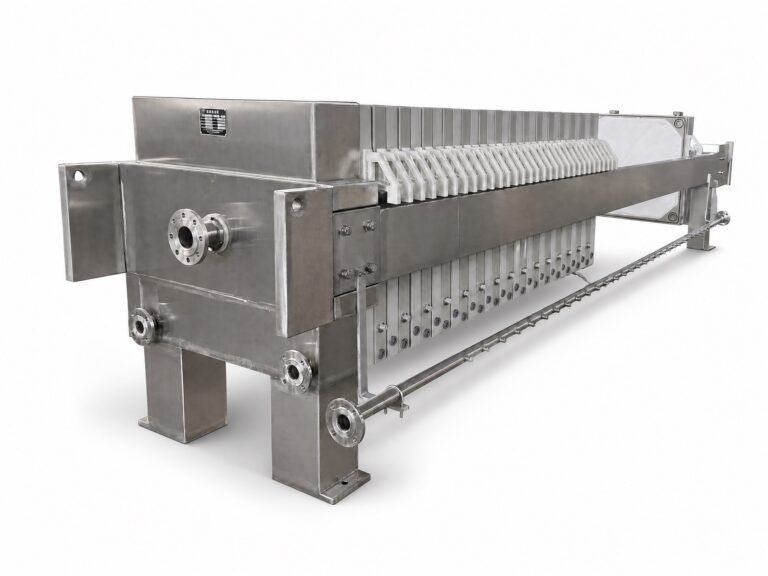
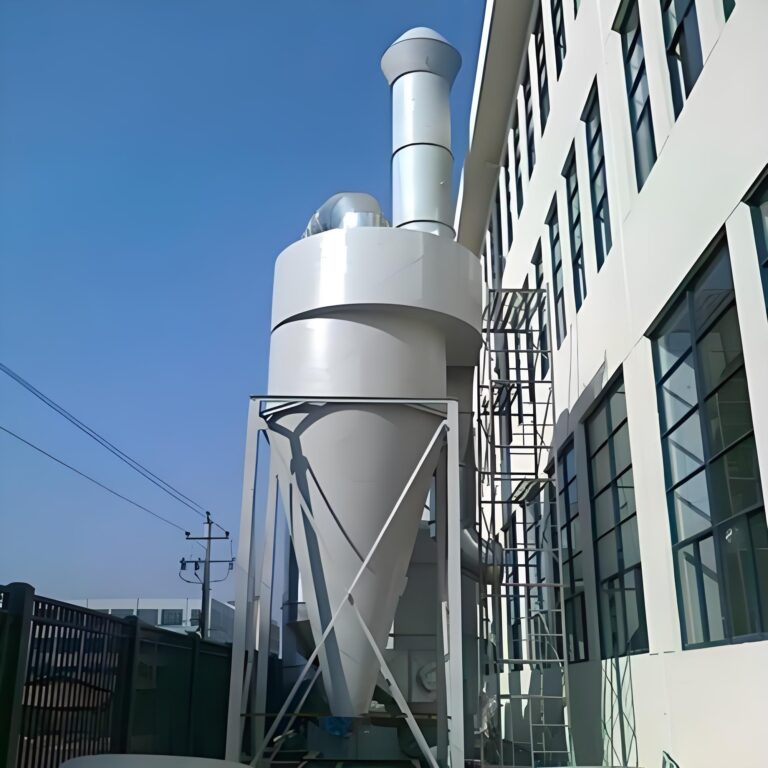
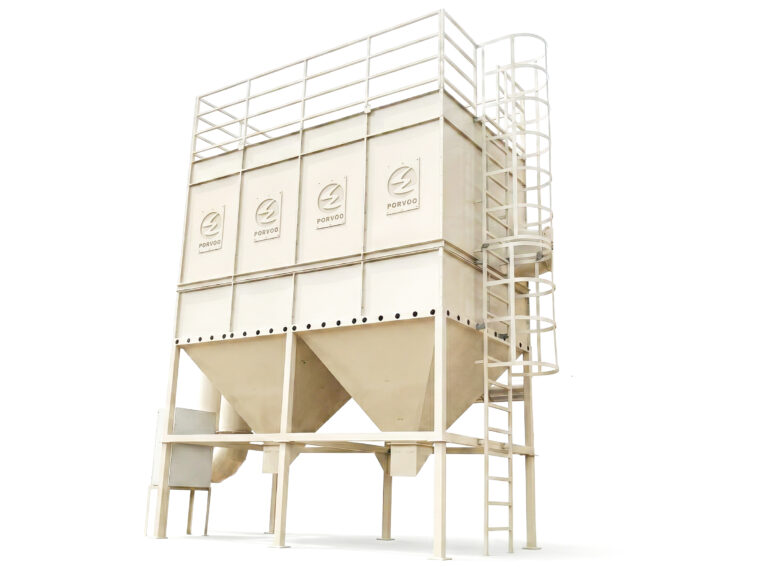
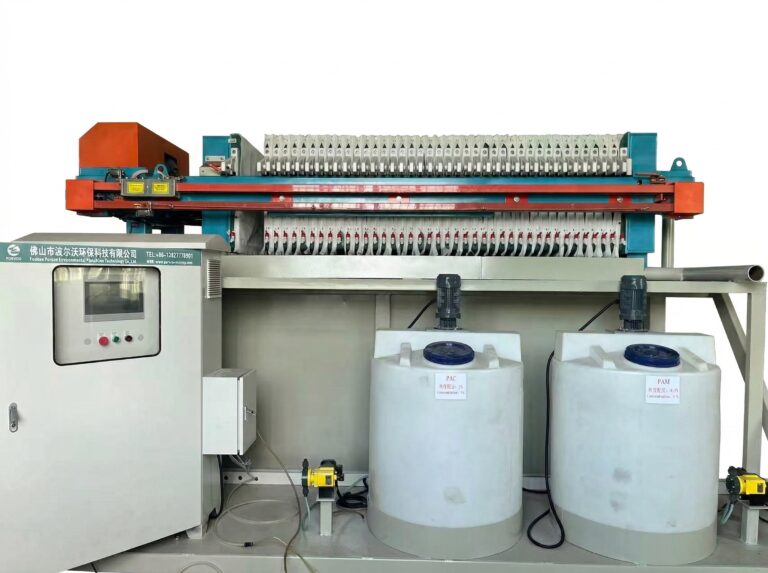
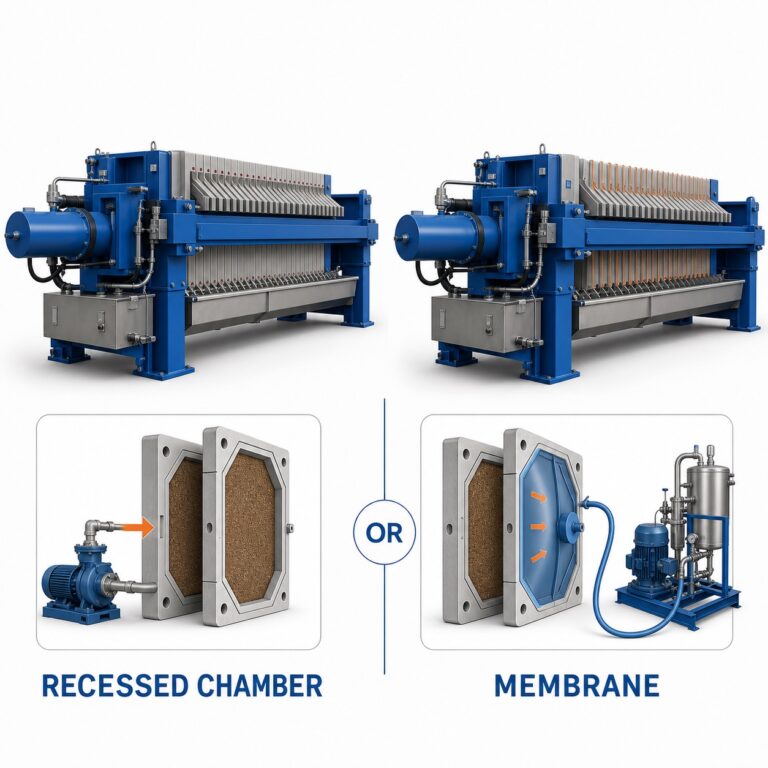
Los sistemas medioambientales industriales de una planta de producción rara vez son verdaderamente independientes. Una mejora del sistema de tratamiento de aguas residuales que incorpore un filtro prensa de placas y marcos La línea de deshidratación de lodos puede compartir un conducto de aire comprimido con el colector de polvo de chorro pulsado que da servicio al mismo edificio de producción. El clarificador que alimenta el filtro prensa puede descargar un flujo de filtrado que vuelve a un sumidero de efluentes compartido. Si los sistemas de aguas residuales, control de polvo y servicios generales se definen y se adquieren como paquetes independientes, estos puntos compartidos no aparecen en los planos de ningún proveedor concreto, y durante la instalación esa ausencia se convierte en una duda sobre el terreno sin un responsable claro.
Considerar los tres sistemas como un único ámbito de proyecto no implica necesariamente adquirirlos a un único proveedor. Significa definir un mapa de alcance coherente antes de realizar cualquier compra: dónde entran y salen los flujos de procesos de cada sistema, dónde se conectan los servicios, dónde cruzan las señales de control los límites del sistema y quién es responsable de probar cada interfaz. Se trata de un criterio de planificación, no de una norma formal, pero es uno de los controles más eficaces contra aquel tipo de orden de modificación que ni el equipo del propietario ni ningún proveedor había previsto.
La práctica recomendada consiste en establecer los límites antes de que se publique la solicitud de presupuesto (RFQ), y no durante la revisión de los proveedores. Cuando el alcance de las obras de aguas residuales y de control de polvo se define de forma secuencial en lugar de en paralelo, el segundo documento de alcance suele redactarse sin tener en cuenta lo que ya se ha especificado en el primer paquete. Las conexiones a los servicios públicos se duplican o quedan sin regular; las cimientos de obra civil se dimensionan de forma independiente y posteriormente se descubre que entran en conflicto; los puntos de integración del PLC se describen de forma diferente por cada proveedor. El coste de la corrección en esa fase no es insignificante, ya que modificar el alcance de un paquete ya adquirido suele implicar una renegociación comercial, no solo una revisión de los planos.
Identificar los modos de fallo provocados por la falta de responsabilidad sobre la interfaz
La causa más habitual de las modificaciones que hay que realizar durante la fase de instalación no es el fallo de los equipos, sino la falta de claridad en las interfaces. Cuando el traspaso de responsabilidades entre los datos de proceso, la infraestructura civil, los servicios públicos, los controles y la puesta en marcha no se asigna a una parte concreta antes de la compra, esa laguna permanece. No se resuelve por sí sola durante la fabricación. Sale a la luz durante la instalación, cuando el contratista civil ha terminado unos cimientos que no se ajustan al plano de carga definitivo del proveedor, o durante la puesta en marcha, cuando el integrador de automatización descubre que dos proveedores distintos han dado por sentado que el otro es el responsable de un punto de E/S concreto.
En los proyectos de equipos medioambientales con múltiples proveedores se repiten varios patrones de fallo. Entre los conflictos físicos más habituales se encuentran los puntos de conexión de tuberías y conductos especificados por un proveedor en una ubicación que entra en conflicto con una estructura o con el acceso de mantenimiento de otro paquete. Una segunda categoría la constituyen los puntos de suministro de servicios públicos que cada proveedor ha descrito en su propia documentación, pero que nadie ha verificado comparándolos con el balance de servicios públicos de la planta. Los fallos de integración de los controles —en los que el intercambio de señales entre el panel de un colector de polvo y un sistema SCADA figuraba en ambos alcances como un “asunto de coordinación”, pero nunca se asignó formalmente— son más difíciles de detectar hasta la puesta en marcha, y más difíciles de solucionar, ya que pueden requerir que ambos proveedores participen en una solución para la que ninguno de los dos ha previsto presupuesto.
Las directrices de la norma ISO 10006 sobre la gestión de interfaces de proyectos constituyen una base útil en este contexto: el énfasis que pone la norma en identificar y documentar las interfaces entre los elementos del proyecto refleja el reconocimiento de que los proyectos en los que participan múltiples partes suelen fracasar con mayor frecuencia en los límites entre ellos, y no dentro de los propios paquetes. Lo que esto significa en la práctica para un proyecto de equipamiento medioambiental es que un registro de interfaces —en el que se enumeren todos los puntos de traspaso físicos, de servicios, de control y de puesta en servicio, con una parte responsable designada en cada lado— debería ser un documento del proyecto elaborado antes de la aprobación de la compra, y no un documento propio de la fase de puesta en servicio.
El modo de fallo con mayores consecuencias es la confusión sobre los límites de la puesta en marcha. Cuando no se ha definido la secuencia de puesta en marcha, el equipo de cada proveedor llega a las instalaciones con una suposición sobre el alcance que nunca se ha contrastado con la de los demás. Las comprobaciones previas a la puesta en marcha se duplican en algunas áreas y se omiten en otras. Las pruebas de rendimiento integradas se retrasan porque ninguna de las partes tiene autoridad para declarar que las interfaces compartidas están listas. Los hitos de pago vinculados a la finalización de la puesta en servicio se convierten en objeto de controversia, ya que nunca se ha dejado por escrito la definición de “completado”.
Compara la coordinación de un solo paquete con la responsabilidad de un paquete específico
La elección entre un único paquete coordinado y paquetes especializados independientes supone, en realidad, una disyuntiva, y la respuesta correcta depende de la complejidad de las interfaces del proyecto, de la capacidad de coordinación interna del promotor y de la importancia que tenga el nivel de especialización en cada sistema. Ninguna de las dos estructuras ofrece un rendimiento superior al de la otra de forma fiable en todos los casos.
Un enfoque de paquete único reduce el número de interfaces externas que el propietario debe gestionar activamente. El proveedor se encarga de la coordinación interna entre los sistemas de aguas residuales, lodos y control de polvo, y la interfaz contractual del propietario es más sencilla. El riesgo que esto conlleva es la opacidad: el propietario tiene menos visibilidad sobre cómo se gestionan internamente los límites de los subsistemas y, cuando es necesario modificar el alcance, el coste del cambio suele ser mayor, ya que existe menos presión competitiva sobre los componentes individuales. El modelo de paquete único también exige que el proveedor cuente con una competencia real en todos los sistemas incluidos en el alcance, algo que conviene verificar en lugar de darlo por sentado.
Los paquetes especializados independientes asignan cada sistema a un proveedor con amplia experiencia en esa tecnología: un especialista en tratamiento de aguas residuales para el clarificador y el filtro prensa, un especialista en control de la contaminación atmosférica para el colector de polvo pulse jet, y así sucesivamente. La contrapartida es que el propietario, o un director de proyecto que actúe en su nombre, debe mantener una matriz de alcance lo suficientemente detallada como para evitar lagunas y solapamientos en cada interfaz. Sin esa matriz, el riesgo de interfaz que el modelo de paquete único internaliza simplemente queda sin asignar en una estructura con múltiples proveedores.
| Aspecto comparativo | Paquete único (llave en mano) | Paquetes especializados (independientes) |
|---|---|---|
| Esfuerzo de coordinación | Bajo; el proveedor gestiona las interfaces internas | Alto; el propietario debe coordinar a varios proveedores |
| Especialización de los proveedores | Moderado; puede que se renuncie a la especialización en un nicho concreto | Alto; cada proveedor es experto en su campo |
| Claridad sobre el alcance para el propietario | Menos interfaces que definir; contrato más sencillo | Se requiere una matriz detallada del alcance y documentos de interfaz |
| Riesgo de interfaz | Pocas interfaces externas, pero riesgo de «caja negra» | Existe un alto riesgo de que se produzcan deficiencias si no hay una supervisión rigurosa por parte del responsable. |
| Posibilidad de modificaciones en el pedido | Se reduce si el alcance está claro; los cambios pueden resultar costosos | Podría ser mayor si las interfaces no se gestionan adecuadamente, pero unos precios competitivos podrían compensarlo |
| Carga de trabajo de gestión de proyectos del propietario | Menor; el proveedor se encarga de la integración | Nivel superior; el propietario o el consultor debe integrar |
La comparación varía en función de una condición clave: si el propietario cuenta con un director de proyecto que posea tanto los conocimientos técnicos necesarios para redactar documentos de interfaz como la autoridad comercial para exigir a los proveedores que los cumplan. Si se da esa capacidad, los paquetes especializados suelen ofrecer mejores resultados técnicos a costes unitarios más competitivos. Si no es así, una estructura de paquete único con criterios de aceptación bien definidos puede reducir la probabilidad de fallos en la fase de instalación, aunque el precio total sea más elevado. El peor resultado es optar por paquetes separados sin elaborar la matriz de alcance del propietario, ya que esa combinación genera el riesgo de interfaz propio de un proyecto con múltiples proveedores, pero sin la disciplina de coordinación necesaria.
Elaborar los registros de aceptación antes del envío y de los trabajos in situ
Las disputas sobre la aceptación en la entrega de un proyecto casi siempre se remontan a una pregunta que se podía responder antes de que comenzara la fabricación: ¿qué significa “superar”? Cuando no se acuerdan de antemano los protocolos de prueba, los umbrales de aceptación, los métodos de muestreo y la autoridad para dar el visto bueno, cada parte llega a la prueba de aceptación con una definición propia. El resultado de la prueba que satisface al proveedor puede no satisfacer al propietario, y ninguna de las dos posturas es irrazonable; simplemente, nunca se conciliaron.
La disciplina de definir los registros de aceptación antes del envío cumple una función diferente a la de la propia prueba. Obliga al propietario a ser específico sobre qué rendimiento debe ofrecer el equipo, en qué condiciones de funcionamiento, cómo se mide y en qué ubicación. Esa especificidad suele revelar que lo que se describió en la especificación como un objetivo de calidad de los efluentes estaba insuficientemente detallado: se indicaba un parámetro, pero no un método de ensayo, o se indicaba un límite, pero no una frecuencia de muestreo. Detectar esa laguna antes de la fabricación forma parte de la revisión del diseño; detectarla in situ durante la puesta en servicio supone una orden de modificación.
| Elemento de registro | Por qué es importante el acuerdo previo al envío | Qué hay que definir antes del envío |
|---|---|---|
| Protocolo de pruebas de rendimiento | Evita disputas sobre las condiciones de las pruebas en las instalaciones | Pasos detallados de la prueba, parámetros de los fluidos, rango de funcionamiento |
| Criterios de aceptación | Evita discusiones ambiguas sobre si se aprueba o se suspende | Límites cuantitativos relativos a la calidad de los efluentes, las emisiones de polvo, etc. |
| Muestreo e instrumentación | Garantiza una medición coherente entre todas las partes | Puntos de muestreo, calibración de instrumentos, equipos de ensayo acordados |
| Puntos de referencia y de control | Permite al propietario observar las pruebas críticas de fábrica | Calendario de puntos de inspección y plazos de notificación |
| Documentación que se debe entregar | Garantiza que se acepten todos los formatos de registro | Plantillas, formatos de exportación de datos, requisitos de planos de obra terminada |
| Funciones y autoridad para dar el visto bueno | Aclara quién aprueba las pruebas y los registros | Signatarios designados, vía de escalado de decisiones |
Las pruebas de aceptación en fábrica previas al envío, en las que se comprueba que el equipo o un sistema representativo cumple los criterios acordados antes de salir de las instalaciones del fabricante, reducen este riesgo, pero no lo eliminan. Lo que hace el acuerdo previo al envío es establecer una condición de referencia: si el equipo cumplía los criterios acordados en fábrica y se demuestra que las condiciones in situ se encuentran dentro de los límites operativos acordados, la carga de la prueba en cualquier controversia posterior se inclina en una dirección bien documentada. El énfasis de la norma ISO 10005 en los planes de calidad para las fases del proyecto respalda este enfoque: la planificación del registro de aceptación es una actividad de planificación de la calidad que debe realizarse en la fase de definición del proyecto, no en la fase de entrega.
En lo que respecta específicamente a los sistemas de aguas residuales, conviene aclarar cómo se documenta el rendimiento de la sedimentación en condiciones de alimentación variables antes de ultimar cualquier protocolo de aceptación. Las orientaciones sobre cómo se ha abordado en los proyectos la congelación de los datos de producción antes del dimensionamiento de los equipos —tal y como se ha tratado en este debate anterior sobre planificación de plantas de tratamiento de aguas residuales industriales — refleja el mismo principio que se aplica en las fases anteriores de la secuencia del proyecto.
Congelar los límites de la batería antes de aprobar la compra
Los límites de las baterías suelen describirse en los primeros documentos del proyecto como una línea en un plano de situación. En la práctica, se trata de un conjunto de decisiones: dónde cambia de manos la propiedad física de las tuberías, dónde se realizan las conexiones a los servicios públicos y quién las lleva a cabo, qué parte es propietaria de una bandeja portacables y quién es responsable de la puesta en marcha previa de un instrumento de interfaz. Cuando alguna de estas decisiones queda pendiente en el momento de la aprobación de la compra, se resolverá in situ, lo que significa que la resolverá quien se encuentre en la interfaz, bajo la presión del tiempo y con restricciones presupuestarias.
La desviación del alcance en los proyectos de equipos medioambientales suele deberse, no a cambios en los equipos principales, sino a la ambigüedad en los límites de la batería. Un contratista de obra civil al que se le pidió que proporcionara un zócalo de hormigón según las “dimensiones facilitadas por el proveedor” descubre durante la instalación que el plano definitivo del proveedor ha modificado la ubicación de los puntos de carga, lo que requiere un refuerzo adicional. Un integrador de sistemas de control al que se le indicó que “se conectara al cuadro del proveedor” descubre que dicho cuadro requiere un protocolo que no figuraba en la lista original de E/S. Ninguna de estas situaciones es inusual, y ninguna de ellas implica que ninguna de las partes haya actuado de mala fe: la discrepancia era estructural, y se produjo porque los límites de la batería se describieron en términos generales en lugar de específicos.
| Componente de límite de batería | Riesgo si no se define | Qué hay que congelar antes de la aprobación |
|---|---|---|
| Límite físico | Desviaciones del alcance y conflictos físicos | Límites exactos de los equipos, bridas e interfaces estructurales |
| Puntos de suministro de servicios públicos | Trazado y costes imprevistos de las redes de servicios públicos | Se han definido el lugar de suministro, la presión, la potencia nominal y el tipo de conexión |
| Intercambio de señales de control | Fallos de integración y reelaboración | Lista de E/S, protocolo de comunicación, puntos de intercambio de datos |
| Interfaces entre ingeniería civil y estructural | Incompatibilidades entre fundaciones y conflictos de acceso | Datos de carga, dimensiones del zócalo, espacios libres para el mantenimiento |
| Límite de puesta en servicio | Confusión sobre quién se encarga de qué pruebas | Secuencia de puesta en marcha, responsabilidades en la fase previa a la puesta en servicio y pruebas integradas |
El control práctico consiste en una revisión de congelación de los límites de la batería que se lleva a cabo como un control formal antes de firmar cualquier orden de compra. La revisión debe confirmar que las interfaces físicas se describen a nivel de punto de conexión, no a nivel de sistema; que los puntos de suministro de los servicios públicos incluyen la presión, la potencia nominal y el tipo de conexión, no solo una etiqueta; que la lista de E/S y el protocolo de comunicación están acordados y reflejados tanto en las especificaciones del equipo como en el alcance del contratista de controles; y que el alcance de la puesta en servicio define las responsabilidades de las pruebas previas a la puesta en servicio y de las pruebas integradas para cada parte, no solo la prueba de aceptación final. Hasta que dicha revisión se haya completado y documentado, pasar a la aprobación de la compra suele implicar adquirir, junto con el equipo, ambigüedad en el alcance del proyecto.
El patrón común en las cinco áreas de planificación es que las decisiones cuya revisión resulta más costosa —la congelación de los datos de alimentación, la asignación de la propiedad de las interfaces, la definición de los registros de aceptación y la especificación de los límites de las baterías— son también las que parecen menos urgentes durante las primeras fases de planificación del proyecto. Se perciben como detalles que pueden resolverse más adelante y, en ese momento, aplazarlas parece una forma de mantener la flexibilidad. El efecto real es posponer esas decisiones hasta las fases del proyecto en las que modificarlas resulta más costoso: fabricación, instalación in situ y puesta en marcha.
Antes de que un proyecto pase a la fase de presupuesto definitivo, la lista de comprobación es breve pero específica: datos de proceso fijados y justificables tras la revisión del proveedor; responsabilidad sobre las interfaces asignada en todos los límites del sistema; criterios de aceptación y métodos de prueba acordados por escrito; y límites de la batería confirmados hasta el nivel de los puntos de conexión. Si no se cumple alguna de estas cuatro condiciones, el proyecto no está listo para la aprobación de la compra, sino para una nueva revisión de planificación.
Preguntas frecuentes
P: Nuestro proyecto consiste en la sustitución, en condiciones idénticas, de un único colector de polvo. ¿Es necesario, aun así, congelar los datos de proceso y definir los límites de batería con tanto rigor antes de presentar el presupuesto?
R: Sí, aunque el alcance de la congelación de datos puede ser más específico. Incluso una sustitución directa supone que el punto de diseño original sigue ajustándose a las condiciones de funcionamiento actuales y que las conexiones a los servicios públicos existentes (electricidad, aire comprimido) siguen estando disponibles con los valores nominales requeridos. Si se omite la congelación de datos sobre la carga de polvo de alimentación, la presión de los servicios públicos y los criterios de aceptación, se corre el riesgo de descubrir una discrepancia solo durante la puesta en marcha, cuando los costes de corrección son más elevados.
P: Tras revisar la lista de comprobación de planificación, ¿cuál es el documento más importante que hay que elaborar en primer lugar para avanzar hacia un presupuesto fiable?
R: Elabora un registro de interfaces en el que se designe a una parte responsable para cada punto de traspaso relacionado con los elementos físicos, los servicios públicos, los sistemas de control y la puesta en servicio. Este documento obliga al equipo a resolver las cuestiones relativas a la responsabilidad antes de solicitar presupuestos a los proveedores, lo que permite subsanar las deficiencias que, de otro modo, se convertirían en órdenes de modificación durante la instalación.
P: ¿Qué ocurre si no podemos fijar todos los datos del proceso antes de la oferta debido a la variabilidad inherente a la producción? ¿Cómo procedemos sin que el proyecto quede expuesto a un sinfín de órdenes de modificación?
R: Defina el ámbito operativo como un rango validado con métodos de medición acordados, y haga que el presupuesto esté supeditado a una verificación sobre el terreno de las condiciones reales antes de la puesta en servicio. Este enfoque transfiere menos riesgo al propietario que una estimación basada en una sola cifra sin fundamento, al tiempo que sigue proporcionando a los proveedores una base defendible para sus garantías de rendimiento y criterios de aceptación.
P: A la hora de elegir entre un proveedor que ofrece un paquete único y varios paquetes especializados, ¿qué enfoque suele dar lugar a menos sobrecostes?
R: Ninguna de las dos opciones garantiza por sí sola un menor número de sobrecostes. Sin una matriz detallada del alcance del propietario, los paquetes especializados independientes suelen generar más órdenes de modificación, ya que las interfaces quedan sin asignar. Un único paquete internaliza esas interfaces, pero puede resultar más costoso modificarlo posteriormente. La opción más segura es adaptar la estructura de contratación a la capacidad del propietario para gestionar las interfaces, y no solo a la tecnología de los equipos.
P: ¿Merece la pena dedicar tanto esfuerzo a este nivel de planificación previa en un proyecto de equipamiento medioambiental de menor envergadura —por ejemplo, de menos de $200 000?
R: Sí, siempre que se adapte a las necesidades del proyecto. Un documento conciso de una sola página que recoja los datos de alimentación congelados, los puntos de conexión a los servicios públicos, los criterios de aceptación (aprobado/rechazado) y la responsabilidad sobre los límites de las baterías permite reducir la mayor parte del riesgo. El coste de la labor de planificación es casi siempre inferior al coste de una sola orden de modificación objeto de controversia o de un retraso en la entrega, incluso en una instalación modesta.