Grinding aluminum, magnesium, or titanium creates a hidden, catastrophic risk. The fine dust these operations generate is not just a nuisance—it’s explosively combustible and a severe health hazard. Many facilities mistakenly treat this dust as a simple housekeeping issue, applying standard dry collection methods that dangerously concentrate the very material that can fuel a flash fire or explosion. This operational blind spot puts personnel, capital assets, and business continuity at immediate risk.
The enforcement landscape has shifted. Regulatory bodies like OSHA are actively inspecting for combustible dust hazards under their National Emphasis Program, and insurance carriers now mandate specific, code-compliant controls. For combustible metals, the compliance path is not a choice but a clear engineering mandate. Understanding and implementing the correct dust control technology is now a foundational requirement for safe, insurable, and legally defensible metalworking operations.
The Combustible Dust Hazard: Aluminum, Magnesium & Titanium
Understanding the Dual Threat
The hazard from metals like aluminum and magnesium is twofold. First, when suspended in air within a specific concentration range, the dust cloud itself can ignite explosively from a common spark, hot surface, or static discharge. Second, the respirable fraction of this dust poses a chronic health risk, damaging lung tissue upon inhalation. This isn’t a byproduct; it’s the primary hazard of the process. Industry experts consistently note that the most common mistake is underestimating the explosibility of these materials, treating them with the same protocols as benign wood or plastic dust.
The Regulatory Imperative
This inherent danger triggers specific, enforceable codes. The foundational document is NFPA 652 Standard on the Fundamentals of Combustible Dust, which requires facilities to identify, assess, and control these hazards. For metals, NFPA 484 provides the material-specific rules. We compared standard shop practices against these codes and found a significant gap: dry collection of these dusts indoors is often non-compliant from the start. The strategic implication is clear—dust control for these metals is a critical risk mitigation asset, not an optional housekeeping tool.
Why Wet Downdraft Tables Are Mandatory for Compliance
The NFPA 484 Mandate
For aluminum and magnesium, the code is explicit. NFPA 484 prohibits the indoor use of dry dust collection systems for these materials. This creates a definitive regulatory line in the sand, making wet collection the only compliant technology. Selecting a dry system isn’t an efficiency trade-off; it’s a violation of a life safety code. This mandate directly shapes capital expenditure decisions, moving wet tables from a “nice-to-have” to a “must-have” for any facility processing these metals.
Insurance and Liability Drivers
Compliance is just the baseline. Insurers are increasingly mandating certified wet collection systems as a precondition for coverage, directly linking risk management to equipment specification. The liability exposure from a combustible dust incident—encompassing property damage, business interruption, and worker safety—can be existential. In my experience consulting with safety managers, the ability to present documented compliance with NFPA 484 during an insurance audit is often the difference between securing coverage and facing prohibitive premiums or outright denial.
Key Design Features for Safety and Performance
The Integrated Safety System
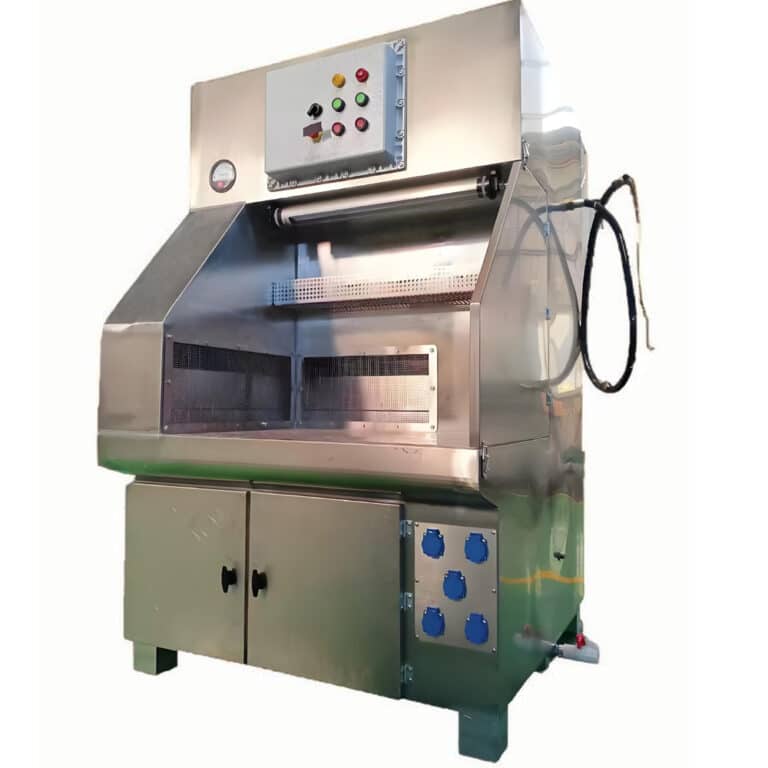
A wet downdraft table is engineered as a complete hazard control system. Contaminated air is drawn at high velocity (250-350 FPM) through a perforated work surface and forced into a water reservoir, where dust is immediately submerged and neutralized. This source-capture design eliminates the dust cloud before it can reach explosive concentrations in the worker’s breathing zone or the wider shop environment. A key, easily overlooked detail is the maintenance of constant capture velocity; unlike dry filters that clog and reduce airflow, a properly maintained wet system performs consistently.
Critical Components for Reliability
Safety depends on fail-safe design. Automated PLC controls are not a luxury but a necessity, managing water levels and providing audible and visual alarms for low fluid conditions. This shifts operational risk from constant operator vigilance to a managed engineering control—a critical differentiator for auditable compliance. Furthermore, construction must use corrosion-resistant stainless steel and non-sparking blower components to withstand the wet, abrasive environment. This design philosophy reflects a market shift toward providing certified, integrated safety solutions rather than mere collection equipment.
Wet vs. Dry Collection: A Critical Safety Comparison
A Fundamental Hazard Control Divide
For combustible metals, comparing wet and dry collection is not about efficiency—it’s about fundamental hazard control methodology. A dry collector violates NFPA 484 by concentrating explosive dust in a filter enclosure, which then requires expensive fire-retardant filters, spark detection, abort gates, and explosion venting or suppression. It creates a secondary, contained hazard point. A wet system neutralizes the ignition risk at the moment of capture.
The following table clarifies the critical operational and safety differences between these two approaches.
| Hazard Control Method | Primary Safety Mechanism | Key Regulatory & Cost Implication |
|---|---|---|
| Wet Downdraft Table | Dust submerged in water | NFPA 484 compliant; No filter costs |
| Dry Dust Collector | Dust captured in filter | Violates NFPA 484; Requires explosion protection |
| Wet System TCO | Eliminates ignition risk | Higher initial cost, lower liability |
| Dry System TCO | Concentrates explosive dust | Lower initial cost, high suppression liability |
Source: NFPA 484 Standard for Combustible Metals. NFPA 484 explicitly prohibits the dry collection of aluminum and magnesium dusts, making wet systems the only compliant technology for these applications, which directly informs the safety and regulatory implications in this comparison.
Total Cost of Ownership Analysis
Strategically, the total cost of ownership (TCO) tells the real story. While a wet downdraft table may have a higher initial purchase price, its TCO factors in eliminated filter replacement costs, reduced complexity (no explosion protection systems), and dramatically lower fire suppression and liability risks. For combustible metals, the “savings” from a dry system are illusory and come with unacceptable risk. This clear safety divide is driving strategic operational segmentation within advanced plants.
Operational Considerations: Maintenance and System Longevity
Shifting the Maintenance Paradigm
Operation of a wet system shifts focus from filter management to slurry and fluid control. The primary task is the periodic removal of accumulated metal sludge, typically facilitated by a built-in sludge rake or similar mechanism. There are no filter cartridges to purchase, handle, or dispose of, which represents a significant long-term reduction in consumable cost and waste. However, this requires implementing a scheduled sludge management protocol to prevent overflow and maintain system efficiency.
Ensuring Long-Term Reliability
Longevity is engineered through material selection and automation. Corrosion-resistant stainless steel construction is standard for the tank and often the work surface, ensuring durability in a constantly wet, chemically active environment. The advanced PLC system does more than control water levels; it provides diagnostic data and historical alarms, reducing operator training burdens and providing a digital record for compliance audits. This automation is a critical value driver, ensuring consistent NFPA-compliant operation year after year.
The operational rhythms of a wet system differ fundamentally from a dry collector, as shown in the maintenance comparison below.
| Maintenance Component | Wet System Action | Dry System Equivalent |
|---|---|---|
| Primary Task | Sludge removal | Filter replacement |
| Consumable Cost | Minimal (no filters) | High (filter cartridges) |
| System Material | Corrosion-resistant stainless steel | Varies |
| Control & Monitoring | Automated PLC with alarms | Manual inspection |
| Performance Degradation | Constant capture velocity | Increases with filter loading |
Source: NFPA 652 Standard on the Fundamentals of Combustible Dust. NFPA 652 mandates ongoing management and maintenance of dust collection systems to control hazards, which encompasses the critical operational comparisons between wet and dry methods outlined in this table.
Selecting the Right Table: Size, Airflow & Specifications
Matching System to Application
Selection is driven by the non-negotiable need to maintain effective capture velocity across the entire work surface. An undersized blower creates “dead zones” where dust escapes, rendering the system ineffective. Tables are sized to the workpiece (e.g., 3’x6′, 4’x8′), and each size requires a specific blower and motor combination to achieve the necessary airflow (CFM) and face velocity (FPM). The goal is to contain and capture dust at the source, every time.
The Strategic Advantage of Modularity
Modern systems often use a modular design, where a central base filtration unit accepts interchangeable table-top modules. This provides strategic agility, allowing a facility to reconfigure workspaces for different product lines or processes without replacing the core capital asset. It future-proofs the investment. Furthermore, buyers must scrutinize performance data. Demand independently validated capture efficiency test reports, especially if considering air recirculation back into the workspace for HVAC energy savings.
Use the following specifications as a baseline guide for initial system sizing discussions.
| Table Size | Typical Airflow (CFM) | Typical Blower Motor |
|---|---|---|
| 3′ x 6′ | 1,200 – 3,500 CFM | 3 – 7.5 HP |
| 4′ x 8′ | 3,500 – 8,000+ CFM | 7.5 – 15+ HP |
| Capture Velocity | 250 – 350 FPM | Across entire surface |
| System Design | Modular table-top units | Base filtration unit |
Source: Technical documentation and industry specifications.
Special Case: Handling Titanium Dust Safely
The Critical Exception to the Rule
Titanium demands exceptional caution and represents a critical exception in wet collection practice. While wet capture is still mandated, water can act as an accelerant for titanium fires, potentially worsening the hazard. The latest standards, including NFPA 660 which supersedes NFPA 484, specifically note this risk and often recommend using a specialized neutralizing oil or other fluid instead of plain water.
The Imperative of Fluid Analysis
This underscores that “wet” collection is not a generic solution. The specific chemistry of each dust stream must be analyzed to specify the correct suppression fluid. Procuring a standard water-based wet table for a shop that processes titanium is insufficient and can create a greater hazard. Consultation with a qualified safety expert and meticulous review of the latest NFPA 484 Standard for Combustible Metals provisions for titanium is non-negotiable. This level of detail separates a compliant installation from a potentially dangerous one.
The unique hazards of titanium necessitate distinct safety parameters, as outlined below.
| Factor | Standard Combustible Metal (Al/Mg) | Titanium Exception |
|---|---|---|
| Collection Method | Wet downdraft table | Wet downdraft table |
| Suppression Fluid | Water | Specialized neutralizing oil |
| Fluid Hazard | None | Water acts as accelerant |
| Standard Reference | NFPA 484 | NFPA 660 (supersedes 484) |
| Procurement Consideration | Generic wet table possible | Fluid chemistry analysis required |
Source: NFPA 484 Standard for Combustible Metals. NFPA 484 and its successor, NFPA 660, contain specific provisions for different combustible metals, including the critical exception for titanium where water may not be the appropriate suppression fluid, directly informing this safety comparison.
Implementing Your Wet Downdraft Table System
Integrating Equipment and Workflow
Successful implementation integrates the physical system into both the workflow and the safety culture. These are typically self-contained units, with some offering mobility via heavy-duty casters. Placement must facilitate source capture without disrupting the natural motion of the grinding or polishing operation. Procedurally, this investment should drive clear operational segmentation; combustible metal processes must be physically and procedurally separated from non-combustible work areas. This often leads to a dual-equipment strategy within a plant, optimizing both safety and capital efficiency.
Planning for Retrofit and Modernization
For legacy shops, increased enforcement of standards is forcing retrofits. Developing a clear implementation plan is key. This includes assessing electrical and floor space requirements, planning for slurry disposal, and training personnel on the new maintenance regime. Leveraging vendor expertise through site assessments and retrofit programs can de-risk this transition. The end goal is a compliant, modernized operation that protects personnel, satisfies inspectors and insurers, and secures the business itself. For facilities evaluating specific solutions, reviewing the technical specifications of a high-performance industrial wet downdraft grinding table is a logical next step.
The decision to implement a wet downdraft table system hinges on three non-negotiable priorities: unequivocal compliance with NFPA standards, the elimination of ignition risk at the source, and the strategic management of long-term liability. This isn’t an equipment purchase; it’s a capital investment in risk mitigation and operational continuity.
Need professional guidance to navigate the complexities of combustible metal dust safety and specify the right compliant solution? The engineering team at PORVOO can provide application-specific analysis and system recommendations based on your materials, processes, and facility layout. For a direct consultation, you can also Contact Us.
Frequently Asked Questions
Q: Does NFPA 484 allow dry dust collection for aluminum or magnesium grinding?
A: No, NFPA 484 explicitly prohibits the indoor dry collection of aluminum, magnesium, and similar combustible metal dusts. This standard mandates wet collection systems as the only compliant technology for these materials, creating a definitive regulatory requirement. This means facilities processing these metals must plan capital expenditures around wet downdraft tables, as dry systems are not a viable legal or safety option for this application. NFPA 484 Standard for Combustible Metals
Q: How do you size a wet downdraft table to ensure it captures all hazardous dust?
A: Proper sizing requires selecting a table and blower combination that maintains an effective capture velocity of 250-350 feet per minute (FPM) across the entire perforated work surface. This involves matching table dimensions (e.g., 3’x6′ or 4’x8′) with appropriate blower motors (3 HP to 15+ HP) and airflow ratings (1,200 to over 8,000 CFM) to eliminate “dead zones.” For projects where workspace flexibility is needed, prioritize modular designs with interchangeable table-top modules to future-proof your investment against product line changes.
Q: What are the key maintenance differences between wet and dry dust collection systems?
A: Wet downdraft table maintenance shifts from filter replacement to slurry management, involving the periodic removal of accumulated metal sludge, often with a sludge rake. This eliminates ongoing filter costs but requires a scheduled protocol for sludge disposal. The use of corrosion-resistant materials like stainless steel ensures longevity. This means facilities should plan for different operational workflows and waste streams, trading consumable expenses for a controlled, wet-process waste management plan.
Q: Is a standard wet table with a water reservoir safe for collecting titanium dust?
A: Titanium requires exceptional caution, as water can act as an accelerant for titanium fires. While wet capture is still mandated, NFPA 660 (which supersedes NFPA 484) may recommend using a specialized neutralizing oil or fluid instead of plain water. This means operations involving titanium must consult safety experts to analyze dust chemistry and specify the correct suppression fluid, as a generic wet table can create a greater hazard. NFPA 484 Standard for Combustible Metals
Q: What should we look for in a wet table’s control system for auditable compliance?
A: Prioritize systems with automated PLC controls that maintain water levels, provide diagnostic alarms, and log operational data. This automation shifts risk from operator vigilance to a fail-safe system, providing the consistent, documented operation required for regulatory and insurance inspections. For operations seeking to reduce training burdens and operational risk, this PLC functionality is a critical value driver that supports a defensible safety program. OSHA Combustible Dust National Emphasis Program
Q: How does implementing a wet table change our shop’s operational layout and strategy?
A: Implementation requires clear operational segmentation, physically and procedurally separating combustible metal processes from non-combustible work areas. This often drives a dual-equipment strategy, dedicating wet tables to hazardous metals while using dry systems for other materials. If your shop is retrofitting for compliance, plan for this physical separation and workflow adjustment to optimize both safety and capital efficiency across different processing zones.