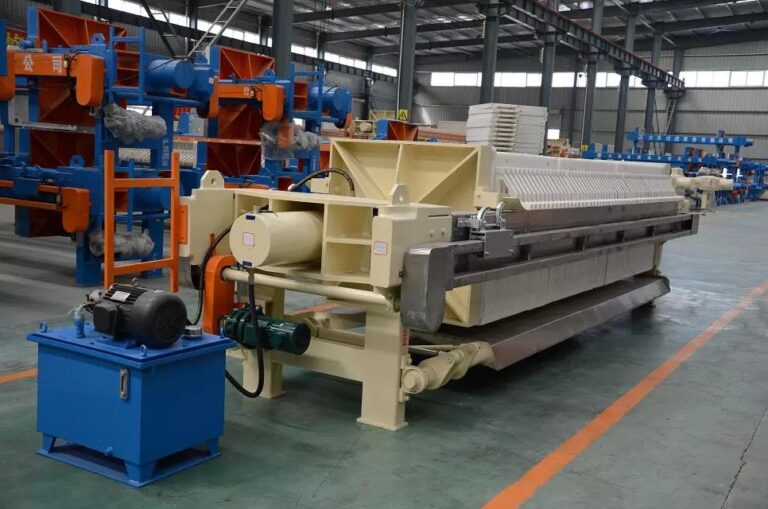
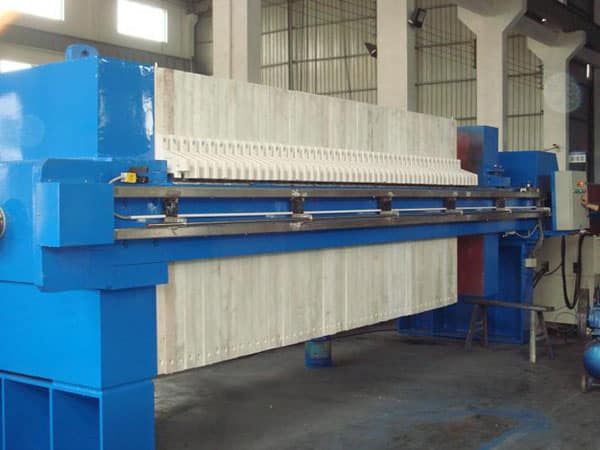
For plant managers and process engineers, the decision to upgrade from a manual to a fully automatic filter press is a critical operational pivot. It’s often framed as a simple cost comparison, but this overlooks the strategic implications for capacity, safety, and long-term process control. The real challenge lies in identifying the precise operational and financial triggers that justify this capital investment.
This evaluation is urgent due to converging pressures: rising labor costs, stricter safety and environmental regulations, and the drive for plant-wide digital integration. A manual press can quickly become a bottleneck, exposing operations to unnecessary risk and inefficiency. Understanding the full scope of differences is essential for making a data-driven upgrade decision.
Manual vs. Automatic Filter Presses: Core Differences Explained
Defining the Operational Divide
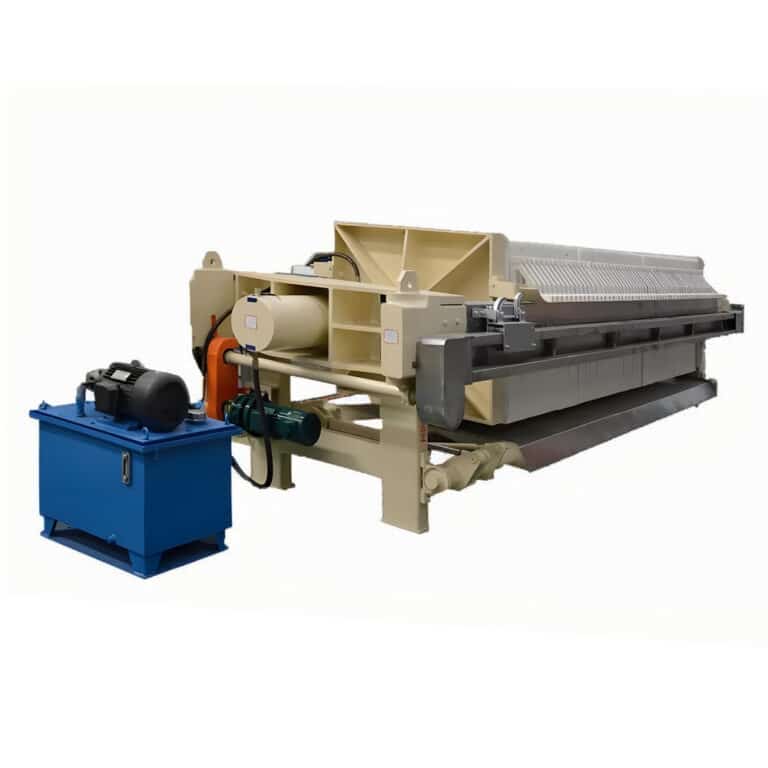
The core distinction is the degree of human intervention in the filtration cycle. A manual system requires an operator for every critical step—using a hand pump to close the plate pack and a mechanical lever to shift plates for cake discharge. This offers direct control but introduces significant variability in cycle time and cake consistency. In contrast, a fully automatic system employs an electro-hydraulic power unit and a programmable logic controller (PLC) to execute closing, opening, and plate shifting with precise, repeatable parameters.
The Impact on Process Control
This shift from manual to automated control transforms process reliability. Operator-dependent cycles in manual presses lead to inconsistent cake dryness, which directly impacts disposal costs. A PLC ensures each cycle is identical, optimizing filtration time and pressure for maximally dry, uniform cakes. This consistency is not just about product quality; it’s a direct lever on operational expenditure. Industry experts recommend automation when process repeatability becomes a business requirement, not just an operational preference.
Understanding the Automation Spectrum
It’s a common misconception that automation is all-or-nothing. In reality, it exists on a spectrum. Basic systems may automate only plate shifting, while advanced setups include integrated cloth washers and sophisticated cake discharge mechanisms. This allows for phased investment. The strategic choice is about aligning the level of automation with specific material challenges and labor goals, transforming a capital decision into a tailored process solution.
Cost Analysis: Capital Investment vs. Long-Term ROI
Evaluating the True Capital Outlay
The initial purchase price of an automatic filter press is higher, covering the PLC, electro-hydraulic unit, and automatic shifter. However, focusing solely on this upfront cost is a narrow view. A manual system’s lower capital expense is quickly offset by its ongoing operational liabilities. The true analysis must account for total cost of ownership over the asset’s lifespan.
Calculating Operational and Hidden Costs
Long-term ROI is driven by reductions in several key areas. Automation drastically cuts direct labor costs by enabling unattended or 24/7 operation. More significantly, it reduces indirect costs. Consistent, drier cakes lower disposal tonnage and fees. It also mitigates hidden costs from equipment damage due to manual errors or safety incidents. We compared total operational costs and found the payback period for automation can be surprisingly short in high-utilization scenarios.
The ROI of Risk Mitigation
Viewing automation purely through an efficiency lens misses a critical component: risk management. Manual operations present tangible safety and compliance risks. An automatic system is a strategic investment in operational resilience. It reduces vulnerability to labor shortages and aligns with stricter workplace safety standards like those referenced in ANSI/AWWA B130-2022 Filter Presses. This positions the upgrade as an investment in stability, not just equipment.
The following table breaks down the key cost factors influencing the ROI calculation between manual and automatic systems.
| Cost Factor | Manual System | Automatic System |
|---|---|---|
| Initial Capital Expenditure | Lower | Higher (PLC, electro-hydraulic unit) |
| Operational Labor Cost | High (attended operation) | Low (unattended/24/7 possible) |
| Cake Disposal Cost | Higher (wetter, variable cakes) | Lower (drier, uniform cakes) |
| Risk/Liability Cost | Higher (safety, damage) | Lower (consistent, controlled cycles) |
| Long-Term ROI Driver | N/A | Labor savings, disposal reduction |
Source: Technical documentation and industry specifications.
Which System Is Better for High-Volume Operations?
The Physical Limitations of Manual Scaling
For high-volume operations, manual systems are fundamentally inadequate. As plate size increases beyond 630mm, the physical mass of each plate makes manual shifting unsafe and impractically slow. This creates a severe bottleneck. The labor required becomes prohibitive, directly capping throughput capacity. Automatic plate shifters eliminate this physical constraint, dramatically reducing cycle time and enabling scalable throughput.
Strategic Frame Design Selection
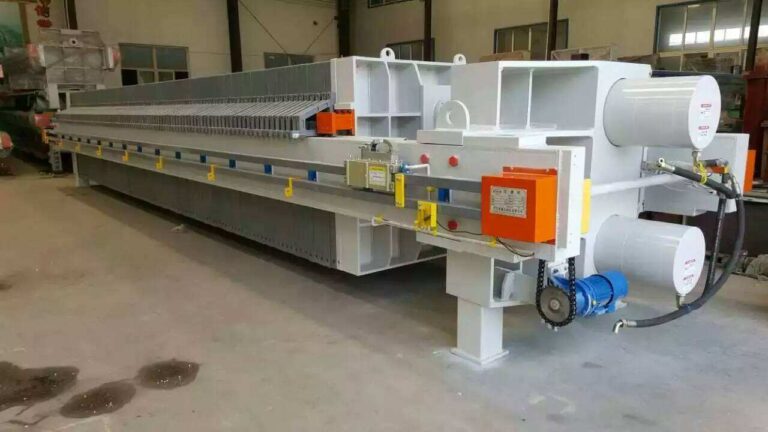
The choice of frame design becomes a critical strategic decision for high-volume automation. Sidebar (EP) frames are common for smaller manual presses due to lower cost. However, for large-scale, continuous-duty automatic presses, overhead beam (QP) frames are superior. They suspend plates from a top rail, enabling faster, more stable automatic shifting and better alignment under constant use. This design is essential for reliability in demanding applications.
The Capacity and Duty Cycle Advantage
Automatic systems unlock true high-volume potential. PLC-optimized cycles ensure maximum throughput is consistently achieved. Furthermore, they are engineered for continuous duty, whereas manual operation is unsustainable for round-the-clock production. The technical requirements for such high-capacity parameters are defined in standards like GB/T 34343-2017 Automatic filter press, which establishes benchmarks for automated plate handling and performance.
The data below illustrates the operational parameters that dictate system suitability for scaled-up production.
| Operational Parameter | Manual System Suitability | Automatic System Suitability |
|---|---|---|
| Plate Size Threshold | ≤ 630mm | ≥ 800mm (essential) |
| Cycle Time Impact | Slow, labor-limited | Fast, PLC-optimized |
| Frame Design for Scale | Sidebar (EP) frames | Overhead beam (QP) frames |
| Throughput Capacity | Limited bottleneck | High, scalable |
| Continuous Duty Suitability | Poor | Excellent |
Source: GB/T 34343-2017 Automatic filter press. This standard defines technical requirements and classification for automatic filter presses, providing a benchmark for the high-capacity parameters, plate handling, and duty cycles that necessitate automation.
Key Indicators Your Operation Needs an Automatic System
Quantitative Equipment Triggers
Specific, measurable equipment thresholds signal the need for change. The most objective is plate size and count. Manual hydraulic systems are typically only practical for plates up to 470mm. When operations scale to plates of 800mm or larger, automation transitions from an option to a technical necessity. Similarly, a high plate count multiplies the manual labor per cycle, making automation the only path to feasible operation.
Labor and Process Consistency Demands
Increasing labor costs or difficulty retaining personnel for repetitive, physically demanding filter press operation is a primary driver. If your process demands consistent cake dryness for predictable disposal costs or downstream processing, the variability of manual control becomes a liability. Automation delivers the repeatability that manual operators cannot guarantee cycle after cycle.
Integration with Modern Plant Systems
A manual filter press becomes an operational anomaly in a modern, integrated plant. If your facility is implementing plant-wide SCADA or process control systems, a manual press cannot provide the data or remote control capabilities required. This disconnect hinders overall plant efficiency and data-driven optimization, making the press a glaring candidate for upgrade.
The following indicators provide a checklist to assess if your operation has crossed the threshold requiring automation.
| Indicator Category | Specific Threshold / Signal |
|---|---|
| Equipment Scale | Plate size ≥ 800mm, high plate count |
| Labor Challenge | High/recurring labor costs, retention difficulty |
| Process Requirement | Demand for consistent cake dryness |
| Plant Integration | Integration with plant-wide SCADA systems |
| Technical Standard | Manual hydraulics for ≤ 470mm plates only |
Source: Technical documentation and industry specifications.
Evaluating Automation for Difficult or Sticky Sludge Types
The Material Dictates the Solution
Sludge characteristics are the foremost determinant in specifying automation. A free-discharging, granular cake may only require a simple plate-shaking system. However, sticky, adhesive, or compressible sludges demand more sophisticated solutions. Selecting an automated system without this analysis is a recipe for failure, as the wrong discharge mechanism will not function correctly.
Advanced Discharge Mechanisms
For challenging materials, standard automation isn’t enough. Systems may require integrated scraper blades that travel between plates or advanced mechanisms that manipulate the filter cloths themselves to peel cakes loose. These are engineered responses to specific rheological challenges. The goal is to transform a process that would require constant manual prying and cleaning into a hands-off, reliable operation.
Ensuring Reliability and Cloth Life
A key, easily overlooked detail is the impact on cloth life. An improperly specified automatic discharge system for sticky sludge can cause rapid cloth wear or damage. The correct system gently but effectively releases the cake, protecting the cloth and ensuring sustained performance. This underscores the necessity of a thorough feed material analysis before specifying any fully automatic filter press system.
Safety and Labor Considerations: A Direct Comparison
Eliminating Ergonomic and Pinch-Point Hazards
Manual operation presents clear safety risks: repetitive strain from pumping, pinch points during plate shifting, and exposure to sludge during cake discharge. Automating the closing, opening, and shifting functions physically removes personnel from these direct hazards. This is a fundamental improvement in workplace safety and aligns with the safety-focused design criteria outlined in filter press standards.
Enhancing Containment and Environmental Safety
Modern automatic systems often pair with gasketed plate designs, creating a sealed filtration chamber. This prevents fugitive emissions of process liquids or aerosols, enhancing both environmental compliance and operator safety. Manual presses, with their more open operation, are increasingly seen as points of potential regulatory liability as workplace exposure limits tighten.
The Strategic Value of Safety Upgrades
Investing in automation for safety is a strategic decision with financial implications. It reduces the risk of costly incidents, workers’ compensation claims, and regulatory fines. Furthermore, it makes the operator’s role one of supervision and system management, which aids in personnel retention and aligns with a modern, technical workplace culture.
Technical Implementation: Retrofitting vs. New System Purchase
The Retrofitting Pathway
Retrofitting an existing manual press with automation is a common and viable strategy. This typically involves installing an electro-hydraulic power unit, an automatic plate shifter, and a PLC control panel. It’s an excellent option when the existing frame and plates are in good condition and the goal is to extend the asset’s life by decades while modernizing its control. The reliability of the new hydraulic components is critical, as defined by standards like ISO 2941:2022 Hydraulic fluid power for filter element integrity.
The Case for a New Integrated System
Purchasing a new, fully integrated automatic system is preferable in several scenarios: when the existing frame is undersized or fatigued, when a major capacity increase is required, or when seamless integration with ancillary equipment (like automated feed pumps, cake conveyors, or cloth washers) is desired. This approach offers a optimized, warranty-backed process loop from a single supplier.
Decision Factors for Each Path
The choice hinges on current asset condition and strategic goals. Retrofitting preserves capital and is faster. A new system offers the latest technology, a clean slate for layout, and often better long-term performance. In our experience, a detailed assessment of the existing press’s mechanical state is the first step in determining which path is feasible and economically sound.
This comparison outlines the two primary technical paths to achieving automation.
| Implementation Path | Key Components Added/Changed | Ideal Use Case |
|---|---|---|
| Retrofitting Existing Press | Electro-hydraulic unit, automatic shifter, PLC | Extending asset life, foundational frame adequate |
| New System Purchase | Fully integrated automatic press & controls | Major capacity increase, seamless ancillary integration |
| Common Goal | Automated plate shifting & closing | Modernizing control, reducing labor |
| Lifecycle Impact | Extends existing asset decades | New, optimized process loop |
Source: ISO 2941:2022 Hydraulic fluid power. This standard specifies test methods for hydraulic filter element integrity, which is critical for ensuring the reliability and safety of the upgraded electro-hydraulic systems central to both retrofitting and new automatic presses.
Decision Framework: Choosing the Right Time to Upgrade
Identifying Your Primary Triggers
Begin with quantitative triggers: plate size (≥800mm is a clear signal) and escalating labor intensity. Calculate the total cost of manual operation, including direct labor, higher disposal costs from wetter cakes, and the latent cost of safety and compliance risks. These tangible metrics form the foundation of your business case.
Aligning with Strategic Operational Goals
Frame the upgrade within your plant’s strategic direction. Is the driver capacity expansion for growth? Is it integration into a digital plant for data-driven optimization? Or is it primarily risk mitigation against future labor scarcity and tightening regulations? Defining this strategic “why” ensures the solution supports broader business objectives, not just solves a tactical problem.
Executing the Transition
With a justified business case, the implementation focus shifts to specification. Your sludge analysis dictates automation complexity. Your operational model (continuous vs. batch) informs system sizing and ancillary needs. Finally, choosing between retrofit and new purchase depends on the technical assessment of existing assets. This structured approach moves the decision from uncertainty to an executable capital project.
The optimal upgrade decision balances clear operational triggers with strategic foresight. Prioritize actions based on plate size thresholds and labor cost pressures, as these offer the most immediate ROI. Implement a phased approach if necessary, starting with core automation (closing/shifting) before adding advanced discharge systems. This builds capability while managing capital outlay.
Need a professional assessment of your filtration process to determine the right automation path? The engineering team at PORVOO can provide a detailed analysis of your sludge characteristics, operational data, and strategic goals to develop a tailored upgrade recommendation.
For a specific proposal or to discuss your application requirements, you can also Contact Us directly.
Frequently Asked Questions
Q: At what plate size does manual operation become impractical, making automation necessary?
A: Manual hydraulic systems are typically only standard for smaller presses, such as those with 470mm plates. Operation becomes unsafe and inefficient as plate sizes increase beyond 630mm or 800mm due to the physical mass. For reliable, high-throughput operation with larger plates, an automatic plate shifter is essential. This means facilities planning to scale capacity should consider automation a prerequisite for any press with plates 800mm or larger.
Q: How do industry standards like ANSI/AWWA B130 inform the evaluation of automatic vs. manual filter presses?
A: The ANSI/AWWA B130-2022 standard provides critical requirements for filter press design, materials, and testing, establishing a baseline for performance and safety. It serves as a key reference when comparing the engineered reliability and safety features of automated systems against manual alternatives. For water treatment applications, compliance with this standard is a fundamental criterion for vendor selection and system validation.
Q: What are the main technical paths for implementing automation on an existing manual filter press?
A: You can implement automation through retrofitting, which involves upgrading the hydraulic system to an electro-hydraulic power unit, installing an automatic plate shifter, and adding a PLC control panel. This extends the asset’s life by decades. Purchasing a new, integrated system is better when major capacity increases or seamless ancillary equipment integration is needed. This means operations with a solid existing frame should evaluate retrofitting as a cost-effective modernization strategy.
Q: How should sludge characteristics influence the choice of automated cake discharge system?
A: The required automation complexity depends directly on sludge rheology. Free-discharging cakes may only need a basic plate-shaking mechanism, while sticky or adhesive sludges demand advanced systems like back-and-forth scrapers that manipulate filter cloths. Selecting an inappropriate discharge method risks operational failure and accelerated cloth wear. If your operation processes variable or difficult sludges, a thorough material analysis is a mandatory step before specifying any automated system.
Q: What specific safety risks does automation mitigate compared to manual filter press operation?
A: Automation eliminates direct operator exposure to repetitive strain from hydraulic pumping, pinch points during plate shifting, and potential contact during cake discharge. Automated systems also enable integration with sealed, gasketed plate designs that control fugitive emissions. This directly addresses workplace safety and environmental compliance concerns. For operations under strict regulatory scrutiny, upgrading is a strategic move to reduce liability from manual process hazards.
Q: Why is an overhead beam frame design recommended for high-volume, automatic operations?
A: For continuous, high-volume duty, an overhead beam (QP) frame that suspends plates from a top rail provides superior stability and enables faster automatic plate shifting compared to sidebar (EP) designs. This frame type supports the increased mass and cyclic demands of larger presses. If your strategic goal is scalable, labor-efficient throughput, investing in an overhead beam frame from the outset locks in long-term operational performance.
Q: How do you calculate the true ROI of upgrading to a fully automatic filter press system?
A: Look beyond the higher capital cost to factor in reduced operational labor, lower disposal fees from consistently drier cakes, and mitigated risks from equipment damage or safety incidents. Automation enables unattended operation and frees skilled personnel for higher-value tasks. This means the business case strengthens with rising labor costs, stringent dryness requirements, and the strategic need for 24/7 capacity or process integration.