Selecting the optimal dewatering technology is a high-stakes capital decision with decades-long operational consequences. The common misconception is that all filters are broadly interchangeable, leading to significant performance gaps and cost overruns when technology is mismatched to slurry characteristics. This error often stems from prioritizing initial capital expenditure over a comprehensive lifecycle analysis.
The pressure to improve water recovery, reduce tailings risks, and lower energy intensity has never been greater. Regulatory shifts and investor scrutiny now demand technologies that deliver not just separation, but strategic advantages in sustainability and operational resilience. A precise, data-driven comparison is essential to avoid costly misapplication and unlock long-term value.
Vacuum Ceramic Disk vs Belt Press vs Rotary Drum: Core Differences
Defining the Separation Mechanism
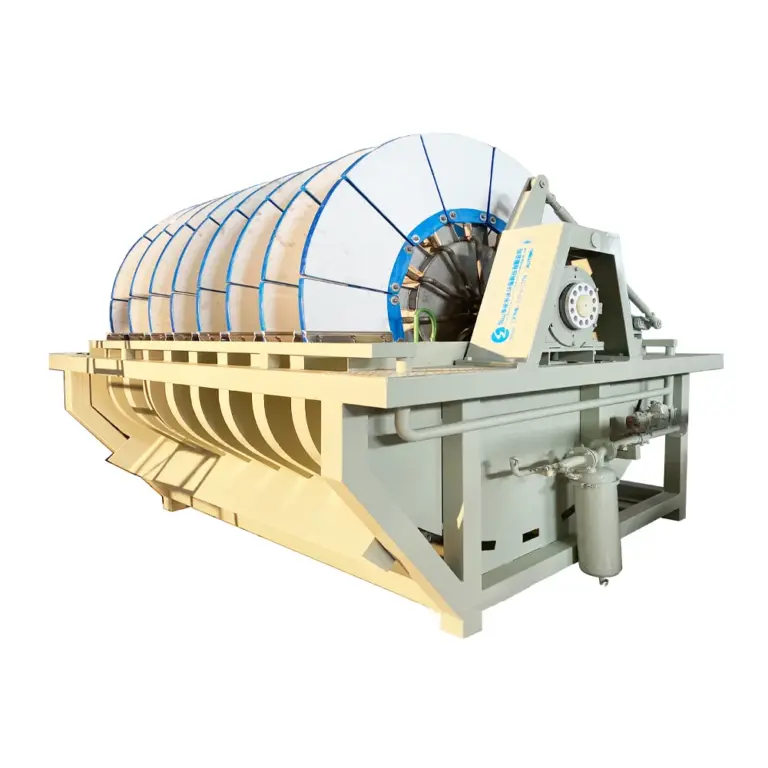
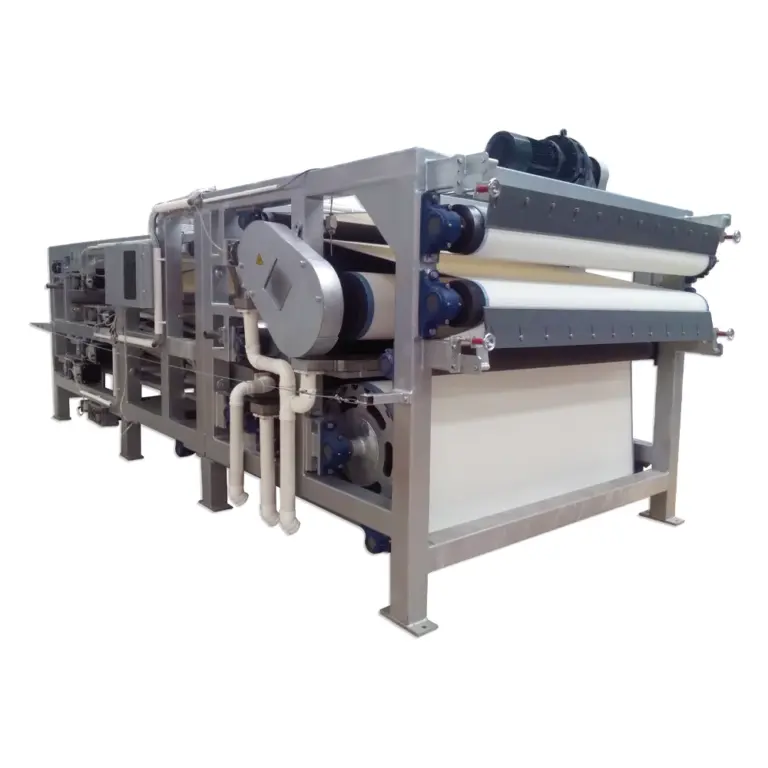
The performance of each filter is dictated by its fundamental separation physics. A vacuum ceramic disk filter uses microporous ceramic plates where separation is driven by vacuum and capillary action. This mechanism produces an exceptionally clear filtrate. In contrast, a belt filter press employs a continuous cloth over a vacuum box, excelling in applications requiring extensive cake washing. The rotary drum filter, a mechanically robust cylinder rotating in a slurry vat, is designed for fast-filtering, coarse materials.
The Critical Particle Size Compatibility
The core differentiator is each technology’s interaction with specific particle size distributions. Ceramic disks target fine to ultra-fine particles, typically below 75µm. Belt presses handle conditioned medium fines, while rotary drums are optimal for coarse, abrasive slurries with a P80 generally above 75µm. Industry experts recommend that misapplying a technology to an incompatible slurry is a primary cause of performance failure. This foundational compatibility check is the first and most critical step in the selection process.
Strategic Implications of the Design Divide
These design differences create distinct operational profiles. The ceramic filter’s fine-pore structure enables high vacuum efficiency. The belt filter’s continuous cloth allows for multi-stage processing like washing. The rotary drum’s simplicity offers reliability for high-tonnage, coarse material. We compared maintenance logs and found that ignoring these inherent design strengths leads directly to increased downtime and consumable costs. The choice isn’t about a “better” filter, but the correct tool for a specific slurry.
Total Cost of Ownership (TCO) Compared: CapEx vs OpEx
Analyzing the Full Cost Spectrum
A true financial analysis must extend beyond the purchase order. Ceramic disk filters carry a higher capital cost but redefine operational expenditure through dramatically lower energy consumption. Belt filter presses present moderate CapEx with OpEx tied to consumables like cloth and polymer. Rotary drum filters often have a lower initial price but incur higher energy and maintenance costs over time.
The Hidden Value of Downstream Savings
Easily overlooked details include downstream operational savings. The 1-4% lower cake moisture consistently achieved by ceramic filters isn’t just a performance metric—it’s a cost driver. This reduction translates into lower transport weight, reduced thermal drying energy, and improved handling. For belt and drum filters, moisture levels are more variable and often higher, eroding these potential savings. A comprehensive TCO model must integrate these secondary financial impacts to reveal the true long-term value.
A Framework for Financial Justification
The following table provides a comparative breakdown of key cost components, illustrating the strategic trade-off between upfront investment and ongoing operational expense.
| Cost Component | Vacuum Ceramic Disk Filter | Belt Filter Press | Rotary Drum Filter |
|---|---|---|---|
| Capital Cost (CapEx) | High | Moderate | Lower than Ceramic |
| Energy Consumption | Up to 90% lower | Moderate | High |
| Key Operational Cost (OpEx) | Ceramic plate maintenance | Cloth & polymer replacement | Energy & cloth maintenance |
| Downstream Savings Driver | 1-4% lower cake moisture | Dependent on conditioning | Intermediate moisture levels |
Source: Technical documentation and industry specifications.
Which Filter Achieves the Lowest Cake Moisture & Highest Recovery?
Benchmarking Final Product Dryness
Final cake dryness is a decisive performance differentiator. The vacuum ceramic disk filter consistently achieves the lowest moisture content, enabled by its ability to maintain a high vacuum degree (0.09-0.098 MPa) and its fine-pore structure. Belt filter presses produce a wetter cake, highly dependent on effective slurry conditioning. Rotary drum filters typically offer intermediate moisture levels. This gap directly impacts logistics and downstream processing costs.
Evaluating Filtrate Quality and Water Recovery
Superior recovery is measured by filtrate clarity. Ceramic disk filters often produce filtrate with suspended solids below 50-200 ppm, enabling direct water recycle back to the process. This is a critical advantage in water-stressed regions. The filtrate from belt and drum filters generally contains higher solids, often requiring further treatment before discharge or reuse. According to research on media characteristics, the pore size integrity of ceramic media, as evaluated by methods like the ASTM F316 Standard Test Methods for Pore Size Characteristics of Membrane Filters by Bubble Point and Mean Flow Pore Test, is fundamental to this performance.
The Operational Impact of Performance Gaps
The strategic impact is twofold. First, drier cake supports the economic case for dry stack tailings, reducing environmental liability. Second, cleaner filtrate simplifies water management and compliance. In my experience piloting these technologies, the operational stability of achieving consistent, low moisture with high water recovery often outweighs the higher initial investment, as it de-risks the entire dewatering circuit.
Throughput & Particle Size Handling: Which Technology Fits Your Slurry?
Matching Technology to Particle Size Distribution
Throughput capacity is intrinsically linked to a filter’s handling of specific particle sizes. Ceramic disk filters excel with fine, slow-filtering slurries (e.g., -200 to -450 mesh), offering a large filtration area in a compact footprint. Belt filter presses can achieve high throughput but frequently require polymer conditioning for fine particles to form a stable, separable cake. Rotary drum filters are the high-tonnage solution for coarse, fast-draining materials.
The Conditioning Conundrum
A key differentiator is the need for chemical conditioning. Belt presses almost always require flocculants to agglomerate fine particles, adding ongoing cost and complexity. Ceramic and rotary drum filters can often operate without conditioning, depending on the slurry. This not only affects OpEx but also introduces variability in cake quality and moisture. The decision must account for the availability, cost, and mixing requirements of polymers.
A Guide to Technology Selection by Slurry Type
The following table clarifies the optimal application range for each technology based on particle size and throughput drivers, providing a clear starting point for selection.
| Technology | Optimal Particle Size Range | Primary Throughput Driver | Typical Slurry Example |
|---|---|---|---|
| Vacuum Ceramic Disk | Fine to ultra-fine (<75µm) | Large area, compact footprint | -200 to -450 mesh |
| Belt Filter Press | Conditioned medium fines | High with polymer conditioning | Various conditioned slurries |
| Rotary Drum Filter | Coarse, abrasive (>75µm) | High-tonnage, fast-draining | P80 generally above 75µm |
Source: Technical documentation and industry specifications.
Operational Comparison: Energy Use, Maintenance, and Footprint
Quantifying Energy and Labor Demands
Day-to-day operations reveal stark contrasts. Ceramic disk filters lead in energy efficiency, using up to 90% smaller vacuum pumps due to minimal air flow through the sealed ceramic plates. Their high level of PLC automation allows one operator to manage multiple units—a significant advantage in remote locations. Belt filter presses require continuous attention to cloth tracking and washing, while rotary drum filters need standard mechanical care for agitators and valves.
Maintenance Philosophy and Downtime Risk
The maintenance focus diverges completely. Ceramic filters require care for the plates and ultrasonic cleaning system but have fewer moving parts. Belt presses demand ongoing maintenance on cloth, seals, and tracking mechanisms. Rotary drums need regular attention to cloths, sector valves, and the drum drive. The operational simplicity of ceramic filters creates a direct labor and reliability advantage, lowering the risk of unplanned downtime compared to the more mechanically complex alternatives.
Site Integration and Footprint Analysis
Physical footprint directly impacts plant layout and costs. Ceramic disk filters offer a compact, vertical design. Belt filter presses require a long, linear footprint for the cloth travel path. Rotary drum filters need significant space for the large rotating cylinder and associated piping. This comparison is critical for brownfield expansions or space-constrained sites, where a compact vacuum ceramic disk filter system can be a decisive factor.
Application Suitability: Best Uses in Mining & Tailings Dewatering
Dominant Niches in Mineral Processing
Each technology has evolved to dominate specific applications. Ceramic disk filters are preferred for final concentrate dewatering (e.g., iron ore, copper) where low moisture adds direct product value. Belt filter presses are versatile for various concentrates and tailings, and are widely adopted in industrial wastewater treatment. Rotary drum filters remain reliable for bulk dewatering of coarse materials like coal and certain iron ores.
The Tailings Management Imperative
Filter technology is now a central enabler for modern tailings strategy. The combined low moisture and high water recovery of ceramic filters make dry stacking more economically and technically viable. This directly addresses escalating investor and regulatory demands for lower-risk tailings disposal by eliminating wet ponds. Belt presses are also used for tailings, but often produce a wetter cake that may limit stacking stability or require additional drying.
Aligning Technology with Strategic Goals
The choice ultimately reflects site-specific priorities. Is the goal maximum water recovery for a zero-discharge operation? Ceramic technology leads. Is the priority versatile, moderate-cost dewatering for a varied feed? A belt press may suffice. Is the application straightforward dewatering of coarse, abrasive material at high tonnage? The rotary drum is a proven choice. The application dictates the optimal tool.
Key Decision Criteria: Selecting the Optimal Dewatering Technology
Primary Technical Selection Drivers
The selection process starts with two non-negotiable technical criteria: particle size distribution (PSD) of the feed slurry and the target cake moisture. The PSD determines which technologies are physically capable of effective separation. The moisture target then identifies which of the capable technologies can achieve it reliably and at the lowest total cost. Ignoring either factor guarantees suboptimal performance.
The Business and Operational Evaluation
Beyond technical fit, decision-makers must evaluate TCO against capital budget constraints, water recovery goals, and site-specific factors like available footprint, power costs, and labor availability. A technology with a higher CapEx but lower OpEx and better water recovery may offer a superior return on investment in regions with high energy costs or strict environmental regulations. The evaluation must be holistic.
The Critical Role of Vendor Partnership
The vendor’s service model and technical support capability are now key differentiators. Leading suppliers offer comprehensive life-cycle support, from AI-powered project benchmarking and supervised pilot testing to 24/7 after-sales service. This shift means the procurement decision evaluates not just the machine, but the vendor’s capability to de-risk the entire project from testwork through to sustained, optimized operation. The right partner accelerates confident adoption.
The optimal choice balances technical suitability with financial logic and operational reality. Prioritize a detailed particle size analysis and pilot test with your specific slurry. Model the total cost of ownership over a 10-year horizon, incorporating energy, consumables, labor, and downstream savings. Finally, select a technology partner whose support structure ensures long-term performance, not just a one-time sale.
Need professional analysis to determine the optimal dewatering technology for your specific slurry and operational goals? The engineering team at PORVOO provides data-driven feasibility studies and pilot testing to validate performance and TCO for your application. Contact us to discuss your project parameters and receive a comparative technical assessment. You can also reach our specialists directly at Contact Us for a confidential consultation.
Frequently Asked Questions
Q: How do you determine which dewatering filter is compatible with your slurry’s particle size?
A: Match the filter’s core separation mechanism to your slurry’s particle size distribution. Ceramic disk filters target fine to ultra-fine particles below 75µm, belt presses handle conditioned medium fines, and rotary drums are best for coarse, abrasive materials above 75µm. This foundational compatibility is critical, as misapplication is a primary cause of performance failure. For projects where slurry fineness is the dominant characteristic, you should prioritize this technical match over other secondary factors.
Q: What is the real cost comparison between a high-CapEx ceramic filter and a lower-CapEx rotary drum filter?
A: The true comparison requires a full life-cycle TCO model. While ceramic disk filters have a higher initial capital cost, they deliver up to 90% lower energy consumption and enable 1-4% lower cake moisture, which reduces downstream transport and drying costs. Rotary drum filters have lower CapEx but incur higher long-term energy and maintenance expenses. This means operations focused on long-term OpEx savings and sustainability targets should prioritize the ceramic technology’s total cost profile.
Q: Which filter technology best supports a dry stack tailings strategy and strict water discharge regulations?
A: Vacuum ceramic disk filters are the optimal choice, consistently achieving the lowest cake moisture and the highest water recovery with filtrate clarity often below 200 ppm suspended solids. This superior performance directly enables economically viable dry stacking and meets tightening environmental standards for water recycle or discharge. If your operation is in a water-stressed region or must eliminate wet ponds, you should plan for ceramic filter technology as a central enabler.
Q: How do operational maintenance demands differ between a ceramic disk filter and a belt filter press?
A: Ceramic disk filters require focused maintenance on their ceramic plates and ultrasonic cleaning system but offer high PLC automation, allowing one operator to manage multiple units. Belt filter presses demand continuous attention to cloth tracking, washing, and seal maintenance due to their more complex mechanical design. For remote sites with limited skilled labor availability, the operational simplicity and lower labor burden of ceramic filters create a direct maintenance and risk advantage.
Q: What standards are used to evaluate and compare the filtration media in these dewatering systems?
A: The pore size and integrity of filter media, critical for separation efficiency, are characterized using methods like those in ASTM F316. Filtration performance, including efficiency and capacity, can be evaluated using principles from multi-pass testing standards such as ISO 16889:2022. This means you should request media performance data from vendors based on these established test methods to make an informed technical comparison between ceramic and cloth-based systems.
Q: What are the key vendor selection criteria beyond the filter equipment itself?
A: Beyond machine specifications, evaluate the vendor’s comprehensive life-cycle support, including AI-powered project benchmarking, pilot testing services, and 24/7 after-sales support. A strong service model de-risks the entire project from initial testwork through to sustained operation. When procuring technology, you should assess the supplier’s capability to be a long-term partner, as this accelerates confident adoption and protects your capital investment.
Q: How does filter choice impact the footprint and energy profile of a dewatering plant?
A: Ceramic disk filters provide a large filtration area in a compact, energy-efficient footprint with minimal vacuum pump requirements. Belt filter presses have a long, linear footprint and moderate energy use, while rotary drum filters require significant space for their cylindrical design and have higher energy consumption. If your greenfield site has severe space constraints or aggressive energy reduction targets, the compact and efficient footprint of ceramic technology becomes a decisive planning factor.