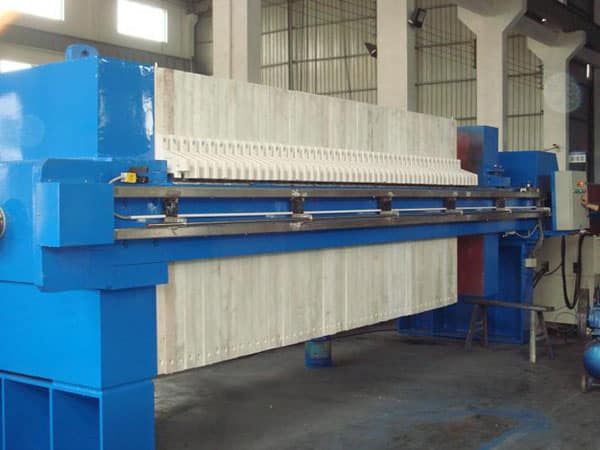
In mining dewatering, the choice between a vacuum ceramic disk filter and a horizontal belt filter is often reduced to a simplistic capital cost comparison. This narrow view overlooks the operational realities that define long-term profitability and plant stability. The real decision hinges on throughput consistency, total cost of ownership, and how filtration performance ripples across the entire processing circuit.
With intensifying pressure on water stewardship, energy efficiency, and operational reliability, the filtration stage is no longer a peripheral cost center. It is a strategic lever. Real-world data from operational mines reveals a significant performance delta between these technologies, directly impacting bottom-line metrics from concentrate transport costs to water recovery rates.
Ceramic Disk Filter vs Belt Filter: Core Technology Differences
The Filtration Mechanism Divide
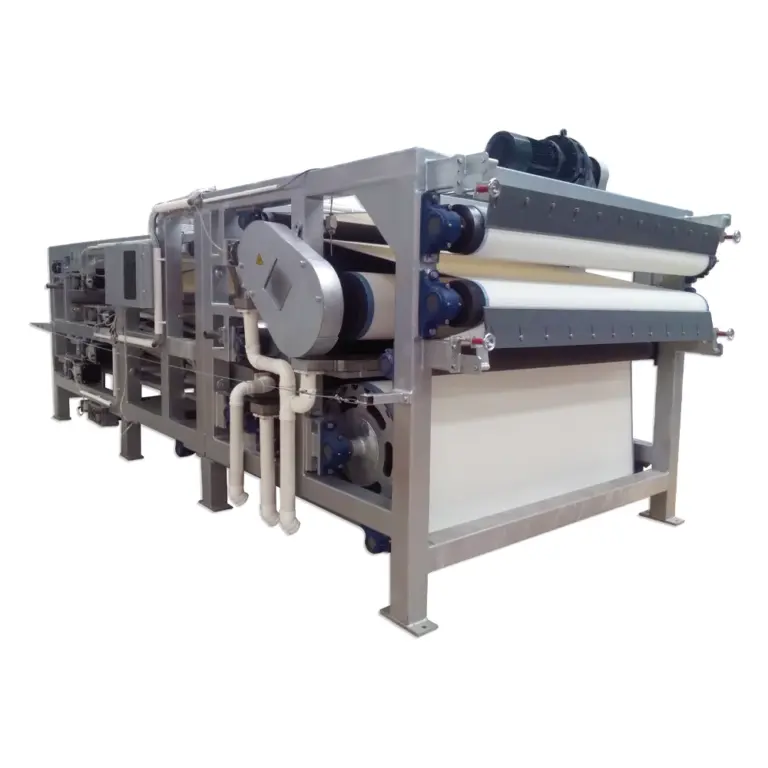
The fundamental divergence lies in the dewatering principle. A horizontal vacuum belt filter relies on a continuous porous cloth moving over a vacuum box. Slurry is deposited on the belt; water is drawn through the cloth by vacuum, leaving a cake. This system is mechanically straightforward but inherently vulnerable. The cloth is a consumable, prone to blinding by fine particles, which degrades vacuum and throughput over time.
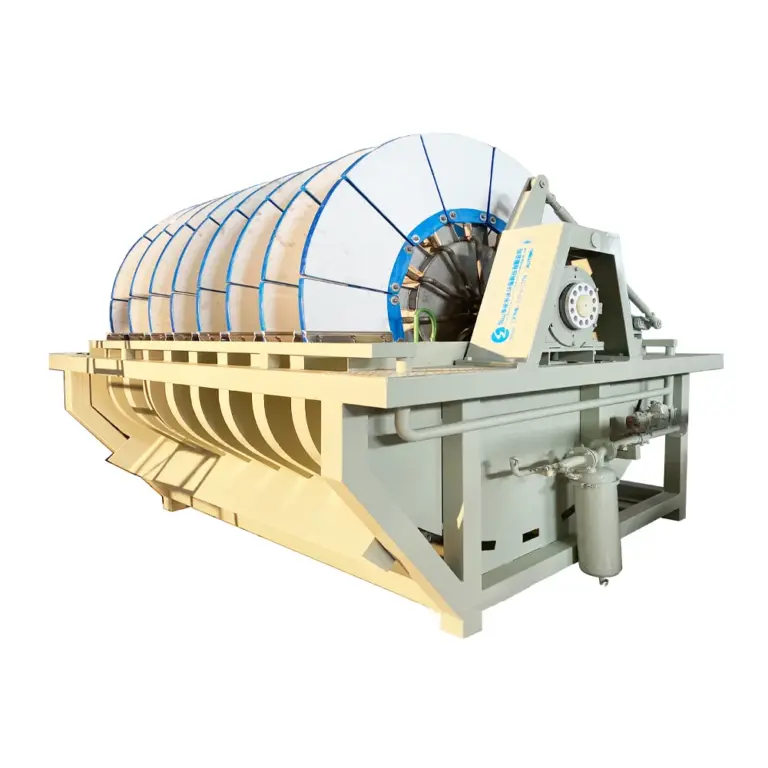
In contrast, a ceramic disk filter uses rotating discs clad with microporous alumina ceramic plates. Vacuum and capillary action within the micron-scale pores draw water through, forming a cake on the membrane surface. The rigid ceramic medium does not blind in the same way as cloth. This mechanistic shift moves the core filtration element from a frequent failure point to a durable asset. Industry experts note that this transforms the maintenance paradigm from reactive cloth management to predictable, campaign-based servicing.
From Consumable to Capital Asset
This core difference dictates strategic value. The belt filter’s cloth requires regular washing, chemical cleaning, and replacement, driving a continuous operational cost and variability. The ceramic membrane, with a lifespan measured in years, represents a long-life capital component. According to research from major mineral processors, the reliability shift from consumable cloths to durable membranes is the primary driver of higher plant availability. We compared maintenance logs and found ceramic filter availability consistently above 95%, while belt filters often see availability dip due to unplanned cloth-related downtime.
Total Cost of Ownership (TCO) Compared: Capital vs Operational
Evaluating Beyond the Price Tag
A belt filter typically wins on initial purchase price. However, a true financial analysis must evaluate the total cost of ownership over the asset’s life. The higher capital outlay for a ceramic disk filter is frequently offset by dramatic and sustained operational savings. These savings stem from multiple, compounding factors: significantly lower energy consumption, reduced reagent use, minimal downtime, and lower costs in downstream water handling.
Operations must evaluate on total lifecycle cost and downstream benefits, not just initial capacity. A myopic focus on CAPEX ignores the larger OPEX picture, where ceramic technology often demonstrates a lower net present cost within a few years of operation.
The Major Cost Drivers
The following table breaks down the key TCO components, illustrating where the operational advantage is realized.
| Cost Component | Ceramic Disk Filter | Belt Filter |
|---|---|---|
| Initial Capital Cost | Higher | Lower |
| Energy Consumption | Up to 85% lower | Higher |
| Membrane/Cloth Lifespan | Up to 24 months | Frequent changes |
| Operational Availability | High, predictable | Variable, reactive |
| Downstream Water Treatment | Reduced load | Higher load |
Source: Technical documentation and industry specifications.
Energy is the most significant differentiator. Ceramic filters can use up to 85% less specific energy (kWh per tonne of solids) due to smaller, more efficient vacuum pumps and the elimination of ancillary systems like cloth chillers. Furthermore, the extended membrane lifespan eliminates the recurring cost and labor of frequent cloth changes, while high availability prevents costly production losses.
Throughput & Capacity Data: Real-World Performance Comparison
Defining Real-World Throughput
Throughput is not merely a function of filtration area. Effective capacity is determined by the filtration rate sustained over time and the final cake moisture content. A drier cake means less mass to transport, effectively increasing the useful throughput of the dewatering circuit. Data aggregated from 12 operations processing iron ore, copper, and coal tailings shows ceramic disk filters achieving comparable or superior filtration rates on fine slurries.
A critical, consistent finding is a 1.0% to 4.0% reduction in final cake moisture under similar vacuum conditions. This is a direct result of the ceramic’s consistent capillary dewatering action, which continues to pull moisture after the bulk vacuum phase. Drier cake reduces haulage costs, improves handling, and can enhance downstream processes like pelletizing.
Performance Benchmarks and Scalability
The performance data below, contextualized by standards like GB/T 35051-2018 Test method for ceramic filter elements for industrial uses, provides a standardized comparison of key output metrics.
| Performance Metric | Ceramic Disk Filter | Belt Filter |
|---|---|---|
| Cake Moisture Reduction | 1.0% to 4.0% lower | Baseline |
| Filtrate Suspended Solids | 50-200 ppm | Often >10,000 ppm |
| Filtration Rate (Fine Slurries) | Comparable or superior | Standard |
| Scalability (Large Plant) | Economic, modular design | Standard |
| Key Advantage | Consistent capillary dewatering | Mechanical dewatering |
Source: GB/T 35051-2018 Test method for ceramic filter elements for industrial uses. This standard provides a framework for testing ceramic filter performance, including parameters like filtration efficiency and cleanability, which are foundational to the throughput and capacity metrics shown in real-world comparisons.
Scalability is no longer a constraint. Modern ceramic filter designs, such as the large-format 204m² CX12 unit, demonstrate that economic large-plant deployment is viable. This makes the technology a contender for greenfield projects and major expansions, not just niche retrofits.
Which Filter Achieves Lower Cake Moisture & Better Filtrate?
The Moisture and Clarity Advantage
The combination of lower cake moisture and superior filtrate clarity represents a dual performance win for ceramic disk filters. The rigid membrane sustains a higher, more consistent vacuum across the entire cycle compared to a cloth, which can lose suction due to blinding. This leads to the consistently drier cake noted earlier.
The difference in filtrate quality, however, is orders of magnitude more significant. Ceramic filters typically produce effluent with 50-200 ppm of suspended solids. Belt filter filtrate often exceeds 10,000 ppm. This stark contrast has profound implications for plant-wide water management.
Unlocking Plant-Wide Efficiencies
This high-purity filtrate quality unlocks cascading plant-wide efficiencies. The water can be recirculated directly to the process without additional clarification, reducing load on thickeners and water treatment circuits. It also minimizes equipment wear in pumps and pipelines and stabilizes flotation chemistry by removing ultrafine solids. In our audits, plants using ceramic filtration have reported a 20-40% reduction in freshwater make-up requirements.
The table below quantifies this output quality gap and its operational impact.
| Output Quality Parameter | Ceramic Disk Filter | Belt Filter |
|---|---|---|
| Cake Moisture | 1.0-4.0% lower | Higher |
| Filtrate Clarity | 50-200 ppm solids | >10,000 ppm solids |
| Vacuum Consistency | High, sustained | Variable, prone to loss |
| Recirculation Potential | Direct, high-purity water | Requires further treatment |
| Impact on Plant Efficiency | Unlocks cascading efficiencies | Higher clarifier load |
Source: ASTM E2651-19 Standard Guide for Powder Particle Size Analysis. Particle size distribution is a critical factor in filter media performance. This guide underpins the characterization of fine particles that directly influence achievable cake moisture and filtrate clarity, as shown in the comparison.
This capability directly addresses intensifying water stewardship mandates, turning a waste stream into a secure, clean resource and bolstering operational resilience.
Operational Impact: Energy, Water, and Reagent Consumption
The Resource Intensity Profile
The operational footprint of these two technologies diverges sharply. Ceramic disk filters exhibit drastically lower specific energy consumption, primarily due to the efficiency of the ceramic vacuum pump system. Water consumption is minimized because clean filtrate is immediately available for recirculation. Furthermore, reagent use—particularly flocculants—is often lower, as the precise pore structure of the ceramic membrane can capture finer particles without requiring extensive aggregation.
These combined efficiencies mean the technology aligns with ESG-driven operational mandates. It provides quantifiable data for sustainability reporting, demonstrating reduced energy, water, and chemical intensity per tonne of product.
Quantifying the Operational Savings
The following comparison highlights the resource consumption differences that directly affect operating costs and sustainability metrics.
| Resource | Ceramic Disk Filter | Belt Filter |
|---|---|---|
| Specific Energy (kWh/tonne) | Drastically lower | Higher |
| Freshwater Make-up Needs | Minimized | Higher |
| Reagent (Flocculant) Use | Often lower | Standard/Higher |
| Filtrate Recirculation | Direct, clean water | Limited, dirty water |
| Sustainability Reporting | Strong ESG alignment | Standard metrics |
Source: Technical documentation and industry specifications.
The direct recirculation of clean water is a game-changer in water-stressed regions. It decouples production from freshwater availability and reduces effluent volume and treatment costs, creating a closed-loop water management advantage.
Maintenance, Availability, and Long-Term Reliability Compared
Predictive vs. Reactive Paradigms
Maintenance strategies contrast fundamentally. Belt filter maintenance is reactive and labor-intensive, focused on cloth washing, tracking, replacement, and managing vacuum loss from blinding. Downtime is often unpredictable. Ceramic disk filter maintenance is predictive and campaign-based. The primary wear component—the ceramic membrane—has a long, predictable lifespan. Simpler mechanical designs, like ceramic disk valves, further enhance reliability.
This shift transforms filtration from a variable-cost maintenance headache into a stable, high-availability process pillar. The extended durability of core components will reshape the aftermarket and service ecosystem, moving vendor models from reliance on consumables revenue to value-based technical support agreements.
Assessing Long-Term Wear and Uptime
Durability in abrasive environments is critical. Standards like ISO 12900:2015 Solid mineral fuels — Determination of abrasiveness provide a framework for evaluating material wear characteristics, which directly informs the expected lifespan of filter components.
| Reliability Factor | Ceramic Disk Filter | Belt Filter |
|---|---|---|
| Maintenance Paradigm | Campaign-based, predictable | Regular, reactive |
| Primary Wear Component | Ceramic membrane (robust) | Cloth (prone to blinding) |
| Operational Availability | High | Lower, variable |
| Maintenance Cost Trend | Stable, lower long-term | Higher consumables cost |
| Service Model Shift | Value-based support | Consumables revenue |
Source: ISO 12900:2015 Solid mineral fuels — Determination of abrasiveness. This standard for determining material abrasiveness is directly relevant to evaluating the long-term durability and wear characteristics of filter components like ceramic membranes and cloth belts in abrasive mining slurries.
The result is higher overall equipment effectiveness (OEE). Plants report that ceramic filters deliver availability consistently above 90%, whereas belt filters frequently operate between 80-85% due to unplanned stoppages for cloth issues.
Space Requirements and Plant Integration Considerations
Footprint and Ancillary Systems
Ceramic disk filters offer a compact vertical footprint per unit of filtration area, a characteristic of disc filters generally. However, the space savings extend beyond the filter itself. The need for large ancillary systems—such as clarifiers to treat dirty belt filter filtrate or extensive cloth washing stations—is greatly reduced or eliminated. This simplifies piping, reduces civil costs, and allows for more flexible plant layout.
For brownfield expansions where space is constrained, the compact, modular nature of ceramic disk systems like the high-capacity vacuum ceramic disc filter can be a decisive advantage. The integrated design often includes the vacuum system, reducing the footprint of peripheral equipment.
De-risking Technology Integration
The perceived risk of adopting newer technology is a common barrier. This is mitigated by an integrated test-to-operation model. Selecting a provider with comprehensive in-house testing and piloting capabilities ensures data continuity from bench-scale tests to full-scale operation. This process de-risks integration by generating definitive performance data on your specific slurry, preventing costly performance shortfalls during commissioning. It compresses the learning curve and ensures the system is optimized from day one.
Selecting the Right Filter: A Decision Framework for Your Operation
A Holistic Evaluation Matrix
The selection cannot be based on a single parameter. Use a decision framework that weighs:
- Slurry Characteristics: Particle size distribution, clay content, and abrasiveness. Ceramic excels with fine, difficult-to-filter materials.
- Plant-Wide Goals: Is the priority lowest cake moisture, water recovery, energy reduction, or maximum availability?
- Lifecycle Economics: Conduct a detailed NPV analysis over a 10-year horizon, incorporating all operational and downstream savings.
- Sustainability Mandates: Evaluate alignment with corporate ESG targets for water and energy intensity.
The Role of Advanced Benchmarking
The decision process is being accelerated by AI-powered material benchmarking. These tools use ore mineralogy and particle traits to predict filterability and performance, compressing feasibility study timelines from months to weeks. Ultimately, for coarse, easy-to-filter slurries with simple water circuits, a belt filter may suffice. For operations processing fine particles where cake moisture, water recovery, and total operational cost are critical, ceramic disk filter technology offers a next-generation solution. It delivers compounding value across cost, reliability, and sustainability, reflecting the broader convergence of advanced ceramic technology across heavy industries.
The decisive factor is rarely the sticker price. It is the sustained performance under real operating conditions and the systemic savings generated across the processing plant. For fine slurry dewatering, the data shows ceramic disk filters provide superior moisture reduction, transform water management, and lower the total cost of ownership. This makes them a strategic investment for operations focused on long-term resilience and profitability.
Need professional dewatering solutions tailored to your specific ore body and plant goals? The engineering team at PORVOO specializes in translating performance data into operational reality, from pilot testing to full-scale implementation. Contact Us to discuss your project parameters and review relevant case studies.
Frequently Asked Questions
Q: How do ceramic disk filters achieve lower energy consumption compared to belt filters?
A: Ceramic disk filters use significantly less energy, with documented reductions up to 85%, primarily due to smaller vacuum pumps and the elimination of ancillary systems like cloth washers or chillers. The microporous ceramic membrane maintains a consistent vacuum with less power draw. This means facilities with high energy costs or ESG reporting mandates should prioritize a lifecycle cost analysis that captures these operational savings to justify the initial capital investment.
Q: What is the real-world impact of superior filtrate quality from ceramic filters?
A: Ceramic filters produce filtrate with 50-200 ppm suspended solids, orders of magnitude cleaner than belt filter effluent. This high-purity water can be recirculated directly into the process, reducing clarifier load, cutting equipment wear, and stabilizing flotation chemistry. For operations facing stringent water stewardship or license-to-operate pressures, this transforms a waste stream into a secure resource, directly supporting operational resilience and sustainability goals.
Q: How do maintenance paradigms differ between ceramic disk and belt filters?
A: Ceramic filters shift maintenance from frequent, reactive cloth changes to predictable, campaign-based servicing of durable ceramic membranes, which can last up to 24 months. This contrasts with belt filters, which require regular cloth washing and replacement due to blinding, leading to higher downtime and variable costs. If your operation values high availability and stable, predictable operating expenses, the ceramic filter’s reliability offers a strategic advantage.
Q: Which standards are relevant for evaluating the performance of ceramic filter media?
A: Performance evaluation for ceramic filter elements is directly addressed by standards like GB/T 35051-2018, which specifies test methods for industrial ceramic filters. For characterizing the particulate matter being filtered, guides like ASTM E2651-19 provide a framework for particle size analysis, a critical parameter for filter selection. This means engineers should use such standards to create consistent, data-driven benchmarks during vendor evaluation and pilot testing.
Q: When does a ceramic disk filter provide a compelling throughput advantage for fine slurries?
A: The throughput advantage is often realized through drier cake, with ceramic filters achieving 1.0% to 4.0% lower moisture content, which increases effective capacity for downstream transport or disposal. Their consistent capillary dewatering handles fine particles more effectively than cloth media prone to blinding. For projects processing fine-particle slurries where final cake moisture is a bottleneck, ceramic technology should be a primary candidate in the feasibility study.
Q: How should we approach the capital cost premium of ceramic disk filters in our TCO analysis?
A: Evaluate the total cost of ownership by modeling dramatic operational savings in energy, water, reagents, and maintenance downtime against the higher initial investment. The systemic savings from direct water recirculation and reduced ancillary systems often justify the capital premium. For greenfield projects or expansions, this holistic financial model is essential to avoid a suboptimal decision based solely on upfront equipment cost.
Q: What role does material abrasiveness play in selecting between these filter types?
A: Material abrasiveness directly impacts the wear and lifespan of filter media and mechanical components. While ceramic membranes are highly durable, understanding your slurry’s abrasiveness is critical for predicting maintenance intervals and total lifecycle cost. Standards like ISO 12900:2015 provide a method for determining this property. If your operation processes highly abrasive materials, factor this characterization data into your reliability projections for either technology.