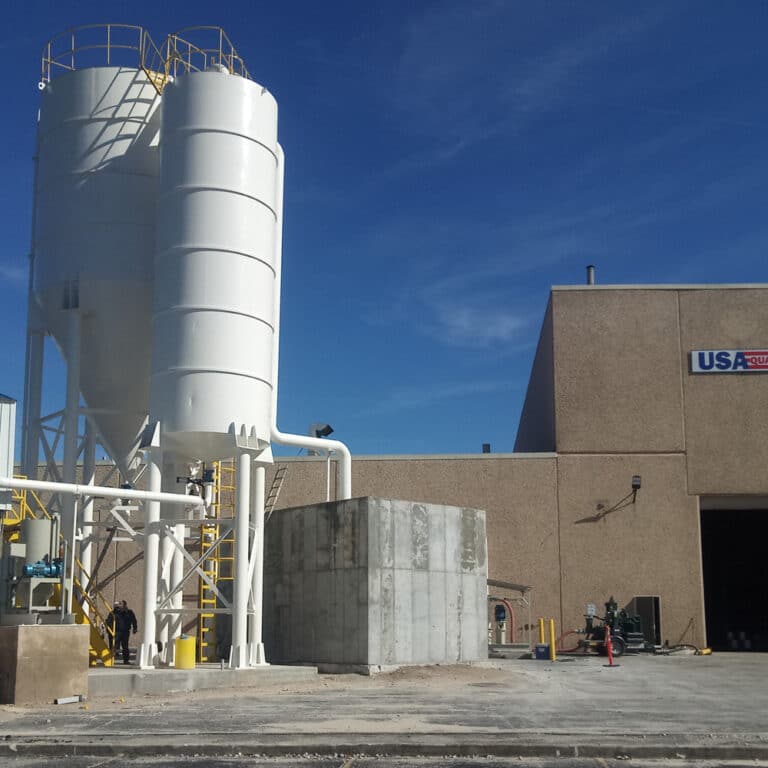
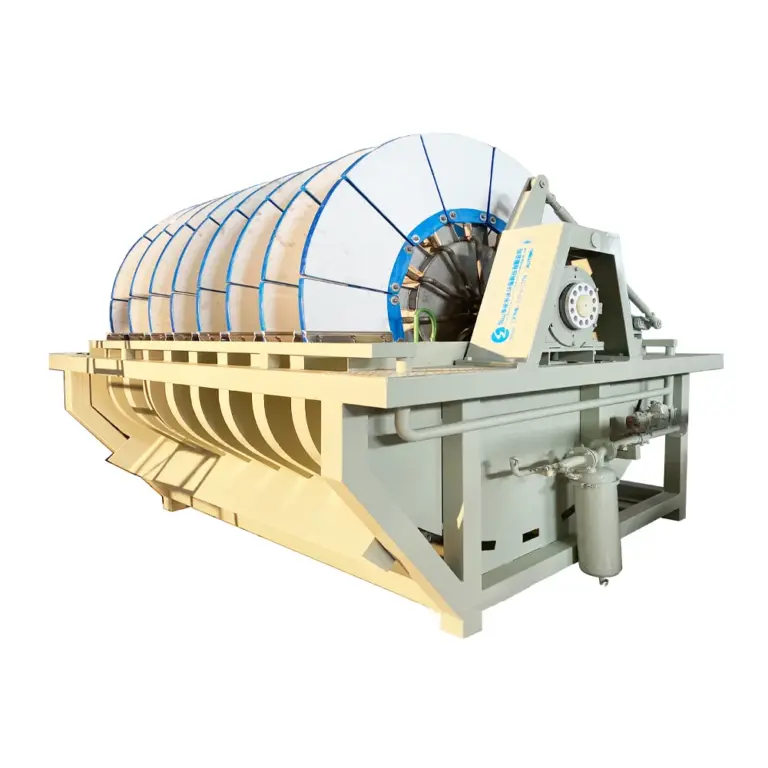
A successful vacuum ceramic disk filter installation in a chemical plant is not merely a mechanical task. It is a precision engineering project where a single misalignment or material incompatibility can cascade into chronic performance issues, safety risks, and costly downtime. The gap between receiving equipment and achieving stable, high-yield operation is bridged only by a methodical, expert-guided process.
For process engineers and plant managers, this installation represents a critical capital investment with direct implications for production yield, waste management, and operational expenditure. A structured approach from site assessment through to validated commissioning is non-negotiable. It transforms a complex assembly of components into a reliable, automated asset capable of delivering the separation efficiency and low moisture cake that ceramic technology promises.
Site Preparation and Foundation Requirements
Defining the Installation Environment
The process begins with a forensic site assessment that extends far beyond blueprint verification. This phase must account for the chemical plant’s unique operational trilemma involving longevity, chemical resistance, and thermal tolerance of all installed materials. The foundation must withstand static and dynamic loads, but also potential exposure to process spills or cleaning agents. Every ancillary material—from the grout anchoring the base to the conduit protecting electrical lines—must be specified for the plant’s specific chemical environment to prevent insidious, premature degradation.
Strategic Utility and Spatial Planning
Utility integration is a strategic exercise in foresight. The placement of entry points for process slurry, filtrate discharge, compressed air, power, and chemical cleaning lines must be aligned with the filter’s piping manifold to avoid stress and future leak points. Equally critical is allocating non-negotiable clearance around the rotary mechanism and disk assembly. In our experience, underestimating this space is the most common constraint during future bearing maintenance or ceramic plate replacement, directly impacting long-term operational safety and efficiency.
Validating Pre-Installation Criteria
A rigorous pre-installation checklist, grounded in industry standards, is the final gate before assembly begins. This formalizes the assessment of load capacity, material specifications, and spatial logistics into actionable criteria.
The following table outlines the key assessment areas and their required validation points, providing a structured framework for site preparation.
| Assessment Area | Key Parameter/Criteria | Required Action/Standard |
|---|---|---|
| Foundation Load | Static & dynamic loads | Verify capacity |
| Material Compatibility | Chemical & thermal resistance | Specify rated materials |
| Utility Entry Points | Process water, air, power | Align strategically |
| Maintenance Clearance | Rotary mechanism access | Ensure non-negotiable space |
| Ancillary Materials | Grout, conduit ratings | Procure application-specific |
Source: Chemical plant solid-liquid separation equipment installation code. This code provides the general principles for material compatibility, safety, and utility integration within chemical plant environments, which directly informs the site preparation criteria.
Mechanical Assembly and Ceramic Plate Installation
Precision Alignment of Core Mechanics
Mounting the main drive, central rotor shaft, and slurry tank demands meticulous leveling and alignment. A shaft that is even marginally out of true induces bearing stress, accelerates wear, and can cause uneven cake formation. The integration of the tank’s internal agitation system is the first operational step, designed to maintain feed homogeneity—a prerequisite for the consistent cake formation critical to efficient filtration. This phase confirms that assembly is a skilled calibration exercise, not a generic mechanical job.
The Critical Ceramic Plate Installation
Installing the ceramic filter plates is a specialized protocol that directly dictates system performance. As industry research confirms, ceramic membranes require unique handling. Each plate must be mounted with its smooth, bright white active filtration surface facing outward toward the slurry. Incorrect orientation catastrophically reduces efficiency and is often irreversible without complete disassembly. This step underscores the technology’s precision; the filter’s capability is entirely dependent on the correct installation of these delicate, high-performance components.
Integrating Vacuum, Cleaning, and Control Systems
Connecting the Driving Force and Regeneration Heart
System integration transforms the mechanical assembly into an automated process unit. Connecting the vacuum system—including the rotary valve, pump, and distribution piping—establishes the driving force for filtration. Simultaneously, installing the cleaning and regeneration systems is arguably as critical as the filter itself. Ceramic filter longevity relies on aggressive, multi-method cleaning. This involves integrating low-pressure backwash circuits, chemical cleaning loops for acid or oxidant circulation, and the ultrasonic cleaning system. The choice between fixed or lift-mounted ultrasonic transducers has strategic maintenance implications, with lift-type designs reducing transducer exposure in corrosive environments.
Orchestrating Automation with the PLC
The Programmable Logic Controller (PLC) is the central nervous system. It orchestrates the vacuum, rotation, discharge, and multi-stage cleaning cycles into a seamless, repeatable process. Proper programming during integration allows for the automation of the full filtration and regeneration sequence, operationalizing the aggressive protocols required for sustained flux. This automation capability is a key differentiator, ensuring cleaning consistency and reducing manual intervention, which directly supports long-term performance stability.
Pre-Commissioning Checks and Dry Testing Procedures
Subsystem Isolation and Functional Verification
Before introducing slurry, comprehensive dry testing de-risks wet commissioning by validating each subsystem independently. Mechanical checks ensure smooth disk rotation and proper scraper clearance. The vacuum system is tested to verify it achieves and holds the design vacuum level, typically greater than 0.092 MPa, confirming leak-free piping and proper rotary valve phasing. This proactive step addresses the common warning about scale-up performance gaps by ensuring the installed full-scale system’s hydrodynamics function as designed.
Testing Cleaning and Safety Protocols
The ultrasonic and backwash cleaning systems are tested with water to confirm transducer operation, nozzle alignment, and circuit integrity. Finally, a mandatory procedural safeguard is the full functional verification of all safety interlocks and emergency stops, a non-negotiable requirement for chemical plant operation.
The formal procedures for this phase are captured in technical specifications that define the acceptance criteria. The table below summarizes the key dry testing parameters and their validation methods.
| Subsystem | Test Parameter | Target/Validation Method |
|---|---|---|
| Vacuum System | Design vacuum level | >0.092 MPa hold |
| Mechanical Assembly | Disk rotation & scraper | Smooth operation, clearance |
| Cleaning Systems | Ultrasonic & backwash | Water test, circuit integrity |
| Safety Systems | Interlocks & emergency stops | Full functional verification |
| Piping & Valves | Leak detection | Dry pressure test |
Source: Ceramic filter installation and acceptance technical specification. This specification establishes the formal criteria and methods for inspection, pressure testing, and subsystem validation prior to acceptance, covering all dry testing procedures.
Wet Commissioning and Process Optimization Steps
Graduated Process Integration and Parameter Adjustment
Wet commissioning transitions from mechanical validation to process integration. Starting with water tests to confirm no leaks, the system gradually introduces process slurry. Optimization then focuses on the interplay of key variables: disk rotational speed (controlling cake thickness and surface shear), vacuum level (directly affecting cake moisture), and scraper alignment. For challenging feeds, the rotational speed generates high shear at the membrane surface, mitigating fouling—a dynamic filtration advantage. Data indicates that optimizing these parameters can enable recovery rates of 95% or higher.
Establishing the Cleaning Regime
Concurrently, the frequency and duration of ultrasonic and chemical cleaning cycles are established based on observed flux decline. This is where the installed integrated ceramic filtration and regeneration system is fine-tuned, operationalizing the aggressive regeneration protocols mandated for ceramic membrane longevity. The goal is to identify the minimum effective cleaning intensity and frequency that maintains baseline flux, optimizing both performance and operating costs.
The optimization process is guided by structured procedures aimed at achieving design specifications. The following table outlines the primary process variables adjusted during wet commissioning and their impact on system performance.
| Process Variable | Optimization Goal | Typical Impact/Outcome |
|---|---|---|
| Disk Rotational Speed | Cake thickness & shear control | Mitigates membrane fouling |
| Vacuum Level | Cake moisture content | Affects final solids dryness |
| Scraper Alignment | Clean cake discharge | Prevents re-slurrying |
| Cleaning Cycle Frequency | Flux maintenance | Based on observed decline |
| Solids Recovery Rate | Process yield | Can enable ≥95% target |
Source: Vacuum ceramic disk filter installation and commissioning specification. This specification details the procedures for gradual slurry introduction and the adjustment of operational parameters to achieve design performance during wet commissioning.
Key Performance Indicators and Validation Metrics
Quantifying Separation Performance
Performance validation moves optimization from qualitative adjustment to quantitative measurement. Key Performance Indicators must be established and measured against design specifications. Primary metrics include cake solids moisture content, filtrate clarity (often targeting less than 50 ppm solids), and solids recovery rate. These KPIs answer the fundamental question: is the installation successful? They provide the empirical evidence that the filter is operating as an efficient unit operation, directly informing total cost of ownership and process yield.
Establishing the Operational Baseline
Strategically, these validated metrics serve as the official baseline for ongoing operational monitoring. High recovery rates and consistent filtrate quality, enabled by proper ceramic technology commissioning, support circular economy practices by maximizing resource recovery from process streams. This baseline becomes the reference point for all future performance audits and troubleshooting.
The formal acceptance of the system hinges on meeting these quantified metrics. The table below defines the core KPIs used for final validation and their purpose.
| Primary KPI | Measurement Target | Validation Purpose |
|---|---|---|
| Cake Solids Moisture | Design specification | Final product dryness |
| Filtrate Clarity | <50 ppm solids | Liquid phase purity |
| Solids Recovery Rate | ≥95% (application-specific) | Process yield & efficiency |
| Operational Consistency | Baseline flux rates | Long-term performance |
| Total Cost of Ownership | Informed by KPIs | Economic validation |
Source: Ceramic filter installation and acceptance technical specification. This technical specification includes performance verification criteria, establishing the quantitative metrics required for final system acceptance and handover.
Long-Term Operation and Maintenance Protocols
Adhering to Optimized Regeneration Cycles
Sustained performance hinges on disciplined operation of the protocols established during commissioning. Routine monitoring of the baseline KPIs is essential. Maintenance schedules must rigorously adhere to the cleaning regimes—combining physical (ultrasonic, backwash) and chemical treatments—that were optimized for the specific feed slurry. Neglecting these aggressive regeneration protocols, as underscored by filtration research, leads to irreversible flux decline. The automation capabilities of the integrated cleaning system should be leveraged to ensure consistency and reduce manual error.
Planning for Specialized Component Lifecycle
Maintenance planning must account for the specialized nature of the hardware. This includes ensuring an inventory of critical spare parts like ceramic plates and chemically compatible seals. Operators should be trained to understand the why behind procedures, such as the proper handling of ceramic plates to prevent microfractures or the importance of chemical cleaning cycle integrity. This knowledge-based approach turns reactive maintenance into proactive asset management.
Final Handover, Training, and Documentation
Comprehensive Knowledge Transfer
The final handover formalizes the transition from a project to an operational asset. Comprehensive operator training is not just procedural; it covers startup, shutdown, routine monitoring, emergency responses, and the logic behind specific maintenance protocols. This ensures the operational team understands the cause-and-effect relationships within the system, linking daily actions directly to long-term performance and cost outcomes.
Delivering the Asset Package
Handover documentation must be complete and actionable. This package includes as-built drawings, operational and maintenance manuals, the finalized PLC program, and a definitive record of all optimization parameters and baseline KPIs. This complete package turns the installed equipment into a reliable, knowledge-based asset, positioning the plant to fully capitalize on the investment and adapt to future process changes.
The installation’s success is defined by three priorities: the precision of initial mechanical and ceramic component assembly, the empirical optimization of wet process parameters, and the establishment of a disciplined, knowledge-based operation and maintenance culture. Each phase builds upon the last, transforming delivered components into a predictable production asset.
Need professional guidance to ensure your filtration system installation achieves its design performance and ROI? The engineering team at PORVOO provides comprehensive support from site review through to commissioning and training, ensuring your ceramic disk filter is a long-term strategic asset. For a detailed discussion of your application requirements, you can also Contact Us.
Frequently Asked Questions
Q: What specific environmental factors must we verify during site preparation for a ceramic disk filter in a chemical plant?
A: Your site assessment must confirm the foundation’s capacity for dynamic loads and analyze the entire area for chemical compatibility. This includes evaluating the resistance of nearby structures and utility entry points to potential spills, ensuring all ancillary materials like grout are rated for your plant’s specific thermal and chemical conditions. For projects where corrosive or high-temperature streams are present, plan for a rigorous material selection process beyond the filter itself, as mandated by industry standards like the Vacuum ceramic disk filter f chemical industry installation standard.
Q: How do we correctly install ceramic filter plates to ensure maximum efficiency?
A: Each ceramic plate must be mounted with its smooth, bright white active filtration surface facing outward toward the slurry tank. Incorrect orientation will catastrophically reduce separation efficiency and throughput. This precision task confirms that assembly is a skilled operation requiring specialized protocols. If your team lacks experience with ceramic membranes, you should prioritize vendor supervision or certified technician involvement during this critical step to prevent costly performance shortfalls.
Q: Why is the integration of the cleaning system considered as critical as the filter assembly itself?
A: The longevity and sustained performance of ceramic filters depend entirely on an aggressive, multi-method regeneration system that integrates low-pressure backwash, chemical cleaning loops, and ultrasonic transducers. The design choice between fixed or lift-mounted ultrasonic units has direct maintenance implications, with lift-types simplifying upkeep in corrosive environments. This means facilities with challenging, fouling-prone feeds should invest in a fully integrated and automated cleaning system during procurement, not as a retrofit.
Q: What dry testing procedures are mandatory before introducing process slurry?
A: Pre-commissioning requires independent validation of all subsystems: mechanical rotation, vacuum system integrity to hold design levels above 0.092 MPa, and functional testing of ultrasonic and backwash circuits with water. You must also verify all safety interlocks and emergency stops. This phase de-risks wet commissioning by ensuring full-scale hydrodynamics function as designed. For complex installations, expect to allocate significant time for this procedural safeguard to identify and resolve integration issues early.
Q: Which operational parameters do we optimize during wet commissioning to control cake moisture and fouling?
A: Key variables for optimization are disk rotational speed, which controls cake thickness and surface shear, and the applied vacuum level, which directly affects final cake moisture. Data from applications like biomass processing shows optimizing these can enable recovery rates of 95% or higher by mitigating fouling. If your feed contains challenging, adhesive solids, plan to dedicate commissioning time to fine-tune these dynamic filtration parameters, as they are central to achieving design KPIs.
Q: What are the key performance indicators used to validate a successful ceramic filter commissioning?
A: Primary validation metrics are cake solids moisture content, filtrate clarity (often targeting under 50 ppm solids), and the solids recovery rate. These KPIs provide a quantitative baseline against design specifications and for ongoing operational monitoring. This means your commissioning report must document measured values for these metrics, as they directly inform total cost of ownership and process yield, supporting goals like resource recovery in circular economy practices.
Q: What long-term maintenance protocol is non-negotiable for preserving ceramic filter flux?
A: Sustained performance requires strict adherence to the aggressive, multi-method cleaning cycles—combining ultrasonic, backwash, and chemical treatments—established during commissioning. Neglecting these regeneration protocols leads to irreversible flux decline and premature membrane failure. For operations, this translates to enforcing disciplined, automated cleaning schedules and ensuring inventory of specialized spare parts like ceramic plates and compatible seals, as outlined in the Ceramic filter installation and acceptance technical specification.
Q: What documentation is essential for the final handover to ensure reliable long-term operation?
A: Complete handover documentation must include as-built drawings, equipment manuals, the finalized PLC program, and a formal record of all optimized operating parameters and baseline KPI values. This package transforms the equipment into a knowledge-based operational asset. For plant management, this means contractually requiring this comprehensive documentation from your vendor to enable effective troubleshooting, consistent operation, and safe training for new personnel.