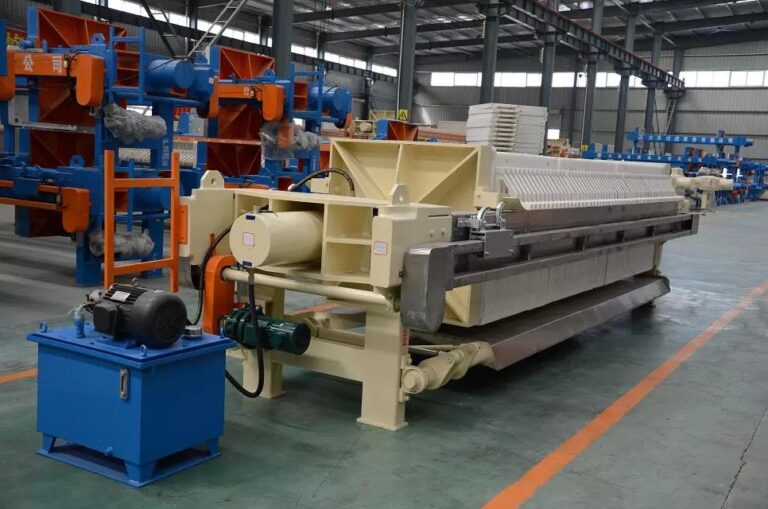
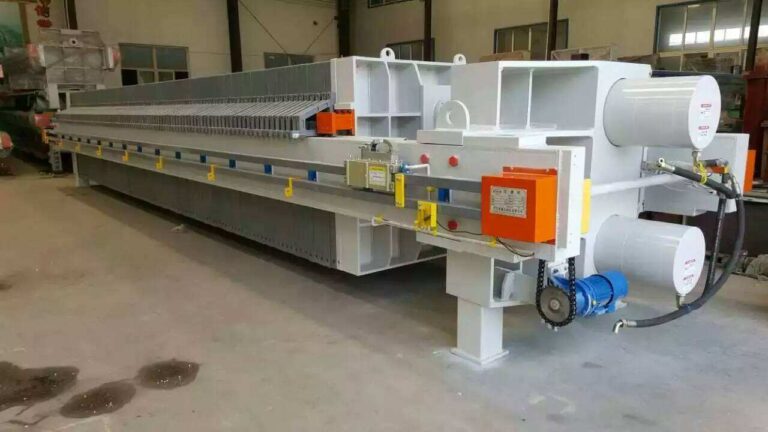
Selecting the right plate and frame filter press is a high-stakes capital decision. A miscalculation in sizing leads to chronic bottlenecks, excessive labor costs, or a system that fails to meet product dryness specifications. The common mistake is treating it as a simple volume calculation, which ignores the interdependencies between slurry properties, cycle time, and mechanical design.
Accurate sizing is now a critical lever for operational efficiency and sustainability. In pharmaceutical and chemical processing, the right press minimizes waste, reduces disposal costs, and ensures batch consistency. This guide provides a sequential engineering framework to translate your process requirements into a reliable, optimized specification, avoiding costly over- or under-sizing.
How to Size a Filter Press: The 5-Step Framework
Sizing is a multi-variable equation where a change in any single parameter fundamentally alters the equipment selection. This five-step framework ensures you account for these interdependencies, from initial slurry analysis to final technical specifications.
The Sequential Engineering Mindset
The process is not linear but iterative. Data from later steps, like cycle time, may force a revision of earlier assumptions about plate count. Industry experts recommend treating pilot testing as the non-negotiable gate for capital approval. Vendor sizing and media selection depend on this real-world data to de-risk the entire system design.
From Process Goals to Physical Capacity
The framework begins with defining your slurry and ends with a complete mechanical and automation specification. Easily overlooked details include the long-term cost of replacement cloths and plates, which are recurring CAPEX items. Their material choice dictates operational costs and chemical compatibility over the equipment’s lifecycle.
Validating the Sizing Output
The final check is ensuring the calculated system fits within your operational reality. We compared assumptions across multiple projects and found the most common point of failure is underestimating total cycle time, which includes fill, filtration, blow-down, and discharge phases. This directly impacts your achievable cycles per day.
Step 1: Define Your Slurry Properties and Process Goals
Accurate sizing begins with a meticulous definition of your application’s operational parameters. This data forms the immutable foundation for all subsequent calculations.
The Critical Data Points
The most critical data point is the slurry’s dry solids concentration by weight. This drives all volume calculations. You must also identify chemical composition, particle size distribution, temperature, and viscosity. This information is non-negotiable for selecting chemically compatible plate and cloth materials.
Establishing Process Boundaries
Concurrently, define the total daily slurry volume and the allowed processing time. This establishes your throughput requirement. A typical baseline is three complete cycles in an eight-hour shift, but this is application-dependent. In my experience, failing to lock down these operational boundaries upfront is the primary cause of scope creep during vendor selection.
The Gatekeeper: Pilot Testing
This step underscores that pilot testing with your actual slurry is essential. It provides the filterability data needed for accurate rate calculations and validates expected cake dryness. Relying on vendor estimates based on similar applications introduces significant risk.
Step 2: Calculate Required Filtration Area and Chamber Count
Using the process data, you now determine the physical capacity needed. This translates slurry volume into the required filtration area and number of press chambers.
Translating Volume to Area
First, divide your total daily slurry volume by your target cycles per day to find the slurry volume per cycle. Using the dry solids percentage and the cake’s expected bulk density, calculate the solid cake volume produced per cycle. This cake volume is used in the core sizing formula.
Applying the Core Sizing Formula
The fundamental calculation is: Filtration Area (m²) = Cake Volume (m³) / Cake Thickness (m). Standard cake thicknesses are 25mm, 32mm, or 50mm. This calculation reveals the total filtration area required to contain the solids from one batch.
The following table outlines the key parameters and formulas used in this critical calculation phase.
| Parameter | Typical Value / Range | Key Consideration |
|---|---|---|
| Cycles per Day | 3 cycles / 8-hr shift | Standard operational baseline |
| Cake Thickness | 25mm, 32mm, 50mm | 32mm is most common |
| Core Sizing Formula | Area (m²) = Cake Volume (m³) / Cake Thickness (m) | Fundamental calculation |
| Cake Bulk Density | Slurry-dependent variable | Drives cake volume calculation |
| Dry Solids Concentration | Critical primary data point | Drives all volume calculations |
Source: GB/T 3047.1-2015 Plate and frame filter press test methods. This standard provides the test methods for evaluating filtration capacity and cake moisture content, which are essential for validating the outputs of the sizing formula and confirming cake thickness assumptions.
Step 3: Select Plate Size vs. Chamber Count: A Critical Trade-Off
With the required filtration area known, you must select a plate size and calculate the number of chambers. This is a strategic trade-off between footprint, modularity, and capital efficiency.
The Capacity Scaling Principle
Standard square plate sizes range from 470mm to 2000mm and larger. Capacity scales non-linearly with plate size. A key strategic implication is that for large-scale projects, selecting a larger plate size can yield exponential capacity gains. A single press with 1500mm plates is often more space- and cost-efficient than configuring multiple smaller presses for the same area.
Operational Implications of Size Choice
Conversely, smaller plates offer easier manual handling and greater modularity. However, they require more chambers and associated hardware—like more cloths and more hydraulic cylinders—to achieve the same filtration area. This increases long-term maintenance parts inventory.
The decision between plate size and chamber count has direct implications for plant layout and operating costs, as shown in the capacity trade-offs below.
| Plate Size (Square) | Capacity Scaling | Strategic Implication |
|---|---|---|
| 470mm | Lower capacity per plate | Easier manual handling |
| 800mm – 1200mm | Moderate to high capacity | Common mid-range sizes |
| 1500mm – 2000mm+ | Exponential capacity gains | Space & cost efficiency for large projects |
| Smaller Plates | More chambers required | Increased modularity, more hardware |
| Larger Plates | Fewer chambers required | Lower footprint, higher per-unit capacity |
Source: GB/T 3047.5-2021 Plate and frame filter press. This standard specifies the basic parameters and dimensions for plate and frame filter presses, providing the foundational size ranges and design configurations that inform this capacity trade-off analysis.
Step 4: How to Estimate Filtration Rate and Total Cycle Time
Preliminary volume-based sizing must be verified against time. A press that holds the right volume but takes too long to process it will not meet your daily throughput goals.
Breaking Down the Cycle
Total cycle time is the sum of fill time, filtration time, cake wash, blow-down, and the time for opening, discharge, and closing. The filtration rate is the most variable component, influenced by slurry filterability, applied pressure, and cloth selection. This is where pilot data is irreplaceable for accuracy.
The Throughput vs. Dryness Trade-Off
This step highlights that “cake dryness” is a configurable output, not fixed. It can be increased by using higher-pressure designs or membrane plates, but this often extends cycle time. You must optimize for the right balance between throughput and product consistency for your specific economics.
Validating Cycle Assumptions
You must ensure the calculated total cycle fits within your operational window. If not, you must adjust the plate count or size. A press that is slightly larger than the minimum volume calculation often provides the cycle time buffer needed for reliable operation.
Step 5: Final Specs: Pressure Rating, Materials, and Automation
Finalize your selection by integrating critical application-specific factors. These specifications lock in performance, longevity, and operational cost.
Pressure and Material Selection
Pressure rating is crucial. Standard 100 psi (7 bar) designs are common, but 225 psi (15 bar) units can produce significantly drier cakes for compressible materials. Materials of construction are typically polypropylene, but glass-filled PP or stainless steel may be required for high temperatures or aggressive chemistry, as defined in industry standards like JB/T 4333.1-2019.
The Automation Justification
The automation level is a direct function of labor and scale economics. Justifying a fully automatic PLC-controlled system requires analysis of labor savings and consistency gains versus higher capital and maintenance costs. For a 24/7 operation, automation is rarely optional.
The final specification integrates multiple interdependent factors that define the press’s capability and total cost of ownership.
| Specification | Common Options | Impact / Rationale |
|---|---|---|
| Pressure Rating | 100 psi (7 bar) standard | Common for many applications |
| Pressure Rating | 225 psi (15 bar) high-pressure | Drier cakes for compressible materials |
| Plate Material | Polypropylene (PP) | Standard, cost-effective |
| Plate Material | Glass-filled PP, Stainless Steel | High temperature / aggressive chemistry |
| Automation Level | Manual to full PLC | Labor savings vs. capital cost |
| Cloths & Plates | Recurring CAPEX item | Dictates long-term operational cost |
Source: JB/T 4333.1-2019 Plate and frame filter press technical conditions. This standard defines the technical requirements, including performance and material specifications, that equipment must meet, directly informing the selection of pressure ratings and construction materials for reliable operation.
Beyond Sizing: Key Selection Factors Competitors Miss
True optimization extends beyond basic calculations. Strategic choices in system design and vendor partnership define long-term success.
The Strategic Plate Type Decision
A critical factor often overlooked is the choice of plate type—recessed chamber, membrane, or plate & frame. Membrane plates, for example, can achieve much drier cakes but at a higher capital cost and with more complex maintenance. Each type offers distinct trade-offs in leak tolerance, cake release, and suitability for fine filtration or washing.
Integrated System vs. Component Buying
The market segments into integrated solution providers versus component suppliers. Your strategy must decide if you need a single-point partner for the full system—including feed pumps, conditioning, and automation—or if you possess the in-house expertise to integrate best-in-class components. This decision defines your risk profile and ongoing vendor relationship.
Pharma vs. Chemical Plant Filter Press Requirements
While the sizing framework is universal, operational priorities and standards diverge significantly between these sectors.
Pharmaceutical Priorities: Purity and Compliance
Pharmaceutical applications prioritize batch integrity, validation, and ease of cleaning. This dictates sanitary designs with polished surfaces, specific material certifications, and automation for absolute consistency. Sustainability drivers often focus on closed-system automation for containment and reducing operator exposure.
Chemical Plant Drivers: Durability and Volume
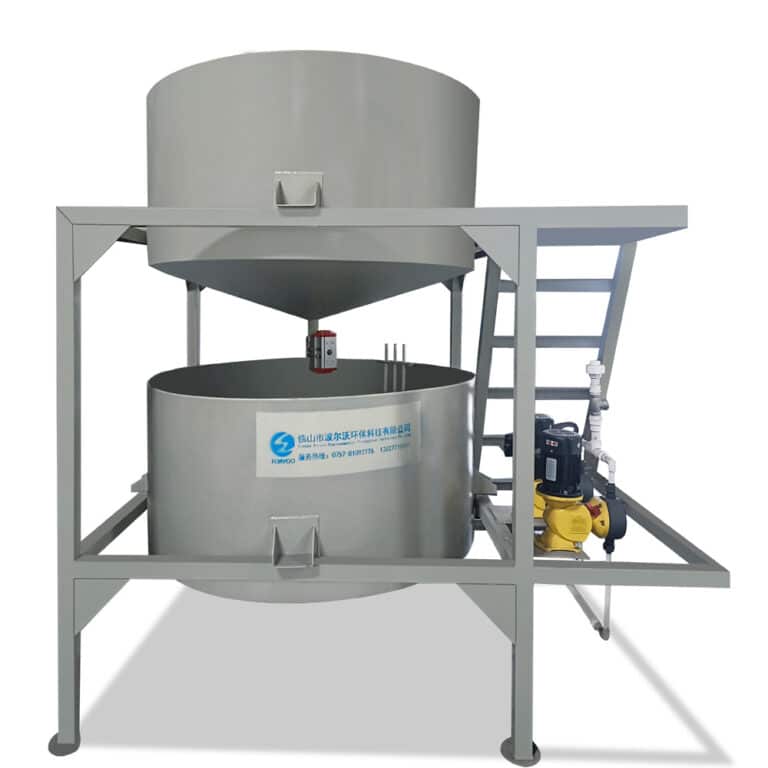
Chemical plants frequently deal with higher volumes, more aggressive chemistry, and wastewater streams. Here, chemical conditioning systems using agents like lime or ferric chloride are not ancillary but core capacity determinants. Their ongoing reagent cost can rival capital expense over the lifecycle. The priority is drier cake to minimize disposal cost and weight.
The table below contrasts the divergent priorities that shape equipment specification in these two critical industries.
| Priority Area | Pharmaceutical Plant | Chemical Plant |
|---|---|---|
| Primary Driver | Batch integrity, validation | Volume, aggressive chemistry |
| Design Focus | Sanitary, cleanable designs | Chemical resistance, durability |
| Key System | Automation for consistency | Chemical conditioning (e.g., lime) |
| Sustainability Goal | Closed-system containment | Drier cake to minimize disposal cost |
| Cost Focus | Compliance, validation cost | Conditioning reagent lifecycle cost |
Source: HG/T 3134-2007 Plate and frame filter press for chemical industry. This chemical industry-specific standard outlines technical requirements for harsh chemical environments, which directly informs the material and design priorities for chemical plant applications listed in the comparison.
Your Decision Checklist: From Sizing to Final Purchase
Consolidate your specification process with this validation list. Have you defined all slurry properties via pilot testing? Calculated area and chamber count, considering the plate-size capacity trade-off? Verified cycle time and selected a plate type aligned with cake dryness goals? Specified pressure rating, construction materials, and automation level based on lifecycle economics? Accounted for auxiliary systems like conditioning feeds or cake conveyors?
Evaluated total cost of ownership, including recurring costs for replacement cloths and plates? Finally, consider indirect strategic factors. Can premium features like membrane plates be justified through ESG metrics like waste minimization? This holistic approach ensures your plate and frame filter press is not just sized, but optimally specified for long-term performance and value.
The five-step framework transforms sizing from a guessing game into a disciplined engineering process. The critical path is clear: anchor all calculations in validated pilot data, explicitly model the trade-offs between plate size and cycle time, and select specifications based on total lifecycle cost, not just capital expenditure. This methodology prevents the twin failures of chronic underperformance and wasteful overcapitalization.
Need a professional partner to validate your sizing calculations and specify a filter press that meets your precise pharmaceutical or chemical processing goals? The engineers at PORVOO specialize in translating complex process requirements into reliable, efficient filtration systems. Contact us to discuss your application data and receive a technically grounded proposal.
For a direct consultation, you can also Contact Us.
Frequently Asked Questions
Q: How do you calculate the required filtration area for a filter press based on slurry data?
A: You determine the needed filtration area by first calculating the solid cake volume produced per batch, using your slurry’s dry solids percentage and the cake’s expected bulk density. Apply the core sizing formula: Filtration Area (m²) = Cake Volume (m³) / Cake Thickness (m), where standard thicknesses are 25mm, 32mm, or 50mm. This means facilities with high solids concentration must accurately define bulk density through pilot testing to avoid significant sizing errors in the final equipment specification.
Q: What is the strategic trade-off between plate size and chamber count during sizing?
A: The decision involves balancing equipment footprint, modularity, and capital efficiency. Larger plates (e.g., 1500mm or 2000mm) provide exponentially greater capacity in a smaller footprint, which is optimal for large-scale projects. Smaller plates offer easier manual handling but require more chambers and associated hardware to achieve the same total filtration area. For projects where floor space is constrained or future expansion is planned, selecting the largest feasible plate size often yields better long-term value and operational simplicity.
Q: How does the choice between recessed chamber and membrane plates affect process outcomes?
A: Plate type directly dictates process flexibility and final cake dryness. Recessed chamber plates are standard for many applications, while membrane plates can apply squeeze pressure to achieve significantly drier cakes, which is critical for minimizing disposal costs. However, this enhanced dryness typically extends the total cycle time. If your operation requires maximum solids dryness for waste reduction or product value, plan for the trade-off of reduced throughput or the need for a larger press to maintain cycle count.
Q: What key standards should we reference when specifying a filter press for chemical industry use?
A: For chemical applications, prioritize standards that address material integrity and performance under aggressive conditions. The HG/T 3134-2007 standard outlines specific technical requirements and test methods for chemical industry filter presses. Additionally, general manufacturing and dimensional guidelines are found in GB/T 3047.5-2021. This means facilities handling corrosive streams should mandate vendor compliance with these standards to ensure chemical compatibility and reliable long-term operation.
Q: Why is pilot testing considered a critical gate for capital approval in filter press sizing?
A: Pilot testing with your actual slurry provides the only reliable data for filterability, optimal cloth selection, and accurate cycle time estimation, which theoretical calculations often miss. Vendor sizing and media recommendations depend on this real-world data to de-risk the entire system design and prevent costly undersizing or overcapitalization. If your operation processes a variable or poorly characterized slurry, you should build pilot testing time and cost into your project’s front-end engineering phase to secure accurate capital approval.
Q: How do automation and pressure rating decisions impact the total cost of ownership?
A: Selecting a higher pressure rating (e.g., 225 psi / 15 bar) or full PLC automation involves a direct trade-off between higher initial capital expenditure and long-term operational savings. Higher pressure yields drier cakes, reducing disposal costs, while automation cuts labor expenses and improves batch consistency. This means facilities with high labor costs or strict product uniformity requirements should perform a lifecycle cost analysis to justify the premium, as savings in recurring operational expenses can offset the higher upfront investment.
Q: What are the divergent priorities when selecting a filter press for pharmaceutical versus chemical plant applications?
A: Pharmaceutical applications prioritize batch integrity, cleanability, and validation, driving selection toward sanitary designs, certified materials, and automation. Chemical plants focus on handling high volumes, aggressive chemistry, and often use chemical conditioning agents where the cost of consumables rivals capital expense. For projects where product purity and regulatory documentation are paramount, you should prioritize vendors with expertise in GMP-compliant, closed-system designs to ensure validation success.