In solid-liquid separation, the choice between manual and automated plate and frame filter presses is often misrepresented as a simple progression from old to new. This false binary leads to capital misallocation and operational inefficiency. The real decision is a strategic evaluation of process economics, material characteristics, and operational resilience. Selecting the wrong system imposes permanent cost penalties and limits process capability.
This analysis is critical because automation is not universally advantageous. The economic and performance crossover points are defined by specific, quantifiable thresholds. For many operations, particularly in pilot-scale, batch-variable, or high-value product contexts, manual operation delivers superior total cost of ownership and process control. Understanding where manual systems outperform automation is essential for capital planning and achieving targeted separation outcomes.
Manual vs. Automated Filter Presses: Core Differences Defined
The Mechanical Foundation
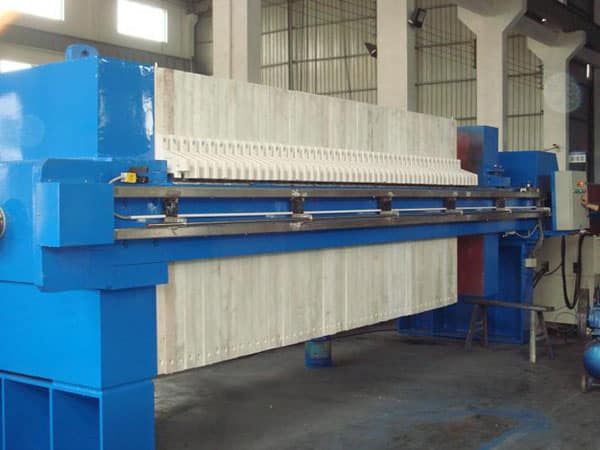
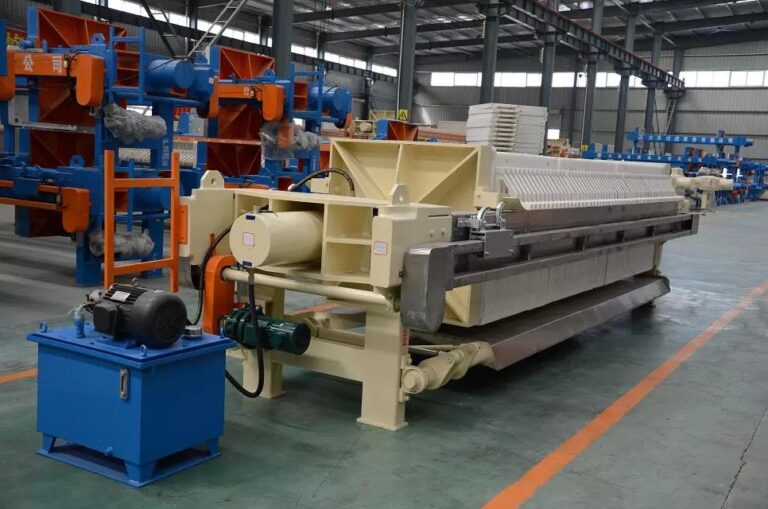
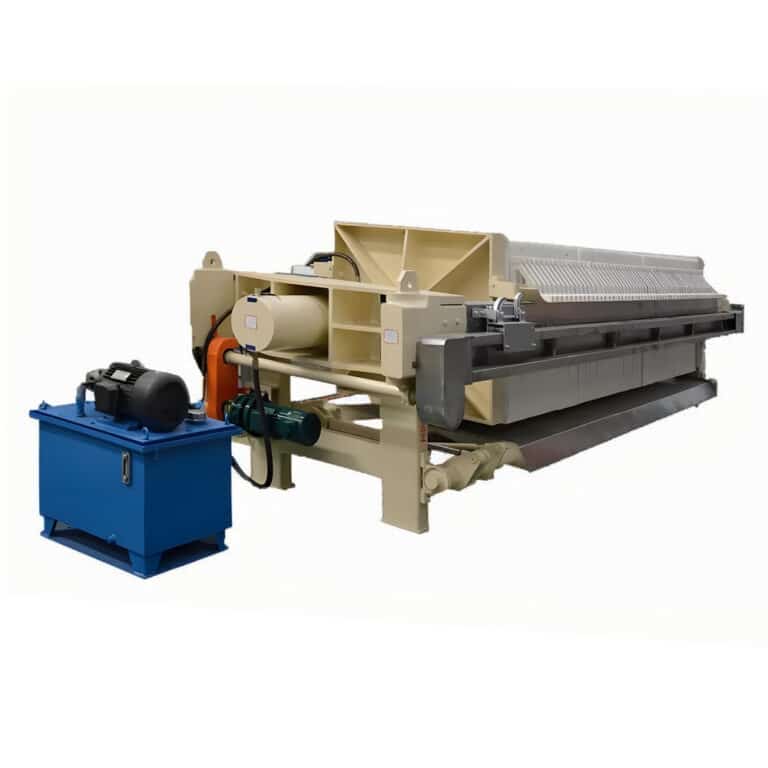
The operational divide originates in the source of clamping force and the level of system intelligence. A manual press uses a hand-operated screw or a basic pump to generate plate pack pressure. Every subsequent action—opening, plate shifting, cake discharge, and cleaning—requires direct, hands-on operator control. Process parameters are adjusted via manual valves based on tactile and visual feedback. Conversely, a fully automated system integrates an electro-hydraulic power unit with a programmable logic controller (PLC). This combination automates the entire cycle: hydraulic clamping, automatic plate shifting via a walking beam or overhead carriage, and sequenced control of feed, washing, and air blowdown through solenoid valves.
Architectural Implications of the Frame
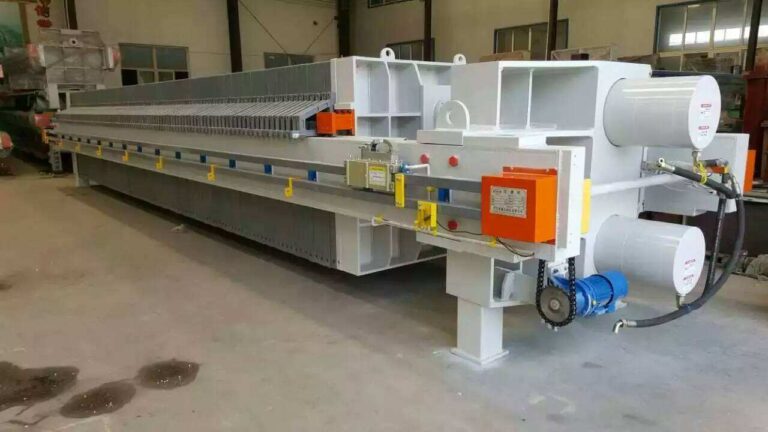
This mechanical divergence is physically embodied in the machine’s frame design, a choice with long-term strategic implications. The traditional sidebar frame is cost-effective and allows for simple expansion by adding plates, making it common in manual designs. The overhead beam frame, while a higher initial investment, provides the structural platform required for automated plate shifting and offers superior ergonomics for cloth access and maintenance. According to research from equipment lifecycle analyses, the frame selection locks in a path for future automation potential or enforces a manual operational model, impacting total cost of ownership from day one.
Defining the Control Paradigm
The core difference ultimately defines the control paradigm. Manual operation is adaptive and discrete, treating each batch as a unique event guided by operator expertise. Automated operation is repetitive and systemic, prioritizing consistent cycle execution across hundreds of batches. Industry experts recommend evaluating not just the machinery, but the available operational philosophy. For non-standardized processes, the rigid logic of a PLC can be a limitation, not an advantage.
| Component | Manual System | Automated System |
|---|---|---|
| Clamping Force Source | Hand-operated screw | Hydraulic cylinder |
| Plate Movement | Operator physically shifts | Automatic plate shifter |
| Process Control | Manual valves | PLC & solenoid valves |
| Frame Design (Typical) | Sidebar (EP) frame | Overhead beam (QP) frame |
| Operator Intervention | High, per-cycle | Minimal, supervisory |
Source: GB/T 32708-2016 Plate and frame filter press. This standard specifies the technical requirements and design parameters for plate and frame filter presses, providing the foundational specifications for the mechanical components (frames, plates) that differ between manual and automated architectures.
Total Cost of Ownership: Capital vs. Operational Expenditure
Unpacking the CAPEX Illusion
Initial capital expenditure (CAPEX) strongly favors manual presses, especially for units with plates under 1000mm. The price differential for a basic manual sidebar press versus a fully automated hydraulic system can be substantial. This upfront saving drives many procurement decisions. However, this view is incomplete. It ignores the compounding operational expenditures (OPEX) that accrue with every batch. Manual systems incur high variable labor costs, more frequent cloth changes due to handling, and production downtime for manual tasks.
The Hidden Operational Multiplier
The true economic analysis requires calculating costs over the asset’s lifecycle. For a manual press, OPEX is dominated by direct labor—an operator is engaged for the full duration of closing, opening, and cake discharge. Maintenance is simpler but may involve more frequent mechanical adjustments. Automated systems trade high CAPEX for lower variable labor costs and higher throughput. Their OPEX includes electrical consumption, hydraulic fluid maintenance, and potentially higher-cost technical support. The crossover point where automation’s higher throughput and lower labor cost per cycle justify its premium is dictated by annual batch volume and local labor rates.
The Resilience Factor
Easily overlooked details include the cost of inconsistency and unplanned downtime. Manual operation introduces human variance, which can affect cake moisture and yield. Automated systems, when properly maintained, deliver repeatable results but require technical staff for troubleshooting. In our comparisons of plant data, low-volume sites with high labor turnover often found manual TCO lower, while high-volume continuous operations achieved better economics with automation, provided they invested in technical training.
| Cost Factor | Manual Press | Automated Press |
|---|---|---|
| Initial Capital (CAPEX) | Low | High |
| Direct Labor Cost | High, variable | Low, fixed |
| Maintenance Complexity | Low, simple | High, specialized |
| Throughput Efficiency | Lower cycles/day | Higher cycles/day |
| Downtime Risk | Operator-dependent | System resilience focus |
Note: Economic crossover depends on throughput volume and labor cost model.
Source: Technical documentation and industry specifications.
Performance Compared: Throughput, Control, and Consistency
The Throughput Imperative
For pure cycle speed and unattended operation, automated systems are superior. Automated plate shifting and hydraulic clamping significantly reduce non-processing time between batches. This allows for more cycles per shift, a decisive metric for high-volume production. In applications with a uniform, predictable slurry, this speed translates directly to higher annual capacity without adding labor.
The Control Paradox
Performance in terms of final cake dryness and filtrate clarity can be identical for both systems on a compatible slurry. The difference lies in control methodology. Automation provides rigid, repeatable control. Manual operation provides adaptive, intelligent control. This is critical for non-uniform processes. When filter cake compacts unevenly or slurry consistency varies, a fixed automated blowdown cycle may follow the path of least resistance, leaving wet pockets—a flaw known in the industry. A skilled operator uses tactile feedback on air valves and visual inspection to adjust the cycle dynamically, ensuring complete dewatering.
Defining the Performance Sweet Spot
The optimal use case for each system is distinct. Automated presses excel in high-volume, standardized operations like municipal sludge dewatering or large-scale mineral processing. Manual presses outperform in applications requiring delicate handling, such as recovering precious metal catalysts or processing fragile crystalline products in pharmaceuticals. The aggressive action of an automatic plate shifter can damage high-value cake. Manual, careful plate separation preserves product integrity and yield.
| Performance Metric | Manual Press | Automated Press |
|---|---|---|
| Cycle Time / Throughput | Lower | Higher |
| Process Consistency | Operator-dependent | High, repeatable |
| Adaptability to Variability | High, tactile feedback | Low, rigid cycle |
| Cake Dryness / Filtrate Clarity | Achievable identical results | Achievable identical results |
| Optimal Use Case | Delicate, high-value cakes | High-volume, uniform slurry |
Source: Technical documentation and industry specifications.
Which System Is Better for Small-Scale or Pilot Operations?
The Scale Threshold
For small-scale, pilot, or R&D operations, manual filter presses are almost always the correct technical and economic choice. The capital barrier for full automation is prohibitive for processing volumes typically below 20-30 cubic feet per cycle. The high cost cannot be amortized over limited batch numbers. A manual press offers a low-CAPEX entry point for process validation and small-batch production.
The Flexibility Advantage
Pilot operations are defined by variability. Feed stocks change, washing protocols are adjusted, and cycle parameters are optimized through experimentation. The flexibility of manual control is invaluable in this context. Adjusting a manual valve sequence or modifying closing pressure requires no PLC reprogramming. This allows engineers to quickly test hypotheses and optimize the process without software overhead. The system can be deployed rapidly, independent of plant-wide control system integration.
Operational Pragmatism
Training for manual operation is straightforward, focusing on the mechanical process and observational skills. This simplicity reduces startup time and cost. For infrequent batches, the maintenance regimen for a manual press is minimal—often just lubrication and occasional seal replacement. This pragmatic approach aligns with the resource constraints and dynamic needs of pilot plants and small-scale production.
| Decision Criterion | Recommendation | Rationale |
|---|---|---|
| Batch Volume Threshold | < ~30 cubic feet/cycle | Favors manual CAPEX |
| Process Frequency | Infrequent, experimental batches | Manual flexibility |
| Capital Barrier | Low entry cost | Manual advantage |
| Training & Integration | Minimal training needed | Manual simplicity |
| System Flexibility | High, ad-hoc adjustments | Manual control |
Source: Technical documentation and industry specifications.
Key Use Cases Where Manual Operation Outperforms Automation
High-Value and Fragile Products
In precious metals, specialty chemicals, and certain food-grade applications, the filter cake itself is the high-value product. The controlled, gentle plate separation and cake removal possible with a manual press prevent product degradation, cracking, or loss. Automated plate shifters, while efficient, apply standardized force that can break up delicate cake structures, reducing yield and increasing product loss to handling.
Variable and Complex Process Sequences
Operations with significant batch-to-batch variability in slurry density, particle size, or viscosity benefit from manual control. An operator can adjust feed pressure, closing force, and blowdown time in real time based on discharge characteristics. Similarly, complex multi-stage washing or solvent extraction sequences are often easier to execute via manual valve manifolds than through complex PLC programming for a non-standard protocol.
The Hybrid Solution Path
Not all manual presses are created equal. The manual overhead beam press represents a critical hybrid solution. It offers the ergonomic benefits of an overhead frame—easy plate movement on rollers and excellent cloth access—without the cost of full hydraulic automation. This design is ideal for medium-capacity operations seeking to reduce operator strain and improve maintenance access while retaining manual control and lower capital cost. It serves as a practical platform for future upgrades should needs evolve.
Maintenance, Reliability, and Long-Term Operational Impact
Simplicity vs. Complexity
Manual filter presses are mechanically simple systems. With fewer components—no hydraulic shifters, solenoid banks, or PLCs—there are fewer points of failure. Troubleshooting is straightforward: leaks, worn seals, or binding mechanisms are visually or tactilely apparent. Repairs often require basic mechanical skills and standard tools, minimizing dependency on specialized technicians and reducing mean time to repair (MTTR).
The Resilience Objective
Automated systems introduce complexity but are designed for a different operational goal: system resilience and high Overall Equipment Effectiveness (OEE). While they require scheduled maintenance of hydraulic fluids, seals, and sensors, their value is in minimizing unplanned downtime and ensuring consistent output. Predictive maintenance, enabled by pressure sensors and cycle counters, can prevent catastrophic failures. The integrity of hydraulic seals and filter elements is paramount for this reliability, as outlined in standards like ISO 2942:2022.
Operational Context Dictates Priority
The long-term impact hinges on the operational environment. In a remote site with limited technical support, the inherent reliability and serviceability of a manual press reduce operational risk. In a high-volume, integrated processing plant, the production losses from a manual press’s slower cycles and operator variance far outweigh the planned maintenance costs of a robust automated system. The choice prioritizes either autonomous reliability or engineered resilience.
| Aspect | Manual Press | Automated Press |
|---|---|---|
| Mechanical Complexity | Low | High |
| Component Failure Risk | Fewer points of failure | More complex systems |
| Troubleshooting & Repair | Easier, less specialized | Requires technical skills |
| Operational Goal | Simple reliability | System resilience (OEE) |
| Ideal Environment | Remote, low-support sites | High-volume, integrated plants |
Source: ISO 2942:2022 Hydraulic fluid power — Filter elements — Verification of fabrication integrity. This standard’s focus on verifying the integrity of filter elements and seals is critical for the reliable, long-term operation of automated hydraulic systems, directly impacting their maintenance and resilience profile.
Evaluating Safety, Ergonomics, and Required Staffing
Ergonomic Risk Assessment
Traditional manual sidebar presses present the highest ergonomic hazard. Operators must lift and slide heavy filter plates within a confined space, leading to musculoskeletal strain and pinch-point injuries. Automation encloses moving parts and eliminates manual plate handling, significantly enhancing safety. The manual overhead beam design offers a middle ground, improving ergonomics by allowing plates to roll easily on beams, reducing lifting and improving access.
The Evolution of Staff Roles
Staffing requirements diverge fundamentally. Manual operation ties labor cost directly to throughput; more batches require more operator hours. The skill is craft-based, focused on the tactile art of filtration. Automation decouples labor from batch count, allowing one operator to supervise multiple presses. The required skill set shifts to that of a technician capable of mechatronic troubleshooting, PLC interface navigation, and data analysis for system optimization.
Safety as a System Feature
Safety in automated systems is engineered through interlocks, light curtains, and emergency stop circuits. These features protect against mechanical hazards but require understanding and periodic testing. For manual systems, safety is procedural, relying on training, lockout/tagout (LOTO) protocols, and personal protective equipment. The choice influences safety management style—reactive and procedural for manual, or proactive and engineered for automated.
Decision Framework: Selecting the Right System for Your Needs
Quantifying Process and Business Parameters
A structured decision requires scoring key parameters. First, quantify Annual Throughput Volume. Low volume (<5,000 cycles/year) strongly favors manual; high volume (>20,000 cycles/year) demands automation. Second, assess Process Standardization. Highly variable or delicate feeds lean manual; consistent, uniform slurries lean automated. Third, evaluate Cake Value and Disposal Cost. High-value or hazardous cakes benefit from manual control and careful handling; commodity cakes suit automated efficiency.
Auditing Internal Capabilities
The fourth parameter is an honest audit of Internal Technical Capabilities. Access to skilled manual operators versus in-house mechatronic support is a decisive factor. The fifth is Site Infrastructure. Reliable three-phase power and clean plant air are prerequisites for automation; manual presses have minimal utility demands. Documenting control logic for automated systems is essential, using standardized symbols as defined in ANSI/ISA 5.1-2022.
Future-Proofing the Investment
Finally, consider the Growth Trajectory. For static processes, choose the optimal system today. For planned expansion, evaluate modular or semi-automatic designs that offer a transition path. The optimal choice aligns technical capability with economic reality and strategic direction, ensuring the selected plate and frame filter press delivers intended separation performance and return on investment.
| Evaluation Parameter | Manual Leaning | Automation Leaning |
|---|---|---|
| Scale & Throughput | Low volume (<30 ft³) | High volume, continuous |
| Process Variability | High, non-uniform slurry | Low, standardized feed |
| Cake Value / Fragility | Delicate, high-value | Robust, commodity |
| Labor Model & Skill | Available manual operators | Skilled technicians available |
| Future Growth Path | Static or slow growth | Planned scale increase |
Source: ANSI/ISA 5.1-2022 Instrumentation Symbols and Identification. This standard provides the essential symbolic language for P&IDs, which is a critical tool for designing, documenting, and communicating the control system complexity inherent in automated filter press installations.
The decision between manual and automated operation is not a question of technological superiority but of contextual fit. Prioritize throughput analysis and total cost of ownership calculations over upfront price. Match the control paradigm—adaptive manual or consistent automated—to the variability of your feed material and the value of your product. Finally, align the system’s complexity with your site’s technical support capabilities to ensure sustainable operation.
Need professional guidance to specify the right filter press for your specific slurry characteristics and operational goals? The engineering team at PORVOO provides application-based analysis and lifecycle cost modeling to support your capital planning. We can help you navigate the trade-offs between manual, semi-automatic, and fully automated systems. For a detailed consultation, Contact Us.
Frequently Asked Questions
Q: How do we calculate the total cost of ownership for a manual versus an automated filter press?
A: You must analyze both capital and operational expenditures over the asset’s life. While manual presses have lower upfront costs, they accrue significant hidden expenses from frequent cloth changes, direct labor for every batch, and production downtime. Automated systems offset higher initial investment with labor savings and consistent throughput. This means facilities with high-volume, continuous operations should model automation’s long-term savings, whereas low-volume sites may find manual TCO more favorable.
Q: What are the key performance trade-offs between manual control and automated cycles?
A: Automated systems deliver superior, repeatable throughput via faster plate shifting and consistent cycle times. However, manual operation provides critical tactile feedback for processes with variable inputs, allowing real-time adjustments to blowdown or washing sequences for non-uniform slurries. This means operations processing delicate, high-value, or inconsistent materials should prioritize manual flexibility, while high-volume plants with uniform feedstocks will benefit more from automated speed and repeatability.
Q: When does a manual filter press become the better choice for a pilot or small-scale operation?
A: Manual systems are superior for batch volumes under approximately 30 cubic feet, infrequent processing, or experimental R&D work. Their lower capital cost, operational simplicity, and ad-hoc adjustment capability without PLC reprogramming offer a pragmatic, low-barrier solution. For projects where process parameters are in flux and integration with plant control systems is unnecessary, plan for a manual press to maximize flexibility and minimize initial investment.
Q: Which technical standards govern the design and fabrication of plate and frame filter presses?
A: The foundational equipment specifications are defined in standards like GB/T 32708-2016 Plate and frame filter press, which covers technical requirements and testing. For automated systems, control schematics should adhere to ANSI/ISA 5.1-2022 Instrumentation Symbols and Identification for clear P&ID documentation. This means your procurement and validation plans should reference these standards to ensure equipment quality and proper system documentation.
Q: How do staffing and skill requirements differ between manual and automated systems?
A: Manual presses require direct labor for each cycle, with staff trained in the tactile art of filtration. Automated systems reduce direct labor but demand technicians skilled in mechatronics and data analysis to optimize and maintain PLCs and hydraulic components. If your operation lacks access to specialized technical support, particularly in remote locations, you should prioritize the simpler reliability and easier troubleshooting of a manual design.
Q: In which specific use cases does manual operation deliver better results than full automation?
A: Manual control outperforms automation for delicate or high-value cakes requiring gentle removal, batches with highly variable slurry characteristics, and complex multi-stage washing protocols. The operator’s ability to make judgment-based, real-time adjustments prevents product degradation and optimizes non-standard sequences. This means facilities in precious metals, specialty chemicals, or food production with these conditions should evaluate manual or semi-automatic systems to preserve product integrity and process adaptability.
Q: What is the strategic implication of choosing a sidebar frame versus an overhead beam frame?
A: The frame is a strategic choice balancing cost against future flexibility. Traditional sidebar frames offer lower capital cost and simple expansion, suiting manual designs. Overhead beam frames, a higher initial investment, provide superior ergonomics and are integral to automated plate shifting. This means operations anticipating growth or prioritizing long-term operator safety and efficiency should consider the overhead beam as a foundation for future automation.