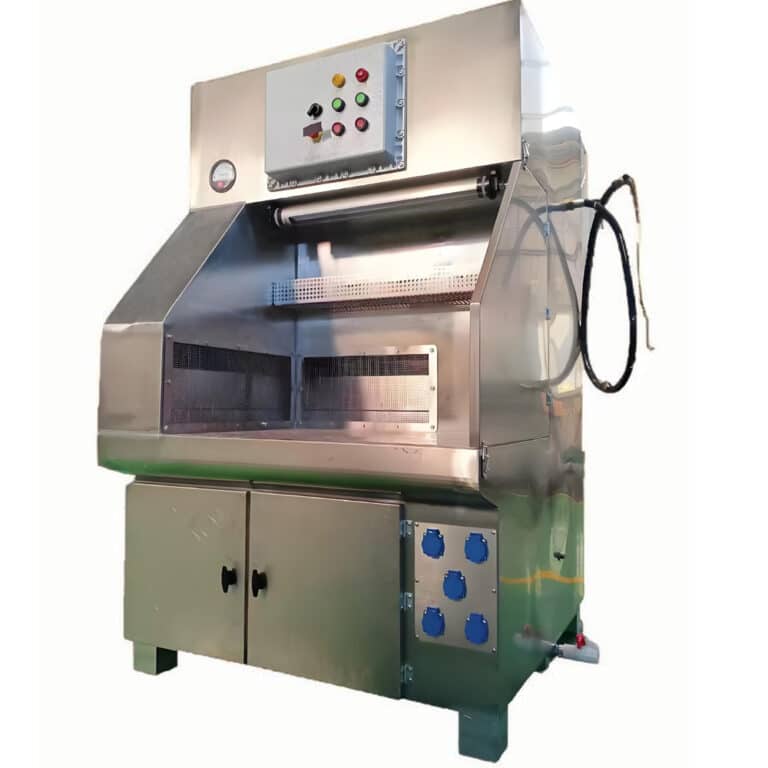
For facility managers and EHS professionals, navigating NFPA standards for portable dust collectors presents a complex compliance challenge. The distinction between NFPA 652 and NFPA 654 is often misunderstood, leading to critical gaps in safety programs and regulatory violations. Misapplying these standards can result in catastrophic dust explosions, severe OSHA penalties, and invalidated insurance coverage.
The regulatory landscape is shifting with the consolidation of standards into NFPA 660, creating a compliance cliff edge. This evolution demands immediate action. Organizations must move from viewing portable collectors as simple housekeeping tools to recognizing them as engineered safety systems with non-negotiable design and operational mandates.
NFPA 652 vs. NFPA 654: Core Focus for Portable Collectors
Defining the Distinct Mandates
NFPA 652 establishes the fundamental, process-agnostic requirements for managing combustible dust hazards. Its central mandate is the Dust Hazard Analysis (DHA), a systematic review that identifies and evaluates fire and explosion risks specific to the dusts and processes involved. NFPA 654 provides the detailed, application-specific controls for equipment like portable dust collectors. It expands on NFPA 652’s fundamentals with precise technical design, installation, and housekeeping criteria.
The Strategic Shift to NFPA 660
The introduction of NFPA 660, which consolidates these and other standards, represents a significant strategic shift. It moves organizations from segmented standards to a unified, mandatory code. This creates an urgent need for gap analysis and budget planning, as it mandates system upgrades and revised DHAs. Compliance is no longer optional; it’s a unified requirement with direct implications for capital planning and risk management.
Core Application for Collector Systems
For portable dust collectors, this hierarchy dictates a specific compliance workflow. The DHA (NFPA 652) identifies the hazard, while NFPA 654 dictates the engineered solution. Understanding this relationship is the first step in building a defensible safety program. The table below clarifies the distinct roles of these key standards.
| Standard | Primary Mandate | Key Application for Collectors |
|---|---|---|
| NFPA 652 | DHA requirement | Process-agnostic hazard fundamentals |
| NFPA 654 | Design & installation controls | Application-specific equipment criteria |
| NFPA 660 | Unified mandatory code | Compliance cliff edge for upgrades |
Source: NFPA 652: Standard on the Fundamentals of Combustible Dust and NFPA 654: Standard for the Prevention of Fire and Dust Explosions. NFPA 652 establishes the foundational requirement for a Dust Hazard Analysis (DHA), while NFPA 654 provides the specific design and installation requirements for dust collection systems, including portable units.
Key Requirements from NFPA 652: The DHA Mandate
The Non-Delegable Foundation
The Dust Hazard Analysis is the cornerstone of compliance and cannot be outsourced. NFPA 652 mandates its completion as the first step, requiring a multi-disciplinary team to evaluate the specific hazards of the dusts collected. This includes determining critical combustibility parameters like Kst and Pmax. The DHA’s findings directly dictate all subsequent decisions on collector selection, placement, and protection systems.
Ownership and Revalidation Cycles
Leadership retains ultimate ownership of the DHA document. Its quality has direct strategic implications, as insurers increasingly use it as a primary risk assessment tool, directly linking premiums and coverage terms to its findings. The DHA is not static; it must be revalidated every five years and whenever material processes or volumes change significantly. This turns the DHA into a living financial and safety document.
Informing Collector Strategy
For portable collectors, the DHA must analyze the specific processes generating the dust and the characteristics of the dust itself. This analysis answers fundamental questions: Is the dust explosive? What is its ignition sensitivity? The answers determine whether a standard cartridge collector is sufficient or if a specialized unit, like a wet scrubber, is required. From experience, the most common oversight in a DHA is failing to analyze transient or intermittent processes that use portable collection, leaving a significant hazard unaddressed.
Key Requirements from NFPA 654: Installation & Design
Mandatory Equipment Specifications
NFPA 654 translates DHA findings into concrete engineering controls. A primary and frequently violated requirement is that portable vacuum cleaners used for housekeeping must be listed for Class II, Division 1, Group G atmospheres. Using unlisted shop vacuums is a critical compliance failure. For dedicated portable collection units, the standard imposes strict design criteria to prevent ignition and contain hazards.
Ductwork as an Engineered Safety Component
Ductwork is not mere plumbing; it is an engineered ignition control. NFPA 654 requires ductwork to be metallic and static-conductive. Flexible hose connections are limited to short, static-dissipative, and grounded segments. The system must maintain minimum conveying velocities—typically 3,500 feet per minute for average industrial dust—to prevent hazardous settling inside ducts, which can become a secondary fuel source.
Material-Dependent Collector Selection
Equipment selection carries high stakes and is dictated by the dust’s properties. For highly explosive metal dusts, guidelines like NFPA 484 may explicitly indicate wet scrubbers as safer than standard cartridge collectors. This creates a binary selection path with severe consequences for misapplication. The following table outlines key NFPA 654 installation requirements.
| Component | NFPA 654 Requirement | Key Parameter / Specification |
|---|---|---|
| Portable Vacuum Cleaners | Must be listed | Class II, Division 1, Group G |
| Ductwork Material | Must be metallic | Static-conductive |
| Flexible Hose Connections | Limited length | Static-dissipative & grounded |
| Minimum Conveying Velocity | Required to prevent settling | e.g., 3,500 fpm average dust |
| Collector Selection (Metal Dusts) | May require wet scrubbers | Per NFPA 484 guidelines |
Source: NFPA 654: Standard for the Prevention of Fire and Dust Explosions. This standard provides the specific technical criteria for the design and installation of dust collection equipment, including mandatory equipment listing, ductwork specifications, and material-specific collector selection.
Explosion Protection Strategies for Portable Dust Collectors
Active and Passive Protection Methods
When the DHA identifies a deflagration hazard within the collector, integrated explosion protection is mandatory. Common methods include NFPA 68-compliant explosion venting, which directs pressure and flame to a safe exterior location. Explosion isolation devices on inlet ducts, governed by NFPA 69, prevent propagation back into the workspace. The choice between venting, suppression, or isolation is an engineering decision based on collector placement and the specific hazard.
The Indoor vs. Outdoor Placement Decision
This decision is a major capital and safety trade-off. NFPA standards strongly prefer outdoor placement for collectors handling combustible dusts. Indoor installation triggers strict exceptions, requiring either wet collectors or dry units with full, integrated explosion protection systems. This choice directly impacts facility layout, risk zoning, and overall system cost by tens of thousands of dollars.
The Shift to Full-System Validation
Compliance is evolving from purchasing a listed collector to certifying an entire safety system. This includes vents, isolation valves, ductwork, and controls. Procurement criteria must therefore shift toward vendors who offer full-system engineering and validation, a trend solidified by the move toward NFPA 660. The table below summarizes key protection strategies.
| Protection Method | Governing Standard | Typical Application / Trigger |
|---|---|---|
| Explosion Venting | NFPA 68 | Collector located indoors |
| Explosion Isolation | NFPA 69 | Prevents propagation to workspace |
| Outdoor Placement | NFPA 654 Preferred Strategy | Avoids strict indoor exceptions |
| Indoor Placement (Exception) | Requires full protection system | Wet collector or protected dry unit |
| Full-System Validation | NFPA 660 Trend | Procurement of engineered solutions |
Source: NFPA 68: Standard on Explosion Protection by Deflagration Venting and NFPA 69: Standard on Explosion Prevention Systems. NFPA 68 governs the design of deflagration vents, a common protection method, while NFPA 69 covers active prevention systems like isolation, both critical for collectors with identified deflagration hazards.
Critical Housekeeping & Vacuum Requirements (NFPA 652)
Managing Accumulation as a Measurable Metric
Effective housekeeping is a legal requirement with defined metrics. NFPA 652 requires managing dust accumulations to prevent layers exceeding a defined “critical depth,” such as 1/32 inch for many dusts. This transforms dust accumulation from a housekeeping issue into a measurable compliance violation. Regular inspection and documentation are required to prove adherence.
Mandated Tools and Prohibited Methods
The standard mandates that dust removal be performed using safe methods only. The use of compressed air for cleaning is explicitly prohibited, as it creates dangerous, explosive dust clouds. The only approved method for removing accumulated combustible dust is vacuuming with equipment listed for Class II, Division 1, Group G environments. This transitions facility housekeeping into an auditable procedure with specified tooling.
Preventing Secondary Explosions
Proper vacuum selection is a fundamental control point. Secondary explosions, which are often more destructive than the initial event, frequently originate from accumulated dust on floors, beams, and equipment outside the primary collector. Using the correct, listed vacuum is a primary defense against this chain reaction. The requirements are summarized below.
| Requirement | Measurable Threshold | Mandated Tool / Method |
|---|---|---|
| Dust Accumulation Limit | Critical depth threshold | e.g., 1/32 inch for most dusts |
| Housekeeping Method | Safe removal required | Listed vacuum cleaners only |
| Vacuum Cleaner Specification | Must be listed | Class II, Div. 1, Group G |
| Prohibited Cleaning Method | Compressed air banned | Creates dangerous dust clouds |
Source: NFPA 652: Standard on the Fundamentals of Combustible Dust. This standard mandates managing dust accumulations to prevent hazardous layers and specifies that removal must be performed using safe methods, explicitly requiring listed equipment and prohibiting unsafe practices like using compressed air.
Maintaining Compliance: Inspection, SOPs, and Training
The Inspection, Testing, and Maintenance Program
Ongoing compliance requires a documented ITM program. This includes regular inspection of ducts for leaks or accumulation, checking filter differential pressure, verifying the integrity of explosion protection devices, and maintaining mechanical components to prevent overheating from friction or misalignment. All inspection and maintenance records must be maintained as proof of due diligence.
Developing Effective Standard Operating Procedures
Written SOPs are mandatory and must cover the safe startup, operation, and shutdown of portable collection systems. These procedures should be based on the DHA findings and manufacturer instructions. They must address specific hazards like ensuring the collector is operating before starting the connected process equipment to prevent dust settling in ducts.
Mandatory Employee Training
NFPA 652 requires that all affected personnel receive initial and annual refresher training. Training must cover the specific dust hazards present, proper operation of collection equipment, emergency procedures, and housekeeping protocols. This systematic approach turns compliance from a static installation into a dynamic operational discipline, reducing human error.
Common Violations and How to Avoid Them
Frequent Audit Findings
Common violations stem from treating standards as a checklist rather than an integrated system. These include using unlisted shop vacuums, employing non-conductive plastic ducting or flexible hose, allowing duct velocities to drop below minimums, and failing to bond and ground all conductive components. Another critical error is placing a collector indoors without the required explosion protection specified by the DHA.
Root Causes and Systemic Solutions
The root cause is often a procurement and engineering disconnect. Facilities purchase equipment based on price and airflow without a DHA to inform material-specific requirements. To avoid this, procurement must evolve from transactional buying to sourcing complete, engineered solutions. Engaging with vendors who offer full-system NFPA compliance services is key.
A Framework for Prevention
Prevention requires a disciplined, front-loaded process. Start with a thorough DHA. Use its findings to create technical specifications for all purchases. Ensure engineering reviews all collection system designs for static control, velocity, and grounding. The table below outlines common pitfalls and prevention strategies.
| Common Violation | Root Cause | Prevention Strategy |
|---|---|---|
| Unlisted shop vacuums | Underestimating hazard | Procure Class II, Div. 1, Group G |
| Non-conductive plastic ducting | Incorrect material selection | Use metallic, static-conductive duct |
| Low duct velocity | Poor system design | Maintain minimums (e.g., 3,500 fpm) |
| Missing bonding/grounding | Ignoring static control | Ground all conductive components |
| Indoor collector misapplication | Ignoring DHA findings | Follow DHA-prescribed protection |
Source: Technical documentation and industry specifications. These common pitfalls are derived from frequent audit findings and enforcement actions related to NFPA 652 and 654 compliance, emphasizing the need for system-level engineering and adherence to the Dust Hazard Analysis.
Implementing a Compliant Portable Collector System
Following the Safety Process Hierarchy
Successful implementation follows a strict hierarchy. It begins with a properly scoped DHA to define the hazard. This informs the strategic choice between indoor and outdoor placement and the selection of appropriately listed equipment. The system must then be designed to NFPA 654 specifications, with correct ducting, velocity, and integrated explosion protection where required.
Integrating Administrative and Engineering Controls
Robust administrative controls—SOPs, ITM, and training—ensure the engineered system operates safely over time. This integrated approach views compliance not as a cost but as an operational excellence initiative. It justifies capital investment, mitigates catastrophic risk, and satisfies evolving insurance underwriting. For facilities handling diverse materials, selecting a versatile, well-engineered industrial portable dust collection system that can be configured for specific hazards is often the most efficient path to compliance.
The core decision points are clear: commission a credible DHA, let it dictate equipment and placement strategy, and build a program for ongoing operational discipline. This framework turns regulatory complexity into a manageable engineering and management process. It protects personnel, assets, and continuity of operations.
Need professional guidance to navigate NFPA 652 and 654 for your specific operations? PORVOO provides engineered dust collection solutions designed with compliance and safety as foundational principles. Our team can help you implement a system that meets both operational and regulatory demands. Contact Us to discuss your application requirements.
Frequently Asked Questions
Q: How does the upcoming NFPA 660 standard change our compliance strategy for portable dust collectors?
A: NFPA 660 consolidates NFPA 652, 654, and other standards into a single mandatory code, creating a compliance cliff. This moves organizations from segmented guidance to unified, non-negotiable requirements. You must conduct a gap analysis against the new code, which will likely mandate system upgrades and revised Dust Hazard Analyses (DHAs). For projects where budgets are planned annually, expect to accelerate capital planning and engage engineering partners who guarantee full-system validation under the new consolidated standard.
Q: What specific vacuum cleaner is required for combustible dust housekeeping, and why is a standard shop vacuum insufficient?
A: NFPA 652 and 654 mandate using vacuum cleaners listed for Class II, Division 1, Group G atmospheres. Standard shop vacuums lack the necessary design to prevent ignition from internal sparks or static discharge. This transitions housekeeping into an auditable procedure with defined tooling. If your operation currently uses unlisted vacuums, plan to replace them immediately, as this is a common violation that insurers scrutinize and which can lead to secondary explosions from accumulated dust.
Q: When is a wet scrubber required over a standard cartridge-style portable dust collector?
A: The selection is dictated by your Dust Hazard Analysis findings, particularly the dust’s explosibility parameters. For highly explosive metal dusts, guidelines like NFPA 484 may explicitly indicate wet scrubbers as the safer option. This creates a binary selection path with severe consequences for misapplication. Facilities processing metal powders or other high-Kst dusts should prioritize wet collection systems in their procurement criteria to mitigate deflagration risk at the source.
Q: What are the key design requirements for ductwork connected to a portable dust collector?
A: NFPA 654 requires ductwork to be metallic, static-conductive, and properly grounded. Flexible connections must be short, static-dissipative, and bonded. The system must also maintain minimum conveying velocities, such as 3,500 feet per minute for typical industrial dust, to prevent hazardous settling inside the ducts. This means ductwork is engineered ignition control, not just plumbing. For any system retrofit, you must specify these material and velocity criteria to avoid a common compliance violation.
Q: How do we decide between placing a portable dust collector indoors versus outdoors?
A: The decision is a major capital and safety trade-off dictated by the DHA and NFPA 654 guidelines, which strongly prefer outdoor placement. Installing a collector indoors triggers strict exceptions requiring either a wet collector or a dry unit with a full, integrated explosion protection system per NFPA 69. If your facility layout or process necessitates indoor placement, plan for significantly higher costs and complexity for explosion venting, isolation, or suppression systems.
Q: What is the ongoing compliance requirement for a Dust Hazard Analysis after it’s completed?
A: A DHA is not a one-time exercise. NFPA 652 mandates that it be revalidated every five years and whenever a process change occurs that could introduce new hazards. Leadership retains ownership of this living document. This means you must calendar formal revalidations and integrate DHA review into your management of change (MOC) procedure, as insurers increasingly link premiums and coverage terms to its current findings and the implementation of its controls.
Q: What explosion protection is required for a portable dust collector installed indoors?
A: If the DHA identifies a deflagration hazard and indoor placement is necessary, integrated explosion protection is mandatory. Common methods include NFPA 68-compliant explosion venting to a safe location and explosion isolation devices on inlet ducts to prevent flame propagation back into the workspace. This shifts compliance from buying a listed collector to certifying an entire safety system. For indoor installations, you must work with vendors who provide engineering for and guarantee the performance of the complete protected assembly.