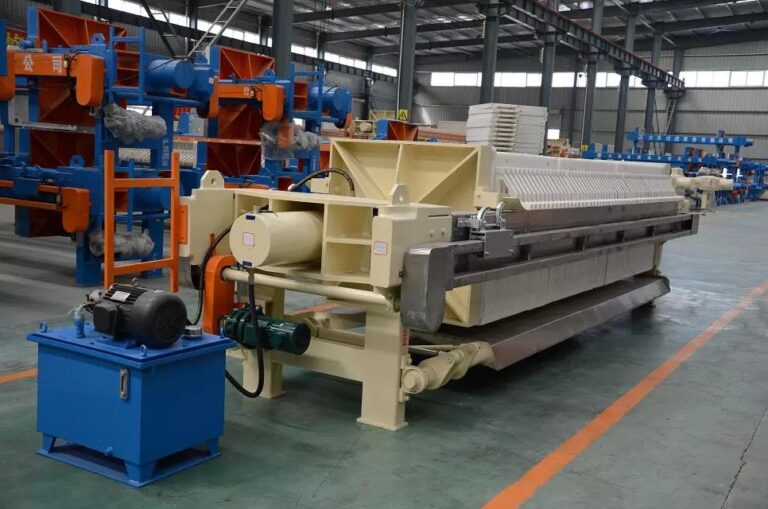
Selecting a membrane filter press for a mining operation is a high-stakes capital decision. The wrong specification leads to chronic underperformance, inflated operating costs, and failure to meet critical dry stacking or water recovery targets. Many procurement teams focus solely on plate size or purchase price, overlooking the integrated system dynamics that dictate long-term success.
This selection process demands a shift from simple equipment comparison to a holistic system analysis. The interplay between filtration area, pressure regimes, and slurry characteristics defines not just capacity, but the total cost of ownership and operational resilience. Getting these specifications right is fundamental to mitigating tailings risk and securing a social license to operate.
Filtration Area vs. Chamber Volume: Core Capacity Specs
Defining the Primary Metrics
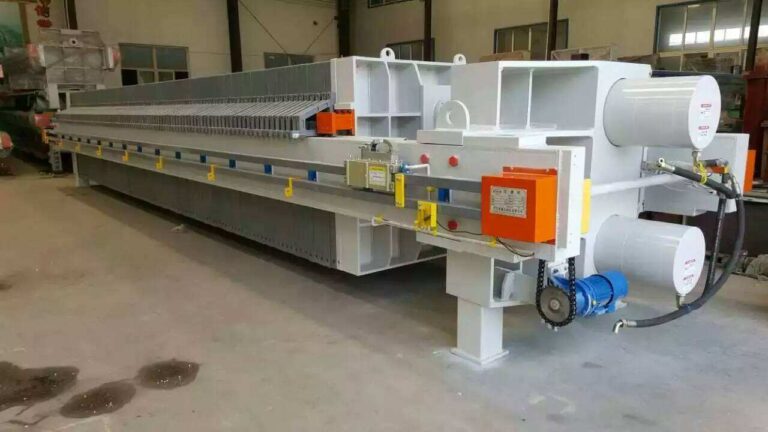
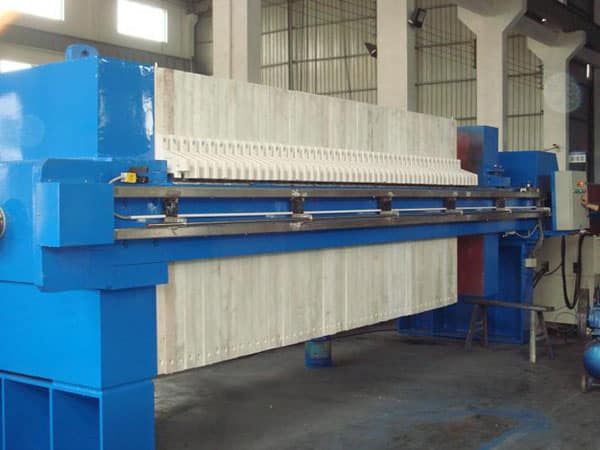
The filtration area and chamber volume are the foundational specifications for any filter press. The total filtration area, calculated from the sum of all active plate surfaces, governs the rate of liquid separation. Chamber volume, determined by plate size and depth, sets the maximum mass of solids processed per cycle. For mining-scale operations, plates typically range from 800mm to over 2000mm, with total areas often exceeding 350 m². Chamber depth, usually between 30-45mm, directly dictates the final cake thickness and dry solids output per batch.
The Strategic Sizing Relationship
These two metrics are intrinsically linked for accurate sizing. The required filtration area is derived from the slurry volume and solids concentration needed to fill the chamber volume within a target cycle time. A common oversight is specifying area based on liquid flow alone without correlating it to the chamber’s solids-holding capacity. This can result in a press that filters quickly but requires impractically short cycles to meet throughput, or one that is grossly oversized. According to the GB/T 34330-2017 Filter press standard, which establishes baseline technical requirements, precise dimensional and capacity specifications are critical for interoperability and predictable performance.
Impact on Project Economics
Misalignment between these core specs creates immediate bottlenecks or capital waste. An undersized chamber volume forces more frequent cycles, straining ancillary systems and increasing cloth wear. An oversized filtration area for a given slurry volume leads to inefficient use of the cloth and higher capital expenditure without throughput benefit. In our analysis of project specifications, we consistently find that a detailed slurry analysis and production rate target must drive the calculation of both metrics simultaneously, not sequentially.
| Plate Size Range | Typical Filtration Area | Chamber Depth Range |
|---|---|---|
| Mining-scale plates | Exceeds 350 m² | 30-45 mm |
| 800mm to 2000mm+ | Dictates liquid separation rate | Sets final cake thickness |
| Chamber volume | Determines solids per cycle | Links to dry solids output |
Source: JB/T 4333.2-2019 Chamber filter press technical conditions. This standard establishes technical conditions for chamber filter presses, including specifications for plate dimensions, chamber construction, and overall capacity parameters relevant to these core sizing metrics.
Pressure Rating Comparison: Feed, Squeeze & Hydraulic Systems
The Three-Pressure Regime
A membrane filter press operates under three distinct pressure systems, each with a non-negotiable function. The feed pump provides filtration pressure, typically up to 7 bar (100 psi), to push slurry into the chambers and form the initial cake. The membrane squeeze system then applies secondary compression, often between 15.5-40 bar, via inflatable diaphragms to mechanically expel residual moisture. The hydraulic clamping system must generate extreme force, frequently exceeding 4000 psi, to seal the entire plate pack against these internal pressures.
Optimizing the Feed Cycle
The feed pump’s role is frequently underestimated. It is not merely a transfer pump; its control strategy is critical for performance. Automated systems that ramp pressure gradually are essential. This controlled approach allows a protective initial cake layer to form on the cloth, preventing fine particles from blinding the fabric prematurely. A pump that delivers maximum pressure too quickly will reduce cloth life and compromise filtration efficiency, regardless of the press’s rated capabilities.
The Squeeze as a Throughput Multiplier
The high-pressure membrane squeeze is the defining feature that separates membrane from recessed chamber presses. This phase is responsible for achieving target cake dryness and drastically reducing cycle time. The pressure rating here is a direct lever for final moisture content. Operations targeting dry stacking for tailings management must prioritize a press with a sufficient squeeze pressure rating, as defined in standards like JB/T 4333.3-2019 Membrane filter press technical conditions, to ensure the mechanical force needed to meet dryness specifications.
| System | Typical Pressure Range | Primary Function |
|---|---|---|
| Feed Pump (Filtration) | Up to 7 bar (100 psi) | Initial cake formation |
| Membrane Squeeze | 15.5-40 bar | Expels residual moisture |
| Hydraulic Clamping | >4000 psi | Seals plate pack |
| Automated pump control | Gradual pressure ramp | Prevents cloth blinding |
Source: JB/T 4333.3-2019 Membrane filter press technical conditions. This standard directly specifies the technical requirements and performance criteria for membrane filter presses, including the design and pressure ratings for feed, squeeze, and hydraulic systems critical for safe and effective operation.
Throughput & Cycle Time: Calculating Operational Capacity
The Throughput Equation
Operational capacity is the ultimate metric, calculated as: (Chamber Volume) x (Feed Solids Concentration) x (Cycles per Day). While chamber volume and solids concentration are largely fixed by design and slurry, the cycles per day are governed entirely by cycle time. Therefore, reducing cycle time is the most effective way to increase throughput without enlarging the physical equipment.
Deconstructing the Cycle
A full filter press cycle includes closing, filling, filtration, membrane squeeze, cake discharge, and cloth washing (if automated). Membrane technology revolutionizes this sequence by compressing the dewatering phase. The squeeze is optimally initiated when chambers reach approximately 80% capacity. This timing balances maximum solids loading with sufficient space for effective membrane expansion to apply uniform pressure. Initiating too early wastes chamber capacity; too late can strain the diaphragms and reduce effectiveness.
The Economic Advantage of Speed
The membrane squeeze can reduce overall cycle time by 50-75% compared to a recessed chamber press relying solely on feed pressure. This acceleration directly translates to more batches processed daily. When evaluating options, the premium for a membrane press must be assessed against this throughput multiplier. The return on investment often comes from faster water reclamation for process reuse and increased dry solids handling capacity, not just from a marginally drier cake.
| Key Variable | Impact on Throughput | Typical Membrane Advantage |
|---|---|---|
| Chamber Volume | Base solids capacity | Fixed by plate design |
| Feed Solids % | Multiplies cycle output | Slurry-dependent variable |
| Cycle Time | Critical throughput variable | 50-75% reduction vs. recessed |
| Cycles/Day | Direct capacity driver | Increased by faster cycles |
| Membrane initiation | At 80% chamber capacity | Optimizes squeeze effectiveness |
Source: Technical documentation and industry specifications.
Membrane vs. Recessed Chamber Plates: Configuration Pros & Cons
Mechanism and Performance Divide
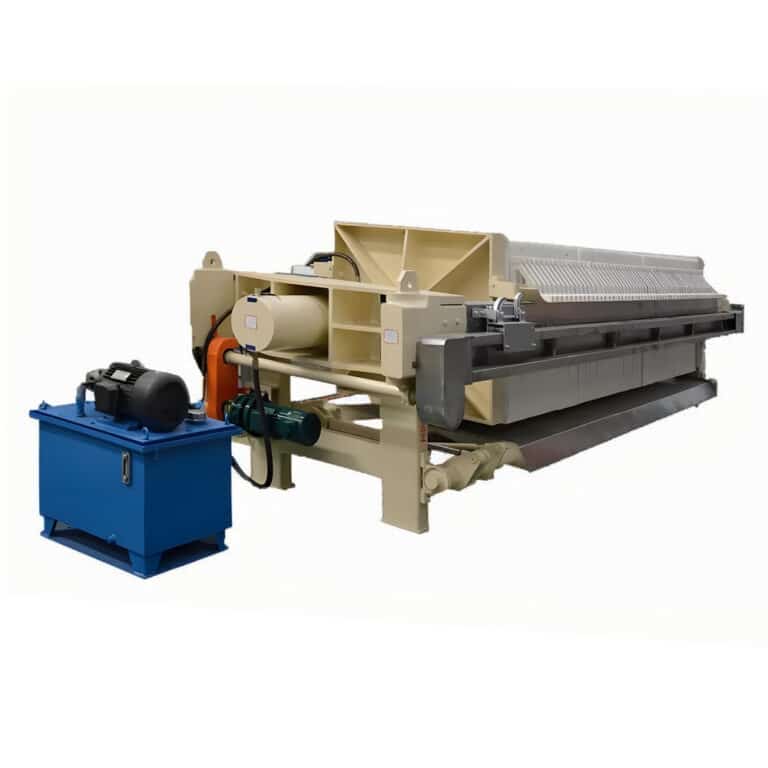
The core difference lies in the dewatering mechanism. A recessed chamber press relies solely on feed pump pressure to form and dewater the cake. A membrane press uses a mixed plate pack—alternating solid recessed plates and membrane plates—to add a high-pressure mechanical squeeze phase after filtration. This secondary compression forces out significantly more residual liquid, producing a drier cake in a much shorter time.
Evaluating Cost and Resilience
The higher initial capital cost of a membrane press is a primary consideration. However, a critical design detail mitigates long-term risk: the choice between replaceable rubber diaphragms and welded membranes. Replaceable diaphragms transform maintenance from a major plate replacement job into a straightforward component swap. This drastically reduces downtime and cost if a single membrane fails. Recessed plates, while lower in upfront cost, offer no such performance upgrade path and typically incur higher operating costs per ton due to longer cycles and higher residual moisture.
The Mining Application Decision
For most modern mining operations, especially those targeting dry stacking or maximizing water recovery, the operational advantages of membrane plates are decisive. The ability to achieve a transportable, stackable cake and the throughput gains justify the capital expenditure. The configuration directly supports broader environmental and risk management strategies, making it a strategic, not just technical, choice.
| Feature | Membrane Plates | Recessed Chamber Plates |
|---|---|---|
| Key Mechanism | High-pressure squeeze phase | Feed pressure only |
| Cycle Time | Shorter | Longer |
| Final Cake Moisture | Drier | Potentially higher |
| Diaphragm Type | Replaceable or welded | Not applicable |
| Initial Capital Cost | Higher | Lower |
| Operational Flexibility | High | Limited |
Source: JB/T 4333.3-2019 Membrane filter press technical conditions. This standard defines the specific construction and performance requirements for membrane plates, including diaphragm specifications, which are central to the performance advantages and maintenance considerations outlined in this comparison.
Total Cost of Ownership: Capital, Operating & Maintenance Factors
Looking Beyond Purchase Price
The acquisition cost is often less than 40% of the total cost of ownership (TCO) over a decade. Operating costs are dominated by electricity for pumps and hydraulics, periodic filter cloth replacement, and labor. Maintenance costs are driven by the frequency and severity of component wear or failure. A TCO analysis forces a lifecycle perspective, revealing the true value of durable components and efficient design.
The Role of Material Specification
Component material selection is the single greatest factor influencing maintenance cost and downtime. Slurry abrasiveness and chemistry dictate whether manifolds should be stainless or carbon steel, or if diaphragms require EPDM or more resistant Viton. Specifying the wrong material to save on initial cost guarantees premature failure. This decision must be grounded in a comprehensive slurry analysis, not assumed.
The Ecosystem for Support
Long-term operational reliability depends on access to a mature aftermarket for parts and responsive technical service. A vendor’s ability to provide lifecycle support—from commissioning and training to stocking critical spares—is as important as the equipment itself. Investing in a supplier with this ecosystem minimizes the risk of prolonged, costly unplanned downtime.
| Cost Category | Key Drivers | Mitigation Strategy |
|---|---|---|
| Capital Expenditure | Plate size, automation level | Precise sizing |
| Operating Costs | Power, cloth replacement, labor | Optimized cycle automation |
| Maintenance Costs | Component material specification | Slurry analysis for materials |
| Downtime Risk | Specialized aftermarket ecosystem | Vendor lifecycle support |
| Material Specification | Stainless vs. carbon steel | Abrasion/chemistry resistance |
Source: Technical documentation and industry specifications.
Which Filter Press is Best for Your Specific Tailings Slurry?
Slurry Characteristics Dictate Design
There is no universal “best” filter press. The optimal configuration is a function of your specific slurry. Key characteristics include particle size distribution, solids concentration, and compressibility. Fine-particle, highly compressible slurries benefit most from the high-pressure membrane squeeze. The target cake dryness—whether for conveyor transport or stable stacking—directly dictates the necessary pressure rating and cycle time.
The Non-Negotiable Step: Pilot Testing
Theoretical calculations and vendor datasheets are insufficient. Pilot testing with a representative slurry sample is essential to generate empirical data. This testing determines achievable cake dryness, optimal cycle time, cloth selection, and the precise 80% fill point for membrane initiation. Skipping this step to save time or cost is the most common and expensive mistake in filter press procurement, often leading to irreversible mis-specification.
From Data to Specification
The pilot data provides the objective basis for all major decisions. It informs the choice between membrane and recessed plates, the required pressure ratings, and the filtration area needed to meet production targets. This data-driven approach selects the press whose proven performance aligns with your slurry profile and operational goals, as guided by application standards like HG/T 4333.3-2019 Membrane filter press.
| Slurry Characteristic | Favored Configuration | Key Decision Driver |
|---|---|---|
| Fine-particle, compressible | Membrane squeeze | Achievable cake dryness |
| High solids concentration | Optimized chamber volume | Cycle time efficiency |
| Target cake dryness | Dictates necessary pressure | Pilot testing data |
| Particle size distribution | Informs cloth selection | Filtration rate |
Source: HG/T 4333.3-2019 Membrane filter press. This chemical industry standard provides guidelines on application and material compatibility for membrane presses, which support the need for slurry-specific analysis to determine optimal configuration and component selection.
Key Selection Criteria Beyond Core Technical Specifications
Automation as a Baseline
Advanced automation via PLC and HMI is no longer a luxury. It ensures consistent, repeatable cycles for optimal cake quality, enhances operator safety by reducing manual intervention, and provides critical data collection for process optimization and reporting. Automated cloth washing systems and cake detection sensors further reduce labor and improve reliability.
Mobility and Integrated Solutions
The industry is shifting toward integrated, skid-mounted or containerized filtration plants. These mobile solutions offer significant advantages for remote mining sites, brownfield expansions, or pilot projects. They reduce installation time and complexity and can be relocated as mine plans evolve. Evaluating a supplier’s capability to deliver such integrated systems is key for flexible, future-proof operations.
The Strategic Dry Stacking Imperative
Filter press selection is increasingly central to water stewardship and tailings management strategies. Producing a dry, stackable tailings cake mitigates the catastrophic risks associated with traditional slurry dams, reduces long-term environmental liability, and can significantly accelerate the permitting process for new projects. The press becomes a core component of an ESG strategy, transforming the purchase from an equipment acquisition into an investment in social license and operational resilience.
Implementing Your Selection: Pilot Testing & Scaling Up
Validating Performance at Pilot Scale
A successful full-scale installation is built on rigorous pilot testing. This phase validates all theoretical parameters—cake dryness, cycle time, cloth type performance—with your actual slurry. It identifies the precise operating parameters, such as the optimal feed pressure curve and membrane initiation point, that will maximize efficiency at scale. Treat the pilot as a learning phase to refine the operational recipe.
The Scale-Up Methodology
Scaling from pilot to production involves proportional increases based on the pilot data. Filtration area and chamber volume are scaled linearly to meet the target production rate. Crucially, ancillary systems—feed pumps, filtrate tanks, and cake handling conveyors—must be sized accordingly. An undersized feed pump will become the bottleneck for an otherwise correctly sized press.
Commissioning for Day-One Success
The final step is a structured commissioning process that leverages the OEM’s start-up support. This includes thorough operator training on both routine procedures and troubleshooting. A well-executed commission ensures the system operates at its designed efficiency from the first production cycle, securing the projected ROI.
| Implementation Phase | Critical Activity | Outcome |
|---|---|---|
| Pilot Testing | Validates cake dryness, cycle time | Empirical performance data |
| Identifies 80% membrane fill point | Optimizes squeeze timing | |
| Scale-up | Proportional area/volume increase | Production capacity |
| Commissioning | OEM training and support | Operational readiness |
Source: Technical documentation and industry specifications.
The selection process culminates in three priorities: data-driven specification via pilot testing, a lifecycle evaluation of total cost over initial price, and alignment of the equipment with broader water and tailings management strategies. The correct membrane filter press is a throughput accelerator and a risk mitigation tool.
Need a professional dewatering solution tailored to your specific slurry characteristics and production goals? The engineering team at PORVOO can support your project from pilot testing to full-scale implementation of robust membrane filtration systems. Contact us to discuss your application requirements.
Frequently Asked Questions
Q: How do we calculate the actual throughput capacity of a membrane filter press for our tailings?
A: Calculate throughput by multiplying the total chamber volume by the feed solids concentration and the number of cycles achieved per day. The critical variable is cycle time, which membrane technology can reduce by 50-75% compared to recessed chamber presses. For projects where water reclamation speed is a priority, plan to analyze cycle time as the fundamental driver of your return on investment.
Q: What are the key pressure systems in a filter press, and which one most impacts cloth life?
A: A filter press uses three pressure systems: feed (up to 7 bar), membrane squeeze (15.5-40 bar), and hydraulic clamping (>4000 psi). The feed pump system, requiring automated pressure ramping, is most critical for cloth life, as improper control causes premature blinding. This means facilities with abrasive slurries should prioritize feed pump optimization as much as the press specification itself.
Q: When should we initiate the membrane squeeze cycle to optimize dewatering and throughput?
A: Initiate the membrane squeeze phase when the chamber reaches approximately 80% capacity with solids. This threshold balances maximum solids loading with sufficient space for effective membrane expansion to expel residual moisture. If your operation requires the driest possible cake, plan for control systems that can accurately detect this fill point to activate the high-pressure squeeze.
Q: Why might a membrane plate with a replaceable diaphragm be preferable to a welded design for mining?
A: A replaceable rubber diaphragm design mitigates cost and downtime risk by allowing a single damaged membrane to be swapped without discarding the entire polypropylene plate. This design choice directly supports the technical conditions for maintenance and longevity outlined in standards like JB/T 4333.3-2019. For mining applications targeting dry stacking, this operational resilience typically justifies the higher initial capital expenditure.
Q: Beyond the purchase price, what factors dominate the total cost of ownership for a filter press?
A: Operating costs are dominated by power for pumps and hydraulics, frequent cloth replacement, and labor. Maintenance costs hinge on material specification for longevity, requiring component materials like specific steel grades or diaphragm polymers to be chosen based on slurry abrasiveness and chemistry. This means procurement must evaluate vendors on lifecycle support and detailed slurry analysis to reduce unplanned downtime.
Q: Is pilot testing really necessary before selecting a full-scale filter press?
A: Yes, pilot testing is non-negotiable to determine critical parameters like achievable cake dryness, optimal cycle time, and cloth life with your specific slurry. This empirical data informs final decisions on plate type, pressure ratings, and cloth selection, as generalized specifications often lead to misapplication. If your project has strict dryness or throughput goals, expect to budget for and conduct thorough pilot testing to de-risk the capital investment.
Q: How does filter press selection integrate with broader water stewardship and tailings management strategies?
A: Selecting a high-performance press is central to implementing dry stacking, which mitigates tailings dam risks, reduces environmental liability, and can accelerate permitting. This strategic function is supported by equipment built to foundational industrial standards like GB/T 34330-2017. This means the decision transforms from a simple equipment purchase into an investment in operational resilience and social license to operate.
Q: What are the critical steps for scaling up from a successful pilot test to full production?
A: Scaling up requires proportionally increasing filtration area and chamber volume based on validated pilot data, while ensuring ancillary systems like feed pumps are sized accordingly. Commissioning must include thorough operator training and leverage OEM start-up support. For operations aiming for peak efficiency from day one, plan a meticulous pathway that uses pilot data to fine-tune the full-scale system’s cycle parameters and feed strategy.