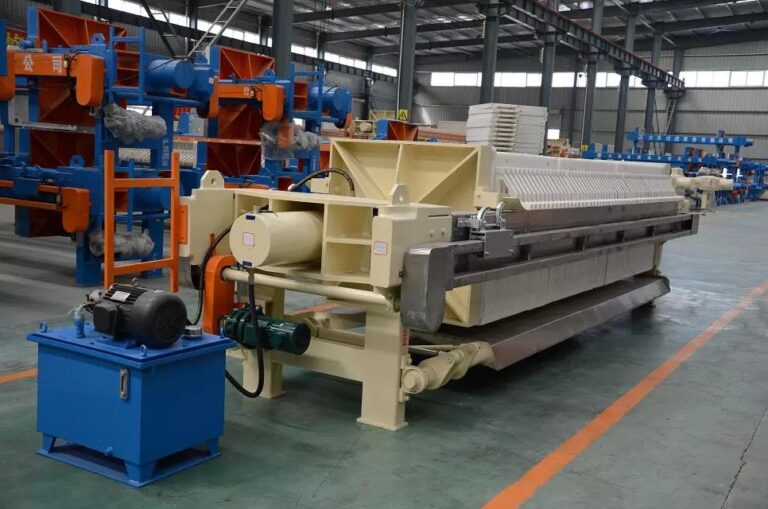
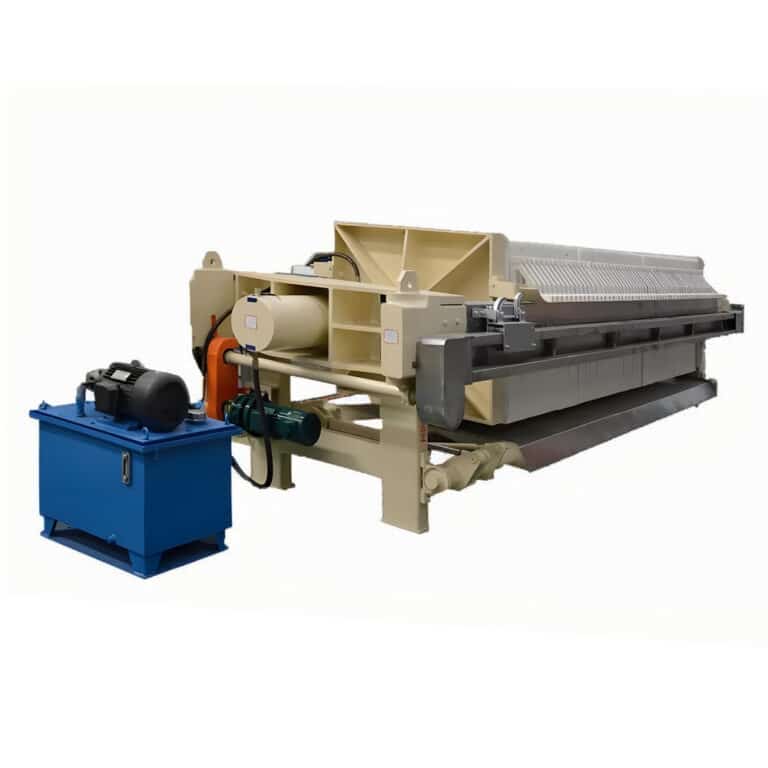
For process engineers and plant managers, the membrane filter press is a critical dewatering asset, yet its cycle time often becomes an unexamined bottleneck. The common misconception is that faster cycles compromise cake dryness or equipment integrity. In reality, systematic optimization of the mechanical and control parameters can unlock significant throughput gains without sacrificing performance. The decision to optimize is not about pushing equipment harder but about operating it smarter.
Attention to cycle efficiency is now a direct lever on plant capacity and operational cost. In batch-driven industries, reducing a press’s cycle time by even 15% can translate to additional production runs per day, directly impacting bottom-line revenue. This focus moves the filter press from a passive processing unit to an active throughput multiplier within your material handling ecosystem.
Method 1: Optimize the Membrane Squeeze Cycle
Understanding the Mechanical Advantage
The membrane squeeze is the defining feature that enables dramatic cycle time reductions. This mechanical compression step, typically applying 17-25 bar (225+ psi), forcibly expels interstitial moisture after the initial filtration phase. The strategic timing of this squeeze is governed by the 80% Fill Rule. Initiating inflation when chambers are approximately 75-80% full, as indicated by a drop in feed pump flow, optimizes energy use and prevents premature strain on the diaphragms.
Implementing the 80% Fill Rule
This precise inflection point marks the transition from filtration to compression, dramatically shortening the final, slow consolidation phase that consumes a disproportionate amount of a standard press’s cycle. Operators must leverage historical data to identify this optimal trigger for their specific slurry. According to research from JB/T 4333.3-2017, the safe and effective application of membrane squeeze pressure is central to this optimization method, turning operational intelligence into a direct performance lever for achieving the core 15-30% time reduction.
Key Parameters for Squeeze Optimization
The table below outlines the critical operational parameters for effectively implementing the membrane squeeze cycle. Monitoring these indicators is essential for consistent, repeatable results.
| Parameter | Optimal Range / Value | Key Trigger / Goal |
|---|---|---|
| Squeeze Pressure | 17-25 bar (225+ psi) | Mechanical compression |
| Chamber Fill Level | 75-80% full | 80% Fill Rule |
| Cycle Time Reduction | 15-30% | Core target |
| Pump Flow Indicator | Drop in flow | Squeeze initiation point |
Source: JB/T 4333.3-2017 Membrane filter press. This standard governs the design and operation of membrane filter presses, including the safe and effective application of membrane squeeze pressure, which is central to this optimization method.
Method 2: Implement Staged Feed Pressure Control
The Problem of Premature Blinding
Optimizing cycle time is not about applying maximum pressure instantly but about building an effective filtering matrix. A common operational error is ramping to full feed pressure immediately, which can cause premature cloth blinding. This occurs when a dense, impermeable cake forms too quickly, drastically reducing throughput and extending the fill phase unnecessarily.
The Graduated Pressure Solution
An automatic pump control system that ramps pressure in graduated stages (e.g., 25, 50, 75, then 100 psi) is critical. Starting at a lower pressure allows a permeable initial layer of solids to form on the cloth, which then acts as a filter aid for subsequent slurry. This staged approach ensures even cake formation, prevents channeling, and maintains cake compressibility for the subsequent membrane squeeze.
Validating the Staged Approach
Furthermore, monitoring the pump’s cycle time at the final pressure stage provides a reliable, automated indicator for when to initiate the squeeze, ensuring consistent, optimal fill. The framework for validating this method’s effectiveness in achieving optimal, repeatable cake formation is provided by standard test methods like GB/T 32759-2016.
The following table illustrates a typical staged pressure profile and its intended outcome for the filtration phase.
| Pressure Stage | Example Value | Primary Purpose |
|---|---|---|
| Initial Stage | 25 psi | Permeable cake formation |
| Intermediate Stage | 50-75 psi | Gradual matrix building |
| Final Stage | 100 psi | Complete filtration |
| Process Outcome | Prevents cloth blinding | Ensures even cake |
Source: GB/T 32759-2016 Test method for filter press. The standard’s test methods for filtration capacity and cake formation provide a framework for validating the effectiveness of staged pressure control in achieving optimal, repeatable results.
Method 3: Configure Your Plate Pack for Maximum Efficiency
Evaluating Feed and Design
The physical configuration of the plate pack is a critical variable in total cost of ownership and efficiency. The corner-feed, non-gasketed plate design is favored for membrane applications because it utilizes the entire plate surface area during inflation, ensuring uniform pressure distribution. A center-feed design concentrates stress on the feed port, risking cloth or membrane tears and inefficient dewatering.
Choosing Between Plate Types
Plate economics also present a strategic choice: welded membrane plates versus plates with removable rubber diaphragms (EPDM, NBR, Viton). In my experience, the latter offers superior operational resilience, enabling faster, cheaper repairs with often in-stock parts, minimizing downtime compared to waiting weeks for a full welded plate replacement. This choice is informed by the material and construction specifications within JB/T 4333.2-2017 and JB/T 4333.3-2017.
Strategic Upgrade Paths
For budget-conscious operations, a “mixed pack”—alternating membrane and recessed plates—provides a cost-effective upgrade path, delivering significant performance gains as a strategic stepping stone toward a full membrane system.
Consider the following configuration options and their primary benefits when auditing or specifying your plate pack.
| Configuration Option | Key Feature | Primary Benefit |
|---|---|---|
| Feed Design | Corner-feed, non-gasketed | Uniform pressure distribution |
| Membrane Plate Type | Removable rubber diaphragms | Faster, cheaper repairs |
| Diaphragm Material | EPDM, NBR, Viton | Chemical/operational resilience |
| Cost-Effective Upgrade | “Mixed pack” (alternating plates) | Strategic performance stepping stone |
Source: JB/T 4333.2-2017 Chamber filter press and JB/T 4333.3-2017 Membrane filter press. These standards define the technical requirements for chamber and membrane plates, informing the design choices and material specifications for a reliable, efficient plate pack.
Method 4: Choose the Right Membrane Inflation Medium
A Fundamental Safety Decision
The choice between water and air as the inflation medium is a fundamental safety and operational design decision. Using high-pressure water in a dedicated closed-loop system is the safer, more reliable method. A water rupture results in a contained leak, whereas an air rupture can cause sudden pressure release, potential plate damage, and hazardous plastic shrapnel, leading to extended, unplanned downtime.
Operational and Environmental Impact
The closed-loop system recovers and reuses the squeeze water, reducing operational waste. This design choice directly impacts plant safety protocols, maintenance procedures, and utility consumption. It safeguards the productivity gains achieved through cycle optimization by minimizing the risk of catastrophic failure and major cycle interruptions. The safety requirements outlined in JB/T 4333.3-2017 directly inform this critical design choice.
The comparative risks and characteristics of each inflation medium are summarized below.
| Inflation Medium | System Type | Key Risk / Characteristic |
|---|---|---|
| High-Pressure Water | Closed-loop, dedicated | Contained leak on failure |
| Air | Standard pneumatic | Hazardous rupture potential |
| Water System Outcome | Recovers squeeze water | Reduces operational waste |
| Safety Priority | Water over air | Prevents catastrophic failure |
Source: JB/T 4333.3-2017 Membrane filter press. The standard outlines safety and technical requirements for membrane filter press systems, which directly informs the critical design choice between water and air as an inflation medium for reliable operation.
Method 5: Automate Cycle Phases for Speed and Consistency
Targeting Non-Filtration Time
Reducing the non-filtration portions of the cycle—filling, compression, draining, and discharge—is essential for total time savings. Automating valve sequencing, squeeze pressure control, and inflation line draining ensures prompt, consistent phase transitions. Manual intervention in these steps introduces variability and extends the overall cycle.
The Strategic Role of Automation
Incorporating an automatic plate shifter dramatically reduces the time and labor for cake discharge compared to manual operation. This represents a strategic shift in labor from operation to optimization. By removing personnel from repetitive, hazardous tasks, skilled labor is reallocated to process monitoring, data analysis, and preventive maintenance.
The Human Capital Dividend
This investment in automation elevates the operational role, aiming to increase system reliability and yield through data-driven oversight rather than manual intervention. It transforms the operator’s function from executing the cycle to optimizing it.
| Automation Component | Function | Impact |
|---|---|---|
| Valve Sequencing | Automated phase transitions | Consistent cycle timing |
| Squeeze Pressure Control | Precise membrane inflation | Maintains optimal compression |
| Automatic Plate Shifter | Mechanical cake discharge | Dramatically reduces labor time |
| Labor Reallocation | From operation to optimization | Data-driven process oversight |
Source: Technical documentation and industry specifications.
Calculating the ROI of Cycle Time Optimization
Beyond Simple Time Savings
The return on investment for membrane optimization extends far beyond faster cycles. A 50-75% cycle time reduction fundamentally transforms the filter press from a potential bottleneck into a throughput multiplier. In batch-driven processes, this directly increases production batches per day, impacting overall plant capacity and revenue generation.
Accounting for Systemic Output
ROI calculations must therefore account for increased systemic output, not just labor or energy savings per cycle. Furthermore, features like optional backer plates, which allow a press to run efficiently at partial capacity, provide operational agility.
Protecting Capital Investment
This enables facilities to handle variable volumes or smaller batches without sacrificing performance, allowing capital assets to scale output in response to demand fluctuations, protecting the investment.
| ROI Factor | Typical Impact / Range | Outcome |
|---|---|---|
| Cycle Time Reduction | 50-75% | Throughput multiplier |
| Operational Agility | Optional backer plates | Efficient partial capacity runs |
| Revenue Impact | Increased batches per day | Higher plant capacity |
| Investment Protection | Scales with demand | Capital asset flexibility |
Source: Technical documentation and industry specifications.
Next Steps: Implementing Your Optimization Plan
Begin with a Process Audit
Realizing full productivity gains requires viewing the filter press as one component in an integrated material handling ecosystem. Competitive advantage lies in seamless workflow integration, including sludge chutes, cake carts, and automated cloth washers. These peripherals are critical to minimizing the downtime between cycles. Begin your optimization plan by auditing current cycle data to establish baselines and identify your specific 80% fill point.
Evaluate Critical Components
Evaluate your plate pack configuration and inflation medium system for safety and efficiency gaps. This includes assessing whether your current membrane filter press equipment is configured to support the advanced optimization methods discussed. Finally, consider automation not as a mere convenience but as a strategy for human capital redeployment and data-driven process control, ensuring the long-term sustainability of your performance improvements.
The core decision points involve validating your squeeze initiation trigger, implementing staged pressure control, and ensuring your plate and system design supports safe, efficient operation. Each step builds upon standardized practices to create a compounded effect on throughput. Need professional guidance to audit your specific membrane filter press operation and develop a tailored optimization roadmap? The engineering team at PORVOO can provide a detailed analysis based on your slurry characteristics and production goals. Contact Us to discuss a cycle time evaluation.
Frequently Asked Questions
Q: How do you determine the optimal moment to start the membrane squeeze cycle for maximum efficiency?
A: You should initiate the diaphragm inflation when the filter chambers are approximately 75-80% full, a point typically signaled by a drop in the feed pump flow rate. This 80% Fill Rule optimizes energy use and prevents premature strain on the membranes by transitioning from filtration to mechanical compression at the right time. For operations targeting a 15-30% cycle reduction, using historical data to pinpoint this exact trigger for your specific slurry is the critical first step.
Q: What is the main operational advantage of using a staged feed pressure ramp instead of applying full pressure immediately?
A: A staged pressure control system builds a permeable filter cake that prevents premature cloth blinding and ensures even dewatering. Starting at a lower pressure (e.g., 25 psi) allows a porous initial solids layer to form, which then acts as a filter aid for subsequent slurry, maintaining high throughput. This means facilities processing compressible or fine-particle slurries must implement automated, graduated pressure control to achieve both speed and consistent cake formation.
Q: Why is a corner-feed plate design recommended over a center-feed design for membrane filter presses?
A: A corner-feed, non-gasketed plate design ensures uniform pressure distribution across the entire membrane surface during the squeeze cycle, maximizing dewatering efficiency. A center-feed design concentrates stress on the single feed port, which risks damaging the cloth or membrane and leads to uneven compression. If your goal is reliable, high-pressure operation, you should specify corner-feed plates, as this configuration is a foundational element for performance outlined in equipment standards like JB/T 4333.3-2017.
Q: Is it safer to use water or air as the inflation medium for the membrane squeeze, and why?
A: Using high-pressure water in a dedicated, closed-loop system is the safer and more reliable method. A water leak is contained, whereas an air rupture can cause sudden pressure release, potential plate damage, and hazardous projectiles. This design choice directly impacts plant safety protocols and maintenance, so operations prioritizing personnel safety and minimizing catastrophic downtime should invest in a closed-loop water system.
Q: How does automating a filter press cycle impact labor and overall plant productivity?
A: Automating valve sequencing and adding an automatic plate shifter reallocates skilled labor from repetitive manual tasks to process monitoring and optimization. This reduces non-filtration cycle time and shifts the operational role toward data-driven oversight and preventive maintenance. For plants aiming to increase total throughput, this investment transforms the press from a manual bottleneck into a consistently high-performing asset.
Q: What standards provide the testing framework to measure the impact of cycle time optimization on filter press performance?
A: The GB/T 32759-2016 standard establishes uniform test methods for key performance parameters like filtration capacity and final cake moisture. Using these methods is essential to objectively quantify if cycle time reductions maintain or improve output quality. Before implementing any optimization, you should baseline your current performance using this standard to ensure your reported gains are scientifically valid and comparable.
Q: What is the strategic benefit of implementing a “mixed pack” configuration of membrane and recessed plates?
A: A mixed pack alternates membrane plates with standard recessed plates, providing a cost-effective performance upgrade path for budget-conscious operations. It delivers significant dewatering improvements over a standard recessed press while avoiding the full capital cost of a complete membrane plate set. This means facilities can achieve a stepping-stone gain in throughput and cake dryness, protecting their investment by scaling capability as needed.
Q: Beyond faster cycles, what broader financial impact should be included in an ROI calculation for membrane optimization?
A: The primary ROI driver is often the transformation of the filter press from a bottleneck into a throughput multiplier, directly increasing production batches per day and overall plant revenue. Calculations must account for this systemic output increase, not just per-cycle utility savings. For batch-driven processes, this means the investment’s payback is fundamentally tied to enabling higher plant capacity and operational agility.