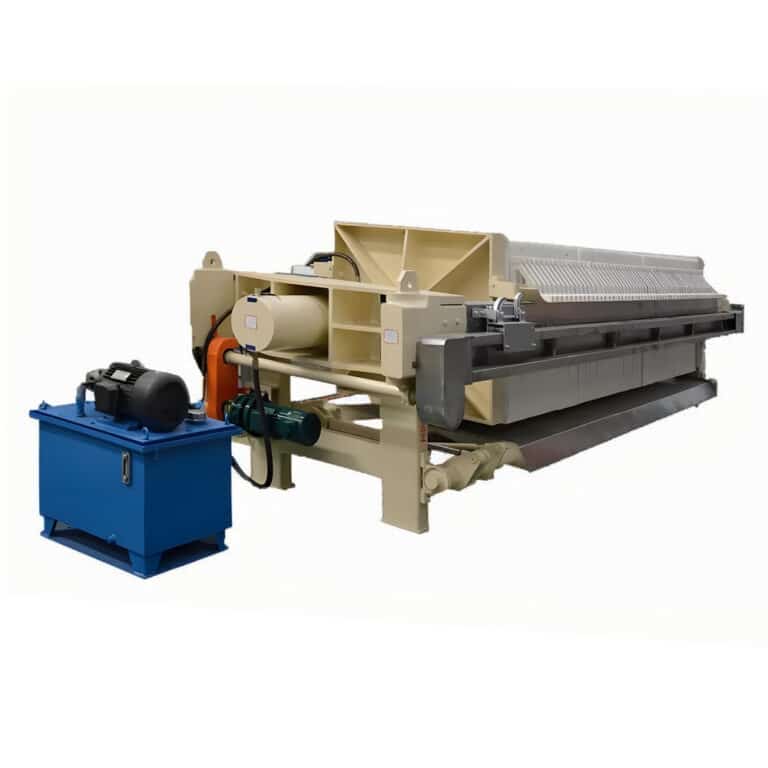
Specifying the correct chamber volume for a membrane filter press is a critical, data-driven decision that directly determines the capital efficiency and operational viability of your mineral concentrate dewatering circuit. An error in sizing—whether undersizing that creates a bottleneck or oversizing that inflates costs—can compromise the entire project’s return on investment. This calculation is not a simple volume estimate; it is a strategic engineering exercise that balances throughput, cake dryness, and total cost of ownership.
The shift toward pressure filtration with membrane squeeze has made precise sizing more important than ever. As operations prioritize drier cake for reduced transport costs and enhanced water recovery, understanding how to translate your specific slurry characteristics into an optimal chamber volume from 20 dm³ to 9000 dm³ is essential for maximizing plant performance and profitability.
Key Parameters for Sizing Your Filter Press Chamber Volume
The Core Sizing Formula
The foundation of filter press specification is the chamber volume calculation, which dictates batch capacity. The required volume is a direct function of your dry solids mass per cycle and the bulk density of the dewatered cake. The essential formula is: Required Chamber Volume (dm³) = (Dry Solids Mass per Cycle (kg) / Cake Bulk Density (kg/dm³)). This deceptively simple equation relies entirely on accurate, site-specific data. The dry solids mass is derived from your daily throughput and desired cycle frequency, while cake bulk density must be determined through representative laboratory filtration tests.
Non-Negotiable Laboratory Data
Relying on theoretical or historical data for slurry characteristics is a common and costly mistake. Laboratory testing is mandatory to determine the filterability of your specific mineral concentrate and the achievable cake density. Variations in particle size distribution, slurry concentration, and chemical composition significantly impact these values. Industry experts consistently find that skipping this step is the primary cause of underperforming installations. The data from these tests feeds directly into the core formula and informs subsequent decisions on plate type and cycle optimization.
Aligning Parameters with Equipment
Once the theoretical chamber volume is calculated, it must be matched to standard press configurations. These configurations are functions of plate size (e.g., 800mm to 2000mm), chamber depth, and the number of chambers. For instance, a press with 1500mm plates and a 40mm chamber depth can yield total volumes between 4,800 and 8,000 dm³ depending on the plate count. The goal is to select a standard model that meets or slightly exceeds your calculated need without significant overcapacity.
The following table summarizes the key parameters that feed into this alignment process.
| Parameter | Typical Range/Value | Impact on Sizing |
|---|---|---|
| Dry Solids Mass | Site-specific (kg/cycle) | Directly determines volume |
| Cake Bulk Density | Lab-determined (kg/dm³) | Core formula variable |
| Slurry Concentration | Variable (%) | Affects feed volume |
| Target Cycle Time | Hours per day | Sets batch frequency |
Source: JB/T 4333.1-2019 Chamber filter press type and basic parameters. This standard defines the fundamental technical parameters for chamber filter presses, providing the classification system and key specifications necessary for selecting equipment based on capacity requirements derived from these core parameters.
Cost Analysis: Capital, Operational, and Total Cost of Ownership
Breaking Down CAPEX and OPEX
A thorough financial evaluation separates capital expenditure (CAPEX) from operational expenditure (OPEX). CAPEX includes the filter press, feed pumps, automation systems, and installation. OPEX encompasses energy consumption, filter cloth replacement, routine maintenance, labor, and disposal costs for the filter cake. The strategic analysis lies in understanding the trade-off between these two cost centers. A lower CAPEX option often carries a higher, recurring OPEX burden.
The Strategic Value of Drier Cake
The choice between membrane and recessed chamber presses epitomizes the CAPEX/OPEX trade-off. According to research, the higher initial investment in a membrane press is frequently justified by long-term OPEX savings. The secondary squeeze achieves a 5-15% lower cake moisture, which reduces weight for transport, lowers disposal fees, and can eliminate the need for downstream thermal drying. In one project we analyzed, the reduced haulage costs alone paid for the membrane system premium in under 18 months.
Quantifying Water Recovery
In water-stressed mining regions, OPEX analysis must include the value of recovered process water. A membrane press typically yields clearer filtrate with higher recovery rates. This water can be recycled back into the processing plant, reducing freshwater intake and associated costs. This credit can be substantial, sometimes redefining the primary ROI driver for the filtration investment from solid cake disposal to water conservation.
| Cost Component | Examples | Strategic Consideration |
|---|---|---|
| Capital (CAPEX) | Press, pumps, automation | Higher initial investment |
| Operational (OPEX) | Energy, cloths, maintenance | Long-term recurring expense |
| Major OPEX Credit | Recovered process water | Reduces net operating cost |
| Key Trade-off | Membrane vs. recessed press | CAPEX vs. OPEX balance |
Source: Technical documentation and industry specifications.
Membrane vs. Recessed Chamber Presses: Which Is Better for You?
The Mechanism of Superior Dewatering
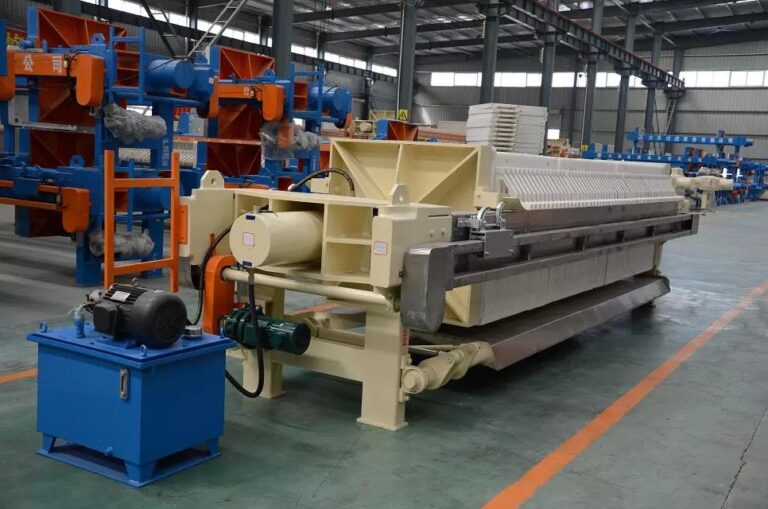
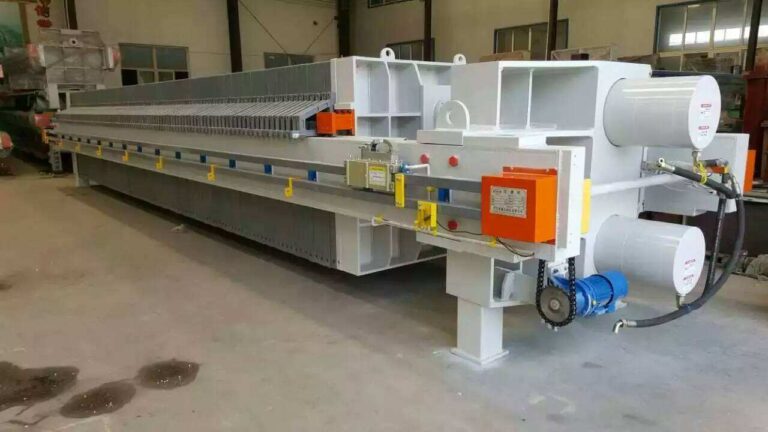
A membrane filter press incorporates an inflatable diaphragm behind the filter cloth. After the initial filtration cycle, this diaphragm is pressurized (typically 15-25 bar) to mechanically squeeze the cake, expelling additional moisture. This secondary action is why pressure filtration with membrane squeeze has largely displaced vacuum technology for final concentrate dewatering. The recessed chamber press lacks this mechanism, relying solely on pumping pressure for dewatering, which results in a consistently higher residual moisture content.
Analyzing the Cost-Performance Trade-off
The decision matrix is clear. Select a membrane press when final cake dryness is a critical cost or quality factor. The higher CAPEX buys lower OPEX through reduced disposal and transport costs. A recessed chamber press may be suitable for applications where ultimate dryness is less critical, offering a lower initial investment. However, the total cost of ownership over a 5-year period often favors the membrane press for mineral concentrates.
Application-Specific Selection
Easily overlooked details include feed slurry stability and cake discharge characteristics. The uniform squeeze of a membrane can produce a more consistent, firm cake that releases cleanly from the cloth. This can reduce cloth blinding and maintenance intervals. The choice must align with the specific mineralogy and downstream handling requirements.
| Feature | Membrane Press | Recessed Chamber Press |
|---|---|---|
| Secondary Squeeze | 15-25 bar pressure | None |
| Cake Moisture Reduction | 5-15 percentage points lower | Higher moisture |
| Capital Cost (CAPEX) | Higher | Lower |
| Operational Cost (OPEX) | Lower (drier cake) | Higher (wetter cake) |
| Primary Selection Driver | Critical cake dryness | Lower initial investment |
Source: HG/T 4333-2012 Technical specification for polypropylene recessed plate and frame filter press. This standard details specifications for recessed plates and frames, the core components defining chamber volume and performance, which are fundamental to understanding the capabilities and limitations of recessed chamber press technology.
How to Calculate Required Chamber Volume for Your Concentrate
A Step-by-Step Sizing Process
Calculating the required chamber volume is a systematic, four-step process. First, define the daily dry solids throughput (in kg/day) and the available operating hours to establish the dry solids mass needed per batch cycle. Second, apply the core formula using the lab-determined cake bulk density. Third, add a design factor (typically 5-10%) for slurry variability and future throughput increases. Fourth, match this calculated volume to standard manufacturer configurations.
Matching Volume to Plate Configuration
The physical realization of chamber volume depends on plate size and chamber depth. Larger plates (e.g., 2000mm) with deeper chambers provide greater volume per plate but require more robust—and expensive—supporting infrastructure. The configuration must also consider plate count; a higher number of smaller chambers can sometimes offer more operational flexibility than fewer, larger chambers.
Avoiding Common Calculation Errors
A frequent error is using the slurry density instead of the dewatered cake bulk density in the formula, which results in a drastic overestimation of required volume. Another is failing to account for non-productive time in the cycle (cake discharge, plate closing), which reduces the effective number of cycles per day and increases the required mass per cycle.
The table below outlines the systematic approach to this calculation.
| Step | Action | Data Input |
|---|---|---|
| 1 | Define daily throughput | Dry solids (kg/day) |
| 2 | Determine operating schedule | Available hours |
| 3 | Apply core formula | Cake bulk density (kg/dm³) |
| 4 | Match to standard config. | Plate size, chamber depth |
| Example Config. | 1500mm plate, 40mm depth | 4,800 – 8,000 dm³ volume |
Source: JB/T 4333.1-2019 Chamber filter press type and basic parameters. This standard directly specifies the basic parameters and configurations of filter presses, including plate sizes and chamber dimensions, which are essential for matching a calculated volume requirement to an available equipment model.
Optimizing Cycle Time and Throughput for Maximum ROI
Deconstructing the Filtration Cycle
Throughput is the product of chamber volume and cycle frequency. The cycle includes filling, filtration, membrane squeeze (if applicable), cake discharge, and plate closure. The longest phase is usually filtration, but the greatest gains often come from minimizing the non-productive phases—discharge and closure. Reducing total cycle time by even 10% can significantly increase annual throughput without increasing chamber volume.
The Automation Imperative
Automation is the primary tool for cycle time optimization. Robotic plate shifters and conveyor belts for cake discharge can cut minutes from each cycle while improving safety. Programmable Logic Controllers (PLCs) ensure consistent, repeatable operation. The high CAPEX for full automation is strategically justified by lower labor OPEX, higher asset utilization, and the ability to achieve >95% uptime. In our experience, automated systems pay back quickly in high-cycle operations.
The Future: Data-Driven Optimization
The next frontier involves using IoT sensors to monitor pressure, flow, and cake resistance in real-time. This data can feed algorithms to dynamically adjust filling rates, squeeze pressure, and cycle termination points for each batch, extracting incremental performance gains. This moves optimization from a static setup to an adaptive process.
| Cycle Phase | Action | Optimization Tool |
|---|---|---|
| Filling & Filtration | Consistent feed slurry | Upstream thickening |
| Cake Discharge | Rapid plate shifting | Robotic plate shifter |
| Plate Closure | Fast, reliable operation | Programmable Logic Controller |
| Non-Productive Time | Minimize delays | Full automation |
| Future Frontier | Dynamic parameter adjustment | IoT sensors & AI |
Source: JB/T 4333.2-2019 Chamber filter press technical conditions. This standard establishes technical conditions for performance, safety, and assembly, ensuring the reliability of automated systems and components critical for achieving optimized, high-cycle operation.
Integrating Your Filter Press with Upstream Plant Processes
The Critical Role of Feed Consistency
A filter press is only as effective as the slurry it receives. Inconsistent feed solids concentration is a primary cause of erratic cycle times and variable cake quality. A well-designed and controlled upstream thickening stage is not optional; it is a prerequisite for reliable press operation. Variations mean the volume of slurry required to deliver the target dry solids mass changes, causing over- or under-filling of chambers.
Skid-Mounted Filtration Plants
The strategic trend is toward integrated, skid-mounted dewatering packages. These units include the feed pump, conditioning system, filter press, and controls pre-assembled on a single frame. This model reduces site integration risk, shortens commissioning time, and allows the vendor to assume responsibility for the performance of the entire circuit. It represents a shift from selling equipment to delivering a guaranteed process outcome.
Control and Instrumentation Links
Effective integration requires communication between the thickener control system and the filter press PLC. Feed density meters should provide real-time data to adjust filtration cycle parameters or feed pump rates. This level of integration smooths out upstream fluctuations and protects the press from process upsets.
Long-Term Operational Considerations and Maintenance
Material Selection as Risk Management
The choice of plate and cloth materials is a critical decision for long-term asset integrity. Polypropylene plates are standard for many concentrates, but highly abrasive or high-temperature slurries may require cast iron or stainless steel. Cloth material and weave must be selected for optimal cake release and longevity based on particle size and slurry chemistry. This decision, guided by standards like GB/T 34333-2017 Chamber filter press, directly impacts maintenance frequency and operational cost.
Proactive Maintenance Scheduling
Long-term reliability depends on a disciplined maintenance schedule. Key components include regular inspection and replacement of filter cloths, checking diaphragm integrity on membrane plates, and maintaining hydraulic systems. A spare parts inventory for critical wear items prevents extended downtime. Planning for scheduled maintenance should be part of the initial plant design, including access space and potential for unit redundancy.
Designing for Operational Resilience
For continuous process plants, consider installing multiple smaller presses instead of one large unit. This provides redundancy, allowing one press to be taken offline for maintenance without halting production. Alternatively, sizing a single press with 10-15% spare capacity allows for scheduled maintenance windows without impacting nameplate throughput.
Selecting the Right Configuration: A Decision Framework
Consolidating Technical and Strategic Drivers
The final selection requires consolidating all data: throughput requirements, target cake dryness, slurry characteristics (pH, temperature, abrasiveness), and site constraints (space, power, water). This data informs the evaluation of plate size, chamber volume, automation level, and material of construction. The framework must balance technical feasibility with the primary strategic driver—be it minimizing cake moisture, maximizing water recovery, or ensuring operational resilience.
Navigating Mega-Scale Projects
For mega-scale applications like tailings dewatering, requiring chamber volumes of 9000 dm³ and above, the vendor landscape narrows significantly. Only a few original equipment manufacturers possess the engineering capability and financial capacity to execute such projects. This shifts negotiation dynamics and makes thorough due diligence on the OEM’s project history and financial stability a critical part of the selection process.
The Final Decision Matrix
The decision should be validated against a weighted matrix that scores each configuration against key criteria: CAPEX, OPEX, cake dryness, reliability, and vendor support. This structured approach removes subjectivity and aligns the equipment selection with the overarching business objectives of the mineral processing operation.
| Decision Factor | Key Question | Data Input |
|---|---|---|
| Primary Goal | Cake dryness or water recovery? | Strategic driver |
| Slurry Characteristic | pH, temperature, abrasiveness | Material compatibility |
| Scale | Mega-scale tailings project? | Limited vendor pool |
| Operational Model | Isolated unit or integrated plant? | Commissioning risk |
| Automation Level | Labor vs. capital priority? | Target uptime (e.g., 95%) |
Source: GB/T 34333-2017 Chamber filter press. This national standard specifies comprehensive technical requirements and test methods for chamber filter presses, providing a foundational compliance framework that informs critical decisions on design, manufacture, and performance for specific applications.
The correct chamber volume sizing hinges on rigorous lab data applied to the core volume formula, followed by a strategic evaluation of the membrane versus recessed chamber trade-off. Prioritize integrating the press with upstream processes and invest in automation to secure cycle time efficiency and long-term ROI. The final configuration must be selected through a decision framework that weighs technical requirements against primary strategic drivers like cost-per-dry-ton or water stewardship.
Need a professional analysis to specify the optimal membrane filter press for your mineral concentrate? The engineering team at PORVOO can guide you from lab testing to final configuration, ensuring your dewatering circuit is sized for maximum efficiency and lifetime value. Discuss your project specifics with our experts to develop a tailored solution.
Frequently Asked Questions
Q: How do we accurately calculate the required chamber volume for our mineral concentrate filter press?
A: You determine the necessary chamber volume by applying the formula: Required Volume (dm³) = Dry Solids Mass per Cycle (kg) / Cake Bulk Density (kg/dm³). The dry solids mass is derived from your daily throughput and operating hours, while the cake density must be obtained from lab testing on your specific slurry. This means facilities must invest in representative filtration testing upfront, as an error in these inputs directly risks a costly production bottleneck or excessive capital expenditure.
Q: What are the key cost trade-offs between a membrane filter press and a recessed chamber press?
A: The decision centers on a CAPEX versus OPEX trade-off. Membrane presses command a higher initial cost but use a secondary squeeze stage to produce a drier cake, which lowers long-term transport and disposal expenses. For projects where ultimate cake dryness is a critical cost driver—such as when it can eliminate a thermal drying stage—the higher CAPEX of a membrane system is typically justified by the significant operational savings.
Q: Which technical standards are essential for specifying and procuring a chamber filter press?
A: Key standards include JB/T 4333.1-2019 for defining types and basic parameters like plate size and chamber volume, and JB/T 4333.2-2019 for technical conditions covering manufacturing, performance, and safety. If using polypropylene plates, HG/T 4333-2012 provides material and dimensional specifications. This means your equipment specification and vendor requests for quotation should explicitly require compliance with these standards to ensure reliability.
Q: How can we optimize filter press cycle time to maximize return on investment?
A: Optimize cycle time by automating non-productive phases like cake discharge and plate closure using robotic plate shifters and PLC-controlled sequences. This high-CAPEX investment strategically reduces labor OPEX, improves safety, and enables the consistent, rapid cycling needed for high plant uptime. If your operation targets over 95% availability, you should plan for full automation from the initial design phase rather than considering it a later upgrade.
Q: What long-term maintenance and operational risks should we plan for with a large filter press?
A: Long-term reliability requires proactive risk management through correct material selection for plates and cloths based on slurry pH and abrasiveness, plus a strict schedule for diaphragm and hydraulic system maintenance. Planning for redundancy, such as installing multiple smaller units, is also critical. This means operations with continuous processing requirements must budget for both a robust spare parts inventory and potential production capacity buffers to accommodate scheduled maintenance without disruption.
Q: How does upstream process stability impact filter press performance and integration?
A: The press depends entirely on receiving a consistent, well-thickened feed slurry; variations in solids concentration cause erratic cycle times and uneven cake quality. The strategic approach is to integrate the press with its feed system on a single skid, which reduces site integration risk and allows for a comprehensive performance guarantee. For new installations, you should evaluate vendors who can supply and guarantee the entire dewatering circuit, not just the press itself.
Q: What factors dictate the selection of plate size and chamber volume configuration?
A: Selection consolidates your throughput needs, lab-derived cake density, and target cycle time to calculate the required chamber volume, which is then matched to standard plate sizes (e.g., 1500mm) and chamber depths (e.g., 40mm). For mega-scale projects needing volumes over 9000 dm³, vendor options become limited to a few specialized OEMs. This means your basic engineering design must be precise before engaging suppliers, as it fundamentally dictates the available market of qualified equipment.