Ceramic tile manufacturers face a persistent challenge: managing wastewater laden with glaze pigments, surfactants, and suspended solids. Traditional, manual dosing of coagulants and flocculants is inefficient, leading to inconsistent effluent quality, wasted chemicals, and missed opportunities for material recovery. The decision to upgrade is not just about compliance; it’s about transforming a cost center into a strategic asset. The complexity of ceramic wastewater, with its low biodegradability and variable composition, demands a more intelligent approach.
The shift towards automated, sensor-driven systems is now a logical progression. Precise control over Polyacrylamide (PAM) and Polyaluminum Chloride (PAC) dosing is critical for both environmental compliance and operational economics. Whether the goal is high-purity glaze recovery or reliable slip water treatment, the margin for error is small. Investing in the right intelligent dosing technology directly impacts raw material costs, water reuse rates, and long-term plant sustainability.
What Is Intelligent PAM/PAC Dosing for Ceramic Wastewater?
Defining the Core Technology
Intelligent PAM/PAC dosing is an automated, model-driven process for treating ceramic tile wastewater. It uses real-time sensors to monitor key water quality parameters like pH, turbidity, and streaming current. This data feeds a control system that automatically adjusts the injection of coagulants (PAC) and flocculants (cationic PAM, or c-PAM). The system moves beyond static, flow-proportional dosing to a dynamic optimization that locks in ideal conditions for contaminant removal, regardless of feed variations from different tile lines.
The Chemical Mechanism in Action
The treatment relies on a two-stage physicochemical process. First, PAC neutralizes the negative surface charges on colloidal particles and anionic surfactants, destabilizing them. Second, c-PAM bridges these destabilized particles into large, dense flocs that settle rapidly. The proven sensitivity of treatment outcomes to precise pH and chemical ratios makes manual control inadequate. According to research, achieving consistent, high-quality effluent requires this automated, intelligent control to manage the complex interactions between PAC, PAM, and the specific contaminants in ceramic wastewater.
From Manual Trial to Automated Control
The transition represents a fundamental operational shift. Operators are freed from constant jar testing and manual valve adjustments. The intelligent system continuously performs micro-optimizations, responding to changes in glaze formulation or production batch. This ensures chemical usage is always at the optimal level, minimizing waste and maximizing removal efficiency. In our experience, plants that implement this shift see an immediate reduction in chemical overuse and a significant improvement in process stability.
Key Benefits: Glaze Recovery vs. Slip Treatment
Strategic Outcomes Dictate System Design
The application of intelligent dosing delivers distinct strategic benefits, primarily defined by the treatment goal: high-purity glaze recovery or general slip water treatment. For glaze recovery, the objective is to remove surfactants and organics that would contaminate recycled material, enabling a closed-loop system. For general slip treatment, the goal is reliable, rapid contaminant reduction to meet discharge or reuse standards. The system’s control algorithms must be configured for these different endgames.
Quantifying the Advantage for Material Recovery
When targeting glaze recovery, the benefit is transformative. High removal efficiencies for COD and, critically, 100% removal of surfactants are not just compliance metrics—they are enablers of circular economics. By producing clean water and recoverable solids, intelligent dosing turns wastewater treatment from a pure cost into a contributor to raw material and water conservation. This directly improves production margins by reducing procurement and disposal costs.
The Operational Efficiency Argument
For facilities focused on discharge compliance, the benefit lies in superior operational reliability. Coagulation-flocculation offers significant speed and space efficiency advantages over biological alternatives. This is crucial for handling the high-strength, variable flows typical in tile production. The table below contrasts the strategic outcomes driven by these two primary goals.
| Primary Goal | Key Performance Metric | Strategic Outcome |
|---|---|---|
| Glaze Recovery | >95% COD removal | Enables closed-loop recycling |
| Glaze Recovery | 100% surfactant removal | High-purity raw material recovery |
| General Slip Treatment | Rapid contaminant reduction | Reliable discharge compliance |
| General Slip Treatment | Superior space efficiency | Smaller footprint vs. biological |
Source: HJ 579-2010 Technical specification for advanced treatment of industrial wastewater. This specification provides the framework for achieving high effluent quality standards necessary for water reuse and material recovery, directly relevant to the performance goals of glaze recovery and slip treatment systems.
Cost Comparison: Capital Investment & Operational ROI
Analyzing the Full Cost Structure
Evaluating an intelligent dosing system requires a full lifecycle cost analysis, not just an equipment price. The capital investment covers sensors, controllers, and automated chemical feed pumps. This is often compared to the capital for biological systems, which involves large tankage and longer hydraulic retention times. The operational cost profile, however, diverges significantly and defines the ROI.
Where the Real Savings Are Generated
The operational ROI of intelligent coagulation is driven by two factors: minimized chemical waste and material recovery value. By continuously optimizing dosage, the system eliminates the reagent overuse common in manual operations—a major expense given the sensitivity of PAC and PAM to precise dosing levels. Furthermore, enabling glaze recovery creates a direct revenue stream by offsetting raw material purchases. Biological treatment may have lower chemical costs but lacks this material valorization potential.
Making the Business Case
The payback period hinges on your plant’s specific waste stream and goals. For a surfactant-heavy glaze wash line aiming for recovery, the ROI can be rapid due to high material value. For general slip treatment, the ROI comes from chemical savings and reduced surcharges for non-compliant discharge. The following comparison highlights the different financial drivers.
| Cost Component | Intelligent Coagulation | Biological Treatment |
|---|---|---|
| Capital Investment | Sensors, controllers, pumps | Large tanks, longer retention |
| Primary Operational Cost | Optimized chemical reagents | Lower chemical, higher energy |
| Key Savings Driver | Minimized reagent waste | N/A |
| Major ROI Factor | Raw material recovery value | Compliance reliability |
Source: Technical documentation and industry specifications.
Performance Metrics: Which System Achieves Better Effluent?
The Fundamental Compromise
Effluent quality is not a single metric but a spectrum defined by the system’s optimization target. Research indicates that maximum COD removal and 100% surfactant removal require different optimal conditions, forcing a strategic compromise. A system must be tuned for one primary objective, understanding that it may slightly underperform on the secondary one. This is a core configuration decision.
Levers for Surfactant vs. COD Removal
For plants where surfactant elimination is paramount—typically for glaze recovery—precise pH control (maintaining pH <6) is the dominant lever, as identified in technical studies. This condition maximizes PAC’s effectiveness in neutralizing anionic surfactants. For broad organic load (COD) reduction, the optimization focuses more on c-PAM setpoints. It’s critical to note that c-PAM significantly enhances COD removal but does not affect surfactants, allowing for staged chemical addition strategies.
Defining the Performance Ceiling
The best possible effluent—achieving both >95% COD and 100% surfactant removal—is attainable but requires sophisticated multi-parameter optimization. Using methodologies like Response Surface Methodology (RSM) to model the interactions between pH, PAC dose, and PAM dose can identify this optimal window. The table below summarizes the performance expectations based on the chosen optimization path.
| Optimization Target | Dominant Control Lever | Expected Removal Efficiency |
|---|---|---|
| Surfactant Elimination | Precise pH control (<6) | 100% surfactants |
| Maximum COD Removal | Optimized c-PAM setpoints | >95% COD |
| Best Possible Effluent | RSM-optimized conditions | >95% COD & 100% surfactants |
Source: CJ/T 51-2018 Test method for municipal sewage water quality. This standard provides the unified test methods for parameters like COD, which are critical for validating the removal efficiencies claimed for different system optimization targets.
Matching Technology to Your Plant’s Specific Waste Stream
Start with Waste Stream Characterization
Selecting the right system begins with a clear, data-driven analysis of your wastewater. The foundational insight is that tile wastewater typically has a low BOD/COD ratio, classifying it as non-biodegradable. This makes physicochemical treatment like PAM/PAC dosing the necessary core process, not an optional pre-treatment. Biological methods alone are often ineffective.
Mapping Contaminants to Treatment Processes
The next step is identifying the primary contaminant profile. Is the stream dominated by surfactants from glaze washing, or is it high in general organics and colloidal clays from slip and body preparation? This diagnosis directly dictates the chemical emphasis and control logic. For surfactant-heavy streams, the technology must prioritize exquisite pH control and PAC dosing. For high-turbidity streams, c-PAM flocculation becomes the critical function.
The Technology Selection Matrix
The universal coagulation-flocculation mechanisms mean the core technology is applicable, but the system’s intelligence must be configured for your specific contaminant hierarchy. The following table provides a clear matching guide based on stream characteristics.
| Waste Stream Characteristic | Core Treatment Process | Critical Chemical |
|---|---|---|
| Low BOD/COD ratio (non-biodegradable) | Physicochemical (coagulation) | PAC & PAM |
| Surfactant-heavy (glaze wash) | Charge neutralization & pH control | PAC |
| High turbidity & color (slip/body prep) | Flocculation & settling | c-PAM |
Source: GB/T 22627-2014 Water treatment chemicals – Polyaluminium chloride and GB/T 17514-2017 Water treatment chemicals – Polyacrylamide. These standards define the technical requirements for PAC and PAM, ensuring their performance and consistency, which is foundational for matching the correct chemical to the specific contaminant profile (e.g., charge neutralization with PAC for surfactants, bridging with PAM for turbidity).
Implementation & Integration with Existing Tile Lines
Phased Approach for Minimal Disruption
Successful integration follows a structured, phased approach. It begins with a comprehensive waste stream audit over a full production cycle to capture variability. The control unit and sensors are then installed, with chemical feed lines tapped into existing piping. Crucially, setpoints are not loaded from a generic library; they must be calibrated on-site using an optimization framework like RSM to find the ideal interactive conditions for your plant’s specific water and goals.
The Critical Calibration Phase
This calibration phase is where the system transitions from automated to intelligent. By modeling the response of key effluent parameters to changes in pH, PAC, and PAM, operators can identify the most cost-effective operating window for their primary objective. This data also establishes baseline performance metrics for ongoing monitoring and alerts.
Connecting to Plant-Wide Control
Final integration involves connecting the dosing system’s PLC to the plant’s central SCADA or control system. This allows for remote monitoring of chemical levels, pump status, and effluent quality trends. It also enables the system to receive signals from production lines, allowing it to anticipate changes in wastewater flow or composition, further refining its predictive dosing capabilities.
Maintenance, Staffing, and Operational Requirements
Evolving the Staff Role
Intelligent systems reduce manual, repetitive tasks but transform the staff’s role towards technical oversight. The shift is from manual chemical handling and jar testing to system monitoring, data interpretation, and preventive maintenance. Operators must understand the strategic compromise embedded in the system settings to effectively manage shifts in production or new glaze formulations.
The Maintenance Regimen
The reliability of the system depends on a disciplined maintenance schedule. Key activities include regular calibration of pH and turbidity sensors, inspection and cleaning of injection nozzles to prevent clogging, and routine servicing of metering pumps. Consistent data review is essential to verify the control algorithms are responding correctly to feed variations and to catch sensor drift early.
Sustaining System Intelligence
The major operational requirement is sustaining the system’s “intelligence.” This means periodically re-validating the optimization models against current waste stream data, especially after significant process changes. The maintenance framework can be summarized as follows.
| Task Category | Key Activities | Frequency / Requirement |
|---|---|---|
| Sensor Maintenance | pH/turbidity calibration | Regular |
| Mechanical Maintenance | Pump servicing, nozzle cleaning | Routine |
| Operational Monitoring | Data review, algorithm check | Consistent |
| Staff Knowledge Requirement | Understanding strategic compromises | Essential |
Source: Technical documentation and industry specifications.
How to Choose the Right Intelligent Dosing System
Define Your Non-Negotiables First
Vendor selection should follow a clear, objective assessment. Explicitly define your primary objective: is it surfactant compliance for discharge, high-purity glaze recovery, or overall COD reduction? This single decision will filter available technologies. The system must have proven, precise pH control capability, as this is more critical than coagulant volume for surfactant removal, a key insight from applied research.
Evaluate Control Logic and Integration
Scrutinize the control logic. Avoid systems that offer only simple flow-proportional dosing. The system must handle multi-parameter optimization, using inputs from multiple sensors to adjust multiple chemical feeds simultaneously. Evaluate its ability to integrate with your existing sensor suite and control architecture without requiring a complete overhaul.
Assess Vendor Expertise and Support
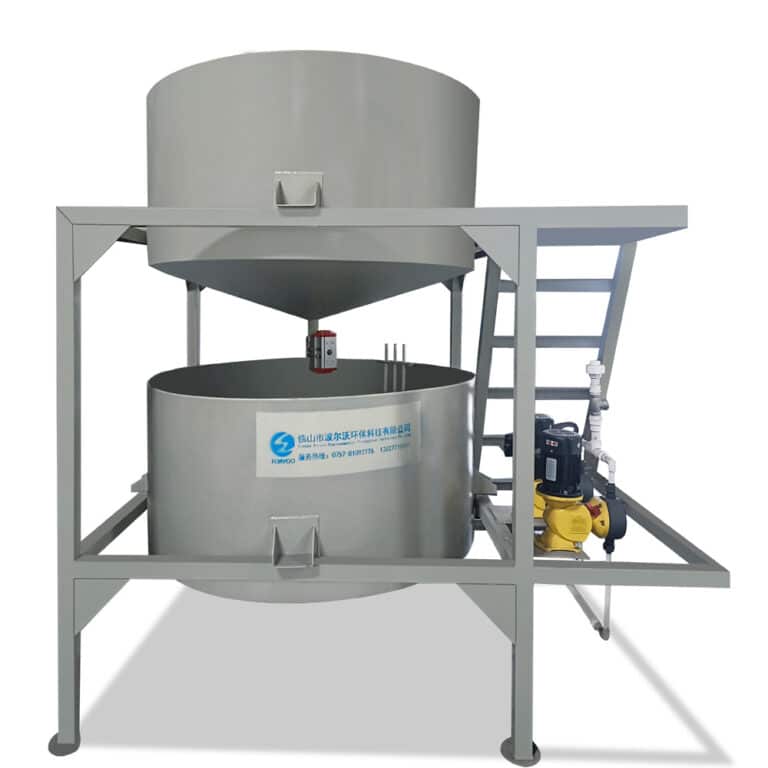
Finally, consider the supplier’s domain expertise. Do they understand the unique challenges of ceramic wastewater? Can they demonstrate experience applying RSM or similar models for initial calibration? The right partner provides not just equipment but a strategic solution tailored to your plant’s economics and operational goals, such as a dedicated intelligent chemical dosing system for industrial wastewater.
The decision hinges on aligning technology with specific waste stream characteristics and strategic plant goals—whether maximizing material recovery or ensuring bulletproof compliance. Prioritize systems with demonstrable precision in pH control and multi-parameter optimization, as these capabilities directly translate to chemical savings and consistent performance. Implementation success depends on thorough initial calibration and a shift in operational mindset from manual intervention to data-driven oversight.
Need professional guidance to specify an intelligent dosing solution for your ceramic tile production? The engineers at PORVOO can help you analyze your waste stream, model the ROI, and integrate a system that turns wastewater treatment into a value center. Contact Us to discuss your plant’s specific requirements.
Frequently Asked Questions
Q: How do you determine if an intelligent PAM/PAC system is right for our specific ceramic wastewater stream?
A: The decision hinges on your waste stream’s primary contaminants and treatment goal. For streams dominated by surfactants from glaze washing, precise pH control below 6 is the critical requirement. For high-turbidity slip water, optimizing c-PAM flocculation is key. The fundamental process is governed by standards like GB/T 22627-2014 for PAC and GB/T 17514-2017 for PAM. This means facilities targeting glaze recovery must prioritize systems with superior pH precision, while plants needing general clarification should focus on robust flocculation control.
Q: What is the operational trade-off between achieving maximum COD removal and complete surfactant elimination?
A: You cannot simultaneously optimize for both goals with a single set of chemical conditions. Maximizing chemical oxygen demand (COD) reduction relies heavily on effective c-PAM flocculation, while eliminating surfactants requires precise, low pH control paired with PAC dosing. A system must be strategically tuned for one primary objective, accepting a compromise on the secondary metric. If your operation’s compliance or reuse standard mandates surfactant-free effluent, you should plan to accept a slightly lower COD removal rate.
Q: How does the return on investment for intelligent dosing compare to biological treatment methods?
A: Intelligent coagulation-flocculation typically offers a faster payback through operational efficiency and material recovery, despite a higher initial capital cost for automation. It minimizes chemical waste through precise control and enables cost savings from glaze recovery and reduced sludge disposal. Biological systems have lower reagent costs but require greater capital investment and space for tanks with longer treatment times. For projects where production space is limited and waste stream variability is high, expect the intelligent system’s reliability and speed to deliver superior long-term ROI.
Q: What are the key staffing and maintenance shifts when moving from manual to intelligent dosing?
A: Your operational team transitions from performing manual jar tests and chemical handling to monitoring system data, interpreting performance trends, and executing preventive maintenance. Critical tasks include regular calibration of pH and turbidity sensors, servicing chemical feed pumps, and cleaning injection points. Staff must understand the strategic compromise embedded in the system’s settings to manage changes in production. This means facilities need to budget for training in data analysis and sensor maintenance, not just equipment purchase.
Q: Which technical standard applies to the polyacrylamide flocculant used in these ceramic wastewater systems?
A: The quality and performance of the cationic polyacrylamide (c-PAM) flocculant are specified by GB/T 17514-2017. This national standard defines the technical requirements, test methods, and handling procedures for PAM as a water treatment chemical. Using compliant materials ensures consistent floc formation and settling performance. When evaluating chemical suppliers or system vendors, you should verify their PAM conforms to this standard to guarantee process reliability.
Q: How should we integrate an intelligent dosing system with our existing tile production and control infrastructure?
A: Implement a phased approach starting with a comprehensive waste audit to establish baseline water quality parameters. Install the control unit and sensors, such as pH and turbidity probes, directly into your equalization or reaction tank, and integrate chemical feed lines with existing plant piping. Crucially, the system’s control algorithms must be calibrated for your specific goals using an optimization framework like Response Surface Methodology. For seamless operation, ensure the new system can communicate data to your central SCADA or plant control system for unified monitoring.
Q: What is the most critical feature to look for in a vendor’s intelligent dosing system for glaze recovery?
A: Prioritize systems with proven, highly precise pH control capability, as this parameter is more critical than coagulant volume for achieving near-total surfactant removal required for closed-loop glaze recovery. The control logic must handle multi-parameter optimization, not just simple flow-proportional dosing. You should also evaluate the vendor’s expertise in using models like RSM for initial calibration and their experience with the ceramic industry’s specific waste challenges. If your primary objective is material recovery, avoid vendors offering only generic, off-the-shelf dosing controllers.