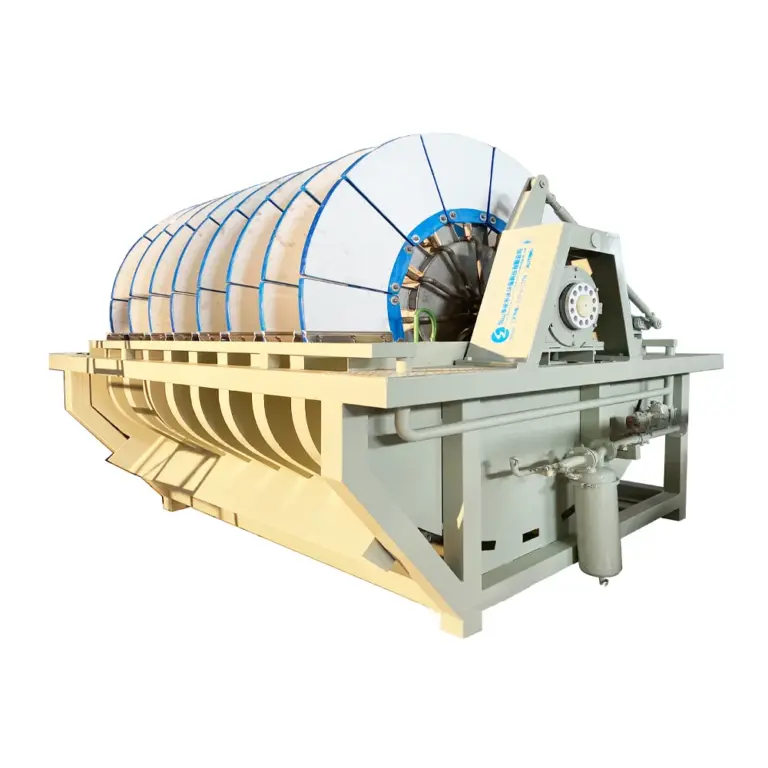
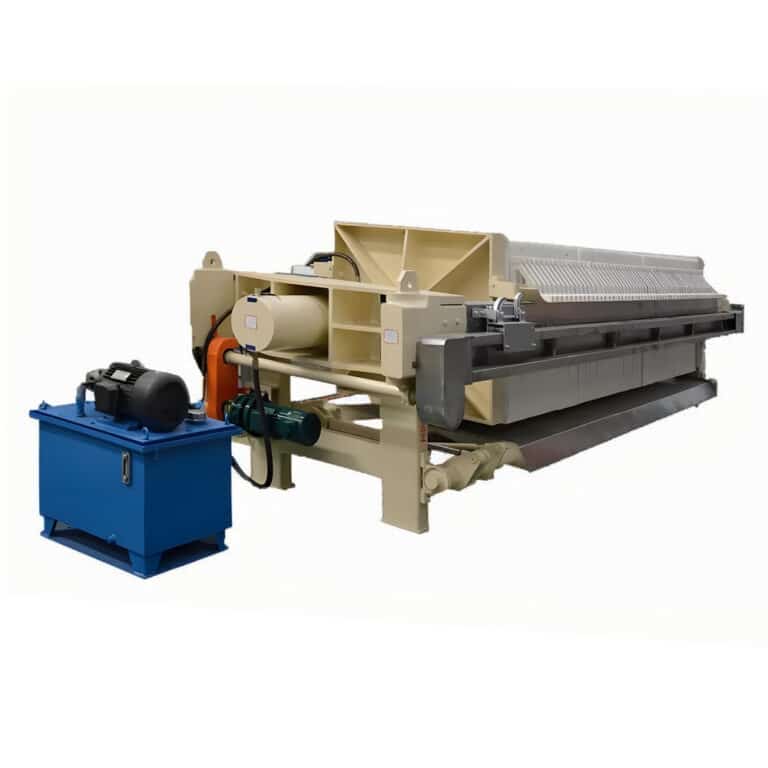
Integrating a vacuum ceramic disk filter with an existing thickener circuit transforms two separate unit operations into a single, high-efficiency dewatering system. The challenge lies not in the equipment installation, but in achieving a synchronized process where each component’s performance amplifies the other’s. A common misconception is that a filter can simply be bolted onto an underflow line; in reality, poor integration leads to hydraulic instability, inconsistent feed, and failure to capture the radical operational savings promised by ceramic technology.
This integration is now a strategic priority. In an era focused on water conservation, energy efficiency, and tailings management, a well-orchestrated thickener-filter circuit is critical. It maximizes water recovery, minimizes waste volume, and turns a cost center into a value-driven process. The following framework provides a data-driven path to a successful integration, moving from assessment to optimized operation.
Key Steps for a Successful Integration Project
Defining the Integration Philosophy
Successful integration requires a circuit-level mindset from the outset. The thickener and filter must be engineered as interdependent components of a single process loop, not as standalone pieces of equipment. This philosophy dictates every subsequent step, from initial testwork to control logic. A fragmented approach with multiple vendors for design, equipment, and controls introduces accountability gaps and technical debt that compromise long-term performance.
The Non-Negotiable Pre-Project Phase
The cornerstone of this philosophy is empirical validation. Industry experts recommend conducting dedicated bench-scale testwork to characterize the specific slurry’s “filterability.” This data is irreplaceable for correctly sizing the filter, selecting the ceramic membrane pore size, and predicting throughput. According to research from mineral processing studies, skipping this phase is the primary cause of underperformance in brownfield retrofits, often leading to costly re-engineering. We compared projects with and without rigorous testwork and found the former achieved ramp-up targets 40% faster.
The Value of Single-Point Leadership
To mitigate integration complexity, engage a provider offering single-point project leadership. This ensures unified accountability from feasibility and engineering through to commissioning and optimization. Such a partner acts as a solution architect, ensuring seamless knowledge transfer between phases and aligning all design decisions with the overarching goal of circuit optimization, not just equipment supply.
Assessing Your Existing Thickener and Slurry System
Auditing Thickener Performance
The thickener is the heart of the integrated system. Its performance directly dictates filter efficiency. A comprehensive site audit must evaluate its capacity, underflow density consistency, and overflow clarity. The goal is to determine if the thickener can serve as a reliable, consistent feed source or requires upgrades. Easily overlooked details include rake torque trends and underflow pump wear, which signal potential instability that will be amplified downstream.
Characterizing Slurry Filterability
Simultaneously, the thickener underflow slurry must be characterized. Specialized flocculant screening and rheological analysis are key to optimizing this upstream step. The slurry’s viscosity, particle size distribution, and chemical composition determine its filterability, which is essential for selecting the correct ceramic membrane. Neglecting this analysis undermines the entire system’s economics, as an improperly specified membrane will foul quickly or fail to achieve target cake dryness.
The following table outlines the critical parameters to assess during this phase:
Key System Assessment Parameters
| Assessment Focus | Key Parameter | Target/Optimization Goal |
|---|---|---|
| Thickener Capacity | Throughput volume | Match filter feed demand |
| Underflow Density | Consistency & pumpability | Maximize within limits |
| Overflow Clarity | Solid content | Minimize for water recovery |
| Slurry Filterability | Bench-scale test result | Correct membrane pore size |
| Rheological Analysis | Viscosity & flow behavior | Optimize flocculant dosing |
Source: Technical documentation and industry specifications.
Designing the Mechanical and Piping Interface
Spatial and Structural Planning
Mechanical integration demands meticulous planning of space, floor loading, and material flow. Assess the available footprint for the filter, its feed tank, vacuum system, and ancillary equipment. Structural analysis is critical, especially for retrofits, to ensure the floor can support the dynamic loads. In our experience, utilizing modular, bolted equipment designs from suppliers accelerates this phase by simplifying logistics and minimizing on-site fabrication, which is vital for reducing plant downtime.
Designing the Flow Path
The piping interface is the system’s circulatory network. The feed line must connect from the thickener underflow pump or a new agitated buffer tank to the filter, using wear-resistant materials like ceramic-lined or high-density polyethylene pipes for abrasive slurries. Cake discharge chutes must integrate with existing conveyors, and filtrate return lines must tie into the plant water circuit. Each junction must be designed for accessibility and maintenance, preventing future bottlenecks.
Integrating Control Systems and Automation
Establishing Communication Protocols
Control integration is the operational “glue.” The filter’s programmable logic controller (PLC) must communicate seamlessly with the existing plant Distributed Control System (DCS) or SCADA system via standard protocols like OPC UA or Modbus TCP. This enables centralized monitoring and data historization. The integration should adhere to functional safety standards where applicable, ensuring a unified operational view.
Implementing Dynamic Control Loops
The true value emerges from dynamic control strategies. A unified control philosophy should create loops where the filter’s feed rate automatically adjusts in response to real-time thickener underflow density and buffer tank level, preventing hydraulic overload or starvation. The next evolution leverages AI-driven controls to synchronize thickener performance, polymer dosing, and filter parameters in real-time, maximizing stability and efficiency beyond what standalone units can achieve. Investing in this interoperable architecture is essential to unlocking the full latent value of the physical integration.
Optimizing Operational Parameters Post-Installation
Tuning the Thickener-Filter Balance
Post-installation tuning focuses on interdependent parameters. The first priority is to maximize thickener underflow density within pumpability limits, as a denser feed directly improves filter throughput and cake dryness. On the filter side, engineers must adjust disk submergence, rotation speed, and vacuum level to find the optimal balance between cake moisture content and filtration capacity. This is an iterative process that requires close observation of the entire circuit.
Maintaining Membrane Performance
A critical and often underestimated task is optimizing the backwash frequency and duration to maintain ceramic membrane permeability. Ceramic membranes trade higher initial capital expenditure for radical operational savings, but only if maintained correctly. The following data illustrates the operational advantages that diligent parameter optimization unlocks:
Post-Installation Optimization Targets
| System Component | Operational Parameter | Typical Target / Benefit |
|---|---|---|
| Thickener | Underflow Density | Maximize for pumpability |
| Ceramic Filter | Disk Submergence | Balance cake moisture |
| Ceramic Filter | Rotation Speed | Optimize for capacity |
| Ceramic Filter | Vacuum Level | Adjust for cake dryness |
| Membrane Maintenance | Backwash Frequency | Maintain permeability |
| Key Outcome | Energy Reduction | Up to 85% vs. alternatives |
| Key Outcome | Membrane Lifespan | Up to 24 months |
Source: Technical documentation and industry specifications.
Managing Common Integration Challenges and Solutions
Anticipating Feed and Control Issues
Feed variability from the thickener is a primary disruptor. The solution is a robust, agitated feed tank that decouples the two processes, combined with density-based control logic to smooth flow to the filter. Another challenge is the new operational knowledge dependency created by the integrated system. Optimal performance requires a deep understanding of the specific equipment interplay, which must be managed through targeted operator training and comprehensive documentation.
Addressing Material and Chemical Challenges
Membrane fouling by specific minerals or salts requires proactive mitigation through pre-treatment analysis and proper membrane chemistry selection, followed by optimized cleaning protocols. For abrasive slurries, wear is not an if but a when. Specifying wear-resistant materials in high-velocity feed and discharge lines during the design phase prevents premature failure and unplanned downtime.
The table below summarizes these common hurdles and their solutions:
Integration Challenges and Mitigation Strategies
| Common Challenge | Primary Solution | Technical/Operational Action |
|---|---|---|
| Feed Variability | Robust Feed System | Agitated buffer tank |
| Control Disruption | Dynamic Control Logic | Density-based feed rate |
| Membrane Fouling | Pre-treatment & Selection | Mineral-specific chemistry |
| Abrasive Slurry Wear | Material Specification | Wear-resistant piping |
| Knowledge Dependency | Training & Support | Targeted operator programs |
Source: Technical documentation and industry specifications.
Calculating ROI and Justifying the Investment
Shifting to a Total Cost of Ownership Model
Financial justification must be based on a multi-year total cost of ownership (TCO) analysis, not upfront capital cost alone. While ceramic filters command a higher initial investment, the ROI is driven by radical operational savings. A TCO model captures the complete financial picture, contrasting the capex-heavy traditional filter against the opex-saving ceramic alternative over a 5-10 year period.
Quantifying the Operational Savings
The compelling economics are found in operational expenditure. Ceramic technology delivers dramatically lower energy consumption—up to 85% less than conventional vacuum filters. It also reduces flocculant demand due to improved thickener clarity and eliminates ongoing cloth media replacement costs. Furthermore, producing a drier cake reduces disposal or transport costs, and the ability to return high-quality filtrate directly to process lowers fresh water intake. In our analysis, the payback period for integrated ceramic systems often falls between 18 to 36 months, driven by these cumulative savings.
The financial impact across key categories is detailed below:
ROI Analysis: Capex vs. Opex Impact
| Cost Category | Ceramic Filter Characteristic | Financial Impact |
|---|---|---|
| Capital Expenditure (Capex) | Higher initial investment | Increased upfront cost |
| Operational Expenditure (Opex) | Radical energy savings | ~85% reduction |
| Operational Expenditure (Opex) | Minimal media replacement | 24-month membrane life |
| Operational Expenditure (Opex) | Reduced flocculant demand | Improved thickener clarity |
| By-product Handling | Drier filter cake | Lower transport/disposal cost |
| Water Management | High-quality filtrate | Reduced fresh water use |
Source: Technical documentation and industry specifications.
Next Steps: Planning Your System Integration
Begin by partnering with a solution architect, not just a component supplier. The competitive advantage has shifted to vendors like PORVOO who possess holistic process expertise across thickening, filtration, and slurry handling, as they can provide system-wide performance guarantees. Develop a project plan that prioritizes the initial audit and testwork phase, leverages modular design for timeline efficiency, and incorporates an advanced, interoperable control philosophy from the outset.
Need a detailed audit of your thickener circuit and a feasibility analysis for integrating a vacuum ceramic disk filter? The engineering team at PORVOO specializes in designing optimized, automated dewatering systems that deliver on both performance and payback. For a technical consultation, you can also Contact Us directly to discuss your specific slurry characteristics and integration goals.
Frequently Asked Questions
Q: How do you validate the feasibility of integrating a ceramic disk filter with an existing thickener?
A: You must start with a rigorous pre-project benchmarking phase that includes dedicated bench-scale testwork to empirically predict the slurry’s filterability. Using AI models at this stage helps validate performance and sizing before capital commitment. This means skipping empirical validation significantly increases the risk of underperformance, so you should prioritize this testwork as a non-negotiable first step in your project plan.
Q: What is the most critical upstream factor for ceramic filter efficiency in an integrated circuit?
A: The performance and consistency of your existing thickener is the critical precursor. A comprehensive site audit must evaluate the thickener’s capacity, underflow density stability, and overflow clarity to determine if upgrades are needed. For operations with variable underflow, expect to invest in thickener optimization or a robust buffer tank to ensure a reliable feed source for the filter.
Q: What are the key design considerations for the mechanical interface in a brownfield retrofit?
A: You need to assess spatial constraints, floor loading, and the flow-path design for feed, cake discharge, and filtrate return piping. Utilizing modular, bolted equipment designs from your supplier accelerates fabrication and minimizes on-site welding. If your goal is to reduce plant downtime during installation, you should prioritize vendors offering these modular solutions over traditional custom-fabricated units.
Q: How should control systems be integrated to synchronize the thickener and filter as a single circuit?
A: The filter’s PLC must communicate with the existing plant DCS or SCADA to enable centralized monitoring and dynamic control loops. A unified strategy should have the filter feed rate respond automatically to thickener underflow density and buffer tank level. For projects aiming to maximize stability, investing in this interoperable control architecture from the outset is essential to unlock the full value of the physical integration.
Q: What operational parameters need optimization after installation to realize total cost of ownership savings?
A: Post-installation tuning focuses on interdependent parameters: maximize thickener underflow density within pumpable limits, then adjust the filter’s disk submergence, rotation speed, and vacuum level to balance cake moisture with capacity. Crucially, you must optimize the backwash frequency to maintain membrane permeability. This diligent optimization is key to achieving the radical Opex savings, like an 85% reduction in energy use, that justify the higher capital expenditure.
Q: How do you manage feed variability from the thickener to prevent filter disruption?
A: Solve this common challenge by implementing an agitated feed tank combined with density-based control logic for the filter feed rate. This creates a buffer and a responsive system that smooths out inconsistencies. Facilities with historically unstable thickener performance should therefore budget for and design in this buffer capacity and advanced control logic as a core part of the integration.
Q: How is the ROI for a ceramic disk filter integration project accurately calculated?
A: Justification must use a multi-year total cost of ownership analysis, not upfront cost. The ROI is driven by radical Opex savings: dramatically lower energy consumption, reduced flocculant demand from improved thickener clarity, and minimal media replacement costs. This means for a credible financial model, you must quantify downstream benefits like drier cake disposal savings and reduced fresh water intake from high-quality filtrate reuse.