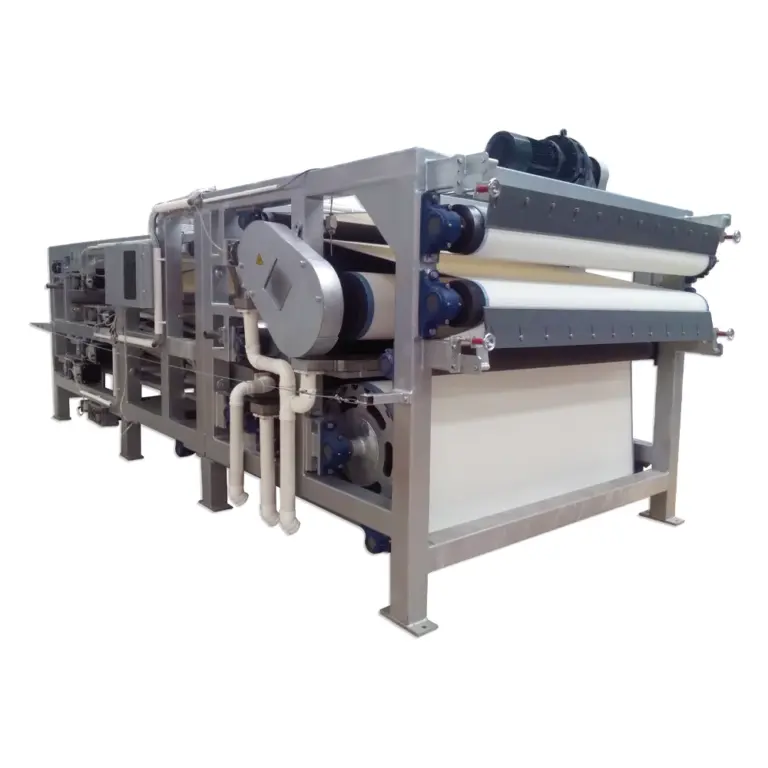
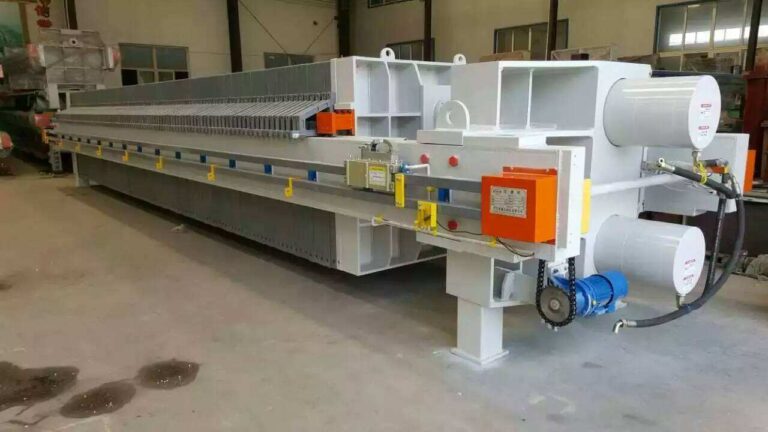
For plant managers and process engineers, calculating the payback period for a fully automatic filter press upgrade is often reduced to a simple labor-versus-cost equation. This oversimplification leads to flawed financial models and missed opportunities. The real challenge is building a defensible business case that accounts for the multi-variable impact of automation on total operational cost, throughput, and strategic risk.
Accurate payback analysis is critical now due to rising labor costs, tightening environmental regulations, and the pressure to maximize asset utilization. A miscalculation can result in capital misallocation or, conversely, a failure to invest in technology that delivers a competitive edge. This guide provides the framework to move beyond back-of-the-envelope estimates.
Key Variables for Your Payback Period Calculation
Defining the Baseline: The Cost of Inaction
An accurate calculation starts with a meticulous audit of your current manual operation. The baseline isn’t zero; it’s the fully burdened cost of your status quo. This includes direct labor for plate shifting, cloth cleaning, and cake discharge, but also the hidden costs: inconsistent cycle times, excessive filter cloth wear from manual cleaning, and disposal costs for wetter cake. Industry experts recommend tracking these variables over several months to establish a reliable baseline. Ignoring them means undervaluing the automation’s true return.
The Multi-Variable Optimization Problem
Viewing this as a single-input problem is the most common mistake. The payback period is the output of a multi-variable optimization problem. Key inputs extend beyond labor to include consumables (cloth, chemicals), throughput (cycles per shift), product yield (cake dryness), and compliance (waste handling). Each variable interacts. For instance, automated high-pressure washing extends cloth life, which reduces consumable cost and downtime for changeovers, thereby increasing throughput. We compared manual and automated cycles and found the compounding effect of these efficiencies is where the true financial advantage lies.
Ensuring Data Integrity
The foundational risk in any payback model is flawed data. Corrupted formulas or optimistic assumptions silently generate incorrect figures. Easily overlooked details include the fully burdened labor rate (including benefits and overhead) and the true cost of filter cloth disposal. According to research from operational benchmarks, using average instead of worst-case data for cycle times or cloth consumption can skew results by 20% or more. Your model’s accuracy depends entirely on the integrity of these inputs.
Calculating Your Total Initial Investment Cost
Beyond the Sticker Price
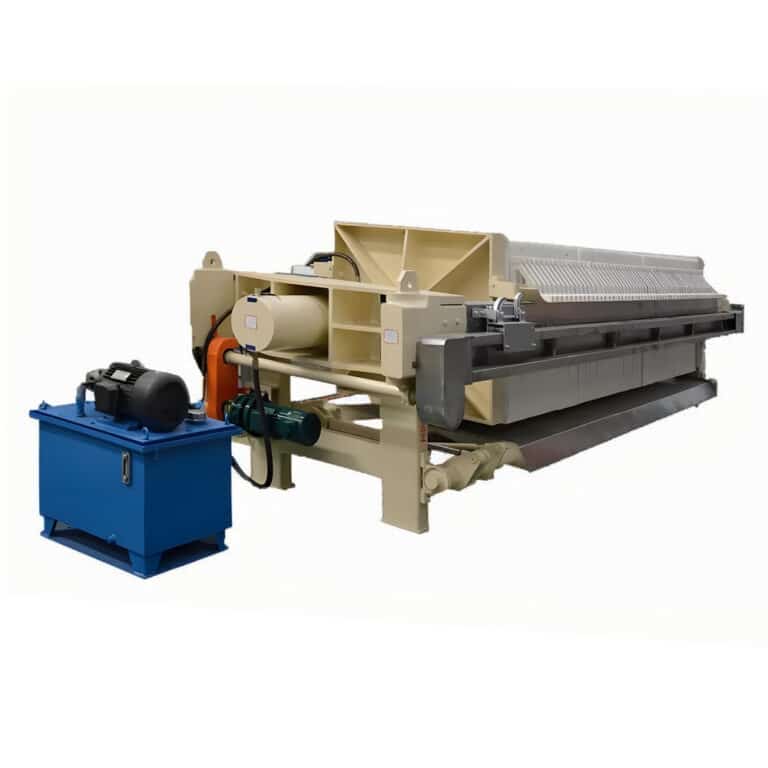
The total capital outlay (CAPEX) is more than the filter press price. It encompasses the automated press with its integrated PLC, plate shifter, cloth washing system, and any ancillary equipment. Installation, electrical work, and integration with existing pumps, conveyors, or SCADA systems represent a significant, often underestimated, added expense. Engineering fees for layout and process integration, plus comprehensive initial operator training, are essential non-equipment costs that must be included in your total investment figure.
Evaluating Full-Solution Providers
Vendor selection is a strategic cost factor. Industry consolidation means suppliers now position themselves as full-solution providers, offering the equipment, filter media, chemicals, and service under single-source accountability. Selecting such a partner reduces integration risk and ensures component compatibility, protecting the long-term performance and uptime of your investment. This approach simplifies ongoing support and can prevent costly finger-pointing between equipment and media suppliers.
A Framework for Investment Costs
To structure this analysis, break down the investment into clear components. This ensures no cost element is missed during budgeting and vendor comparison.
Calculating Your Total Initial Investment Cost
| Cost Component | Description | Key Consideration |
|---|---|---|
| Automated Filter Press | Core equipment capital cost | Includes PLC, plate shifter |
| Installation & Integration | Electrical work, pump/conveyor hookup | Significant added expense |
| Engineering & Training | Design fees, initial operator training | Essential for performance |
| Vendor Selection | Full-solution provider | Single-source accountability |
Source: Technical documentation and industry specifications.
Quantifying Annual Labor and Operational Savings
Direct Labor Reduction
Labor savings are typically the largest contributor. Calculate the annual hours spent on manual tasks: plate shifting, cloth cleaning, cake discharge, and general press supervision. Multiply this by the fully burdened wage rate. Automation can reduce these hours by 70-90%, reallocating personnel to higher-value tasks like process monitoring and quality control. However, focusing solely on direct labor misses the broader picture.
The Throughput Multiplier
Automation’s payback extends beyond labor savings. Faster, repeatable cycles with consistent feed and closure pressures reduce average cycle time. This allows for more cycles per shift, effectively increasing processing capacity without adding another press. Assign a monetary value to this additional throughput—either as reduced bottleneck costs elsewhere in the plant or as potential for increased production volume. This gain often runs continuously, including through breaks and shift changes.
Yield and Consistency Gains
Quantify the savings from improved product yield and operational consistency. Automated systems produce a drier, more consistent cake, which reduces disposal tonnage and cost. They also minimize product loss from incomplete discharge or spillage during manual cleaning. In my experience, the reduction in waste hauling fees alone can justify a significant portion of the annual savings. These are not soft benefits but direct, measurable cost reductions.
Quantifying Annual Labor and Operational Savings
| Savings Category | Primary Driver | Secondary Benefit |
|---|---|---|
| Labor Reduction | Manual plate shifting, cleaning | Fully burdened wage rate |
| Throughput Gains | Faster, repeatable cycles | Processes more per shift |
| Product Yield | Drier cake solids | Reduced disposal costs |
| Operational Consistency | Minimized product loss | Cleaner discharge process |
Source: ISO 22400-2. This standard defines KPIs for manufacturing operations, providing the framework to measure efficiency, quality, and throughput gains—the exact metrics needed to quantify these annual savings accurately.
Factoring in Throughput Gains and Consumables Savings
Monetizing Additional Capacity
Throughput gains must be translated into financial terms. If an automated press completes two additional cycles per 8-hour shift, determine the value of that increased output. Is it enabling higher overall plant throughput? Is it eliminating a bottleneck that delays downstream processes? The monetary value can be modeled as contribution margin on additional product or as the avoided cost of overtime or a second shift needed to achieve the same output manually.
Extending Filter Cloth Life
A primary consumables saving is extended filter cloth life. Automated, high-pressure washing preserves cloth integrity far better than manual brushing or harsh chemical soaks. This directly reduces the annual number of cloth purchases and the labor for changeovers. The choice of cleaning method is critical; chemical compatibility dictates maintenance strategy. Manual cleaning with aggressive acids like HCl accelerates cloth degradation, while optimized automated cycles use less chemical and gentler, more effective mechanical action.
The Full Consumables Equation
The savings extend beyond cloth. Calculate the reduction in chemical cleaning agents, the associated neutralization costs for spent acid, and the labor for handling hazardous materials. Automated systems precisely control chemical dosing and rinse cycles, optimizing usage. The combined effect on consumables is a recurring annual saving that directly improves net operating profit.
Factoring in Throughput Gains and Consumables Savings
| Factor | Monetary Value Source | Key Mechanism |
|---|---|---|
| Throughput Gains | Additional cycles per shift | Automated, faster cycles |
| Filter Cloth Life | Fewer annual cloth purchases | High-pressure automated washing |
| Chemical Use | Lower purchase & waste costs | Optimized cleaning cycles |
| Media Depreciation | Extended cloth integrity | Reduced manual acid cleaning |
Source: Technical documentation and industry specifications.
Accounting for New Costs and Maintenance
Offsetting Operational Costs
Automation introduces new costs that offset gross savings. These include scheduled preventive maintenance for PLCs, sensors, actuators, and the plate shifter mechanism. Electrical consumption may increase, though often this is marginal compared to the value generated. Budgeting for a critical spare parts inventory (e.g., proximity sensors, solenoid valves) is also a prudent operational cost to ensure uptime.
Design Simplicity and Reliability
The long-term maintenance cost is a direct function of design simplicity. Choose systems with fewer moving parts, durable materials like stainless steel in the wash zone, and components like UHMW-PE wear strips. This philosophy minimizes the frequency of breakdowns and the complexity of repairs. Unexpected downtime is a critical variable in uptime-sensitive payback models; a reliable design protects your projected net savings.
The Total Cost of Ownership View
Adopting a total cost of ownership (TCO) perspective ensures these new costs are neither underestimated nor overlooked. Engage with vendors to understand the recommended maintenance schedule and obtain estimated costs for annual service contracts or spare parts. Factoring these in from the start creates a more resilient and accurate financial model.
Performing the Payback Period Calculation: A Worked Example
Building the Calculation Framework
The core formula is straightforward: Payback Period (years) = Total Initial Investment / Annual Net Savings. The complexity lies in accurately deriving the two inputs. Annual Net Savings is Gross Annual Savings minus New Annual Costs. Let’s apply the variables we’ve defined to a realistic scenario.
A Detailed Worked Example
Assume a total initial investment of $250,000. Gross annual savings are calculated as: $120,000 from labor reduction (equivalent to 1.5 FTE), $25,000 from reduced cloth and chemical consumables, and $40,000 from throughput gains, totaling $185,000. New annual costs for added maintenance, spare parts, and energy are estimated at $15,000. Therefore, Net Annual Savings = $185,000 – $15,000 = $170,000.
The simple payback period is $250,000 / $170,000 ≈ 1.47 years, or roughly 18 months. This model must be structured using a standardized life-cycle costing approach to ensure all costs over the asset’s life are considered.
Performing the Payback Period Calculation: A Worked Example
| Financial Variable | Example Amount | Calculation Note |
|---|---|---|
| Total Initial Investment | $250,000 | Includes all capital costs |
| Labor Savings (Gross) | $120,000 | 1.5 FTE reduction |
| Consumables/Maintenance Savings | $25,000 | Cloth & chemical reduction |
| Throughput Gain Value | $40,000 | Additional cycle capacity |
| New Maintenance/Energy Costs | $15,000 | Offsets gross savings |
| Net Annual Savings | $170,000 | Gross savings minus new costs |
| Payback Period | ~1.47 years | $250,000 / $170,000 |
Source: ISO 15686-5:2017. This standard provides the life-cycle costing framework and methodology required to structure this payback calculation, ensuring all relevant costs and savings over the asset’s life are correctly accounted for.
Beyond Payback: NPV, IRR, and Intangible Benefits
Advanced Financial Metrics
While payback period assesses liquidity risk, it ignores the time value of money and the asset’s full life. Net Present Value (NPV) and Internal Rate of Return (IRR) provide a more complete financial picture. NPV discounts all future net cash flows (savings) back to today’s dollars, using your company’s cost of capital. A positive NPV indicates value creation. IRR is the discount rate that makes NPV zero, effectively showing the project’s annualized return. These metrics are essential for comparing this investment against other capital projects.
Strategic and Intangible Advantages
Powerful intangible benefits strengthen the business case. Automation enables the development of closed-loop systems, potentially recovering water or valuable fines from the filter cake for reuse or resale. It also serves as a strategic hedge against regulatory pressure, which is a silent driver for upgrade decisions. Consistent, automated operation provides auditable data for compliance, reduces environmental liability, and dramatically improves operator safety by removing personnel from hazardous manual cleaning and heavy lifting.
The Skill Set Migration
Acknowledge the required workforce evolution. The shift is from manual labor to system monitoring, data analysis, and preventative maintenance. Investing in this skill set migration not only supports the new equipment but builds competency for future digitalization initiatives, adding long-term strategic value beyond the immediate payback.
Next Steps: Validating Your Data and Making the Business Case
From Model to Actionable Data
Begin by instrumenting your current operation. Collect at least three months of granular data on labor hours, cycle times, cloth change frequency, chemical usage, and cake solids content. This establishes your defensible baseline. Simultaneously, engage potential vendors to provide performance guarantees for throughput increases and filter cloth life under your specific process conditions. This data validation phase turns assumptions into commitments.
Constructing the Holistic Business Case
Present a case that combines compelling financials with strategic imperatives. Lead with the clear payback, NPV, and IRR. Then, integrate the risk mitigation arguments: compliance readiness, safety improvement, and reduced operational variance. Frame the investment as foundational for future initiatives in resource recovery and circular economy models, positioning the plant for long-term resilience.
Initiating the Procurement Process
With a validated model, you can move to a structured procurement process for fully automatic filter press technology. Develop a technical specification that emphasizes design simplicity, material durability, and integration capabilities. Use your detailed financial model as a key evaluation criterion during vendor selection, ensuring the proposed solution delivers the projected returns.
A defensible payback analysis requires moving from simple labor substitution to a holistic operational model. Prioritize data integrity, account for all cost drivers—both saved and incurred—and evaluate the investment through both financial and strategic lenses. The goal is not just a faster press, but a more predictable, compliant, and cost-effective dewatering process.
Need a detailed financial model tailored to your specific sludge profile and operational costs? The engineering team at PORVOO can provide a customized payback analysis based on proven performance data from similar applications. Contact Us to schedule a review of your current process and explore the automation potential for your plant.
Frequently Asked Questions
Q: How do you accurately quantify the total savings from an automatic filter press beyond just labor reduction?
A: You must model a multi-variable optimization that includes throughput gains from faster cycles, consumables savings from extended cloth life, and reduced disposal costs from drier cake solids. Operational improvements in product yield and consistency also contribute significant value. For projects where waste handling or chemical use is costly, expect these operational efficiencies to form a major portion of the net annual savings, often exceeding labor benefits alone.
Q: What new costs should we budget for when upgrading to a fully automated filter press system?
A: Your budget must include preventive maintenance for PLCs and actuators, increased electrical consumption, and a strategic spare parts inventory. Evaluating system reliability as a direct function of design simplicity is critical; prioritize systems with fewer moving parts and durable materials in high-wear areas. This means facilities with high uptime requirements should plan for these recurring costs and select equipment designed to minimize unexpected downtime and protect long-term net savings. Control system reliability is guided by programming standards like IEC 61131-3.
Q: Which standards provide a framework for the financial analysis of a capital investment like an automation upgrade?
A: The ISO 15686-5 standard provides the definitive methodology for life-cycle costing, establishing principles for calculating total cost of ownership over an asset’s service life. It covers acquisition, operation, maintenance, and disposal costs, forming a standardized basis for payback, NPV, and IRR calculations. This means for a rigorous business case that withstands financial scrutiny, you should align your evaluation model with this life-cycle costing framework.
Q: How can we measure the operational performance gains from an automated filter press to validate our payback model?
A: Use standardized Key Performance Indicators (KPIs) for manufacturing operations to measure metrics like Overall Equipment Effectiveness (OEE), cycle time, and throughput. Applying these KPIs provides precise, auditable data on efficiency and productivity gains. If your goal is to track performance against financial assumptions, plan to implement a monitoring system aligned with ISO 22400-2 definitions from the project’s start.
Q: What are the critical but often overlooked variables in a filter press automation payback calculation?
A: The most commonly missed variables are the hidden cost of inaction from manual hazards and inconsistent operation, the monetary value of each additional processing cycle, and savings from reduced chemical use and neutralization waste. Ignoring these undervalues the true ROI. This means facilities with corrosive chemistries or bottlenecked capacity must meticulously document these baseline costs to establish an accurate savings benchmark.
Q: Why is vendor selection as a full-solution provider critical for an automation project’s success?
A: Selecting a vendor that offers equipment, media, chemicals, and service under single-source accountability reduces integration risk and ensures component compatibility. This simplifies ongoing support and protects the long-term performance of your investment. For projects where minimizing operational risk is a priority, you should prioritize partners who can act as a full-solution provider over those selling standalone equipment.
Q: How does automation help address regulatory and safety concerns in filter press operations?
A: Automation ensures consistent, auditable operation that reduces environmental liability and improves compliance. It minimizes manual chemical handling and heavy lifting, directly enhancing operator safety. This means operations under increasing regulatory pressure should view automation as a strategic hedge, mitigating compliance risk while achieving financial payback.