Effective dust collection in a multi-station workshop is a fundamental engineering challenge, not a simple equipment purchase. The core problem professionals face is the disconnect between a portable collector’s advertised performance and its real-world capability in a ducted system. Misapplying a single-tool CFM rating to a complex network leads to underpowered collection, leaving fine particulate airborne and creating significant health and compliance risks.
This precise calculation is critical now due to converging factors: stricter awareness of occupational exposure limits for wood dust, the rising performance expectations in hybrid DIY/professional shops, and the financial impact of selecting an improperly sized system. A methodical approach to CFM and static pressure is the only way to ensure both safety and operational efficiency.
Core CFM Fundamentals for Multi-Station Dust Collection
Defining CFM and Static Pressure
Cubic Feet per Minute (CFM) measures the volume of air a system moves, while static pressure (SP) quantifies the resistance that air must overcome through filters, ductwork, and fittings. Effective dust collection requires generating sufficient CFM at the tool hood after subtracting all SP losses. A system’s performance is defined at the intersection of its blower’s capability curve and the ductwork’s resistance curve.
The Reality of Manufacturer Ratings
A critical strategic insight is that manufacturer CFM ratings are unrealistic benchmarks, typically measured under unrestricted “free air” conditions with zero static pressure. In a configured system with ducts and filters, achievable CFM can be half the advertised peak. This derating is the foundational reality that must guide all planning. Selecting a collector based solely on its peak rating guarantees disappointment.
The System Performance Mandate
Therefore, the goal shifts from buying a high-CFM machine to engineering a low-resistance system that allows a capable collector to operate efficiently. This mindset prioritizes duct design and component selection as primary performance levers. Industry experts recommend always seeking published performance curves (CFM at various SP levels) over a single peak number when evaluating equipment.
Step 1: Determining Individual Tool CFM Requirements
CFM Needs by Tool Type
Each woodworking tool requires a specific CFM range for effective capture at its intake point. These requirements are dictated by the hood design, particle size, and debris volume. For instance, a planer generating large chips needs high airflow for transport, while a sander producing fine dust requires that same airflow but places greater emphasis on final filtration efficiency.
A Two-Pronged Collection Strategy
This highlights that particle size dictates a two-pronged strategy. High-chip-volume tools demand high CFM for debris transport, while fine-dust producers require that same airflow but underscore the need for high-efficiency final filtration. A single system must be sized for volumetric demand but may need supplemental air cleaning technology for sub-micron particulate.
Reference Data for Planning
The following table provides target CFM ranges for common workshop tools, based on methodologies for local exhaust ventilation. These figures represent the airflow needed at the tool’s intake for effective capture.
Step 1: Determining Individual Tool CFM Requirements
| Woodworking Tool | Typical CFM Requirement Range | Primary Collection Focus |
|---|---|---|
| Planers / Joiners | 400 – 600 CFM | High chip volume |
| Miter Saws | 400 – 600 CFM | High chip volume |
| Table Saws | 350 – 500 CFM | Debris transport |
| Drum Sanders | 350 – 500 CFM | Fine dust capture |
| Router Tables | 300 – 450 CFM | Debris transport |
| Bandsaws | 250 – 400 CFM | Debris transport |
Source: ACGIH Industrial Ventilation: A Manual of Recommended Practice. This manual provides the foundational methodologies for calculating required airflow (CFM) for local exhaust ventilation at specific tools and operations, directly informing the target ranges for effective dust capture.
Step 2: Calculating Equivalent Duct Length and Static Pressure
Mapping Your Longest Run
Static pressure loss from ductwork is the primary constraint on CFM delivery. Begin by mapping the longest duct run from the collector to the most demanding tool. This critical path determines the system’s peak resistance. Measure all straight sections of smooth ducting.
Accounting for Fittings and Hose
Each fitting adds significant resistance, quantified as “Equivalent Duct Length.” Straight smooth duct uses its actual length, but you must add equivalent feet for every bend and adjust for inefficient hose. This calculation proves that ductwork design directly dictates collector sizing.
Performing the Calculation
A typical run might include 15 feet of straight pipe, one 90° elbow, and 6 feet of corrugated flex hose. Its Equivalent Length is 15 ft + 10 ft (for the elbow) + 12 ft (6 ft of hose x 2) = 37 feet. This adjusted length is used with friction charts to estimate static pressure loss. I’ve seen well-designed 1.5 HP systems outperform poorly ducted 3 HP units, making layout optimization more cost-effective than a larger motor.
Equivalent Length Reference
Use the table below to calculate the total equivalent length for any duct run, a necessary step for estimating static pressure.
Step 2: Calculating Equivalent Duct Length and Static Pressure
| Ductwork Component | Measured Length | Equivalent Length Added |
|---|---|---|
| Straight Smooth Duct | (Actual length) | 1x (No addition) |
| 90-Degree Elbow | N/A | +10 feet |
| 45-Degree Elbow | N/A | +5 feet |
| Corrugated Flex Hose | (Actual length) | 2x (Double length) |
Note: Equivalent Length is the sum of straight duct length plus added feet for all fittings and adjusted flex hose.
Source: ACGIH Industrial Ventilation: A Manual of Recommended Practice. The manual prescribes methods for calculating pressure loss in ventilation systems, including assigning equivalent lengths to various fittings and duct types to account for airflow resistance.
Selecting Your Dominant Tool and Target CFM
The Single-Operator Principle
In a single-operator shop, only one blast gate should be open at a time. Therefore, your system must be sized for the single tool with the highest CFM requirement, not the sum of all tools. The planer or jointer is typically this dominant tool. Your target CFM is this tool’s requirement from Step 1.
Accounting for System Losses
The critical step is selecting a collector powerful enough to deliver that target CFM after accounting for the static pressure losses calculated in Step 2. This requires cross-referencing the collector’s performance curve to ensure it can provide the needed CFM at your system’s estimated SP.
The Electrical Infrastructure Constraint
This is where electrical infrastructure becomes a foundational constraint. Motors above 2 HP often require dedicated 220V service. Your workshop’s available power may dictate the ceiling of your system’s capability, making an electrical assessment a necessary prerequisite to collector selection. Overlooking this can lead to costly circuit upgrades.
Portable Collector Performance: Rated CFM vs. Real-World CFM
Understanding the Performance Gap
The disparity between advertised “free air” CFM and real-world performance is the most common planning pitfall. This loss is due to static pressure from filters, ducts, and fittings. Units that only publish a peak rating provide insufficient data for system design.
The Critical Role of Performance Curves
Authoritative selection requires published performance curves that show CFM at various static pressure levels. This data allows you to plot your system’s estimated resistance and see the actual delivered airflow. According to research from industrial ventilation standards, designing without this curve is speculative.
The Filter Maintenance Trade-Off
Furthermore, understand that filter “seasoning” creates a performance trade-off. A clean filter offers maximum airflow but poorer fine-dust capture. As a dust cake builds on the media, it improves filtration efficiency but reduces CFM. Maintenance thus becomes a balance—cleaning restores airflow but temporarily resets filtration quality.
Performance Expectation Framework
The table below contrasts rated conditions with real-world expectations, framing the data you need for selection.
Portable Collector Performance: Rated CFM vs. Real-World CFM
| Performance Metric | Rated (Free Air) Condition | Real-World System Expectation |
|---|---|---|
| Achievable CFM | Peak, unrestricted flow | ~50% of rated CFM |
| Static Pressure | Minimal or zero | High from filters/ducts |
| Filtration Efficiency | Lower on clean filter | Improves with filter “seasoning” |
| Key Selection Data | Advertised peak CFM | Published CFM/SP performance curves |
Source: Technical documentation and industry specifications.
Optimizing Ductwork Design to Minimize Airflow Loss
Principles of Low-Resistance Design
System efficiency is won or lost in duct design. The core principles are simple: maximize diameter, minimize length, and smooth the path. Stepping up from a 4″ to a 6″ main duct dramatically reduces SP loss. Always use smooth-walled metal or PVC duct instead of corrugated flex hose for main runs.
Strategic Tool Placement
This directly supports the insight that tool placement is a critical system optimization variable. By positioning high-debris, high-CFM tools like the planer closest to the collector, you minimize the length and complexity of the most critical run. This is a low-cost method to boost effective CFM and reduce the required collector size.
Component-Level Optimization
At the component level, use two 45° elbows instead of a single 90° elbow where possible, and ensure all connections are airtight. Keep flex hose runs as short as possible, reserving them only for the final connection to movable tools. These details collectively determine whether a system hums or struggles.
Design Comparison for Efficiency
The following table contrasts common practices with optimized solutions to minimize static pressure loss.
Optimizing Ductwork Design to Minimize Airflow Loss
| Design Principle | Poor Practice | Optimized Practice |
|---|---|---|
| Duct Diameter | 4-inch main ducting | 6-inch main ducting |
| Duct Material | Corrugated flex hose | Smooth-walled metal/PVC |
| Elbow Configuration | Single 90-degree elbow | Two 45-degree elbows |
| Tool Placement | High-demand tool farthest | High-demand tool closest |
Source: ACGIH Industrial Ventilation: A Manual of Recommended Practice. This source provides detailed engineering guidelines for optimizing ductwork layout and component selection to minimize static pressure loss and maintain target airflow velocities in industrial exhaust systems.
Key Considerations for Portable vs. Centralized Systems
Defining the Strategic Fork
This choice represents a fundamental strategic fork with long-term implications for workflow and capital. Portable units moved between tools offer layout flexibility and lower upfront cost but sacrifice consistent performance due to reconfiguration and smaller-diameter hoses.
The Case for a Fixed Ducted Network
A fixed, ducted system delivers superior and repeatable performance but locks in your workshop layout. It favors stationary production lines and high-volume work. The investment in ducting is significant but pays off in predictable capture efficiency and cleaner air.
Aligning Choice with Workflow
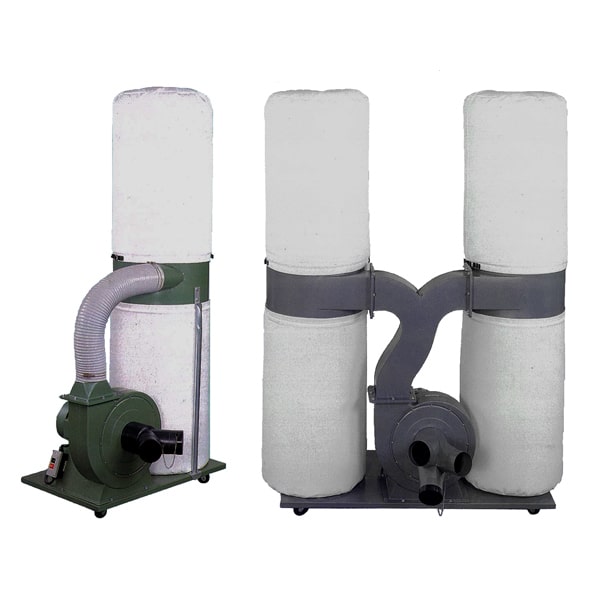
Your decision should precede major tool acquisitions and shop design. It commits capital and workflow down divergent paths. For shops evolving toward production, starting with a properly sized portable unit that can later be integrated into a fixed system, like a high-performance industrial portable dust collector, can be a strategic middle ground.
Implementing and Maintaining Your Multi-Station System
Installation and Commissioning
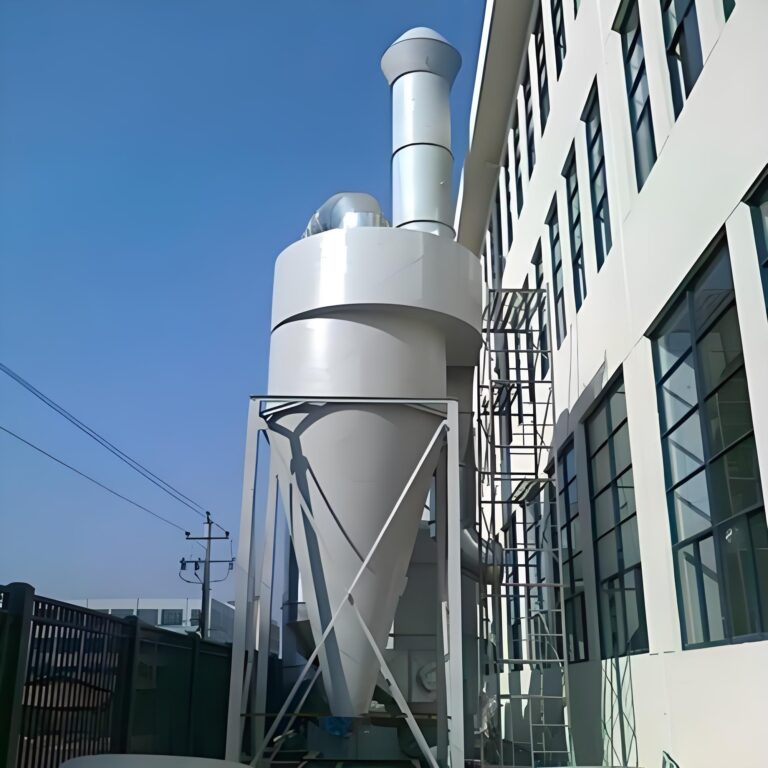
Implementation requires installing a blast gate at every branch and ensuring all gates except the active tool’s are closed. Consider adding a two-stage cyclone separator upstream of your collector to preserve filter life and maintain suction. Start-up should include a check for leaks at all connections.
Evolving Toward an Integrated System
The shift is toward integrated “systems,” not isolated collectors. This means pairing your source collector with a ceiling-mounted air filtration unit to capture airborne fines that escape primary capture, creating a layered defense. This approach aligns with comprehensive risk management.
Future-Proofing Through Standards
Looking forward, health liability is driving filtration standards upward. Investing in collectors with upgradeable filter paths (e.g., to HEPA) is prudent. Understanding standards like ISO 14644-1 for air cleanliness classification informs these upgrades. Furthermore, the convergence of DIY and professional markets on performance means industrial-grade principles like cyclone separation and high-static-pressure blowers are now essential for any serious workshop.
The core decision points are clear: size your system for your dominant tool’s real-world CFM after duct losses, prioritize low-resistance duct design over a larger motor, and choose between portable and fixed systems based on long-term workflow. This engineering-focused framework moves beyond guesswork to predictable performance.
Need professional guidance to specify a system that matches your shop’s specific tool layout and electrical capacity? The engineering team at PORVOO can help translate these calculations into a functional solution. Contact us to discuss your multi-station challenge.
Frequently Asked Questions
Q: How do you calculate the real-world CFM a portable dust collector will deliver to a tool?
A: Real-world CFM is the advertised “free air” rating significantly reduced by static pressure losses from ductwork, hoses, and filters. Expect to achieve only about half the manufacturer’s peak CFM in a typical system. To select accurately, prioritize models that publish a performance curve showing CFM at various static pressure levels. This means you must size your collector based on the tool’s required CFM after system losses, not the unit’s peak rating, to avoid an underpowered installation.
Q: What is the correct method for sizing a collector for a multi-station shop with one operator?
A: Size the system for the single tool with the highest airflow demand, not the sum of all tools, as only one blast gate should be open during operation. Typically, a planer or jointer (requiring 400-600 CFM) is this dominant tool. Your target is the collector’s ability to deliver that CFM after accounting for duct losses. This means your workshop’s available electrical service, especially for motors above 2 HP requiring 220V, becomes a foundational constraint that dictates your system’s maximum capability.
Q: How does ductwork design impact the performance and cost of a dust collection system?
A: Ductwork design directly dictates the static pressure the collector must overcome, which determines the CFM delivered. Use smooth-walled duct, minimize corrugated flex hose (doubling its length in calculations), and replace 90° elbows with two 45° bends where possible. A well-designed 1.5 HP system can outperform a poorly ducted 3 HP unit. For projects where layout is flexible, placing high-demand tools closest to the collector is a low-cost optimization that reduces required collector size and cost.
Q: Which authoritative guide provides methodologies for calculating required CFM and designing ductwork?
A: The ACGIH Industrial Ventilation: A Manual of Recommended Practice is the principal guide for designing local exhaust ventilation systems, including dust collectors. It provides critical methodologies for calculating required airflow (CFM), hood design, and duct velocities. This means professionals designing systems for compliance or optimal performance should reference this manual over generic vendor guidelines to ensure their calculations meet recognized industrial hygiene and engineering practices.
Q: What are the strategic trade-offs between a portable and a fixed, ducted dust collection system?
A: Portable units offer layout flexibility and lower initial investment but sacrifice consistent performance due to frequent reconfiguration and restrictive hoses. Fixed ducted systems deliver superior, reliable airflow but require a committed workshop layout and higher upfront installation. This represents a strategic fork: if your operation requires adaptable, project-based workspaces, plan for portable flexibility; if you run stationary production, the long-term performance of a ducted system justifies its fixed infrastructure cost.
Q: How should fine dust from sanders be managed differently than chips from planers?
A: Both tool types require high CFM, but the collection strategy diverges. Planers need high airflow primarily for bulk debris transport. Sanders require that same CFM but place greater emphasis on final filtration and capturing airborne fines. This means a single system must be sized for volume, but operations with significant fine particulate may need to integrate supplemental air filtration or collectors with upgradeable filter paths to meet health and air quality standards.