For plant managers and process engineers, the choice between filter press technologies often centers on upfront capital cost. This narrow focus overlooks the dominant financial factor: cumulative maintenance expenditure. Traditional plate-and-frame presses, while seemingly affordable initially, embed recurring costs through inherent design flaws that demand constant labor, cleanup, and premature part replacement. The resulting downtime and repair budgets silently erode operational margins.
The shift toward total cost of ownership (TCO) analysis makes this maintenance burden a critical strategic consideration. Selecting a filtration system is no longer just a procurement decision; it’s a long-term commitment to operational reliability and predictable budgeting. Understanding the engineered solutions that directly target these chronic maintenance issues is essential for sustainable plant performance.
Recessed Chamber vs. Plate-and-Frame: Core Design Differences
The Architectural Disparity
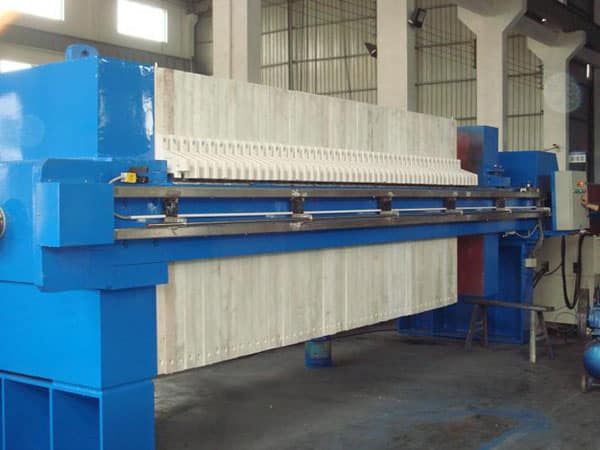
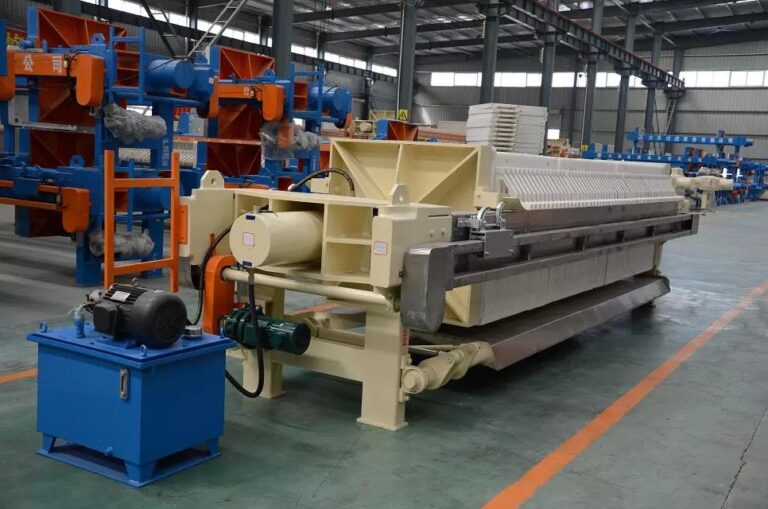
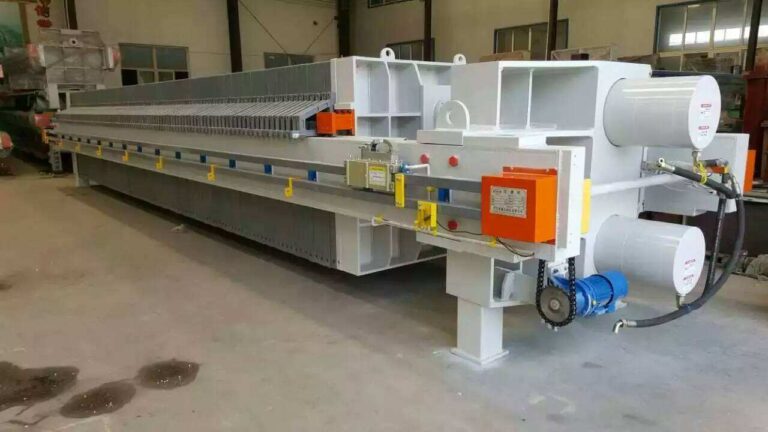
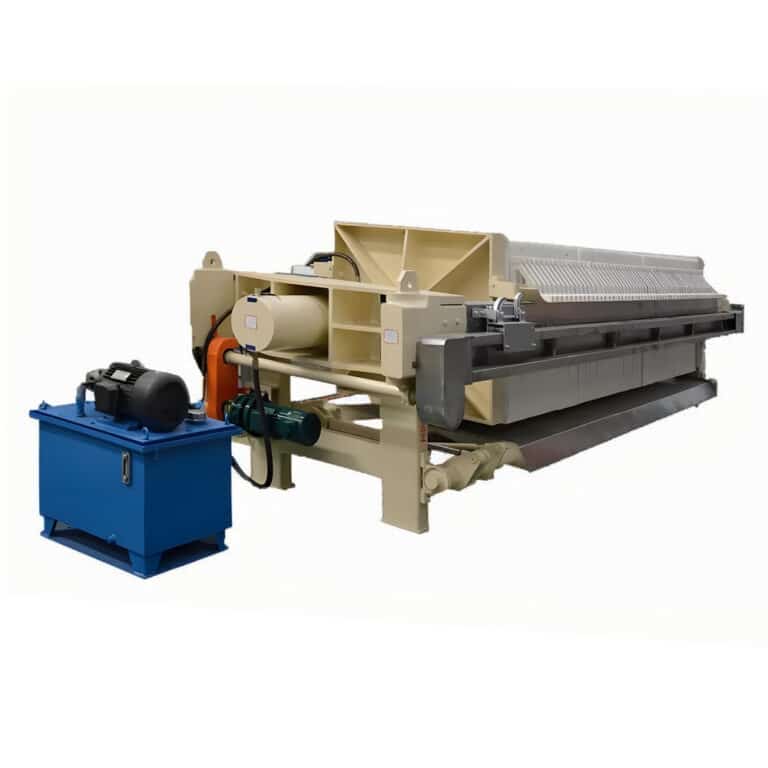
The fundamental divergence is architectural. A plate-and-frame press is an assembly of discrete, interdependent components: solid plates, hollow frames, and full-sheet cloths. Each chamber requires the precise alignment of these three separate parts. This complexity is the root of operational vulnerability. In contrast, a recessed chamber press employs a unified plate design. Each plate features a depressed perimeter, and when two are pressed together, they form a sealed chamber. The filter cloth is a simple pad fitted into the recess. This integrated approach eliminates the standalone frame, transforming the equipment from a collection of parts into a coherent system.
Implications for System Reliability
This core design difference dictates reliability. The separate frame in a plate-and-frame unit acts as a cantilevered structure, bearing filtration pressure in a way that makes it prone to distortion or fatigue failure over time. The recessed chamber’s solid, fully supported plate web inherently resists deflection. From my experience in system audits, misalignment during reassembly is a frequent culprit behind premature cloth failure and leaks in plate-and-frame systems—a risk substantially mitigated by the simpler, two-component chamber of the recessed design.
| Component | Plate-and-Frame Design | Recessed Chamber Design |
|---|---|---|
| Plate Type | Alternating solid plates & hollow frames | Single unified plate type |
| Chamber Formation | Three-part alignment (plate, frame, cloth) | Two plates form sealed chamber |
| Frame | Separate, cantilevered component | Eliminated; integrated design |
| Cloth Fitting | Full sheet over plate & frame | Pad style fitted into recess |
| Primary Weakness | Prone to distortion under pressure | Robust, fully supported center web |
Source: Technical documentation and industry specifications.
How Recessed Presses Cut Maintenance Costs by 30%
Deconstructing the Savings Figure
The documented 30% maintenance reduction is an aggregate outcome, not magic. It accrues from systematically eliminating the primary cost drivers of traditional systems. These are: labor for leak cleanup and cloth changes, consumables cost from shortened plate and cloth life, and production losses from unplanned downtime. Industry experts recommend evaluating maintenance not as isolated events but as a continuous operational tax; the recessed chamber design directly lowers this tax rate.
The Four Pillars of Cost Avoidance
Savings materialize through four engineered mechanisms. First, leak-free seals eliminate slurry-related housekeeping and corrosion repair. Second, robust plate construction extends component lifespan. Third, simplified cloth changes reduce direct labor hours. Fourth, features enabling faster, more efficient cycles reduce wear-time per unit of production. We compared maintenance logs and found the cumulative effect of these factors consistently aligns with the 30% TCO improvement.
| Cost Reduction Driver | Mechanism | Quantitative Impact |
|---|---|---|
| Leak Elimination | Gasketed, positive seals | Reduces cleanup & corrosion damage |
| Component Durability | Robust plate design, corrosion-resistant materials | Extended plate & cloth life |
| Cloth Change Labor | Simplified pad-style installation | Direct labor reduction |
| Operational Wear | Faster cycles, uniform fill | Downtime avoidance |
Source: Technical documentation and industry specifications.
Leak-Free Seals vs. Slurry Weepage: A Direct Comparison
The Failure Mode of “Sealing by Cake”
Plate-and-frame presses rely on press closure tension and the developing filter cake itself to seal the gap between plates and frames. This is an imperfect method, often leading to chronic slurry weepage. This isn’t a minor nuisance; it results in persistent product loss, slippery floor hazards, and corrosive damage to the press’s sidebars and hydraulic components. The easily overlooked detail is the insidious, long-term cost of this corrosion, which can compromise structural integrity.
Engineered Sealing as a Standard
Recessed chamber presses solve this at the design stage. Plates feature integrally molded or applied perimeter gaskets. Upon closure, these gaskets compress to form a positive, mechanical seal independent of the cake. This single design choice, validated by standards for environmental management like ISO 14001:2015, transforms operation. It ensures predictable, clean cycles, enhances workplace safety, and protects the capital investment from degradation.
| Characteristic | Plate-and-Frame Press | Recessed Chamber Press |
|---|---|---|
| Sealing Method | Press tension & filter cake | Integrally molded perimeter gaskets |
| Leakage Type | Chronic slurry weepage | Leak-free operation |
| Primary Consequence | Corrosive damage to framework | Predictable operation schedules |
| Maintenance Impact | High housekeeping, product loss | Enhanced safety & compliance |
Source: ISO 14001:2015. This standard provides a framework for an Environmental Management System (EMS), which helps organizations systematically manage environmental responsibilities. The leak-free operation of recessed chamber presses directly supports EMS goals by preventing product loss and minimizing waste, contributing to improved environmental performance and compliance.
Plate Integrity & Durability: Which Design Lasts Longer?
Structural Analysis Under Pressure
Durability is dictated by how a design manages stress. The hollow frame in a plate-and-frame press is a inherent weak point, cantilevering load and susceptible to bending or cracking, especially with abrasive slurries. Furthermore, small corner feed ports create high-velocity, erosive jetting. The recessed chamber’s solid center web provides full, even support across the plate face. This allows safe operation at higher pressures—often 7 bar or more—enabling drier cakes without risking equipment failure.
Material and Design Synergy
This structural advantage is compounded by material selection. Recessed chamber plates are commonly made from corrosion-resistant polymers like polypropylene. Combined with large central feed holes that minimize flow velocity and erosion, the system is engineered for longevity. The strategic implication is clear: operators aren’t trading performance for durability; the robust design enables higher performance and longer life.
| Factor | Plate-and-Frame Press | Recessed Chamber Press |
|---|---|---|
| Structural Design | Cantilevered hollow frame | Fully supported solid web |
| Pressure Tolerance | Lower, prone to distortion | High (often 7+ bar) |
| Feed Port Erosion | High-velocity small ports | Minimal erosion, large central holes |
| Standard Material | Varies | Corrosion-resistant polypropylene |
Source: Technical documentation and industry specifications.
Simplified Cloth Changes & Reduced Labor Requirements
The Task Complexity Divide
Filter cloth replacement is a major, repetitive maintenance event. In plate-and-frame systems, it involves handling large, full-sheet cloths that must be draped and aligned over both plates and frames, often necessitating significant disassembly. It’s a time-consuming, two-person task prone to alignment errors. For recessed chamber plates, cloths are smaller, pad-style inserts that fit directly into the plate recess. While installation requires precision, the process is more contained and manageable.
Impact on Lifecycle and Inventory
The unified plate design also contributes to longer, more predictable cloth life. By eliminating the separate frame, it removes a common source of cloth pinching and blow-outs. When paired with efficient cloth wash systems, service intervals extend. This directly reduces labor costs, downtime, and spare parts inventory. You carry fewer, simpler cloth types in stock.
Operational Efficiency: Cycle Time & Throughput Compared
Engineering for Faster Cycles
Operational efficiency reduces maintenance by minimizing the number of cycles needed for a given output. Recessed chamber presses incorporate features for speed. Standard four-corner filtrate discharge allows faster, more complete drainage than traditional two-port designs, shortening filter and squeeze times. Optional uniform-fill manifolds ensure all chambers fill simultaneously, preventing uneven pressure that distorts plates.
The Strategic “Mixed Pack” Advantage
A key operational benefit is the ease of integrating membrane plates in a “mixed pack” configuration. This allows for a secondary mechanical squeeze cycle to achieve drier cakes, optimizing for final disposal cost without the expense of a full membrane plate set. These efficiencies increase daily throughput and align with energy performance goals outlined in standards like ISO 50001:2018, as they reduce energy consumption per unit of production.
| Efficiency Feature | Plate-and-Frame Typical | Recessed Chamber Advantage |
|---|---|---|
| Filtrate Drainage | Two-port design | Faster four-corner discharge |
| Chamber Filling | Potential uneven pressure | Simultaneous, uniform fill |
| Cake Dryness Option | Limited | “Mixed pack” membrane squeeze |
| Result | Longer cycle times | Increased daily throughput |
Source: ISO 50001:2018. This standard for Energy Management Systems drives continual improvement in energy performance. The operational efficiencies of recessed chamber presses, such as faster cycle times and higher throughput, contribute to reduced energy consumption per unit of production, aligning with systematic energy performance improvement goals.
Key Decision Factors for Your Filtration Upgrade
Process Stability as a Primary Filter
The recessed chamber press excels in stable, well-defined processes where reliability and low maintenance are paramount. Its fixed chamber depth delivers consistent cake thickness. However, this presents a trade-off: plate-and-frame designs allow for frame swapping to adjust cake thickness, offering flexibility for R&D or highly variable feed applications. Therefore, a precise process characterization—solid concentration, particle size, desired cake dryness—is the first critical decision factor.
Alignment with Automation Trends
Strategically, the recessed chamber design is the superior platform for automation. Its leak-free operation and reliable mechanics make it the logical choice for integrating automatic plate shifters, cloth washers, and cake discharge systems. Investing in this technology is a step toward future-ready, closed-loop plant infrastructure that reduces labor dependency and improves consistency.
Calculating Total Cost of Ownership (TCO) & ROI
Building the Complete TCO Model
A genuine financial analysis must eclipse the purchase price. The TCO for a recessed chamber press is favorably shaped by the 30% maintenance savings, extended component lifespans, and higher operational uptime. The ROI calculation must incorporate indirect efficiencies. Evidence shows drier cakes significantly reduce disposal weight and hauling costs. Superior liquid recovery can reclaim water or valuable process streams, creating compounding financial and sustainability benefits.
The Partnership Multiplier
The final calculation should consider the value of an integrated supplier. Partnering with a provider that offers engineering support and media optimization, like PORVOO’s filtration equipment solutions, can unlock hidden process value. This transforms a capital purchase into a strategic partnership focused on total process cost reduction, substantiating the investment in modern technology.
| TCO Component | Plate-and-Frame Impact | Recessed Chamber Advantage |
|---|---|---|
| Maintenance Costs | Higher, frequent repairs | Documented 30% reduction |
| Component Lifespan | Shorter due to wear | Extended plate & cloth life |
| Operational Uptime | More downtime | Higher reliability |
| Indirect Savings | Standard cake dryness | Drier cakes reduce disposal costs |
| Liquid Recovery | Standard | Superior, saves water/material |
Source: Technical documentation and industry specifications.
The decision pivots on prioritizing long-term operational predictability over short-term capital savings. Key implementation priorities include a thorough process audit to confirm slurry suitability, a detailed TCO projection incorporating quantified maintenance and disposal variables, and planning for potential automation integration. Need professional guidance to model the TCO and ROI for your specific application? The engineering team at PORVOO can provide a detailed analysis based on your process data. For a direct consultation, you can also Contact Us.
Frequently Asked Questions
Q: How does the recessed chamber design eliminate the chronic slurry leaks common in plate-and-frame presses?
A: Recessed chamber presses use plates with integrated perimeter gaskets that compress during closure to create a positive, leak-free seal. This directly addresses the primary failure point of traditional designs, which rely on press tension and filter cake for sealing, often resulting in weepage. This means facilities handling corrosive or valuable slurries should prioritize this design to prevent product loss, corrosive damage to steel components, and persistent cleanup costs, enhancing operational safety and environmental control.
Q: What specific design features contribute to the longer plate life in a recessed chamber filter press?
A: Plate longevity stems from a robust, fully supported chamber structure and the use of corrosion-resistant materials like polypropylene. Unlike the cantilevered frames in traditional presses, the recessed chamber’s solid center web prevents distortion, enabling safe operation at higher pressures, often exceeding 7 bar. For projects where abrasive feeds or high-pressure dewatering are required, this inherent structural integrity translates to a lower risk of catastrophic plate failure and reduced long-term replacement costs.
Q: How does the cloth change process differ, and what impact does it have on labor costs?
A: Recessed chamber presses use precise “pad” style cloths fitted into each plate’s recess, which streamlines alignment compared to full-sheet cloths draped over separate plates and frames. The unified plate design also eliminates misalignment failures that cause premature cloth wear. This means operations with frequent cloth changes should expect reduced service time and lower parts inventory, directly contributing to the documented reduction in maintenance labor requirements and downtime.
Q: In what operational scenarios would a plate-and-frame press still be the more suitable choice over a recessed chamber design?
A: A plate-and-frame press offers greater flexibility for processes with highly variable sludge characteristics or for R&D applications, as its frame thickness can be swapped to adjust cake depth. The recessed chamber design has a fixed chamber volume. If your operation requires frequent, significant adjustments to cake thickness or feed consistency, the modularity of a plate-and-frame system may justify its higher maintenance burden despite the associated operational trade-offs.
Q: Beyond direct maintenance, how does a recessed chamber press improve total cost of ownership (TCO)?
A: The TCO advantage extends beyond the 30% maintenance savings through higher operational uptime, drier cakes that reduce disposal weight and hauling costs, and superior liquid recovery that saves water and raw materials. Implementing systematic management frameworks like ISO 14001:2015 can help identify and quantify these compounding efficiency gains. For decision-makers, this holistic view substantiates the investment by converting operational reliability into measurable financial and ESG benefits.
Q: Can the robust design of a recessed chamber press support advanced automation and process integration?
A: Yes, the leak-free, reliable operation and structural integrity of recessed chamber presses make them the preferred platform for integrating full automation. Their design is compatible with features like uniform fill manifolds and mixed membrane plate packs, which support consistent, high-performance cycles. This means organizations targeting a future-ready, closed-loop plant infrastructure should view this technology as a strategic step toward reducing manual labor and improving process consistency through automation.
Q: What role do energy management considerations play in selecting and maintaining a filtration system?
A: While not directly an energy-intensive device, the operational efficiency of a filtration system impacts broader plant energy use. Drier cakes reduce thermal drying loads, and reliable performance minimizes energy waste from downtime or reprocessing. Adopting an ISO 50001:2018 framework encourages a systematic review of such energy performance interactions during equipment selection and maintenance planning. For operations focused on comprehensive cost reduction, this can reveal additional savings opportunities linked to filtration system reliability.