Grit removal is a critical pretreatment step, yet selecting the wrong technology can compromise downstream processes and inflate operational costs. The choice between gravity, aerated, and centrifugal systems is often oversimplified to a basic cost comparison, neglecting the long-term impact on sludge handling, energy consumption, and equipment wear. Many plants inherit legacy systems without reassessing their suitability for current flow patterns or evolving grit characteristics.
This decision demands a modern, total-cost-of-ownership perspective. Regulatory focus is shifting toward finer particle removal and resource recovery, while space constraints and variable flows from urbanization challenge traditional designs. A strategic comparison must move beyond capital expenditure to evaluate performance consistency, grit purity, and adaptability to future requirements.
Gravity vs Aerated vs Centrifugal: Core Principles Compared
Defining the Separation Mechanisms
Each technology employs a distinct physical principle. Gravity settling relies on reduced flow velocity in a channel or tank, allowing denser grit to fall out of suspension. It is a passive process dependent on consistent hydraulic conditions. Aerated grit chambers introduce diffused air to create a spiral roll. This turbulence scours organic material from grit particles, promoting cleaner settling through differential washing. Centrifugal, or vortex, systems actively generate a controlled vortex using a mechanical inducer. Centrifugal force drives particles to the perimeter for collection, independent of inflow velocity.
Operational Character and Dependencies
The core principle dictates operational behavior. Gravity systems are highly sensitive to flow surges, which can resuspend settled material. Their effectiveness is a direct function of detention time and tank geometry. Aerated systems offer tunable performance through air rate adjustment, allowing operators to respond to changes in grit load or composition. Centrifugal systems provide flow-independent consistency; the mechanically sustained vortex ensures stable separation efficiency regardless of inflow variations, a key advantage in plants with significant infiltration and inflow.
Application Suitability Insights
The presence of fine, low-density, or grease-coated grit fundamentally challenges simple gravity separation. In our analysis of municipal inflows, we consistently find that these fractions bypass basic settlers, accumulating in digesters and wearing pumps. The washing action of aerated chambers or the forceful separation of vortex systems becomes necessary for comprehensive removal. This aligns with the precise terminology for material characterization found in standards like ASTM D653-14 Standard Terminology Relating to Soil, Rock, and Contained Fluids, which underscores the importance of accurately defining particle properties for process design.
Capital & Operating Cost Comparison: TCO Analysis
Breaking Down Initial and Ongoing Expenditures
A true financial assessment extends far beyond the equipment purchase order. Gravity systems often have low mechanical costs but can incur significant concrete and land expenses. Aerated chambers carry moderate capital costs, with a substantial portion allocated to the blower and diffuser system. Centrifugal vortex systems typically command the highest equipment cost due to the precision-engineered inducer and controls, but this can be offset by reduced civil works and a compact footprint.
The Hidden Cost of Grit Disposal
Operational cost profiles diverge sharply. Gravity systems have low energy use but produce grit with high organic carryover, leading to costly disposal and lost digester capacity. Aerated and centrifugal systems consume more energy (for blowers or the inducer) but yield a cleaner grit product. This transforms the waste stream. Systems with integrated grit washing, while a higher capital outlay, reduce disposal fees and can create offsetting value, improving total cost of ownership.
TCO Analysis in Practice
The following table provides a comparative breakdown of key cost drivers across the three technologies, illustrating how initial investment intersects with long-term operational and waste management expenses.
| Cost Component | Gravity Settling | Aerated Chamber | Centrifugal Vortex |
|---|---|---|---|
| Capital Cost | Low to Moderate | Moderate | High |
| Key Cost Driver | Concrete, land | Blower system | Vortex inducer |
| Operational Cost | Low | High (blower energy) | Moderate (inducer energy) |
| Grit Disposal Cost | High (dirty grit) | Lower (cleaner grit) | Lower (cleaner grit) |
| Value Recovery Potential | Minimal | Moderate (cleaner product) | Moderate (cleaner product) |
Source: Technical documentation and industry specifications.
Performance & Capacity: Which System Handles Your Flow?
Capture Efficiency and Grit Purity
Performance is measured by both the percentage of particles removed and the organic content of the captured grit. Gravity settlers effectively capture larger, denser particles but struggle with fines and are prone to high organic carryover. Aerated chambers excel at removing finer particles and produce the cleanest grit due to in-situ washing. Centrifugal systems offer highly consistent capture efficiency across a broad particle size range, with performance maintained despite inflow fluctuations.
Hydraulic Load and Surge Response
Capacity planning must account for both average and peak conditions. Gravity systems are vulnerable to resuspension during flow surges. Aerated chambers can adjust aeration rates to handle variable loads, maintaining the optimal spiral roll. Centrifugal vortex systems, with detention times as low as 20-30 seconds, are designed for high hydraulic loading rates and are inherently resilient to surges, making them suitable for plants with significant wet weather flows.
Key Performance Metrics Compared
Selecting a system requires balancing these interrelated metrics. The following table contrasts the operational performance characteristics, highlighting the trade-offs between capture efficiency, flow sensitivity, and output quality.
| Performance Metric | Gravity Settling | Aerated Chamber | Centrifugal Vortex |
|---|---|---|---|
| Capture Efficiency | Larger, denser particles | Finer particles | Consistent, flow-independent |
| Flow Surge Sensitivity | High (resuspension risk) | Moderate (adjustable aeration) | Low |
| Detention Time | Minutes | Minutes | 20-30 seconds |
| Grit Purity (Organic Content) | High carryover | Low (washed in-situ) | Low |
| Hydraulic Loading Rate | Lower | Moderate | High |
Source: ISO 6107-6:2004 Water quality – Vocabulary – Part 6. This standard provides the precise terminology for water quality parameters and wastewater constituents, which is essential for defining and comparing performance metrics like capture efficiency, particle size, and hydraulic loading.
Key Advantages and Limitations: A Side-by-Side Review
Strengths of Each Technology
Gravity settling offers mechanical simplicity and low energy consumption, advantageous for small plants with steady flows. Aerated grit chambers provide excellent grit washing, handle variable particle sizes effectively, and offer a side benefit of some pre-aeration. Centrifugal vortex systems deliver a compact footprint, consistent performance under highly variable conditions, and rapid separation, enabling significant space savings or capacity upgrades within existing sites.
Inherent Constraints and Trade-offs
Each strength is counterbalanced by a limitation. Gravity systems require large land areas, are sensitive to flow changes, and produce dirty grit. Aerated chambers have higher energy costs, require more operator attention to control air rates, and have a larger footprint than vortex units. Centrifugal systems involve higher initial capital investment and have moving parts (the vortex inducer) subject to abrasive wear, necessitating a proactive maintenance strategy.
Strategic Considerations for Future-Proofing
A critical, often overlooked limitation is adaptability. As regulatory focus may shift to smaller, more abrasive microparticles, simple gravity systems risk obsolescence. Aerated and enhanced centrifugal systems, particularly those with adaptive controls, are better positioned to meet stricter future standards. This makes the technology choice a strategic decision with a multi-decade horizon.
Footprint & Installation: Space and Site Impact
Physical Space Requirements
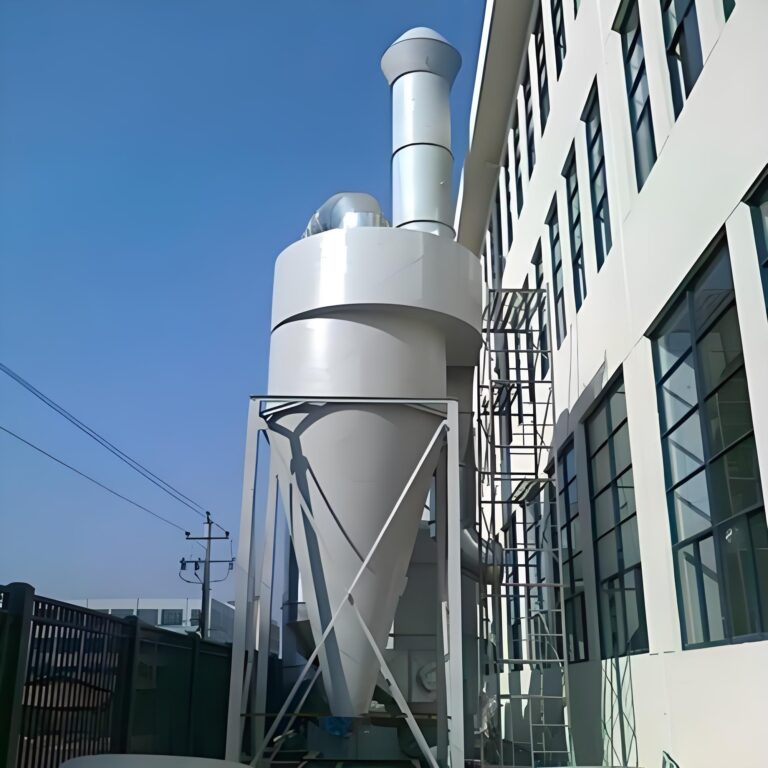
Footprint is a primary differentiator with direct cost implications. Gravity detritors require long channels or large tanks, consuming significant land area. Aerated chambers have a substantial rectangular footprint to accommodate the spiral flow pattern. In contrast, centrifugal vortex systems utilize a vertical, compact tank design, often requiring less than 25% of the footprint of a conventional gravity system for equivalent capacity.
Installation Complexity and Site Suitability
The installation profile varies dramatically. Gravity systems involve extensive cast-in-place concrete work, suited for greenfield sites. Aerated chambers require moderate civil works for tank construction and air piping. Centrifugal systems are frequently supplied as packaged, modular units, minimizing on-site construction time and complexity. This makes them ideal for retrofits, space-constrained urban plants, or indoor installation.
The Drive Toward Decentralized and Modular Solutions
Space constraints directly drive technology adoption. The growing market for decentralized treatment creates a specific niche for compact, packaged vortex or aerated units. These modular solutions simplify installation in remote, industrial, or smaller-scale applications where traditional civil construction is impractical or prohibitively expensive. The following table summarizes the spatial and installation characteristics.
| Characteristic | Gravity Settling | Aerated Chamber | Centrifugal Vortex |
|---|---|---|---|
| Physical Footprint | Very Large (long channels) | Large (rectangular tank) | Very Compact |
| Installation Type | Extensive civil works | Moderate civil works | Packaged, modular |
| Ideal Site Context | Ample greenfield space | Standard plants | Space-constrained, retrofits |
| Suitability for Decentralized Treatment | Low | Moderate | High |
Source: Technical documentation and industry specifications.
Maintenance, Wear, and Operational Complexity
Routine and Preventative Demands
Operational burdens differ by technology. Gravity systems have minimal mechanical maintenance but may require frequent manual cleaning if organics accumulate on tank floors. Aerated systems demand regular blower maintenance, diffuser cleaning, and vigilant control of air rates to maintain separation efficiency. Centrifugal systems focus maintenance on the vortex inducer—the impeller or paddle assembly that is the system’s heart and primary wear component.
Managing Abrasive Wear
Abrasion is the dominant wear mechanism. In gravity and aerated systems, wear is distributed across channels, flights, or diffusers. In centrifugal systems, wear is concentrated on the inducer, necessitating robust materials like specialized polyurethane or hardened alloys. However, this concentrated wear point allows for targeted monitoring and predictable replacement scheduling, which can be more manageable than distributed, unpredictable wear.
The Shift to Predictive Operations
Advanced systems with integrated sensors transform maintenance philosophy. Data on grit load, motor torque, and vibration can forecast inducer wear. More importantly, this data provides intelligence for the entire plant, predicting wear on downstream equipment like pumps and digesters. This moves operations from scheduled preventative tasks to a condition-based, predictive model, optimizing parts inventory and reducing unplanned downtime. The operational profiles are compared below.
| Operational Aspect | Gravity Settling | Aerated Chamber | Centrifugal Vortex |
|---|---|---|---|
| Mechanical Complexity | Low | Moderate | High |
| Primary Wear Component | Collector mechanism | Blower, diffusers | Vortex inducer (impeller) |
| Maintenance Focus | Manual cleaning, chains | Air rate control, blowers | Abrasive wear on inducer |
| Predictive Potential | Low | Moderate | High (with sensors) |
| Operational Simplicity | High | Moderate | Requires monitoring |
Source: Technical documentation and industry specifications.
Which Technology Is Better for Your Specific Use Case?
Matching Technology to Plant Context
There is no universally superior technology, only the optimal fit for specific conditions. Gravity settling may suit small, rural plants with exceptionally steady flows, ample space, and simple operational goals where grit disposal is inexpensive. Aerated chambers are a strong choice for medium to large plants that prioritize grit cleanliness, deal with significant fines or FOG, or where pre-aeration provides a process benefit.
The Case for Centrifugal Vortex Systems
Centrifugal vortex systems excel in specific, increasingly common scenarios. These include space-limited plants, facilities with highly variable flows or significant wet weather infiltration, and retrofit projects requiring capacity upgrades within an existing footprint. They are also well-suited for industrial applications with dense, abrasive grit loads where consistent removal is critical for protecting downstream equipment.
The Critical Link to Upstream Screening
This selection cannot be made in isolation from upstream processes. The size and type of coarse screens directly determine the load and physical characteristics of the grit presented to the removal system. A poorly sized screen can overwhelm a grit chamber or damage a vortex inducer. Effective pretreatment requires an integrated design where screening and grit removal are specified as a cohesive system.
Decision Framework: Selecting the Right Grit Removal System
Step 1: Conduct Detailed Influent Characterization
Begin with data. Analyze grit load, particle size distribution, density, and FOG content. This profile dictates whether simple settling is sufficient or if washing-enhanced separation is required. Partner with a technology provider like PORVOO who can assist with this analysis, as their expertise in large particle grit removal systems ensures the data translates into a correct specification.
Step 2: Evaluate Site and Hydraulic Constraints
Apply practical filters. Footprint is often the primary constraint, eliminating technologies that cannot fit the available space. Next, analyze flow patterns—both diurnal and seasonal—to determine sensitivity to surges. This step aligns the technology’s hydraulic resilience with the plant’s actual flow regime.
Step 3: Define Comprehensive Performance Requirements
Move beyond basic capture rates. Mandate limits on organic carryover to protect downstream biology and reduce sludge costs. Consider future regulatory trends regarding finer particles. Specify performance-based outcomes (e.g., “achieve 95% removal of 150-micron particles with less than 10% volatile content”) rather than prescribing a technology. This forces vendors to demonstrate value through integrated solutions.
Step 4: Execute a Lifecycle TCO Analysis
Model all costs: capital, energy, maintenance, disposal, and potential resource recovery. Systems with higher upfront costs but lower operational and disposal expenses often present a better long-term value. Use this analysis to justify investment in automation or washing features that turn operational expenditure into an optimization lever.
Prioritize technologies that protect downstream processes, adapt to variable conditions, and offer a manageable operational profile. The goal is a system that functions as a reliable, low-maintenance asset, not a constant source of operational difficulty. Need a professional analysis for your specific grit removal challenge? The engineering team at PORVOO can provide a detailed assessment and technology recommendation based on your plant’s unique data. Contact Us to discuss your project requirements.
Frequently Asked Questions
Q: How do you evaluate the true long-term cost of a grit removal system beyond the initial purchase price?
A: A total cost of ownership (TCO) analysis must include capital, energy, maintenance, and disposal costs. Systems with integrated grit washing, like aerated or advanced centrifugal units, have higher capital outlay but produce cleaner grit that reduces disposal fees and can create resource recovery value. For projects where waste handling is expensive, prioritize technologies that improve grit purity to transform a cost center into a potential revenue stream.
Q: What are the critical performance differences between gravity and centrifugal grit removal for variable flow conditions?
A: Gravity settlers are highly sensitive to flow surges, which can resuspend settled material, while centrifugal vortex systems maintain consistent separation despite inflow variations due to their mechanically controlled, flow-independent vortex. This consistent performance is driven by active force generation within a compact vessel. This means facilities with significant wet weather infiltration or highly variable diurnal flows should strongly consider vortex systems to ensure reliable grit capture.
Q: How does grit composition and particle size influence the choice between aerated and gravity-based systems?
A: The presence of fine, low-density, or grease-coated particles challenges simple gravity separation. Aerated chambers introduce a washing action that scours organics from grit, making them effective for finer particles and FOG. This dual-purpose mechanism is key for comprehensive removal. If your influent characterization, per standards like ISO 6107-6:2004, shows a high fraction of fines or organics, an aerated system is necessary to protect downstream biological processes.
Q: Why is footprint a primary driver in grit technology selection for urban treatment plants?
A: Space constraints directly dictate viable options, as gravity detritors require long channels and aerated chambers need moderate rectangular space, while centrifugal vortex systems offer a vertically oriented, compact footprint. This physical differentiation is critical for retrofits, expansions, or indoor installations where space is limited. For urban plants or decentralized treatment applications, compact vortex or modular aerated units become the default choice to meet capacity within existing site boundaries.
Q: What operational maintenance model is emerging for advanced centrifugal grit removal systems?
A: Advanced systems with integrated sensors enable a shift from scheduled preventative maintenance to a predictive model. Data on grit load and composition can forecast wear on the mechanical vortex inducer and downstream equipment like pumps. This means operations with a focus on minimizing unplanned downtime should invest in systems that provide this operational intelligence, turning maintenance into a strategic planning function rather than a reactive cost.
Q: How should performance requirements be specified to ensure effective grit removal in a procurement process?
A: Move beyond basic capture efficiency (e.g., 95% for particles >210 µm) to mandate limits on organic carryover, which steals food from biological treatment and increases sludge costs. Reference foundational terminology from ASTM D653-14 for precise material descriptions. If your goal is to protect downstream processes, specify performance-based outcomes that force vendors to prove value through integrated separation and washing solutions.
Q: Which grit system is best suited for a plant with ample space but concerns about future regulatory changes targeting smaller particles?
A: While simple gravity settling may seem adequate for a spacious site, its inability to adapt to stricter limits on microparticles (<210µm) poses a strategic risk. Aerated or enhanced centrifugal systems are better positioned for such a regulatory shift due to their finer particle removal and washing capabilities. For long-term asset planning, even plants with space should evaluate technologies that offer a performance buffer against evolving standards.