Choosing dewatering equipment for ceramic tile sludge inside a closed water recycling loop is rarely a straightforward dryness-versus-cost comparison. Operations that treat it as such often discover the real cost later: washwater demand rising unexpectedly, belt blinding during production peaks, or filtrate quality swinging far enough to destabilize return flows and trigger unplanned secondary clarification. The decision that actually governs long-term performance is whether the sludge’s daily generation pattern, polymer response, and consistency will sustain a continuous squeeze process—or whether the loop is better served by controlled batch dewatering with planned interruptions. By the end of this piece, you will have a clearer basis for evaluating which equipment type fits your specific sludge rhythm, and where the hidden constraints typically surface during operation.
Compare continuous and batch dewatering needs
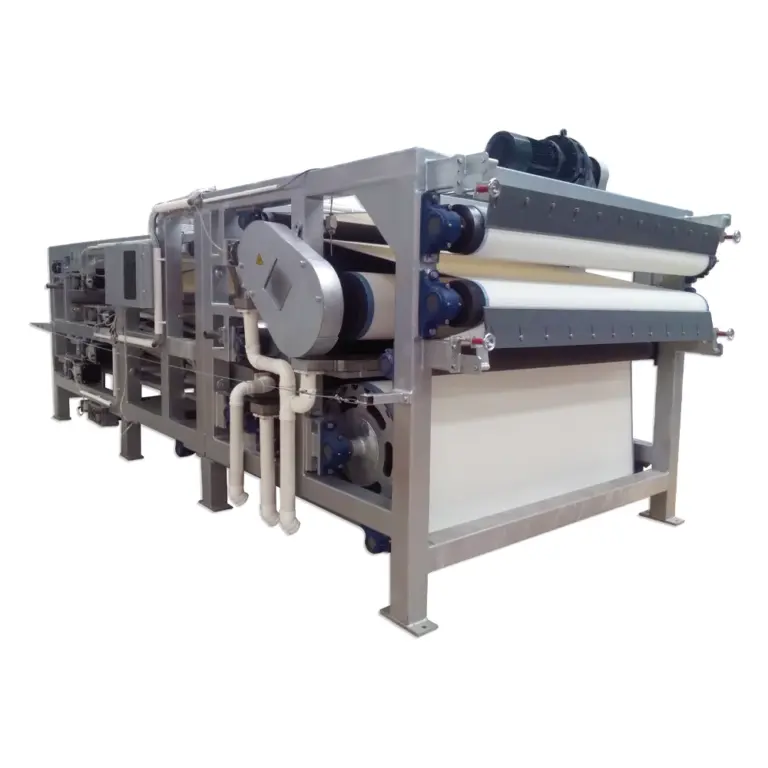
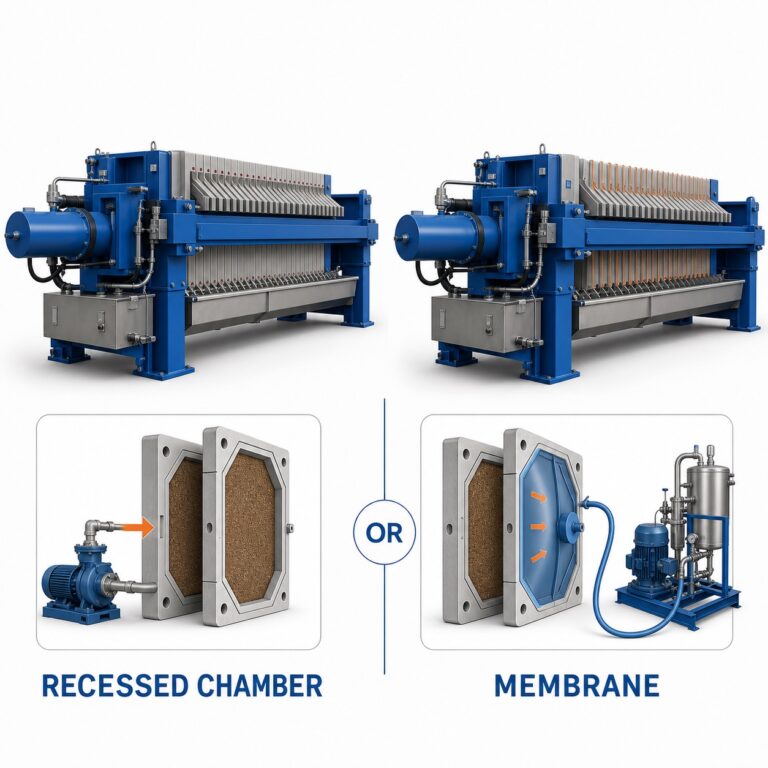
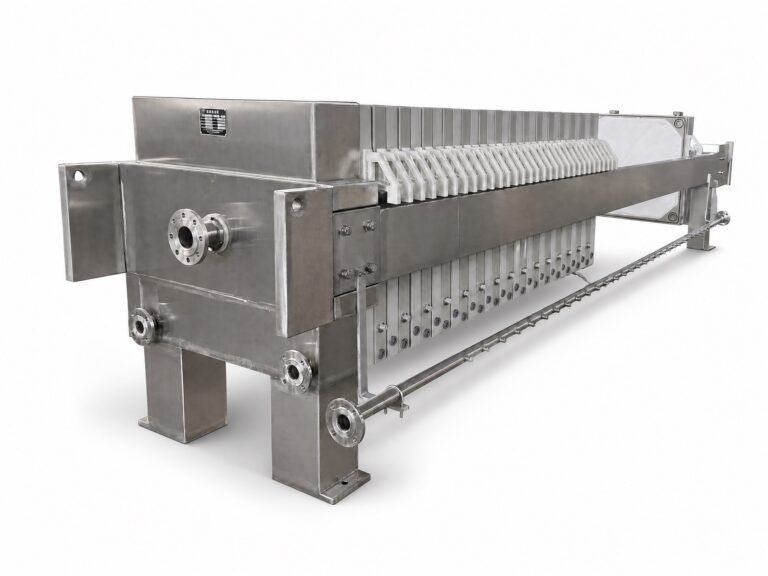
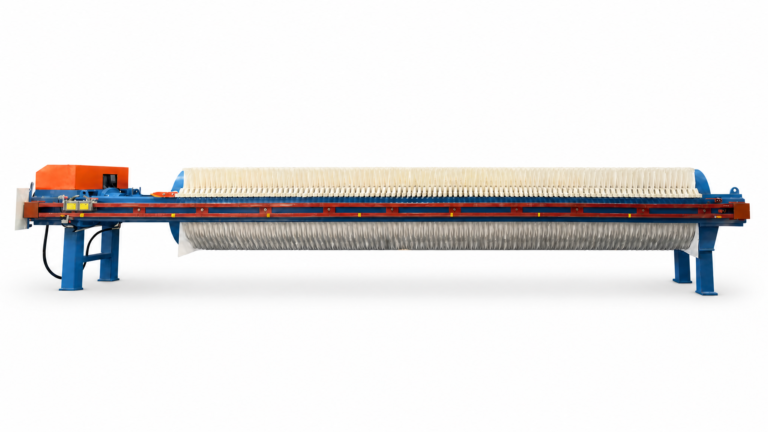
The operational mode of each press type is not a preference—it is a structural constraint that must align with how sludge arrives at the dewatering station. A belt filter press processes feed in an uninterrupted flow, moving conditioned sludge through gravity drainage and successive roller zones without stopping between batches. That architecture works when feed volume is consistent and conditioning is predictable. A chamber filter press fills, presses, and discharges in discrete cycles, which means the upstream process must be able to hold sludge in a buffer tank between cycles without destabilizing feed characteristics or allowing settled solids to separate.
For ceramic tile production, where washwater generation often tracks production shifts, neither mode is inherently superior—but the mismatch between equipment mode and actual sludge rhythm is a documented source of downstream inefficiency. If sludge generation is genuinely continuous and high-volume, forcing it through a batch press without adequate buffer design creates feed inconsistency that affects cake uniformity and cycle predictability. Conversely, running a belt press on intermittent, low-volume flows can mean insufficient sludge depth across the belt width, which reduces squeeze effectiveness and increases relative washwater consumption per unit throughput.
Buffer tank sizing is the practical decision point when considering a chamber press for a site with continuous sludge generation. The buffer does not eliminate the batch constraint—it accommodates it. If site footprint, agitation, and holding time requirements cannot support an adequately sized buffer, that operational reality should weigh against the chamber press option before capital cost enters the conversation.
| Aspect | Belt Filter Press | Chamber Filter Press |
|---|---|---|
| Operation mode | Continuous | Batch (cycle-based) |
| Flow characteristic | Uninterrupted, steady feed | Intermittent feed; requires buffer tank |
| Volume handling | Consistent high-volume input | Medium-to-high volumes managed through cycles |
| Buffer requirement | No sludge buffer | Sludge buffer essential |
Check polymer response before choosing a belt press
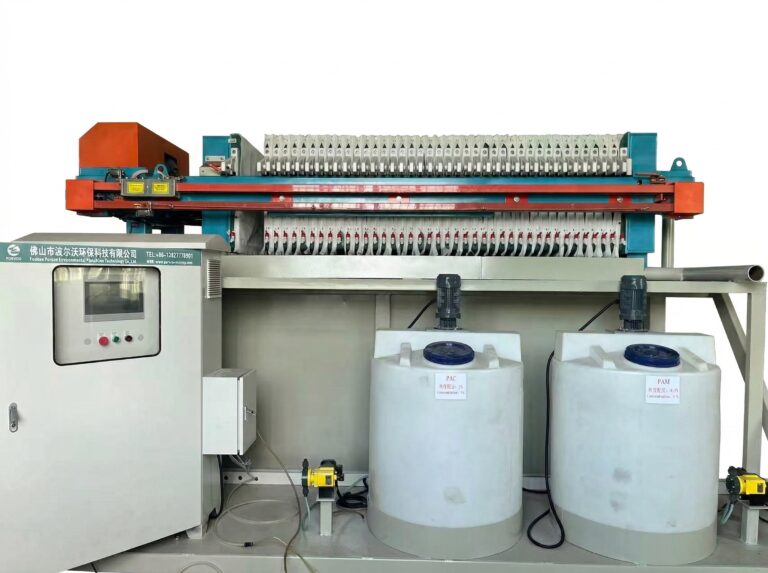
A belt filter press cannot correct poor conditioning on the fly. Once conditioned sludge enters the gravity drainage zone and moves into the roller nip points, there is no mechanism to compensate for under-flocculated material. If the ceramic sludge’s polymer response is inconsistent—varying by particle size distribution, clay mineral composition, or upstream process chemistry—the belt press will reflect that variability directly in filtrate clarity, belt blinding frequency, and washwater demand. These are not startup problems that stabilize over time; they are recurring operational costs tied to pretreatment quality.
This makes polymer jar testing on representative ceramic sludge samples a pre-selection requirement, not a commissioning task. Evaluating dosage ranges, mixing intensity, and floc stability under realistic feed conditions before selecting a belt press is the kind of check that prevents later operational friction. ISO 5667-13:2011 provides a sampling framework for sludge characterization that supports consistent, comparable jar test conditions—useful when sludge characteristics vary across production periods or tank locations and you need sampling protocol consistency to make the test results meaningful.
The practical implication is that a site with predictable, well-characterized sludge and a proven polymer program can take full advantage of a belt press’s continuous throughput. A site where conditioning has not been systematically characterized, or where sludge chemistry shifts significantly between production runs, carries a meaningful risk that a belt press will underperform against expectations—with washwater spikes and secondary clarification as the visible symptoms.
Compare cake dryness washwater and operator load
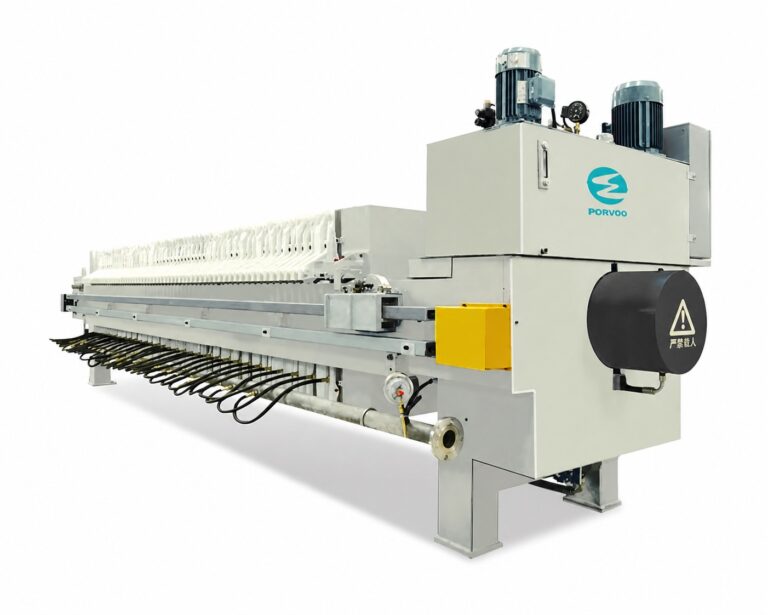
For ceramic sludge specifically, chamber filter presses operating at pressures typically above 30 bar can produce dense, uniform cakes suited to downstream handling or disposal. That pressure capability is an application-specific design figure relevant to ceramic clay dewatering, not a universal operating threshold—sites should confirm target dryness and required press pressure against their own sludge characterization before treating any figure as a specification anchor.
Belt filter presses generally achieve lower cake dryness than high-pressure chamber configurations in ceramic sludge applications. The trade-off is not only solids content: washwater consumption for belt cleaning and the operator attention required to monitor belt tracking and blinding represent a different operational burden than what a chamber press demands. For chamber presses, automated high-pressure cloth washing systems—where available—reduce the manual labor associated with cloth maintenance and help prevent blinding between cycles. That said, automated washing reduces labor; it does not eliminate the need for periodic cloth replacement, which remains a planned maintenance reality regardless of how well the washing system performs.
The operator load comparison matters most when labor availability and shift structure are factored in. A belt press requires frequent visual monitoring of belt tracking and blinding conditions across a continuous operation. A chamber press concentrates its maintenance demands around cloth inspection and cycle transitions, with the hydraulic system representing the other primary maintenance focus. Neither profile is universally lower-burden; they distribute differently across shift time and skill requirements.
| Dimension | Belt Filter Press | Chamber Filter Press |
|---|---|---|
| Cake dryness (ceramic sludge) | Not stated; generally lower than chamber | Over 30 bar, producing a dense, uniform cake |
| Washwater / cleaning | Maintenance focuses on belt alignment and cloth blinding; washwater consumption not detailed | Automatic high-pressure water spray bar cleans cloths, reducing labour and blinding |
| Primary maintenance items | Belt alignment, cloth blinding | Hydraulic systems, cloth durability |
| Operator load | Frequent visual checks for track and blinding | Labour reduced by automated cloth washing; periodic cloth replacement still needed |
Review chamber press cycle time and cloth care
Cycle time in a chamber press is not just a throughput variable—it directly determines how the press integrates into the surrounding water loop. A fill-press-discharge cycle that runs longer than anticipated can delay return of clarified filtrate to the loop and create buffer tank overflow risk if upstream sludge generation continues uninterrupted. Sites that benchmark cycle time against nameplate data without accounting for actual sludge compressibility, polymer conditioning quality, or filter cloth condition often discover that real-world cycles run longer than modeled, particularly as cloths age.
Cloth care planning deserves early-stage attention precisely because it affects both cycle time and cake release. As cloths blind progressively between cleaning cycles, filtration resistance increases, fill time extends, and expressed cake may release unevenly—complications that compound if the cleaning interval is not matched to actual fouling rate. Automated cloth washing systems can reduce the frequency of operator intervention and extend the interval before replacement is needed, but they shift the planning question rather than eliminating it: the cleaning cycle must be scheduled within the broader operational rhythm, and replacement intervals must be estimated based on actual ceramic sludge abrasiveness and clay mineral loading, not generic cloth life data.
The practical maintenance commitment for a chamber press in a ceramic tile operation should be built into the operational plan before procurement, not treated as a running cost to be managed reactively. Frequent unplanned cloth replacements erode the economic case for the higher upfront capital and the disposal savings that often justify it.
Include filtrate quality in the comparison
Filtrate from both belt and chamber configurations can achieve clarity suitable for recirculation within a closed water loop, but the operating conditions that produce acceptable filtrate are not automatic. Belt press filtrate quality is directly dependent on conditioning quality—under-flocculated sludge produces turbid filtrate that carries fine ceramic particles back into the loop, creating progressive buildup in the return water system and potentially affecting downstream process quality. Chamber press filtrate tends to be less sensitive to feed variability once the press is sealed and pressure is applied, but early-cycle filtrate before cake formation is established may require routing to a buffer or return to feed rather than direct recirculation.
Treating filtrate quality as a guaranteed outcome of either press type is a planning error. Manufacturer guidance suggests that both configurations can deliver suitable clarity for reuse but may require further clarification to meet discharge thresholds. GB/T 30176-2013 provides filtration performance measurement methods applicable to liquid filtrate characterization and can support a structured approach to evaluating filtrate quality against site-specific reuse or discharge targets. EPA water reuse guidance for industrial applications offers broader context on industrial loop closure goals, though it does not set binding specification limits for ceramic tile effluent.
The practical check is to define the filtrate quality specification required for your specific reuse application—whether return to glazing lines, tile washing stages, or cooling circuits—before commissioning, and to test both configurations against that specification under representative sludge conditions rather than relying on general performance claims.
Match equipment to daily sludge rhythm
Daily sludge generation in ceramic tile plants is rarely perfectly uniform. Production line changeovers, glaze chemistry shifts, and tile format changes all affect suspension characteristics and total solids loading. The equipment decision needs to account for how each press type responds when that rhythm varies.
A belt press is most stable when sludge generation is genuinely continuous and conditioning remains predictable across the operating day. If conditioning quality drops during a production transition and the belt press continues running, the effects—blinding, tracking deviation, filtrate quality shift—manifest immediately and propagate into the return water loop without a natural stopping point. A chamber press, by contrast, buffers some variability through its batch structure: a cycle that begins with well-characterized sludge in the buffer tank is less immediately affected by upstream fluctuations that occur during the press cycle. The buffer tank, if properly sized and agitated, can smooth short-term feed variability before it reaches the press.
That advantage is conditional. If sludge consistency shifts significantly between batches and the chamber press is sensitive to changes in flocculation, cloth blinding or poor cake release can result—a failure mode that surfaces during discharge, not during filtration, which means it disrupts the next cycle rather than the current one. The rhythm mismatch between ceramic tile production peaks and available dewatering capacity is the most common trigger for this pattern.
| Factor | Belt Filter Press Suitability | Chamber Filter Press Suitability |
|---|---|---|
| Sludge flow pattern | Continuous, steady generation | Intermittent or batch generation |
| Volume consistency | Consistent high volume favours uninterrupted belt operation | Medium-to-high volumes manageable via buffer and cycles |
| Tolerance for interruptions | Minimised interruptions; continuous process | Interruptions acceptable when maximum dryness justifies them |
| Cake dryness priority | Moderate dryness requirements | High dryness justifies batch cycles and buffer |
| Operational planning | Conditioning must be predictable; washwater acceptable | Requires planning for cycle time, cloth care, and cake discharge |
Choose based on loop stability not only cake dryness
The capital cost contrast between belt and chamber presses is real—belt presses generally carry lower entry capital for comparable throughput capacity, while chamber presses require higher upfront outlay that is typically justified through reduced cake volume, lower disposal costs, and the potential to eliminate secondary dewatering steps. Those savings are not automatic; they depend on achieving and sustaining the cake dryness that makes the economic case, which in turn depends on consistent conditioning, proper cloth maintenance, and cycle planning. Sites that model the economic comparison without stress-testing the operating assumptions tend to find the gap between projected and actual savings narrowing over the first year of operation.
The less visible risk is loop stability. A belt press running on inconsistent conditioning or with progressive belt blinding introduces filtrate quality variability that propagates through the return water system. That variability can affect tile surface finish, interfere with glaze suspension chemistry, or trigger secondary clarification interventions that were not planned for in the loop design. A chamber press that experiences frequent cloth blinding or extended cycle times creates periodic loop interruptions and buffer overflow risk. Both failure modes destabilize the water recycling loop more than they affect dewatering performance in isolation—which is why loop stability, not solids content, is the more useful long-term performance criterion.
Chamber press performance is also documented to be more sensitive to sudden changes in sludge consistency or flocculation quality, with cloth blinding and poor cake release as the primary consequences. That sensitivity means the pretreatment system upstream of a chamber press deserves as much engineering attention as the press itself. For sites with variable production chemistry or inconsistent polymer programs, that upstream investment is not optional—it is the condition under which the chamber press’s dryness and disposal advantages actually materialize.
| Aspect | Belt Filter Press | Chamber Filter Press |
|---|---|---|
| Upfront capital | Lower entry capital for scaled deployments | Higher upfront outlay |
| Operating savings | Not highlighted as a recovery driver | Recovers through reduced cake volume, disposal savings, and eliminated secondary steps |
| Sensitivity to sludge consistency | Conditions should remain predictable; sensitive to flocculation variation not highlighted | More sensitive to sudden changes, risking cloth blinding or poor cake release |
| Water-loop stability | Continuous, steady throughput supports stable loop operation | Interruptions and sensitivity to flocculation may challenge loop stability |
Before committing to either configuration, the questions that most reduce downstream risk are not about dryness targets or capital budgets—they are about sludge characterization and pretreatment readiness. Has the polymer response of the ceramic sludge been tested across the range of production conditions the plant actually runs? Is the buffer tank capacity and agitation design adequate for the press cycle time under realistic, not ideal, sludge characteristics? Has the filtrate quality specification been defined against actual reuse application requirements rather than generic loop closure goals?
For sites where those questions have clear, data-supported answers, the equipment comparison between a belt filter press and a recessed plate chamber press becomes a structured selection rather than a preference. For sites where those answers are still being developed, the higher-risk path is selecting equipment based on dryness figures and capital cost before the sludge behavior and loop requirements are fully characterized.
Frequently Asked Questions
Q: We don’t operate a closed water recycling loop—we just need to dewater sludge for off-site disposal. Do the loop stability considerations in this article still apply?
A: No. Without a closed loop, filtrate quality and its effect on return water become secondary. Your comparison should shift to cake dryness for haulage weight reduction, polymer consumption, and labor. A belt press may still work if continuous operation and moderate dryness are acceptable, but a chamber press targeting higher solids often lowers disposal costs enough to pay back its premium, regardless of loop stability.
Q: We’re ready to move forward with testing—what’s the most critical first step to compare these two presses for our specific sludge?
A: Begin with a representative sludge sampling campaign that captures variability across production shifts, glaze changes, and tank locations, using ISO 5667-13:2011 as a framework for consistency. Then run polymer jar tests to establish conditioning response and floc strength before piloting either press. Only after feed predictability is measured can you meaningfully compare cake dryness, filtrate quality, and operational cost under each press’s operating mode.
Q: Does this belt-vs-chamber comparison apply to non-ceramic industrial sludges, like metal hydroxide or food processing waste?
A: The operational principles—continuous vs batch, polymer dependence, cloth care, buffer needs—transfer across many sludges. However, the specific performance figures, especially the >30 bar chamber press pressure and dryness outcomes, are tailored to ceramic clay compressibility. For other sludges, dewatering behavior must be re-characterized; lower pressures may suffice, polymer demand may differ, and the loop stability concept only holds where water is recirculated.
Q: Over the equipment’s lifetime, which press typically costs less in total—belt or chamber?
A: There is no single answer. Chamber presses usually carry higher upfront cost but can lower total cost of ownership if greater cake dryness sharply reduces disposal tonnage and if cloth maintenance avoids unplanned downtime. Belt presses require less initial capital but can accumulate higher washwater, polymer, and belt replacement expenses. The break-even depends entirely on your sludge’s dewaterability, polymer efficiency, and local disposal rates—build a site-specific TCO model that stress-tests key assumptions.
Q: Our ceramic plant is small—producing less than 500 tons of sludge per year. Does the chamber press’s higher dryness still justify the investment?
A: Only if disposal costs are high enough to recover the premium within a short payback period. Calculate annual savings from a 5–10 percentage point increase in cake solids; if that doesn’t cover the extra capital and cloth maintenance inside 2–3 years, a belt press with lower upfront cost and simpler operation may be more pragmatic. At low sludge volumes, absolute disposal savings are often modest, making the belt press’s affordability the deciding factor.