Selecting a belt filter press is a high-stakes engineering decision. A mismatch between machine design and sludge characteristics leads to chronic underperformance, excessive polymer consumption, and unplanned downtime. The core challenge is moving beyond basic vendor sizing charts to a systematic evaluation of interdependent parameters that govern real-world throughput capacity and total cost of ownership.
This selection process demands greater rigor today. Stricter disposal regulations, volatile chemical costs, and the integration of dewatering into broader resource recovery strategies make the BFP a critical process node. A methodical approach to design and selection is no longer optional for plant engineers and procurement specialists managing capital projects.
Belt Filter Press Selection: A 12-Parameter Framework
The Gravity Zone: Your First Strategic Lock-In
The initial and most consequential choice is the gravity zone configuration. This zone dictates the machine’s fundamental ability to handle dilute or poorly draining feeds. A standard gravity section works for predictable sludges, but a poorly draining material requires an extended zone or a dedicated gravity belt thickener. This decision locks in process flexibility and capital investment against both current and future sludge profiles. Industry experts recommend treating this as a strategic capacity buffer, not just a sizing exercise.
Pressure Profile and Ancillary Support as Differentiators
Following the gravity zone, the pressure zone’s roller profile is the primary performance lever. A sequenced design with multiple, decreasing-diameter rollers applies a gradual, high-pressure gradient. This maximizes cake dryness without causing rewetting. We compared systems with three versus five primary pressure rollers and found the latter consistently achieved 2-5% higher cake solids on organic sludges. The industry is converging on this high-pressure, long-dwell standard, making vendor expertise in ancillary support, service, and system integration the true differentiators.
Key Engineering Parameters for Throughput Capacity
Defining the Core Mechanical Drivers
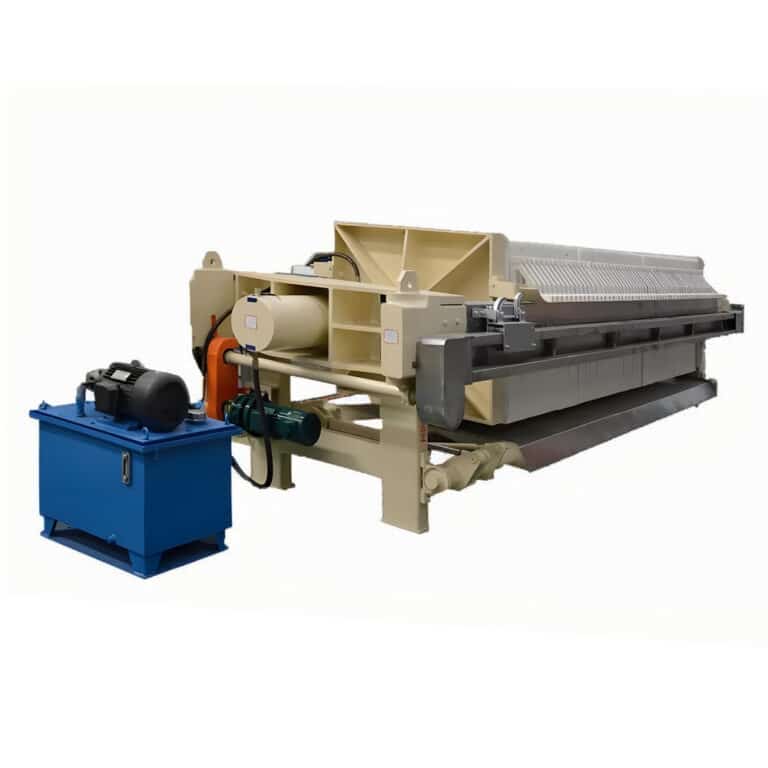
Throughput capacity, measured in kg of dry solids per hour, is a synergistic output. It is governed by the effective filtration area across all zones, which determines residence time. The wedge zone’s adjustable geometry ensures optimal initial compression, while advanced gravity zone enhancements like rotating rakes prevent cloth blinding. A robust belt tensioning system, utilizing rack-and-pinion mechanics, is non-negotiable for maintaining even pressure distribution and preventing premature wear.
The Filter Cloth: A Process Variable
A common oversight is treating the filter cloth as a commodity. Its material, weave, and yarn design are active process variables. Polyester monofilament offers excellent cake release for municipal sludges, while multifilament fabrics may provide better fines retention for industrial streams. The cloth directly impacts blinding resistance, cycle time, and wash water consumption. Specifying the correct belt requires pilot testing with your specific sludge.
Quantitative Parameter Analysis
The interaction of these parameters is best understood through a structured framework. The following table summarizes the key engineering parameters that directly influence throughput capacity and their typical design focus.
| Parameter | Key Influence | Typical Design Focus |
|---|---|---|
| Effective Filtration Area | Residence time & drainage | Gravity, wedge, pressure zones |
| Roller Profile (Pressure Zone) | Mechanical pressure gradient | Multiple, decreasing diameter sequence |
| Wedge Zone Geometry | Initial compression | Adjustable angle |
| Filter Cloth Selection | Blinding resistance & release | Material, weave, yarn design |
| Belt Tensioning System | Pressure distribution & wear | Rack-and-pinion, automated controls |
Source: Technical documentation and industry specifications.
Comparing 2-Belt vs. 3-Belt System Performance
Application Dictates Architecture
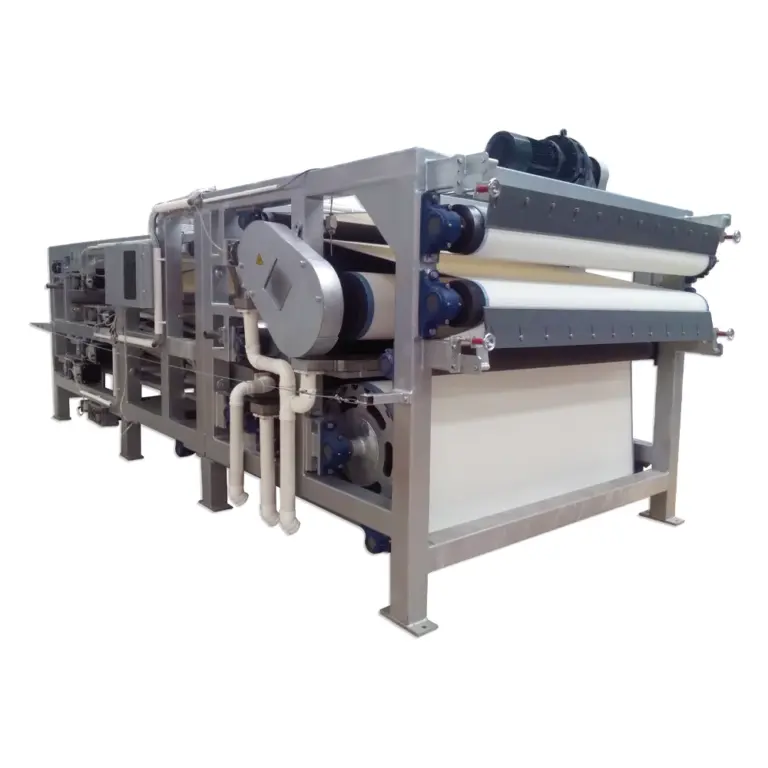
The choice between a 2-belt and 3-belt system is fundamentally dictated by feed sludge concentration and drainage characteristics. A standard 2-belt system is engineered for sludges with moderate drainage and solids concentrations typically above 1.5%. For challenging, dilute feeds (often <1.5% solids), a 3-belt system integrates a separate gravity belt thickener to pre-concentrate sludge before the main dewatering zones. This configuration can boost effective capacity by 30-50% for such applications.
Evaluating the Trade-offs
The decision involves a direct capital and operational trade-off. A 3-belt system offers superior flexibility for variable or dilute feeds but requires a higher initial investment and larger footprint. A 2-belt system is more compact and cost-effective for stable, thicker feeds. An extended gravity zone on a 2-belt press provides a middle-ground solution for poorly draining sludges, offering some capacity boost without the full cost of a third belt.
System Selection Matrix
To clarify this critical decision, the table below contrasts the primary applications, advantages, and trade-offs of each system configuration.
| System Type | Primary Application | Key Advantage | Key Trade-off |
|---|---|---|---|
| 2-Belt System | Sludge >1.5% solids | Compact, cost-effective | Limited dilute feed handling |
| 3-Belt System | Sludge <1.5% solids | Integrated pre-thickening | Higher capital cost & footprint |
| 2-Belt (Extended Gravity) | Poorly draining sludge | Middle-ground capacity boost | — |
Source: Technical documentation and industry specifications.
Cost Analysis: Capital, Operating, and Total Cost of Ownership
Moving Beyond the Purchase Price
A thorough financial analysis must evaluate the complete dewatering line’s lifecycle economics. Capital costs vary significantly with construction materials (galvanized vs. stainless steel), automation level, and delivery format (integrated skid vs. modular units). The purchase price is just the entry point. Operating costs are dominated by polymer consumption, which can constitute 40-60% of ongoing expenses, followed by energy for drives and wash pumps, labor, and routine maintenance.
The Strategic Shift to TCO
Total cost of ownership (TCO) analysis shifts focus to integrated system design. Strategic investments in precise polymer dosing and advanced automation reduce chemical and labor expenses over time. Furthermore, specifying a high-performance pressure zone that yields drier cake directly lowers downstream handling, transportation, and disposal costs. This transforms the press from a cost center into a strategic enabler for subsequent processes like composting or energy recovery. In my experience, a 2% increase in cake solids can reduce disposal mass by 10%, offering a rapid ROI on a better-designed pressure section.
Decomposing the Cost Structure
Understanding the full financial picture requires breaking down costs into their key drivers and strategic impacts, as outlined below.
| Cost Category | Key Drivers | Strategic Impact |
|---|---|---|
| Capital Cost | Materials, automation, configuration | Initial investment lock-in |
| Operating Cost | Polymer, energy, labor, maintenance | Major recurring expense |
| Total Cost of Ownership (TCO) | System design & cake dryness | Downstream disposal savings |
Note: High-performance pressure zones reduce downstream handling costs.
Source: Technical documentation and industry specifications.
How to Validate Performance with Pilot Testing
Mitigating Unacceptable Risk
Pilot testing with representative sludge samples is a non-negotiable step for mitigating technical and financial risk. Its primary objective is to empirically determine achievable throughput, final cake solids, and optimal polymer dosage. Testing validates theoretical selections for gravity zone design, roller count, and belt speed against the unpredictable reality of your sludge. Skipping this step transfers significant risk to the plant owner, potentially resulting in catastrophic underperformance.
A Structured Test Protocol
A well-structured pilot test follows a defined protocol to generate actionable data. It should process a sufficient volume of sludge over multiple hours to account for feed variability. The test must evaluate different belt types and polymer chemistries. The data generated provides the only reliable basis for scaling to full-size equipment and writing a performance-based specification that holds vendors accountable.
Key Pilot Test Objectives and Outputs
A successful pilot test is measured against clear objectives that map directly to machine specification. The table below details the core test objectives, the key metrics they measure, and the equipment parameters they validate.
| Test Objective | Key Metric | Validated Parameter |
|---|---|---|
| Process Capacity | kg dry solids/hour | Throughput & belt speed |
| Final Product Quality | % cake solids | Pressure zone effectiveness |
| Chemical Efficiency | Polymer dosage | Conditioning & feed type |
| Equipment Suitability | Belt type selection | Cloth material & weave |
Source: Technical documentation and industry specifications.
Integrating Automation and Control System Requirements
From Manual Machine to Process Node
Modern automation transforms the BFP from a manually intensive machine into an optimized, stable process node. Core components include Variable Frequency Drives (VFDs) for precise belt speed control and a Programmable Logic Controller (PLC) to integrate press operation with feed pumps, polymer dosing, and auxiliary systems. This enables closed-loop control based on instrumentation for feedwell level, sludge flow, and belt tension.
The Operational and Economic Rationale
The strategic implication is a shift in the operator’s role from constant manual adjustment to supervision and optimization. Automation ensures consistent performance during variable feed conditions, maximizes chemical efficiency by dynamically adjusting polymer dose, and provides diagnostic data for predictive maintenance. The true cost of ownership now must include these software and integration capabilities, which are essential for reducing long-term labor costs and stabilizing process output.
Maintenance, Reliability, and Operational Considerations
Designing for Longevity
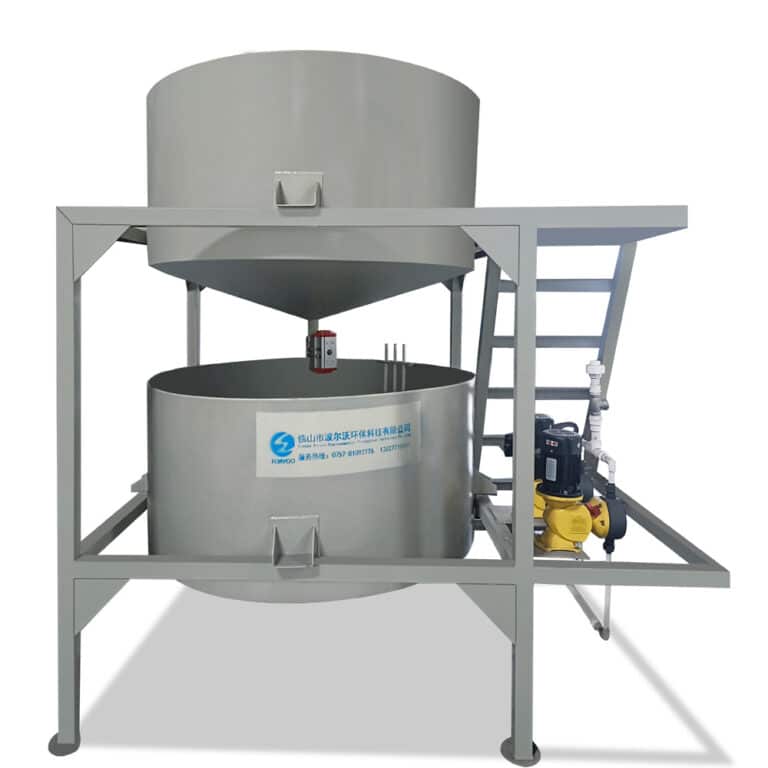
Long-term reliability is engineered through robust construction. Key components include heavy-duty frames, sealed spherical roller bearings, and effective belt washing systems with high-pressure nozzles and oscillating spray bars. Operational consistency fundamentally depends on uniform feed distribution and flocculation, which is achieved through well-designed feedboxes and reactor vessels. Neglecting these ancillary components will compromise the performance of even the best press.
The Service and Retrofit Niche
The fragmented, long-asset-life market for BFPs creates a significant niche for specialized service and retrofitting. Strategic partnerships with expert service providers can extend asset life by decades through performance upgrades, mechanical rebuilds, and control system modernizations. This approach offers a capital-efficient alternative to full replacement, modernizing existing equipment and improving output at a lower lifecycle cost. It’s a viable strategy for plants with legacy equipment facing new process demands.
Final Selection Criteria and Implementation Checklist
Synthesizing Data into a Decision
Final selection synthesizes technical parameters with strategic site-specific needs. Begin by thoroughly characterizing the sludge and defining clear capacity requirements, including peak and average loads. Use pilot test data to specify the machine configuration, ensuring the gravity zone and pressure profile match the feed material. Evaluate the complete system integration, including conditioning, conveyance, and controls, not just the press unit.
Navigating Critical Trade-offs
The implementation checklist must address key design trade-offs. Balance footprint and installation speed (favored by skid-mounted units) against long-term layout flexibility (offered by modular units). Choose construction materials based on a realistic assessment of the plant environment’s corrosiveness. A common mistake is over-specifying stainless steel for benign environments, unnecessarily inflating capital cost.
Securing Long-Term Value
Finally, secure supplier commitments for commissioning support, comprehensive operator training, and lifecycle service availability. This holistic approach ensures the selected belt filter press system delivers optimal throughput, reliability, and value over its entire operational life. The contract should include performance guarantees for throughput and cake solids based on your pilot data.
The selection process culminates in balancing three core priorities: matching the gravity and pressure zones to your sludge’s drainage profile, investing in automation to control the dominant operating cost (polymer), and planning for lifecycle support to protect reliability. This framework moves the decision from vendor comparison to a tailored engineering specification. Need professional guidance to specify and pilot test the right system for your sludge profile? The engineering team at PORVOO can support your evaluation from lab testing to final commissioning. Contact Us to discuss your project parameters.
Frequently Asked Questions
Q: How do you determine if a 2-belt or 3-belt filter press is right for your sludge?
A: The choice hinges on feed sludge concentration and drainage. A standard 2-belt system is effective for stable feeds with solids typically above 1.5%. For dilute or highly variable sludges below 1.5% solids, a 3-belt system with an integrated gravity belt pre-thickens the material, significantly boosting capacity. This means facilities with fluctuating or weak feed streams should evaluate the higher capital cost of a 3-belt system against the risk of underperformance with a 2-belt unit.
Q: What are the most critical engineering parameters for maximizing belt press throughput?
A: Throughput capacity is governed by the synergistic effect of the effective filtration area across all zones and the pressure zone’s roller profile. A sequenced design with multiple rollers of decreasing diameter applies a gradual, high-pressure gradient to maximize dryness without rewetting the cake. For projects where throughput is the primary constraint, you should prioritize pilot testing to validate both the gravity zone configuration and the specific pressure profile needed for your material.
Q: Why is pilot testing considered non-negotiable before purchasing a belt filter press?
A: Pilot testing with representative sludge is essential to mitigate technical and financial risk by empirically determining achievable throughput, final cake solids, and optimal polymer dosage. It validates theoretical selections for gravity zone design, roller count, and belt speed against real-world variability. If your operation skips this step, you accept significant risk of catastrophic underperformance or unforeseen issues with dewatered cake handling.
Q: How does automation impact the total cost of ownership for a dewatering system?
A: Automation, using PLCs and VFDs for integrated control of the press, feed, and polymer dosing, transforms operational economics. It enables closed-loop control for consistent performance and maximizes chemical efficiency, directly reducing long-term polymer and labor costs. This means strategic investments in advanced controls should be evaluated not as an optional extra but as a core component for lowering total lifecycle expenses.
Q: What should be included in a total cost of ownership analysis for a belt filter press?
A: A comprehensive TCO analysis extends beyond the press purchase price to include the complete dewatering line’s lifecycle costs. Key factors are capital costs (materials, configuration), operating costs (polymer, energy, labor), and the impact of cake dryness on downstream handling or disposal expenses. For operations where sludge is a resource for composting or energy recovery, selecting a high-performance press that yields drier cake can transform it from a cost center to a value enabler.
Q: What are the key maintenance and reliability considerations for long-term belt press operation?
A: Long-term reliability depends on robust construction—like heavy-duty frames and sealed spherical roller bearings—and proactive strategies, including effective high-pressure belt washing systems. Operational consistency further requires uniform feed distribution and flocculation. This means that in the fragmented, long-asset-life BFP market, forming a strategic partnership with a specialized service provider for performance upgrades and expert maintenance can be a cost-effective alternative to full capital replacement.