Treating slurry as a single disposal problem is where most fabrication plants create expensive problems for themselves downstream. Dry dust, wet slurry, settled grit, thickened sludge, and clarified water behave differently, require different equipment, and carry different disposal classifications — but when they are allowed to intermix without defined routes, one stream quietly degrades the performance of the system handling another. The result is usually discovered at commissioning or during a waste audit: a collector that is failing prematurely, a settling tank that loses capacity within months, or a reuse water circuit that is slowly fouling the tooling it was meant to protect. Mapping each stream by phase — from its generation point to its exit or reuse point — is the decision that determines whether the treatment system is sized correctly before equipment is purchased.
Trace dust generation at cutting grinding and polishing points
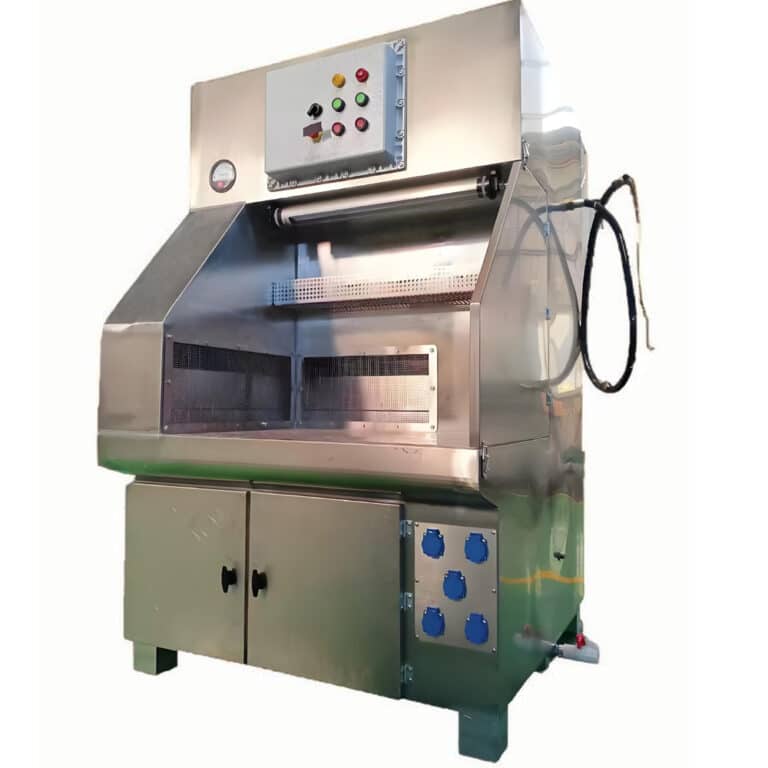
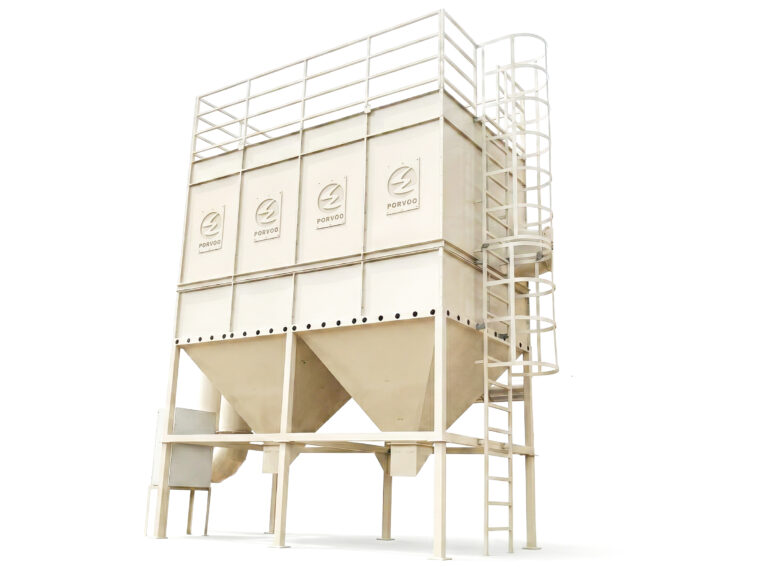
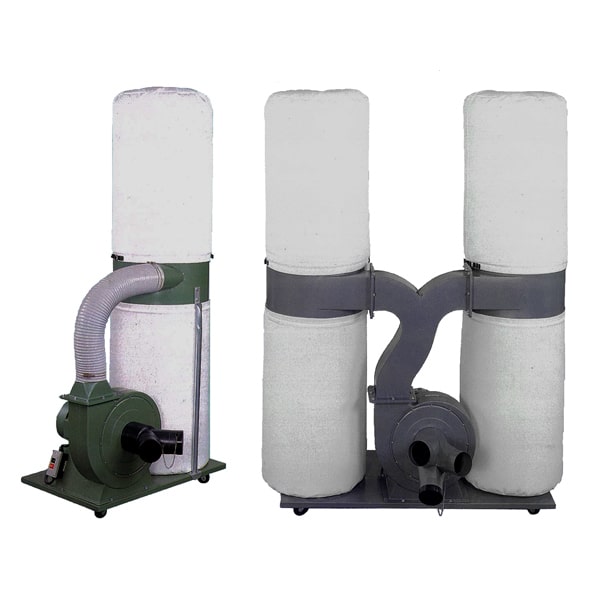
Dry dust and wet mist are produced at different workstations and must be collected separately. Dry cutting and grinding operations — angle grinders, edge profilers, and CNC routers working without continuous water flood — produce airborne particulate that includes fine calcium carbonate and crystalline silica fractions. These require dedicated dry or downdraft capture directly at the tool path. A шлифовальный стол positioned at the work surface keeps fine particulate in the capture zone rather than allowing it to become entrained in shop air, where accumulation over a shift creates both an air quality risk and a housekeeping hazard.
The risk framing from the OSHA-NIOSH Hazard Alert on worker exposure to silica during countertop manufacturing is worth applying here not as a universal compliance checklist, but as a calibration of consequence: the alert identifies countertop fabrication as a high-exposure environment specifically because grinding and dry-cutting operations generate respirable dust at concentrations that conventional ventilation alone does not reliably control. The practical implication for plant layout is that workstations generating dry dust should not share an extraction hood with wet-cut stations. When they do, the moisture carryover from wet operations reaches filter media designed for dry particulate, reducing collection efficiency and shortening service intervals in ways that are easy to misattribute to filter quality rather than stream mixing.
Polishing stations introduce a third variant: wet slurry mist generated by rotary polishing heads with water feed. This mist is too wet for a dry collection system and too low-volume to be efficiently routed through the main slurry conveyance channel without careful design. In practice, it is the generation point most often left undefined in early layout drawings, which means it defaults to floor drainage — carrying fine suspended solids into channels sized for coarser slurry fractions and adding an unplanned load to the first settling stage.
Identify where wet slurry enters channels sumps and tanks
Wet slurry enters the collection system at multiple points simultaneously, and the configuration of channels, sumps, and transfer tanks determines whether the system handles peak load or struggles against it. Bridge saws and CNC waterjet cutters generate the highest slurry volume, and their outlets define the primary conveyance requirement. Secondary inputs — spindle coolers, edge profilers, and wet-polishing heads — add smaller but continuous flows that accumulate in volume across a full production shift.
The channel gradient matters more than it is often given credit for in early layout decisions. Channels designed with insufficient slope allow coarse grit to settle in the conveyance run before it reaches the first sump, requiring periodic manual cleanout that disrupts production. The practical configuration choice is between a single-chamber sump that receives all wet inputs and passes the combined load to the first treatment stage, versus a staged sump arrangement that begins separation by gravity before the slurry reaches the treatment system. The single-chamber approach is simpler to install but creates a mixed-solid load that the downstream separation equipment must handle; the staged approach reduces that load but introduces more collection points to maintain.
Tank sizing is a configuration decision that depends on peak flow rates at the busiest cutting stations, cycle time between cleanouts, and the solids load per unit volume of water. Without site-specific data from a production schedule and equipment manifest, a generic tank volume is little more than a placeholder. Plants that size sumps based on average throughput rather than peak concurrent production often find that the sump overflows or backs up during shift changeovers, forcing slurry into floor drains that were not designed to carry it.
Separate coarse grit from fine suspended solids
The case for treating coarse grit as a distinct separation stage rather than a settled fraction within the main clarification system comes from the mass of abrasive entering the slurry. For waterjet cutting of granite, garnet abrasive consumption typically runs between 1.0 and 1.5 lbs per minute per cutting head — a rate that, across a production day, produces a coarse solid fraction that a settling tank sized for fine suspended solids cannot efficiently handle without accelerating wear on pumps and reducing effective clarification volume.
Three operating variables define how much coarse grit the separation system must process.
| Фактор | Typical Application / Value | Impact on Coarse Grit Volume |
|---|---|---|
| Waterjet Pressure (PSI) | Varies by equipment and stone thickness | Higher pressure may increase garnet consumption, adding to the volume of spent abrasive requiring separation. |
| Orifice Size | Sized for targeted cutting speed and stone type | Directly influences abrasive flow rate, defining how much coarse grit enters the slurry. |
| Твердость материала | Granite: typical garnet consumption 1.0–1.5 lbs/min | Harder stone increases abrasive demand, establishing the mass of coarse grit that must be separated from fine suspended solids. |
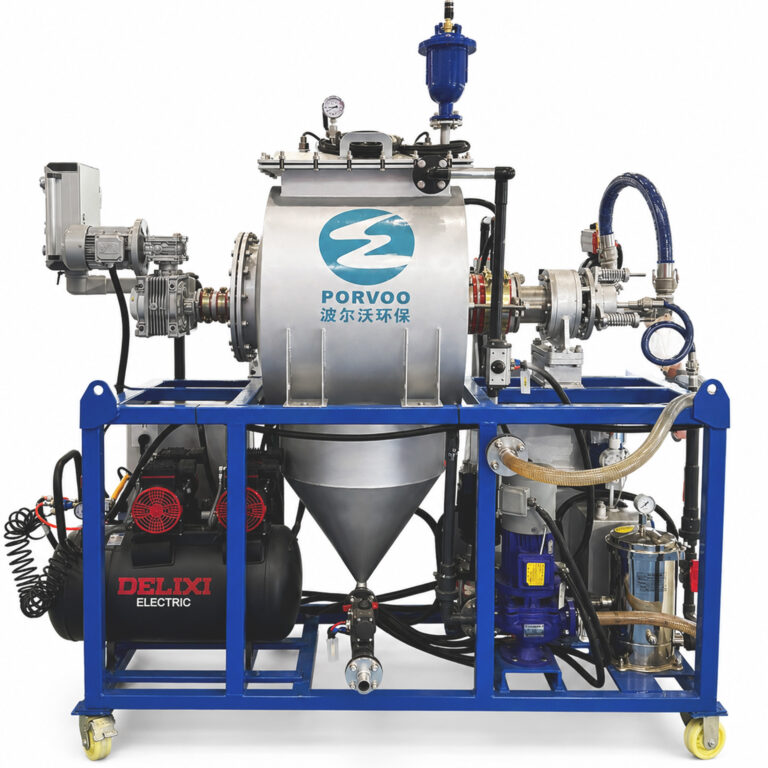
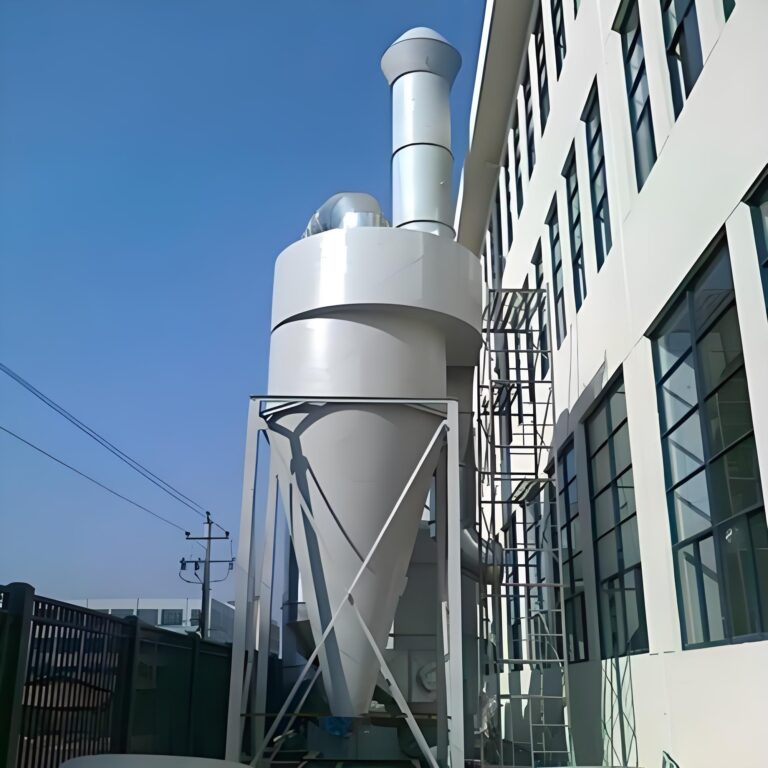
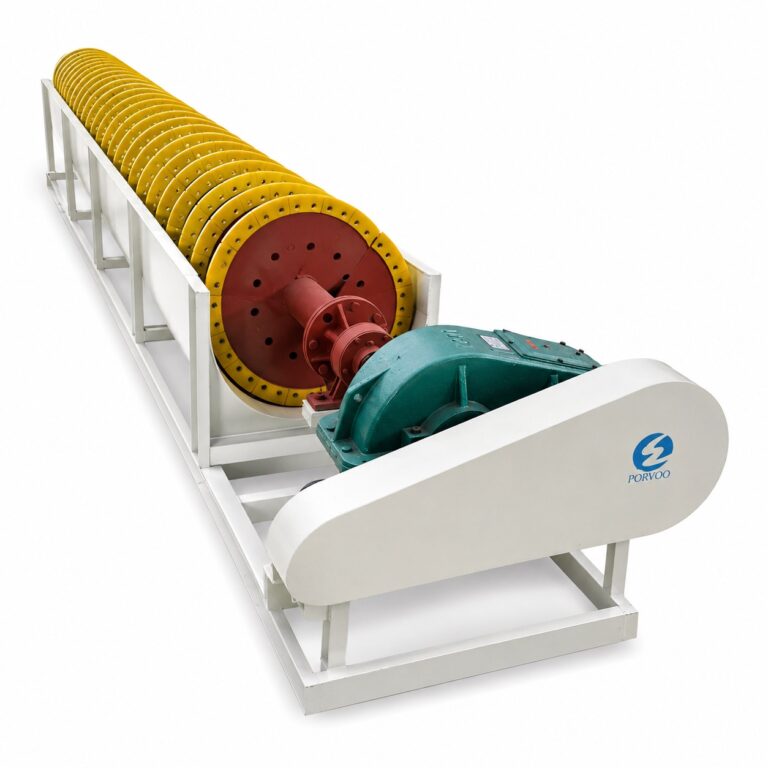
The consequence of skipping a dedicated coarse removal stage is not just increased wear on downstream equipment — it is a mismatch between equipment sizing assumptions and actual operating conditions. A удаление крупных частиц песка unit positioned upstream of the main settling stage intercepts the dense, fast-settling fraction before it reaches tanks and pumps designed for fine particle behavior. Without that interception, coarse grit either accumulates at the inlet of the sedimentation tank — progressively reducing its working volume — or is carried forward by higher-velocity flow into recirculation lines, where it abrades pump seals and valve seats. Neither failure is immediately visible; both shorten equipment service life on a timeline that makes the cause difficult to trace after the fact.
The separation boundary between “coarse grit” and “fine suspended solids” is a planning criterion, not a fixed threshold that applies identically across all stone types and cutting methods. Marble and softer limestone generate a finer particle distribution than granite; a plant cutting both should not assume that the grit removal specification for granite handles the full range of materials without review.
Decide where collected dust and sludge leave the plant
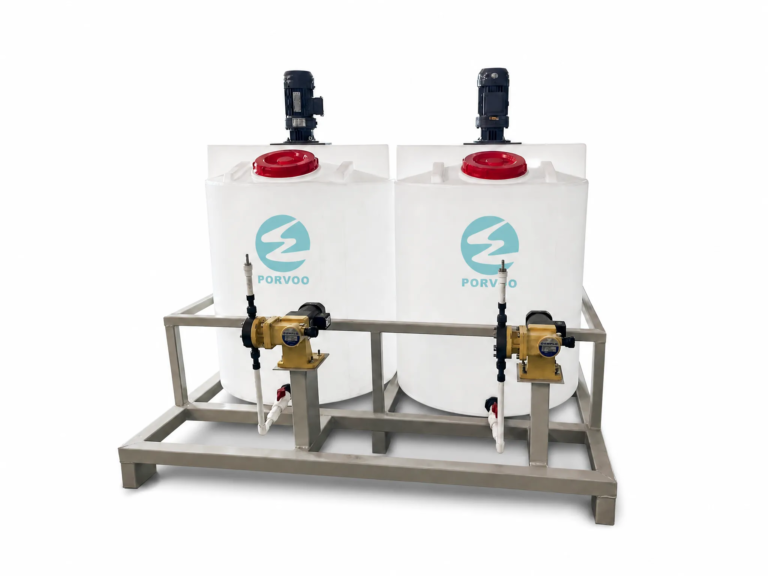
Dust collected from dry workstations and sludge pressed from the wet treatment system are both solid waste outputs, but they are not interchangeable in terms of disposal classification or handling requirements. Dry collector waste — filter cake or baghouse dust — is typically a dry, non-hazardous mineral residue when the source material is natural stone. Pressed sludge from the wet circuit carries residual moisture, may contain polymer flocculant residues from chemical dosing, and must be classified based on local waste regulations rather than assumed to follow the same disposal path as dry collector waste.
The planning error that surfaces most often at audit is that these two streams are stored together without separate labeling or manifest documentation, creating uncertainty about the classification of the combined material. A plant that generates both streams needs a defined exit route for each — separate collection points, separate temporary storage, and separate disposal records — before the first tonne of either material is produced.
Sludge sampling methodology is relevant here as a quality control step rather than a routine operational procedure. Where pressed sludge is destined for landfill, reuse in secondary applications, or third-party processing, representative sampling provides the characterization data that disposal contractors and regulators typically require. ISO 5667-13 offers a reference methodology for sludge sampling that can support this documentation step, though the specific sampling protocol and frequency are properly determined by local requirements and the nature of the disposal arrangement, not by the standard alone.
The exit point decision also has a logistical dimension: sludge from a filter press exits as cake in manageable batches, while collector dust exits continuously or in cyclic dump cycles. If both outputs converge at the same temporary storage location without a buffer, storage capacity may be inadequate during peak production periods, backing up into the collection system itself.
Route filtrate and clarified water before reuse
Clarified water leaving a sedimentation stage carries a residual suspended solids load that most reuse applications cannot tolerate without further conditioning. The critical planning decision is matching the reuse destination to the water quality the treatment system actually delivers — not the quality it is theoretically capable of producing under ideal conditions.
For bridge saw cooling and CNC spindle cooling, residual fine particulate in recycled water accelerates wear on seals and bearing surfaces. For waterjet cutting, the quality threshold is tighter: suspended solids, dissolved calcium and magnesium, and residual flocculant can foul waterjet orifices and scale high-pressure pump components over time. Plants that push recycle rates up to minimize water consumption without matching filtration performance to orifice tolerance often see cut quality degrade before anyone identifies the water circuit as the source — by the time orifice wear is diagnosed, scale or particulate has already shortened pump service intervals. Waterjet manufacturers typically specify water quality conditions for their high-pressure systems, and those specifications are the reference point for evaluating whether the clarified water output is suitable for direct reuse or requires a polishing step.
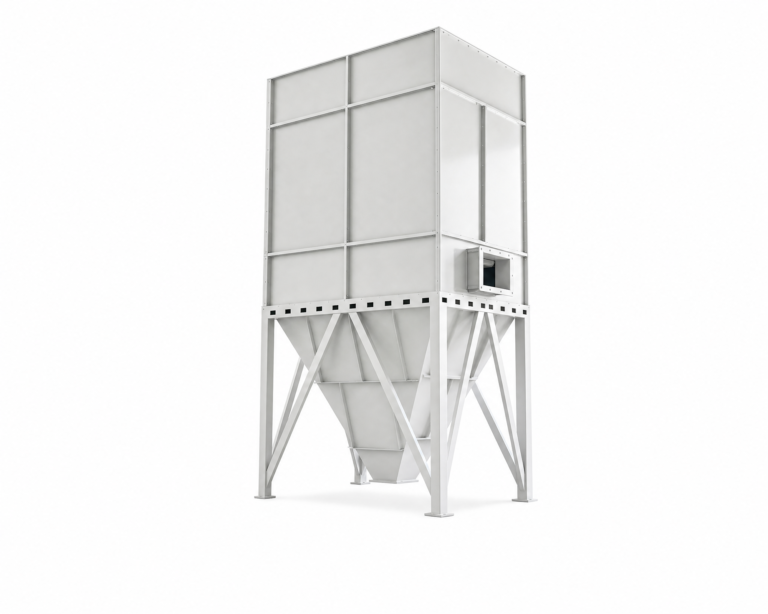
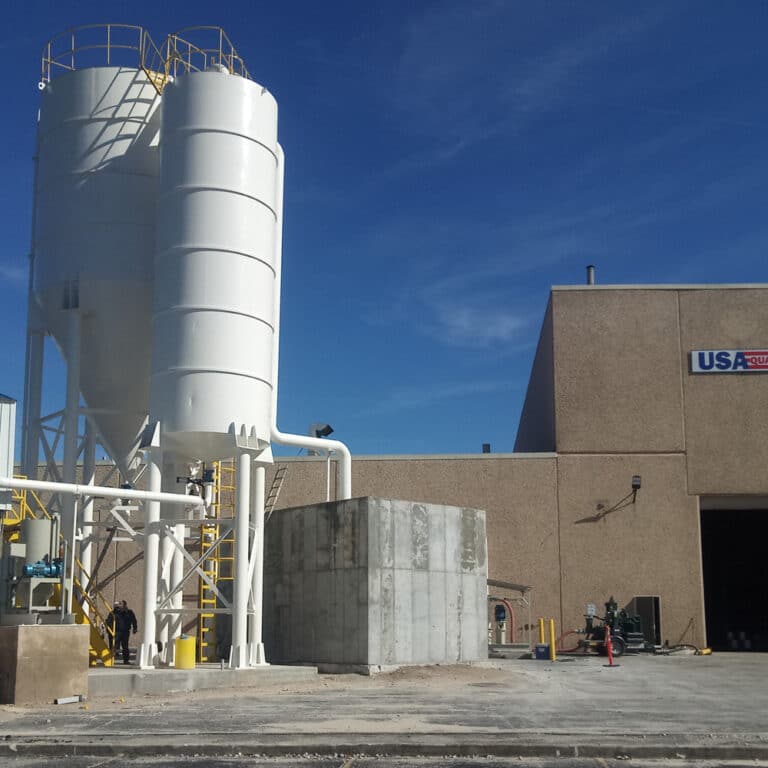
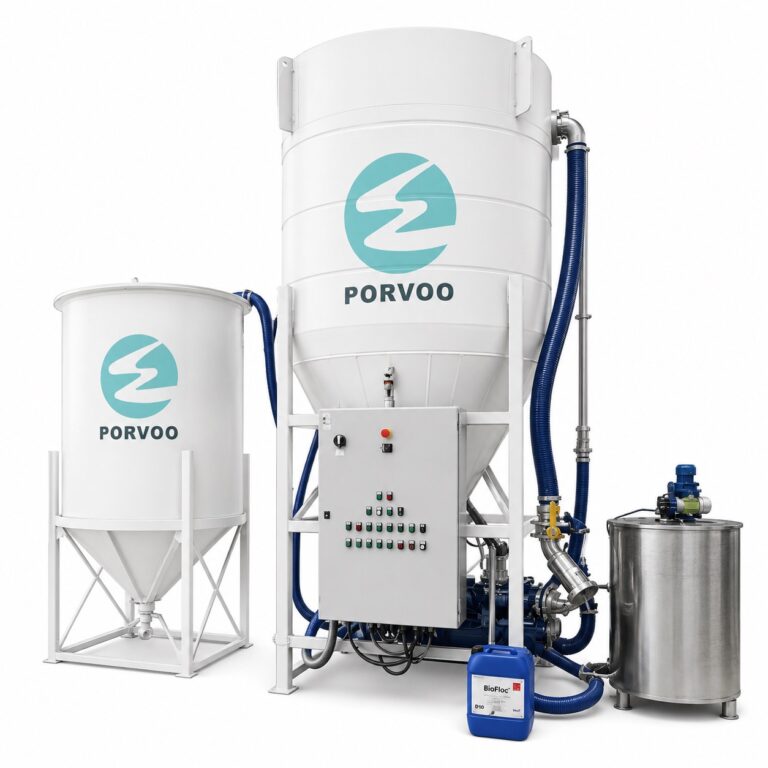
A вертикальная осадочная башня produces clarified water as its primary output, but the filtrate quality depends on influent characteristics, hydraulic loading, and chemical dosing — all of which vary with production. The filtrate leaving the sedimentation stage should be characterized under actual operating conditions, not assumed to meet reuse criteria based on equipment specifications alone. For plants where wastewater sampling is used to document treatment performance, ISO 5667-10 provides a reference approach for wastewater sampling methodology that can support characterization efforts, though site-specific sampling design is determined by what the data needs to demonstrate and to whom.
The routing decision also needs to account for what happens when the treatment system is offline for maintenance. Without a buffer tank or bypass arrangement, any interruption in clarification stops the water supply to production, forcing a choice between halting cutting operations and drawing on untreated water. That contingency is worth resolving at the design stage rather than discovering during the first scheduled maintenance cycle.
Check which waste stream overloads another control system
The failure mode that is most difficult to catch in advance is cross-stream interference — a condition where one waste stream, by volume or composition, overwhelms the control point handling another. This is a risk pattern worth auditing deliberately across the plant map rather than assuming it will be detected during commissioning.
Three interaction points are worth reviewing specifically. First, wet carryover from an improperly baffled hood near a wet saw reaching a dry dust collector: the moisture loads filter media in a way that creates early clogging, increases pressure drop, and can produce a disposal classification problem if wet cake from a dry collector is mixed with dry collector waste in the same container. This is a layout problem, but it manifests as a maintenance and disposal problem. Second, coarse grit migrating into a settling tank sized only for fine suspended solids: this reduces effective tank volume faster than expected and increases pump wear on the recirculation line, as described in the separation section. Third, a peak slurry flow event — multiple cutting stations running simultaneously — exceeding the hydraulic capacity of the primary sump and pushing slurry into secondary drainage paths not designed to carry it.
The check is straightforward in principle: for each control point in the plant, identify every upstream stream that feeds it, estimate the peak concurrent load from those streams, and confirm that the control point’s design capacity accounts for that combined load rather than a single-stream average. Where the treatment sequence is still being configured, the article on процессы очистки сточных вод для предприятий с высоким содержанием твердых частиц covers sequencing decisions for grit removal, dosing, settling, and pressing in more detail.
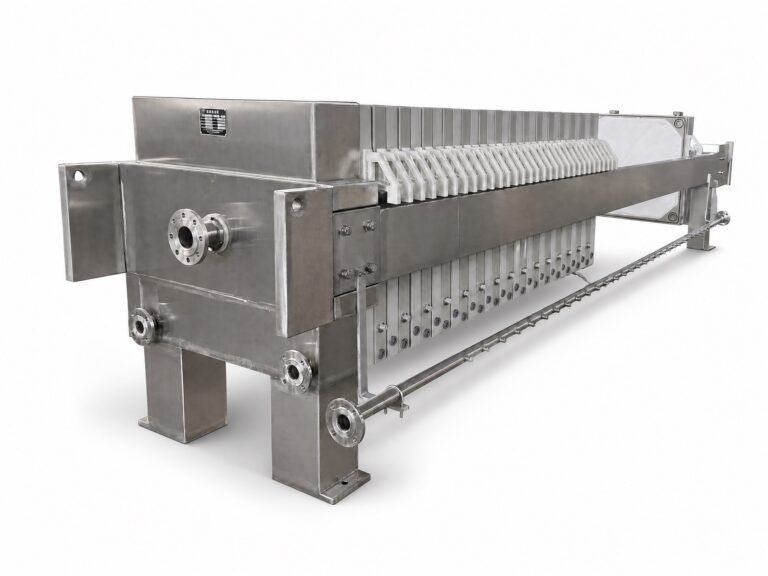
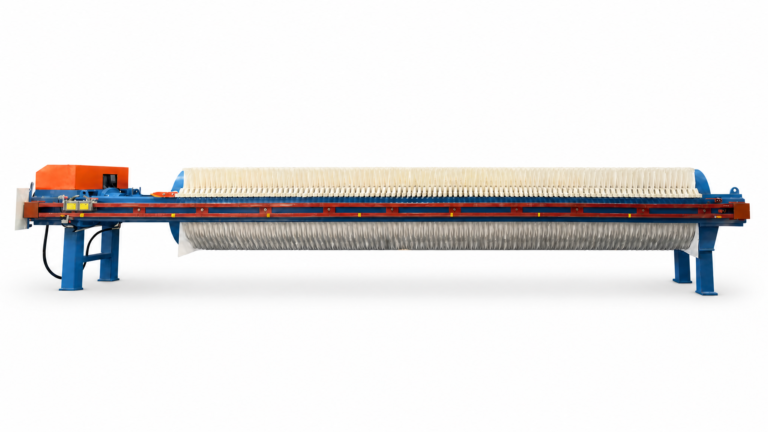
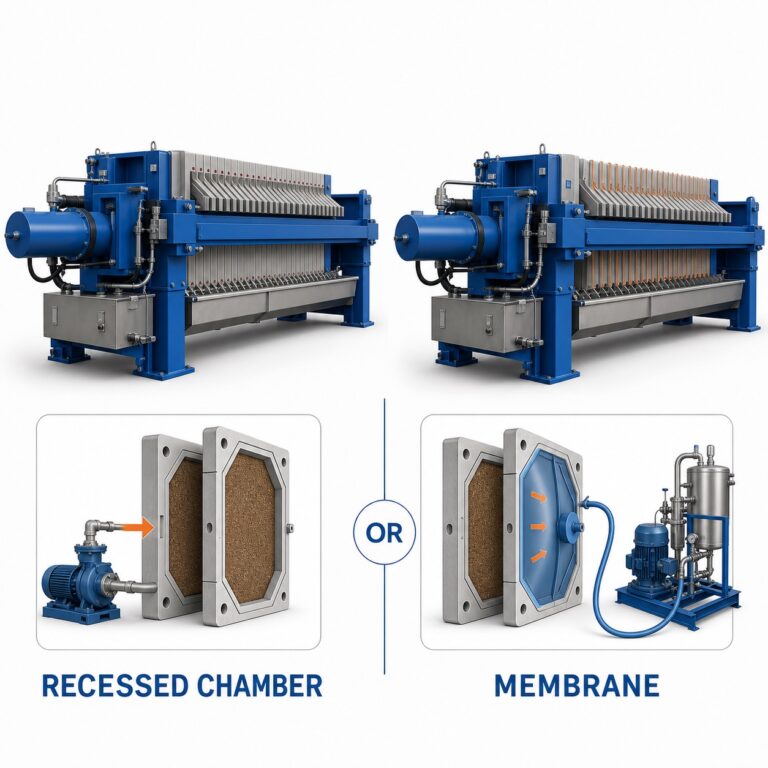
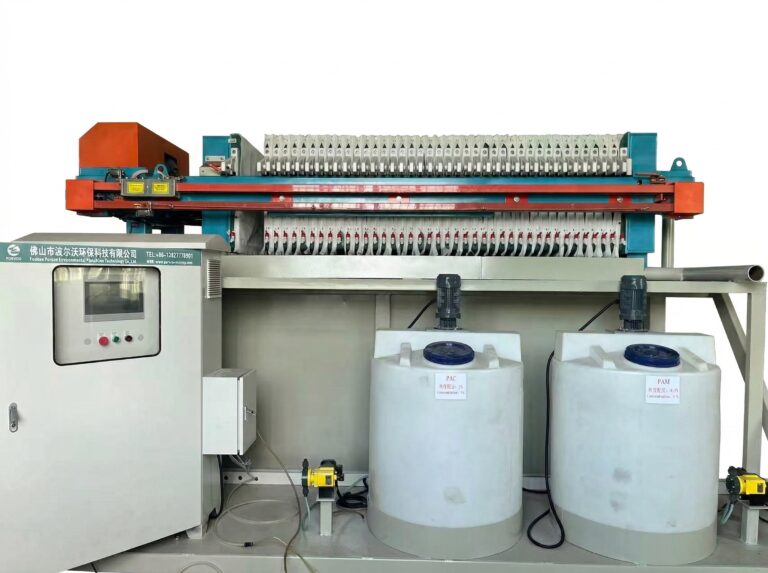
The interaction point between the filter press and the sedimentation tank deserves particular attention. A recessed plate and frame filter press operates in batch cycles, and when the press is in its fill phase it draws heavily on the clarified water buffer. If the sedimentation tank is undersized or operating at reduced capacity due to accumulated grit, the press may draw insufficiently conditioned sludge, reducing cake dryness and increasing the volume of press cycles needed to process the same sludge load. That inefficiency compounds across a production week and can surface as increased sludge disposal frequency before the root cause is identified.
Use the map as the basis for RFQ data
A plant-level stream map translates directly into the inputs a treatment equipment vendor needs to size and configure a system — and the completeness of that map determines whether the vendor’s proposal addresses the actual plant or a simplified version of it. Vendors working from incomplete data make assumptions, and those assumptions typically default to average conditions rather than peak concurrent loads, coarser particle size distributions, and combined stream interactions.
The data categories that define a useful RFQ package for stone fabrication wastewater treatment are: production equipment manifest and concurrent operating schedule, water consumption per cutting station at production capacity, garnet abrasive consumption rate by station and stone type, slurry solids characterization (particle size distribution, density, and settling rate), target reuse water quality for each application, and the separation and disposal classification requirements for each solid waste stream. Each of these figures should be derived from the stream map rather than estimated from industry averages — the difference between a system sized on actual plant data and one sized on general figures is the difference between a system that handles peak load and one that regularly exceeds its operating envelope.
The stream map also makes vendor scope boundaries unambiguous. When the plant map defines where the grit removal stage ends and the sedimentation stage begins, and where the filter press output separates from dry collector waste, the vendor’s scope of supply can be specified without ambiguity — and any gap in coverage becomes visible before contracts are signed rather than after installation. For plants evaluating whether clarification, filtration, and dewatering should be handled as integrated stages or separated into discrete systems, the considerations covered in industrial effluent treatment systems: when clarification, filtration, and dewatering should be split into stages are a useful pre-RFQ reference.
The most concrete implication of mapping stone fabrication waste streams in detail is that it converts a system-sizing problem into a set of specific, answerable questions: what is the peak concurrent slurry load, what coarse grit mass must be separated per shift, what water quality does the reuse application actually require, and where does each solid waste stream exit the plant under a defined disposal classification. Each of those questions has a number or a configuration decision attached to it.
Before approaching vendors or drafting an RFQ, confirm that the stream map accounts for peak concurrent production — not average daily throughput — and that each interaction point between streams has been reviewed for cross-loading risk. A map that only traces normal operating conditions will not catch the failure modes that emerge when multiple stations run simultaneously or when the treatment system cycles through maintenance. That review is what converts a plant layout into a procurement document that a vendor can actually use to size equipment correctly the first time.
Часто задаваемые вопросы
Q: Does this mapping approach still apply if the plant only cuts natural stone and never uses waterjet or garnet abrasive?
A: Yes, but the coarse grit separation stage becomes less critical and the dry dust stream typically dominates instead. Without garnet abrasive, the coarse solid fraction entering the slurry is much lower, so the separation boundary shifts — the main sizing concern moves to fine suspended solids loading from calcium carbonate and silica fines rather than dense abrasive grit. The rest of the stream map logic — separate routes for dry dust, wet slurry, thickened sludge, and clarified water — applies regardless of cutting method.
Q: What is the right order of steps once the stream map is complete but before contacting equipment vendors?
A: Characterize each stream under peak concurrent production conditions before sending any RFQ. The map identifies the streams and their interaction points, but vendors need measured or calculated figures — peak slurry flow rate, solids load per shift, particle size distribution, and target reuse water quality — to size equipment for actual operating conditions rather than averages. Submitting an RFQ before those figures are confirmed is what leads to a system that handles normal production but overloads during busy shifts.
Q: At what plant scale does splitting the system into separate grit removal, sedimentation, and pressing stages stop making sense compared to a simpler combined unit?
A: For very small plants running a single bridge saw with no waterjet cutting, a combined sump-and-settle arrangement may be sufficient — the coarse grit mass per shift is low enough that it does not rapidly consume settling tank volume. The staged approach becomes necessary once garnet abrasive is in use, once two or more high-volume cutting stations run concurrently, or once the reuse water quality requirement is tight enough that fine suspended solids must be reliably removed to protect tooling. Below those thresholds, the additional maintenance points of a staged system may not be justified by the separation benefit.
Q: How does a wet-dry mix at capture points change the disposal classification of the collected solid waste?
A: It can shift dry collector waste from a straightforward non-hazardous mineral residue into a mixed material with uncertain classification, which creates problems at the disposal stage. Dry filter cake from a baghouse or downdraft table is typically classified based on the source stone material alone. Once moisture carryover from a nearby wet-cut station reaches that collector, the cake composition changes — and if polymer flocculant from the wet circuit is also present, the combined material may require separate characterization before a disposal contractor will accept it under the original manifest. Keeping dry and wet capture systems physically separated is a disposal-documentation decision as much as a maintenance decision.
Q: If the budget only allows for one treatment stage initially, which stream poses the greatest risk if left uncontrolled?
A: Uncontrolled wet slurry entering floor drainage carries the highest compounding risk because it simultaneously loads drainage infrastructure not designed for solids, prevents water reuse, and creates a regulatory exposure. Dry dust, while a serious air quality and health hazard that demands capture at source, at least fails visibly — accumulation is observable. Slurry entering uncontrolled drainage routes can silently reduce pipe capacity, contaminate site drainage, and consume water that should be recycled, all on a timeline where the cost only becomes apparent once blockages or compliance notices force action. If phasing is unavoidable, slurry conveyance and a basic settling stage should come before any other treatment investment.