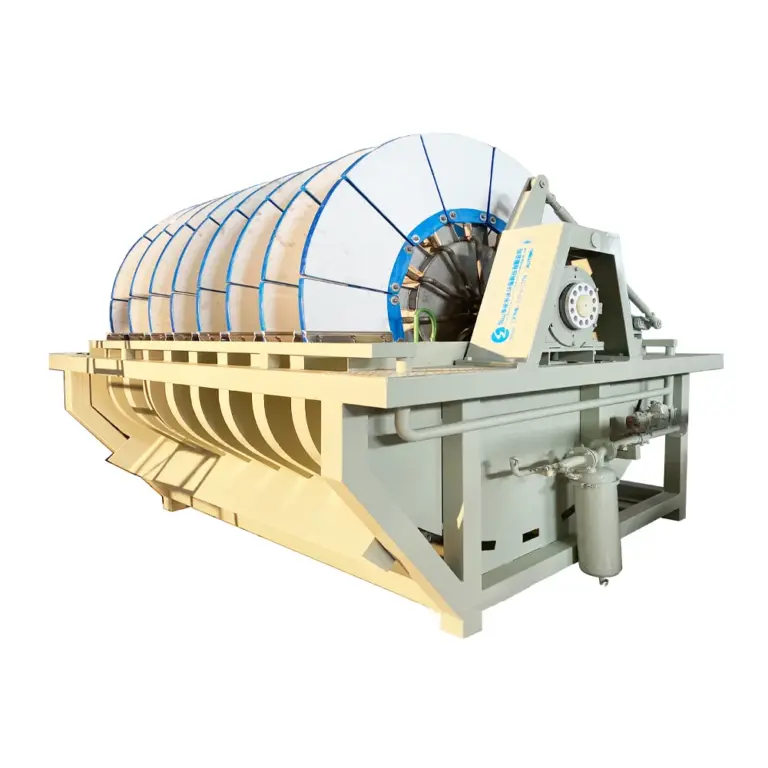
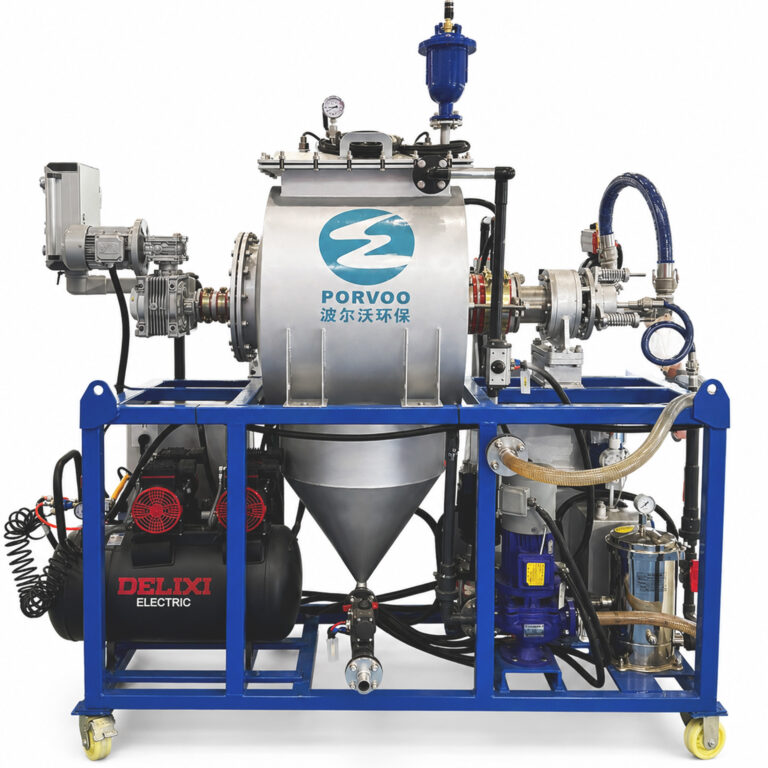
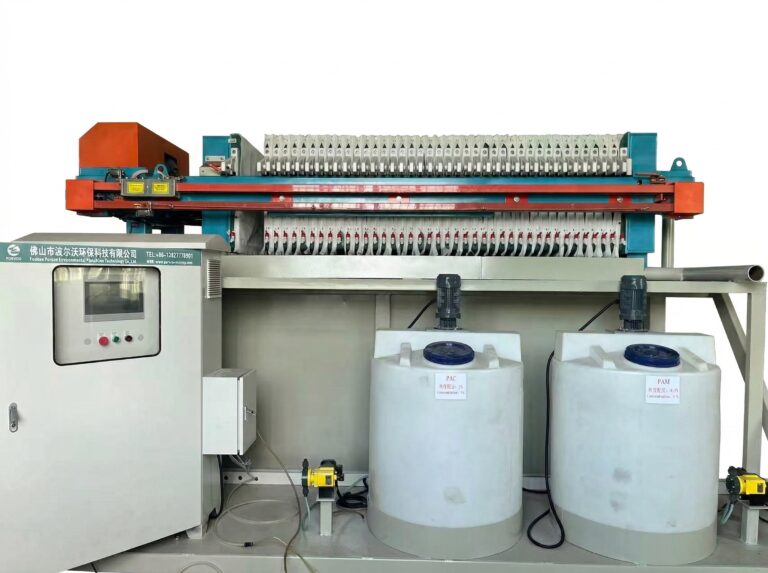
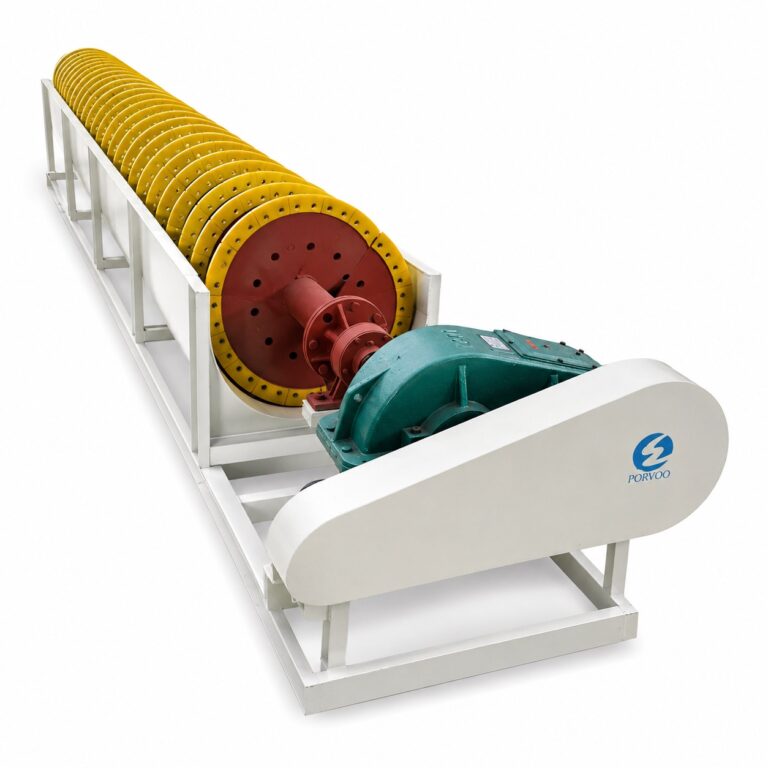
A concentrate stream and a tailings stream can leave the same plant within hours of each other, yet a single filter duty statement written for one rarely transfers to the other. Before comparing vacuum ceramic disk filter options, the project team needs to decide which stream is being sized, because the recovery goal, the acceptable filtrate quality, and the downstream handling path diverge in ways that change what “acceptable performance” means.
Separate Concentrate and Tailings Objectives Before Comparing Equipment
| Duty | Objective to define | Related handling or management boundary |
|---|---|---|
| Concentrate | Product recovery objective and allowable filtrate solids | Downstream cake-handling route |
| Хвосты | Filtration target linked to water return | Transport, storage, and the wider tailings-management boundary; filtration alone does not resolve facility risk |
A concentrate stream and a tailings stream carry different economic and handling logic even when they originate from the same ore body or the same production line. Concentrate filtration exists to recover a valuable product in a form that downstream smelting, shipping, or further processing can accept; the filter cake is the product, and its moisture content, particle retention, and consistency carry commercial weight. Tailings filtration exists to manage a waste or low-value stream so that water can be returned to the process and the residual solids can be transported, stacked, or stored in a way that fits the site’s tailings-management approach; the filter cake here is a material to be moved and contained, not a saleable output.
Because the two streams answer different questions, defining “the duty” as a single generic filtration requirement invites a mismatch. If a project team writes one specification meant to cover both applications, it tends to average conflicting targets: a filtrate clarity suited to concentrate recovery gets applied to a tailings stream where water-return volume matters more than filtrate polish, or a cake-handling assumption suited to bagged or bulk concentrate shipping gets applied to tailings that will be conveyed and stacked. Each mismatch either overspecifies one duty or underspecifies the other.
The practical response is to treat concentrate and tailings as two duties from the start of the selection process, even where the same filter platform and the same plant will eventually host both. Each duty needs its own objective statement, its own acceptance measures, and its own equipment configuration review, because the variables that matter to one duty do not necessarily matter to the other in the same order or to the same degree. Where a plant processes both streams through separate equipment lines, this separation is straightforward to maintain in the specification. Where a plant considers using a shared platform or shared infrastructure across both duties, the separation still needs to be maintained in the underlying duty definition, even if the equipment selection later converges on a common design family.
This separation also matters when a supplier is asked to review project inputs for configuration or quotation purposes, since a request that blends concentrate and tailings targets into one data sheet makes it difficult to identify which acceptance measure governs which design decision.
Define the Feed Window and Representative Test Samples
Once the duty is separated, the next decision is defining the feed window for each stream on its own terms. A feed window describes the range of conditions the filter must handle in practice, not a single design point. Ore variability, circuit changes, seasonal effects on slurry temperature, and shifts in upstream comminution or flotation performance can all move the feed characteristics a concentrate filter sees over its operating life. A tailings stream can shift for different reasons, including changes in reagent dosing upstream, changes in the ratio of different ore types being processed, or changes in thickener underflow density feeding the filter. Because the underlying causes differ, the feed window for concentrate and the feed window for tailings should be built from their own process history and their own anticipated range, not derived from one another.
Defining the feed window matters because vacuum ceramic disk filtration performance is sensitive to particle size distribution, solids concentration, and slurry chemistry, all of which affect how a cake forms on the ceramic membrane and how readily it releases. A feed window that only reflects average conditions risks leaving the filter undersized or misconfigured when the stream drifts toward its coarser, finer, denser, or more dilute extreme. Where a project can supply only average feed data, that gap should be recorded as an open item rather than treated as equivalent to a full range.
Representative test samples turn the feed window from a description into evidence. A sample is representative when it reflects the range the feed window defines, not just the condition that was easiest to collect. Testing a single grab sample from a stable production day tells the project little about how the filter will behave when the feed moves toward the edge of its expected variability. For both concentrate and tailings duties, the project team should confirm how the test samples were collected, over what time span, and whether they correspond to the feed window range rather than a single point within it. This becomes the basis the next stage of evaluation depends on.
Translate Cake, Filtrate, and Capacity Needs into Acceptance Measures
| Acceptance area | Project value to state | Boundary to retain |
|---|---|---|
| Product recovery | Concentrate recovery objective | Evaluate it alongside allowable filtrate solids rather than as a stand-alone target |
| Filtrate or water return | Allowable filtrate solids for concentrate service; water-return target for tailings service | Keep the target specific to the selected duty |
| Cake handling | Downstream handling route for concentrate; transport and storage basis for tailings | Do not transfer one stream’s handling basis to the other |
| Вместимость | Required output for each separate duty | Do not fix filter area or guaranteed output before representative slurry tests and documented scale-up assumptions |
With a feed window and representative samples in hand, the project team can convert stream-specific goals into acceptance measures that a filter configuration can be tested and judged against. For concentrate service, the central measure is the product recovery objective, but recovery cannot be judged in isolation from the filtrate quality the process can tolerate. A configuration that recovers a high proportion of solids into the cake while passing an unacceptable level of fines into the filtrate has not met the duty, because those fines represent lost product value or a filtrate stream that itself becomes a disposal problem. The acceptance measure for concentrate therefore needs to state both the recovery target and the allowable filtrate solids together, alongside the downstream cake-handling route the cake must be compatible with, whether that route involves further drying, direct shipment, or blending.
For tailings service, the acceptance measure centers on the filtration target as it connects to water return, since the value of tailings filtration lies largely in how much process water can be recovered and reused rather than lost to storage or evaporation. That target needs to be stated alongside the transport method the filtered cake will use, the storage or stacking approach the site has adopted, and the wider tailings-management boundary the site operates under. Filtration performance contributes to that boundary; it does not substitute for it. A filter that meets its stated filtration target does not, by itself, resolve questions of facility-level tailings risk, and project acceptance measures should not be written as though it does.
Capacity is the measure most likely to get fixed too early. Required output differs by duty: concentrate capacity is usually tied to the production rate of the beneficiation circuit feeding it, while tailings capacity is tied to the throughput of the entire process, since essentially all of the process tonnage eventually reports to tailings. Filter area and guaranteed output should not be fixed before the representative slurry tests are run and any scale-up assumptions between test-scale results and full-scale equipment are documented, because the relationship between test-scale filtration rate and production-scale filtration rate depends on cake formation behavior that can shift with scale in ways a single test point does not reveal.
Compare Configuration and Scale-Up Assumptions for Each Duty
Comparing vacuum ceramic disk filter configurations across concentrate and tailings duties means comparing how each configuration responds to the feed window, acceptance measures, and capacity target already established for that specific stream, not comparing nameplate figures in isolation. A configuration that performs well on a concentrate stream with fine, relatively uniform particle size and a strong economic incentive for low cake moisture may not carry the same advantage on a tailings stream with coarser or more variable particle size and a water-return priority instead of a product-moisture priority. Where the comparison is done using representative slurry tests specific to each duty, the resulting configuration choice reflects the stream it was tested against; where the comparison borrows results from the other duty’s testing, the choice carries an unstated assumption that the two streams behave alike.
Scale-up assumptions deserve explicit attention at this stage because vacuum ceramic disk filtration performance measured on a test unit does not automatically transfer to full production scale at the same rate per unit area. Cake formation, membrane fouling behavior, and cycle time can all shift as equipment size changes, and the direction and extent of that shift depends on the specific slurry characteristics of the stream being tested. A project that carries a scale-up factor from a prior concentrate application into a tailings sizing exercise, or vice versa, is making an assumption that the inputs need to justify rather than one that can be taken for granted across duties.
Where a project is genuinely evaluating filter area and configuration for both a concentrate line and a tailings line, the comparison should preserve two separate documented outcomes: which configuration suits the concentrate feed window and acceptance measures, and which configuration suits the tailings feed window and acceptance measures, along with the scale-up assumption used to reach each conclusion. This is also the stage at which integration with existing thickener and slurry-handling systems becomes a relevant configuration variable, since the filter does not operate independently of the thickener underflow density and flow rate feeding it, and a configuration chosen without reference to that interface may not perform as tested once connected to the actual upstream equipment.
Where the test evidence and scale-up assumptions for one duty are well documented but the other duty’s evidence remains preliminary, the project team should treat the two configuration decisions as being at different stages of readiness rather than assuming parity between them.
Record the Selected Duty Basis and Unresolved Project Conditions
| Record item | Entry to preserve | Decision value |
|---|---|---|
| Selected duty | Concentrate or tailings, recorded separately for each stream | Prevents the objectives for one stream from becoming the assumed basis for the other |
| Feed and test basis | Feed window, representative slurry sample, and test conditions | Defines the basis used to compare configurations |
| Условия принятия | Applicable recovery, filtrate, cake-handling, water-return, transport, storage, and capacity targets | Shows which outcomes the selected duty must address |
| Configuration basis | Configuration compared and documented scale-up assumptions | Keeps filter area and guaranteed output tied to the stated test and scale-up basis |
| Unresolved project conditions | Feed, acceptance, test, or scale-up inputs still open | Distinguishes open project conditions from the selected duty basis |
Once configurations have been compared for each duty, the project benefits from a written record that separates what has been decided from what remains open, because the same project will often return to this record when conditions change or when a supplier’s quotation needs to be checked against the original basis. Recording the selected duty for each stream, rather than one shared entry, prevents a later reviewer from assuming that a target set for concentrate governs the tailings equipment or the reverse.
The feed window and test basis used to reach each configuration decision belongs in this record as well, since a configuration chosen against a narrow feed window carries a different confidence level than one chosen against a range that reflects known process variability. The acceptance basis, covering recovery, filtrate, cake-handling, water-return, transport, storage, and capacity targets as applicable to each duty, should be recorded in enough detail that a future reviewer can tell which targets applied to which stream without re-deriving them.
The configuration basis, including the scale-up assumption used, ties the filter area and guaranteed output back to the test conditions that produced them; this is the entry most likely to be misread if separated from its scale-up assumption, since a guaranteed output figure means something different when it was derived from representative full-range testing than when it was derived from a single sample point.
Finally, the record should state plainly which feed, acceptance, test, or scale-up inputs remain open. A project may have a firm concentrate basis while the tailings basis still depends on data the site has not yet collected, or the reverse. Naming that gap directly, rather than letting an unresolved condition sit silently inside a finished-looking specification, gives the project team and any supplier reviewing the project information a clear view of what still needs to be confirmed before filter area, configuration, or guaranteed output can be treated as final for that duty.
Часто задаваемые вопросы
Q: Can concentrate and tailings service use the same equipment comparison because both streams come from one plant?
A: No. Record a separate duty basis, feed window, and acceptance targets for each stream so the objectives and handling conditions of one do not become assumptions for the other.
Q: What should accompany a slurry sample submitted for filtration testing?
A: Define which duty the sample represents, the applicable feed window and test conditions, and the required outcomes for cake, filtrate or water return, and capacity. This lets the test result be interpreted against the intended service rather than as a stand-alone result.
Q: When is there enough information to fix filter area or guaranteed output?
A: Only after representative slurry tests have been completed and the scale-up assumptions have been documented. Keep any unresolved feed, test, acceptance, or scale-up conditions open instead of turning them into fixed commitments.
Q: How should competing configurations be compared fairly?
A: Compare them against the same duty-specific feed basis, test conditions, and acceptance measures. For concentrate service, include recovery, allowable filtrate solids, and the downstream cake-handling route; for tailings service, include water return, transport, and storage requirements.
Q: Does choosing a tailings filtration target settle the wider tailings-management decision?
A: No. Link the filtration target to water return, transport, and storage, while keeping the wider tailings-management boundary explicit because filtration alone does not resolve facility risk.