Stone processing plants often select dewatering equipment based on footprint and purchase price, then discover after commissioning that their sludge feed is too variable to sustain belt press performance — leaving them with cake too wet for their disposal or reuse criteria and no practical path to correction without adding chemistry or replacing equipment entirely. That failure sequence is common enough that it should be treated as a default risk, not an edge case. The question that resolves it is not which press type produces drier cake in a brochure, but whether the plant’s actual feed consistency and daily operating rhythm can sustain the conditioning and flow demands the press requires. Reading through the sections below will give you a clearer basis for matching press type to your specific sludge characteristics, space constraints, and downstream cake requirements before procurement.
Separate continuous-flow and batch-cycle operating assumptions
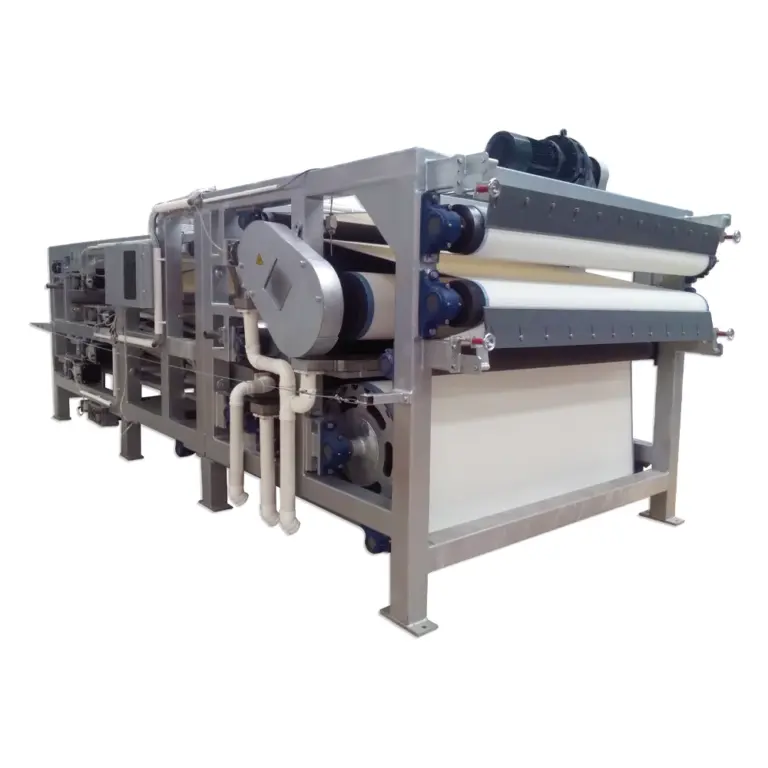
A belt filter press runs continuously: sludge is conditioned, fed, and discharged as an ongoing process. That operating assumption shapes everything upstream — feed pump sizing, chemical dosing continuity, and the plant’s ability to absorb throughput variability. If feed flow drops or sludge consistency shifts mid-run, the belt press does not pause; it continues processing degraded feed, and the output reflects that immediately.
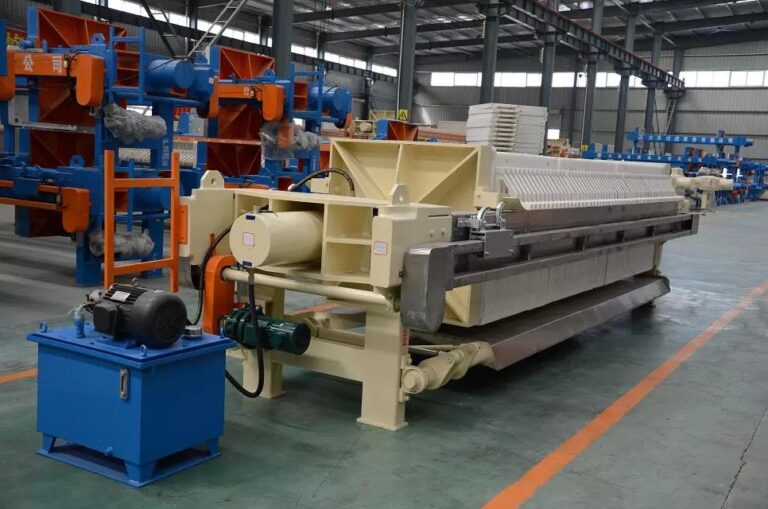
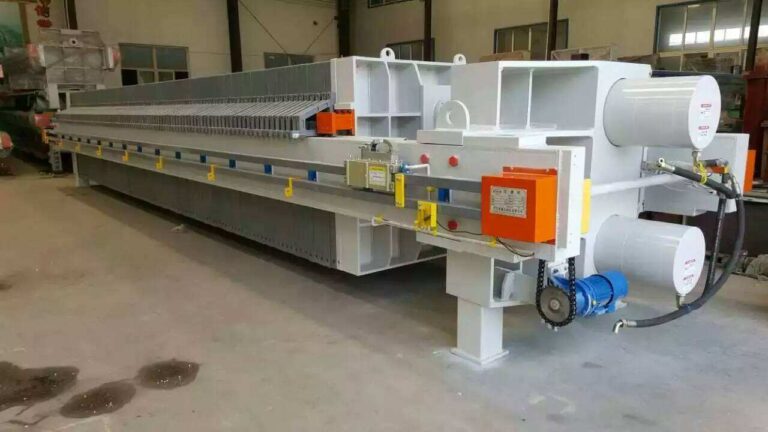
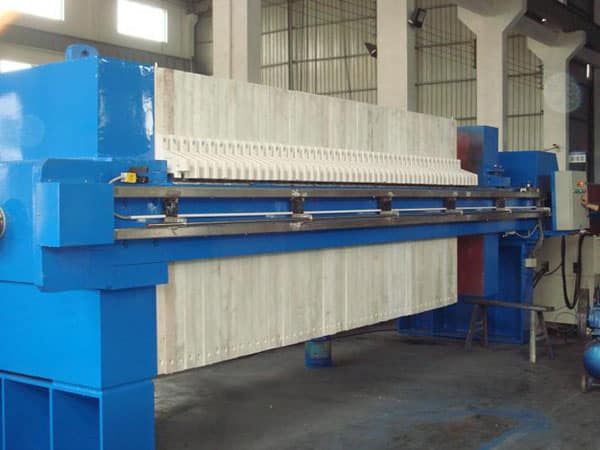
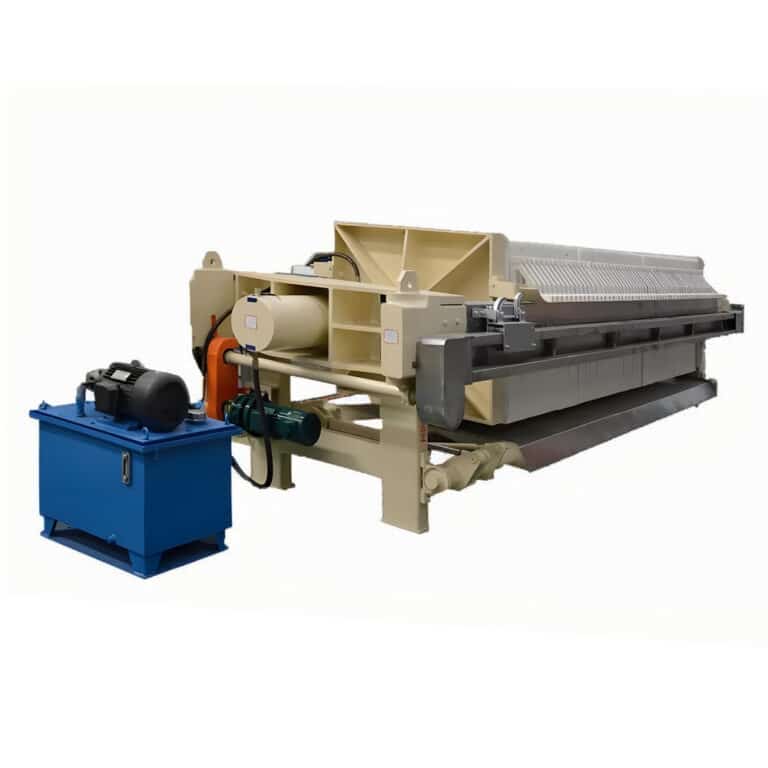
A chamber filter press operates in batch cycles. The press fills, holds pressure across the filter cycle, then opens for cake discharge before the next fill begins. That sequence is not a disadvantage in itself, but it creates a structural planning requirement: the upstream feed line cannot stop while plates are opening and cake is dropping. Without a surge tank to accumulate sludge during discharge intervals, the upstream process — cyclone underflow, settling tank outlet, or wet classification drain — has nowhere to go. Teams that treat the surge tank as optional infrastructure to be added later typically encounter feed disruption and upstream process instability that is difficult to correct after installation.
The practical implication is that these two presses are not drop-in alternatives for the same piping layout. A belt press requires continuous, conditioned feed from the moment it starts. A chamber press requires batch-ready feed buffering from the moment the system is designed. Confirming which mode fits your plant’s upstream flow pattern before equipment selection avoids layout rework after the foundation is set.
Compare belt press washwater and chamber press discharge needs
The water balance of a belt press is not a minor utility consideration. Continuous belt washing is a functional requirement, not an accessory — belts blind progressively without it, and blinding degrades filtrate clarity and cake consistency faster than most operators expect at commissioning. The washwater demand is ongoing for every hour the press runs, it must be collected, and it must be managed as part of the facility’s water circuit. Plants that treat washwater as a negligible line item during layout often face two problems later: undersized drainage channels and discharge volumes that were not included in the original water permit scope.
Chamber filter presses do not wash belts. Their water release occurs at the filtrate discharge point during the press cycle, and that volume is bounded by the fill quantity and filter cycle time rather than continuous spray demand. The filtrate is typically cleaner in suspended solids than belt press effluent, which can simplify recirculation or reuse decisions. The practical difference between the two is not just volume — it is the form of the water release: continuous and spatially distributed for a belt press, periodic and localized for a chamber press. Both require proper collection and drainage planning, but they impose those demands differently on facility layout and utility capacity.
If washwater recirculation is part of the design intent, the belt press requires that the recirculation loop be sized for continuous flow and that water quality does not degrade belt washing effectiveness over time. That loop adds equipment, monitoring, and maintenance obligations that should be scoped at the project stage, not retrofitted.
Evaluate cake dryness against operator and maintenance load
The most consequential performance gap between these two press types shows up at the cake discharge point. Stone processing sludge that fails a moisture threshold — whether for landfill acceptance or secondary reuse — generates disposal cost and handling problems that compound daily. A chamber filter press, operating under sustained hydraulic pressure, consistently delivers cake with moisture content generally at or below 30%. A belt press, relying on mechanical compression and gravity drainage, typically produces wetter cake, and its output is more sensitive to feed variation. That gap widens when feed conditions are not stable.
| Коэффициент сравнения | Ленточный фильтр-пресс | Камерный фильтр-пресс |
|---|---|---|
| Cake Dryness (moisture content) | Typically higher moisture; not guaranteed to meet ≤30% threshold | Generally ≤30% moisture, delivering drier cake |
| Внимание оператора | Requires continuous monitoring for belt tracking, washwater, and chemical conditioning | Can be automated; oversight needed for scheduled cloth changes and cake discharge |
| Flocculant Usage | Requires significant polymer/flocculant addition | Can dewater effectively with minimal or no chemicals |
The operator attention profile is worth reading carefully. Belt press operation is not passive: belt tracking, washwater adjustment, and chemical dosing rate require active monitoring throughout the run, and even experienced operators cannot fully compensate for feed inconsistency through manual intervention. Chamber press operation can be automated to a higher degree, but it concentrates maintenance events at scheduled intervals — filter cloth changes and cake discharge cycles. The skill requirement is different, not lower. A plant that cannot sustain consistent belt press monitoring will see cake quality deteriorate before the problem is obvious on any instrument, because the degradation appears first in subtle changes to cake profile and filtrate turbidity rather than in equipment alarms.
Flocculant reduction in chamber press operation is a real engineering trade-off, not a guaranteed outcome across all sludge types. For stone processing sludge with relatively uniform mineralogy, the reduction can be meaningful. For highly variable feeds, some chemical conditioning may still be required on the chamber press. The reduction is directional — lower than belt press demand in comparable conditions — and should be confirmed against actual sludge characterization data rather than assumed.
Check polymer sensitivity before choosing a belt press
A belt press cannot function without adequate sludge conditioning. Polymer addition is not a tunable option — it is a baseline operational requirement. The polymer forms the floc structure that allows mechanical pressure to express water from the sludge layer as it progresses through the gravity drain, low-pressure, and high-pressure zones of the belt. When polymer type, dose, or mixing is off, the belt receives poorly conditioned sludge, and no mechanical adjustment recovers the lost dewatering efficiency. For stone processing applications where sludge mineralogy, particle size distribution, or solids concentration varies across production runs or seasonal quarry conditions, that dependency carries real performance risk.
Chamber filter presses can operate with minimal or no flocculant on appropriate feed types. The hydraulic pressure sustained across the filter cycle does much of the dewatering work without requiring pre-formed floc structure. This is a meaningful procurement consideration for plants where polymer supply is costly, logistically difficult, or operationally complex to manage consistently. It is also relevant for plants where chemical handling introduces safety or permitting complications.
The failure risk with a belt press is not that polymer will occasionally be unavailable — it is that inconsistent feed quality will require continuously re-optimized polymer dosing to maintain acceptable cake. That optimization burden is easy to underestimate at procurement and difficult to sustain in practice. If your stone processing operation runs multiple material types or has periods of high fines content in the sludge, that variability should be tested against belt press performance expectations before the equipment is specified. For polymer sensitivity analysis and a cost-based comparison of chemical demand across both press types, the Расход полимера в ленточном фильтр-прессе по сравнению с камерными прессами: Анализ затрат article provides a useful reference frame.
Review space power and sludge-feed constraints
Space and utility requirements affect not just where equipment fits but what ancillary infrastructure must be budgeted and permitted from the start.
| Ограничение | Ленточный фильтр-пресс | Камерный фильтр-пресс |
|---|---|---|
| След | Compact design; lower space demand | Requires more space due to surge tank and ancillary equipment |
| Surge Tank Required | Not required (continuous feed) | Required for batch-feed accumulation |
| Потребление энергии | Lower energy usage | Повышенное энергопотребление |
| High-Pressure Feed Pump | Не требуется | Required for dewatering |
The belt press compact footprint is a legitimate planning advantage, but it does not tell the full story of the space requirement. Washwater supply lines, drainage channels, chemical dosing equipment, and effluent collection must be incorporated into the layout, and those elements extend the effective footprint beyond the press frame itself. A fair space comparison accounts for the full operating envelope of each system, not just the machine boundary.
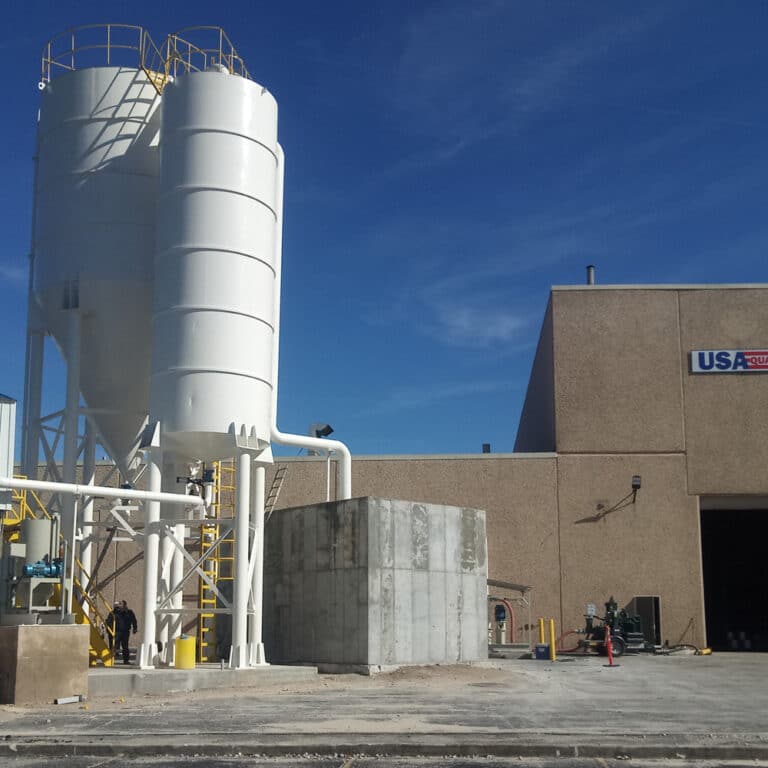
On the chamber press side, the surge tank is the most underestimated infrastructure item. Its volume must be sized to hold the sludge volume produced during at least one full press cycle — fill time, pressure hold, plate opening, and cake discharge — which can represent a substantial tank for higher-throughput operations. That tank requires structural support, level instrumentation, and agitation if sludge settles quickly. These are not optional refinements; they are prerequisites for stable batch operation. The high-pressure feed pump adds a maintenance item that belt press installations do not carry: pump seals, valve condition, and pressure relief systems must be included in the maintenance schedule from commissioning.
Energy consumption favors the belt press under normal continuous operation. The chamber press hydraulic system, high-pressure pump, and longer press-cycle duration result in higher per-cycle power demand. For operations running multiple shifts or processing high daily sludge volumes, that energy differential becomes a meaningful line item in the operating cost model and should be incorporated into any total cost of ownership comparison alongside chemical and maintenance costs.
Compare downtime risk for belts cloths plates and hydraulics
Neither press type eliminates maintenance downtime — but they concentrate that downtime differently, and the operational consequences of each pattern are distinct.
| Ориентация на техническое обслуживание | Ленточный фильтр-пресс | Камерный фильтр-пресс |
|---|---|---|
| Belts / Cloths | Frequent belt washing downtime and belt replacement | Regular filter cloth changes required |
| Rollers, Bearings, Moving Parts | Roller and bearing replacement adds downtime | Fewer moving parts; lower mechanical downtime risk |
| Plate Integrity | Не применимо | Recessed chamber center-feed design reduces plate blockage and damage risk |
Belt press downtime tends to be distributed and cumulative. Belt washing reduces the interval between replacements, but it does not eliminate belt wear. Roller and bearing condition degrades progressively under continuous operation, and when a roller fails mid-shift, the press stops immediately. The maintenance cost profile is characterized by frequent, relatively small interventions that add up over time rather than discrete scheduled outages. Plants that do not track belt wear and bearing condition proactively often face unplanned downtime at inconvenient points in the production day.
Chamber press maintenance is more schedulable. Filter cloth changes occur at defined intervals based on filtration cycle time and cake release performance, and they can typically be planned without halting upstream production if surge tank capacity is adequate. The recessed chamber center-feed design reduces the risk of plate damage from feed maldistribution or clogging — a meaningful reliability advantage — but it does not eliminate cloth fouling or the need for periodic plate inspection. The chamber press’s lower moving-part count relative to a belt press means fewer mechanical failure modes, but hydraulic system integrity must be maintained for reliable plate closure and pressure hold.
The procurement implication is that spare parts strategy differs substantially between the two. A belt press requires a continuous supply of replacement belts and a ready stock of roller bearings. A chamber press requires filter cloth inventory sized to the press plate count and replacement cycle. Both should be confirmed as reliably available before equipment is specified, particularly for plants in regions where specialty filter media supply chains have longer lead times.
Select the design that matches daily plant rhythm
The final selection question is not which press performs better in isolation — it is which press fits how your plant actually operates across a full production day, a full week, and through seasonal feed variation.
| Фактор решения | Ленточный фильтр-пресс | Камерный фильтр-пресс |
|---|---|---|
| Plant Rhythm Fit | Suited for continuous sludge production with consistent feed conditions | Fits plants that can batch-process with surge tank cycles and need drier cake |
| Капитальные затраты | Низкие первоначальные инвестиции | Более высокие первоначальные инвестиции |
| Operational Cost (chemicals, maintenance) | Higher ongoing cost driven by chemicals and maintenance | Lower chemical cost; maintenance focused on cloth replacement |
| Сухость торта | Typically wetter cake | Drier cake (≤30% moisture), meeting stricter disposal or reuse criteria |
A belt press demands that the plant deliver consistent, conditioned sludge for every hour it runs. If production schedules are continuous and feed quality is stable — consistent solids concentration, predictable particle size, reliable polymer supply — the belt press’s lower capital cost and compact footprint are genuine advantages. If any of those conditions are intermittent or variable, the performance gap between belt press specification and actual output widens progressively after commissioning, and chemistry cannot reliably compensate.
A chamber press tolerates feed variability better, but it asks the plant to absorb batch downtime for cake discharge and cloth maintenance as a normal operational rhythm. That requirement matters more in practice than equipment specifications suggest. A plant running a tight single-shift schedule with no buffer capacity for press downtime will find batch cycle management more disruptive than anticipated. Conversely, a plant with multiple production lines or flexible scheduling can accommodate batch cycles without affecting throughput.
The capital versus operating cost contrast — lower upfront for the belt press, lower chemical and per-cycle cost for the chamber press — is a lifecycle trade-off, not a simple comparison of purchase price. For stone processing operations where cake moisture directly affects disposal classification or secondary aggregate reuse qualification, the chamber press’s consistent ≤30% moisture output may justify the higher capital and space investment by reducing disposal cost and eliminating reclassification risk over the equipment’s operating life. That calculation depends on actual disposal rates, cake volumes, and the value of downstream reuse — all of which should be quantified before the final specification is locked.
The most useful pre-procurement step for stone processing sludge is a direct feed characterization against the conditioning requirements of each press type: measure solids concentration range, particle size distribution, and variability across your production calendar, then assess whether your polymer management capability can sustain belt press performance under those conditions consistently. If it cannot, the chamber press’s lower chemical sensitivity and drier cake output likely represent a better lifecycle fit, even at higher capital cost.
Before finalizing the RFQ, confirm three things regardless of which press direction you are leaning toward: whether your layout can accommodate the full system boundary including ancillary equipment, whether your daily schedule can absorb the press’s maintenance and operational demands without disrupting upstream continuity, and whether your cake’s end-use or disposal criteria have a defined moisture threshold that the selected press can reliably meet under variable feed. For detailed specifications on both press configurations, the Утопленный пластинчато-рамный фильтр-пресс и Ленточный фильтр-пресс pages provide equipment-level detail to support that scope definition.
Часто задаваемые вопросы
Q: What happens if our stone processing plant runs multiple material types with varying fines content — can a belt press still perform reliably?
A: Variable feed is the single condition most likely to undermine belt press performance, and multiple material types with shifting fines content represent exactly that risk. A belt press requires continuously re-optimized polymer dosing to maintain floc structure as feed composition changes; without consistent conditioning, dewatering efficiency drops and cake moisture rises. If your production calendar includes periods of high fines variability or switching between stone types, characterize solids concentration range and particle size distribution across those conditions before specifying a belt press — if the variability is significant, a chamber press’s pressure-driven dewatering and lower chemical sensitivity will likely sustain more consistent output across the production range.
Q: After commissioning whichever press we select, what is the first operational check that should be run before declaring the system stable?
A: The first check should be a structured feed consistency trial run against the press’s conditioning requirements under actual production conditions — not controlled test conditions. For a belt press, this means verifying that polymer dose, mixing time, and belt tracking hold acceptable cake profile and filtrate clarity across a full shift of real feed, not just a short startup run. For a chamber press, it means confirming that surge tank volume is sufficient to buffer at least one complete press cycle — fill, pressure hold, plate opening, and cake discharge — without disrupting upstream flow. Discovering either gap after the system is declared operational is significantly more disruptive and costly to correct than catching it during a structured commissioning trial.
Q: At what daily sludge volume does the energy cost difference between belt and chamber press become a meaningful factor in the operating cost model?
A: The article does not specify a precise volume threshold, and the crossover point depends on local electricity rates, shift structure, and cycle frequency — so a general tonnage figure would not be reliable across different plant configurations. What can be stated is that the gap is directional: chamber press hydraulic systems and high-pressure pumps consume more energy per cycle than belt press continuous operation, and that differential compounds with higher daily throughput and multi-shift schedules. For operations processing large daily sludge volumes across two or three shifts, the energy line item should be explicitly modeled in the total cost of ownership comparison alongside chemical and maintenance costs before the capital decision is finalized.
Q: Is a membrane filter press worth considering instead of a recessed chamber press if cake dryness is the primary selection criterion?
A: Yes, a membrane filter press is worth evaluating when maximum cake dryness is the overriding requirement. A recessed chamber press achieves moisture content generally at or below 30% through hydraulic pressure alone; a membrane press adds an additional mechanical squeezing stage after the filtration cycle, which can push moisture content lower still for appropriate sludge types. The trade-off is higher capital cost and greater mechanical complexity from the membrane inflation system. If your disposal classification or secondary aggregate reuse criteria sit at or near the threshold that a standard chamber press can meet, the recessed design is likely sufficient. If those criteria are more stringent or if feed variability means a standard chamber press output may be borderline, a Мембранный фильтр-пресс should be included in the comparative specification.
Q: If our plant operates a single tight shift with no buffer capacity, does the batch cycle of a chamber press create throughput problems that outweigh its cake dryness advantage?
A: For a plant with no scheduling flexibility, batch cycle management can be more disruptive in practice than the equipment specification suggests. During plate opening and cake discharge, upstream sludge production continues — without adequate surge tank capacity, that flow has nowhere to go, and upstream process instability follows. A single-shift operation with no buffer also has limited time to absorb unplanned cloth changes or plate inspection within the working day. Whether this outweighs the cake dryness advantage depends on whether your disposal or reuse criteria impose a hard moisture threshold: if they do, and a belt press cannot reliably meet that threshold under your feed conditions, the operational complexity of batch management may still represent the better lifecycle trade-off. If the moisture requirement is soft and the belt press can meet it with consistent feed, the continuous-flow model fits a tight single-shift schedule more naturally.