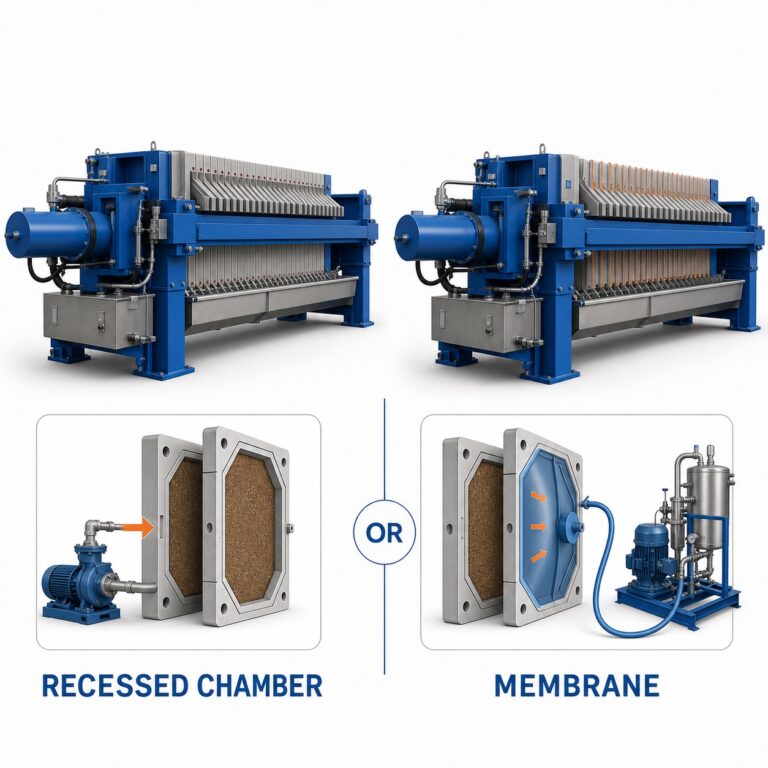
A cake moisture reading can look excellent on a lab report and still tell a plant manager almost nothing about whether the press will deliver the daily tonnage the project needs. The two numbers answer different questions, and treating one as a proxy for the other is where capacity commitments start to drift from what the equipment actually delivers on site.
What a Low-Moisture Result Actually Establishes
A cake moisture test confirms that, under the feed characteristics, pressure, and cycle time used during that test, the press produced a cake with a given solids content. That is a statement about the chemistry and mechanics of filtration at one point in time: how the solids packed under pressure, how effectively free liquid was expelled, and whether the filter media and chamber geometry supported that particular dewatering outcome. It does not describe how many cycles the press can complete in a shift, how much solid mass each cycle represents, or how the equipment behaves when feed conditions shift.
This distinction matters because a buyer evaluating a proposal often receives the moisture figure as the headline result, with throughput presented alongside it as if the two were derived from the same evidence. They are not. Moisture is an endpoint measurement of one batch. Throughput is a rate, and a rate requires knowing how much material moves through the system per unit of time across repeated cycles, including every step that is not filtration itself.
Where the test conditions match the actual feed slurry, concentration, and operating pressure the plant will run, the moisture result is a reasonable indicator of achievable cake quality. Where the test used a bench sample, a different feed concentration, or a shorter or idealized cycle, the moisture figure still describes what happened in that test, but it stops being evidence about the full-scale plant unless the project team can show the conditions were representative. A buyer comparing two quotations with similar moisture numbers gains nothing from that similarity if the underlying test conditions, chamber sizes, or cycle assumptions differ.
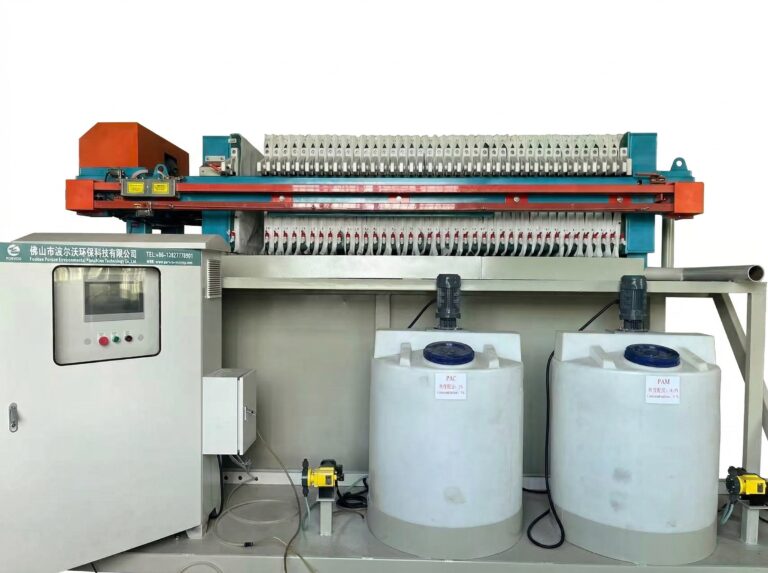
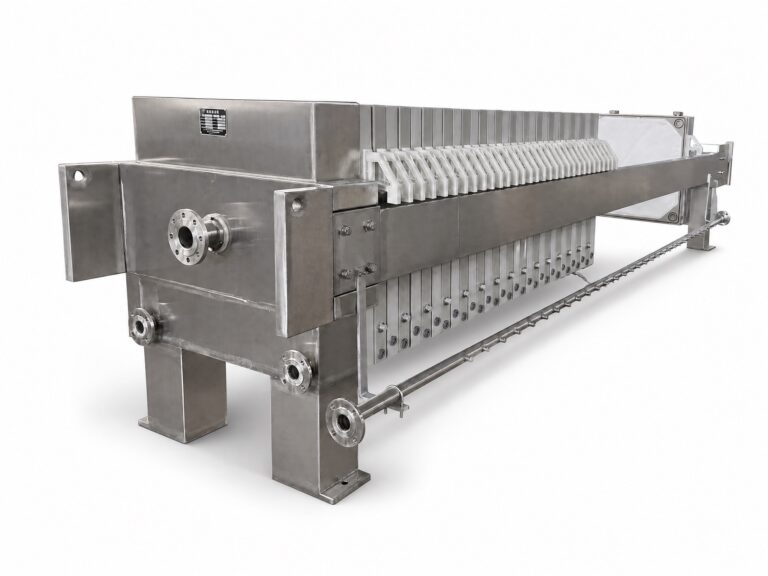
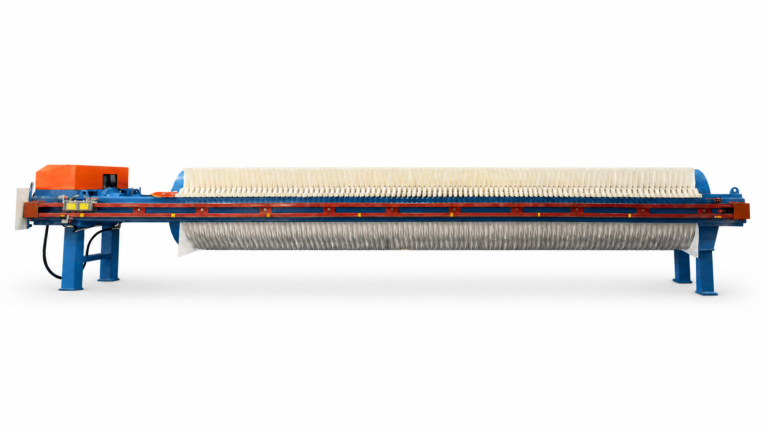
The practical move is to separate the two questions explicitly when reviewing a proposal. Ask what cake quality was demonstrated, under what feed and pressure conditions, and then ask a separate question entirely: what cycle and operating model produces the daily or shift tonnage being promised. The EPA’s Recessed-Plate Filter Press fact sheet describes фильтр-прессы as batch equipment where cake solids and cycle performance are tied to representative testing and to the specific feed-pump and chamber interface involved, which is consistent with treating a single moisture result as describing that batch rather than the plant’s output over time. That fact sheet addresses municipal biosolids dewatering, so its cake-solids figures and cycle details should not be carried over numerically to an industrial slurry application; the relevant point for a different plant is the structural one, that batch performance and representative testing are tied together, not the specific numbers reported for biosolids.
Cycle Time and Chamber Volume Behind Solids Throughput
Plant output is the product of how much solid mass one completed cycle delivers and how many cycles the press completes over the operating period. Both halves of that calculation depend on information a moisture test does not provide.
Chamber volume and the solids concentration of the feed determine how much dry solid mass accumulates in the chamber by the time a cycle reaches its target cake condition. A press with larger chambers, or a feed with higher solids loading, can deliver more mass per cycle even if the final cake moisture is identical to a smaller chamber or a more dilute feed. This is why chamber volume and the solids captured per cycle need to be stated as their own figures, independent of the moisture figure, before a throughput number can be evaluated.
Cycle time is the second variable, and it is not a single step. Filling the chamber takes time, and filtration itself continues until the flow rate through the forming cake drops to the point where further dewatering becomes impractical within the allotted cycle. Where the project includes a squeeze step, using a diaphragm to apply additional mechanical pressure, or a wash step to displace residual liquor or soluble contaminants from the cake, each of those steps adds process time that is part of the cycle even though it is not the initial filtration phase. A cycle time quoted without stating whether squeeze or wash steps are included will understate the real duration, and two presses can report the same final moisture while running cycles of different length because one includes steps the other omits.
The relationship between these variables is multiplicative, not additive: a longer cycle with higher solids captured per cycle does not automatically mean lower throughput than a shorter cycle with less solids captured, and the comparison only resolves once both the per-cycle mass and the cycle frequency over the operating period are known together. A buyer who receives a chamber volume and a cycle time, but not the solids concentration assumed for the feed, cannot yet convert those numbers into a daily output figure, because the mass captured per cycle is what connects chamber geometry to actual throughput.
Cake Discharge, Cleaning, and Downtime in the Capacity Model
Filtration time is only part of the cycle, and the time required to discharge the finished cake and prepare the press for the next cycle is a separate category that a moisture result says nothing about. Once filtration and any squeeze or wash steps are complete, the plates must open, the cake must release and fall or be removed from each chamber, and the filter media and chamber surfaces need to be in a condition suitable for the next fill. Where cake release is straightforward, this step adds a comparatively small increment to the cycle. Where the cake tends to adhere to the filter cloth or where plate shifting and cake removal require more attendance, that discharge step extends the cycle beyond what the filtration time alone would suggest, independent of how dry the cake turned out to be.
Cleaning sits alongside discharge as a related but distinct time cost. Filter media that becomes blinded or fouled over repeated cycles needs periodic cleaning to maintain filtration performance, and the frequency of that cleaning affects how much of the total operating period is spent on cycles that remain productive. A press can produce consistent cake moisture cycle after cycle while the proportion of the shift given over to discharge and cleaning work varies depending on the feed’s tendency to foul the media and on how the discharge mechanism is designed. None of this is visible in a cake moisture report, because the test is evaluating the cake, not the equipment’s behavior across repeated cycles.
Downtime beyond routine discharge and cleaning, whether from maintenance, feed interruptions, or other operating stoppages, further reduces the proportion of the shift or day that is actually available for completed cycles. A throughput commitment is only meaningful once it states the availability assumption behind it, meaning what fraction of the calendar period is modeled as productive operating time versus discharge, cleaning, and other downtime. A plant output figure built on an optimistic availability assumption will not match actual results even if the underlying cycle chemistry, including the cake moisture achieved, is accurate and repeatable.
Feed Variability and Pressure-Flow Effects on Cycle Duration
Filtration through a forming cake follows pressure-flow behavior where the rate of liquid passing through the cake declines as the cake thickens and as resistance builds. Early in a cycle, flow is comparatively rapid; as solids accumulate and pack against the chamber walls, the same applied pressure drives progressively less flow, and the cycle approaches its endpoint asymptotically rather than at a fixed rate. This means that reaching a given cake moisture is not just a function of applied pressure and elapsed time in isolation, it is a function of how the feed’s own characteristics interact with that pressure over the course of the cycle.
Feed variability changes this interaction directly. Where the solids concentration entering the press is higher, the cake may form and reach its target condition over a different duration than where the feed is more dilute, even if the applied pressure and target moisture are unchanged. Where the particle size distribution or the presence of fine, compressible solids differs between batches, the cake’s resistance to flow changes, which changes how long the pressure-flow curve takes to approach its practical endpoint. A feed that includes more fine material can produce a cake that packs more densely and resists further dewatering, extending the cycle even when the eventual moisture result looks similar to a coarser feed processed previously.
This is the mechanism behind a counterintuitive but important outcome: two cycles can report nearly identical final cake moisture while one took meaningfully longer to get there, because the feed characteristics altered the shape of the pressure-flow curve rather than its endpoint. Where a project’s feed is consistent batch to batch, a single representative test may reasonably predict cycle duration across the operating period. Where the feed varies, whether from upstream process changes, seasonal effects, or blending of different material sources, the cycle duration observed in one test cannot be assumed to hold for every subsequent cycle, even if the moisture specification remains the same target.
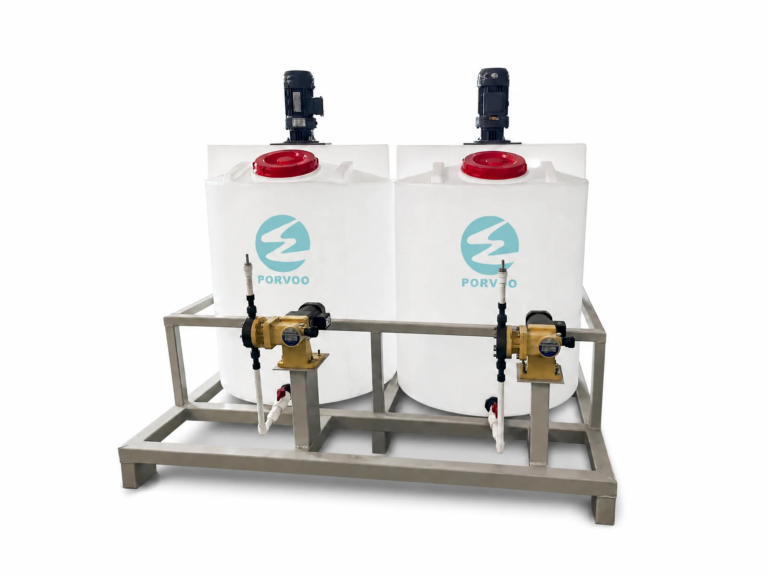
Dosing or conditioning of the feed ahead of the press, where used, is one of the interfaces that affects this behavior, because changes to flocculation or coagulation state alter how the solids pack and how readily liquid moves through the forming cake. A project that adjusts dosing between test conditions and full operation should not expect the tested cycle duration to transfer unchanged, even if the chemistry produces comparable final moisture.
Evidence Needed Before Accepting a Plant Output Commitment
| Evidence to review | Capacity question it answers | Граница принятия решения |
|---|---|---|
| Cake moisture result and tested conditions | What cake outcome was achieved in the test? | This result alone does not establish the mass processed over a shift or day. |
| Chamber volume and solids captured per cycle | How much solid load does one completed cycle represent? | Per-cycle load is needed before cycle frequency can support a throughput commitment. |
| Fill and filtration time | How long do loading and filtration take? | These durations affect how many complete cycles fit into the modeled operating period. |
| Squeeze or wash steps, when included | What additional process time is part of each cycle? | Omitting an included step understates the full cycle duration. |
| Cake discharge and cleaning time | How much time is required after filtration before the next cycle? | A cake moisture result does not account for discharge and cleaning work. |
| Downtime and stated availability assumptions | How much of the shift or day is modeled as operating time? | The output commitment depends on the stated availability basis. |
| Pressure-flow behavior across feed variability | How might cycle duration change as the feed changes? | Similar final cake moisture can still occur with longer or shorter cycles. |
A plant output commitment is only as reliable as the cycle model behind it, and that model needs to be visible as a whole rather than inferred from a single cake moisture figure. The components that make up a complete cycle, from fill and filtration through any squeeze or wash steps, discharge, and cleaning, each contribute duration that affects how many cycles fit into an operating period, and the solids captured per cycle determines how much mass each of those cycles represents. A moisture result confirms only the quality of the cake at the end of filtration; it does not confirm the per-cycle mass, the full cycle duration, or the availability assumption applied to convert cycles into a shift or daily total.
Where feed conditions are expected to vary across the operating period, the pressure-flow behavior underlying the cycle means that a single test result represents one point on a range, not a guaranteed cycle time for every batch. A buyer evaluating a throughput commitment should ask whether the feed used in testing reflects the range of conditions the plant will actually see, and if the answer is that testing used a narrower or more favorable feed than production will provide, the commitment needs to be understood as provisional on that difference being confirmed.
This is the information PORVOO’s quotation and sizing review works from when a project supplies slurry characteristics, chamber and cycle requirements, and the intended operating schedule, because a configuration that matches the equipment’s chamber volume, cycle steps, and discharge arrangement to the stated feed and availability assumptions depends on those inputs being complete rather than reduced to a single moisture target.
The distinction between a dry cake and a fast plant does not resolve by requesting more decimal places on the moisture figure. It resolves by requesting the complete cycle accounting: chamber volume, solids captured per cycle, each time component within the cycle, the availability basis applied to the operating period, and evidence that the feed conditions used in testing represent the range the plant will process. Where that accounting is supplied and stated with its assumptions, a throughput commitment can be evaluated on its own terms. Where it is not, the moisture result remains a valid description of one test and nothing more.
Часто задаваемые вопросы
Q: Can two tests with similar final cake moisture support the same throughput estimate?
A: No. Compare the solids captured per cycle, the complete cycle duration, the modeled downtime, and the pressure-flow response across representative feed conditions. Different values can produce different shift or daily output even when the final cake moisture is similar.
Q: What should be recorded during a test so it can support scale-up?
A: Record the cake moisture result with its tested conditions, chamber volume, solids captured per cycle, and the time used for filling, filtration, any squeeze or wash steps, cake discharge, and cleaning. Also record how pressure and flow behave as the feed varies so the scale-up model can state its operating assumptions clearly.
Q: How can buyers compare capacity offers that use different cycle assumptions?
A: Put both offers on the same shift or daily operating period and require the same cycle steps and downtime basis. Then compare the solids captured per cycle and the number of complete cycles that fit within that period; an excluded step or unstated availability assumption makes the capacity figures unsuitable for direct comparison.
Q: When is a plant-capacity commitment ready for acceptance review?
A: Treat it as ready for review when representative testing feeds a full-cycle model that states chamber volume, per-cycle solids load, every included process and handling step, downtime, and operating availability. The commitment should remain conditional on the tested feed range and the stated pressure-flow behavior rather than on cake moisture alone.