A buyer asking what utilities a pulse-jet dust collector needs usually receives either a vague list or figures borrowed from a different site. The more useful starting point is a pair of boundary questions: where does the approved machine-side scope end, and what must the plant provide at each agreed connection point? Until those boundaries are written down, electrical and pneumatic data cannot be compared in any meaningful way, and responsibility for the gap between them stays ambiguous. What the site baseline supports is a project-specific equipment review, not a fixed utility package or a published consumption figure.
Define the Machine-to-Plant Utility Boundaries First
The utilities conversation becomes tractable when it is split into two interfaces: the electrical supply connection and the compressed-air connection. Each has a machine side, a plant side, and a connection point between them. The purpose of naming those boundaries early is not to fix values, but to establish which party supplies what, which document records it, and which decisions remain open.
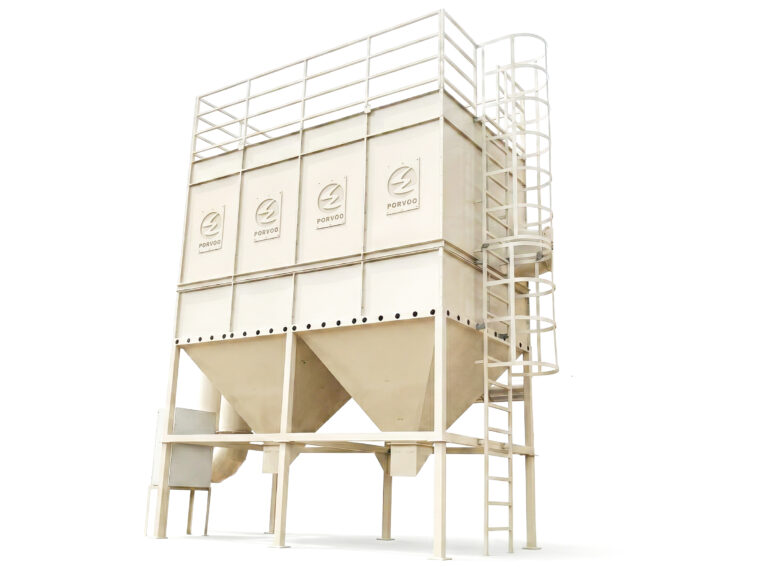
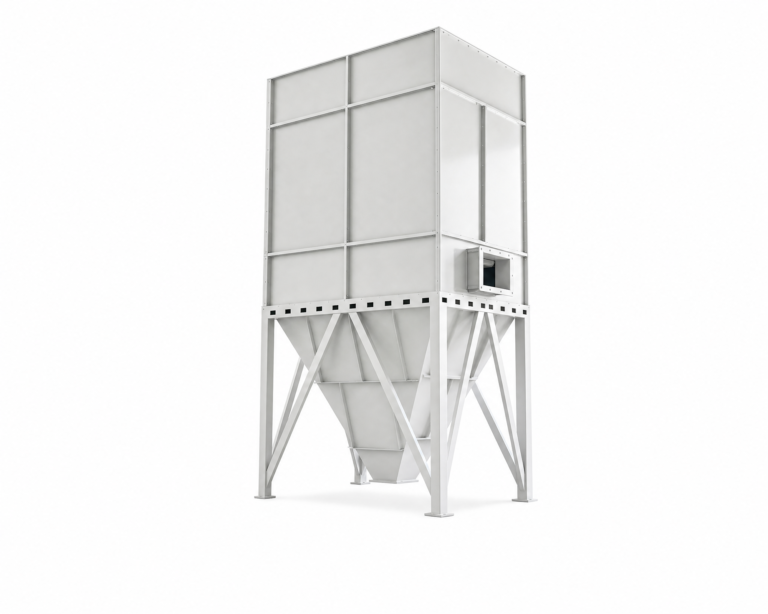
For a pulse-jet collector, the relevant machine-side entry point is the configurable unit itself — for example, the Coletor de pó modular com jato pulsante entry — but the interface details remain project-specific. Configuration depends on the assigned application and site conditions, so the boundary map should be treated as a planning instrument rather than a specification.
| Utilidade | Machine-side boundary supported by the source | Plant-side information to confirm | Project decision needed |
|---|---|---|---|
| Electrical supply | Connection point to the machine electrical equipment | Oferta disponível e restrições das instalações | Exact connection point and scope split |
| Ar comprimido | Machine pneumatic system and components | Compressor and plant distribution capability at the connection point | Exact connection point and scope split |
A utility value without an agreed connection point is not yet an interface requirement.
Electrical Supply and Connection Data to Exchange
IEC 60204-1:2016 — Electrical equipment of machines — locates the boundary of the covered machine electrical equipment at the point where the supply connects to that equipment. That single statement is useful to buyers because it turns a vague “power supply” discussion into a defined interface: the parties can agree where the machine begins and the plant installation ends.
At that agreed point, the facility side should provide its available supply characteristics and any local constraints, while the supplier side should provide approved connection and load data. Exact voltage, frequency, load, protection, signals, wiring, earthing, and conformity decisions are not settled by the standard and require the project’s electrical documents and competent review. The practical items to divide are incoming supply, isolation and protection, protective bonding or earthing, cable route and termination, and any local power-quality or environmental constraints that affect the installation.
| Item da interface | Supplier/project data to provide | Site data to provide | Confirmation boundary |
|---|---|---|---|
| Incoming supply | Approved required characteristics and load data | Available supply characteristics | Final compatibility by competent electrical review |
| Ponto de conexão | Approved terminal or interface reference | Route and point available on site | Exact scope and termination responsibility |
| Isolamento e proteção | Machine-side requirements in approved documents | Disposição na fábrica e requisitos locais | Project design and compliance confirmation |
| Ligação de proteção ou aterramento | Interface de máquina aprovada | Informações do sistema do site | Competent project confirmation |
| Controles e sinais | Approved interface list | Necessidades do sistema de controle da fábrica | Agreed signals, ownership, and test basis |
Compressed-Air Supply and Pneumatic Boundary Data to Exchange
ISO 4414:2010 — Pneumatic fluid power systems and components — covers pneumatic systems and components on machinery while excluding factory air compressors and typical plant air-distribution systems. The standard does not supply pulse-cleaning pressure, flow, air quality, consumption, pipe sizing, conditioning, or safety measures, and local requirements still need confirmation. Its value in this planning step is narrower: it supports treating the machine pneumatic system and the plant air distribution as two distinct scopes with an agreed connection between them.
At that connection point, the exchange should run in both directions. Supplier-required pressure range, flow or demand profile, and air-quality condition at the boundary are compared against site-available data under relevant plant conditions. Plant piping, conditioning, isolation, drainage, connection, and monitoring responsibilities then need owners. No pressure, flow, purity, or consumption figure should be assumed for the project until the approved documents and site records support it.
| Item da interface | Supplier/project data to provide | Site data to provide | Confirmation boundary |
|---|---|---|---|
| Ponto de conexão | Approved machine pneumatic interface | Plant distribution endpoint | Exact scope split and connection responsibility |
| Pressão | Required operating range at the boundary | Available range under relevant plant conditions | Project compatibility; no generic value |
| Flow or demand profile | Required demand information | Available capacity and competing demand context | Project compatibility; no generic value |
| Qualidade do ar | Required condition at the boundary | Available air treatment and observed condition | Project-specific conditioning decision |
| Plant distribution | Machine-side limits | Piping, isolation, drainage, monitoring, and route information | Plant and supplier responsibility confirmation |
Match Utilities to Project-Defined Control and Operating States
A single connected/not-connected answer does not serve the whole project. Installation and pre-start checks, startup or commissioning, normal operation, and shutdown or maintenance may each call for a different combination of electrical availability, air availability, and documented isolation state. Which states apply is a project decision; the supplies themselves are not.
Control-supply or signal interfaces, alarms, remote commands, permissives, and data exchange should come from approved documents rather than from assumptions about automation architecture. Similarly, the checks and records for each state — which signals, permissives, and records are agreed — should be defined by the project, not imported from a generic startup procedure.
| Project-defined state | Electrical information to confirm | Compressed-air information to confirm | Control or evidence question |
|---|---|---|---|
| Installation or pre-start checks | Availability and approved isolation state | Availability and approved isolation state | Which approved checks require each utility? |
| Startup or commissioning | Approved supply and connection status | Approved supply and boundary condition | Which signals, permissives, and records are agreed? |
| Normal operation | Approved operating requirement vs available supply | Approved demand vs available plant capacity | Which conditions are monitored or recorded? |
| Shutdown or maintenance | Approved isolation/interface information | Approved isolation/interface information | Who confirms the state under project and site rules? |
Close Every Interface in a Responsibility and Evidence Matrix
Open interfaces tend to survive into installation because no single record carries them. A closure matrix fixes that by giving each boundary a connection point, the supplier data required, the site data available, the owner who confirms, the governing document and revision, a status, and a resulting action. Status values such as confirmed, open, or conflicting are more useful than a blanket “agreed,” because they keep discrepancies visible rather than buried.
Unresolved values, overlapping scopes, missing local requirements, or conflicting revisions should remain open until authorized engineering and project parties confirm them. Documenting the interface this way is primarily a handoff discipline, not a performance guarantee. Buyers assembling process and facility data before quotation may find an adjacent preparation path useful in the Lista de verificação para solicitação de cotação de sistemas de coleta de poeira para estações de trabalho de retificação e corte.
| Interface | Required supplier input | Required site input | Owner to confirm | Evidence and revision | Status |
|---|---|---|---|---|---|
| Incoming electrical supply | Approved requirements | Available supply data | Parte designada para o projeto | Current electrical interface document | Confirmed, open, or conflicting |
| Electrical connection and signals | Approved terminals and interface list | Site routing and control needs | Parte designada para o projeto | Current drawing or schedule | Confirmed, open, or conflicting |
| Compressed-air connection | Approved pneumatic requirements | Available plant air data | Parte designada para o projeto | Current utility interface document | Confirmed, open, or conflicting |
| Plant distribution and conditioning | Machine boundary information | Plant system information | Parte designada para o projeto | Current site utility record | Confirmed, open, or conflicting |
Perguntas frequentes
Q: We already have a plant air compressor. Is that enough to confirm the collector’s compressed-air supply?
A: No. Compare the project’s required pressure, demand profile, and air quality with what the plant can provide at the agreed machine connection point under relevant plant conditions. Include competing demand, distribution, conditioning, and connection responsibilities in that comparison.
Q: What electrical information should we exchange before assuming the collector can use our existing supply?
A: Exchange the site’s available supply characteristics and constraints with the supplier’s approved connection and load data. Identify the connection point, cable route and termination, isolation and protection, bonding or earthing, and control interfaces for competent project review.
Q: Could utilities be suitable for normal operation but still leave commissioning questions unresolved?
A: Yes. Utility availability and approved interfaces need confirmation for the project’s installation checks, startup, normal operation, shutdown, and maintenance states. Use the approved documents to identify required supplies, signals, permissives, and records for each relevant state.
Q: How should we settle whether plant piping, conditioning, cabling, and connection work is included?
A: Record the exact machine-to-plant boundary and agreed scope for each interface. Match supplier requirements and site data to a project-assigned owner, current document revision, status, and unresolved action, so neither an overlap nor a gap is hidden by a general utilities allowance.