Most grinding and cutting dust collection systems that fail within the first year were not failed by the collector—they were failed by the RFQ that specified it. The typical pattern: a buyer requests a system sized for a general workshop, the supplier quotes to the numbers provided, and only after installation does the gap become visible—filter blinding within weeks from sticky abrasive dust, a duct fire traced to spark carryover that was never declared, or acceptance tests that pass under controlled conditions and fail the moment three stations run simultaneously on a heavy-gauge cutting cycle. Retrofitting a system for the right CFM or replacing a filter housing incompatible with damp, oily dust is an unplanned cost that procurement teams rarely budget for because it arrives after the purchase order is closed. The discipline that prevents this is describing the source thoroughly before asking for a price.
Describe materials tools station count and duty cycle
The industry or process area is the first context a supplier needs to size and select correctly. Grinding stainless steel generates a fine, dense, potentially abrasive dust with different collection requirements than cutting mild steel plate or processing aluminum. Including that distinction in the opening of an RFQ is not a formality—it changes which filter media, housing materials, and airflow assumptions are appropriate.
Station count on its own is not enough. The number that actually drives equipment sizing is simultaneous station use: how many stations are operating at the same time under normal production conditions. A facility with twelve grinding stations that never runs more than four concurrently has a fundamentally different CFM requirement than one where all twelve run on the same shift. Quoting the total number without the simultaneous figure leaves suppliers guessing at the load, and guessing conservatively means oversized equipment; guessing optimistically means a system that cannot maintain capture velocity once the floor hits full production.
Duty cycle—continuous, batch, or intermittent—affects both the thermal and mechanical load on the collector. A system running two hours per shift needs different filter pulse cleaning intervals and different fan bearing specifications than one running eight. State it plainly, including whether the workload is seasonal or production-driven, because a duty cycle that changes over the year is a real design input.
Provide source geometry and capture distance
Capture distance is where many RFQs lose precision. Stating that a workstation uses an enclosing hood, a backdraft hood, or a freestanding downdraft table describes the pickup geometry. Stating that the capture point is 150 mm from the tool-workpiece contact zone defines the capture distance. These two details together determine whether the exhaust volume the supplier calculates will actually pull airborne dust into the collection stream under real working conditions.
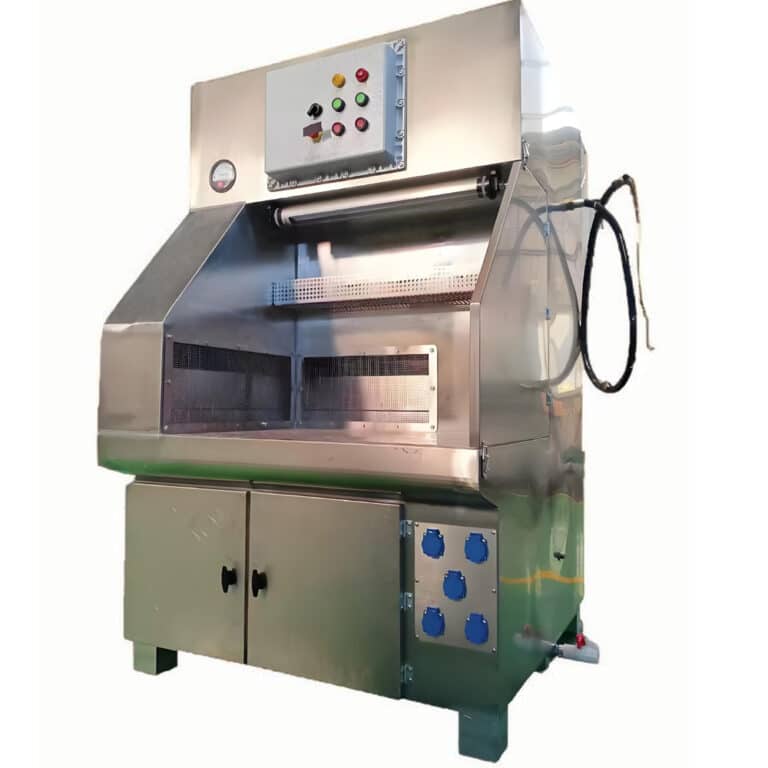
ASHRAE Handbook Chapter 33 provides design figures for capture velocity and hood geometry for industrial local exhaust applications, and it is a useful reference for understanding what a well-designed pickup should achieve. These figures are planning targets, not regulatory mandates, but they give both buyer and supplier a common framework for reviewing whether the geometry described in the RFQ is physically consistent with the stated capture intent. An mesa de esmerilhamento com exaustão descendente para estação industrial de usinagem a seco/a úmido integrates pickup geometry into the work surface, which removes some of this uncertainty by constraining the capture zone—but for workstations with movable tooling or variable part sizes, the buyer still needs to define the worst-case capture distance before comparing quotes.
Where a supplier cannot confirm capture performance without a site visit or additional measurements, that uncertainty should be stated in the RFQ response rather than resolved by assumption. A quote built on a geometry that does not match the real workstation will produce capture velocities that look adequate on paper and are inadequate in production.
State wet or dry process split and dust properties
The single most consequential set of inputs in any grinding or cutting dust collection RFQ is the description of the dust itself. A system designed for dry, free-flowing abrasive grit will fail quickly if the actual dust is damp, oily, or sticky—because filter blinding accelerates, pulse-jet cleaning loses effectiveness, and accumulated material can bridge across the hopper or create fire or explosion conditions under the wrong circumstances.
Each operating condition in the table below corresponds to a real material-selection or design decision on the supplier’s side.
| Condição | What to Describe in RFQ |
|---|---|
| Temperatura | Normal and peak temperature, units, measurement point, and whether peak is occasional, frequent, or related to startup/upset. |
| Dust Physical Characteristics | Whether dust is fine, coarse, abrasive, sticky, oily, damp, mixed with scale, or associated with hot process fume. |
| Sparks/Fire Risk | State if visible sparks may reach the dust collector. |
| Moisture and Oil | Presence of moisture, condensation, oil mist, damp dust, or changing moisture conditions. |
| Gas Conditions | If known, provide sulfur, oxygen, acid gas, alkaline factors, humidity, or condensation risk; do not guess. |
Two of these conditions are worth particular emphasis because they are consistently under-declared in RFQs. Spark carryover risk is a safety input, not just a nuisance condition. If visible sparks can reach the duct or collector body during normal grinding operations, that must be stated explicitly—it affects whether a spark arrestor is required before the filter housing and whether the filter media itself needs to be fire-retardant rated. Moisture and oil mist are the other commonly omitted inputs. Damp dust on a pulse-cleaned cartridge filter does not fall cleanly into the hopper; it smears across the filter media and shortens replacement intervals dramatically. If the process involves coolant mist, cutting oil, or humidity swings between seasons, state all of it. If the exact gas composition or condensation risk is unknown, mark it as unknown—a supplier working from an honest unknown will ask clarifying questions, whereas a supplier working from a guessed value may select materials that fail within the warranty period.
Include duct route utilities and discharge method
Duct routing directly affects system static pressure, and static pressure determines whether the fan selected at quotation stage will perform adequately after installation. A buyer who provides the collector footprint but omits the duct run length, number of elbows, and vertical rises leaves the supplier calculating static pressure from assumptions. The result is often a fan that operates at the edge of its curve under actual conditions rather than at the design point.
ASHRAE Chapter 33 provides guidance on minimizing pressure loss through proper duct design—avoiding long horizontal runs that can allow dust accumulation, sizing duct diameter to maintain minimum transport velocity for the specific dust type, and managing elbow placement. The RFQ should include a rough layout of the planned duct route, total equivalent length where available, and the number and type of directional changes. If the route is not yet designed, stating that uncertainty is more useful than providing a placeholder length.
Discharge method is a site-specific planning criterion that also affects permitting. A collector that exhausts to atmosphere requires confirmation that the discharge concentration meets local environmental requirements for particulate emissions. A collector that exhausts back into the workspace—recirculating clean air—requires a higher confidence level in filter efficiency and, in some jurisdictions, specific testing before recirculation is permitted. State which method is intended, whether a permit condition applies, and whether the discharge point is constrained by building layout or existing infrastructure.
Utilities—compressed air for pulse-jet cleaning, electrical supply voltage and phase, and drain connections for wet systems—should also be declared. Missing a compressed air supply specification is a common oversight that delays commissioning when the on-site pressure does not match what the cleaning system was configured for.
Ask for CFM static pressure and filter assumptions
A well-prepared RFQ does not ask suppliers to decide the CFM from scratch without inputs—it provides the process conditions and lets the supplier confirm or challenge the resulting airflow and pressure calculation. The difference matters because buyers who provide a CFM figure without stating the source of that number often transmit an assumption from a previous project or a rough rule of thumb that does not reflect the actual station geometry, simultaneous use, or dust load.
Operating pressure and flow rate are process inputs that the supplier uses to calculate final equipment sizing and material selection. If the facility has existing ventilation measurements—captured from a prior installation or an engineering assessment—include them as reference data with a note on how and where they were taken. If they were measured according to ISO 10780 velocity measurement methods, that is worth noting as it gives the supplier confidence in the figures. If they are estimated, say so.
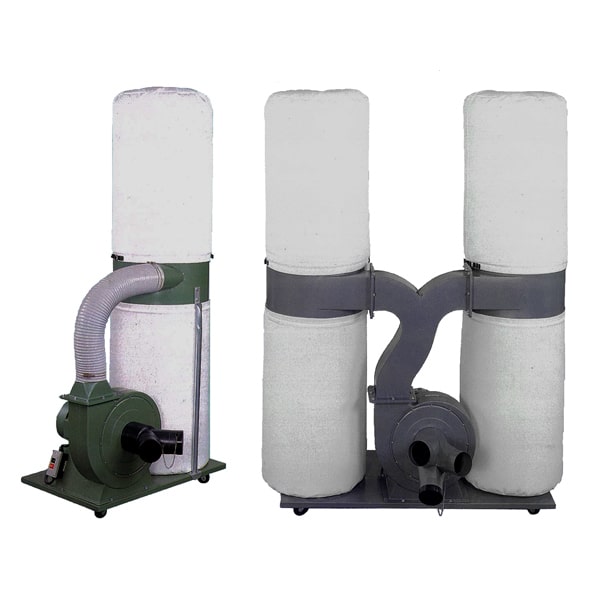
Filter assumptions are a related area where buyers can prevent rework at the quotation stage. Stating a preference for cartridge filters, baghouse filters, or wet collection—along with any constraints on air-to-cloth ratio, emissions class, or filter media type for the specific dust—gives suppliers a meaningful boundary to work within. A coletor de pó de cartucho configured for general workshop dust and one configured for fine abrasive metallic dust with oil mist can look identical on a spec sheet line but perform very differently in service. Ask suppliers to state their filter media selection reasoning in the quotation response so that the review process includes a judgment on fitness-for-purpose, not just price comparison.
Define acceptance checks before comparing price
Acceptance criteria belong in the RFQ, not in a side discussion after the purchase order is signed. Buyers who defer this conversation until installation give up their clearest leverage to enforce performance—once the system is commissioned and integrated into the facility, disputing whether it meets capture velocity at the workstation or outlet concentration at the discharge point becomes a negotiation rather than a contract check.
Define what successful acceptance looks like before comparing supplier quotes. That means stating whether capture velocity will be measured at each hood, what instrument and method will be used, whether dust concentration at the discharge point will be sampled, and who performs the test. Post-installation velocity measurement using a traceable method—ISO 10780 describes one framework for gas stream velocity and volumetric flow measurement at stationary sources—provides a defensible basis for acceptance sign-off if a dispute arises. Use it as a post-installation verification tool, not as an RFQ specification requirement.
The most useful discipline here is also the most underused: marking unknown inputs as unknown rather than providing a best guess. If the actual dust load per station is not measured, if the peak temperature during upset conditions is not documented, or if the simultaneous station count fluctuates based on production scheduling, say that clearly. Incorrect inputs produce quotes that appear competitive because they are sized for conditions that do not exist. That mismatch surfaces during acceptance testing—or worse, it does not surface until the filter replacement cycle reveals that the system was never sized for actual production. An honest unknown gives a capable supplier the opening to ask the right questions; a plausible-looking guessed value closes that conversation before it starts.
Include maintenance access and spare filter expectations
A dust collection system that cannot be serviced without a two-week parts lead time has a real downtime cost that does not appear anywhere in the capital equipment comparison. This is particularly relevant when procurement decisions are made on unit price alone without confirming parts availability for the specific filter media, cleaning valves, or gasket materials specified.
For facilities sourcing equipment internationally or from suppliers outside their immediate supply region, spare parts lead time is a planning criterion that belongs in the procurement conversation at the RFQ stage—not after the first filter change. The equipment plan should confirm filter media replacement specifications, valve types, and gasket materials before the order is placed, because substituting a different filter media grade after installation often requires revalidating the system’s emission performance.
| Spare Part or Inventory Item | O que verificar |
|---|---|
| Mídia de filtro | Request lead time and recommended minimum on‑hand quantity. |
| Válvulas | Confirm lead time and inventory recommendation for critical valves. |
| Gaxetas | Include gasket spare specifications, lead time, and suggested quantity. |
| Recommended spares inventory | Ask for a complete list of recommended spares, consumables, and their standard lead times. |
Maintenance access geometry is a separate and often overlooked consideration. State in the RFQ whether the installation location constrains door swing, filter removal path, or hopper access. A collector installed in a tight bay where the filter housing door cannot open fully creates a safety and maintenance problem that is difficult and expensive to correct after installation. If a coletor de pó portátil is being considered to serve multiple stations with repositioning flexibility, confirm that the filter access geometry is practical in the actual floor layout, not just in the supplier’s standard drawing.
Ask suppliers to include a recommended spares list with their quotation—covering filter elements, cleaning valves, gaskets, and any other consumables—with stated standard lead times for each item. This converts an abstract procurement risk into a concrete inventory decision that can be planned and budgeted before the system goes live.
The failure modes in grinding and cutting dust collection rarely start with a bad collector. They start with a quote built on incomplete source information, where the simultaneous station count was optimistic, the dust behavior was described as general abrasive when it was actually sticky and damp, and the acceptance criteria were left open so that a passing commissioning test did not reflect real production conditions. By the time those gaps become visible—in filter life, in capture performance on a busy shift, in a duct fire—the procurement decision is long closed.
The practical value of this checklist is that it moves the critical questions upstream: before price comparison, before supplier selection, and before the layout is fixed. Buyers who provide a complete source description, declare honest unknowns, and define acceptance criteria in the RFQ give suppliers the information needed to quote the right system—and retain the contractual basis to verify that the right system was delivered.
Perguntas frequentes
Q: Our workshop handles grinding, cutting, and occasional welding. Can I use the same dust collection RFQ for all processes, or do I need separate sections?
A: Yes, the same RFQ can cover mixed processes, but each process must be described separately within it. The article’s framework for material, dust properties, and capture geometry applies to each activity, but welding fume adds heat, fine particulate, and potential gas-phase contaminants that require distinct filter media and spark protection beyond what grinding demands. Group stations by process type so the supplier can design zone-specific collection rather than a one-size-fits-all system that underperforms for the most challenging dust.
Q: After sending this RFQ, what should I prioritize when reviewing supplier responses to confirm they didn’t just quote to the numbers without understanding the risks?
A: First, check that the supplier’s technical proposal explicitly references your stated process conditions—material, dust behavior, simultaneous station count, and spark risk—not just the CFM figure. A response that ignores your wet/dry split or recommends a standard filter media for abrasive, oily dust signals a generic quote. Second, verify the supplier has asked clarifying questions about any unknowns you declared; silence on those gaps means they filled in assumptions without disclosure. Finally, confirm the quoted acceptance criteria match those you defined, including measurement method and responsibility. A quote that passes all three checks demonstrates process understanding rather than mere form-filling.
Q: How detailed does the RFQ need to be for a very small operation—say, a single worker using a portable grinder a few hours a week?
A: Even a single-station intermittent operation benefits from declaring critical safety inputs like material type, spark risk, and whether dust is dry or damp, because these determine fire risk and filter compatibility. However, the full duct-routing, simultaneous-station, and acceptance-testing sections can be simplified—there is no duct network, no concurrency, and acceptance may be as simple as visual confirmation of capture. Provide the tool, material, wet/dry condition, and any spark observation; state that it’s a standalone portable setup; and let the supplier recommend an appropriately sized unit, such as a coletor de pó portátil with built-in spark arrestor if needed. The principle of describing the source still holds; the scope of the RFQ shrinks with the scale of the problem.
Q: How does this source-focused RFQ approach compare to the typical industry shortcut of requesting a dust collector based on general square footage and number of workers?
A: The source-focused approach prevents the most common procurement failure: a collector sized for a generic average that doesn’t exist in the real shop. The square-footage shortcut often yields a system that runs chronically under-capture velocity during peak production or blinds filters because dust stickiness was never communicated. The trade-off is upfront time, but the cost difference between that effort and a single filter-media replacement after six months of wrong-sizing typically pays back immediately. For any process with hazardous, combustible, or high-volume dust, the source-first RFQ is the only reliable path to a system that passes a real acceptance test on a busy shift.
Q: Is the extra work of preparing this checklist really worthwhile if we’re a smaller shop that might only buy one dust collector in a decade?
A: Yes, because the cost of a mismatched collector—filter replacement at 3 months instead of 3 years, production downtime for retrofits, or a fire incident—falls disproportionately on smaller shops that lack redundant capacity. The checklist is not a bureaucratic exercise; it’s a structured way to give the supplier the exact same information a site visit would reveal, but in writing, before quotes are binding. For a once-a-decade purchase, getting it right the first time avoids a recurring operational penalty that dwarfs the few extra hours spent on the RFQ.