Most disputes over dewatering equipment performance in ceramic and stone plants don’t begin at commissioning — they begin the moment a procurement team sends out a vague RFQ and receives proposals built on incompatible assumptions. When a supplier quotes a filter press sized against a generic sludge profile rather than your actual cutting slurry or polishing wastewater, the gap between their assumed feed conditions and your real plant output stays invisible until the press is installed and cake moisture targets are consistently missed. At that point, the vendor points to feed inconsistency; the buyer points to the machine. Defining the right inputs, thresholds, and scope boundaries before the RFQ is issued is the only way to give both sides a shared basis for performance accountability. The sections below give process engineers and procurement teams a structured way to build an RFQ that produces comparable, defensible supplier proposals.
Describe the plant process and wastewater source precisely
Sludge from a ceramic tile plant running wet ball milling looks nothing like sludge from a stone cutting workshop or a sanitary-ware casting line. Feed particle size, mineralogy, organic load, and chemical treatment history all vary by process stage, and they directly control which equipment configuration is appropriate, what materials of construction can withstand the feed, and what conditioning chemistry is likely to work. Treating sludge source type as background detail rather than a primary design input is one of the most consistent causes of equipment mismatches in this industry segment.
What the RFQ should establish is the specific unit operation generating the sludge — wet grinding, polishing, slurry settling, wastewater neutralization, or a combination — and whether the sludge reaching the dewatering system is a primary slurry overflow, a secondary settled underflow, or a chemically precipitated sludge from pH adjustment or coagulation. Each source type behaves differently under pressure filtration. A chemically precipitated sludge from a stone polishing line may floc rapidly but produce a fragile, high-moisture cake unless conditioning is managed carefully. A dense ceramic grinding slurry may dewater to a low final moisture but carry fine abrasive particles that accelerate wear on filter cloth and plate surfaces. Neither behavior is predictable from a generic description of “ceramic wastewater sludge.”
This section of the RFQ should also flag whether sludge sources are batched or continuous, and whether production shifts, seasonal demand, or product changeovers cause significant swings in flow rate or solids concentration. Suppliers who receive this context can propose equipment sized for actual operating range rather than a single average figure that may not represent any real operating condition.
Provide flow solids pH grit and sludge sampling data
Equipment sizing in a dewatering system is only as reliable as the feed data behind it. Undersized equipment creates a physical bottleneck that limits production throughput; oversized equipment wastes capital and often operates at part-load conditions that reduce dewatering efficiency per cycle. Neither outcome is visible in the quotation stage — both surface only after installation.
The practical risk is that most plants cannot provide all the data listed below from existing records. If continuous flow measurement or solids monitoring is not in place, the RFQ should require the supplier to base their proposal on measured or sampled data rather than assumed figures. ISO 5667-13:2011 provides a useful reference framework for sludge sampling protocol if the plant team needs guidance on sampling approach; it should be used as a technical reference for planning the sampling program, not treated as a mandatory compliance requirement for this category of plant.
| Data to Provide | Pourquoi c'est important | What to Specify in the RFQ |
|---|---|---|
| Feed sludge quantity per day | Prevents under/oversized equipment; bottleneck vs. wasted capital | Average and peak flow (m³/day) or dry solids (kg/day) |
| Feed moisture / solids content | Baseline input; without it performance cannot be calculated or guaranteed | Current sludge solids concentration (%DS) |
| Sludge composition (pH, grit, chemicals) | Drives material selection, odour handling, operator safety | pH range, grit content, chemical additives present |
| Sludge settling, floating, foaming, screening/blinding behaviour | Unstable floc or screen blinding causes downtime and poor cake quality | Observed on-site behaviour or lab settling/flotation tests |
| Jar test results (polymer type, dose, mixing, filtrate clarity) | Conditions chemistry, operating cost, cake quality and filtrate disposal | Polymer type, optimum dose, mixing energy, and final filtrate clarity |
Jar test results deserve particular attention because they expose the conditioning gap that capacity-based comparisons routinely miss. Two presses with identical plate count and chamber volume can produce substantially different cake moisture if one proposal is built on a realistic polymer type and dose and the other is not. Running jar tests before issuing the RFQ — or requiring suppliers to propose a pre-sizing trial — gives the buyer feed-specific data that can be used to hold each proposal to a comparable baseline. For plants that have not yet calculated their required press capacity from daily slurry volume and solids concentration, that calculation should be completed before the RFQ is issued rather than left to the supplier. Comment calculer la capacité requise du filtre-presse en fonction du volume quotidien de boue et de la concentration de solides ? provides a practical method for that step.
State target cake moisture filtrate and reuse requirements
Without buyer-declared acceptance thresholds, a supplier can deliver equipment that produces output that is technically functional but operationally unacceptable, and have no contractual basis for the rejection to stand. Defining maximum allowable cake moisture and minimum filtrate clarity before the RFQ is issued transforms these into binding performance criteria rather than post-award negotiating points.
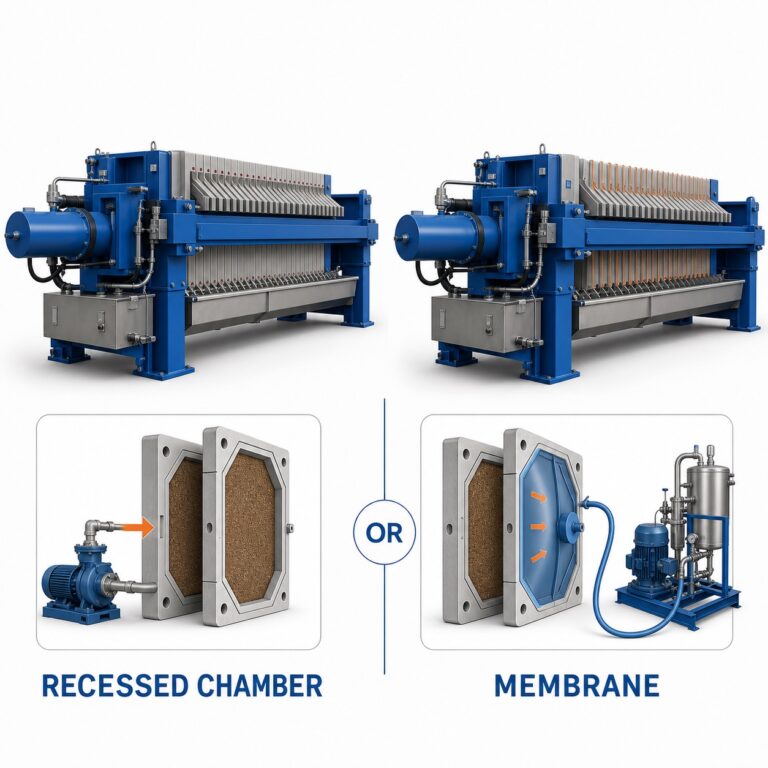
Cake moisture is not a single number to optimize in isolation — it is a threshold that connects directly to whatever happens to the cake downstream. If dewatered cake goes to landfill, the disposal contractor likely has a maximum moisture acceptance limit. If it feeds a thermal dryer, each additional percentage point of moisture in the press cake carries a real energy cost in the drying stage. This relationship is not a precise formula, but the planning consequence is clear enough to act on: specifying the tightest realistic moisture target upfront avoids discovering the cost impact after the system is commissioned and the dryer is running over budget. If a membrane filter press is being considered for high-solids applications, the target cake moisture figure in the RFQ becomes the central criterion that distinguishes it from a recessed plate option; without a declared target, both proposals may look equivalent on paper.
| Acceptance Criterion | Pourquoi c'est important | What to State in the RFQ |
|---|---|---|
| Target cake moisture after dewatering | One-percentage-point change significantly alters thermal drying energy and cost | Maximum acceptable moisture content (% moisture or %DS) |
| Minimum filtrate clarity | Cloudy filtrate can violate discharge permits or prevent water reuse | Required suspended solids limit (mg/L) or visual clarity standard |
| Sludge disposal or reuse route | Different routes have different moisture/compliance limits | Final disposition (landfill, incineration, low‑temperature use, etc.) and its moisture limit |
Filtrate quality is often treated as a secondary concern in stone and ceramic plant RFQs, but it determines whether the return water stream can go directly back to the process circuit or requires further treatment before reuse. If the plant operates a closed-loop water reuse system, even moderate suspended solids carry-over in the filtrate can accumulate in the process water and degrade product surface quality over time. State the filtrate SS limit or reuse quality expectation explicitly so that suppliers can confirm compatibility with their proposed equipment and cloth specification.
Define automation utilities installation and civil scope boundaries
Scope ambiguity at the RFQ stage becomes a contract dispute after award. When suppliers make their own assumptions about power supply, installation extent, civil work, and automation level, each proposal reflects a different scope of supply — and comparing them on price alone compares incomparable things.
| Scope Boundary | Information to Provide | Risk if Not Specified |
|---|---|---|
| Operating hours and peak sludge generation | Daily schedule and peak generation rate (not just average) | Equipment sized on average fails at peak; unclear duty cycle causes disputes |
| Available utilities | Power (voltage, phases), steam (pressure, temperature), water (source, pressure), compressed air (pressure, flow) | Missing or incompatible utilities lead to installation delays and scope disputes |
| Space and layout constraints | Available footprint, ceiling height, access doors, drainage | Equipment may not fit the site, forcing costly civil rework |
| Preferred automation level | Operator skill level and desired control system (local panel, PLC, SCADA integration) | Over-automation wastes features; under-automation forces excessive manual labour |
The automation level question has a second dimension that is easy to overlook: operator availability and skill. A fully automated press with PLC control and remote diagnostics is only an advantage if the plant has operators capable of managing it and maintenance staff who can service the control system. In facilities with high operator turnover or limited electrical maintenance capability, a simpler local-panel control approach may deliver better uptime than a more sophisticated system that nobody can troubleshoot when it faults. The RFQ should name the operator interface preference and the available electrical maintenance skill level so suppliers can propose accordingly, rather than defaulting to their standard automation package.
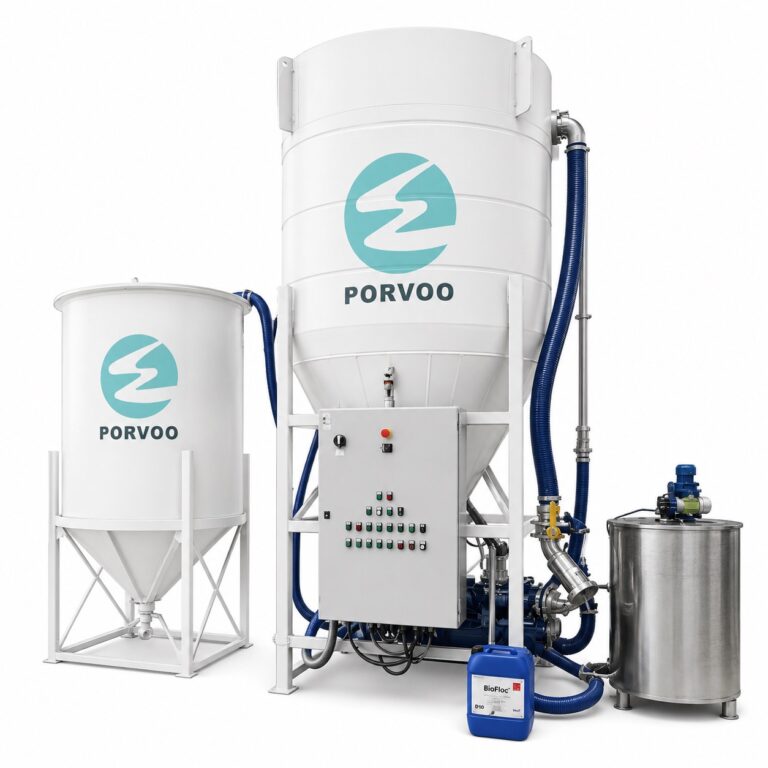
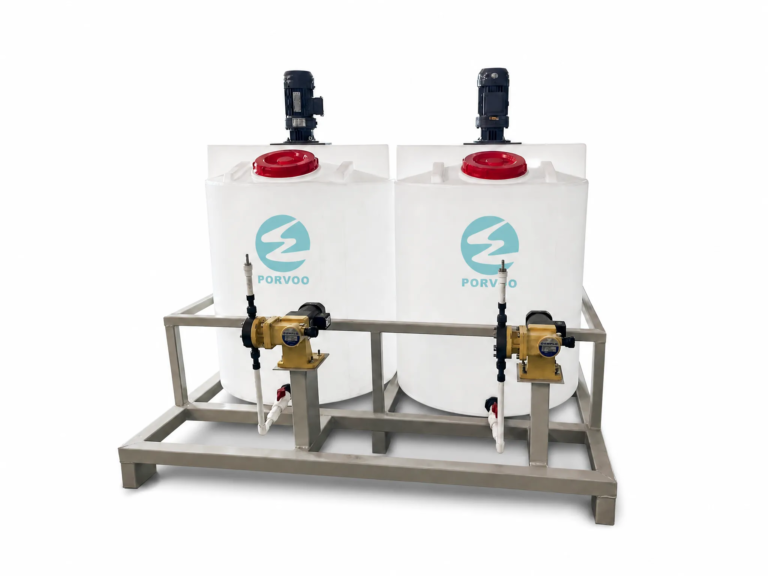
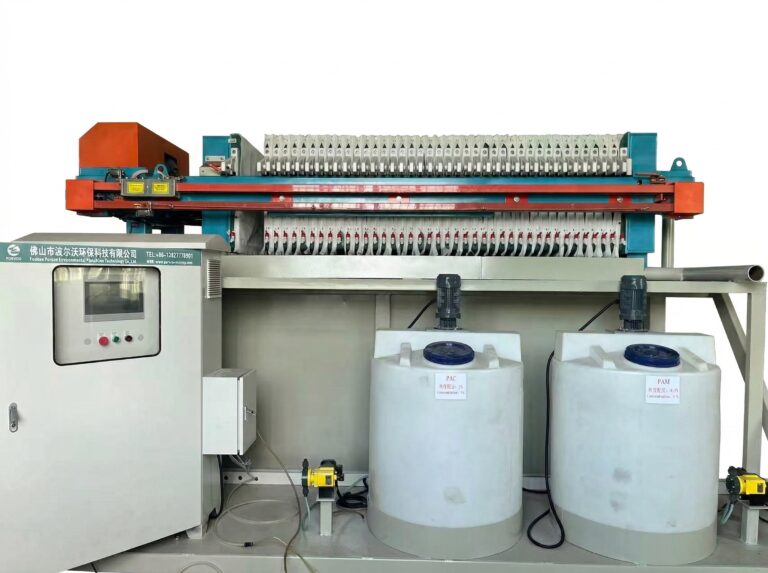
For chemical dosing systems that will be integrated with the press, utility supply to the dosing unit — water pressure and flow, compressed air for pneumatic components, and power phase requirements — should be listed separately from the press utilities. An système intelligent de dosage des produits chimiques integrated with the dewatering line adds conditioning control flexibility, but it also adds utility connections and control integration points that need to be defined in the RFQ scope rather than resolved during installation.
Ask for consumables spare parts and training in the quote
Filter cloth is the most frequently replaced consumable in a filter press installation, and its replacement cycle depends on feed abrasivity, operating pressure, and cleaning method. In ceramic and stone plants, where abrasive fines are common, cloth life can be significantly shorter than in less aggressive applications. If the RFQ does not ask for cloth cost, estimated replacement interval, and availability of replacement stock from the supplier’s local inventory, this cost is invisible at the award stage and discovered later in the operating budget.
Beyond filter cloth, the RFQ should ask for a recommended first-year spare parts list, including hydraulic seals, plate corner gaskets, pressure relief components, and any electrical wear items. Suppliers who include this list in their proposal signal better lifecycle thinking; those who omit it create uncertainty about parts availability and lead time when a breakdown occurs. For plants in locations where supplier service response time is more than a day’s travel, stocking the right spares locally is not optional — it is the only way to avoid extended downtime on a production-critical piece of equipment.
Training scope should be specified in the RFQ rather than negotiated after equipment delivery. Ask whether operator training covers startup, shutdown, fault response, and cloth washing procedure. Ask whether maintenance training includes hydraulic system inspection and press plate inspection intervals. If a polymer dosing system is part of the supply, training on dosing adjustment and jar test interpretation will reduce operating cost over time by keeping conditioning chemistry optimized as sludge characteristics shift with seasonal or product-mix changes.
Require acceptance method and feed assumptions in writing
The most common root cause cited in dewatering performance disputes is inconsistent feed — and the reason it is so commonly cited is that most RFQs never require the supplier to declare, in writing, the feed solids range and consistency their proposal is built on. When performance falls short, the vendor’s first response is almost always that the feed was inconsistent with what was assumed. Without a declared assumption on record, the buyer has no basis to contest it.
| What to Require in Writing | Pourquoi c'est important | How to Verify in the Quote |
|---|---|---|
| On-site trial before final sizing | Reduces performance risk by confirming sludge behaviour under real conditions | Vendor proposes a lab/pilot trial plan and ties performance guarantee to trial results |
| Vendor’s assumed feed solids consistency | Inconsistent feed is the most common root cause of dewatering performance complaints | Vendor must declare assumed feed solids range and consistency in the quote |
| Downstream dryer supplier involvement (if applicable) | Misaligned cake moisture assumptions between dewatering and drying cause system integration failures | Require that the dewatering vendor align cake assumptions with the dryer supplier early |
For new installations where sludge data is limited or variable, requiring a lab or pilot trial before final equipment sizing is a practical risk-reduction step, not an unreasonable demand. It gives both parties feed-specific dewatering data to align on before committing to machine dimensions and performance guarantees. GB/T 26114-2024 provides a technical reference for filter performance verification that may inform how acceptance test conditions and measurement methods are framed in the contract, though its application to a specific site acceptance protocol should be worked out between buyer and supplier based on the actual installation scope.
If a thermal dryer is part of the planned system — whether in the initial scope or as a future phase — the dewatering supplier and the dryer supplier need to align on cake moisture output and cake handling assumptions before equipment is finalized. When these two suppliers work from different assumptions about press cake moisture, the integration problem surfaces at commissioning, not at quotation. The RFQ should flag this dependency explicitly and ask the dewatering supplier to confirm whether they have reviewed the downstream equipment requirements.
Compare suppliers on assumptions not only price
Receiving three filter press proposals at different prices does not mean you have three comparable options. If each proposal is built on a different assumed feed solids concentration, a different polymer dose, or a different target cake moisture, comparing them on price per chamber or price per unit capacity produces a ranking that reflects proposal assumptions more than it reflects likely field performance.
| Facteur de comparaison | Risk if Only Price Compared | What to Request from Each Supplier |
|---|---|---|
| Expected cake moisture | Lower equipment price can hide poor dewatering performance that increases downstream drying cost | Guaranteed cake moisture at design throughput, not just machine capacity |
| Conditioning and feed assumptions | A larger machine with poor conditioning can underperform a smaller well‑conditioned machine, distorting capital cost comparisons | Polymer type, dosage, and assumed feed solids concentration used to size the equipment |
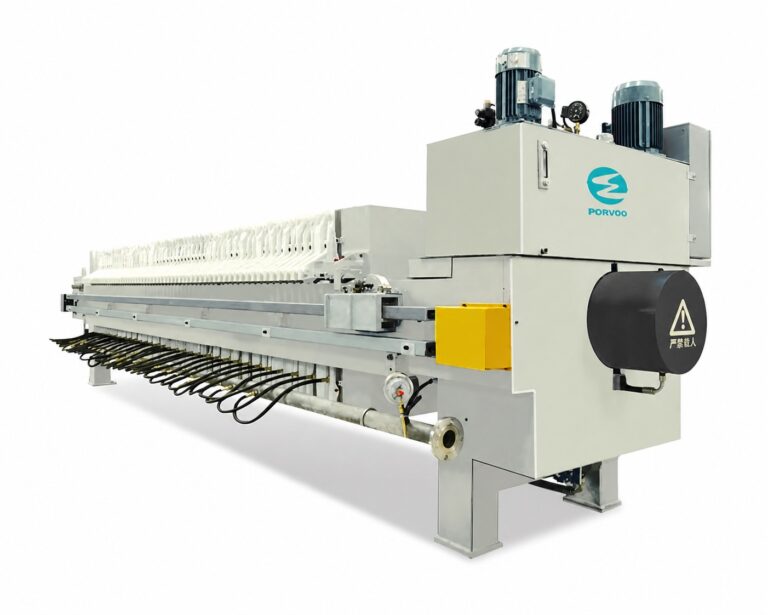
The conditioning assumption is where the most consequential differences between proposals tend to be hidden. A supplier who proposes a smaller filtre-presse à plaques encastrées alongside a well-specified polymer conditioning system built on jar test results may deliver lower total operating cost than a supplier who proposes a larger machine with a vague conditioning statement and a lower unit price. The larger machine looks more conservative on paper, but if its sizing assumes better floc quality than the sludge reliably produces, its effective throughput at acceptable cake moisture will be lower than the capacity specification implies. This is not a universal pattern — it depends on actual sludge chemistry and operating discipline — but it is a reason to require that all suppliers declare their assumed polymer type, dose, and feed solids concentration explicitly, so that proposals can be compared on a common basis.
For plants evaluating whether a membrane press with squeeze capability is justified over a conventional recessed plate design, the comparison should be made on guaranteed cake moisture at design throughput rather than on press capacity or plate count. The filtre-presse à membrane design adds equipment cost and operating complexity, and that cost is only justified if the cake moisture reduction it delivers meaningfully reduces downstream drying load or disposal cost. Without declaring your specific moisture target in the RFQ, neither proposal can be held to a performance commitment that makes this comparison possible.
The decisions that determine whether a dewatering system performs to expectation are mostly made before the RFQ is sent, not after the press is installed. Sludge source type, measured feed solids data, jar test conditioning results, and declared cake moisture targets together define the design basis that any credible supplier proposal needs to be anchored to. Without those inputs on the buyer’s side of the document, the RFQ produces proposals that cannot be compared fairly or held to account later.
Before finalizing the RFQ document, confirm that every supplier is being asked to declare their assumed feed solids range, their conditioning assumptions, and their guaranteed cake moisture at design throughput — not just machine capacity and lead time. Those three items, compared side by side across proposals, will surface performance and lifecycle cost differences that a price comparison alone will never show.
Questions fréquemment posées
Q: What should we do if we don’t yet have measured sludge data to include in the RFQ?
A: Issue the RFQ with a requirement that suppliers base their proposals on a pre-sizing trial or lab test using samples from your actual process, rather than allowing them to substitute generic ceramic or stone sludge profiles. An RFQ built on assumed feed data produces proposals that reflect the supplier’s assumptions, not your plant conditions — and those assumptions become the vendor’s first line of defense when performance falls short after installation.
Q: At what point does the advice in this checklist stop applying — for example, if the dewatering system is only a small part of a larger wastewater treatment project?
A: The checklist applies as long as dewatering performance is a contractual deliverable, regardless of how large the overall project scope is. If the filter press is a sub-item within a larger EPC contract, the same feed data, cake moisture targets, and declared assumptions still need to appear somewhere in the project documentation — the risk of vague feed assumptions causing post-commissioning disputes does not diminish because the press is one line item among many.
Q: Is a membrane filter press always the better choice for ceramic and stone applications, or are there conditions where a recessed plate press is sufficient?
A: A membrane press is only justified when the cake moisture reduction it delivers measurably reduces a real downstream cost — typically thermal drying energy or a disposal contractor’s moisture limit. If your target cake moisture is achievable with a well-conditioned recessed plate press at your specific feed solids concentration, the added capital cost and hydraulic complexity of membrane squeeze adds no operational return. The decision should be driven by your declared moisture target tested against jar trial results, not by a general assumption that higher squeeze pressure always produces better outcomes.
Q: Once the RFQ is issued and proposals are received, what is the most important thing to do before shortlisting suppliers?
A: Extract and compare each supplier’s declared feed assumptions — specifically their assumed feed solids concentration, polymer type and dose, and guaranteed cake moisture at design throughput — and restate them in a single comparison table before evaluating price. Proposals built on different feed assumptions are not comparable on price per chamber or total equipment cost. Normalizing the assumptions first reveals whether a lower-priced proposal is genuinely competitive or is simply built on more optimistic feed conditions that your sludge will not reliably produce.
Q: Does this checklist still apply if the plant currently sends sludge to a third-party disposal contractor and has no immediate plan to treat or reuse the filtrate?
A: Yes, with one adjustment: even if filtrate discharge is not a reuse concern today, the cake moisture target and the disposal contractor’s acceptance limit must still be declared in the RFQ. The contractor’s moisture threshold is a binding performance criterion that determines whether the press output is usable — and if it is not stated in writing before award, there is no contractual basis to reject equipment that produces wetter cake than the contractor will accept. Filtrate quality can be treated as a secondary item in this scenario, but cake moisture remains a primary acceptance criterion regardless of the disposal route.