Most ceramic plant upgrade projects go wrong before the purchase order is raised. A press that underperforms on day one is rarely a press problem—it is a thickening problem, a dosing problem, or a cycle discipline problem that was never diagnosed, and the larger press simply inherited it at greater capital cost. The downstream consequence is equipment that cannot achieve its rated throughput because the upstream process cannot feed it consistently, followed by a second round of expenditure to fix what should have been addressed first. The judgment that separates a productive upgrade from an expensive detour is identifying which subsystem is actually limiting output before any equipment is specified.
Map the current wastewater flow and sludge balance
Before any subsystem can be identified as the constraint, the actual flow and solids balance needs to be documented as it runs today—not as it was designed. Ceramic wastewater circuits accumulate operational drift: bypasses that became permanent, thickener underflow concentrations that shifted seasonally and were never re-baselined, polymer doses that were set during commissioning and never adjusted for changed feed conditions.
The practical value of a flow and sludge balance is not regulatory compliance. It is the diagnostic baseline that tells you where solids inventory is accumulating, where dilution is entering the circuit, and where measured performance diverges from design intent. Without this, any bottleneck identification is educated guessing.
A common mistake is using design drawings or original commissioning data as a proxy for current conditions. In plants that have been running for several years, actual thickener underflow concentrations, press feed solids, and cake discharge moisture often differ meaningfully from what was documented at startup. The balance needs to reflect current operating data—actual flow rates, solids concentrations at key points, and cycle times as they are being run now, not as the operating procedure specifies.
Treat this analysis as a planning criterion that informs the next diagnostic step. It does not replace physical testing of specific equipment, and it does not by itself confirm whether any subsystem is the limiting constraint. What it does is narrow the field and reduce the risk of misidentifying where the intervention should be focused.
Identify whether thickening dosing pressing or controls is limiting
A ceramic plant’s dewatering output is the product of several interdependent steps, and a capacity gap at the press is frequently caused by a constraint upstream of it. The common candidates are insufficient thickening before the press feed, inconsistent or under-dosed polymer, poor cloth condition, and cycle settings that were never optimised after commissioning. Only one of these justifies a larger press. The others are correctable without new capital equipment.
Thickening is the step most often underweighted. If the press is being fed at lower solids concentration than it was sized for, cycle times lengthen, cake moisture rises, and filtrate quality deteriorates. The press looks like it is underperforming, but the constraint is upstream. The same effect occurs with inconsistent polymer dosing: even a well-designed press produces variable results when floc formation is unstable before the feed pump.
Pilot testing of candidate equipment during the design phase—as practised in some larger municipal upgrade projects—has been used as one method to verify performance against actual feed conditions before committing to a full installation. For ceramic plants, a less resource-intensive but practically useful step is to run controlled trials with the existing equipment after adjusting polymer dose and thickener residence time, and record the effect on cake solids and cycle time. If output improves materially, the limiting factor is process management, not press size.
If filtration performance at the press itself is being evaluated as the suspected bottleneck, GB/T 30176-2013 provides a framework for liquid filter performance measurement methods that can support a more structured comparison. This should be treated as a testing reference for that specific diagnostic question, not as a general design standard for the upgrade.
The decision implication is direct: if the bottleneck cannot be isolated through operating data review and targeted adjustments to thickening and dosing, it is worth investing in structured testing before a press specification is written. A press quote that lands before the bottleneck is confirmed often anchors the project to the wrong solution.
Improve operating discipline before buying larger equipment
The least capital-intensive upgrade available to most ceramic plants is operational, and it is frequently skipped in favour of equipment procurement because it is harder to point to on a project schedule. Cloth maintenance intervals, cycle programming, polymer mixing discipline, and thickener rake management are all variables that degrade quietly over time and collectively reduce dewatering performance without triggering an obvious fault.
One observed practice from larger wastewater upgrade projects is the use of an integrated team approach that included operations, maintenance, engineering, electrical, and controls stakeholders from early design through commissioning. The practical effect was that equipment was selected and configured in a way that the people who would operate and maintain it could actually sustain. Applied to a ceramic plant context, the same principle argues for involving the operators who manage the press, the thickener, and the dosing system before specifying an upgrade, rather than after. Operational constraints that look like equipment failures are often rooted in process steps that operators have informally adapted around.
The boundary condition here matters: operational improvements reduce risk and often recover meaningful performance at low cost, but they cannot substitute for additional capacity when a downstream constraint is confirmed and real throughput limits have been reached. The point of addressing operating discipline first is not to avoid necessary capital investment. It is to ensure that when capital is committed, the process that feeds and sustains the new equipment is already performing at its realistic best, so that the new equipment’s contribution can be measured cleanly. A press installed into an undisciplined process will underperform, and the cause will be difficult to isolate during commissioning.
Compare retrofit downtime utilities and layout constraints
Retrofit projects in ceramic plants often encounter a structural reality that is underestimated during planning: the existing building was not designed for the equipment being installed, and the constraints imposed by a tight footprint can quickly exceed the cost savings that motivated the retrofit decision.
The two failure modes that recur here are accepting extended operational downtime without a contingency plan, and discovering mid-project that platforms or support structures need significant modification. Both are manageable if they are planned for. Neither is manageable if they are discovered during installation. Municipal wastewater upgrade experience offers one instructive precedent: a project that needed to maintain continuous permit compliance while replacing dewatering equipment within an existing building engineered a temporary dewatering system to run in parallel during construction. The analogous risk in a ceramic plant is production interruption and sludge accumulation if press capacity is taken offline without a backup arrangement.
Structural capacity deserves a separate assessment before the equipment selection is finalised. A heavier press, or one with a different footprint than the unit being replaced, may require reinforcement of the centrifuge platform, sludge loadout, or centrate return lines—changes that affect project schedule and budget in ways that are not visible in the equipment quote itself.
| Facteur | Éléments à évaluer | Mitigation / Plan |
|---|---|---|
| Operational continuity | Risk of interrupting normal plant operations during construction | Install a temporary dewatering system to maintain continuous permit compliance |
| Existing building footprint | Space limitations for new equipment inside a tight existing building | Assess layout constraints; plan placement to fit within the available area |
| Structural capacity | Load-bearing capacity of existing platforms and supports for heavier or re-arranged equipment | Plan structural improvements for centrifuge platform, sludge loadout, and centrate handling |
The practical planning implication is that the structural and continuity assessment should be completed before supplier engagement, not during it. A supplier quote that does not account for actual site constraints is not a useful basis for project budgeting.
Reuse working equipment where the process allows
The assumption that an upgrade means replacing the entire dewatering system is a common source of unnecessary capital spend. Thickeners, digesters, and even centrifuge frames that are mechanically sound and sized adequately for the new throughput target can often be retained and integrated with new downstream or upstream equipment, provided their condition is verified rather than assumed.
The critical discipline here is the distinction between equipment that is functioning adequately and equipment that is assumed to be functioning. Integration with retained equipment can fail at the controls level, at the piping interface, or because a thickener that appeared operational under the old load is not capable of feeding a new press at higher throughput. Real-world integration of new dewatering equipment with existing thickening and digestion systems has been done successfully—the LOTT municipal project is one documented example—but those cases emphasised process piping, instrumentation, and control integration as planned work items, not afterthoughts. Asset condition determined feasibility, and that condition was verified before integration was committed to in the design.
On the equipment side, some manufacturers offer centrifuge upgrades that retain the existing frame, which avoids the civil and structural work associated with a full replacement. This is a manufacturer-specific option that depends on the specific unit being evaluated—it is not a generic dewatering centrifuge guarantee—but it illustrates the broader principle that partial reuse can reduce project scope when compatibility is confirmed.
| Existing Equipment / System | Reuse Strategy | Ce qu'il faut confirmer |
|---|---|---|
| Thickening and digestion systems | Retain functional systems and integrate with new dewatering equipment | Verify process condition, compatibility, and control integration requirements |
| Centrifuge frame | Evaluate retrofit that keeps the existing frame (e.g., Andritz CP4-1.2 type) | Confirm structural integrity, mounting points, and vibration tolerances |
| Process piping and instrumentation | Design new piping to tie new dewatering equipment into existing systems | Check material compatibility, flow capacity, and isolation points |
The procurement implication is to require condition verification as a defined scope item before the reuse decision is locked in. Assuming compatibility without inspection transfers risk to the commissioning phase, where it is considerably more expensive to resolve.
Request upgrade quotes with explicit before-and-after assumptions
A quote that specifies new equipment without defining the feed conditions, current baseline performance, and target performance is not evaluable. It may describe hardware accurately, but it does not establish whether the hardware will achieve the result the plant actually needs. This is a frequent gap in ceramic plant upgrade procurement: quotes are solicited and compared on equipment specifications and price, while the performance assumptions underlying them remain implicit and inconsistent between suppliers.
The practical protection is to require that each supplier quote against explicitly stated before-and-after conditions: current press feed solids concentration, current cake moisture and cycle time, target cake moisture and throughput after upgrade, and the assumed thickener underflow concentration and polymer dose that the new equipment is designed to operate with. When these assumptions are made explicit, quotes become comparable in a way that equipment-only specifications do not support.
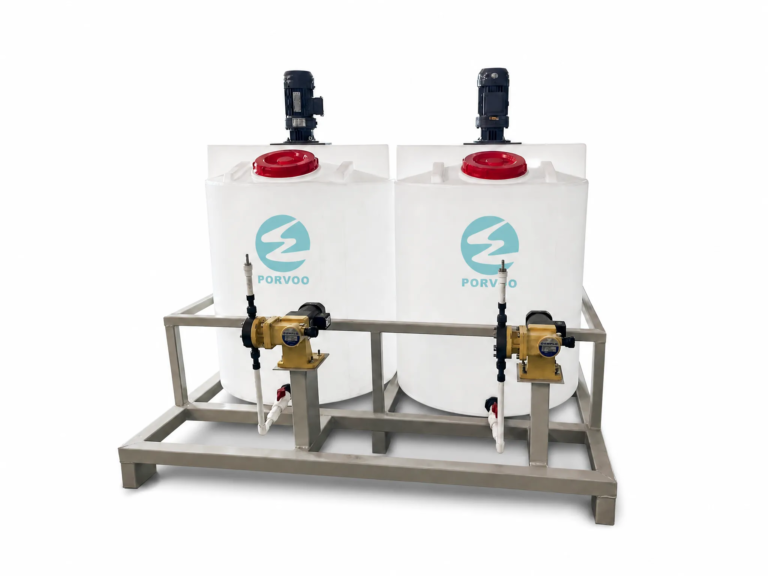
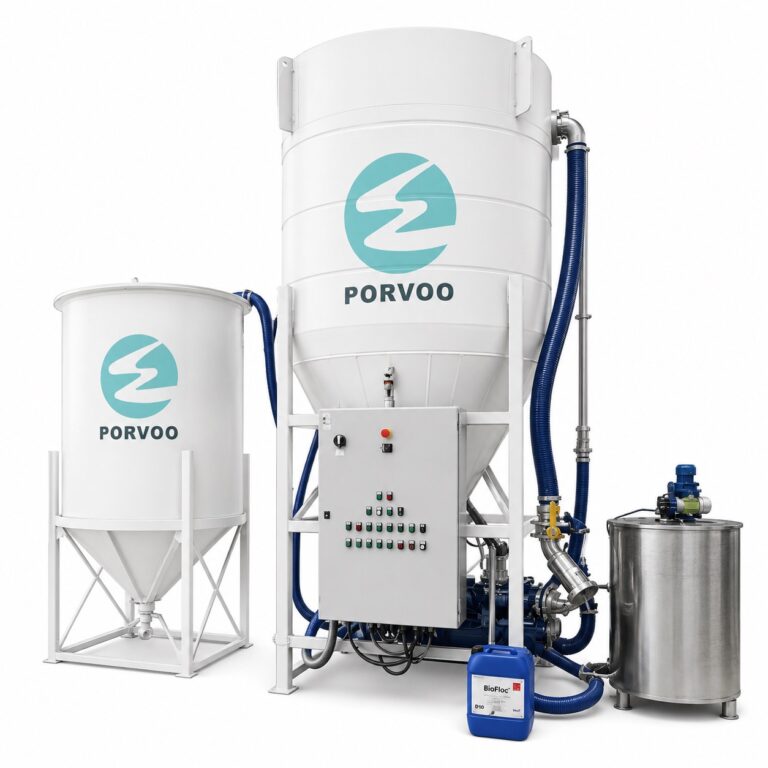
This is a procurement discipline, not a regulatory requirement. It also functions as a scope verification check: if a supplier’s performance claim depends on upstream feed conditions that the current thickener cannot deliver, that gap becomes visible before the purchase order is placed rather than during commissioning. For projects that are also considering the Système intelligent de dosage de produits chimiques PAM/PAC as part of the upstream conditioning upgrade, the assumed dosing performance should be one of the stated assumptions in the press quote, so that the interdependency is explicit and can be evaluated as a system rather than as separate line items.
A secondary check is to ask each supplier to identify the upstream conditions that would prevent the quoted equipment from achieving the stated performance. Suppliers who cannot answer this question are not in a position to support commissioning when those conditions are encountered.
Buy capacity only after the bottleneck is proven
Adding press capacity before the constraint is confirmed produces a specific and predictable failure: the new equipment cannot be fully loaded because the system upstream of it—thickening, dosing, feed conveyance—was sized for the old throughput. The larger press runs at partial utilisation, the expected cycle time improvement does not materialise, and the plant has committed capital without resolving the performance gap.
The municipal context offers a useful reference point. A dewatering infrastructure replacement at Kailua Regional WWTP explicitly replaced aging equipment without increasing the plant’s overall treatment capacity. The project rationale was reliability and serviceability, not expansion—and the scope was disciplined accordingly. This is not an argument against capacity increases when they are genuinely needed. It is evidence that disciplined replacement without expansion is a coherent project objective, and that conflating infrastructure renewal with capacity growth produces a scope that is harder to justify and harder to commission cleanly.
The practical test for a capacity increase is whether the diagnostic steps from the earlier stages of this process have confirmed a true throughput ceiling at the press itself, with upstream conditions at their realistic best. If cloth condition is good, polymer dosing is optimised, the thickener is performing at its design underflow concentration, and cycle discipline is tight—and throughput is still insufficient—then a capacity argument for a larger press is defensible. If any of those conditions have not been verified, the capacity case is premature.
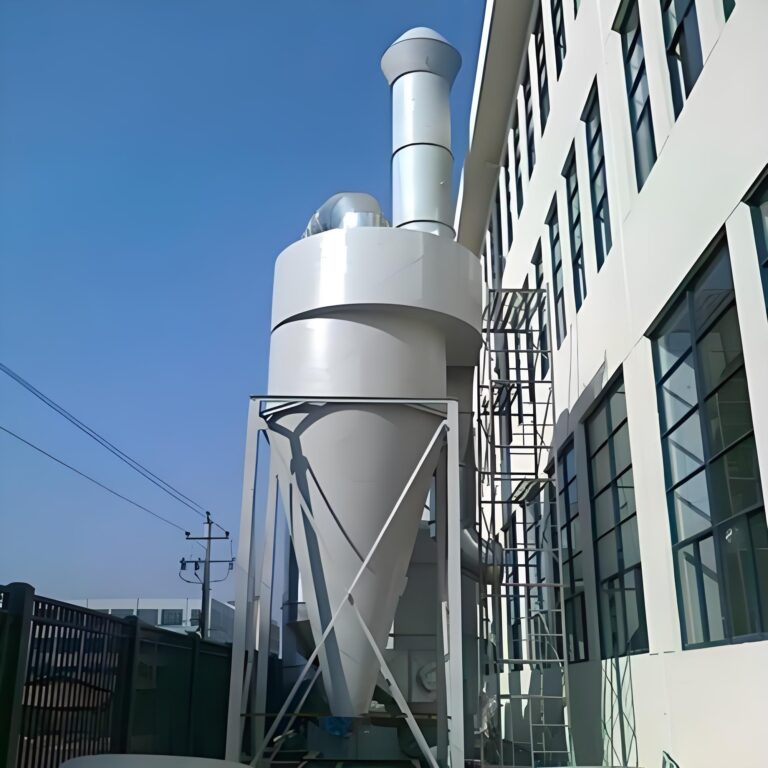
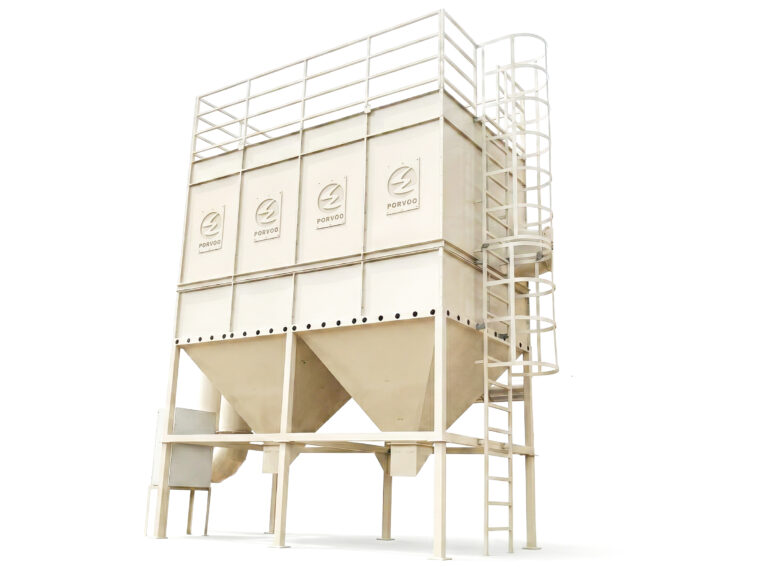
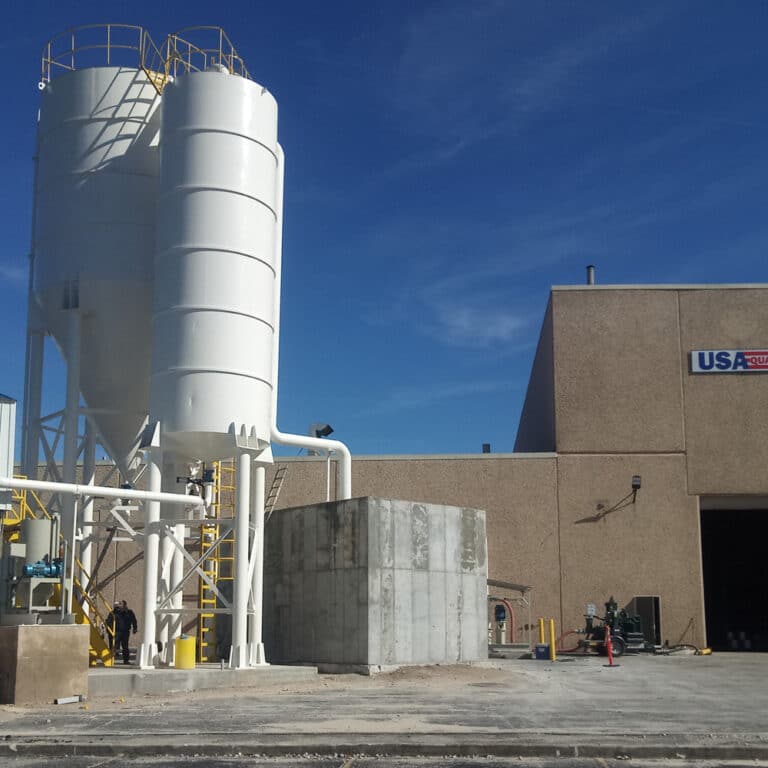
For plants that have completed the upstream diagnostic and confirmed that sedimentation or solids separation before the press is genuinely limiting, the Tour de sédimentation verticale pour le recyclage des eaux usées is one option worth evaluating as part of the upstream conditioning scope. The decision to include it should follow the bottleneck confirmation, not precede it.
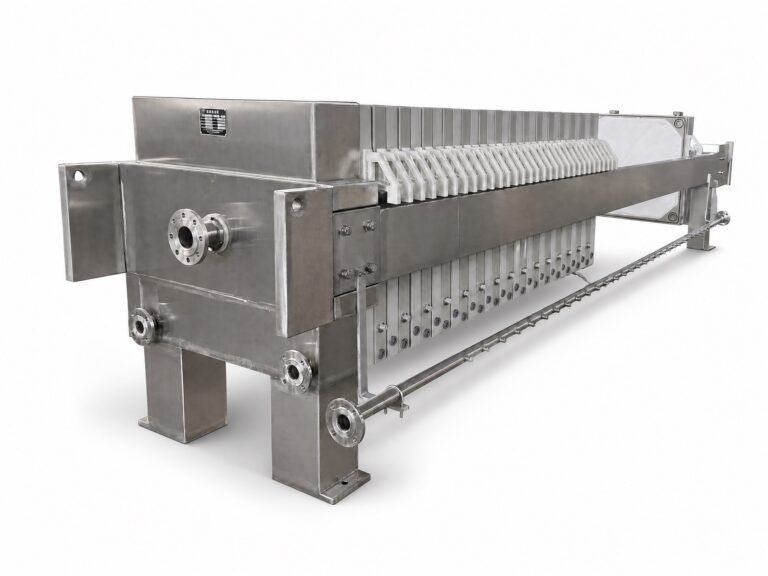
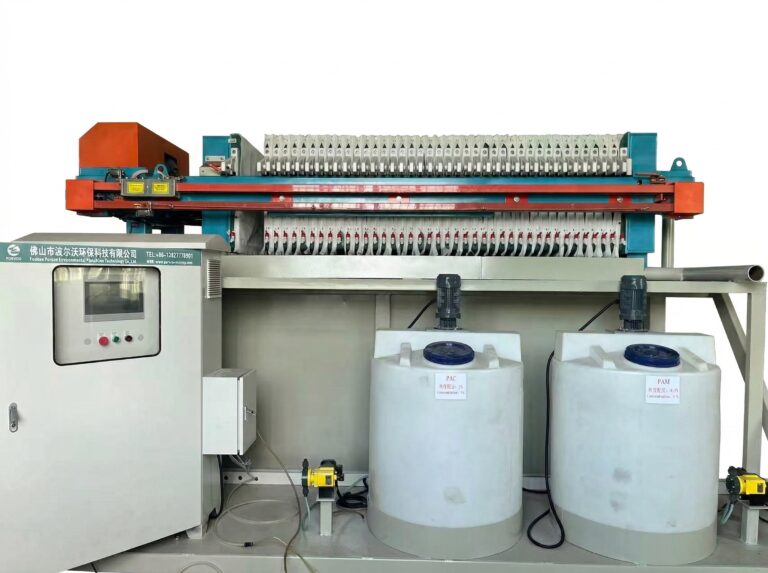
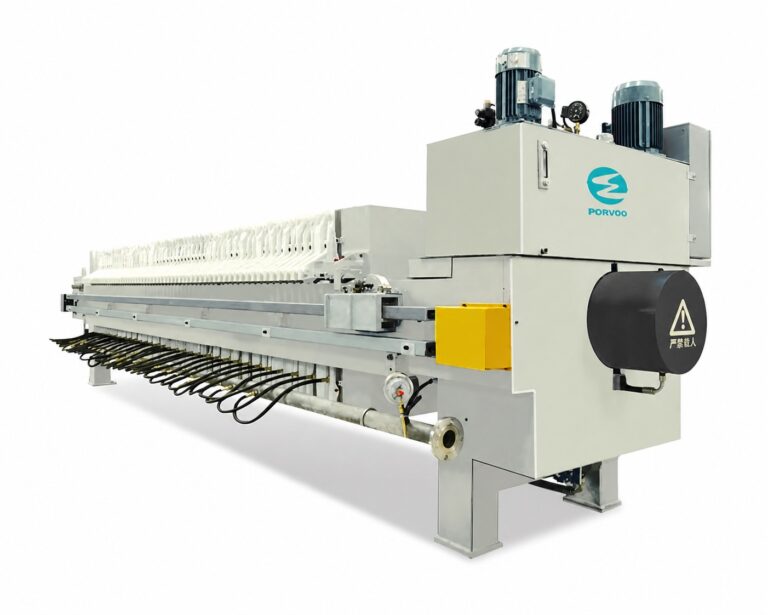
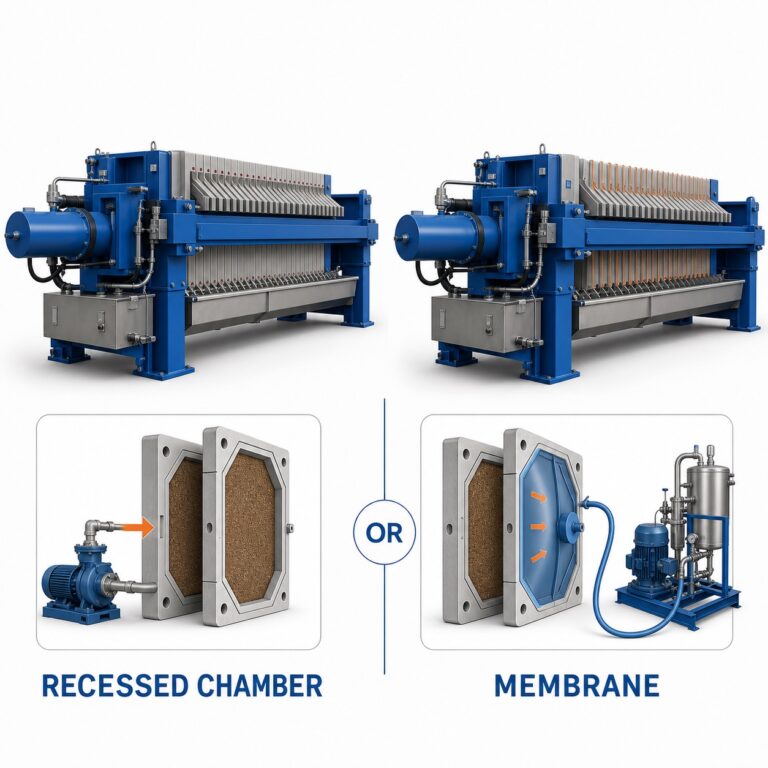
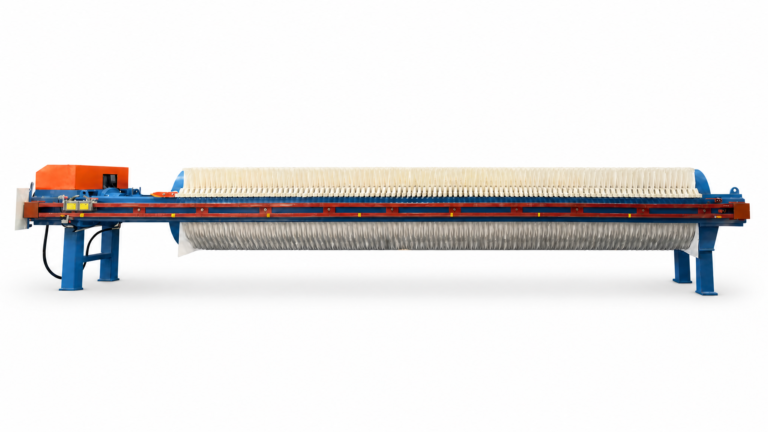
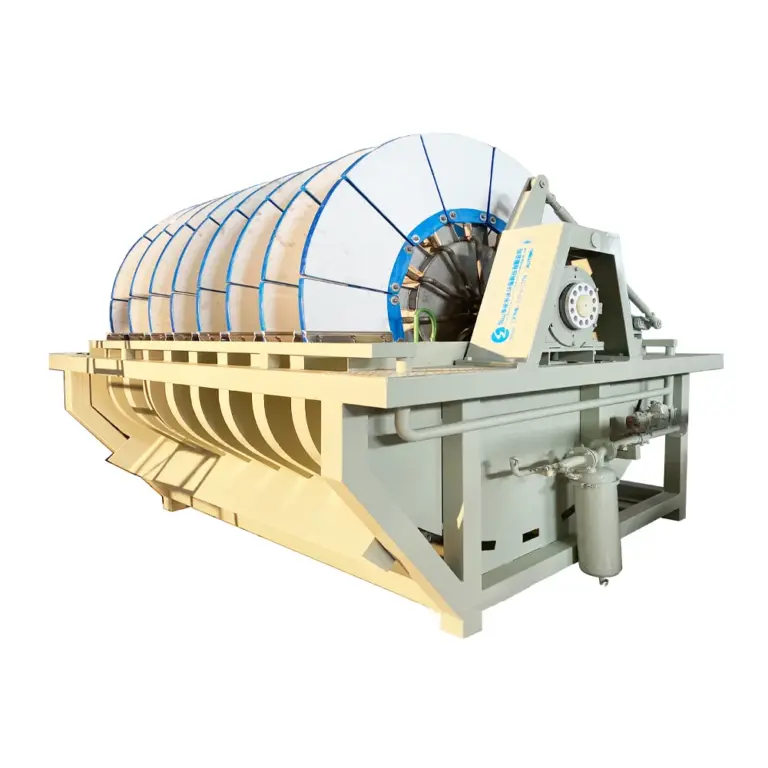
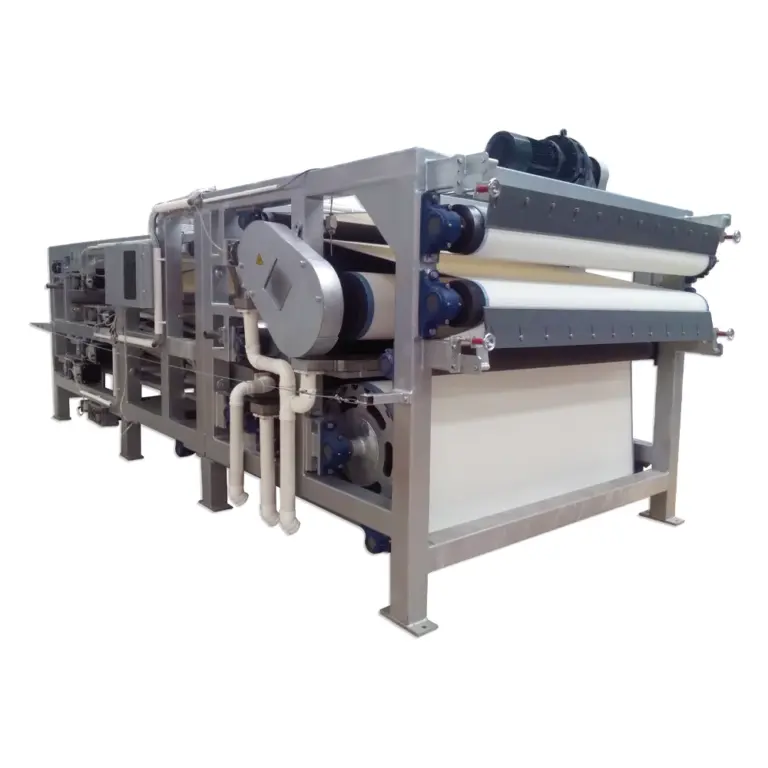
Le Filtre-presse entièrement automatique is similarly worth evaluating once the feed conditions, cycle requirements, and layout constraints have been defined—because a press specified against verified feed data is a fundamentally different procurement from one specified against assumptions.
Ceramic dewatering upgrades that deliver on their expected throughput and moisture targets almost always share one characteristic: the bottleneck was confirmed before equipment was specified, not during commissioning. The projects that struggle are those where the press was selected while thickening, dosing, cloth management, or cycle discipline remained unresolved—conditions that the new equipment inherits along with the purchase order.
Before requesting formal quotes, the most productive pre-procurement step is to define the before-and-after assumptions explicitly: current feed solids, current cake moisture, target performance, and the upstream conditions that each quoted system depends on to achieve it. That framing forces the diagnostic work upstream, keeps supplier comparisons honest, and reduces the risk that a capacity increase is purchased to solve a problem that operating discipline or a targeted upstream intervention would have resolved at a fraction of the cost.
Questions fréquemment posées
Q: Our management wants to skip the diagnostic work and order a larger press immediately. How can we still avoid overbuying?
A: Shift the burden of proof to the supplier by insisting on a performance-based contract. Require explicit throughput and cake moisture guarantees tied to your current upstream conditions, and agree on remedies if commissioning fails to meet those targets. This approach forces the supplier to evaluate—and often expose—the real bottleneck without delaying procurement.
Q: Once we receive upgrade quotes based on our before-and-after assumptions, what criteria should we use to compare them beyond price?
A: Give preference to suppliers who transparently identify the upstream conditions that would prevent their equipment from achieving quoted performance. A vendor who can clearly list potential failure scenarios understands the process interdependencies and is better positioned to support commissioning when real conditions deviate from assumptions. Comparability comes from risk disclosure, not just spec sheets.
Q: How do we determine that operational improvements are fully exhausted and new equipment is genuinely unavoidable?
A: The signal is when further deliberate adjustments—optimized polymer dosing, extended thickener residence time, restored cloth condition, and disciplined cycle programming—produce negligible additional throughput gain, yet the required output is still not met. At that point the constraint is physical rather than operational, and a capacity increase is defensible.
Q: When does a full system replacement make more sense than retrofitting existing dewatering equipment?
A: Full replacement typically becomes the better path when the existing building requires structural upgrades that approach the cost of a new installation, or when multiple core components—thickener, feed system, controls, and piping—are near end-of-life. Retrofit is usually the stronger option when the mechanical frame and key supporting infrastructure are in verifiably good condition and can be integrated with targeted new equipment.
Q: Is the diagnostic approach worthwhile for a plant with limited engineering staff or a tight budget?
A: Yes, because even a lightweight version—running controlled trials with the existing press after adjusting polymer dose and wash intervals—can reveal whether the bottleneck is operational. That requires operator time, not capital, and the cost of a mis-specified press far exceeds the effort. If the trial recovers enough throughput, you avoid the purchase entirely.