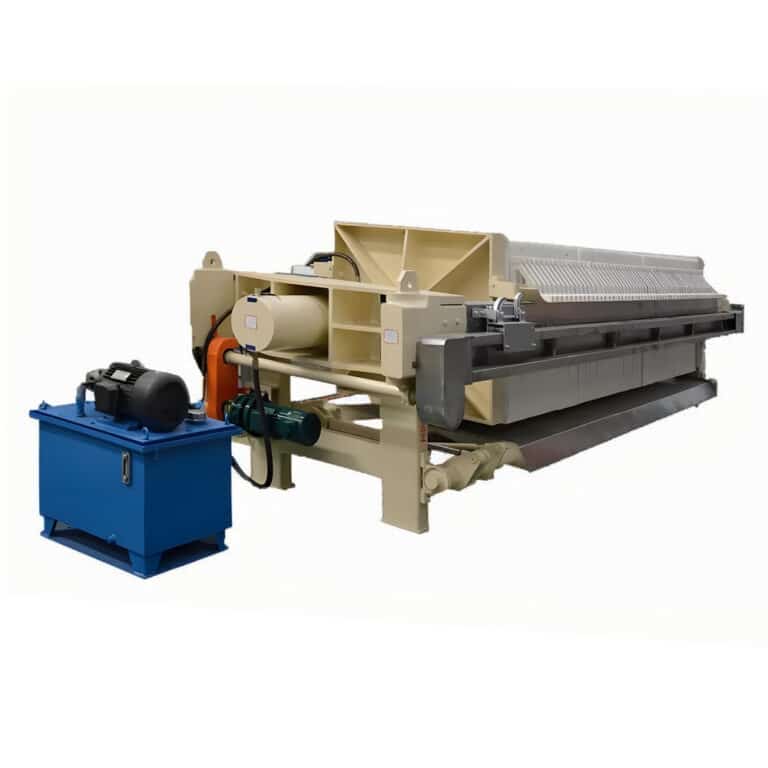
La séparation solide-liquide dans l'industrie est un goulot d'étranglement persistant. Les professionnels sont confrontés à un choix critique : accepter les limites de la déshydratation conventionnelle ou investir dans une technologie de pointe. Le filtre-presse à membrane représente cette frontière à haute efficacité, promettant une siccité et un débit supérieurs. Cependant, son coût d'investissement plus élevé exige une justification rigoureuse. Des idées fausses persistent selon lesquelles il s'agirait simplement d'une version plus coûteuse d'une presse à chambre encastrée, sans tenir compte de la transformation de l'économie opérationnelle et des avantages spécifiques de l'application.
La décision est encore plus urgente en 2025. Les réglementations environnementales de plus en plus strictes augmentent les coûts d'élimination, tandis que les objectifs d'efficacité de la production exigent des temps de cycle plus courts. Le choix du bon système ne se limite plus aux caractéristiques de l'équipement ; il s'agit d'un calcul stratégique du coût total de possession, du risque opérationnel et de l'adaptation à l'avenir en vue de la conformité à l'économie circulaire. Ce guide fournit le cadre technique nécessaire à cette décision.
Fonctionnement des filtres-presses à membrane : Principes de base
Le mécanisme de déshydratation en deux étapes
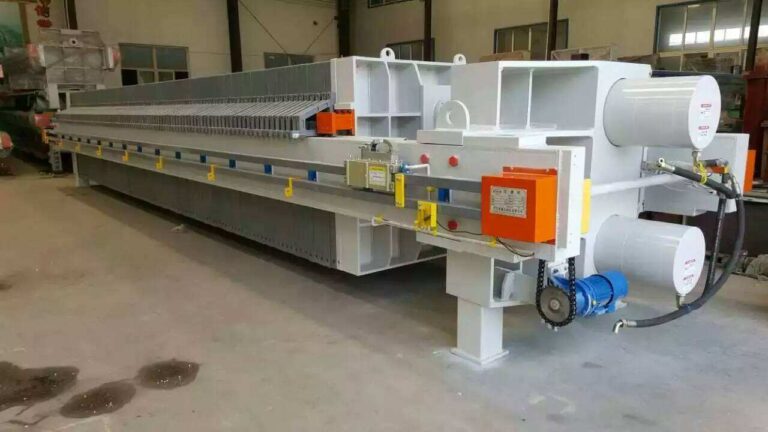
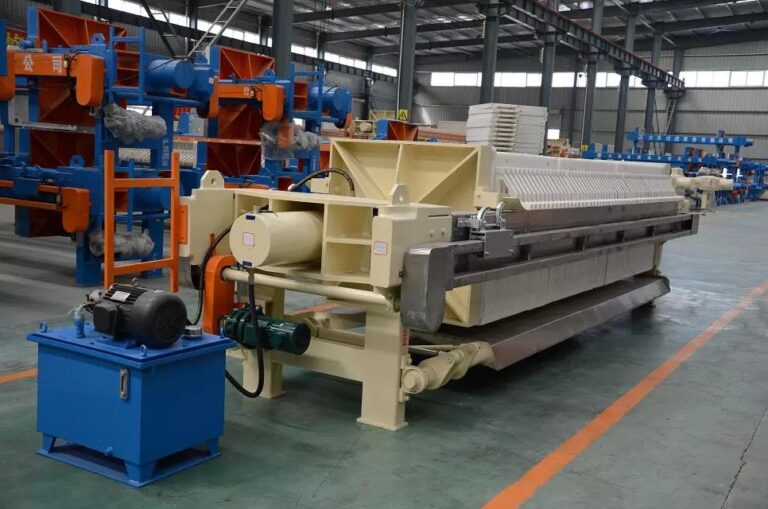
Un filtre-presse à membrane fonctionne selon un principe fondamental d'application séquentielle de la pression. La première étape est une filtration standard : la boue est pompée dans des chambres formées entre des plaques, généralement à des pressions allant jusqu'à 7 bars. Le filtrat liquide passe à travers des toiles filtrantes, laissant un gâteau solide préformé. Toutefois, ce procédé seul laisse une humidité interstitielle importante. La deuxième étape déterminante est la compression mécanique. Un fluide à haute pression, obligatoirement de l'eau pour des raisons de sécurité, est injecté derrière des membranes flexibles sur les plaques à une pression de 15 à 17 bars. Ces membranes se gonflent, appliquant une pression isostatique uniforme sur toute la surface du gâteau, ce qui permet d'extraire physiquement l'eau liée. Cette phase de compression est le principal facteur de différenciation, car elle permet de réduire considérablement les temps de cycle, ce qui justifie le prix élevé de cette technologie.
Du principe à l'impact sur les performances
L'implication stratégique de ce mécanisme est claire. En comprimant mécaniquement le gâteau, le procédé permet d'obtenir deux gains simultanés : une teneur en matières sèches nettement plus élevée et un cycle nettement plus court. Pour les matériaux compressibles, cela peut se traduire par une accélération du cycle de 50 à 75%. Dans notre analyse des données opérationnelles, la déshydratation plus rapide se traduit directement par un débit plus élevé du système et une meilleure rotation des actifs, ce qui permet souvent à une presse à membrane plus petite d'être plus performante qu'une unité conventionnelle plus grande. Cette intensification du processus est la proposition de valeur fondamentale.
Un contrôle opérationnel pour des résultats optimaux
La réalisation de ces gains théoriques nécessite un contrôle précis. Une erreur opérationnelle courante consiste à appliquer la pression maximale de la pompe dès le départ. Cela conduit souvent à un décollement prématuré de la toile, où les particules fines bouchent les pores de la toile, paralysant ainsi le taux de filtration. Les experts de l'industrie recommandent d'automatiser l'augmentation de la pression d'alimentation. Commencer la filtration à une pression plus basse (par exemple, 1,7 bar) permet à une couche de gâteau perméable de se former, ce qui permet ensuite une déshydratation efficace à des pressions plus élevées. Négliger ce contrôle nuit à l'efficacité de l'ensemble du système et à la durée de vie du tissu.
Filtres-presses à membrane ou à chambre encastrée
Divergence fondamentale de conception
La comparaison repose sur un seul élément : la membrane gonflable. Une presse à chambre encastrée dépend uniquement de la pression de la pompe pour la déshydratation, ce qui nécessite souvent une phase de “consolidation” prolongée au cours de laquelle la pression est maintenue pour obtenir la siccité finale du gâteau. La presse à membrane remplace cette attente passive par une compression mécanique active. Cette divergence de conception crée un écart de performance qui a un impact direct sur l'économie d'exploitation et la flexibilité de la conception du procédé.
Quantifier le différentiel de performance
Les avantages sont mesurables. Pour les matériaux compressibles et poreux tels que les hydroxydes métalliques ou les boues biologiques, la teneur en matières sèches s'améliore généralement de 2 à 5 points de pourcentage. Les temps de cycle sont souvent réduits de moitié. Il en résulte une matrice de décision claire mais nuancée. Le système membranaire n'est pas universellement supérieur ; il se justifie dans des conditions économiques ou opérationnelles spécifiques. Il devient essentiel lorsque la valeur du produit ou le coût d'élimination est élevé, lorsque le débit de l'usine est un goulot d'étranglement critique, ou lorsqu'un gâteau plus sec et plus homogène est nécessaire pour l'évacuation automatisée ou le traitement en aval.
Une analyse stratégique des coûts et des bénéfices
Le choix est fondamentalement une analyse coût-bénéfice. Les dépenses d'investissement plus élevées d'une presse à membrane doivent être mises en balance avec les économies d'exploitation. Nous avons comparé les modèles de coût total de possession pour de multiples applications et constaté que le point de passage se produit souvent lorsque les coûts d'élimination dépassent un certain seuil ou lorsque l'augmentation du débit peut retarder une expansion de l'investissement. Le tableau suivant présente les principales caractéristiques comparatives permettant d'encadrer cette analyse.
Filtres-presses à membrane ou à chambre encastrée
| Fonctionnalité | Filtre-presse à membrane | Presse à chambre encastrée |
|---|---|---|
| Mécanisme de base | Pompe + membrane de compression | Pression de la pompe uniquement |
| Sécheresse typique du gâteau | 2-5% plus de solides | Teneur en matières solides plus faible |
| Durée du cycle | Réduction 50-75% | Phase de consolidation plus longue |
| Coût du capital | Investissement initial plus élevé | Coût initial moins élevé |
| Meilleur pour | Coût d'élimination élevé, débit critique | Sécheresse moins critique, débit |
Source : JB/T 4333.2-2017 Conditions techniques du filtre-presse à chambre. Cette norme établit la base technique des filtres-presses à chambre, catégorie qui englobe à la fois les types à membrane et à chambre encastrée, en définissant leurs paramètres fondamentaux et leurs attentes en matière de performances.
Principales normes techniques et configurations des plaques
Le “Mixed Pack”, standard de l'industrie”
La configuration des plaques est un levier essentiel pour équilibrer les performances et les coûts. La conception la plus courante et la plus rentable est le “pack mixte”, où les plaques à membrane alternent avec des plaques encastrées standard. Cette approche hybride offre la plupart des avantages de compression d'un ensemble complet de membranes à un coût d'investissement considérablement réduit. Elle optimise le rapport coût-performance, rendant la technologie accessible à une plus large gamme d'applications où la compression complète de chaque chambre n'est pas strictement nécessaire.
Construction de membranes : Fixe ou remplaçable
En ce qui concerne les plaques à membrane elles-mêmes, les normes 2025 mettent en évidence deux constructions aux philosophies opérationnelles divergentes. Les membranes fixes en polypropylène, soudées au noyau de la plaque, offrent une surface sans soudure idéale pour les applications sanitaires dans l'industrie alimentaire ou pharmaceutique. Cependant, les plaques avec membranes en caoutchouc remplaçables (EPDM, NBR, Viton) offrent une flexibilité opérationnelle supérieure. Elles permettent un remplacement rapide et peu coûteux des composants en cas de défaillance d'une membrane, ce qui minimise les temps d'arrêt et les coûts de stockage. Cette conception répond directement à un facteur critique de réduction du coût total de possession et du risque opérationnel.
Normes de conception et de sécurité
La conception des plaques n'est pas arbitraire ; elle est régie par des normes techniques qui garantissent la performance et la sécurité. Les spécifications relatives aux matériaux, aux pressions nominales et aux dimensions sont détaillées dans des normes telles que GB/T 32760-2016 Filtre-presse à plaques et à cadres. En outre, le mandat de l'industrie d'utiliser de l'eau, et non de l'air, comme fluide de gonflage est une norme de sécurité essentielle. L'utilisation de l'air introduit une source d'énergie compressible qui peut entraîner une rupture explosive de la plaque en cas de rupture d'une membrane, un risque éliminé par l'eau incompressible. Le tableau suivant présente les principales options de configuration et leur impact.
Principales normes techniques et configurations des plaques
| Composant | Standard / Option 1 | Standard / Option 2 |
|---|---|---|
| Paquet d'assiettes | Paquet mixte (plaques alternées) | Pack membrane complet |
| Construction des membranes | Membranes en caoutchouc remplaçables (EPDM, NBR) | Polypropylène fixe (soudé) |
| Avantage principal | Réduction des coûts, flexibilité opérationnelle | Sanitaire, sans joint de membrane |
| Conception de l'orifice d'alimentation | Alimentation en coin (sans joint) | Alimentation centrale (avec joint) |
| Impact opérationnel clé | Minimise les temps d'arrêt et les coûts d'inventaire | Convient aux applications de haute pureté |
Source : GB/T 32760-2016 Filtre-presse à plaques et à cadres. Cette norme nationale spécifie les exigences techniques pour les filtres-presses à plaques et à cadres, régissant directement la conception des plaques, les configurations et les spécifications des matériaux essentiels à la performance et à la sécurité des plaques à membranes.
Mesures de performance : Sécheresse, temps de cycle et débit
Indicateurs clés de performance interdépendants
La sélection et l'optimisation d'une presse à membrane nécessitent d'équilibrer trois paramètres interdépendants : la siccité du gâteau final, la durée totale du cycle et le débit du système. Il ne s'agit pas de variables indépendantes. Si l'on se concentre sur une siccité extrême, on risque d'allonger la durée du cycle, ce qui réduira le débit. Inversement, le raccourcissement du cycle peut compromettre la siccité. La valeur de la membrane est d'influencer positivement cette courbe de compromis, en permettant une siccité plus élevée dans un temps plus court par rapport à une presse à chambre encastrée. L'amélioration spécifique dépend fortement du matériau, lié à la compressibilité de la boue et à la structure des particules.
Le rôle essentiel des contrôles automatisés
L'obtention de mesures optimales repose sur des systèmes de contrôle intégrés. Comme nous l'avons vu, l'augmentation automatisée de la pression d'alimentation est essentielle à la formation d'un gâteau perméable. Le contrôle de la phase de pressage de la membrane est tout aussi important. La pression, la durée et même le profil de pressage peuvent être programmés en fonction du matériau. Ces contrôles transforment la presse d'un simple dispositif mécanique en une unité de traitement optimisée et reproductible. La validation des performances par rapport à ces paramètres doit suivre des méthodes d'essai normalisées, telles que celles décrites dans les documents suivants JB/T 4333.1-2017 Méthodes d'essai du filtre-presse à chambre, qui fournissent des procédures de mesure de l'humidité et de la capacité des gâteaux.
Valider les performances à l'aide de mesures normalisées
Les professionnels doivent spécifier et vérifier les performances en utilisant des paramètres clairs et normalisés. Le tableau ci-dessous résume les plages de fonctionnement typiques et les contrôles critiques qui les régissent. Il montre que les performances supérieures ne dépendent pas seulement de la capacité de l'équipement, mais aussi de l'application précise d'une pression contrôlée tout au long du cycle.
Mesures de performance : Sécheresse, temps de cycle et débit
| Métrique | Gamme / Valeur typique | Contrôle de l'optimisation des clés |
|---|---|---|
| Pression de filtration | Jusqu'à 7 bar (100 psi) | Augmentation automatisée de la pression |
| Pression d'écrasement de la membrane | 15-17 bar (217-246 psi) | Système de gonflage à base d'eau |
| Réduction du temps de cycle | 50-75% plus rapide | Phase de compression de la membrane |
| Amélioration de la siccité des gâteaux | 2-5 points de pourcentage | Dépend de la compressibilité du matériau |
| Mandat de sécurité critique | Liquide de gonflage à l'eau uniquement | Prévient la rupture explosive de la plaque |
Source : JB/T 4333.1-2017 Méthodes d'essai du filtre-presse à chambre. Cette norme fournit des méthodes d'essai unifiées pour vérifier les indicateurs de performance clés tels que la teneur en humidité du gâteau et la pression de fonctionnement, qui sont essentiels pour valider les paramètres de ce tableau.
Coût total de possession : Économies d'investissement et d'exploitation
Aller au-delà du prix d'achat
L'analyse économique d'un filtre-presse à membrane repose sur le coût total de possession, et non sur le coût d'investissement initial. Si le coût d'investissement peut être supérieur de 20-40% à celui d'une presse à chambre encastrée, la justification réside dans les économies réalisées sur les dépenses d'exploitation. La réduction OPEX la plus importante concerne les coûts d'élimination. Un gâteau plus sec a une masse et un volume plus faibles, ce qui réduit directement les frais de transport et de mise en décharge. Dans les applications où les déchets sont coûteux ou réglementés, ces économies peuvent permettre de rembourser la prime d'investissement dans un délai étonnamment court.
Le débit et la maintenance comme leviers économiques
Parmi les autres leviers économiques, citons l'augmentation du débit, qui améliore la rotation des actifs et peut différer les coûts d'expansion, ainsi que la planification stratégique de la maintenance. Les modèles dotés de membranes remplaçables transforment un éventuel remplacement majeur de plaque en un échange mineur de composants, ce qui réduit à la fois le coût des pièces et le temps d'immobilisation. Cette approche réduit le risque opérationnel à long terme. L'industrie évolue vers des vendeurs qui agissent en tant que fournisseurs de solutions complètes, offrant un soutien tout au long du cycle de vie. Les acheteurs doivent évaluer leurs partenaires en fonction de leur capacité à assurer cette réussite opérationnelle intégrée et à long terme, et non pas seulement en fonction de l'équipement.
Cadre pour l'analyse du TCO
Une analyse rigoureuse du coût total de possession doit modéliser tous ces facteurs sur la durée de vie prévue de l'équipement. Le tableau suivant présente les principaux facteurs de coût influant sur le choix d'une presse à membrane et fournit un cadre pour l'élaboration d'un modèle financier.
Coût total de possession : Économies d'investissement et d'exploitation
| Facteur de coût | Presse à membrane Impact | Considération du TCO |
|---|---|---|
| Dépenses en capital (CAPEX) | 20-40% coût initial plus élevé | Prime sur la chambre encastrée |
| Coût d'élimination (OPEX) | Réduction significative | Le gâteau plus sec réduit le poids/volume |
| Capacité de débit | Augmentation de la rotation des actifs | Cycles plus courts = capacité plus élevée |
| Stratégie de maintenance | Plaques de membrane remplaçables | Diminution du risque/coût à long terme |
| Évaluation des fournisseurs | Partenariat pour une solution totale | Soutien tout au long du cycle de vie par rapport à l'équipement seul |
Source : Documentation technique et spécifications industrielles.
Optimisation pour des applications et des flux de déchets spécifiques
Permettre un lavage efficace des gâteaux
Les presses à membrane excellent dans les opérations spécialisées telles que le lavage des gâteaux, utilisé pour purifier les solides ou récupérer des solutés précieux dans des industries telles que les produits chimiques ou pharmaceutiques. La compression uniforme crée une structure poreuse cohérente dans le gâteau, permettant au liquide de lavage de passer uniformément dans un lavage par déplacement. Après le lavage, la membrane peut recomprimer le gâteau pour éliminer la liqueur entraînée. Les performances dépendent essentiellement de la conception du drainage de la plaque. Les plaques “extra-portées” avec des canaux internes optimisés assurent une distribution uniforme du liquide de lavage et empêchent les courts-circuits, ce qui est essentiel pour atteindre la pureté cible et maximiser la récupération du soluté.
Soutenir les objectifs de l'économie circulaire
Cette technologie est un élément clé de la conformité à l'économie circulaire. En obtenant des gâteaux plus secs, elle minimise le volume final de déchets solides à éliminer. Plus important encore, elle permet de récupérer un pourcentage plus élevé de liquide de traitement clair (filtrat), qui peut souvent être recyclé dans le processus. Par exemple, dans le domaine de la brasserie, cela signifie récupérer plus de moût ; dans le domaine de la finition des métaux, cela signifie récupérer plus d'eau de traitement ou de produits chimiques. Cette démarche s'aligne sur les réglementations de plus en plus strictes en matière d'efficacité des ressources et de réduction des déchets, transformant un coût de mise en conformité environnementale en une source d'efficacité opérationnelle et d'économies de matériaux. Pour un aperçu détaillé des technologies avancées de systèmes de filtre-presse à membrane conçus pour des applications aussi exigeantes, des solutions d'ingénierie spécifiques sont nécessaires.
Compatibilité des matériaux en fonction de l'application
Tous les flux de déchets ne sont pas égaux. La compatibilité chimique des matériaux des membranes (EPDM, NBR, Viton, etc.) avec les boues de traitement est primordiale. Un détail facilement négligé est l'effet de la température et du pH sur la durée de vie et les performances de la membrane. Une membrane adaptée à une boue minière neutre, à température ambiante, peut céder rapidement dans un processus chimique chaud et acide. Le choix de l'élastomère approprié nécessite une analyse approfondie du profil chimique et thermique de l'application.
Considérations critiques en matière de maintenance et d'exploitation
La membrane en tant qu'élément d'usure
Les performances accrues d'un système membranaire introduisent des complexités d'entretien spécifiques. La pompe à haute pression, les vannes associées et les membranes elles-mêmes sont des points d'attention supplémentaires. Les membranes sont des pièces d'usure dont le cycle de vie est limité par la pression de fonctionnement, l'exposition aux produits chimiques et la fréquence des cycles. Une stratégie d'entretien réactive “jusqu'à la défaillance” des membranes entraîne des temps d'arrêt imprévus. Un programme proactif d'inspection et de remplacement est nécessaire pour assurer un fonctionnement prévisible.
L'avantage de la conception modulaire
Cette réalité souligne l'avantage opérationnel des plaques à membranes remplaçables. En cas de défaillance, le personnel de maintenance peut remplacer la membrane en caoutchouc sur le terrain, souvent en moins d'une heure, et remettre la plaque en service. Avec une plaque en polypropylène soudée, la plaque entière doit être enlevée, expédiée pour réparation et remplacée - un processus qui coûte des jours d'immobilisation et des frais importants. La conception modulaire contribue directement à l'amélioration de l'efficacité globale de l'équipement (OEE).
La trajectoire vers l'automatisation complète
L'industrie s'oriente clairement vers un fonctionnement entièrement automatisé avec des changeurs de plaques, des laveurs de tissus et des contrôles PLC avancés. Cette tendance est motivée par la nécessité de réduire les coûts de main-d'œuvre dans des environnements difficiles, d'améliorer la sécurité du personnel et de garantir un contrôle des processus cohérent et reproductible 24 heures sur 24, 7 jours sur 7. La planification de cette automatisation dès l'achat initial est un investissement stratégique. Il faut souvent spécifier des structures plus robustes et des commandes plus sophistiquées dès le départ. La sécurité de ces systèmes automatisés est régie par des normes telles que HG/T 4333.3-2017 Exigences en matière de sécurité pour les filtres-presses à chambre, qui traitent des risques liés aux pièces mobiles et aux systèmes à haute pression.
Considérations critiques en matière de maintenance et d'exploitation
| Composant | Considérations relatives à la maintenance | Tendance stratégique |
|---|---|---|
| Membranes d'étanchéité | Cycle de vie fini de l'article d'usure | Inspection/remplacement proactif |
| Type de plaque | Remplaçable ou soudé | Remplaçable pour un échange rapide |
| Pompe à haute pression/soupapes | Points d'entretien supplémentaires | Nécessite un entretien programmé |
| Fonctionnement du système | Manuel ou automatisé | Automatisation complète pour un contrôle 24/7 |
| Principal moteur de l'automatisation | Réduire la main-d'œuvre, améliorer la sécurité | Assurer un contrôle cohérent des processus |
Source : HG/T 4333.3-2017 Exigences en matière de sécurité pour les filtres-presses à chambre. Cette norme de sécurité traite des exigences en matière d'exploitation et de maintenance qui sont essentielles au fonctionnement sûr et à long terme des composants à haute pression tels que les membranes, les pompes et les systèmes automatisés.
Choisir le bon système : Un cadre décisionnel pour 2025
Quantifier les objectifs et analyser le flux d'information
Le cadre de sélection 2025 nécessite une analyse disciplinée et multi-variable. Tout d'abord, il convient de quantifier explicitement les objectifs du processus : pourcentage cible de siccité du gâteau, débit horaire ou journalier requis (qui dicte mathématiquement la durée maximale admissible du cycle), et tout besoin de lavage du gâteau. Deuxièmement, il convient de procéder à une analyse approfondie du flux de déchets. Les essais en laboratoire ou les essais pilotes sont très utiles pour déterminer la compressibilité, la distribution granulométrique et la compatibilité chimique. Ces caractéristiques définissent le gain de performance potentiel de la compression membranaire et dictent le choix des matériaux.
Mener un CTP rigoureux et définir des normes essentielles
Troisièmement, élaborez un modèle détaillé du coût total de possession. Tenez compte de la prime d'investissement, modélisez les économies d'exploitation résultant de la réduction des déchets et de l'augmentation de la capacité, et tenez compte des coûts d'entretien différentiels. Quatrièmement, spécifiez des normes techniques non négociables dans votre demande de devis : insistez sur un système de gonflage à base d'eau, donnez la priorité aux plaques à membranes remplaçables pour la flexibilité opérationnelle, et exigez un contrôle automatisé de la pression d'alimentation comme base de référence. Ces spécifications garantissent la sécurité, des coûts de cycle de vie réduits et des performances fiables.
Plan de pérennisation et de partenariat
Enfin, tenez compte des besoins futurs. L'adoption croissante des secteurs de haute pureté stimule la demande de conceptions hygiéniques spécialisées, de capacités de nettoyage en place et de matériaux avancés. Il est essentiel de sélectionner un fournisseur qui possède une expertise dans votre secteur d'activité spécifique et qui a fait ses preuves en matière d'innovation. Le bon partenaire fournit plus qu'une machine ; il offre une solution intégrée avec une assistance technique continue pour assurer un succès opérationnel à long terme.
La décision de spécifier un filtre-presse à membrane dépend d'une analyse lucide des objectifs opérationnels par rapport aux caractéristiques du flux de déchets. Donnez la priorité aux exigences quantifiées en matière de siccité et de débit, puis validez-les à l'aide d'une étude pilote. Insistez sur les normes de sécurité, comme le gonflage à l'eau, et sur les caractéristiques opérationnelles, comme les membranes remplaçables, afin de contrôler les risques à long terme. Ainsi, l'achat d'une machine ne sera plus une dépense d'investissement, mais un investissement stratégique dans l'intensification des processus et la réduction des coûts.
Vous avez besoin de conseils professionnels pour appliquer ce cadre à votre problème spécifique de séparation solide-liquide ? Les ingénieurs de PORVOO sont spécialisés dans la traduction de ces paramètres techniques et économiques en solutions de filtration optimisées. Contactez-nous pour discuter des exigences de votre application et explorer une voie axée sur les données vers une plus grande efficacité.
Questions fréquemment posées
Q : En quoi l'étape de compression de la membrane améliore-t-elle réellement les performances par rapport à une presse à chambre encastrée standard ?
R : L'étape de la membrane applique une pression isostatique uniforme au gâteau préformé, pressant mécaniquement l'humidité interstitielle que la pression de la pompe seule ne peut pas éliminer. Cette compression secondaire permet d'augmenter la siccité du gâteau et de réduire la durée du cycle de 50 à 75%. Cela signifie que les installations qui traitent des boues compressibles et dont les coûts d'élimination ou le débit sont critiques devraient donner la priorité à la technologie membranaire pour ses avantages en matière d'intensification des procédés.
Q : Quelles sont les principales normes techniques permettant d'évaluer les performances et la sécurité des filtres-presses à membrane ?
R : Les tests de performance, notamment en ce qui concerne l'humidité et la capacité du gâteau, doivent être effectués conformément aux méthodes décrites dans le document JB/T 4333.1-2017. Les conditions techniques générales sont fixées par JB/T 4333.2-2017, tandis que les exigences critiques en matière de sécurité pour les opérations à haute pression sont imposées par le HG/T 4333.3-2017. Pour les projets où le risque opérationnel est une préoccupation, prévoyez de spécifier la conformité du fournisseur à ces normes lors de la passation du marché.
Q : Quelle configuration de plaques offre le meilleur rapport coût-performance pour un nouveau système de filtre-presse à membrane ?
R : Une configuration “mixte”, dans laquelle des plaques à membrane alternent avec des plaques encastrées standard, offre la plupart des avantages en termes de performances à un coût d'investissement nettement inférieur à celui d'un ensemble complet de membranes. Cette approche hybride permet d'optimiser l'investissement initial tout en réalisant des gains importants en termes de siccité et de temps de cycle. Si votre budget d'investissement est limité mais que vous avez besoin d'une déshydratation améliorée, vous devriez considérer cette configuration comme la configuration de départ par défaut.
Q : Pourquoi le contrôle automatisé de la pression d'alimentation est-il essentiel pour le fonctionnement de la presse à membrane ?
R : La montée en puissance automatisée, qui consiste à démarrer la filtration à basse pression (par exemple, 25 psi) et à l'augmenter progressivement, est essentielle pour créer une couche de gâteau perméable et empêcher le décollement prématuré du tissu. Négliger ce contrôle nuit à la vitesse de filtration, à l'uniformité du gâteau et à la durée de vie de la toile. Pour les opérations visant une performance constante 24/7 et une maintenance réduite, vous devez spécifier cette fonction d'automatisation pour protéger l'efficacité de votre processus et le coût total de possession.
Q : Comment justifier le coût d'investissement plus élevé d'un filtre-presse à membrane ?
R : La justification nécessite une analyse globale du coût total de possession qui compense la prime par des économies d'exploitation. Les gâteaux plus secs réduisent le tonnage et le coût de l'élimination, tandis que les cycles plus courts augmentent le débit sans augmenter l'encombrement. Si votre flux de déchets est compressible et que l'élimination ou la capacité est coûteuse, les économies d'exploitation devraient justifier l'investissement initial, transformant la presse en un atout stratégique.
Q : Quel avantage les plaques à membranes remplaçables offrent-elles en matière de maintenance par rapport aux membranes soudées ?
R : Les plaques à membranes en caoutchouc remplaçables (EPDM, NBR, Viton) permettent un remplacement rapide et peu coûteux des composants lorsque la membrane s'use, ce qui minimise les temps d'arrêt et les coûts de stockage. Les membranes fixes en polypropylène soudées nécessitent le remplacement de l'ensemble de la plaque. Pour les opérations qui privilégient la flexibilité opérationnelle à long terme et l'atténuation des risques, vous devriez donner la priorité à la conception de la membrane remplaçable afin de contrôler les dépenses de maintenance et les interruptions de production.
Q : Quelle est la norme de sécurité non négociable pour le système de gonflage à membrane ?
R : Vous devez utiliser de l'eau à haute pression, et non de l'air, comme fluide de gonflage de la membrane afin d'éliminer le risque de rupture explosive de la plaque. Il s'agit d'un impératif de sécurité dicté par les pressions de fonctionnement de 15 à 17 bars (217 à 246 psi). Lors de la spécification ou de l'audit d'un système, insistez sur l'utilisation d'un système de gonflage à base d'eau ; il s'agit d'une exigence fondamentale pour la protection du personnel et de l'équipement.