Les systèmes de séparation solide-liquide jouent un rôle crucial dans diverses industries, du traitement des eaux usées à la transformation des aliments. Parmi les nombreuses technologies disponibles, le filtre-presse à bande se distingue par son efficacité et sa polyvalence. Cet article se penche sur les subtilités des filtres-presses à bande et leur application dans les systèmes de séparation solide-liquide, en explorant leurs avantages, leur fonctionnement et leur impact sur les processus industriels.
Dans le domaine de la séparation solide-liquide, les filtres-presses à bande ont changé la donne. Ces machines offrent un processus de déshydratation en continu qui sépare efficacement les solides des liquides, ce qui permet d'obtenir un produit final plus sec et un filtrat plus propre. Les industries étant de plus en plus contraintes d'optimiser leurs processus et de réduire les déchets, il est essentiel pour les ingénieurs, les directeurs d'usine et les spécialistes de l'environnement de comprendre les capacités et les applications des filtres-presses à bande.
Au cours de notre voyage dans le monde des filtres-presses à bande, nous explorerons leur conception, leur fonctionnalité et les diverses industries qui bénéficient de leur utilisation. Du traitement des eaux usées municipales aux opérations minières, ces machines polyvalentes ont trouvé leur place dans de nombreuses applications. Nous examinerons également les facteurs qui influencent leurs performances et les dernières innovations qui repoussent les limites de la technologie de séparation solide-liquide.
Les filtres-presses à bande sont la pierre angulaire des systèmes modernes de séparation solide-liquide. Ils offrent une grande efficacité, un fonctionnement continu et une adaptabilité à divers besoins industriels.
Comment fonctionne un filtre-presse à bande ?
Au cœur de tout système de séparation solide-liquide, la mécanique de l'équipement joue un rôle crucial dans son efficacité. Le filtre-presse à bande ne fait pas exception à la règle : il utilise un processus sophistiqué mais simple pour obtenir des résultats de séparation optimaux. Mais comment cette machine transforme-t-elle exactement une boue en composants solides et liquides distincts ?
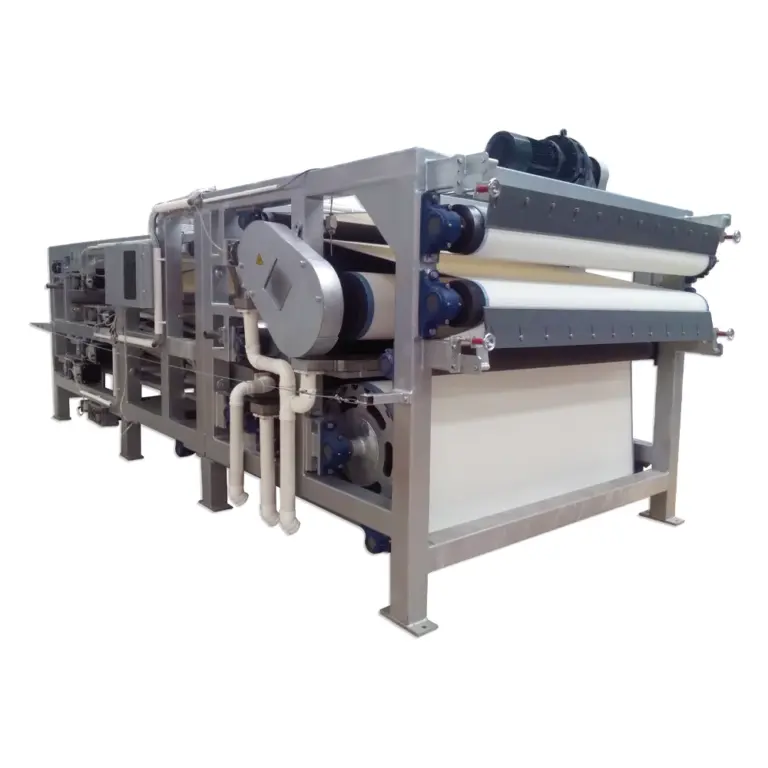
Un filtre-presse à bande fonctionne selon le principe de la pression mécanique appliquée à une boue prise en sandwich entre deux bandes poreuses. Le processus commence par l'introduction d'une boue floculée ou conditionnée dans la section de drainage par gravité de la presse. C'est là que l'eau libre peut s'écouler, ce qui déclenche le processus d'épaississement. Au fur et à mesure que le matériau se déplace dans la presse, il rencontre des zones de pression croissante qui extraient progressivement plus de liquide.
La clé de l'efficacité du filtre-presse à bande réside dans son approche en plusieurs étapes :
- Zone de drainage par gravité : Élimination initiale de l'eau libre
- Zone de basse pression : L'écrasement en douceur commence
- Zone de haute pression : Compression et déshydratation maximales
- Zone de décharge : Élimination du gâteau déshydraté
Le filtre-presse à bande réalise la séparation solide-liquide en combinant le drainage par gravité et la pression mécanique, ce qui permet d'obtenir un processus de déshydratation continu et efficace.
| Zone | Objectif | Pression typique |
|---|---|---|
| Gravité | Élimination gratuite de l'eau | 0 bar |
| Basse pression | Compression initiale | 1-3 bar |
| Haute pression | Déshydratation maximale | 3-7 bar |
| Décharge | Retrait des gâteaux | N/A |
Cette approche progressive permet une élimination optimale de l'eau tout en minimisant le risque de colmatage ou d'endommagement du média filtrant. La nature continue du processus fait des filtres-presses à bande la solution idéale pour les applications à haut volume où la constance des performances est cruciale.
Ce qui distingue le filtre-presse à bande des autres technologies de séparation solide-liquide, c'est sa capacité à traiter une large gamme de matériaux et à produire des solides toujours secs. Les réglages de pression et les vitesses de bande réglables permettent aux opérateurs d'adapter le processus aux différentes caractéristiques des boues, ce qui en fait un choix polyvalent pour diverses applications industrielles.
En conclusion, le principe de fonctionnement du filtre-presse à bande allie simplicité et efficacité, ce qui en fait un outil fiable dans le domaine de la séparation solide-liquide. Son fonctionnement continu et son adaptabilité à divers matériaux d'alimentation ont cimenté sa position en tant que solution de choix pour les industries à la recherche de solutions de déshydratation efficaces.
Quels sont les principaux composants d'un filtre-presse à bande ?
Comprendre l'anatomie d'un filtre-presse à bande est essentiel pour toute personne impliquée dans la production d'un filtre-presse à bande. systèmes de séparation solide-liquide. Ces machines sont des merveilles d'ingénierie, chaque composant jouant un rôle essentiel dans le processus de séparation. Mais quels sont exactement ces composants clés et comment contribuent-ils à la fonctionnalité globale de la presse ?
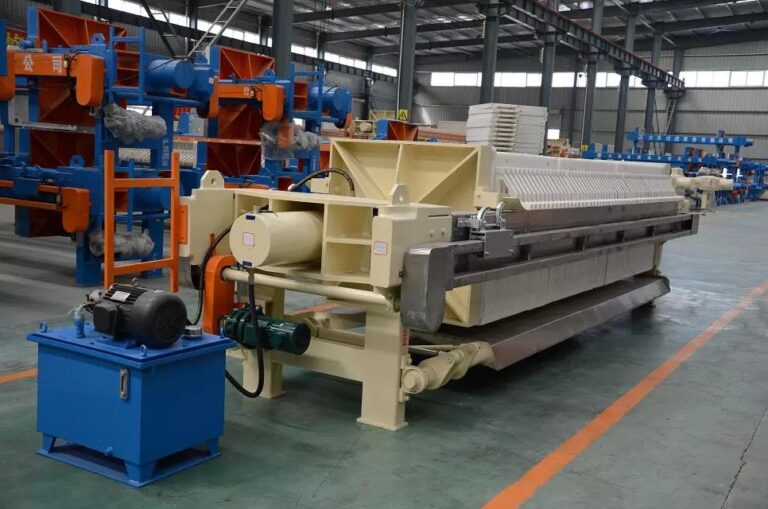
Le filtre-presse à bande se compose de plusieurs éléments essentiels, chacun étant conçu pour optimiser le processus de déshydratation :
- Bandes filtrantes : Deux bandes continues et poreuses qui prennent le lisier en sandwich.
- Rouleaux : Une série de rouleaux qui guident et tendent les courroies.
- Section de drainage par gravité : Zone initiale où l'eau libre s'écoule
- Zones de pression : Zones de compression croissante
- Système de lavage : Pulvérisateurs qui nettoient les courroies
- Système d'entraînement : Moteurs et engrenages qui assurent le mouvement des courroies.
Ces composants travaillent en harmonie pour créer un système qui sépare efficacement les solides des liquides. Les bandes filtrantes, généralement fabriquées à partir de matériaux synthétiques, sont cruciales car elles sont en contact direct avec la boue et doivent résister aux pressions et aux produits chimiques impliqués dans le processus.
La synergie entre les composants du filtre-presse à bande est la clé de son succès dans la séparation solide-liquide, chaque élément étant conçu avec précision pour remplir sa fonction au sein du système global.
| Composant | Fonction | Matériau |
|---|---|---|
| Bandes filtrantes | Filtration et transport | Polyester, polypropylène |
| Rouleaux | Guidage et tension de la courroie | Acier inoxydable |
| Système de lavage | Nettoyage des courroies | Buses haute pression |
| Système d'entraînement | Mouvement de la ceinture | Moteurs électriques, réducteurs |
La section de drainage par gravité est l'endroit où le processus commence, permettant l'élimination initiale de l'eau sans appliquer de pression. Cette étape est essentielle pour préparer la boue aux zones de pression ultérieures, où se déroule le véritable travail de déshydratation.
Au fur et à mesure que le matériau progresse dans la presse, il rencontre des rouleaux de diamètre décroissant, ce qui crée des zones de pression croissante. Cette compression progressive est essentielle pour obtenir une déshydratation optimale sans surcharger le système ni endommager le média filtrant.
Le système de lavage joue un rôle essentiel dans le maintien de l'efficacité de la presse. En nettoyant continuellement les bandes, il empêche la formation d'accumulations susceptibles d'entraver la filtration et garantit des performances constantes au fil du temps. Cette attention portée à la propreté est l'un des facteurs qui contribuent à la réputation de fiabilité du filtre-presse à bande.
En conclusion, les composants clés d'un filtre-presse à bande ne sont pas seulement des pièces individuelles, mais un système soigneusement orchestré, conçu pour une séparation solide-liquide optimale. Chaque élément, des bandes filtrantes au système de lavage, contribue à la capacité de la presse à traiter une large gamme de matériaux et à produire des solides toujours secs. La compréhension de ces composants est cruciale pour les opérateurs et les ingénieurs qui cherchent à maximiser l'efficacité de leurs processus de séparation.
Quelles sont les industries qui bénéficient le plus des filtres-presses à bande ?
Les filtres-presses à bande ont trouvé leur place dans un large éventail d'industries, chacune bénéficiant des capacités efficaces de séparation solide-liquide de cette technologie. Mais quels sont les secteurs qui ont adopté cette technologie avec le plus d'enthousiasme, et pourquoi répond-elle si bien à leurs besoins ?
La polyvalence des filtres-presses à bande les rend idéaux pour les industries traitant de grands volumes de boues ou de suspensions nécessitant une déshydratation. Parmi les industries clés qui ont trouvé une valeur significative dans cette technologie, on peut citer
- Traitement des eaux usées municipales
- Transformation des aliments et des boissons
- Exploitation minière et traitement des minerais
- Fabrication de pâte à papier
- Traitement chimique
- Blanchisserie industrielle
Chacune de ces industries a des exigences uniques en matière de séparation solide-liquide, et le filtre-presse à bande s'est avéré adaptable à ces besoins variés. Dans le traitement des eaux usées, par exemple, cette technologie est essentielle pour déshydrater les boues, réduire leur volume et faciliter leur élimination ou leur traitement ultérieur.
Les filtres-presses à bande sont devenus indispensables dans les industries où une déshydratation efficace est essentielle à l'efficacité du processus, au respect de l'environnement et à la qualité du produit.
| L'industrie | Application | Teneur en solides typique |
|---|---|---|
| Eaux usées | Déshydratation des boues | 15-30% |
| Alimentation et boissons | Séparation de la pulpe de fruit | 20-40% |
| Exploitation minière | Déshydratation du concentré minéral | 50-80% |
| Pâtes et papiers | Déshydratation du papier | 40-60% |
Dans l'industrie alimentaire et des boissons, les filtres-presses à bande jouent un rôle crucial dans la séparation des solides et des liquides dans des processus tels que la production de jus de fruits ou la gestion des déchets de brasserie. L'action de pressage en douceur permet de préserver la qualité du produit tout en réalisant la séparation nécessaire.
Les exploitations minières bénéficient des capacités de déshydratation à grande capacité des filtres-presses à bande, qui peuvent traiter des matériaux abrasifs et produire des concentrés plus secs, réduisant ainsi les coûts de transport et améliorant la manutention des matériaux.
L'industrie des pâtes et papiers fait appel à des filtres-presses à bande pour déshydrater le stock de papier et récupérer les fibres précieuses. Le fonctionnement continu de ces machines s'adapte parfaitement à la nature de la production de papier, qui est très volumineuse.
Les usines de traitement chimique utilisent des filtres-presses à bande pour séparer les solides des flux de traitement, récupérer les matériaux précieux et préparer les déchets à l'élimination. La capacité à traiter des matériaux corrosifs rend ces presses particulièrement adaptées à cette industrie.
En conclusion, les industries qui bénéficient le plus des filtres-presses à bande sont celles qui nécessitent une séparation solide-liquide efficace, continue et en grand volume. L'adaptabilité de cette technologie à différents matériaux et exigences de traitement en a fait une solution de choix dans un large éventail de secteurs. À mesure que les réglementations environnementales se renforcent et que l'efficacité des processus devient de plus en plus importante, le rôle des filtres-presses à bande dans ces industries est susceptible de s'accroître encore davantage.
Comment les filtres-presses à bande se comparent-ils aux autres technologies de séparation ?
Dans le domaine de la séparation solide-liquide, les filtres-presses à bande ne sont que l'une des nombreuses technologies à la disposition des professionnels de l'industrie. Mais comment se situent-ils par rapport aux autres méthodes de séparation ? Quels sont les avantages uniques et les inconvénients potentiels du choix d'un filtre-presse à bande par rapport à d'autres technologies ?
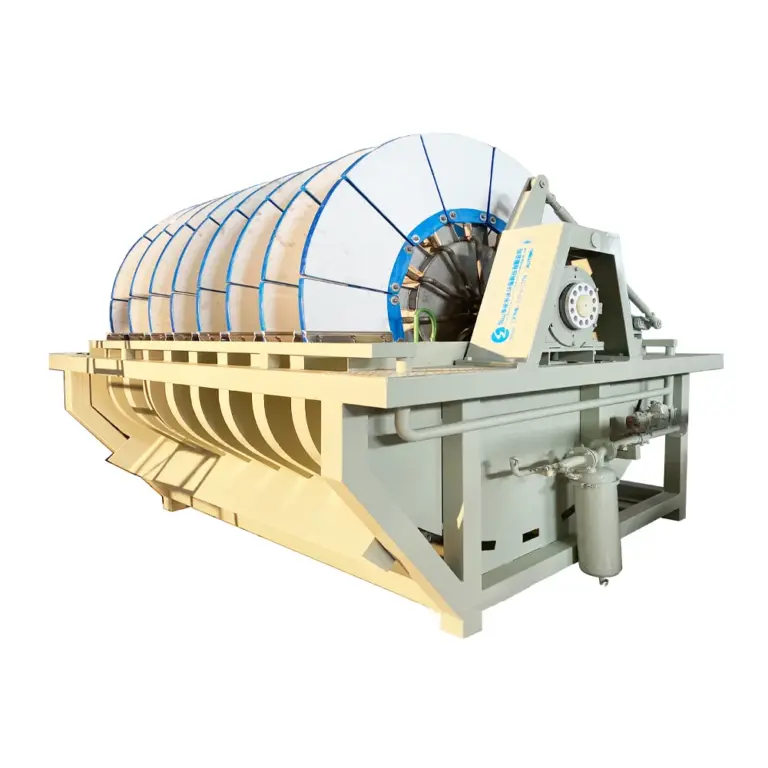
Pour répondre à ces questions, nous devons comparer les filtres-presses à bande avec d'autres technologies de séparation courantes, telles que les filtres-presses à bande, les filtres-presses à bande et les filtres-presses à bande :
- Centrifugeuses
- Filtres à vide
- Filtres-presses à plaques et à cadres
- Presses à vis
Chacune de ces technologies a ses points forts et ses points faibles, et le choix dépend souvent des exigences spécifiques de l'application. Les filtres-presses à bande offrent toutefois une combinaison unique d'avantages qui les rendent intéressants pour de nombreuses industries.
Les filtres-presses à bande offrent un équilibre entre un fonctionnement continu, une capacité élevée et une siccité modérée du gâteau, ce qui les distingue des autres technologies de séparation solide-liquide.
| Technologie | Fonctionnement continu | Sécheresse du gâteau | Coût du capital | Consommation d'énergie |
|---|---|---|---|---|
| Presse à bande filtrante | Oui | Modéré | Modéré | Faible |
| Centrifugeuse | Oui | Haut | Haut | Haut |
| Filtre à vide | Oui | Faible à modéré | Haut | Haut |
| Presse à plaques et à cadres | Non | Haut | Faible à modéré | Faible |
| Presse à vis | Oui | Modéré | Faible | Faible |
L'un des principaux avantages des filtres-presses à bande est leur fonctionnement en continu. Contrairement aux procédés discontinus tels que les filtres-presses à plaques et à cadres, les filtres-presses à bande peuvent traiter un flux constant de matériaux, ce qui les rend idéaux pour les applications à grand volume. Ce fonctionnement en continu a également tendance à se traduire par une qualité de gâteau plus constante.
En termes de siccité du gâteau, les filtres-presses à bande atteignent généralement des niveaux modérés, se situant entre la siccité élevée des centrifugeuses et la siccité plus faible des filtres sous vide. Ils conviennent donc à un large éventail d'applications où des solides extrêmement secs ne sont pas nécessaires.
La consommation d'énergie est un autre domaine dans lequel les filtres-presses à bande se distinguent. Par rapport aux centrifugeuses et aux filtres à vide, dont le fonctionnement nécessite une puissance importante, les filtres-presses à bande sont relativement économes en énergie. Cela peut se traduire par des coûts d'exploitation inférieurs pendant toute la durée de vie de l'équipement.
Les coûts d'investissement des filtres-presses à bande sont généralement modérés, ce qui les rend accessibles à un plus grand nombre d'industries. Bien qu'elles soient plus chères que les simples presses à vis, elles offrent souvent de meilleures performances et une plus grande flexibilité.
L'un des inconvénients potentiels des filtres-presses à bande est leur encombrement physique, qui peut être plus important que celui d'autres technologies. Toutefois, cet inconvénient est souvent compensé par leur capacité élevée et leur fonctionnement continu.
En conclusion, les filtres-presses à bande offrent une solution équilibrée pour de nombreux besoins de séparation solide-liquide. Leur combinaison de fonctionnement continu, de siccité modérée du gâteau et d'efficacité énergétique en fait un choix polyvalent pour des industries allant du traitement des eaux usées à la transformation des aliments. Bien qu'ils ne constituent pas le meilleur choix pour chaque application, leurs performances globales et leur rentabilité leur ont permis de s'imposer comme une technologie de pointe dans le domaine de la séparation solide-liquide.
Quelles sont les dernières innovations en matière de technologie de filtre-presse à bande ?
Le domaine de la séparation solide-liquide est en constante évolution, les ingénieurs et les chercheurs cherchant continuellement à améliorer l'efficacité, à réduire les coûts et à accroître les performances. Les filtres-presses à bande, malgré leur longue histoire, ne font pas exception à cette tendance à l'innovation. Mais quels sont les développements de pointe qui façonnent l'avenir de cette technologie ?
Les progrès récents de la technologie des filtres-presses à bande se sont concentrés sur plusieurs domaines clés :
- Média de filtration amélioré
- Amélioration des systèmes de contrôle de la pression
- Intégration de la technologie des capteurs et de l'automatisation
- Amélioration de l'efficacité énergétique
- Conceptions modulaires et évolutives
Ces innovations ne sont pas de simples améliorations marginales, mais représentent des avancées significatives dans les capacités et l'efficacité des filtres-presses à bande.
Les dernières innovations en matière de technologie de filtre-presse à bande repoussent les limites de ce qui est possible en matière de séparation solide-liquide, offrant des niveaux d'efficacité et de contrôle sans précédent.
| L'innovation | Bénéfice | Impact sur les performances |
|---|---|---|
| Média filtrant avancé | Taux de filtration plus élevés | Augmentation du débit jusqu'à 30% |
| Contrôle intelligent de la pression | Déshydratation optimale | 10-15% amélioration de la siccité du gâteau |
| Intégration de l'IdO | Contrôle en temps réel | Réduction des temps d'arrêt et des coûts de maintenance |
| Entraînements économes en énergie | Consommation d'énergie réduite | Jusqu'à 25% de réduction de la consommation d'énergie |
| Conception modulaire | Des mises à jour et une maintenance plus faciles | Amélioration des coûts du cycle de vie |
L'un des domaines d'innovation les plus importants est celui des médias filtrants. De nouveaux matériaux et de nouvelles techniques de tissage ont permis de créer des bandes qui offrent des taux de filtration plus élevés tout en conservant, voire en améliorant, leur durabilité. Ces bandes avancées peuvent supporter des débits plus élevés et obtenir de meilleurs résultats de séparation.
Les systèmes de contrôle de la pression ont également fait l'objet d'améliorations majeures. Les systèmes intelligents capables d'ajuster dynamiquement la pression en fonction des caractéristiques de l'alimentation et des résultats souhaités sont de plus en plus courants. Ces systèmes peuvent optimiser le processus de déshydratation en temps réel, ce qui permet d'obtenir des gâteaux toujours plus secs et un fonctionnement plus efficace.
L'intégration de la technologie de l'Internet des objets (IoT) et des capteurs avancés révolutionne la manière dont les filtres-presses à bande sont surveillés et contrôlés. Les données en temps réel sur la tension de la bande, la consistance de l'alimentation et la siccité du gâteau permettent une maintenance prédictive et une optimisation des processus, ce qui réduit les temps d'arrêt et améliore l'efficacité globale.
L'efficacité énergétique a été au cœur des innovations récentes. De nouveaux systèmes d'entraînement et de nouvelles conceptions de moteurs ont permis de réduire considérablement la consommation d'énergie des filtres-presses à bande, ce qui les rend plus respectueux de l'environnement et plus rentables.
Grâce à leur conception modulaire et évolutive, les filtres-presses à bande s'adaptent mieux à l'évolution des besoins. Ces conceptions facilitent les mises à niveau et la maintenance, et permettent d'augmenter la capacité en fonction de la demande.
En conclusion, les dernières innovations dans le domaine de la technologie des filtres-presses à bande rendent ces machines plus efficaces, plus fiables et plus adaptables que jamais. Des matériaux avancés aux systèmes de contrôle intelligents, ces développements garantissent que les filtres-presses à bande restent à la pointe de la technologie de séparation solide-liquide. Les industries continuant à exiger des performances plus élevées et des coûts plus faibles, nous pouvons nous attendre à voir des innovations encore plus passionnantes dans les années à venir.
Comment les opérateurs peuvent-ils optimiser les performances de la presse à bande filtrante ?
Il est essentiel d'obtenir des performances optimales d'un filtre-presse à bande pour maximiser l'efficacité et réduire les coûts d'exploitation. Mais quelles mesures les opérateurs peuvent-ils prendre pour s'assurer que leur équipement fonctionne de manière optimale ? Comment peuvent-ils résoudre les problèmes courants et affiner leurs processus pour obtenir les meilleurs résultats ?
L'optimisation des performances d'une presse à bande filtrante implique une combinaison de maintenance appropriée, d'ajustements opérationnels et de contrôle du processus. Voici quelques stratégies clés que les opérateurs peuvent mettre en œuvre :
- Inspection et entretien réguliers de la courroie
- Conditionnement chimique approprié de la boue d'alimentation
- Optimisation de la vitesse d'alimentation et de la consistance
- Réglage fin de la vitesse et de la tension de la courroie
- Surveillance et réglage des systèmes d'eau de lavage
- Mise en œuvre de programmes de maintenance préventive
En se concentrant sur ces domaines, les opérateurs peuvent améliorer de manière significative les performances et la longévité de leurs filtres-presses à bande.
Un fonctionnement et un entretien corrects sont essentiels pour obtenir des performances optimales des filtres-presses à bande, avec un potentiel d'améliorations significatives en termes d'efficacité et de qualité des résultats.
| Domaine d'optimisation | Amélioration potentielle | Action clé |
|---|---|---|
| Entretien des courroies | 10-20% plus longue durée de vie de la courroie | Nettoyage régulier et contrôle de la tension |
| Conditionnement chimique | Jusqu'à 30% gâteau de séchage | Sélection et dosage optimisés des polymères |
| Contrôle de l'alimentation | 15-25% débit plus élevé | Taux d'alimentation et teneur en solides constants |
| Vitesse/tension de la courroie | 5-10% Amélioration de la déshydratation | Réglage fin en fonction des caractéristiques de l'alimentation |
| Système d'eau de lavage | Réduction de l'éblouissement, allongement de la durée de vie de la courroie | Inspection et nettoyage réguliers des buses |
L'inspection et l'entretien réguliers des courroies sont essentiels pour obtenir des performances optimales. Les opérateurs doivent vérifier régulièrement l'usure, le bon suivi et la tension correcte des courroies. Un nettoyage approfondi des courroies et leur remplacement si nécessaire permettent d'éviter de nombreux problèmes courants.
Le conditionnement chimique de la boue d'alimentation est un autre domaine critique à optimiser. Le choix et le dosage appropriés des polymères peuvent améliorer considérablement les performances de floculation et de déshydratation. Les opérateurs doivent travailler en étroite collaboration avec les fournisseurs de produits chimiques pour trouver le programme de conditionnement optimal pour leur application spécifique.
Le contrôle de la vitesse d'alimentation et de la consistance est vital pour maintenir un fonctionnement stable. Les fluctuations des caractéristiques de l'alimentation peuvent entraîner une mauvaise performance de déshydratation. La mise en œuvre de systèmes de contrôle de l'alimentation et le maintien de processus cohérents en amont peuvent contribuer à assurer un fonctionnement stable.
Le réglage de la vitesse et de la tension de la bande permet d'affiner le processus de déshydratation. Les opérateurs doivent expérimenter différents réglages pour trouver l'équilibre optimal entre le débit et la siccité du gâteau pour leur application spécifique.
Le système de lavage à l'eau joue un rôle crucial dans le maintien de la propreté de la bande et la prévention de l'éblouissement. L'inspection et le nettoyage réguliers des buses de pulvérisation, ainsi qu'une pression et un débit d'eau adéquats, peuvent considérablement prolonger la durée de vie de la bande et améliorer ses performances.
La mise en œuvre d'un programme complet de maintenance préventive permet de détecter les problèmes potentiels avant qu'ils ne deviennent des problèmes majeurs. Cette approche proactive peut réduire les temps d'arrêt et prolonger la durée de vie de l'équipement.
En conclusion, l'optimisation des performances d'une presse à bande filtrante nécessite une approche holistique qui aborde tous les aspects de l'exploitation et de la maintenance. En se concentrant sur ces domaines clés, les opérateurs peuvent obtenir des améliorations significatives en termes d'efficacité, de siccité du gâteau et de performances globales. La surveillance, le réglage et l'entretien réguliers sont les clés qui permettent d'exploiter pleinement le potentiel de la technologie des filtres-presses à bande dans les systèmes de séparation solide-liquide.
Quels sont les impacts environnementaux de l'utilisation des filtres-presses à bande ?
Alors que les industries se concentrent de plus en plus sur la durabilité et la responsabilité environnementale, les impacts environnementaux des technologies de séparation solide-liquide font l'objet d'un examen minutieux. Les filtres-presses à bande, bien qu'efficaces dans leur fonction première, ont également des répercussions sur l'environnement. Mais quels sont exactement ces impacts et comment se comparent-ils à ceux des technologies alternatives ?
Les considérations environnementales des filtres-presses à bande peuvent être classées en plusieurs catégories :
- Consommation d'énergie
- Consommation d'eau
- Utilisation de produits chimiques dans le processus de floculation
- Production et élimination des déchets
- Pollution sonore
- Risque de déversement ou de fuite
La compréhension de ces facteurs est cruciale pour les industries qui cherchent à minimiser leur empreinte environnementale tout en maintenant des opérations efficaces.
Les filtres-presses à bande, lorsqu'ils sont correctement optimisés, peuvent offrir un équilibre entre l'efficacité et la responsabilité environnementale dans les processus de séparation solide-liquide.
| Facteur environnemental | Niveau d'impact | Stratégie d'atténuation |
|---|---|---|
| Consommation d'énergie | Modéré | Utilisation de moteurs et d'entraînements à haut rendement énergétique |
| Consommation d'eau | Haut | Mise en place de systèmes de recyclage de l'eau |
| Utilisation de produits chimiques | Modéré à élevé | Optimisation du dosage du floculant |
| Production de déchets | Faible à modéré | Élimination ou recyclage adéquat des solides déshydratés |
| Pollution sonore | Faible | Utilisation d'enceintes insonorisantes |
La consommation d'énergie est un facteur important pour tout processus industriel. Les filtres-presses à bande ont généralement des besoins énergétiques modérés par rapport à d'autres solutions comme les centrifugeuses. Toutefois, des améliorations sont toujours possibles. De nombreux fabricants proposent désormais des moteurs à haut rendement énergétique et des entraînements à fréquence variable pour réduire la consommation d'énergie.
La consommation d'eau est peut-être l'impact environnemental le plus important des filtres-presses à bande. Ces machines nécessitent un apport constant d'eau de lavage pour maintenir les bandes propres et éviter qu'elles ne se décolorent. Toutefois, les conceptions modernes intègrent souvent des systèmes de recyclage de l'eau qui peuvent réduire considérablement la consommation globale d'eau.
L'utilisation de produits chimiques, en particulier de floculants, dans le processus de conditionnement est une autre préoccupation environnementale. Bien que ces produits chimiques soient essentiels pour une performance optimale, leur utilisation peut avoir des répercussions en aval. Les opérateurs peuvent atténuer ce problème en optimisant soigneusement le dosage des floculants et en explorant des alternatives plus respectueuses de l'environnement.
Les déchets générés par les filtres-presses à bande se présentent généralement sous la forme de solides déshydratés ou "gâteau". L'impact environnemental de ces déchets dépend en grande partie de leur composition et de la manière dont ils sont gérés. Dans de nombreux cas, les solides déshydratés peuvent être recyclés ou utilisés de manière bénéfique, par exemple pour l'épandage ou comme source de combustible.
Les nuisances sonores des filtres-presses à bande sont généralement faibles par rapport à d'autres équipements industriels. Toutefois, dans les environnements sensibles, des mesures supplémentaires d'atténuation du bruit peuvent s'avérer nécessaires.
Le risque de déversement ou de fuite est une préoccupation pour tout équipement de manipulation de liquides. Un entretien adéquat et des mesures de confinement sont essentiels pour prévenir la contamination de l'environnement.
En conclusion, bien que les filtres-presses à bande aient un impact sur l'environnement, il est possible de le gérer et de l'atténuer grâce à une conception, un fonctionnement et une maintenance appropriés. Par rapport à d'autres technologies, les filtres-presses à bande offrent souvent un bon équilibre entre efficacité et responsabilité environnementale. Au fur et à mesure que la technologie évolue, on peut s'attendre à de nouvelles améliorations de leurs performances environnementales, ce qui en fait une option de plus en plus attrayante pour les industries à la recherche de solutions durables de séparation solide-liquide.
En conclusion, les filtres-presses à bande se sont imposés comme une technologie de base dans les systèmes de séparation solide-liquide de diverses industries. Leur capacité à assurer une déshydratation continue et efficace en fait un outil inestimable dans des processus allant du traitement des eaux usées à la production alimentaire. La polyvalence et l'adaptabilité des filtres-presses à bande leur permettent de traiter une large gamme de matériaux et de produire des solides toujours secs, ce qui en fait une solution de choix pour de nombreuses applications.
Tout au long de cet article, nous avons exploré le fonctionnement interne des filtres-presses à bande, leurs principaux composants et les industries qui bénéficient le plus de leur utilisation. Nous nous sommes également penchés sur les dernières innovations dans ce domaine, démontrant ainsi que cette technologie ne cesse d'évoluer et de s'améliorer. La comparaison avec d'autres technologies de séparation a mis en évidence les avantages uniques des filtres-presses à bande, notamment en termes de fonctionnement continu et d'efficacité énergétique.
Les opérateurs qui cherchent à optimiser les performances de leur filtre-presse à bande disposent désormais d'une feuille de route claire, axée sur des domaines tels que la maintenance, le conditionnement chimique et le contrôle du processus. Ces stratégies peuvent conduire à des améliorations significatives de l'efficacité et de la qualité des produits.
Comme les industries continuent à donner la priorité à la responsabilité environnementale, nous avons également examiné les impacts environnementaux des filtres-presses à bande et les stratégies d'atténuation. Bien qu'il y ait des défis à relever, notamment en ce qui concerne l'utilisation de l'eau, le profil environnemental global des filtres-presses à bande est souvent favorable par rapport à d'autres solutions.
L'avenir des filtres-presses à bande dans l'Union européenne PORVOO L'avenir des systèmes de séparation solide-liquide est prometteur. Grâce aux innovations constantes en matière de matériaux, de systèmes de contrôle et de conception, ces machines sont appelées à devenir encore plus efficaces, adaptables et respectueuses de l'environnement. Alors que les industries sont de plus en plus contraintes d'optimiser leurs processus et de réduire les déchets, les filtres-presses à bande joueront sans aucun doute un rôle crucial pour relever ces défis.
Dans le paysage en constante évolution des processus industriels, les filtres-presses à bande témoignent de la puissance de l'amélioration et de l'adaptation continues. Leur capacité à répondre aux divers besoins de multiples industries tout en offrant des possibilités d'optimisation et de responsabilité environnementale garantit leur place en tant que technologie clé dans la séparation solide-liquide pour les années à venir.
Ressources externes
Séparation liquide-solide - Thermopedia - Cette ressource fournit une vue d'ensemble de la séparation liquide-solide, y compris les étapes de prétraitement, de concentration des solides, de séparation des solides et de post-traitement. Elle répertorie divers équipements et procédés utilisés dans le processus de séparation.
La séparation solide-liquide expliquée : Principes et applications - Cet article explique les principes et les applications de la séparation solide-liquide, en particulier dans l'industrie pharmaceutique. Il couvre des méthodes telles que la centrifugation, la filtration et l'évaporation, et souligne l'importance de ce processus pour le contrôle de la qualité et la sécurité.
Projets - Système de séparation solide/liquide - Westinghouse Nuclear - Cette page présente un système de séparation solide/liquide conçu par Westinghouse pour la gestion des déchets nucléaires. Elle décrit l'utilisation de la technologie des filtres à flux croisés et de caractéristiques de conception innovantes pour éliminer efficacement l'excès de liquide et concentrer les solides radioactifs.
Séparation solide-liquide du fumier animal et des eaux usées - Cette ressource se concentre sur la séparation solide-liquide du fumier animal et des eaux usées, en utilisant des méthodes telles que les centrifugeuses et les hydrocyclones. Elle traite des avantages et des applications dans les élevages de bétail et de volaille.
Séparation solide-liquide : Une vue d'ensemble - Cette vue d'ensemble sur ScienceDirect couvre les principes fondamentaux, l'équipement et les applications de la séparation solide-liquide dans diverses industries, y compris les secteurs chimiques, pharmaceutiques et environnementaux.
Équipement et procédés de séparation solide-liquide - Cet article du magazine Chemical Engineering présente les différents types d'équipements et de procédés utilisés pour la séparation solide-liquide, notamment les décanteurs par gravité, les centrifugeuses et les hydrocyclones, ainsi que leurs applications dans différentes industries.
Séparation solide-liquide dans les bioprocédés - Cette ressource se concentre sur le rôle de la séparation solide-liquide dans les bioprocédés, y compris l'utilisation de filtres en profondeur, de centrifugeuses et d'autres techniques pour garantir la pureté et la sécurité des produits biologiques.
Séparation solide-liquide : Techniques et applications - Cette publication sur ResearchGate fournit un examen détaillé des différentes techniques de séparation solide-liquide, de leurs principes et de leurs applications dans différents domaines tels que le génie chimique, les sciences de l'environnement et les produits pharmaceutiques.