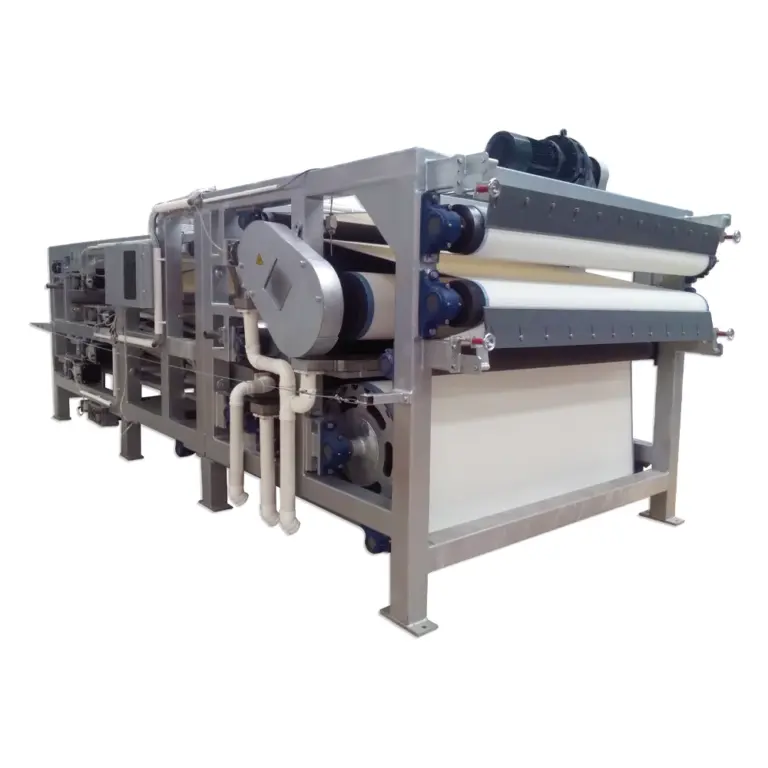
La baisse du rendement des presses est l'une des erreurs de diagnostic les plus coûteuses dans le secteur de la transformation de la pierre. Lorsque les temps de cycle s’allongent et que l’humidité du gâteau augmente, le réflexe est de remettre en question la capacité de la presse — et les équipes d’approvisionnement se tournent parfois vers des équipements plus imposants avant même que quiconque ait examiné la toile. Si la cause profonde réside dans la pénétration de fines particules abrasives dans les canaux poreux, ou dans un surdosage de PAM créant une couche gélatineuse à la surface de la toile, une presse plus grande reproduira le même problème en l’espace de quelques semaines. Le risque aggravant est qu’un diagnostic tardif permette aux particules, résidus et dépôts de polymères de s’infiltrer à l’intérieur de la toile, où un lavage à haute pression ne permettra peut-être plus de rétablir la perméabilité — ce qui repoussera le remplacement bien en deçà de la fourchette de 100 à 500 cycles qui devrait être atteignable avec une routine d’entretien efficace. Ce qui suit offre aux équipes de maintenance et aux ingénieurs de procédés une méthode structurée pour distinguer les causes liées à la toile et au procédé des véritables limites de capacité de la presse, et pour déterminer à quel moment il vaut la peine d’envisager des modifications du prétraitement avant tout remplacement de la toile ou de l’équipement.
Identifiez les symptômes d’éblouissement avant de rejeter la faute sur la taille des caractères
Une baisse du débit de filtration et une augmentation de l’humidité du gâteau sont deux phénomènes compatibles avec un colmatage de la toile, mais ils peuvent également s’expliquer par un sous-dimensionnement de la presse, des variations de la concentration de la matière première ou l’usure de la pompe. Considérer l’un ou l’autre de ces symptômes comme la preuve d’un colmatage — ou comme la preuve d’une insuffisance de la presse — avant d’avoir vérifié l’état de la toile est l’erreur qui conduit à un surdimensionnement de l’équipement de remplacement. La question diagnostique est de savoir si les performances ont baissé progressivement au fil des cycles par rapport à un niveau de référence auparavant stable, ou si elles n’ont jamais été adéquates dès le départ.
Une baisse progressive sur une alimentation stable constitue l'indicateur le plus fiable d'un problème lié à la toile ou au procédé. Si le débit et la sécheresse du gâteau étaient acceptables lors de la mise en service et se sont depuis dégradés, il est peu probable que la presse elle-même soit devenue le goulot d'étranglement. La séquence d’inspection la plus efficace commence par la toile — contrôles visuels visant à détecter un colmatage de surface, une adhérence de pâte ou une décoloration — avant de passer au dosage de polymère, à la montée en pression et aux registres de lavage. La norme GB/T 30176-2013 fournit un cadre méthodologique pour la mesure des performances des filtres, susceptible de faciliter une collecte de données plus systématique, cycle par cycle, si votre exploitation ne dispose pas d’enregistrements de référence ; toutefois, la séquence de diagnostic elle-même reste un jugement lié au procédé plutôt qu’un protocole normalisé.
La conséquence directe d'une attribution erronée de l'aveuglement à la taille de la presse est une augmentation des coûts d'approvisionnement et un retard dans le projet, sans aucune amélioration du processus. Une presse de remplacement alimentée avec la même boue conditionnée, équipée du même tissu et suivant le même cycle de lavage, reproduira la même courbe de dégradation.
Vérifier la teneur en fines argileuses et en particules surdimensionnées de l'abrasif
La boue de pierre issue des opérations de découpe, de meulage ou de polissage contient des particules qui provoquent l’aveuglement selon deux mécanismes distincts — et les confondre conduit à une réponse corrective inappropriée. Les microparticules fines et les matières colloïdales entraînées par les fines abrasives pénètrent progressivement dans les pores du tissu au fil de multiples cycles, obstruant peu à peu les canaux de drainage depuis l’intérieur. La boue de pierre à haute viscosité agit différemment : elle adhère à la surface de la toile, formant une couche dense de type pâte qui obstrue les pores depuis l’extérieur sans nécessairement pénétrer en profondeur dans la structure de la toile.
Ces deux mécanismes ont une importance sur le plan opérationnel, car la réponse corrective diffère. L'adhérence de la pâte en surface peut bien réagir à des cycles de lavage plus agressifs et à des modifications du traitement de surface des chiffons. La pénétration dans les pores internes est plus difficile à inverser une fois qu'elle s'est installée, et peut nécessiter un prétraitement ou le remplacement des chiffons, selon le stade d'avancement de la dégradation.
| Mécanisme d'occultation | Comment cela se passe-t-il ? | Caractéristiques typiques d'une boue |
|---|---|---|
| Obstruction des pores par des particules fines | Les microparticules fines, les matières colloïdales ou les fines abrasives pénètrent dans les pores du tissu et obstruent progressivement les canaux de drainage. | Teneur élevée en particules fines, en argile ou en particules abrasives ; fréquente dans les boues issues de la transformation de la pierre. |
| Adhérence de la pâte sur la surface | La boue de pierre, très visqueuse, adhère à la surface du tissu, formant une couche dense de consistance pâteuse qui obture les pores. | Matériau à haute viscosité (par exemple, la boue de pierre) qui présente une consistance collante et pâteuse. |
Si l'installation traite plusieurs types de pierres ou des gisements dont les caractéristiques varient selon les saisons, la distribution granulométrique doit être vérifiée périodiquement, plutôt que d'être considérée comme fixe dès la mise en service. Une taille de pores du tissu adaptée à une alimentation donnée peut se comporter de manière très différente lorsque la source de pierre change et que la teneur en fines évolue — un point qui redevient pertinent lors de la réévaluation du choix du tissu.
Examiner le dosage des polymères et le cisaillement des flocs
| Problème de floculation | Résultat sur tissu | Pourquoi cela se produit-il ? |
|---|---|---|
| Formation insuffisante de flocs | Les particules fines ne s'agglomèrent pas ; elles pénètrent donc dans les pores du tissu et provoquent un colmatage. | Type de floculant inadapté, dosage insuffisant ou temps de mélange incorrect. |
| Surdosage de floculant à haut poids moléculaire | Crée une substance visqueuse et gélatineuse qui obstrue les pores du tissu. | Utilisation excessive de floculants de haut poids moléculaire, notamment le PAM. |
La dose de polymère se situe dans une fourchette fonctionnelle étroite, et les erreurs de part et d’autre de cette fourchette entraînent toutes deux un colmatage — ce qui rend les erreurs de dosage particulièrement difficiles à diagnostiquer. Une floculation insuffisante ne parvient pas à agglomérer les particules fines en flocs filtrables ; celles-ci pénètrent donc dans la presse sous forme de particules libres et s’infiltrent directement dans les pores de la toile. Un surdosage de floculants de haut poids moléculaire, tels que le PAM, crée une substance visqueuse et gélatineuse qui recouvre les pores de la toile, augmentant ainsi la résistance d’une manière qui ressemble — mais qui est distincte — au colmatage dû aux particules. Aucun de ces deux problèmes ne s’améliore avec une presse plus grande ou une toile plus serrée.
L'étape de mélange est tout aussi importante que le débit de dosage. Un temps de contact insuffisant entre le floculant et la boue laisse les particules partiellement non conditionnées, même à une dose nominalement correcte. Un cisaillement excessif en aval du point de dosage brise les flocs déjà formés, ramenant les particules à une taille leur permettant de pénétrer dans les pores de la toile. Les sites qui se fient à l’inspection visuelle de la boue d’alimentation pour évaluer la qualité des flocs passent souvent à côté de ce problème : des flocs d’apparence cohérente dans le réservoir d’alimentation peuvent en réalité être suffisamment fragiles pour se briser à l’entrée de la presse.
Vérification pratique avant d'ajuster le dosage : s'assurer que le temps de rétention dans le mélangeur, la vitesse de la turbine et la distance entre le point de dosage et l'entrée de la presse sont conformes aux exigences de conditionnement du fournisseur du floculant. Les modifications de dosage effectuées sans résoudre un problème de cisaillement ou de mélange donneront des résultats variables et rendront plus difficile l'établissement d'un point de consigne d'exploitation fiable.
Vérifier la montée en pression lors du lavage des toiles et le démoulage des gâteaux
Le démarrage d'un cycle de pressage à pleine pression d'alimentation avant la formation d'un gâteau de filtration est l'un des facteurs les plus sous-estimés à l'origine d'un colmatage accéléré dans les applications de boues de roche. En l'absence d'une couche de gâteau bien établie faisant office de préfiltre, les particules fines présentes dans la boue d'alimentation sont poussées directement dans les pores de la toile sous une charge hydraulique maximale. À l’œil nu, les dommages qui en résultent ressemblent à de l’usure de la toile, ce qui fait de l’enregistrement des données cycle par cycle — et non pas seulement des contrôles d’humidité en fin de lot — le seul moyen fiable de distinguer le colmatage dû à la montée en pression de la dégradation du matériau.
Au-delà de la montée en pression, la qualité de l’installation et l’état des orifices de drainage constituent des facteurs de risque aggravants plutôt que des causes principales. Les plis, les désalignements ou une mauvaise étanchéité des bords créent des concentrations de contraintes localisées qui accélèrent le colmatage dans les zones surchargées, entraînant une défaillance d’une partie de la toile bien plus tôt que le reste. Ce phénomène est détectable lors de l’inspection et peut être corrigé avant le cycle suivant. Les obstructions des orifices de drainage produisent des schémas de filtration irréguliers qui peuvent masquer les symptômes d’obstruction de la toile : une chambre qui se draine mal en raison d’un orifice bouché ressemble à une chambre qui se draine mal en raison d’une toile obstruée.
| Facteur opérationnel | Risque en l'absence de contrôle | Éléments à vérifier |
|---|---|---|
| Rampe de pression d'alimentation | La haute pression exercée au début de l'opération enfonce les particules fines profondément dans les pores du tissu, ce qui accélère l'obstruction des mailles. | Vérifiez que la pression augmente progressivement, en laissant d'abord se former une croûte. |
| Pose de revêtements en tissu | Les plis, les défauts d'alignement ou une mauvaise étanchéité au niveau des bords entraînent une répartition inégale des contraintes et un colmatage prématuré dans les zones soumises à une charge excessive. | Avant chaque cycle, vérifiez qu’il n’y a pas de plis, que l’alignement est correct et que les bords sont bien scellés. |
| Orifices de drainage de la plaque filtrante | Un drainage obstrué ou irrégulier entraîne une filtration inégale et peut masquer les symptômes d'aveuglement. | Vérifiez régulièrement que les orifices de vidange ne sont pas obstrués et débouchez-les si nécessaire. |
Sur le plan opérationnel, cela signifie que le profil de montée en pression, les conditions d'installation de la toile et l'état des orifices de drainage doivent être considérés comme des éléments à vérifier lors d'une liste de contrôle préalable à la mise en service, et non comme des points relevant uniquement de la mise en service. Un site qui ne vérifie ces éléments qu'au moment de l'installation et qui ne s'y intéresse à nouveau que lorsque le débit a déjà diminué fonctionne systématiquement en retard par rapport à la courbe d'obstruction.
Adapter le choix du tissu au comportement des particules dans la suspension
Il n'existe pas de configuration de toile unique qui soit optimale pour tous les types de boues de roche, et les choix inadaptés effectués lors de la mise en service initiale sont rarement revus, même lorsque les conditions d'alimentation changent. Le choix structurel porte sur le type de tissage : les toiles monofilament présentent des surfaces lisses qui permettent un détachement immédiat du gâteau et sont moins susceptibles de retenir la boue de roche collante entre les cycles, ce qui en fait un point de départ plus pratique pour les boues abrasives ou cohésives que les alternatives multifilaments.
Le choix des matériaux dans des conditions abrasives a une incidence significative sur les coûts d'exploitation. D’après les fournisseurs et l’expérience du secteur, le monofilament en nylon (PA66) offre une résistance à l’abrasion environ trois fois supérieure à celle du polypropylène pour les applications de découpe de pierre — un chiffre indicatif qui, bien qu’il ne s’agisse pas d’un seuil normalisé certifié, reflète la différence de comportement à l’usure ayant une incidence sur la fréquence de remplacement et le coût total de la toile sur une saison. Pour les opérations où la boue de pierre est systématiquement abrasive, le fait de choisir une toile en PP sur la base du coût unitaire, puis de la remplacer plus fréquemment, entraîne souvent un coût total plus élevé que le choix initial du PA66.
| Facteur de sélection | Options / Compromis | Incidence sur l'aveuglement |
|---|---|---|
| Type de tissage | Les toiles en monofilament présentent une surface lisse qui garantit un démoulage immédiat des gâteaux, contrairement aux modèles en multifilament. | Empêche les boues collantes d'adhérer ; recommandé pour les résidus miniers et autres boues collantes similaires. |
| Matériau fibreux | Le monofilament en nylon (PA66) offre une résistance à l'abrasion environ trois fois supérieure à celle du polypropylène (PP). | Prolonge la durée de vie du tissu dans des conditions abrasives, telles que les boues de découpe de la pierre ; réduit les colmatages liés à l'usure. |
| Taille des pores | Trop grande → turbidité ; trop petite → encrassement rapide. | Il faut trouver un équilibre entre la clarté du filtrat et le risque d'obstruction ; adapter la taille des pores à la distribution granulométrique des particules. |
| Traitement de surface | Le calandrage, le flambage ou les traitements hydrophobes/hydrophiles réduisent la rétention de particules. | Améliore les propriétés anti-colmatage et facilite le nettoyage en présence de boues difficiles à traiter. |
Le choix de la taille des pores constitue le compromis technique le plus délicat dans la spécification d’une toile filtrante. Des pores plus serrés retiennent davantage de particules fines et produisent un filtrat plus clair, mais augmentent le taux de colmatage sous une charge abrasive et réduisent la fenêtre de nettoyage effective avant que le colmatage irréversible ne s’installe. Des pores plus ouverts prolongent cette fenêtre mais peuvent produire un filtrat trouble qui entraîne des contraintes en aval en matière de réutilisation ou de rejet. Ce compromis doit être réexaminé chaque fois que la provenance de la roche, le procédé de concassage ou les exigences en matière de réutilisation de l’eau changent — et pas seulement lors de la mise en service initiale. Les traitements de surface — calandrage, flambage, finitions hydrophobes ou hydrophiles — peuvent prolonger les performances anti-colmatage pour les boues difficiles et méritent d’être spécifiés lorsque le tissage standard entraîne des intervalles plus courts que prévu entre les cycles de nettoyage.
Prévoyez un nettoyage avant que l'engorgement du système d'évacuation ne devienne la norme
La pratique d’entretien la plus préjudiciable sur le plan opérationnel dans le domaine de la déshydratation des boues de roche consiste à laisser les intervalles de nettoyage prolongés devenir la norme de facto sur le site. Une fois que des particules fines, des résidus huileux ou des dépôts de polymères ont pénétré à l’intérieur de la toile au fil de nombreux cycles sans intervention, la structure interne de la toile est compromise d’une manière que le lavage à haute pression ne peut plus corriger. À ce stade, le remplacement devient nécessaire bien avant la référence de 100 à 500 cycles que les toiles bien entretenues atteignent généralement — et l’augmentation des coûts d’exploitation se produit sans aucun changement au niveau du procédé ou de l’équipement.
Le critère pratique justifiant un lavage de routine est une augmentation notable du temps de filtration ou une hausse confirmée de l’humidité du gâteau, avec un intervalle maximal de 15 à 20 cycles, que la dégradation des performances soit déjà visible ou non. Le lavage à l’eau sous haute pression (50 à 80 bars) — ces chiffres constituent des recommandations destinées aux professionnels plutôt qu’un minimum réglementaire — est la méthode mécanique standard ; la pression effective et le temps de maintien dépendront du type de toile et de la nature des dépôts. Lorsque du tartre est visible à la surface de la toile, un lavage à l’acide chlorhydrique dilué est la méthode appropriée pour éliminer les dépôts. La règle d’or consiste à intervenir dès l’apparition du premier signe avant qu’il ne se soit maintenu pendant plusieurs cycles, et non à considérer le premier signe d’allongement de la durée du cycle comme une norme acceptable.
| Activité de maintenance | Déclenchement / Synchronisation | Méthode / Détails |
|---|---|---|
| Lavage régulier du linge | Tous les 15 à 20 cycles, ou lorsque la durée de filtration augmente sensiblement. | Nettoyeur haute pression (50 à 80 bars) ; veillez à nettoyer soigneusement la surface avant toute pénétration à l'intérieur. |
| Élimination du tartre ou des dépôts chimiques | Lorsque des traces de calcaire apparaissent sur le linge. | Laver à l'acide avec du HCl dilué pour dissoudre le tartre. |
| Évaluation du remplacement des tissus | Il n'y a pas de calendrier fixe ; surveillez les indicateurs de performance. Durée de vie typique : 100 à 500 cycles. | Remplacez le tissu lorsque le nettoyage ne permet plus d'assurer un drainage adéquat ou de maintenir l'humidité de la pâte. |
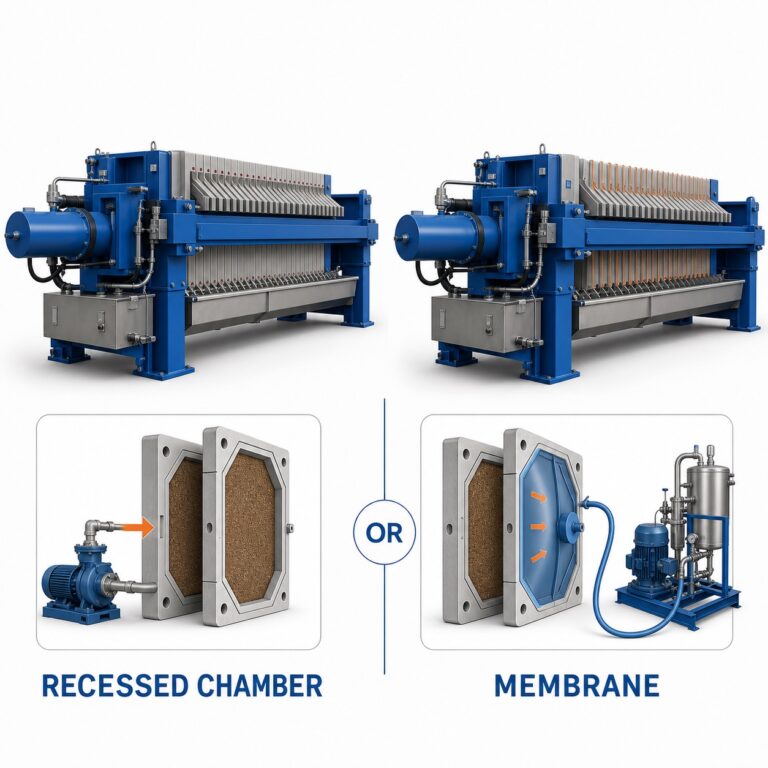
Le moment du remplacement doit être déterminé en fonction d’indicateurs de performance plutôt que d’un nombre fixe de cycles. Lorsque le nettoyage ne parvient systématiquement pas à ramener le débit de drainage ou l’humidité du gâteau dans une fourchette acceptable — non pas une seule fois, mais sur deux ou trois cycles de nettoyage —, la toile a atteint la fin de sa durée de vie utile récupérable, quel que soit son nombre de cycles écoulés. Les filtres-presses à plaques encastrées utilisés pour les applications de boues de pierre sont généralement dotés d’un système d’accès aux toiles qui influe sur la rapidité avec laquelle ce cycle d’inspection et de remplacement peut être effectué ; charge d'entretien et considérations relatives à l'accessibilité selon les types de presses Il convient de les examiner avant de mettre en place un protocole de nettoyage et de remplacement au niveau du site.
Déterminer à quel moment il vaut mieux modifier le prétraitement plutôt que de remplacer le tissu filtrant
Lorsque le nettoyage ne permet plus de rétablir une perméabilité suffisante et que le colmatage réapparaît après seulement quelques cycles suivant la mise en place d’une nouvelle toile, le problème ne relève plus de l’entretien de la toile, mais du conditionnement de la matière première — et la solution appropriée consiste à ajuster le prétraitement, et non à accélérer le remplacement. Remplacer la toile à un rythme plus fréquent sans s'attaquer à l'état de la matière première qui a provoqué le colmatage prématuré au départ ne fera que reproduire le même résultat, pour le même coût.
La filtration avec pré-revêtement — qui consiste à appliquer une couche d’adjuvant de filtration, tel que de la terre de diatomées ou de la pâte de bois blanchie, à la surface de la toile avant l’introduction de la boue — protège les pores du contact direct avec les particules colmatantes pendant la phase critique initiale de chaque cycle. Il s’agit d’une pratique largement admise pour les charges riches en particules fines, qu’il vaut la peine d’essayer avant de s’engager dans un changement de spécification de toile ou une refonte du programme de polymères. La seule contrainte réside dans la discipline opérationnelle : pour être efficace, le pré-revêtement doit être appliqué de manière systématique avant chaque cycle, et cette pratique ajoute une étape de préparation que certains sites hésitent à intégrer dans leurs plannings à haut débit.
| Méthode de prétraitement | Comment ça marche ? | Guide de candidature |
|---|---|---|
| Filtration avec pré-couche de résine | Une couche d'adjuvant de filtration (par exemple, terre de diatomées, pâte de bois blanchie) est appliquée sur la toile avant l'alimentation en boue, afin de protéger les pores du contact direct avec les particules susceptibles de les obstruer. | Appliquer une couche de pré-revêtement avant chaque cycle ou chaque lot ; il s'agit d'une solution largement reconnue pour éviter l'obstruction des toiles. |
| Alimentation du corps | L'adjuvant de filtration est mélangé directement à la boue, formant ainsi une couche interne poreuse qui empêche l'agglomération des particules dans la toile. | Commencez par utiliser 100 livres d'adjuvant de filtration pour 1 000 gallons de solution, puis réduisez la dose jusqu'au minimum efficace. |
L'ajout en masse — c'est-à-dire le mélange de l'adjuvant de filtration directement dans la boue — permet d'obtenir une structure interne poreuse continue qui empêche l'agglomération des particules dans la toile pendant la filtration. Une dose de référence initiale de 100 livres d’adjuvant de filtration pour 1 000 gallons de boue, issue des recommandations des professionnels plutôt que d’une norme réglementaire, sert de point de départ pour l’ajustement ; l’objectif est de réduire progressivement cette dose jusqu’à la dose minimale efficace permettant de maintenir un drainage acceptable, car un excès d’adjuvant de filtration augmente le coût des matières sans apporter de gain de performance supplémentaire. Le pré-enduction et l’alimentation en suspension sont toutes deux des interventions au niveau du procédé qui modifient la rentabilité du remplacement des toiles — si l’une ou l’autre prolonge la durée de vie de la toile de 150 cycles à 350 cycles sans que le surcoût en adjuvant de filtration ne dépasse les économies réalisées sur la toile et la main-d’œuvre, l’option de prétraitement constitue le choix opérationnel le plus justifiable.
Pour les opérations en cours d'exécution filtres-presses à plaques et cadres encastrés En ce qui concerne la boue de roche, l'interaction entre la profondeur de la chambre, la compressibilité du gâteau et le programme de prétraitement influe également sur le degré de séchage du gâteau pouvant être atteint — un lien examiné plus en détail dans Optimisation de l'épaisseur du gâteau en fonction de la teneur en humidité souhaitée.
L’idée centrale que cet article vise à étayer consiste à distinguer une défaillance du tissu ou du procédé d’une limitation de capacité de la presse — car les mesures à prendre en matière d’approvisionnement et d’exploitation sont totalement différentes, et il est facile de se tromper de diagnostic lorsque seuls les symptômes au niveau du rendement sont visibles. Avant tout remplacement de toile, tout redimensionnement de la presse ou tout essai de prétraitement, les quatre variables en interaction — dosage de polymère et qualité du conditionnement, profil de montée en pression, spécifications de la toile et programme de lavage — doivent être évaluées chacune séparément. Modifier l’une d’entre elles sans comprendre les autres produit des résultats difficiles à interpréter et peut nécessiter des cycles correctifs supplémentaires.
Pour les équipes chargées d'élaborer un protocole de maintenance, le cahier des charges d'un appel d'offres ou un calendrier de remplacement des toiles, la prochaine étape la plus utile consiste à mettre en place un registre de performances cycle par cycle qui consigne de manière cohérente la durée de filtration et l'humidité du gâteau, plutôt que de se fier aux estimations de l'opérateur à la fin de chaque lot. C'est ce registre qui fait la différence entre une décision justifiable concernant le prétraitement ou les spécifications des toiles et un choix d'achat effectué sans données de processus adéquates.
Questions fréquemment posées
Q : Notre source d'approvisionnement en pierre varie selon les saisons. Les spécifications relatives au tissu définies lors de la mise en service restent-elles valables lorsque la composition du flux d'alimentation change ?
R : Pas de manière fiable. La taille des pores et le type de tissage d’une toile sont adaptés à une distribution granulométrique spécifique, et un changement dans le flux d’alimentation vers des matériaux plus fins ou plus colloïdaux peut entraîner un colmatage rapide d’une toile auparavant adéquate, même si aucun autre élément du processus ne change. Lorsque la provenance de la pierre ou le procédé de concassage change, il convient de revérifier la distribution granulométrique et de réexaminer les spécifications du tissu à la lumière du nouveau profil d’alimentation avant que le colmatage ne se reproduise et ne rende cette révision inévitable.
Q : Une fois le dosage de polymère et la courbe de pression définis, comment savoir si les toiles existantes sont encore réutilisables ou s'il faut déjà les remplacer ?
R : Effectuez deux ou trois cycles de nettoyage complets selon le processus corrigé et vérifiez si le débit de drainage et l’humidité du gâteau reviennent aux valeurs de référence établies lors de la mise en service. Si c’est le cas, les toiles sont récupérables. Si plusieurs nettoyages consécutifs ne parviennent pas à rétablir des performances acceptables, cela signifie que l’intérieur des toiles a été endommagé au-delà de ce que le lavage peut réparer, et leur remplacement est alors justifié — non pas en raison du nombre de cycles, mais parce que la réponse en termes de performances au nettoyage n’est plus satisfaisante.
Q : La filtration par pré-revêtement est-elle pertinente dans le cadre de programmes à haut débit, où l'ajout d'une étape de préparation entre les cycles incite à la supprimer ?
R : Le pré-revêtement n’offre ses avantages anti-colmatage que s’il est appliqué de manière systématique avant chaque cycle — une application intermittente n’apporte aucune protection significative et engendre des coûts sans contrepartie. Si le calendrier de production du site rend difficile, d’un point de vue opérationnel, l’application systématique de la couche d’apprêt, l’ajout direct — c’est-à-dire le mélange de l’adjuvant de filtration directement dans la boue — constitue une alternative plus pratique, car il s’intègre dans le flux d’alimentation sans nécessiter d’étape de préparation distincte à chaque cycle.
Q : Le monofilament en PA66 est-il toujours préférable au PP pour les boues de roche, ou existe-t-il des situations où le PP reste le choix le plus judicieux ?
R : Le PA66 constitue le choix le plus judicieux lorsque l’abrasion est le principal mécanisme d’usure et que la fréquence de remplacement des toiles est le principal facteur de coût d’exploitation. Le PP devient une option valable lorsque la composition chimique de la boue présente des conditions dégradant le nylon — certains environnements acides ou oxydants — ou lorsque le coût initial des toiles constitue une contrainte stricte et que l’exploitation peut supporter une fréquence de remplacement plus élevée. La comparaison penche en faveur du PA66 à mesure que la charge abrasive augmente ; pour les types de pierres à faible abrasion où le colmatage, plutôt que l’usure, constitue le principal mode de défaillance, le choix du matériau devient moins déterminant que la taille des pores et le traitement de surface.
Q : Nous ne disposons d'aucune donnée de référence relative à la mise en service dans nos dossiers. Est-il tout de même utile de commencer dès maintenant à enregistrer les données cycle par cycle, ou cela n'a-t-il de sens qu'à partir du premier jour ?
R : Le lancement d’un journal de performance dès maintenant permet tout de même d’obtenir des données utiles, même en l’absence d’une référence de mise en service. Après quelques semaines d’enregistrement régulier, ce journal établit une référence opérationnelle actuelle et met en évidence les tendances de détérioration en temps réel. L’absence de données historiques limite certes la capacité à évaluer l’ampleur de la dégradation déjà survenue, mais elle ne diminue en rien l’intérêt du journal pour détecter toute dégradation future, planifier les interventions de nettoyage avant que le système de drainage ne tombe en panne, et constituer le dossier de suivi nécessaire pour étayer une décision justifiable concernant le choix du tissu filtrant ou du prétraitement.