Un dépoussiéreur qui a passé avec succès les essais de réception en usine chez le fournisseur peut tout de même tomber en panne dès la première semaine dans votre atelier de production — non pas parce que le cahier des charges était erroné, mais parce que les essais n’ont jamais reflété la charge de fonctionnement réelle. Un média filtrant qui fonctionne correctement avec de l’air d’essai pur peut se transformer en véritable diffuseur de poussières fines dès que le meulage ou la découpe commencent pour de bon, et une variation de perte de charge qui semble gérable prise isolément peut se traduire par une réduction de 40% du débit d’air au niveau de la face de la hotte après un seul cycle de remplissage dans certains modèles de dépoussiéreurs à un seul étage. La signature d’un document de réception n’a de sens que si les conditions d’essai reflètent réellement l’installation : équipement de production en fonctionnement, opérateurs à leurs postes habituels, cycles de nettoyage par impulsions en cours, et trémie se vidant dans les mêmes conditions qu’elle le fera à chaque équipe. Ce qui suit fournit aux équipes de mise en service et aux responsables des achats les vérifications spécifiques — débit d’air, pression, fuites visibles, méthode d’échantillonnage, comportement des impulsions, simulation de déchargement et comparaison des résultats — qui distinguent une véritable réception d’une simple hypothèse documentée.
Vérifier le débit d'air à chaque point de prélèvement
La capacité nominale du ventilateur et le débit d’air mesuré à chaque point de prélèvement sont des valeurs distinctes, et c’est en considérant l’une comme un substitut de l’autre que de nombreuses installations échouent discrètement. Un collecteur correctement dimensionné au niveau du système peut tout de même produire une vitesse de captage insuffisante au niveau d’une hotte éloignée si la résistance des conduits de dérivation, les réglages des registres ou les pertes au niveau des raccords ont été estimés plutôt que mesurés lors de la conception. Les essais de réception doivent vérifier la vitesse réelle et le débit volumique à chaque point de prélèvement dans des conditions normales de fonctionnement, et non pas uniquement le débit global du système.
En matière de mesure de la vitesse et du débit volumétrique, la norme ISO 10780 fournit un cadre reconnu pour parcourir les sections transversales des conduits et calculer le débit volumétrique à partir de relevés de vitesse en plusieurs points. Il ne s'agit pas d'une exigence réglementaire obligatoire pour toutes les installations industrielles, mais lorsque le cahier des charges du projet exige des mesures traçables ou lorsque les réglementations locales imposent une méthode formelle, cette norme confère à l'essai une base technique solide. L'utiliser comme cadre d'essai — plutôt que de le considérer comme une norme de conformité contraignante — constitue l'approche la plus appropriée pour la plupart des scénarios de réception.
Le critère de décision pratique consiste à déterminer si chaque point de prélèvement atteint la vitesse de captage prévue à la source, et non si le débit d'air total du système correspond à la courbe du ventilateur. Une installation présentant un débit total adéquat mais une répartition déséquilibrée entre les dérivations affichera des valeurs globales acceptables tout en laissant certaines opérations insuffisamment captées. Identifiez le point de prélèvement le plus éloigné sur le plan hydraulique avant le début de l'essai, et considérez-le comme le critère d'acceptation essentiel.
Enregistrer la pression statique et la perte de charge au niveau du filtre
La pression statique aux niveaux de l’ensemble filtrant sert d’indicateur de l’état du filtre, mais ne remplace pas la mesure du débit d’air ; son utilisation comme critère d’acceptation unique surestime sa résolution, à moins qu’une corrélation spécifique au site entre la perte de charge et le débit n’ait été établie. Lors de la réception, la bonne approche consiste à enregistrer la pression statique de référence aux niveaux du filtre au début de l’essai, à la comparer à la plage de fonctionnement nominale indiquée par le fournisseur et à vérifier que les mesures de débit d’air effectuées simultanément correspondent aux hypothèses de conception pour cette perte de charge.
La question la plus importante en matière d'acceptation est de savoir à quelle vitesse la perte de charge augmente sous une charge de production réelle. Dans les collecteurs à un seul étage présentant un encrassement rapide du filtre, des observations documentées montrent que le débit d’air peut chuter d’environ 40% après un seul remplissage des sacs — un mode de défaillance qui n’apparaîtra pas lors d’un bref essai sur banc à air pur. Il ne s’agit pas d’une constante de conception universelle, mais d’un schéma de risque indicatif que les essais de réception sur les collecteurs à un seul étage devraient délibérément provoquer en effectuant l’essai sur au moins un cycle de production représentatif, plutôt que de s’arrêter aux conditions de mise en service initiale.
L'enregistrement de la perte de charge au début et à la fin du cycle, ainsi que des mesures de débit d'air correspondantes, fournit à l'équipe de mise en service une enveloppe de performances en conditions de charge réelle. Si le système de nettoyage du collecteur est censé rétablir la perte de charge entre les cycles, l'essai doit confirmer que ce rétablissement a bien lieu et que le débit d'air après l'impulsion revient dans la plage de conception avant le début du cycle de production suivant.
Vérifier la présence d'émanations visibles lors du meulage ou de la découpe en conditions normales
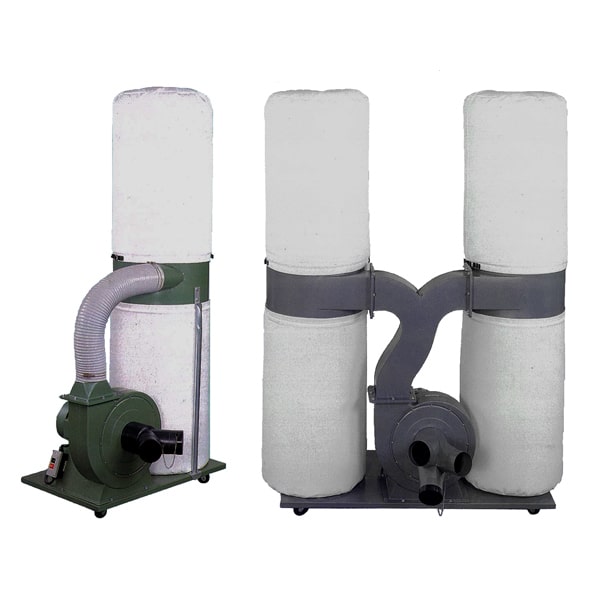
Une fuite de poussière visible à hauteur de tête ou à proximité lors de la production est l'un des signaux de défaillance les plus évidents qu'un test de réception puisse révéler, et c'est également l'un de ceux qui sont le plus souvent ignorés, car le collecteur semble fonctionner sans déclencher d'alarme. Les médias filtrants à faible efficacité — en particulier les sacs en polyester poreux de l'ordre de 30 microns — peuvent laisser passer des particules fines en fonctionnement normal, créant ainsi un nuage de poussière visible à hauteur de la zone de respiration de l'opérateur, que aucune mesure de pression statique ne permettra de détecter. La présence de poussière fine constitue un risque opérationnel probable qui mérite d'être testé de manière explicite, et non un cas marginal.
Le contrôle en lui-même est simple : il suffit de faire fonctionner l’installation de production réelle — broyage, découpe, mélange, quel que soit le cas de figure prévu — à un débit représentatif, puis d’observer les effluents du collecteur et l’espace autour des postes des opérateurs. Toute fuite visible au niveau de la cheminée d’évacuation ou de la sortie d’air de recirculation doit être considérée comme un problème lié au média filtrant ou au dimensionnement du système, qui doit être résolu avant la clôture de la réception. La distinction entre une fuite visible et une non-conformité réglementaire spécifique dépend de la norme locale applicable en matière d’émissions visibles et du matériau concerné ; toutefois, qu’une limite officielle soit atteinte ou non, une fuite visible au niveau des postes d’opérateurs constitue un défaut de confinement au regard de toute norme de production raisonnable.
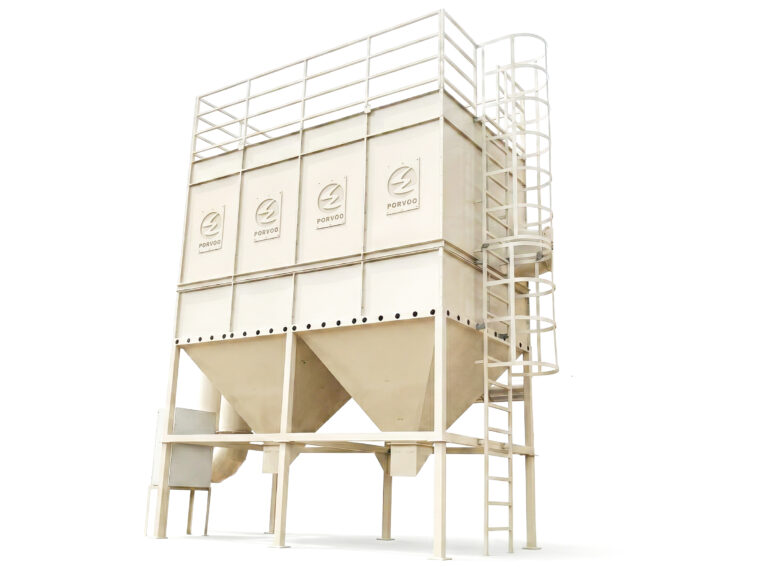
Pour les applications où des poussières fines ou dangereuses sont présentes, un Dépoussiéreur à cartouche L'utilisation de matériaux filtrants aux caractéristiques adaptées permet d'obtenir une filtration nettement plus fine que celle offerte par les modèles à poches poreuses — une distinction qui doit être précisée dès la phase de spécification plutôt que d'être constatée lors de la réception.
Préciser la méthode d'échantillonnage des particules ou de la poussière, le cas échéant
Tous les essais de réception d'un dépoussiéreur ne nécessitent pas forcément un échantillonnage formel des particules en suspension dans l'air ; toutefois, lorsque l'application concerne des matières pour lesquelles des limites d'exposition professionnelle ont été définies, il n'est pas justifiable de se fier uniquement à l'observation visuelle et aux mesures de perte de charge. Le protocole de réception doit préciser à l'avance si un échantillonnage des particules en suspension dans l'air est requis, qui est chargé de prélever et d'analyser les échantillons, et quel est le seuil de réception.
L'une des approches utilisées pour les systèmes confinés traitant des matières dangereuses ou hautement actives est le test de substitution : il s'agit de remplacer la matière de processus réelle par un composé de substitution — le lactose à concentration non diluée en est un exemple documenté — qui peut être détecté à de très faibles concentrations dans l'air sans présenter le risque d'exposition sanitaire lié à la matière réelle. L'utilisation de poussière de substitution 100% plutôt que des concentrations diluées typiques des flux de procédé réels crée un scénario de pire cas pour le collecteur lors de la mise en service, ce qui est précisément le but recherché. Il s'agit d'une option spécifique au fabricant et à l'application, et non d'une norme à l'échelle du secteur, mais lorsque les VLE sont strictes et que la substance réelle ne peut pas être utilisée en toute sécurité pendant la mise en service, cette approche s'avère utile dans la pratique.
Lorsqu'un protocole d'échantillonnage réglementaire est requis — pour les émissions des cheminées ou les mesures environnementales officielles —, les méthodes gravimétriques telles que celles décrites dans les normes ISO 9096 ou ASTM D6331 fournissent des cadres reconnus pour la détermination de la concentration massique, bien que l'applicabilité de chacune d'entre elles dépende des exigences locales spécifiques ou des conditions d'autorisation.
| Type de durée d'échantillonnage | Seuil de détection (lactose) | Application typique |
|---|---|---|
| TWA sur 8 heures | 0,005 µg/m³ | Évaluation de l'exposition sur une journée de travail complète |
| STEL de 14 minutes | 0,17 µg/m³ | Contrôle de l'exposition maximale à court terme |
Les limites de détection indiquées dans le tableau sont importantes, car elles déterminent si la méthode d’échantillonnage permet réellement de confirmer la conformité à la VLE concernée. Une méthode incapable de détecter des concentrations proches de la limite cible donnera automatiquement un résultat conforme, sans fondement factuel — ce qui constitue un type d’acceptation différent et bien moins solide.
Observer le comportement des impulsions de nettoyage et du déchargement de la trémie
Un collecteur qui assure un débit d’air adéquat et une perte de charge acceptable au niveau du filtre au début d’un essai, mais dont les performances se dégradent progressivement en raison d’un dysfonctionnement de son système de nettoyage, a réussi un contrôle statique ponctuel, mais n’a pas obtenu l’acceptation opérationnelle. Le contrôle des impulsions de nettoyage doit confirmer que les impulsions, qu’elles soient temporisées ou déclenchées par la pression différentielle, se produisent à l’intervalle correct, qu’elles délogent effectivement les dépôts accumulés sur les surfaces des filtres, et que les dépôts délogés tombent et s’accumulent dans la trémie comme prévu, plutôt que d’être réentraînés dans le flux d’air.
Le contrôle de la vidange de la trémie est souvent la dernière étape des essais de réception. Pour les applications impliquant des matières dangereuses, l’opération de vidange — retrait de la doublure, cycle de la vanne, scellage du sac — constitue en soi un événement d’exposition qui doit être testé dans des conditions représentatives. Dans un cas documenté de système confiné, les opérateurs ont effectué trois cycles de vidange à l’aide d’un système à double vanne papillon, puis ont sertis et coupé la doublure ; les prélèvements d’air au niveau des opérateurs effectués pendant ces opérations ont confirmé des concentrations bien inférieures à la VLE applicable. Les chiffres spécifiques issus de ce cas concernent une conception de système et un matériau donnés et ne doivent pas être considérés comme des objectifs de performance universels ; toutefois, la structure de l’essai — simulant l’opération de déchargement et prélevant des échantillons d’air au niveau des postes des opérateurs pendant l’opération — constitue une bonne pratique pour toute application où le déchargement de la trémie crée une voie d’exposition plausible.
| Opérateur | Durée de l'échantillonnage (min) | Concentration mesurée (µg/m³) |
|---|---|---|
| Opérateur 1 | 126 | 0.077 |
| Opérateur 2 | 126 | 0.045 |
La conclusion à tirer ici est claire : si les opérations de déchargement n'ont pas été testées, le test de réception n'a pas couvert l'intégralité du cycle d'exposition. Pour les applications impliquant des matières contenues ou dangereuses, cette lacune constitue un risque qui doit soit être comblé avant la réception, soit être explicitement reporté en tant que point en suspens connu, assorti de mesures d'atténuation convenues.
Comparer les résultats aux hypothèses retenues
L'allégation de performance du fournisseur — qu'elle soit exprimée sous forme de limite OEL, de pourcentage d'efficacité de captage ou de concentration maximale dans les gaz d'échappement — constitue un engagement de conception, et non une limite réglementaire. Les essais de réception permettent de vérifier cet engagement par rapport aux performances réelles du système installé et en charge. La comparaison des résultats mesurés avec les hypothèses avancées n'a de sens que si les conditions d'essai correspondent effectivement, voire dépassent délibérément, les conditions que le fournisseur avait prises en compte lors de la formulation de son allégation.
Une fois les essais de réception terminés, trois scénarios sont possibles selon la façon dont les concentrations mesurées se situent par rapport au seuil indiqué par le fournisseur.
| Résultats | Dans quels cas cela s'applique-t-il ? | Action requise |
|---|---|---|
| Accepter tel quel | Les concentrations mesurées sont inférieures à la limite indiquée | Passer à l'acceptation |
| Modifier et refaire le test | Les résultats sont proches du seuil, mais ne sont pas tout à fait conformes. | Réglez le système, puis refaites le test |
| Évaluation des risques | Les performances sont inférieures au seuil | Procéder à une évaluation des risques et envisager l'utilisation d'EPI supplémentaires |
La phase de modification et de nouveau test est souvent sous-financée dans les calendriers de projet, ce qui explique en partie pourquoi les tests d’acceptation menés trop tôt — avant que le système ne soit entièrement équilibré, avant que la charge de production ne soit représentative ou avant que la synchronisation des impulsions de nettoyage n’ait été optimisée — ont tendance à produire des résultats marginaux plutôt que fiables. Un résultat jugé satisfaisant uniquement parce que le test a été réalisé dans des conditions favorables posera des problèmes dès le premier audit de production ou dès le premier changement de processus modifiant la charge de poussière. La voie de l’évaluation des risques, lorsque les performances ne sont pas à la hauteur, doit être le fruit d’une décision mûrement réfléchie, accompagnée d’une justification documentée, et non le résultat par défaut d’un test non concluant.
Conformité étroite aux performances du système installé
Les résultats des essais sur substituts, lorsqu’ils sont disponibles, peuvent constituer une preuve solide que le collecteur répondra aux exigences de contrôle des émissions dans des conditions réelles d’exploitation. Dans un cas documenté, un client a accepté les résultats d’essais sur substituts lors des essais de réception sur site (FAT) comme preuve suffisante avant l’expédition de l’équipement. Toutefois, les données relatives aux performances de confinement ne suffisent pas à elles seules à valider la réception ; elles ne valident que la partie de l’examen consacrée au contrôle de l’exposition. La réception du système installé nécessite également une évaluation pratique visant à déterminer si le système est viable sur le plan opérationnel.
L'acceptabilité fonctionnelle englobe des facteurs qui n'apparaissent pas dans les données relatives aux émissions, mais qui influent sur le coût total de possession et la fiabilité opérationnelle à long terme.
| Facteur | Exigence relative à l'examen d'acceptation |
|---|---|
| Facilité d'entretien | Le client et le fabricant doivent examiner et approuver |
| Utilisation de l'énergie | Le client et le fabricant doivent examiner et approuver |
| Fiabilité | Le client et le fabricant doivent examiner et approuver |
| Coût total de possession | Le client et le fabricant doivent examiner et approuver |
La facilité d’entretien des filtres, la consommation d’énergie en charge de production, la fiabilité des impulsions de nettoyage et celle du déchargement de la trémie sont les facteurs les plus susceptibles d’engendrer des coûts de maintenance imprévus et des temps d’arrêt s’ils ne font pas l’objet d’un examen et d’un accord entre le client et le fournisseur avant la signature du procès-verbal de réception. Un collecteur qui respecte toutes les exigences en matière de confinement, mais dont le remplacement d’une cartouche filtrante nécessite deux personnes et trente minutes dans un espace confiné, accumulera des retards d’entretien tout au long de sa durée de vie. Ces examens ne constituent pas une liste de contrôle standard officielle à l’échelle du secteur, mais ils mettent en évidence l’écart entre ce que prouve un test de réception et ce dont une équipe de production a réellement besoin pour assurer le bon fonctionnement du système.
Pour les modèles de collecteurs à jet pulsé où la charge du filtre et la gestion des cycles de nettoyage sont essentielles au maintien des performances du débit d'air, le Dépoussiéreur à jet pulsé Les paramètres de conception du produit doivent être examinés spécifiquement en fonction du type de poussière générée lors de la production et du débit de charge dans le cadre de l'évaluation fonctionnelle ; il ne faut pas partir du principe qu'ils sont couverts par la seule capacité indiquée sur la plaque signalétique.
La différence entre une validation fiable et une hypothèse documentée réside dans le fait de savoir si le test a été réalisé dans des conditions susceptibles de mettre réellement en évidence un problème. Le débit d’air à chaque point de prélèvement sous charge de production, la perte de charge du filtre sur au moins un cycle de remplissage représentatif, les fuites visibles au niveau des postes opérateurs, la récupération après impulsion de nettoyage et le comportement de vidange de la trémie lors d’une opération réelle de retrait : chacun de ces éléments constitue un mode de défaillance potentiel qu’un test de plaque signalétique ou de air pur ne permettra pas de détecter. Avant la clôture de la réception, l’équipe doit être en mesure de confirmer lesquelles de ces vérifications ont été effectuées, quelles étaient les conditions d’essai par rapport aux hypothèses avancées par le fournisseur, et s’il subsiste un écart entre les conditions testées et les conditions réelles de production. C’est cette confirmation qui confère à un document de réception toute sa valeur pratique.
Questions fréquemment posées
Q : Notre processus de production fonctionne par intermittence et la trémie n'est jamais entièrement remplie au cours d'un même poste. Le test de réception nécessite-t-il tout de même un cycle de remplissage complet ?
R : Oui, mais vous pouvez simuler une charge maximale en faisant fonctionner le collecteur à son débit de production maximal pendant une période représentative, même si la trémie n’atteint pas sa capacité maximale. L’objectif est d’observer le comportement de la perte de charge du filtre sous une charge de poussière réelle et de vérifier la récupération après l’impulsion de nettoyage. Un cycle de remplissage partiel qui reproduit la charge de poussière maximale que votre processus peut produire au cours d’une seule fenêtre de fonctionnement fournit tout de même des données valables, à condition que l’essai ne soit pas interrompu avant que le système de nettoyage n’ait effectué au moins un cycle sous charge.
Q : Une fois toutes les vérifications effectuées, quels documents faut-il fournir pour finaliser officiellement la réception ?
R : Au minimum, vous devez disposer d’un rapport d’acceptation signé qui répertorie chaque paramètre de test (débit d’air aux points de prélèvement, perte de charge initiale et finale, observations de fuites visibles, résultats des prélèvements s’ils ont été effectués, et enregistrements des événements de rejet) aux côtés des objectifs de conception et des valeurs mesurées correspondants, ainsi qu’une déclaration claire confirmant que le système installé répond aux critères fonctionnels et de performance convenus. Tout écart, point en suspens ou évaluation des risques convenue doit être joint. Ce rapport sert de référence pour les futurs contrôles de maintenance et les demandes de garantie.
Q : À partir de quel moment la présence de poussière visible cesse-t-elle d'être un simple problème de performance pour devenir une infraction réglementaire ?
R : Le seuil est défini par votre autorisation locale d’émission atmosphérique ou par la norme relative aux émissions visibles — il s’agit généralement d’une limite d’opacité (par exemple, une opacité de 20% pour une émission continue). Si aucune limite numérique ne s’applique, une fuite visible au niveau des zones de respiration des opérateurs constitue tout de même un défaut de confinement qui doit être résolu avant la réception, car cela indique que le média filtrant ou la conception du système ne retient pas les particules fines. Vérifiez toujours la réglementation applicable à votre site et à votre matériau ; la conformité est distincte du contrôle de réception opérationnel, mais peut dicter les corrections nécessaires.
Q : Les collecteurs à cartouche et à jet pulsé nécessitent-ils des procédures d'essais de réception différentes ?
R : Les contrôles fondamentaux — débit d’air, perte de charge, fuites visibles et comportement de décharge — s’appliquent aux deux types de systèmes, mais l’évaluation du système de nettoyage diffère. Pour les dépoussiéreurs à cartouches, il faut vérifier que le nettoyage par impulsions inversées déloge efficacement les poussières fines des médias plissés et que les plis ne s’agglutinent pas. Pour les filtres à manches à impulsion, vous vous concentrez sur l’alignement des tubes d’impulsion, la synchronisation des vannes et la tension des manches afin de confirmer la libération de la poussière. Dans les deux cas, l’essai doit être réalisé en conditions réelles de charge de production afin de démontrer l’efficacité du nettoyage.
Q : Un test de réception complet est-il nécessaire pour un petit atelier ne comportant qu’une seule source de poussière et produisant de la poussière de bois non dangereuse ?
R : L'étendue des essais doit être adaptée au niveau de risque et aux exigences réglementaires. Au minimum, vérifiez le débit d’air au niveau du point de prélèvement unique, contrôlez s’il y a des fuites de poussière visibles pendant le fonctionnement et assurez-vous que l’impulsion de nettoyage (le cas échéant) rétablit le débit d’air après une période de charge typique. L’échantillonnage de l’air et les comparaisons formelles avec les VLE ne sont généralement pas nécessaires, sauf si la poussière fait l’objet d’une limite d’exposition établie ou si un permis exige des essais au niveau de la cheminée. Le cadre présenté dans cet article correspond à une approche de qualité maximale ; pour les environnements à faible risque, vous pouvez l’adapter en ne conservant que les contrôles qui ont une incidence directe sur la sécurité des travailleurs et la durée de vie du collecteur.