Specifying a moisture number without anchoring it to what happens to the cake after it leaves the press is one of the most common ways ceramic and stone sludge dewatering projects create trouble downstream. The machine passes its acceptance run, the number looks acceptable on paper, and then disposal costs come in higher than projected because the target was set to match a competitor’s datasheet rather than actual haul distance and gate fees. The more disruptive failure happens when the acceptance run itself was conducted under stable, hand-picked feed conditions, and real production — with its particle size swings, pH variability, and conditioning inconsistency — produces cake that never repeats the accepted moisture within the first month of operation. Getting this right means fixing the disposal route first, characterising the sludge second, and writing the moisture target and test conditions together as a single document rather than as separate procurement and engineering decisions. The sections that follow will help process engineers, EHS teams, and procurement leads judge which variables actually control achievable moisture and which acceptance conditions are too narrow to hold up in sustained production.
Tie cake moisture target to handling transport or disposal route
The first question is not what moisture is achievable — it is what moisture is required to make the downstream handling economical. A target that is tighter than the route demands will cost more to achieve and maintain than the savings justify. A target that is looser than the route requires will generate avoidable transport and disposal expense.
For ceramic and stone washing applications, optimised dewatering can bring cake moisture from approximately 40% down to around 18% through rapid high-volume filling and core blowout sequences. That reduction is meaningful for long-haul transport because disposal fees in most markets are assessed by weight, and reducing moisture directly reduces payable tonnage. As a rough planning benchmark from industry practice, a 1% reduction in cake moisture has been estimated to save up to $100,000 annually at sufficient volume — a figure that is not universally replicable but illustrates why tightening the target by even a few points can be worth engineering effort when haul distances and disposal volumes are large. For on-site treatment or short-haul routes, the same effort to squeeze cake drier adds chemical and energy cost without a corresponding logistics benefit.
| Disposal or transport scenario | Moisture target strategy | Ce qu'il faut vérifier |
|---|---|---|
| Long-distance transport | Target lower moisture (e.g., 18% cake moisture) to reduce weight and transport cost | Confirm disposal fees and haul distance; a 1% moisture reduction can save up to $100k per year |
| Incineration or mass-based disposal | Lower moisture improves calorific value and reduces disposal fee per tonne | Verify how moisture threshold affects gate fee and energy recovery economics |
| On-site treatment or short-haul routes | Avoid over-specification; higher moisture may be acceptable without added dewatering cost | Clarify that pushing below the site’s practical limit adds chemical and energy cost without transport benefit |
Over-specification is a real procurement risk. Buyers who request the lowest achievable moisture without first confirming disposal route, haul distance, and gate fee structure end up paying for conditioning chemicals, extended cycle time, and membrane squeeze capability that serve no commercial purpose at their site. Confirm those logistics inputs before writing a target into the equipment specification.
Sample sludge consistently before setting acceptance numbers
Acceptance numbers that come from a single grab sample will almost certainly misrepresent the achievable moisture range under sustained production. Feed slurry solids concentration, pH, particle size distribution, organic content, and zeta potential all vary across shifts and across quarry zones — and each of those variables changes how the sludge responds to conditioning chemicals and how much water the cake retains at a given pressure and cycle time.
ISO 5667-13:2011 provides a relevant framework for sludge sampling procedures and can serve as a reference point when structuring the sampling protocol for acceptance testing. The underlying principle — that a single grab sample does not characterise a variable feed stream — applies directly here. Sampling must capture multiple cycles across normal production variability, not just conditions that happen to be stable on the day the equipment supplier’s engineer is on site.
| Parameter to monitor | Why it affects acceptance targets | Sampling approach |
|---|---|---|
| Feed slurry solids concentration | Variations directly change cake moisture between cycles | Capture multiple cycles, not a single grab sample |
| Feed slurry pH | pH shifts alter chemical conditioning and flocculation performance | Monitor pH over time to bracket typical swings |
| Distribution de la taille des particules | Fine particles hold more water and dewater more slowly | Characterise from multiple representative batches |
| Organic content | Organic fractions bind water differently and shift achievable moisture | Include organic content in sample characterisation |
| Zeta potential | Indicates particle charge and the conditioning demand | Measure under field-like chemical and pH conditions |
The procurement consequence is direct: if the acceptance number is based on samples taken during an atypically stable period, the machine may pass its acceptance run and fail to repeat that performance within weeks of handover. Fine ceramic or stone particles, pH swings driven by process chemistry upstream, and organic carryover from cutting fluids or clay fractions all alter the dewatering resistance in ways that a single characterisation point will not capture. The sampling protocol belongs in the acceptance test specification, not left as an assumption.
Compare moisture target with cycle time and chemical demand
Tightening the moisture target beyond a certain threshold does not just cost more — it can consume the savings it was meant to generate. The trade-off is not always obvious until it is calculated against actual cycle throughput and chemical spend.
Membrane squeeze cycles and air-blowing can reduce cake moisture by an additional 3–8% compared to conventional pressure filtration alone. That is a meaningful reduction when transport costs are high and volumes are large. The paired penalty is extended cycle time, higher energy consumption per batch, and accelerated wear on membrane plates and cloths. At some point — and the crossover depends on sludge type, polymer response, and local disposal fees — the marginal cost of achieving the last few percentage points of dryness exceeds the disposal saving it generates.
| Dewatering enhancement | Typical moisture reduction | Operational trade-off |
|---|---|---|
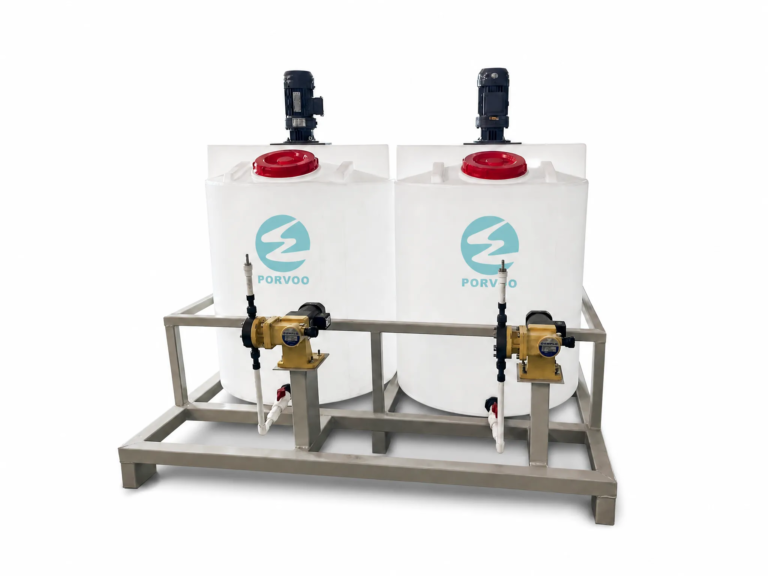
| Higher polymer dosage | Variable increase in dryness | Higher chemical cost and risk of cloth blinding |
| Higher pressure or longer cycle time | Marginal to moderate improvement | Increased energy consumption, wear, and longer batch time |
| Membrane squeeze / air-blowing | Additional 3–8% moisture reduction | Extended cycle time and higher energy use |
| Combined chemical–mechanical intensification | Can be significant when sludge is responsive | Must verify whether savings outweigh combined chemical, energy, and maintenance costs |
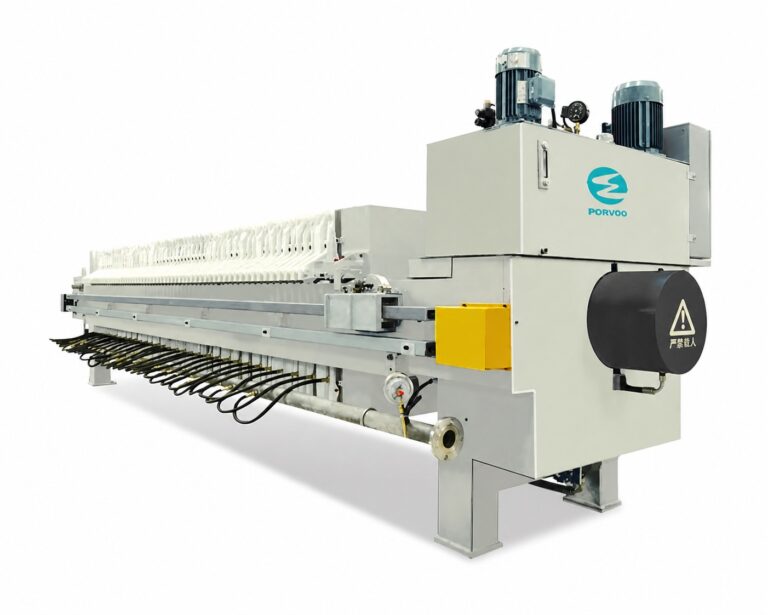
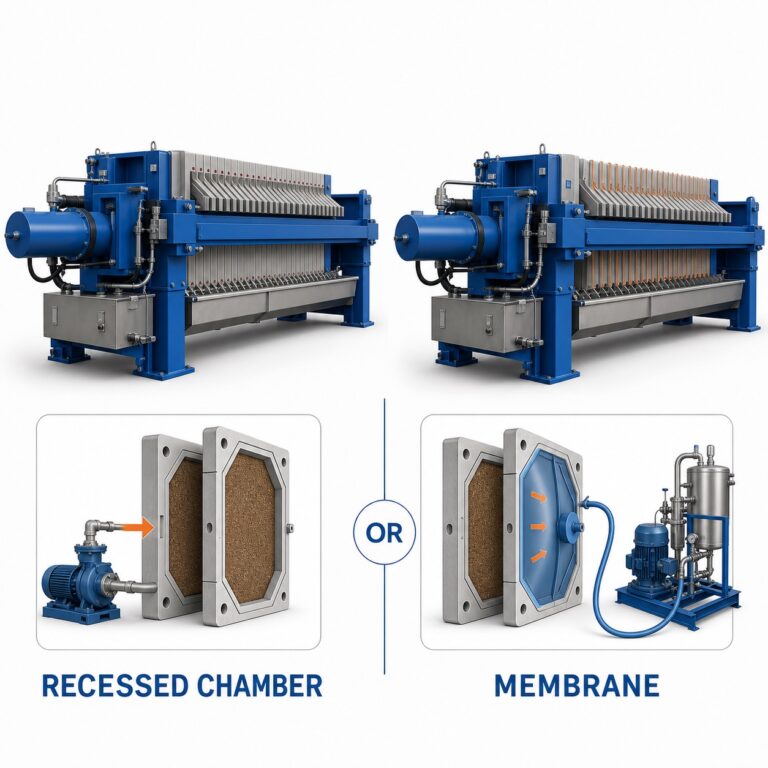
Buyers should define the acceptable cycle time as part of the moisture target specification, not separately. A moisture number without a cycle time constraint can be met by simply extending the press time indefinitely — which degrades throughput and increases operating cost while technically satisfying the acceptance criterion. The membrane filter press is the appropriate equipment path when a 3–8% squeeze gain is genuinely justified by the disposal economics; where that math does not close, a recessed plate configuration operating at a defined cycle time may deliver a more sustainable cost position. Equipment selection and moisture target must be decided together, not sequentially.
Check whether cloth condition changes repeatability
Filter cloth condition is the variable most likely to undermine moisture repeatability between cycles, and it is the variable most likely to be ignored during acceptance testing. As clay and fine ceramic particles blind the cloth, filtration resistance rises, dewatering rate slows, and cake moisture increases — quietly, without triggering any alarm. A machine that achieves the specified moisture on day one of an acceptance run may not repeat it by day three if cloth condition is not monitored and controlled across the full test period.
Cloth selection affects this risk. Monofilament weaves offer better drainage and are easier to clean but may allow finer particles to pass into the filtrate. Multifilament weaves retain solids more aggressively but blind faster under fine particle loads typical of ceramic grinding or stone washing circuits. Neither choice eliminates blinding risk; both require a defined cleaning cycle to maintain consistent filtration resistance across test runs. High-pressure cloth washing between cycles is the baseline maintenance step. For heavily blinded cloths, periodic acid washing may be required to restore permeability.
The procurement implication is that the acceptance test procedure should specify cloth condition as an explicit variable: how many cycles will be run before the cloth is cleaned, what cleaning method is used, and how filtrate clarity or differential pressure across the cloth will be monitored. Without those controls, what the acceptance committee is actually measuring is the cloth’s initial performance, not the machine’s repeatable operational performance. A machine accepted under new cloth conditions can fall outside specification within weeks once the cloth settles into normal blinding behaviour under production feed.
Define test runs feed assumptions and measurement method
If the feed assumptions for an acceptance test are not written down before the test begins, the moisture result cannot be defended or repeated. This is where many projects create disputes at handover: the supplier runs the machine under conditions that favour a dry result, the buyer accepts the number, and production then delivers a feed that is coarser, finer, or differently conditioned than the test assumed.
For stone washing circuits, a reasonable initial feed solids range is 10–20%, but the correct value depends on the specific process upstream of the press. Particle size distribution should be characterised across its full range, not summarised at d50, because the fine fraction controls water retention and dewatering rate disproportionately. Viscosity, specific gravity, and zeta potential should be measured at representative process temperatures, not at laboratory ambient conditions if the two differ materially. Chemical conditioning type and dose should be fixed by jar testing at lab scale before the acceptance run begins — not adjusted during the test to hit the target.
| What to define | Suggested detail or range | Pourquoi est-ce important ? |
|---|---|---|
| Initial feed solids | 10–20% for stone washing | Ensures test replicates production consistency |
| Distribution de la taille des particules | Full distribution, not just d50 | Controls water retention and dewatering rate |
| Viscosity and specific gravity | Measured at representative temperature | Influences pumpability and solid–liquid separation |
| Zeta potential | Lab measurement under process conditions | Signals charge stability and conditioning chemical response |
| Moisture content measurement method | ASTM D4413 or equivalent | Removes ambiguity in acceptance criteria |
| Conditioning chemical type and dose | Determined by lab jar testing before scale-up | Prevents under- or overdosing that skews moisture results |
Moisture content should be measured using a defined method — ASTM D4413 or an equivalent oven-dry gravimetric procedure — specified in the acceptance criteria before testing starts. GB/T 30176-2013 covers filter performance measurement and may provide a relevant process reference for the equipment under test. Neither standard governs the acceptance number itself, but specifying the measurement method removes the most common source of post-test dispute: two parties measuring the same cake and reporting different moisture values because they used different drying temperatures, sample masses, or timing protocols. Defining the measurement method is as important as defining the target.
Avoid promising one universal moisture percentage
A moisture target written as a standalone percentage — without naming the equipment type, feed conditions, and operating envelope — is functionally unenforceable. The same feed sludge will produce materially different cake dryness depending on which technology is used to dewater it, and those differences are not marginal.
| Equipment type | Typical cake solids range | Implication for the moisture target |
|---|---|---|
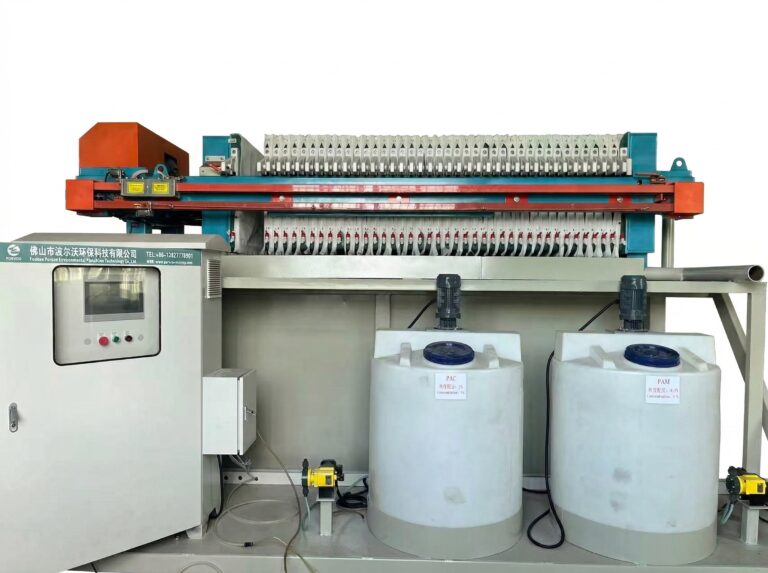
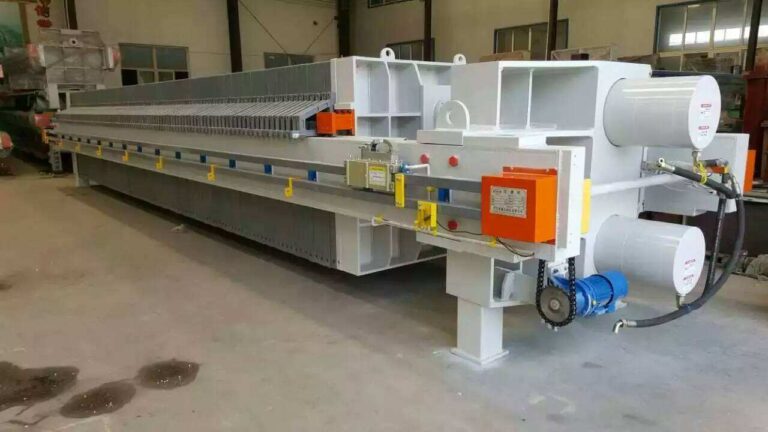
| Recessed-plate filter press | 30–50% solids | Capable of drier cake; target must align with this technology’s envelope |
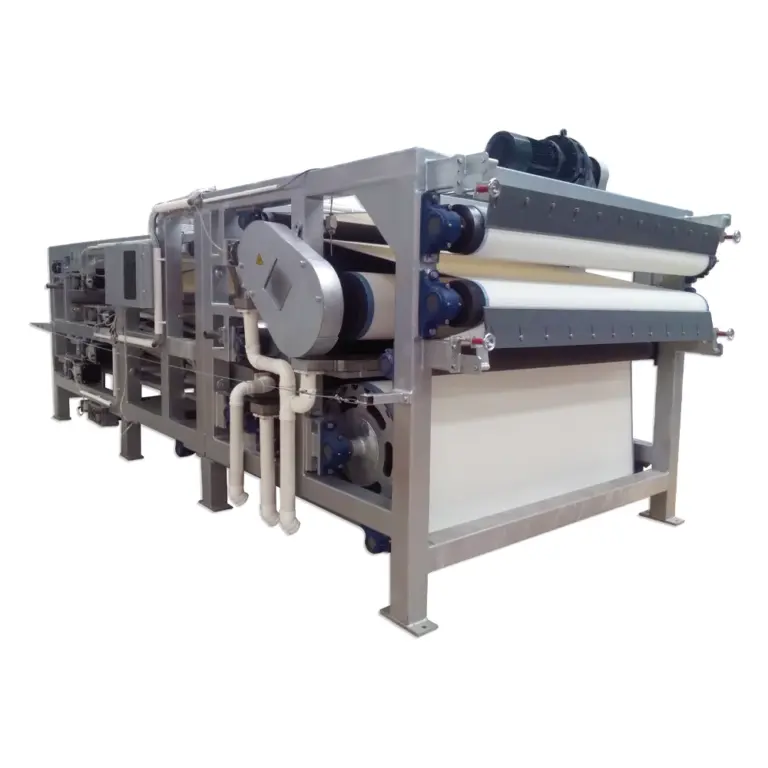
| Presse à bande | 15–30% solids | Cannot reach the dryness of a recessed-plate press; a single universal target would be unattainable or drive the wrong technology choice |
A recessed-plate filter press operating at design pressure can produce cake solids in the 30–50% range for responsive sludge. A belt press working on the same feed will typically land in the 15–30% solids range. Writing a target of, say, 75% moisture (25% solids) into a specification without naming the technology creates a situation where the target is achievable on one equipment type, unachievable on another, and may inadvertently drive the buyer toward a higher-capital solution when a lower-cost option would have satisfied the actual disposal requirement. See the comparison of recessed chamber and traditional frame designs for further data on how configuration choices affect achievable moisture, and the analysis of chamber depth optimisation for moisture targets by industry for guidance on how press geometry interacts with feed type.
The procurement rule is straightforward: the moisture target must be written against a named equipment type and a defined operating envelope — pressure, cycle time, cloth type, and feed solids range. A number without those anchors cannot be guaranteed by the supplier, cannot be verified during acceptance testing, and cannot be used to compare competing quotations on an equivalent basis.
Use acceptance data to refine the next equipment quote
Acceptance testing generates more useful information than a pass/fail determination on moisture. Mass-balance data from a correctly instrumented acceptance run — feed volume, feed solids, filtrate volume, filtrate suspended solids, cake mass, cake moisture — provides the inputs needed to calculate actual solids capture, actual water removal, and actual cycle throughput under defined feed conditions. That data is the most reliable basis for projecting annual disposal cost savings and for sizing chemical dosing requirements at sustained production rates.
The review check that most buyers skip is the total-cost evaluation: chemical spend per tonne of cake, energy consumed per cycle, cloth replacement interval, and maintenance burden compared against transport and disposal savings generated by the achieved moisture level. If that calculation was not done before the acceptance run, it should be done immediately after, using actual acceptance results rather than projected figures. The comparison will often reveal that the margin between the achieved moisture and the next tighter target does not justify the incremental cost of achieving it — or, occasionally, that a modest additional investment in membrane squeeze or polymer optimisation would recover significantly more in disposal savings than it costs.
That cost structure then feeds directly into the next equipment decision. A buyer who knows that 22% cake moisture with a 45-minute cycle time at a defined polymer dose produces a net saving of X per year is in a position to evaluate whether a membrane press upgrade, a different cloth specification, or a higher-pressure pump would shift that number meaningfully. A buyer who only knows that the machine passed acceptance at the specified moisture percentage has a data point, not a decision tool.
Before finalising any moisture target for a ceramic or stone sludge dewatering project, confirm three things: the disposal route and its cost structure, the representative feed characterisation across normal production variability, and the measurement method and test conditions that will govern the acceptance run. Those three inputs determine whether the moisture number in the specification is commercially meaningful or an arbitrary benchmark that the equipment cannot repeat in production.
The acceptance run itself is worth treating as a data-collection exercise rather than a compliance event. Feed assumptions, cycle time, chemical dose, cloth condition, and measurement method should all be documented at the time of testing so that the results can be compared against a future configuration change or used to cost-justify the next equipment upgrade. A well-documented acceptance run is reusable procurement data. One that records only the final moisture percentage is not.
Questions fréquemment posées
Q: What if the sludge composition changes significantly between the acceptance run and normal production?
A: The moisture target itself may need to be expressed as a range rather than a fixed point. If feed solids concentration, particle size distribution, or organic content shifts materially between seasons or quarry zones, a single acceptance number will not hold across sustained production — the specification should define the feed envelope within which the target applies, and any feed condition outside that envelope should trigger a separate performance evaluation rather than a warranty dispute.
Q: After the acceptance run is complete, what should be done with the data before signing off?
A: Run a full mass-balance calculation before closing out the acceptance — feed volume, filtrate volume, cake mass, cake moisture, and solids capture — and compare total operating cost per tonne of cake against actual disposal savings at the achieved moisture level. Sign-off should be conditional on that cost reconciliation, not just on whether the moisture number was met, because the mass-balance data is the only reliable input for sizing chemical dosing, projecting annual disposal savings, and justifying any future equipment upgrade.
Q: Does the moisture target advice still apply if disposal regulations at the site mandate a specific cake dryness regardless of transport economics?
A: When a regulatory threshold governs the minimum dryness — for example, a landfill gate rule or a provincial solid waste classification threshold — that limit overrides the logistics-based optimisation logic and becomes the non-negotiable floor. In that case, the procurement task shifts: the question is no longer what moisture is commercially optimal, but which equipment configuration, cycle design, and conditioning protocol can reliably meet the regulatory floor under the worst-case feed conditions the site will realistically encounter, not just under the stable conditions of an acceptance run.
Q: Is a membrane filter press always the better choice when the disposal economics justify tighter moisture?
A: Not automatically. A membrane press delivers the additional 3–8% moisture reduction when the sludge responds well to squeeze pressure — typically cohesive cakes with adequate structural integrity — but fine ceramic sludge with very high clay fractions can crack or extrude under membrane pressure, reducing the effective squeeze gain and increasing cloth wear. The decision should be based on squeeze trials with representative sludge before committing to membrane configuration, not on the published moisture improvement range alone.
Q: How should a buyer compare two competing filter press quotations when both claim to meet the same moisture target?
A: Moisture percentage alone is not a sufficient basis for comparison. Request that both suppliers specify the cycle time, operating pressure, cloth type, and polymer dose at which the target is achievable, and ask each to hold those parameters as part of the acceptance criteria. A target met at a 90-minute cycle with heavy polymer dosage is a materially different commercial outcome than the same target met at 45 minutes with half the dose — and only by fixing those variables in both quotations can the total operating cost be compared on an equivalent basis.