A process water recycling system that clarifies water to a stable, visually acceptable state is not automatically ready for every reuse point in the plant. When clarified water fails a downstream requirement, the question is not whether to add another treatment step, but whether the clarifier is actually the cause, and what the unmet requirement actually is before any equipment decision gets made.
Separate Clarification Performance From Reuse-Water Fitness
| Decisão | Evidências a serem comparadas | What the comparison establishes |
|---|---|---|
| Is clarification meeting its assigned task? | Representative influent and clarified-water results across operating conditions | Whether clarification is performing the solids and water-quality task assigned to it; this does not establish fitness for every reuse point |
| Is clarified water fit for the intended reuse? | Clarified-water results, the intended process use, and applicable requirements | Whether the water meets the project-specific conditions for that reuse point |
| Is another treatment stage justified? | The unmet reuse requirement and the likely cause of the gap | Whether an additional stage has a defined problem to address before a treatment option is selected |
Clarification is assigned a specific solids and water-quality task: settling or separating suspended material out of a stream so that the clarified output falls within a defined range for its intended use. Whether clarification is succeeding at that task is a separate question from whether the clarified water is fit for a particular reuse point, because different reuse points can carry different requirements even when they draw from the same clarified-water source.
This distinction matters because a buyer who conflates the two will misdiagnose the problem. If the clarifier is tested only against a single downstream complaint, rather than against the solids-removal task it was configured for, the conclusion drawn from that single comparison may not hold once operating conditions shift. A representative comparison across conditions, not a single sample pulled at a convenient moment, is what establishes whether the clarifier is doing its assigned job. Feed composition changes with upstream process variation, and a clarifier that performs within range at one loading or flow condition can show a different result at another. Judging clarification performance therefore requires looking at influent and clarified-water results together, across the range of conditions the clarifier actually sees, not at the clarified-water result in isolation.
Once clarification performance is established on its own terms, a second and distinct judgment follows: does the water meet the requirement for the specific reuse it is intended for? A result that satisfies one process use may not satisfy another use with a tighter or simply different acceptance condition. Where a plant uses clarified water across multiple reuse points with different requirements, the same clarified-water result can be sufficient for one point and insufficient for another. Treating “clarification works” and “this reuse point is satisfied” as the same conclusion skips the step where the project’s actual reuse requirement gets defined. A buyer evaluating a modular water recycling system, including configurations intended for ceramic and stone plant reuse streams, needs both judgments made separately before deciding that an additional stage is justified: first whether the clarifier met its task, second whether that met task is enough for the point where the water is reused.
Identify the Unmet Process Requirement Before Adding Equipment
Before specifying any additional treatment step, the unmet requirement itself needs to be stated in terms that can be tested, not in terms of a general impression that the water “looks wrong” or “isn’t working.” A vague dissatisfaction with reuse water does not tell a supplier what to configure, because filtration, membrane treatment, and chemistry adjustment solve different problems, and specifying the wrong one wastes the opportunity the diagnostic step was meant to provide.
The diagnostic sequence starts with naming the process that the water is failing to support. Is the issue a specific product or surface effect, a fouling or scaling tendency in reused water, a downstream equipment sensitivity, or a chemistry mismatch between the reused stream and the fresh water it displaces? Each of these implicates a different mechanism and a different candidate fix. A buyer who jumps from “the water isn’t right” directly to “we need another filter” has skipped the step where the actual mechanism gets identified, and the added equipment may not address the real gap.
This is also where the distinction between clarification performance and reuse fitness, already established, becomes operational. If clarification is meeting its assigned task and the reuse point is still unsatisfied, the gap lies either in a requirement that clarification was never configured to meet, or in a parameter that clarification does not control, such as a chemical characteristic or a biological condition. If clarification is not meeting its assigned task, the more direct question is why the clarifier itself is underperforming, which points toward the upstream causes rather than toward an additional downstream stage.
Where the plant operates multiple reuse points fed from a shared clarified-water source, the unmet requirement should be tied to the specific point that is failing, since a fix configured for one reuse point’s requirement will not necessarily resolve a different point’s distinct requirement. Stating the unmet requirement in testable terms, tied to a specific reuse point, is what allows the next diagnostic step to produce a usable answer rather than a guess.
Test Suspended Solids, Turbidity, pH, and Other Relevant Characteristics
| Característica | What to compare or determine | Limite de interpretação |
|---|---|---|
| Sólidos suspensos | Results determined by filtration through glass-fibre filters under ISO 11923 | The method sets no treatment guarantee or legal limit, and the result should not be treated as turbidity |
| Turbidez | Results determined by optical techniques under ISO 7027-1 | Turbidity is not suspended solids and is not a universal reuse criterion |
| pH | Representative results against the intended process use and applicable project requirements | The acceptable condition depends on the intended application and project-specific criteria |
| Other relevant characteristics | Characteristics selected for the unmet reuse requirement and likely cause being investigated | Product, process, chemical, microbial, and regulatory criteria remain site-specific |
Once the unmet requirement is named, the water needs to be characterized against measurements that match that requirement, and those measurements should not be treated as interchangeable. Suspended solids, determined by filtration through glass-fibre filters under ISO 11923, and turbidity, determined by optical techniques under ISO 7027-1, measure different physical properties of the water. A reduction in one does not establish a reduction in the other, and a project record that reports “clarity improved” without specifying which measurement changed leaves the actual cause unresolved.
This distinction has a direct consequence for diagnosis. If a reuse point’s complaint is framed around visual clarity, the relevant check is turbidity; if the complaint is framed around filter loading, scaling residue, or solids carryover, suspended solids is the more directly relevant measurement. Running only one when the complaint implicates the other produces a result that looks informative but does not actually test the mechanism in question. Both ISO 11923 and ISO 7027-1 state their own interferences and procedural conditions, and neither standard sets a treatment guarantee or a legal limit on its own; the standard tells the buyer how the number was obtained, not what number the project needs to achieve.
pH sits in a different category because its acceptable range depends entirely on the intended process use and the project’s own requirements, rather than on a universal number. A pH condition acceptable for one reuse application can be unacceptable for another, so the comparison has to run against the specific process the water is being reused for, not against a general assumption carried over from a different application.
Beyond these three, other characteristics become relevant depending on the unmet requirement identified earlier: a chemistry-driven complaint calls for different characteristics than a solids-driven complaint. As the EPA’s industrial reuse planning resources frame it, connecting source water, the intended application, the treatment train, and applicable requirements is the planning task; the specific product, process, chemical, microbial, and regulatory criteria that apply to any one characteristic remain site-specific and must be confirmed against the project’s own conditions, not assumed from a general reuse guideline.
Trace Grit, Dosing, Settling, and Sludge-Removal Causes
If the water-quality checks confirm that clarification itself is underperforming its assigned task, the next step is tracing which part of the clarification process is responsible, because different causes call for different corrective actions rather than a single added treatment stage.
Grit and coarse-particle carryover upstream of the clarifier changes the loading the clarifier has to handle. Where incoming grit is not controlled ahead of the clarification step, the clarifier is being asked to perform a settling task on a feed stream it was not configured to separate, and the resulting clarified-water result reflects that mismatch rather than a fault in the clarifier’s own design or operation.
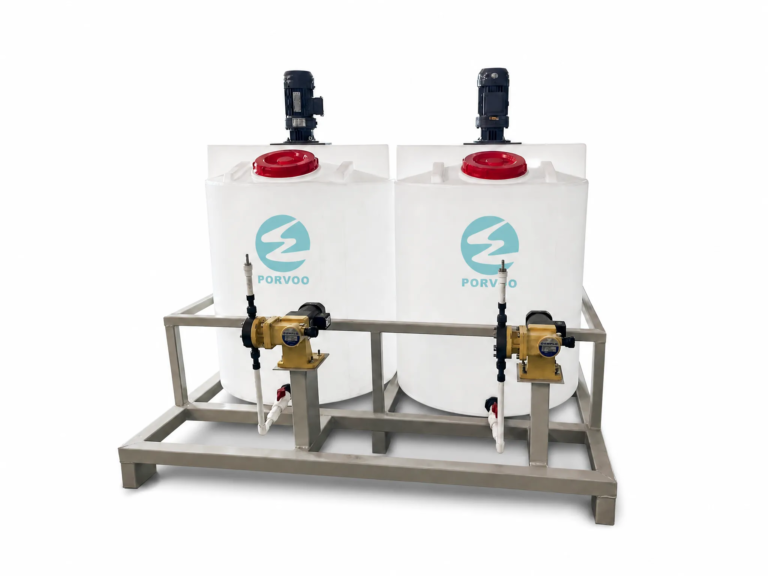
Dosing, where chemical addition is part of the configuration, governs how readily suspended material aggregates and settles. A dosing condition that is mismatched to the current feed characteristics, whether because the feed has shifted or because the dosing point and rate were set for a different condition, changes settling behavior without necessarily indicating any mechanical fault in the clarifier itself. Settling performance, in turn, depends on residence time and hydraulic conditions inside the vessel; a clarifier operating correctly at one flow rate can show different settling behavior at another, since the physical process of settling is time- and flow-dependent by nature.
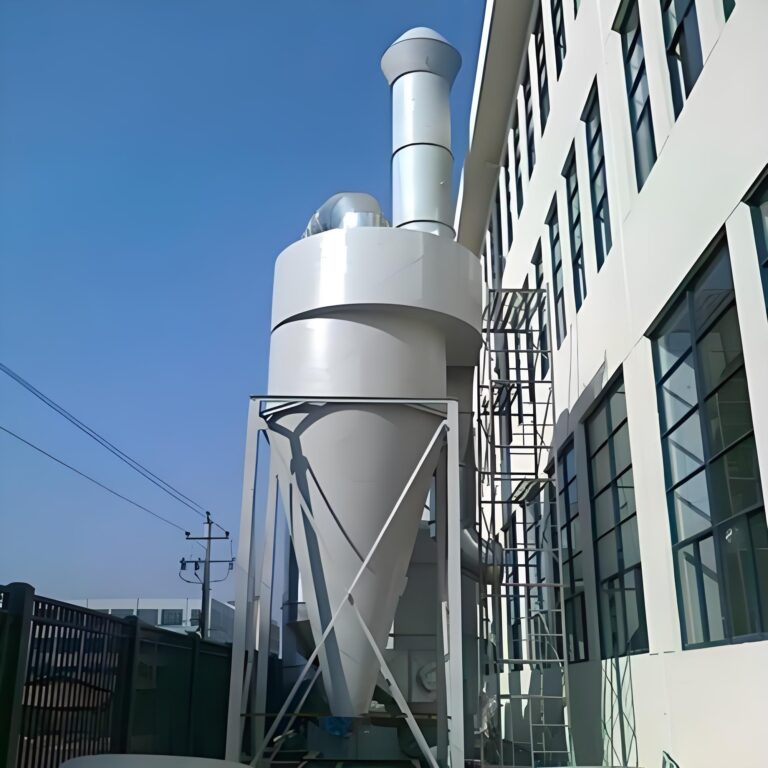
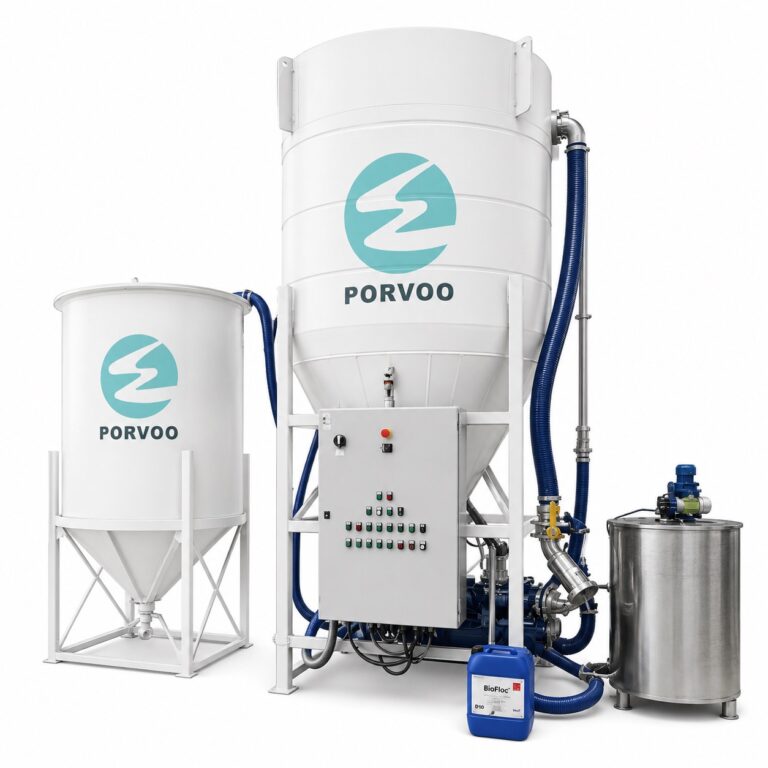
Sludge removal is the last link in this chain, and a consequence often expressed in clarified-water results rather than in the sludge zone where it originates. Where accumulated sludge is not withdrawn at a rate matching its generation, solids can resuspend into the clarified zone, producing a clarified-water result that looks like a settling failure even though the root cause sits in the removal step, not the settling step. A vertical sedimentation tower configuration, for instance, depends on sludge being drawn off the bottom at a rate that matches the solids load for the clarified zone above it to stay within its designed condition.
Tracing cause through this sequence, from grit control, to dosing, to settling, to sludge removal, identifies which part of the existing clarification stage needs adjustment before concluding that an entirely new treatment stage is the answer. A confirmed cause within clarification itself points toward adjusting that stage; a confirmed gap that clarification was never configured to close points toward the next decision.
Choose an Additional Treatment Step for the Confirmed Gap
Only once the requirement is defined and the cause is traced does selecting an additional treatment step become a sound decision rather than a guess. Filtration, membrane treatment, and chemistry adjustment each address a different category of gap, and the choice among them follows from what the preceding diagnosis actually confirmed, not from which option is most familiar or most readily available.
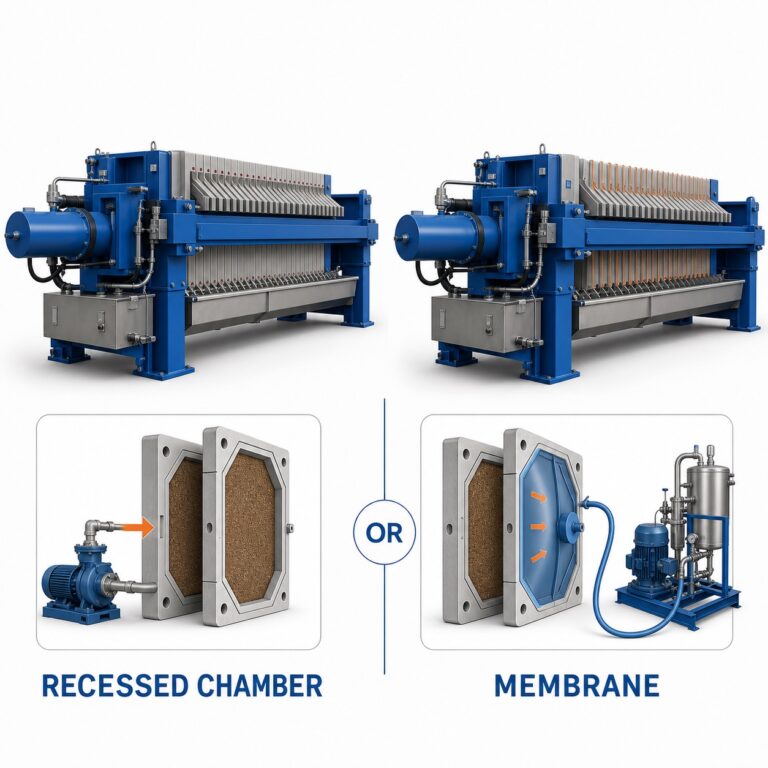
Where the confirmed gap is a solids-related limitation that clarification and sludge-removal correction cannot close, for example because the required particle-size cut is finer than gravity settling can achieve, a filtration or membrane step addresses a physical separation gap that clarification was never configured to reach. Where the confirmed gap is a chemistry mismatch, such as a pH or dissolved-constituent condition that the intended reuse application cannot tolerate, adding a filtration stage does not address that gap, because filtration and membrane steps separate suspended material, not dissolved chemistry; a dosing or chemistry-adjustment step is the one that addresses that category of requirement.
This is the point in the decision where the conditional contrast matters: where the unmet requirement is a solids or particle-size limitation, a membrane or finer-filtration stage downstream of clarification addresses the physical gap directly; where the unmet requirement is a chemistry or dissolved-constituent limitation, the same membrane stage will not close that gap, and a dosing or chemistry adjustment is the step that matches the confirmed cause. Selecting the wrong category of step against a correctly diagnosed gap means the new stage’s output still fails the same reuse requirement it was added to satisfy.
This is also the stage at which the project information a buyer supplies, the confirmed unmet requirement, the traced cause, and the representative water-quality results, enters a supplier’s configuration and quotation review, since those are the inputs that determine which additional stage, and at what configuration, actually matches the project’s confirmed gap rather than a generic assumption about what clarified water normally needs.
Set New Monitoring and Acceptance Conditions
| Monitoring or acceptance element | Condition to define | Uso da decisão |
|---|---|---|
| Source water | Representative influent results across operating conditions | Establishes the incoming water basis for interpreting downstream results |
| Clarified water | Representative clarified-water results across operating conditions | Shows performance against the task assigned to clarification |
| Intended application | The process use and the unmet reuse requirement | Identifies which water-quality characteristics and conditions must be judged |
| Treatment train | Clarification and any selected additional treatment stage | Identifies the project configuration covered by the monitoring results |
| Applicable requirements | Relevant process and site-specific regulatory conditions | Defines the acceptance boundary without treating any one measurement as a universal reuse criterion |
Adding a treatment step changes what needs to be monitored and what counts as acceptable, because the treatment train now includes a stage that did not exist when the original clarification-only monitoring plan was set. The monitoring plan has to be rebuilt around the full train, not just the new stage, since the new stage’s performance can only be interpreted correctly against the source-water and clarified-water results that already describe the upstream conditions.
Source-water results, taken across the range of operating conditions the plant actually sees, remain the basis for interpreting everything downstream; without that basis, a change in the new stage’s output cannot be distinguished from a change in what was fed into the train to begin with. Clarified-water results continue to describe whether the original clarification task is being met, independent of whether the new stage is also performing as intended. The intended application, and the specific unmet requirement that justified the new stage, define which characteristics the monitoring plan actually needs to track going forward, since a monitoring plan that tracks the same characteristics as before will miss whether the new stage closed the gap it was selected for.
The treatment train itself, meaning clarification together with whatever additional stage was selected, defines the configuration that any acceptance condition applies to; acceptance conditions set for clarification alone do not automatically transfer to a train that now includes a membrane or dosing stage. Applicable requirements, drawn from the relevant process and site-specific regulatory conditions, set the boundary against which the full train’s results are judged, and no single measurement, whether suspended solids, turbidity, or pH, should be treated as a universal reuse criterion that substitutes for that project-specific boundary.
This is also where equipment and interface decisions connect to what happens after installation: a modular recycling configuration or a sedimentation stage added to the train has maintenance, dosing, and sludge-handling interfaces that the monitoring plan needs to account for, since acceptance conditions set without reference to how the new stage integrates with existing sludge removal and dosing points will not reflect how the train actually behaves in ongoing operation.
Perguntas frequentes
Q: Does cloudy clarified water automatically mean another treatment stage is needed?
A: No. First compare representative influent and clarified-water results across operating conditions with the requirements of the intended reuse point. Then check whether the gap reflects clarification performance, a grit, dosing, settling, or sludge-removal issue, or a separate water-quality requirement before adding equipment.
Q: Can turbidity be used as a substitute for suspended-solids testing when deciding whether PWR clarification is sufficient?
A: No. Turbidity and suspended solids are different measurements, and neither provides a universal reuse criterion. Interpret each result against the intended process use and the applicable project conditions rather than assuming that a change in one establishes the other.
Q: What information should be prepared before comparing filtration, membrane treatment, chemistry adjustment, or another treatment step?
A: Define the unmet reuse requirement, the characteristic that fails to meet it, the likely cause of that gap, and the current treatment train. Include representative source-water and clarified-water results, the intended application, and any relevant process, chemical, microbial, or regulatory conditions so each option is assessed against a specific task.
Q: How can a buyer distinguish a clarifier problem from a reuse-water specification problem?
A: Judge clarification against the solids and water-quality task assigned to it, then make a separate comparison between clarified-water results and the conditions for the intended reuse. A clarifier may meet its assigned task while the reuse point still requires another treatment stage.
Q: What should acceptance criteria cover after an additional treatment stage is selected?
A: Set criteria for the actual project configuration and intended reuse point. Define which characteristics will be monitored, where representative samples will be taken, which operating conditions must be covered, and which process and site-specific requirements will determine acceptance.