Aumentar a dosagem de polímero costuma ser o primeiro ajuste que os operadores fazem quando o bolo sai úmido ou o filtrado fica turvo. O problema é que isso frequentemente piora a situação de maneiras que levam semanas para serem atribuídas ao sistema químico: depósitos de polímero se acumulam no tecido da correia, os ciclos de lavagem se tornam mais frequentes e a água de retorno transporta o excesso de polímero para o circuito de tratamento — tudo isso enquanto a causa subjacente acaba sendo o condicionamento do pH, que nunca foi verificado, ou uma taxa de alimentação de lodo acima da faixa para a qual a dosagem foi originalmente calibrada. O custo real não se resume apenas aos gastos com produtos químicos; trata-se do acúmulo de encargos de manutenção, da frequência de substituição da tela e das taxas de transporte que um bolo ligeiramente mais seco poderia ter compensado. O que as seções a seguir abordam é onde procurar antes de ajustar o botão de dosagem, como interpretar os sinais de drenagem e do filtrado em conjunto e onde a lógica financeira da otimização da secagem realmente se aplica.
Defina como deve ser um floco de boa qualidade para esse lodo
A qualidade do floco é a restrição a montante que todos os parâmetros a jusante — velocidade de drenagem, teor de sólidos no bolo, clareza do filtrado — acabam refletindo. Antes de comparar os níveis de dosagem, os operadores precisam de uma meta prática que defina como é, de fato, um floco aceitável para essa matéria-prima, e não de um parâmetro de referência genérico tomado de outra unidade.
Uma faixa de orientação útil, derivada de estudos de desaguamento controlado, é uma tensão de escoamento do floco de 1 a 5 Pa, o que corresponde a sólidos em suspensão no filtrado na faixa de 0,9 a 0,5 g/L. Esses valores devem ser considerados como metas práticas de projeto, derivadas de condições experimentais, e não como limites universais ou regulatórios. Diferentes composições de lodo — particularmente alimentações industriais mistas com carga orgânica variável ou variações sazonais de condutividade — podem apresentar desempenho aceitável de desaguamento fora dessa faixa ou falhar dentro dela. O que essa faixa oferece é um ponto de calibração inicial: flocos muito fracos drenam mal e perdem sólidos para o filtrado; flocos com dosagem excessiva e rígidos tendem a se romper sob a pressão da prensa e a impedir a descarga do bolo limpo.
A implicação prática para o comissionamento e a configuração do processo é que a resistência alvo do floco deve ser verificada em relação às características específicas da alimentação da unidade antes do início da otimização da dosagem. A realização de testes em jarros ou medições do tempo de sucção capilar (CST) com a alimentação real da planta — e não com lodo sintético ou uma linha de produção diferente — fornece à equipe um ponto de referência local. Sem isso, os ajustes de dosagem são feitos com base em um padrão indefinido, e torna-se difícil distinguir posteriormente um problema de dosagem de um problema relacionado às condições da alimentação.
Ajuste a ordem de adição do coagulante e do polímero de acordo com o pH antes de aumentar a dosagem
A sequência das adições químicas é mais importante do que a maioria dos exercícios iniciais de otimização leva em conta. O ajuste do pH e a dosagem do coagulante definem a carga superficial e as condições de agregação das partículas com as quais o polímero precisa trabalhar. Se essas condições iniciais estiverem desalinhadas, aumentar a dose de polímero não recupera a qualidade perdida dos flocos — isso apenas acrescenta custo a uma falha no condicionamento.
A alavanca de ajuste mais significativa costuma ser a concentração do polímero, e não a taxa de dosagem. A concentração afeta a extensão da cadeia do polímero e a eficiência da formação de pontes de uma forma que as alterações na taxa baseadas no volume não conseguem reproduzir. Se o desempenho atual estiver aquém do esperado, deve-se verificar se a proporção de diluição na unidade de reposição está produzindo a faixa de concentração alvo antes de aumentar a dose volumétrica. Essa não é uma distinção sutil: aumentos na taxa elevam o custo do produto químico de forma linear, enquanto ajustes na concentração atuam diretamente no próprio mecanismo de floculação.
A interação entre a vazão de alimentação do lodo e a taxa de dosagem do polímero agrava essa situação. Esses dois parâmetros devem ser tratados como entradas configuradas em conjunto, e não como variáveis ajustáveis independentemente. Uma taxa de dosagem calibrada para uma determinada vazão de alimentação produz uma relação polímero/sólidos diferente quando a vazão de alimentação muda — e essa variação na relação pode fazer com que o sistema passe de uma condição de subdosagem para uma condição adequadamente condicionada, ou de adequada para superdosagem, sem qualquer alteração na configuração da bomba dosadora. Equipes que otimizam a dosagem em um fluxo de teste fixo e, em seguida, operam a prensa em um fluxo operacional diferente, frequentemente constatam que os resultados do teste não se aplicam diretamente. Estabelecer a relação entre dosagem e alimentação em toda a faixa esperada de fluxo de alimentação, em vez de em um único ponto, é uma abordagem de configuração mais justificável.
Comparar a velocidade de drenagem, a liberação do bolo e a claridade do filtrado
Nem todos os parâmetros operacionais têm a mesma influência nos resultados da desaguamento, e interpretar erroneamente quais parâmetros são mais importantes leva a um esforço direcionado aos aspectos errados. Dados de ensaios controlados sobre o desempenho da prensa de correia apontam a vazão do lodo como a variável dominante para os sólidos suspensos no filtrado — uma constatação apoiada pela ANOVA com p = 0,0025, indicando que o controle da vazão de alimentação merece mais atenção do operador do que normalmente recebe em relação aos ajustes de dosagem. A velocidade linear da tela, por outro lado, é o parâmetro mais significativamente associado ao teor de sólidos do bolo, enquanto a velocidade da correia, por si só, não apresenta efeito estatisticamente significativo em nenhum dos dois resultados nas mesmas condições.
| Parâmetro operacional | Efeito sobre a secura do bolo | Efeito na claridade do filtrado | Importância |
|---|---|---|---|
| Vazão de lodo | Não é significativo para os sólidos do bolo | Parâmetro mais influente para os sólidos em suspensão no filtrado | p = 0,0025 (ANOVA) |
| Velocidade linear da tela | Afeta significativamente o teor de sólidos do bolo | Não foi relatado diretamente | p < 0,05 |
| Velocidade da correia | Nenhum efeito significativo | Nenhum efeito significativo | Não é significativo |
| Faixa prevista (geral) | Sólidos do bolo 10,39–14,26% | Sólidos no filtrado <0,5 g/L nas séries de ensaios 58% | - |
O que a tabela sugere, em termos operacionais, é uma estrutura de prioridades com duas alavancas: gerenciar a taxa de alimentação para proteger a claridade do filtrado e a captura de sólidos; ajustar a velocidade da tela linear para influenciar a secura do bolo. A velocidade da correia pode ser utilizada para o gerenciamento da produtividade, sem que se espere que isso altere a qualidade da desaguagem. A faixa de sólidos no bolo de 10,39–14,26% reflete o desempenho alcançável em condições típicas nesses ensaios — uma execução ultrapassou 14%, mas isso não deve ser considerado uma meta máxima confiável sem replicar as condições específicas que a produziram. Da mesma forma, atingir sólidos em suspensão no filtrado abaixo de 0,5 g/L — alcançado em 581 TP3T de ensaios — é uma meta operacional razoável, mas não um resultado garantido sob todas as condições de alimentação e polímeros. Definir critérios internos de aceitação com base nessa taxa de atingimento é mais justificável do que tratar 0,5 g/L como uma especificação fixa.
Fique atento à dosagem excessiva, que pode manchar o tecido ou sujar a água de retorno
A dosagem excessiva de polímero não se limita a reduzir o retorno do investimento em produtos químicos — ela cria um modo de falha de manutenção que se agrava com o tempo. O excesso de polímero que não se liga às partículas de lodo se deposita no tecido da correia, reduzindo progressivamente a capacidade de drenagem de uma forma que se assemelha a um declínio geral no desempenho, em vez de um problema químico específico.
| Risco | Por que é importante | O que monitorar |
|---|---|---|
| Depósitos de polímero nas correias decorrentes do uso excessivo de dosagem | Provoca o entupimento do filtro de tecido, exigindo lavagem com alta pressão; aumenta os custos de manutenção e o tempo de inatividade | Limpeza da correia após os ciclos, frequência necessária dos ciclos de lavagem |
| Dosagem inconsistente devido a verificações visuais manuais | Erros frequentes de subdosagem e sobredosagem reduzem a eficiência da desidratação e aumentam o desperdício de produtos químicos | Variação na qualidade do efluente, frequência e direção dos ajustes manuais |
O padrão de entupimento do pano é oneroso do ponto de vista operacional, pois a resposta corretiva — a lavagem da esteira sob alta pressão — aumenta simultaneamente o consumo de água, o tempo de inatividade do ciclo e o desgaste do pano. Se a dosagem excessiva continuar, a frequência de lavagem necessária para manter as taxas de drenagem pode anular o ganho de rendimento que a dose mais alta pretendia proporcionar. O que torna esse modo de falha persistente é o fato de ele ser auto-reforçador: o pano entupido drena mais lentamente, os operadores interpretam isso como baixo desempenho, e o instinto é aumentar ainda mais a dosagem, em vez de inspecionar e limpar o pano primeiro.
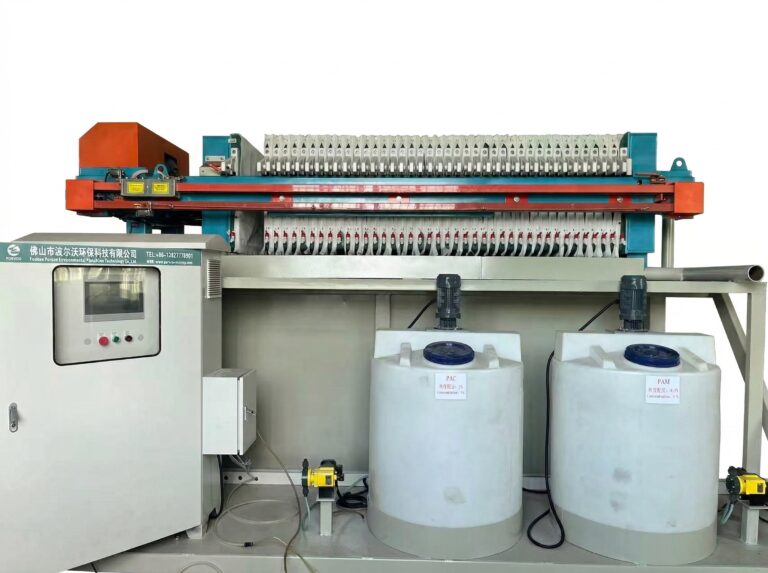
O risco de erro na dosagem decorrente da avaliação visual manual do efluente é a causa primária que possibilita esse ciclo. A avaliação visual da turbidez pelo operador não é um mecanismo de controle confiável para a dosagem de polímeros. A direção e a magnitude dos ajustes manuais variam entre operadores e turnos, o que significa que uma faixa de dosagem definida durante os testes sofrerá desvios na prática, a menos que a faixa operacional seja estreita o suficiente para ser mantida sem depender de julgamentos visuais. A integração do monitoramento de turbidez em linha, com referência a um método como ISO 7027-1:2016 — ou automatizando o ajuste da dose por meio de um sistema como o Sistema inteligente de dosagem de produtos químicos PAM/PAC — reduz esse desvio de maneiras que os protocolos manuais não conseguem igualar de forma confiável ao longo de uma semana inteira de operação.
Considere o custo dos produtos químicos juntamente com a economia no transporte e na redução do tempo de ciclo
As decisões relativas à desaguamento são frequentemente avaliadas apenas com base no custo dos produtos químicos, o que sistematicamente subestima a economia gerada nas etapas posteriores pelo bolo mais seco. O manuseio de lodo normalmente representa 40–60% dos custos operacionais totais da estação — uma parcela grande o suficiente para que mesmo melhorias moderadas na secura do bolo gerem retornos financeiros que superam em muito a diferença no custo dos polímeros.
| Fator de custo | Valor típico / Impacto | Implicações financeiras |
|---|---|---|
| Participação do tratamento de lodo nas despesas operacionais (OPEX) da usina | Quarenta a sessenta e um mil, trezentos e trinta e três | As decisões relativas à desidratação influenciam fortemente os custos operacionais totais |
| Redução de volume por desaguamento mecânico | 70–80% | Reduz diretamente as taxas de transporte e descarte |
| Redução do teor de água do bolo | Cada redução de 1% gera uma economia de aproximadamente $100k por ano | Pequenas melhorias no nível de secura geram economias anuais significativas |
O valor de $100.000 por redução de 1% no teor de água do bolo é uma referência de nível de planejamento baseada em dados do setor, e não uma projeção específica para a unidade. Seu papel na análise é estabelecer a lógica financeira: a faixa de economia resultante de uma melhoria de um ponto percentual na secura é grande em relação ao aumento no custo do polímero necessário para alcançá-la, desde que o aumento na dosagem esteja de fato produzindo um bolo mais seco, em vez de apenas adicionar carga química que retorna no filtrado. O efeito de redução de volume de 70–80% da desaguagem mecânica reforça essa lógica — a base a partir da qual as taxas de transporte são calculadas diminui substancialmente antes mesmo de qualquer otimização ser aplicada.
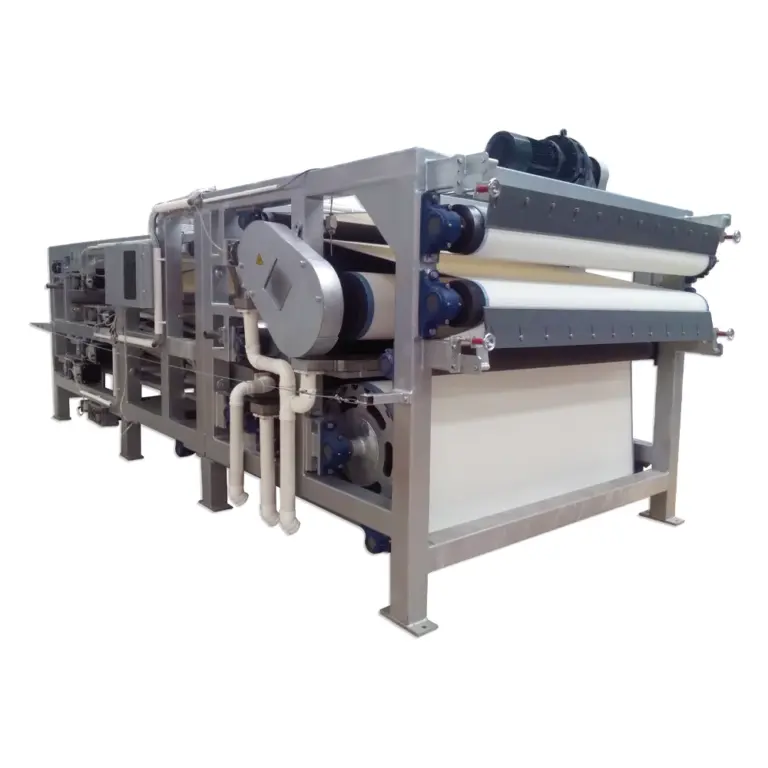
O ponto em que essa análise de custo-benefício tende a falhar é ao excluir os custos de manutenção da correia da parte do balanço financeiro referente aos custos com produtos químicos. Se um aumento na dosagem que melhora o teor de sólidos do bolo em 1% também dobrar a frequência do ciclo de lavagem, os custos com desgaste do tecido, consumo de água e tempo de inatividade podem consumir uma parcela significativa da economia obtida com o transporte. Uma comparação completa de custos precisa incluir o custo dos produtos químicos, o intervalo de substituição do tecido, o volume de água de lavagem e a disponibilidade da prensa — e não apenas os gastos com polímeros e as taxas de descarte. Para instalações que utilizam um filtro prensa de correia, o ciclo de vida do tecido e a frequência dos ciclos de lavagem costumam ser as variáveis operacionais que mais influenciam o custo total de desaguamento, uma vez estabelecida uma dosagem estável.
Repita o teste quando houver alterações na fonte de ração ou na composição da ração
As configurações estáticas de dosagem desenvolvidas com base em um único perfil de alimentação perderão a calibração quando a composição da produção ou a fonte de afluente forem alteradas. Essa não é uma observação genérica sobre a variabilidade do processo — ela decorre diretamente da interação comprovada entre a taxa de alimentação de lodo e a dosagem de polímero. Como esses dois parâmetros precisam ser otimizados em conjunto, uma alteração na composição da alimentação que modifique a concentração de sólidos do lodo, a viscosidade ou a distribuição granulométrica efetivamente desloca o sistema para um ponto diferente na superfície de resposta “dosagem versus alimentação”. A dosagem que antes era ideal pode agora estar excessiva ou insuficiente para um tipo diferente de lodo.
O fator prático que desencadeia a reavaliação é qualquer mudança significativa na fonte de alimentação, na mistura de produção, na composição química do tratamento prévio ou nas condições sazonais do efluente. Isso deve ser tratado como uma verificação de rotina para manutenção do desempenho, e não como uma tarefa da fase de comissionamento. Esperar que o desempenho da desaguamento se deteriore visivelmente antes de realizar novos testes significa que a operação já acumulou bolo de rejeito, filtrado sujo ou consumo excessivo de polímero antes mesmo que o problema seja reconhecido. Documentar as condições de alimentação e as configurações de dosagem correspondentes de cada exercício de otimização — mesmo que de maneira informal — fornece aos operadores um mapa de referência para detectar quando o desempenho atual se desviou de um estado previamente calibrado. Essa documentação também é o ponto de partida para uma reavaliação fundamentada, em vez de uma reotimização cega a partir do zero. Para uma comparação detalhada de como as configurações de dosagem e o consumo de polímero interagem entre as diferentes configurações de prensa, o Análise do consumo de polímero na prensa de filtro de correia fornece um contexto útil sobre como as relações entre ração e dose variam entre os diferentes tipos de sistemas.
Definir um intervalo de dosagem que os operadores possam realmente controlar
Uma faixa de dose que apresenta bom desempenho durante ensaios supervisionados costuma apresentar pior desempenho na operação diária, pois a janela operacional é ampla demais para que os operadores a mantenham sem feedback em tempo real. O objetivo ao final da otimização não é uma dose-alvo única — trata-se de uma faixa definida com parâmetros de prioridade claros que os operadores possam gerenciar com os controles disponíveis.
| Parâmetro | Faixa de operação recomendada | Impacto no desempenho |
|---|---|---|
| Concentração do polímero | 0,2–0,31 TP3T | Afeta a resistência dos flocos e a drenagem; ajuste a concentração antes de definir a taxa de dosagem |
| Taxa de dosagem do polímero | 0,4–0,6 m³/h | Interage com a taxa de alimentação de lodo; otimize-as em conjunto |
| Taxa de alimentação de lodo | 40–60 m³/h | Parâmetro mais influente para a claridade do filtrado e a retenção de sólidos |
| Velocidade da correia | 40–50 Hz | Não há efeito significativo sobre a secura do bolo; ajuste de acordo com a produtividade |
| Velocidade linear da tela | 60–70 Hz | Tem um impacto significativo nos sólidos do bolo; é fundamental para o controle da secura |
A lógica de prioridades refletida na tabela é a seguinte: a taxa de alimentação de lodo e a velocidade linear da tela exercem a influência mais direta e estatisticamente comprovada sobre os dois principais resultados da desaguamento — a claridade do filtrado e o teor de sólidos do bolo, respectivamente. Os operadores devem tratar esses dois parâmetros como as principais alavancas de controle e ajustar a concentração do polímero antes de ajustar a taxa de dosagem quando forem necessárias alterações químicas. A velocidade da esteira é uma variável de rendimento, não uma variável de qualidade, e não deve ser utilizada para atingir metas de secagem.
A faixa de concentração de 0,2–0,31 TP3T, a taxa de dosagem de 0,4–0,6 m³/h, a taxa de alimentação de 40–60 m³/h e a velocidade da peneira de 60–70 Hz são faixas operacionais recomendadas, derivadas de condições específicas de ensaio. Elas fornecem uma estrutura inicial prática, mas exigem validação em relação às características de alimentação do local antes de serem adotadas como parâmetros operacionais permanentes. A restrição mais importante desse quadro é que ele só se aplica se a faixa operacional for estreita o suficiente para que os operadores possam mantê-la sem depender de avaliações visuais do efluente. Uma faixa que pareça controlável no papel, mas que exija ajustes subjetivos constantes na prática, produzirá os mesmos erros crônicos de dosagem que a ausência total de uma faixa definida.
O equilíbrio entre o consumo de polímero e a secura do bolo não é uma otimização de variável única. A implicação concreta dos dados aqui apresentados é que a taxa de alimentação do lodo e a velocidade linear da peneira merecem a mesma atenção sistemática que a dosagem quando se avalia ou corrige o desempenho da desaguamento. Comparações de custos de produtos químicos que excluem a manutenção do tecido, a água de lavagem e a disponibilidade da prensa são incompletas e farão com que os aumentos na dosagem pareçam, de forma consistente, mais atraentes do que realmente são na prática.
Antes de definir uma faixa de dosagem ou uma especificação de polímero para uma instalação nova ou modificada, as verificações prioritárias são: confirmar se o condicionamento do pH e a sequência de coagulantes estão corretamente configurados para essa alimentação; estabelecer a relação entre dosagem e alimentação em toda a faixa real de vazão operacional, em vez de em um único ponto de teste; e definir uma janela operacional estreita o suficiente para que os operadores possam mantê-la sem precisar recorrer à avaliação visual manual como principal sinal de controle. Quando a fonte de alimentação ou a composição da produção mudarem, trate essas configurações como necessitando de nova verificação — e não como um padrão seguro herdado de um período operacional diferente.
Perguntas frequentes
P: Essa abordagem de otimização ainda se aplica se a alimentação de lodo contiver uma mistura altamente variável de fluxos industriais e municipais?
R: As alimentações mistas variáveis exigem recalibrações mais frequentes, em vez de uma abordagem diferente, mas a confiabilidade do método diminui se as variações na composição da alimentação forem grandes e imprevisíveis. A relação entre a dose e a alimentação estabelecida durante os testes está ligada às características específicas do lodo — concentração de sólidos, viscosidade e tamanho das partículas. Quando uma alimentação mista apresenta variações significativas em qualquer uma dessas propriedades entre turnos ou ciclos de produção, a faixa de dosagem calibrada pode passar do nível ideal para uma dosagem excessiva ou insuficiente, sem que haja qualquer alteração nas configurações da bomba. Para alimentações altamente variáveis, a solução prática é reduzir o intervalo de reavaliação e registrar as condições da alimentação juntamente com as configurações de dosagem, de modo que os estados de composição conhecidos possam ser associados a configurações previamente validadas, em vez de serem reotimizados do zero a cada vez.
P: Depois de definir uma faixa de dosagem estável com base nos ensaios, qual é a primeira etapa operacional a ser realizada antes de operar a prensa em plena capacidade?
R: Verifique se a relação entre a dosagem e a vazão de alimentação se mantém em toda a faixa prevista de vazão de alimentação antes de passar para a capacidade total de produção — e não apenas no ponto de vazão de teste. Taxas de dosagem calibradas para uma única vazão de alimentação produzirão uma relação polímero/sólidos diferente em vazões mais altas ou mais baixas, o que pode levar o sistema a uma situação de sobredosagem ou subdosagem assim que a capacidade de produção mudar. Operar a prensa de forma incremental ao longo da faixa de vazão de alimentação planejada, enquanto monitora os sólidos em suspensão no filtrado e a qualidade da descarga do bolo, é a etapa prática de confirmação. Somente quando a dosagem se mantiver consistente em toda essa faixa é que as configurações devem ser registradas nos parâmetros operacionais permanentes.
P: Em que momento investir no controle automatizado da dosagem se torna mais vantajoso financeiramente do que tornar os procedimentos operacionais manuais mais rigorosos?
R: O controle automatizado da dosagem se justifica financeiramente quando a avaliação visual manual é o principal sinal de controle e a operação ocorre em vários turnos com diferentes operadores. A avaliação visual manual da turbidez introduz erros de direção e magnitude que se acumulam ao longo de uma semana inteira de operação, fazendo com que a dosagem real se desvie para fora da faixa calibrada de maneiras difíceis de detectar até que o desempenho já tenha se deteriorado. A justificativa de custo para a automação é mais forte quando a frequência de substituição dos panos é alta, os ciclos de lavagem são frequentes ou a qualidade da água de retorno é uma preocupação de conformidade — pois esses são os custos mensuráveis que o desvio crônico na dosagem produz. Procedimentos manuais mais rigorosos podem reduzir o desvio, mas não conseguem eliminar a variabilidade entre operadores que torna a faixa de dosagem instável ao longo do tempo.
P: É realmente possível obter uma melhoria de 1% na secura do bolo sem aumentar a dosagem de polímero, ou isso sempre exige um maior consumo de produtos químicos?
R: Em muitos casos, é possível alcançar uma melhoria de 1% no teor de sólidos do bolo apenas por meio de ajustes nos parâmetros mecânicos, especificamente reduzindo a taxa de alimentação de lodo ou aumentando a velocidade linear da tela, sendo que ambos têm efeitos estatisticamente significativos sobre a secura do bolo, independentemente da dosagem. Os dados dos testes mostram que a velocidade linear da tela é o parâmetro mais diretamente ligado ao teor de sólidos do bolo, enquanto a velocidade da correia não apresenta efeito significativo. Isso significa que os operadores podem buscar melhorar a secura por meio das configurações do equipamento antes de alterar o uso de produtos químicos — e devem fazê-lo, pois um aumento na dosagem, somado a uma configuração de velocidade da tela abaixo do ideal, aumenta o custo dos produtos químicos sem resolver a variável mais influente. A possibilidade de atingir a meta específica de 1% sem o uso adicional de polímero depende de quão próximas as configurações atuais estão dos limites da faixa de operação mecânica.
P: Qual é o limite máximo realista de secagem do bolo que deve ser considerado no projeto desse tipo de configuração de desaguamento?
R: Uma meta prática de planejamento máxima é de 14% de sólidos do bolo, com 10,39–14,26% como a faixa alcançável em condições operacionais típicas, com base em dados de ensaios controlados. Apenas um ensaio ultrapassou 14%, o que significa que definir metas internas ou contratos de descarte com base em valores acima dessa faixa introduz um risco de cumprimento que não é respaldado pelas evidências. Projetar com base na faixa média de 12–13% proporciona margem operacional, mantendo-se consistente com o que a configuração de equipamentos e produtos químicos pode produzir de forma confiável. Se os contratos de descarte ou os requisitos de incineração especificarem metas de secagem acima dessa faixa, talvez seja necessário avaliar uma tecnologia de desaguamento diferente ou uma etapa térmica, juntamente com a otimização da prensa de correia, em vez de considerar o aumento da dosagem de produtos químicos como o caminho para alcançá-las.