Separate cyclone duty from facility compliance
Define what the cyclone removes from the air stream, and what the overall system must demonstrate at workstations and discharge points. US OSHA requirements vary by task, substance and industry, and state plans should be checked where applicable.
Identify the relevant provisions
Use the OSHA ventilation standards index and have the site team identify the relevant provisions and evaluation methods. Discuss combustible dust or hazardous materials with qualified specialists before obtaining equipment proposals.
Describe the ventilation train
Provide source locations, workstation geometry, duct routes, discharge path and normal and peak production. Ask for documents covering fan pressure, cyclone operation and the final filter as installed.
Require repeatable commissioning records
Capture the actual branch openings, operating airflow and equipment pressure along with representative task observations. Arrange for exposure assessment where required. Identify the person responsible for repeating each applicable check.
Assess a constrained retrofit in the field
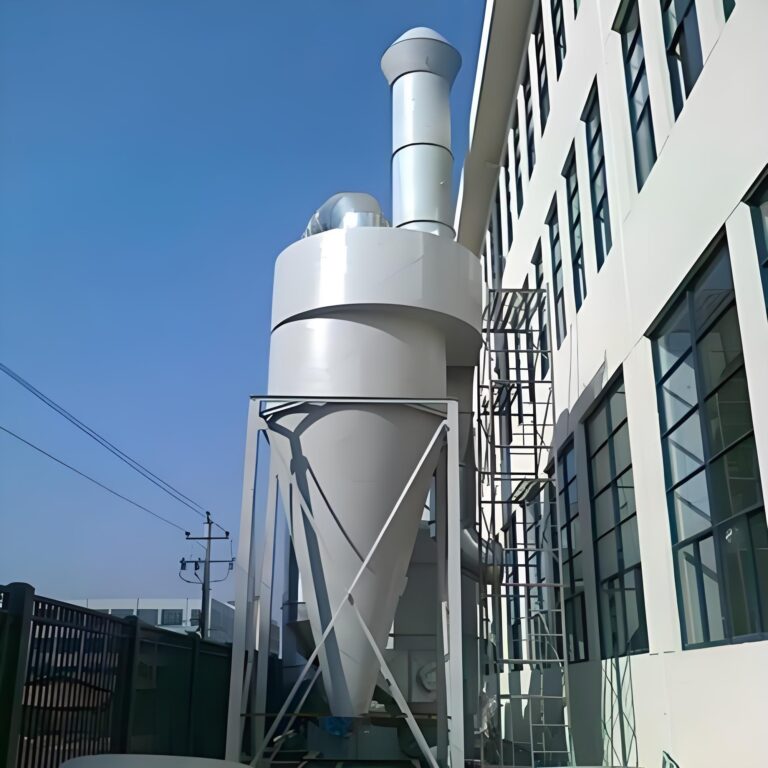
Survey elevations, fan access, dust removal route and room for the proposed duct and hopper. Have the designer compare routing losses and whether the existing fan can maintain capture. Quote added supports and access work separately, and test the final arrangement.
Use process information for industry differences
For a facility with varying tasks, list particle or substance types, relevant process changes and access restrictions. Have the responsible specialists determine whether collection streams should share equipment and how the resulting arrangement is evaluated.
Review changes before relying on old readings
Changes to tooling, duct routes, production or collected material may make the earlier ventilation and exposure measurements less representative. Document what changed and have the site team determine the necessary follow-up.