Operator training that stops at “press the start button” is one of the more reliable ways to invalidate a performance guarantee before the first full month of operation. The gap is rarely in the PLC program itself — it is in what the operator does when the PLC behaves unexpectedly: a pressure trip just before the squeeze completes, a filtrate sample that looks slightly turbid, a cloth that sounds different during washing. Without a grounded understanding of what those signals mean and what the adjustment limits actually are, the instinct is to intervene manually, and that intervention is often the beginning of a slow degradation the data does not catch until consent limits are already at risk. What separates a stable handover from an unstable one is whether the operator can distinguish a normal variation from a pattern that requires action — and whether that distinction is written down before the commissioning team leaves the site.
Train operators on dosing feed pressure and discharge sequence
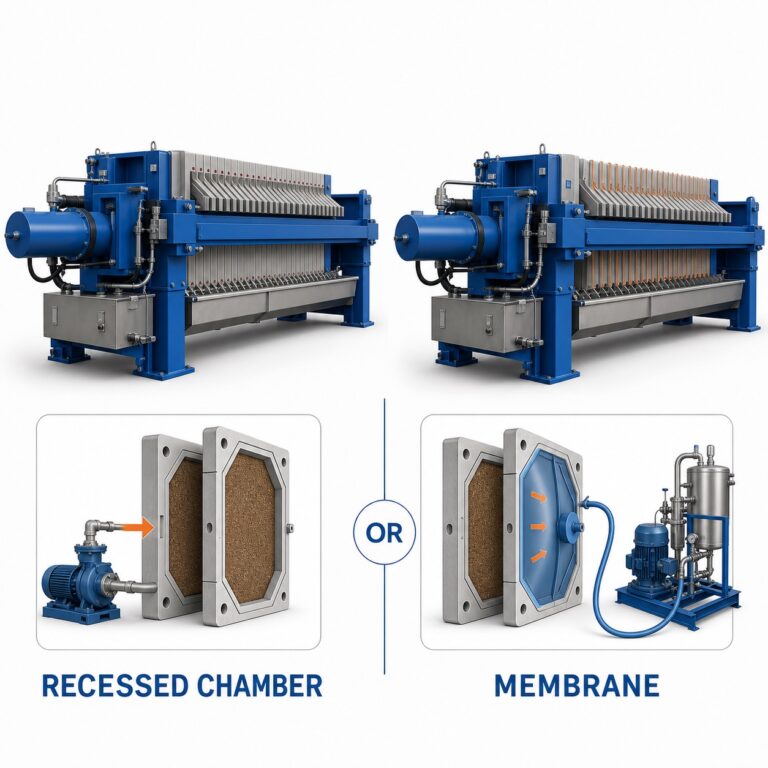
The PLC sequence is not just automation convenience — it is the mechanism that keeps cycle performance repeatable and prevents mechanical damage. Feed pressure ramping, membrane squeeze timing, and plate shifter sequencing are interdependent: if an operator interrupts or manually overrides one step without understanding how it affects the downstream steps, the consequences can range from poor cake dryness on that cycle to accelerated diaphragm wear across hundreds of cycles. Training must explain the rationale behind each step, not just the button order.
For the feed pump specifically, operators need to understand that a positive displacement pump delivering variable flow against increasing back-pressure — up to the design limit of 16 bar (230 psi) for systems configured to that pressure — behaves differently from a centrifugal pump. Pressure rises as the chambers fill; the PLC manages that rise deliberately. An operator who sees a high-pressure warning and assumes the pump is faulty, rather than recognizing a near-complete fill, may abort a cycle that was two minutes from a clean discharge.
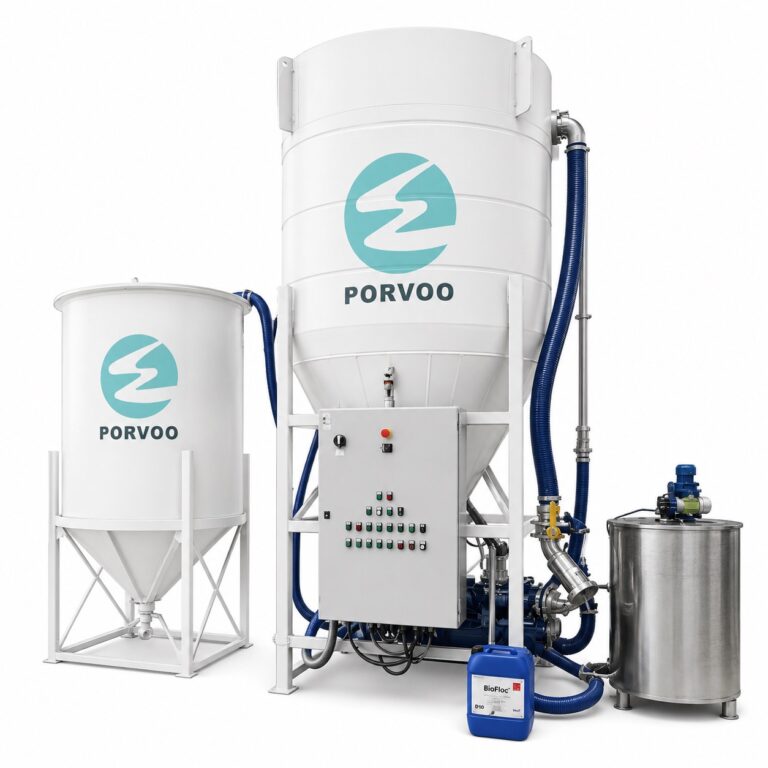
Polymer conditioning sits upstream of the press but its effect on cake quality is direct. Concentration, dose rate, and in-line mixer performance all affect floc size and stability entering the press. If the makeup unit produces an inconsistent polymer concentration — because aging time was shortened or the agitator speed was not verified — the filter cloths receive poorly conditioned sludge, blinding accelerates, and cycle times creep upward. That creep is rarely flagged immediately; it shows up first in filtrate TSS and only later in cycle time alarms.
| Foco no treinamento | Key Equipment / Control | What Operators Must Verify |
|---|---|---|
| Feed pressure ramping & cycle sequencing | PLC-controlled feed pump speed, pressure ramps, membrane squeeze timing, plate shifter sequence | Cycle step order and timing align with PLC program; plate shifter operates safely |
| Polymer conditioning system | Polymer makeup and aging unit, dosing pump, in-line mixer | Correct polymer concentration, dosage setting, and mixer operation for floc formation |
| Feed pump under back-pressure | Positive displacement pump, variable flow, pressure up to 16 bar (230 psi) | Pump responds to PLC fill rate and final pressure; no excessive high-pressure trips |
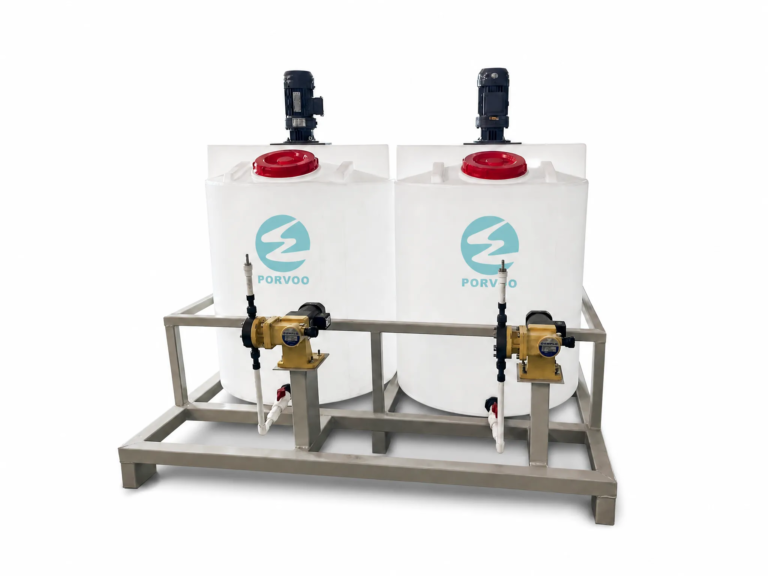
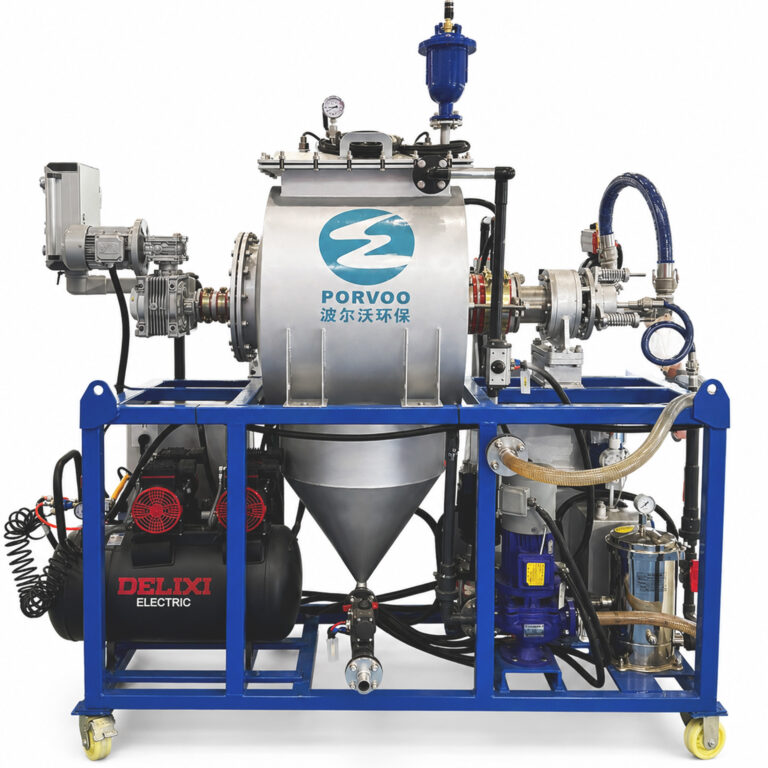
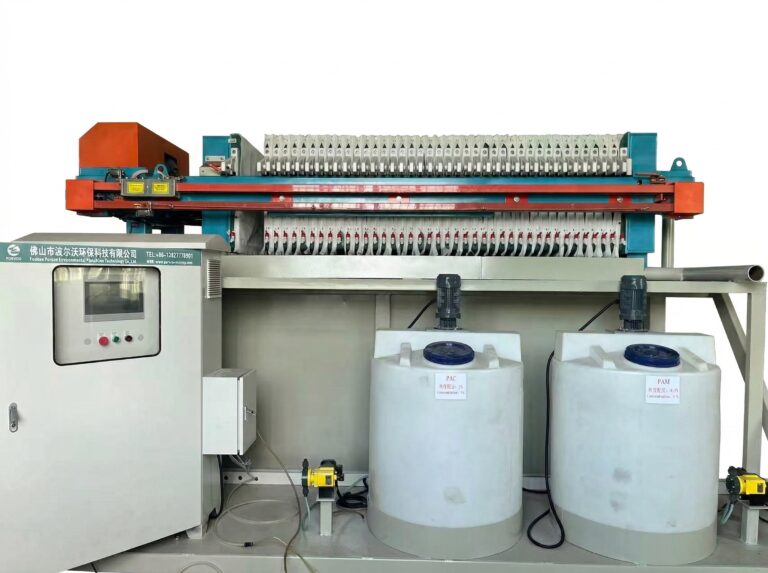
The Porvoo Sistema inteligente de dosagem de produtos químicos PAM/PAC integrates makeup, aging, and dosing functions in a single controlled unit, which reduces the preparation variability that most conditioning problems trace back to.
Confirm alarms interlocks and manual override behavior
Interlock confirmation is a safety-verification step, not a performance check. It cannot be deferred to post-handover or treated as a vendor responsibility to demonstrate once and document once. During commissioning, each safety device — light curtains, safety gates, emergency stop buttons, pressure relief valves — must be individually tested and confirmed to trigger the correct PLC response. The most consequential interlock is the one that prevents the press from opening while chamber pressure remains above the safe threshold. If that interlock is defeated or misconfigured, an operator performing a manual discharge check is exposed to a sudden pressure release.
Manual override behavior warrants equal scrutiny. Overrides exist for fault recovery and maintenance; they should require a deliberate action and should not be accessible during automatic cycle operation. During commissioning, walk through the override sequence for each interlock and confirm that the PLC logs the override event with a timestamp. That log is the evidence that distinguishes a sanctioned maintenance action from an unexplained cycle interruption when a performance dispute arises later.
The downstream implication is procedural: if manual override behavior is not documented during commissioning — which inputs must be confirmed before an override is valid, which pressure condition must be satisfied — operators will develop informal habits that are impossible to audit. A site that cannot show a clear boundary between normal adjustment and override use has a defensibility problem the moment an incident or a consent exceedance triggers regulatory scrutiny.
Establish cloth washing cake handling and filtrate checks
When cloth washing fails to maintain cloth permeability, the first visible symptom is rising filtrate TSS — but the root cause is already established well before that reading appears. A well-performing filter press system typically produces filtrate with TSS in the range of 50–200 mg/L; where that target sits for a specific installation depends on the sludge characteristics and was established during pilot testing. GB/T 30176-2013 provides a standardized measurement framework for verifying filtrate quality during commissioning, and samples taken at startup should be measured using consistent methods so the data is comparable to pilot results.
The practical risk during commissioning is that the automatic cloth washing trigger — usually set to activate after a defined number of cycles — is verified as a sequence function but not confirmed against actual cloth performance. If the trigger interval is too long for the sludge loading, cloths begin to blind progressively between wash events, TSS drifts upward, and cake moisture increases. By the time a spot sample catches the deviation, the conveyor may already be handling wetter-than-specified cake with downstream handling consequences.
| Verificar item | Target / Criterion | Verification During Commissioning |
|---|---|---|
| Filtrate total suspended solids (TSS) | 50–200 mg/L | Measure TSS; confirm automatic cloth washing programmed after set number of cycles maintains target |
| Drip trays / bomb bay doors | Must retract fully before cake discharge | Observe sequence; confirm no obstruction to cake fall onto conveyor |
Drip tray and bomb bay door retraction is a manufacturer-specific sequence check that is easy to overlook because it happens quickly and visually looks complete even when it is not fully clear. Confirm mechanically that the tray retracts to its full open position before cake discharge begins; a partial retraction will obstruct the cake fall, cause bridging on the conveyor, and — if not caught — damage the tray mechanism over repeated cycles.
Document normal setpoints and adjustment limits
Baseline setpoints are valid only for the sludge and operating conditions under which they were derived. Feed pressure, cycle time, membrane squeeze pressure, and polymer dosage established during pilot testing represent the starting configuration for this installation — they are not default values that transfer from site to site or from one sludge type to another. During commissioning, those values should be formally recorded, along with the permitted adjustment range that operators are authorized to use without engineering review.
That adjustment range is the boundary the training must make explicit. An operator who understands that polymer dosage can be varied within ±X kg/tonne to respond to incoming sludge variability — but that exceeding that range risks cloth blinding or floc carryover — will make better decisions than one who treats the setpoint as a target to always match exactly or freely adjusts it by instinct. The table below captures the parameter structure; the pilot-derived values for each installation must replace the placeholders before this document is used operationally.
| Parâmetro operacional | Baseline Setpoint (from Pilot) | Permitted Adjustment Limit |
|---|---|---|
| Pressão de alimentação | [Value from pilot] bar | [Range or ±Δ] |
| Tempo de ciclo | [Value from pilot] min | [Range or ±Δ] |
| Pressão de compressão da membrana | [Value from pilot] bar | [Range or ±Δ] |
| Dosagem do polímero | [Value from pilot] kg/tonne or L/min | [Range or ±Δ] |
GB/T 30176-2013 provides measurement methods that support consistent data collection during pilot testing and startup verification. The value of using those methods throughout — from pilot to commissioning acceptance — is that the data is directly comparable, and discrepancies between pilot and startup performance can be traced to operating differences rather than measurement inconsistency.
Hand over spare parts consumables and maintenance routines
Filter cloths and membrane diaphragms are consumable components with lifespans that depend heavily on how the press is operated, not just on elapsed time. In municipal sludge applications, cloth lifespan of 6–24 months or 4,000–8,000 cycles reflects a wide range driven by sludge abrasiveness, polymer chemistry, wash water quality, and wash pressure — all of which vary by site. Treating either end of that range as a planning certainty will leave the spare parts shelf either empty at the wrong moment or overstocked with cloths that age before they are needed.
The handover spare set should include at minimum one full complement of filter cloths and a set of membrane diaphragms, with documented lot numbers and installation dates. Actual service life should be tracked from the first commissioning cycle so that the replacement interval for this specific installation is based on observed data, not the manufacturer’s typical estimate. Cloths that reach a low cycle count but show blinding or physical damage may warrant an earlier replacement schedule than the standard estimate suggests.
| Frequência | Tarefa | Inspection / Service Focus |
|---|---|---|
| Diariamente | Verificações visuais | Overall system condition, leaks, unusual noise or vibration |
| Semanal | Cloth inspection | Filter cloth integrity, blinding, and cleanability |
| Anual | Hydraulic and structural service | Hydraulic system, structural components, safety devices |
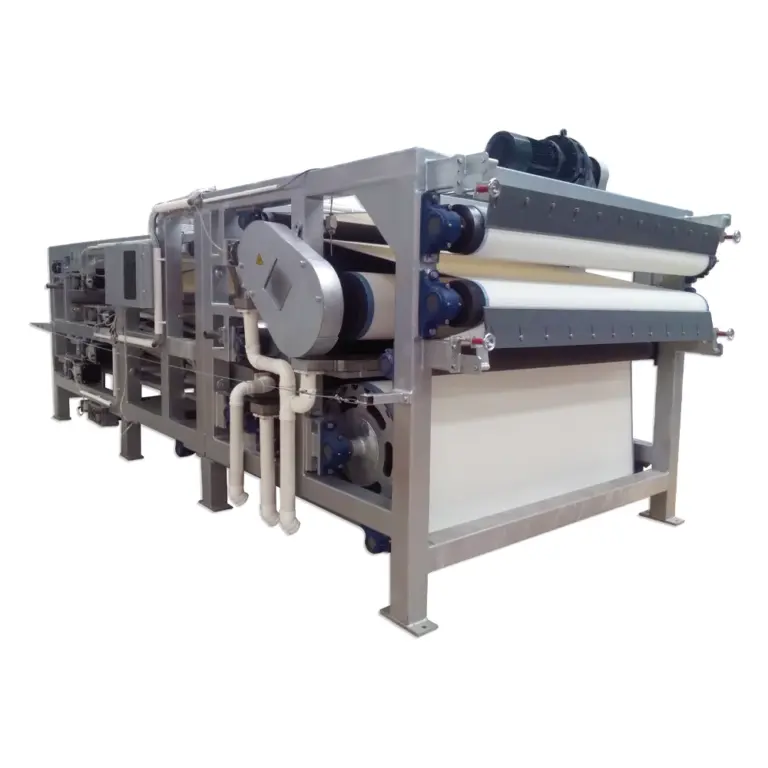
The hidden cost in skipping the weekly cloth inspection is not a single failed cycle — it is arriving at annual service with a diaphragm that has been quietly fatiguing for months and a spare parts shelf that has not been restocked because no one tracked consumption against the projected interval. For more detail on ongoing cloth inspection and belt maintenance practices, the Manutenção da prensa de filtro de correia: Guia completo do processo covers comparable inspection logic that applies across dewatering equipment types.
Run startup data against the acceptance target
Acceptance targets are performance guarantees negotiated against pilot-derived results, not industry benchmarks that every installation is expected to reach. During commissioning, cake solids content, filtrate TSS, and cycle time should be measured under steady operating conditions — after the system has run enough cycles to stabilize cloth loading and polymer dosing — and compared directly against those agreed targets.
When a target is missed, the diagnostic sequence matters. A cake solids shortfall may trace to membrane squeeze pressure below the setpoint, a diaphragm that is not fully inflating, or polymer conditioning that is producing inadequate floc compressibility. A filtrate TSS exceedance may indicate cloth blinding from an incorrectly triggered wash cycle or a feed rate that exceeded the design fill rate for the chamber volume. Recalibrating sensors before concluding that the process has failed is a necessary first check — pressure transducers and flow meters that were not zeroed after installation can introduce offsets that make a passing result look like a failure or conceal a real one.
| Parâmetro de desempenho | Acceptance Target (from Pilot) | Measured During Startup | Meets Guarantee? |
|---|---|---|---|
| Teor de sólidos da torta | [Pilot-derived target %] | [Measured %] | [Yes / No] |
| Filtrate TSS | [Pilot-derived target mg/L] | [Measured mg/L] | [Yes / No] |
| Tempo de ciclo | [Pilot-derived target min] | [Measured min] | [Yes / No] |
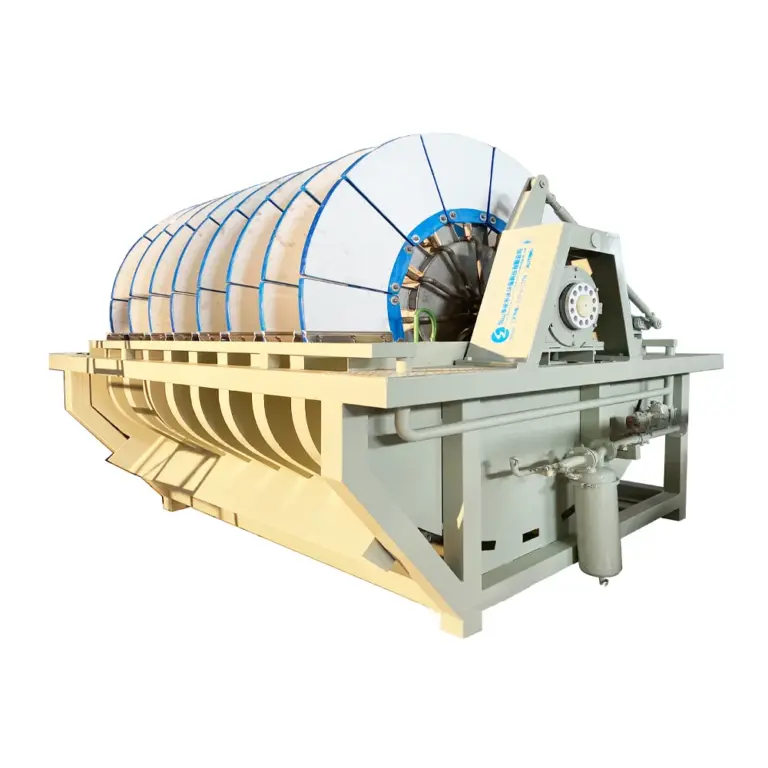
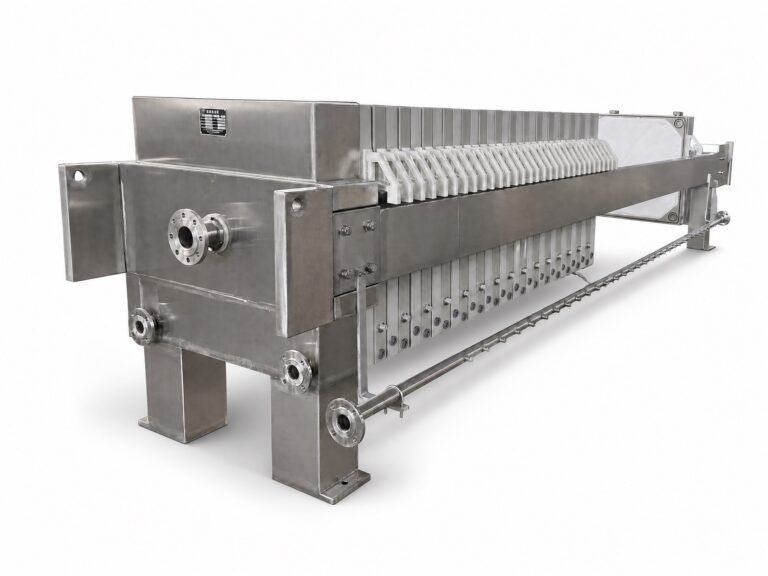
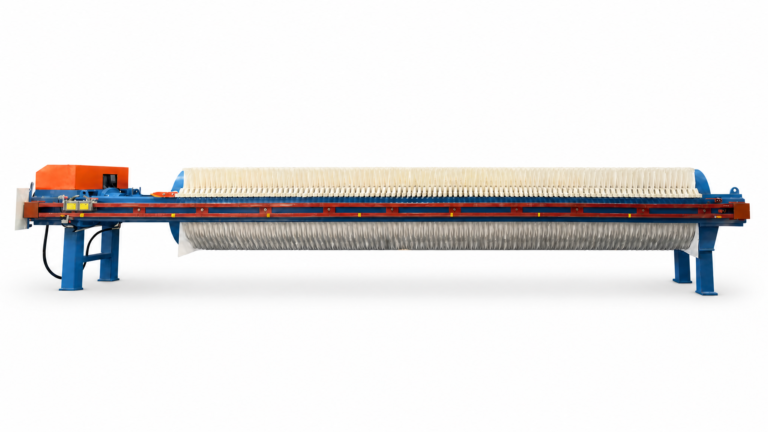
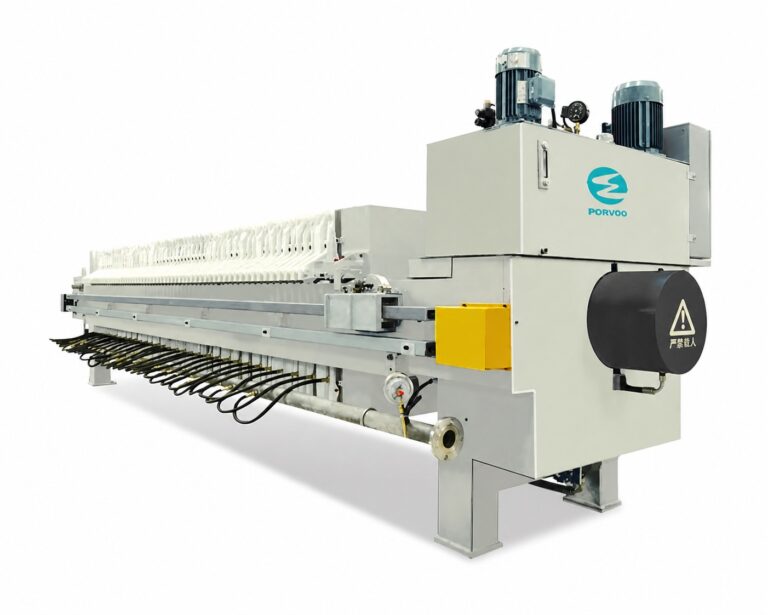
The Porvoo Filtro prensa totalmente automático integrates PLC-controlled pressure ramping and membrane squeeze sequencing in a way that makes acceptance data directly traceable to operating parameters, which simplifies the investigation when startup results diverge from pilot.
Leave the plant with a repeatable operating checklist
A checklist that operators do not understand is a liability document, not an operating tool. The checklist delivered at handover should reflect the PLC logic, the setpoints documented during commissioning, and the training given — it is a site-specific procedure, not a generic template. Startup sequence, normal operating checks, alarm response, cloth washing trigger verification, and shutdown sequence should each appear as discrete steps written in the language the operators used during training, not in the language of the equipment specification.
The practical test of checklist quality is whether an operator who was present during commissioning training can follow it independently after two weeks away from the press. If the checklist requires the operator to recall information that was only covered verbally — PLC parameter names, manual override conditions, filtrate TSS action thresholds — it will not be followed consistently, and the cycle-to-cycle repeatability the PLC is designed to deliver will be undermined by operator variation. The checklist should reference parameter values by their PLC screen location, not by value alone, so that the operator is reading what the system is actually displaying rather than comparing against a memorized number.
The distinction between a normal adjustment and a warning pattern is where most checklists fall short. Build in explicit trigger points: if filtrate TSS exceeds X mg/L on two consecutive cycles, check cloth washing; if cycle time extends beyond Y minutes without a PLC alarm, review feed pump pressure curve. Those thresholds turn a sequence document into a decision tool that operators can act on before a small drift becomes a compliance issue.
The most useful thing a commissioning team can leave behind is not a binder of records — it is an operator who can explain what normal looks like, what a deviation pattern looks like, and which adjustments are within their authority. That understanding is only built if training covers the rationale behind dosing limits and pressure ramps, not just the steps. Before commissioning closes, confirm that every alarm and interlock has been tested and documented, that acceptance data has been measured using consistent methods, that spare parts and maintenance intervals are tied to observed cycle data rather than estimates, and that the operating checklist has been reviewed by the operators who will use it — not just signed by the project manager. Those confirmations are the difference between a handover that holds and one that generates a call back to site within ninety days.
Frequently Asked Answers
Q: We didn’t run a pilot study. Can the commissioning checks and setpoint documentation still work?
A: They can, but initial setpoints must be derived from design data and confirmed over a longer stabilization period. Without pilot-derived performance guarantees, acceptance targets should be set conservatively and validated against multiple steady cycles, because you lack the baseline that normally anchors adjustment limits and spare part planning.
Q: What should the plant team monitor most closely in the first month after handover?
A: Filtrate TSS trends, cycle time stability, and cloth condition. Track daily spot samples of filtrate, compare cycle times against the documented baseline, and inspect cloths weekly for early blinding. Watching these three indicators catches drift before it reaches alarm thresholds, confirming the setpoints hold under real load variability.
Q: The cloth lifespan estimate is for municipal sludge. How should we plan spare parts for abrasive industrial sludges?
A: Plan on a significantly shorter replacement interval — often well below 4,000 cycles. Commissioning must establish a cycle‑count inspection schedule and adjust reorder points based on measured wear rates, not calendar estimates. A smaller initial stock, replenished quickly from early data, avoids both stock‑outs and overstocking.
Q: Is the commissioning process fundamentally different for a belt filter press?
A: The same core disciplines apply — operator training, alarm confirmation, cloth‑related checks, and acceptance testing — but the specific checks shift. Instead of plate shifter and membrane squeeze behavior, you’ll verify belt tension, tracking, and wash water nozzles. The principles hold; you need an equipment‑specific adaptation, such as the checks covered in the separate Belt Filter Press maintenance guide.
Q: If the press runs fully automatically, is the detailed operator training really worth the time?
A: Yes. Automation manages repeatable cycles but cannot interpret subtle signals like rising filtrate turbidity or irregular cloth washing. Operators who only acknowledge alarms will miss early cloth blinding or polymer conditioning drift — problems the PLC won’t prevent and that often degrade performance guarantees before a technician can return to site.