Um sistema de coleta de poeira cotado sem dados específicos da estação de trabalho quase sempre será dimensionado com base no ponto de operação errado. A falha raramente se manifesta na fase de solicitação de cotação — ela se revela no comissionamento, quando a velocidade medida na coifa fica aquém do esperado e as opções são: reformar a rede de dutos, sobredimensionar o motor ou aceitar um sistema que funciona, mas não captura a poeira. A causa subjacente quase sempre está a montante: o fornecedor recebeu dados parciais e preencheu as lacunas com suposições que favoreciam um coletor menor e mais barato. Organizar esses dados antes de emitir uma solicitação de cotação é o que permite que a cotação assuma a responsabilidade pelo desempenho real, em vez de transferir o risco do comissionamento para o comprador.
Registrar as dimensões da estação e a distância da fonte
Antes que qualquer valor de CFM possa ser considerado confiável, o fornecedor precisa de uma planta baixa — não um esboço aproximado, mas um documento que mostre a localização das máquinas, as dimensões e posições dos coletores de poeira, a localização pretendida do coletor principal, a altura do piso até a viga e quaisquer obstruções estruturais ou de processo entre a fonte e o coletor. Sem isso, o fornecedor não pode calcular o comprimento da duta, não pode traçar as curvas e não pode determinar se a localização selecionada para o coletor cria uma duta principal que prejudique as velocidades nos ramais que ela deveria suportar.
A distância da fonte é importante porque a velocidade de captação diminui com a distância. Um exaustor posicionado a 300 mm do ponto de trituração se comporta de maneira diferente de um a 150 mm — e nenhum deles se comporta como a superfície de uma mesa que envolve a área. A planta baixa obriga tanto o comprador quanto o fornecedor a considerar onde a captação realmente ocorre, em vez de tratá-la como uma variável da ficha técnica. Sistemas que omitem essa etapa costumam receber cotações com pontos de captação modelados como ideais; depois, quando instalados em uma geometria real, o trajeto da conduta acrescenta dois cotovelos não planejados e a coifa acaba ficando 100 mm mais distante da superfície de trabalho do que o cálculo previa.
Essa coleta de dados não é uma etapa regulatória — trata-se de um processo sistemático de coleta de informações que determina se o restante do exercício de dimensionamento produzirá um número fundamentado ou uma estimativa baseada em conhecimento. Prepare-a antes de emitir a solicitação de cotação (RFQ), e não em resposta às perguntas dos fornecedores após o recebimento da cotação.
Listar as ferramentas ativas e os pressupostos de uso simultâneo
A falha mais comum no dimensionamento inadequado de instalações de retificação e corte com múltiplas estações é basear o dimensionamento do sistema em uma única máquina ou em condições “típicas” de produção. Um sistema dimensionado para uma estação ativa por vez não conseguirá manter a velocidade de captura no momento em que duas estações operarem simultaneamente — e, na maioria dos ambientes de fabricação, o uso simultâneo não é um caso excepcional, mas sim a condição normal durante os turnos de pico.
O CFM total do sistema é igual à soma do CFM necessário em todos os dutos ramificados primários em operação simultânea. Esse cálculo exige uma definição clara da carga simultânea no pior cenário: quantas estações estão ativas, quais ferramentas estão em funcionamento e se alguma estação opera de forma intermitente, de modo que sua utilização possa ser compensada pela média. Se a resposta for incerta, dimensione o sistema para o uso simultâneo máximo plausível — e não para a estimativa intermediária mais confortável. Um coletor ligeiramente superdimensionado para um único turno é recuperável; um coletor subdimensionado para a carga de pico exige alterações na rede de dutos, um ventilador maior ou ambos.
Antes de emitir uma solicitação de cotação (RFQ), documente cada máquina que se conectará ao sistema, o CFM necessário no ponto de captação e se ela opera de forma contínua ou intermitente. Indique quais combinações representam o valor máximo do projeto. Essa lista passa a ser a restrição que o fornecedor deve cumprir e fornece ao departamento de compras uma base para avaliar se uma cotação baixa é competitiva ou se simplesmente omite vários fluxos de ramificação do cálculo.
Incluir a geometria da mesa ou do braço do exaustor
A geometria da coifa determina se o CFM promove a captura ou apenas move o ar através de um duto. O mesmo ventilador, fornecendo o mesmo fluxo de ar total, pode reter a poeira na fonte ou permitir que ela escape lateralmente, dependendo inteiramente da forma e do posicionamento da coifa. As perdas de entrada em um duto de extremidade aberta e romba são significativamente maiores do que em um duto com boca em forma de sino — o que significa que uma parcela menor da pressão estática do ventilador é efetivamente utilizada para gerar a velocidade de captura, e uma parcela maior é desperdiçada no ponto de entrada.
Para aplicações de retificação na usinagem de metais, as orientações da ACGIH estabelecem a faixa de velocidade de captação entre 2,5 e 10 m/s (492–1968 fpm), sendo que o valor adequado nessa faixa depende da taxa de geração e da direção de dispersão da poeira da operação específica. O Capítulo 33 da ASHRAE sobre sistemas industriais de exaustão local fornece referências complementares para os princípios de projeto de exaustores, incluindo ajustes do coeficiente de entrada de acordo com o tipo de exaustor. Trata-se de valores de projeto a serem aplicados no julgamento de engenharia, e não de exigências regulatórias — mas ignorá-los resulta em sistemas nos quais a velocidade de transporte no duto ramificado é tecnicamente adequada, enquanto a captura efetiva na face do exaustor não é.
| Parâmetro de projeto | Requisito / Diretriz | O que isso afeta |
|---|---|---|
| Velocidade de captura | 2,5–10 m/s (492–1968 fpm) para retificação | Captura eficaz de poeira na fonte (limite da ACGIH) |
| Tamanho mínimo da ramificação | Se a saída da máquina for <3″, instale um redutor para o diâmetro de 3″ (≈195 CFM) | Mantém a velocidade de transporte e evita o entupimento dos dutos |
| Formato da entrada do capô | Use um bocal em forma de sino; evite dutos de parede fina com extremidades abertas | Reduz a perda na entrada e melhora a eficiência de captura |
As consequências práticas de não especificar a exaustora na fase de solicitação de cotação incluem sistemas de braço flexível cotados sem conexões de alargamento, conexões de ramificação com diâmetro inferior ao mínimo de 3″ — o que impede a manutenção da velocidade de transporte — e geometrias de captação que geram turbulência local em vez de um fluxo de ar direcionado. Esses problemas são baratos de resolver na fase de projeto, mas caros de corrigir após a instalação. Exija que o fornecedor apresente a geometria da exaustora ou da mesa considerada em seus cálculos antes de aceitar o valor em CFM.
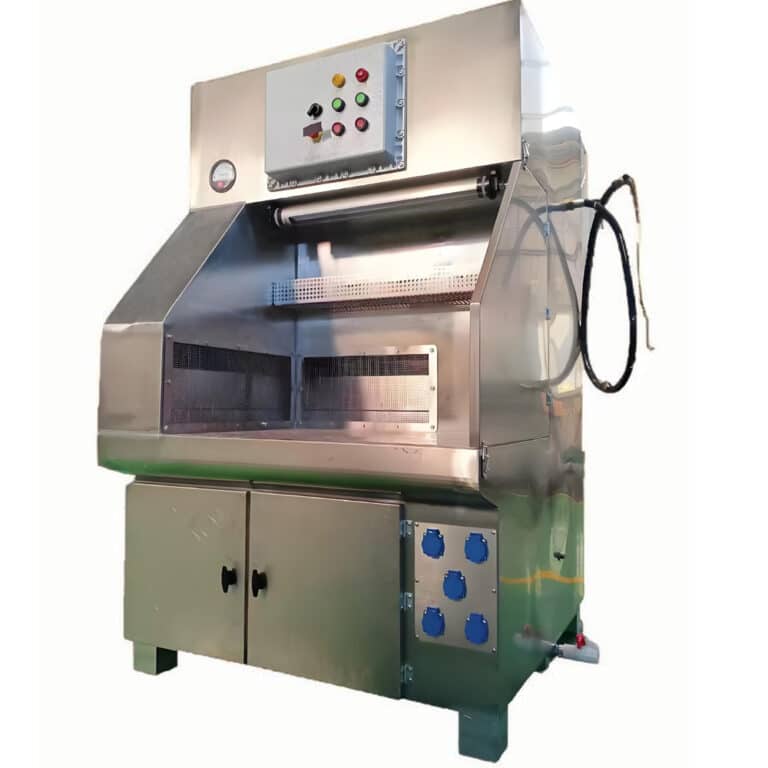
Para instalações que processam pó metálico em estações de trabalho específicas, um mesa de esmerilhamento industrial com fluxo descendente para trabalho a seco/a úmido integra a superfície de captura e a geometria do coletor em uma única unidade projetada, o que elimina as variáveis de montagem em campo que frequentemente causam discrepâncias na perda de entrada em configurações personalizadas de capôs.
Levar em conta as curvas do duto da mangueira e a resistência do filtro
A pressão estática é o ponto em que a maioria das cotações dos fornecedores diverge do desempenho real após a instalação. Uma classificação em CFM publicada para um coletor não tem sentido, a menos que esteja vinculada à pressão estática total real do sistema — e esse valor não pode ser calculado sem levar em conta todos os elementos de resistência na rede de dutos.
A mangueira flexível é a fonte de resistência mais comumente subestimada. A resistência equivalente a um duto reto de uma mangueira flexível é aproximadamente três vezes seu comprimento físico, o que significa que uma conexão flexível de 2 metros conectada a um braço de trituração contribui com a mesma queda de pressão que aproximadamente 6 metros de duto rígido. Em sistemas com múltiplas conexões flexíveis, essa diferença pode deslocar o ponto de operação na curva do ventilador em várias polegadas de coluna d’água — o suficiente para levar o sistema a uma região em que ele forneça 20–30% menos vazão de ar do que o especificado. Curvas e cotovelos devem ser convertidos em tubos retos equivalentes usando tabelas do fabricante para a geometria específica do encaixe; um cotovelo padrão de 90° em um ramal de 4″ não apresenta a mesma resistência que uma curva de raio longo, e a diferença se acumula em um sistema com múltiplos ramais.
O estado do filtro acrescenta uma resistência separada e variável no tempo. Um filtro de cartucho limpo na inicialização pode apresentar uma pressão de 0,5″ w.g. no meio filtrante; o mesmo filtro, carregado com partículas finas de usinagem acumuladas ao longo de várias semanas, pode atingir 2″ w.g. ou mais. Se o fornecedor dimensionou o sistema com base no ponto de operação do filtro limpo, o sistema perderá progressivamente o fluxo de ar à medida que os filtros se carregarem — passando no teste de aceitação no comissionamento e apresentando desempenho abaixo do esperado em poucas semanas, sem qualquer falha mecânica e sem acionar nenhuma condição de falha óbvia.
| Fator | Valor / Regra | Para que serve |
|---|---|---|
| Constante de perda de entrada | 1″ seg. | Sempre inclua isso como parte da estimativa inicial da pressão estática |
| Constante de perda do filtro sujo | 2″, segundo. | Adicionar para representar a resistência do filtro no pior cenário durante a operação |
| Multiplicador do comprimento da mangueira flexível | Multiplique o comprimento real da mangueira flexível por 3 | Converter para a resistência equivalente de duto reto ao calcular o SP da ramificação |
| Fórmula da pressão estática total | Perda na entrada + perda no filtro + SP do ramal com pior rendimento + SP do duto principal + SP do duto de retorno | Fórmula completa que o fornecedor deve demonstrar no cálculo do sistema |
Uma cotação que apresente o CFM sem um cálculo documentado da pressão estática — indicando a perda na entrada, a perda no filtro, a pressão estática no ramal, a pressão estática no duto principal e a pressão estática no duto de retorno — não pode ser verificada e não pode ser considerada válida no comissionamento. Esse cálculo não é opcional; é a prova de que o CFM indicado na cotação corresponde ao sistema instalado, e não a uma classificação de bancada em ar livre.
Identificar o tipo de poeira e o comportamento de acúmulo
O tipo de poeira determina dois aspectos que a solicitação de cotação (RFQ) deve especificar: a velocidade de transporte necessária para manter as partículas em suspensão e o meio filtrante capaz de lidar com a carga e as características das partículas. Errar em qualquer um desses aspectos resulta em um sistema que ou entope prematuramente ou permite que a poeira sedimentada se acumule nas seções horizontais da duta — o que representa um ônus de manutenção e um risco de incêndio em ambientes de usinagem de metais.
Para poeiras de usinagem de metais — aço, alumínio, ferro fundido —, os valores de projeto utilizados na engenharia de ventilação industrial têm como meta 4.500 FPM nos dutos secundários e 4.000 FPM nos dutos principais. Esses são limites calibrados para impedir que partículas mais pesadas caiam da corrente de ar; ficar abaixo desses valores cria zonas de sedimentação que exigem limpeza periódica e prejudicam o equilíbrio do sistema ao longo do tempo. A norma OSHA 1910.94 fornece um contexto de ventilação para operações abrasivas, embora esses valores específicos de velocidade sejam práticas de projeto, e não valores codificados nessa norma. O que importa para a aquisição é que o fornecedor deve comprovar que o dimensionamento dos dutos atinge essas velocidades no CFM calculado — o diâmetro do duto ramificado não é uma escolha estética, é a variável que determina se a velocidade de transporte é mantida.
O comportamento de acúmulo de poeira afeta as especificações do filtro. Poeira fina e seca proveniente da usinagem de metais, com baixa coesão, requer um intervalo de pulso de limpeza e um peso do meio filtrante diferentes daqueles necessários para poeira abrasiva mais grossa com tendência à aglomeração. A poeira que forma pontes ou se aglomera nas superfícies verticais do filtro obstruirá um cartucho mais rapidamente do que o modelo de dimensionamento padrão do fornecedor pressupõe — especialmente se a instalação gerar partículas de tamanhos mistos provenientes de diferentes operações de retificação no mesmo coletor. Identifique os principais materiais que estão sendo processados, a taxa esperada de geração de pó por estação e se as condições de retificação são a seco ou a úmido. Um sistema dimensionado para retificação a seco de aço e, posteriormente, utilizado com pasta úmida de alumínio não representa uma adaptação menor; trata-se de um problema de filtragem e drenagem totalmente diferente.
Peça aos fornecedores que apresentem os valores em CFM
Uma classificação em CFM em uma cotação de fornecedor não tem valor para fins de aquisição, a menos que possa ser atribuída a um cálculo do ponto de operação. A prática comercial comum de indicar a capacidade do coletor à pressão estática zero — a classificação em ar livre — é precisa para o ventilador isoladamente, mas operacionalmente enganosa para o sistema instalado. À pressão estática zero, um ventilador fornece o fluxo de ar máximo; à pressão estática real do sistema, ele fornece um fluxo substancialmente menor. O ponto de operação é onde a curva do ventilador cruza a curva de resistência do sistema, e essa interseção deve ser calculada e apresentada, não presumida.
| O que verificar | Método de verificação | O que a cotação deve indicar |
|---|---|---|
| Valor do CFM | Meça a velocidade média com um anemômetro; CFM = FPM × área do duto (pés quadrados) | A alegação da CFM pode ser verificada em campo |
| Base de pressão estática | Utilize um manômetro de água na conduta e as fórmulas de conversão padrão | CFM na pressão estática real medida, e não no valor nominal em ar livre |
| Avaliação de desempenho | Exigir curvas do ventilador/coletor que mostrem o CFM na pressão estática real de operação do sistema | Classificação do fabricante na pressão estática do sistema (não na pressão estática zero), de modo que o fluxo de ar operacional seja garantido |
Nos testes de aceitação, o CFM pode ser verificado em campo por meio de uma medição transversal com anemômetro: mede-se a velocidade média ao longo da seção transversal do duto e multiplica-se pelo área do duto em pés quadrados. A norma ISO 10780 fornece uma metodologia reconhecida para a medição de velocidade em dutos por meio de varredura em condições de fonte estacionária, o que oferece uma estrutura consistente quando as medições do fornecedor e do comprador precisam ser conciliadas. A pressão estática pode ser verificada independentemente com um manômetro de água em um ponto de medição com derivação. Se o ponto de operação indicado pelo fornecedor não corresponder às medições de campo durante o comissionamento, o sistema possui uma fonte de resistência não documentada ou foi cotado com base em uma curva do ventilador que não reflete a unidade instalada.
Exija que a cotação inclua a curva de desempenho do ventilador com o ponto de operação calculado marcado — CFM e pressão estática em conjunto. Uma cotação que forneça o valor em CFM sem a pressão estática, ou a pressão estática sem documentar como ela foi calculada a partir do traçado da duto, não constitui um exercício de dimensionamento. Trata-se de um número que se encaixa na ficha técnica, mas que não pode ser validado na prática.
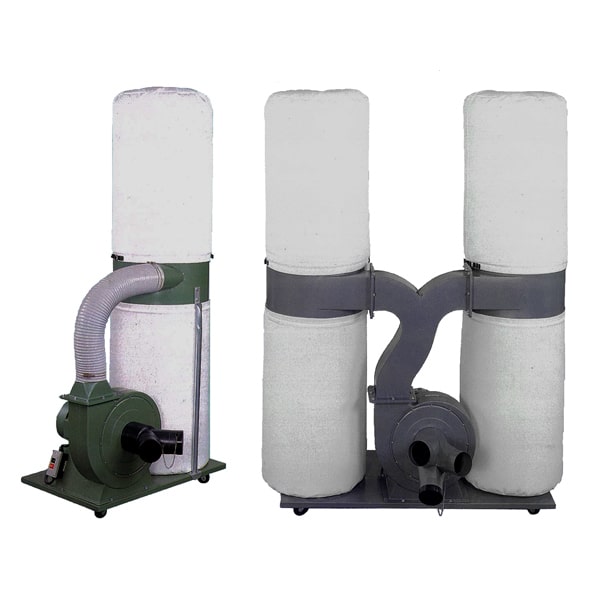
Para instalações em que o coletor atende a várias estações de trituração ou a estações que podem ser realocadas, um coletor de pó de cartucho Uma curva de ventilação documentada na pressão estática de projeto oferece às equipes de manutenção uma referência à qual podem recorrer quando o acúmulo de resíduos no filtro ou alterações na rede de dutos deslocarem o ponto de operação ao longo do tempo.
Rejeite orçamentos que não levem em conta as premissas relativas ao fluxo de ar no local
Uma cotação que não especifique tanto o CFM quanto a pressão estática no ponto de operação do sistema deve ser considerada incompleta, independentemente de quão competitivo o preço pareça. A ausência de documentação sobre o fluxo de ar instalado não é uma falha de formatação — é a condição específica que permite que um fornecedor proponha um coletor que pareça dimensionado corretamente no papel, mas que não consiga manter a velocidade de captura sob carga real. Quando o comissionamento revela a deficiência, o equilíbrio de poder já mudou: o equipamento está no local, a rede de dutos está instalada e o caminho para a correção passa por ordens de alteração, trocas de equipamentos ou soluções alternativas operacionais.
O padrão de falha é consistente em projetos de diferentes escalas. O fornecedor recebe dados de entrada parciais, faz uma cotação para um coletor com base no CFM de uma única estação ou de um filtro limpo e apresenta uma especificação que corresponde ao número solicitado, sem revelar a suposição de pressão estática subjacente. O comprador aceita a cotação porque o valor de CFM corresponde ao que foi solicitado. O sistema é aprovado em uma inspeção inicial porque ninguém mede a velocidade da coifa em várias estações simultâneas sob condições de filtro carregado no momento da aceitação. O problema vem à tona semanas ou meses depois, quando uma auditoria de Saúde, Segurança e Meio Ambiente (EHS) ou o vazamento visível de poeira desencadeia uma revisão no local e o sistema instalado não consegue demonstrar a captura em condições reais de operação.
O critério de rejeição é simples: se uma cotação não apresentar o ponto de operação de CFM em relação à pressão estática, calculado a partir de um traçado documentado da rede de dutos — incluindo comprimentos dos ramificações, mangueiras flexíveis convertidas em resistência equivalente, curvas tabuladas e perda do filtro incluída —, ela não contém informações suficientes para confirmar que o sistema funcionará adequadamente. Solicitar esse cálculo não é uma exigência irracional; trata-se da evidência mínima de que o fornecedor realmente dimensionou o sistema, em vez de ter selecionado um produto de um catálogo.
Em situações em que a área de produção exige um sistema de coleta de poeira portátil ou reconfigurável em várias estações de trabalho, a suposição de fluxo de ar instalado torna-se ainda mais crítica, pois a geometria da tubulação muda de acordo com o posicionamento. Um coletor de pó portátil industrial mesmo quando utilizado em diversas configurações, deve continuar a apresentar um ponto de operação nominal para o comprimento esperado da mangueira e a geometria da conexão — e não um valor de vazão de ar medido em bancada que se perde assim que a mangueira flexível é conectada.
O teste prático para qualquer cotação de sistema de coleta de poeira é se o fornecedor consegue apontar uma linha específica na curva de desempenho do ventilador e afirmar: “A essa pressão estática, calculada a partir desse traçado de dutos, o sistema fornece esse CFM na coifa”. Se essa demonstração exigir que se retorne ao fornecedor com perguntas após o recebimento da cotação, a solicitação de cotação (RFQ) não continha dados de entrada suficientes para permitir um exercício real de dimensionamento. Preparar as dimensões das estações, as premissas de uso simultâneo, a geometria da coifa, o traçado da duta e o tipo de poeira antes de emitir a solicitação de cotação é o que torna essa responsabilização possível na fase da cotação, e não na fase de comissionamento.
Antes de aceitar qualquer orçamento, confirme se o CFM do ponto de operação reflete condições de filtro sujo, e não condições de partida com filtro limpo; se a resistência da mangueira flexível foi considerada com base em seu comprimento equivalente real multiplicado; e se a classificação de desempenho apresentada corresponde à curva do ventilador na pressão estática calculada do sistema. Essas três verificações permitirão identificar a maioria dos sistemas subdimensionados ou com orçamentos incorretos antes da assinatura dos contratos.
Perguntas frequentes
P: E se apenas uma ou duas estações de moagem estiverem ativas na maior parte do tempo — ainda é necessário dimensionar o sistema para que todas as estações funcionem simultaneamente?
R: Sim, o dimensionamento deve ser feito para a carga simultânea no pior cenário possível, independentemente das condições operacionais típicas. Na maioria dos ambientes de fabricação, é a demanda de pico — e não a demanda média — que o sistema deve suportar. Um coletor subdimensionado para o uso simultâneo máximo não conseguirá manter a velocidade de captação exatamente nos períodos de produção em que a geração de poeira é mais alta, e adaptar a capacidade do ventilador ou a rede de dutos após a instalação é significativamente mais caro do que especificar corretamente desde o início. Se o cenário mais desfavorável for realmente incerto, opte pela maior combinação plausível de uso simultâneo e documente essa suposição explicitamente para que o fornecedor fique vinculado a ela.
P: Em que ponto a adição de mais trechos de mangueira flexível torna um coletor centralizado impraticável em comparação com unidades individuais?
R: Não há um limite fixo para o número de mangueiras, mas o ponto de decisão ocorre quando a resistência cumulativa das mangueiras flexíveis — cada trecho multiplicado por aproximadamente três para obter a resistência equivalente de um duto reto — eleva a pressão estática do sistema a um nível tão alto que o ponto de operação do ventilador cai abaixo do CFM necessário para manter uma velocidade de ramificação de 4.500 FPM em todas as estações ativas simultaneamente. Quando essa transição ocorre, o motor e o impulsor necessários para recuperar o desempenho podem custar mais do que a implantação de unidades portáteis dedicadas ou mesas com exaustão descendente em cada estação. Calcule a resistência total equivalente da conduta antes de optar por um layout centralizado; se o resultado exceder o que um único ventilador pode atender com um motor de tamanho econômico, vale a pena comparar as unidades distribuídas com base no custo total de instalação.
P: Se a unidade passar da retificação a seco de aço para a retificação úmida de alumínio no mesmo coletor, o cálculo original de CFM ainda se mantém válido?
R: Não — a moagem úmida em um sistema projetado para poeira de usinagem de metal a seco representa um problema distinto de filtragem e drenagem, e não uma variação menor do processo. A pasta úmida de alumínio gera coesão entre as partículas e um comportamento de aglomeração que obstrui o meio filtrante do cartucho mais rapidamente do que o modelo de dimensionamento original previa, e o caminho de drenagem para o líquido capturado deve ser projetado no sistema desde o início. O valor original de CFM para a velocidade de transporte pode ser direcionalmente semelhante, mas a especificação do meio filtrante, o intervalo dos pulsos de limpeza e a drenagem do invólucro exigem reavaliação. Trate a mudança de material como um novo exercício de dimensionamento antes de conectar o processo úmido a um sistema existente para poeira seca.
P: Como um comprador deve lidar com uma situação em que o fornecedor apresenta uma curva de ventilação, mas o ponto de operação indicado se baseia apenas na pressão estática com filtro limpo?
R: Rejeite o ponto de operação por estar incompleto e exija que o fornecedor o recalcule nas condições de filtro sujo — normalmente adicionando 2″ w.g. ao total da pressão estática com filtro limpo. Um sistema aceito com base em um ponto de operação com filtro limpo perderá progressivamente o fluxo de ar à medida que o meio filtrante se satura, sendo aprovado no teste de aceitação no comissionamento e apresentando degradação abaixo dos limites de velocidade de captura em questão de semanas, sem qualquer falha mecânica. O ponto de operação com filtro sujo é a restrição que o ventilador deve satisfazer para que o sistema permaneça eficaz durante todo o intervalo de manutenção do filtro, e não apenas no primeiro dia. Se a curva do ventilador mostrar que o sistema fica aquém do CFM exigido na pressão estática com filtro sujo, o ventilador está subdimensionado e a cotação precisa ser revisada antes da assinatura.
P: Esse nível de preparação de dados antes da solicitação de cotação (RFQ) é viável para instalações menores que não contam com engenheiros de ventilação na própria equipe?
R: Os dados essenciais — planta baixa com a localização das máquinas, uma lista das ferramentas ativas simultaneamente, esboço do trajeto da conduta e tipo de poeira — não exigem a participação de um engenheiro interno para serem produzidos. Eles requerem o conhecimento operacional da própria instalação, ao qual nenhum fornecedor tem acesso sem que lhe seja informado. O que exige julgamento de engenharia é traduzir esses dados em valores de pressão estática e CFM, e essa é, de fato, a responsabilidade do fornecedor assim que os dados forem fornecidos. Uma instalação sem conhecimento especializado interno em ventilação deve se concentrar em documentar o que sabe sobre as condições de seu processo e exigir que o fornecedor apresente o cálculo a partir desses dados — em vez de aceitar um orçamento que preencha os dados ausentes com valores padrão convenientes.