Shops that install a central ducted system against total installed station count — rather than the number of stations actually running at the same time — lock themselves into fixed airflow capacity sized for a peak that rarely materializes, paying the energy cost of that peak across every shift. When a machine is later added or relocated without rebalancing the duct network, extraction performance degrades quietly at every connected hood before anyone traces the cause back to an unbalanced branch. On the portable side, units that justified their purchase on flexibility often end up parked in corners during production pressure, and the filter neglect that follows across several dispersed units multiplies the maintenance coordination burden in ways that weren’t visible at the procurement stage. The decision between central and portable collection turns on three specific conditions — simultaneous station count, layout stability, and who is accountable for filter service — and this article is structured to help you define each of those conditions for your own facility before committing to either configuration.
Count simultaneous stations before central sizing
The first number that determines whether a central system is appropriately sized is not the total station count on the floor plan — it is the number of stations operating at the same time during a normal production shift. Central systems are designed around continuous simultaneous airflow to every connected branch; if only six of twelve stations are running at any given time, the system is delivering extraction capacity to six idle pickup points and burning fan energy to do it. That gap between installed count and actual concurrent use is the primary source of oversizing in central installations, and it has a compounding effect: the larger the gap, the harder it becomes to justify the fixed operating cost relative to what the system is actually capturing.
The practical planning step is to map station utilization by shift — not just which stations exist, but which ones overlap during peak production and which ones are idle during standard operations. If your facility runs dedicated lines where most stations operate together continuously, central sizing against simultaneous use and total installed count converge, and a central system’s fixed airflow design is appropriate. If utilization is staggered, sequential, or job-order-driven with significant idle periods across stations, that same fixed airflow design works against you. Variable airflow handling — covered in the expansion section below — can partially address this, but only if it is designed in from the start, not retrofitted later. ASHRAE Chapter 32 provides a useful process-reference framework for industrial ventilation airflow methodology when working through simultaneous-use calculations across branch circuits.
The station count exercise also sets the boundary condition for the portable route: if your concurrent station count is low and variable, portable units sized individually to each active station may deliver comparable or better extraction without the overhead of a central system. That comparison only holds when filter service and dust disposal are managed consistently — a condition addressed later.
Compare flexibility against duct balancing discipline
Portable collectors are genuinely flexible in planning, but that flexibility depends on whether staff actually reposition them when the work moves. Units that require disconnecting hose, wheeling across the floor, and reconnecting to a new capture point tend to stay where they were last used, particularly under production pressure. The flexibility that justified the procurement decision becomes a paper characteristic rather than an operational one, and the station that needed extraction coverage gets none.
Central systems carry a different discipline requirement: any layout change — new machine, relocated station, modified workstation height — that alters branch velocity or hood geometry requires duct rebalancing and potentially filter resizing. Performance loss following an unacknowledged layout change is a likely outcome in practice, because the change feels minor at the station level but alters pressure balance across branches that share the same main duct. Facilities that install central systems without a documented rebalancing procedure following any floor change tend to accumulate those deficits over time.
| Aspecto da flexibilidade | Central Ducted System | Portable Collectors |
|---|---|---|
| Layout changes | Requires duct reconfiguration, filter resizing, and rebalancing; risk of performance loss if not done | Instantly relocatable; no duct changes needed |
| Operational discipline | Must maintain duct-balancing discipline when adding/relocating machines | Risk of being abandoned in corner due to repositioning effort; needs staff habit |
| Adaptability to temporary sites | Not suited for frequent relocations | Easily moved to temporary workstations |
Neither failure mode is a product defect. Portable abandonment is a staffing and workflow discipline problem; central drift is a process documentation and maintenance-engineering problem. The question worth asking before selection is which failure mode your facility is better positioned to prevent — not which system sounds more suitable in principle.
Review how often the layout changes
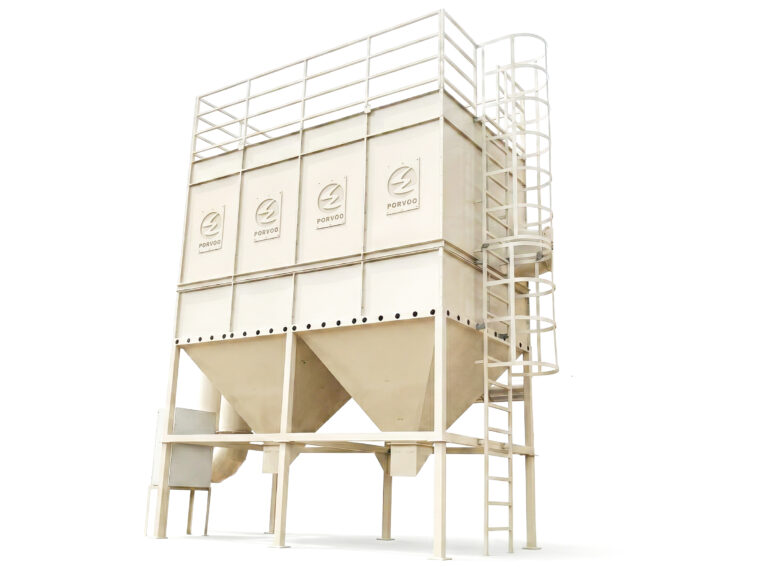
Central systems are a reasonable fit for stable, specialized production where machine placement is fixed across planning horizons of several years. The duct investment only pays off when the branches it serves remain in place long enough to justify the engineering and installation cost, and when layout stability allows the system to run at its designed airflow balance without periodic rebalancing intervention. If that stability exists, a central system concentrates extraction capacity, filter maintenance, and dust disposal into a single managed asset.
Portable collectors match short-to-medium-term adaptability needs: contract manufacturing with shifting product lines, facilities that reconfigure cells by season or customer, or workshops where machines are regularly moved to accommodate large workpieces. The relevant planning question is not whether the layout might change, but how often it actually has changed in the past two or three years, and whether the next two years have identifiable drivers for reconfiguration — new product introduction, facility expansion, equipment replacement cycles.
One condition that changes this calculation is a facility midway through a transition: a shop that is currently flexible but moving toward dedicated production lines may be better served by a hybrid approach — portable units now, with infrastructure pre-positioned for a future central tie-in — than by committing fully to either configuration at the current state. That hybrid path is only viable if the central system, when eventually installed, is designed with the modular expansion points discussed in the next section.
Include branch dampers and future expansion points
A central system designed without pre-installed branch dampers and expansion taps does not simply limit future growth — it makes any meaningful expansion structurally disruptive. Adding a station to a fixed-branch duct network without modular tie-in points requires cutting into existing ductwork, resizing the affected branch sections for the new airflow demand, and rebalancing the full network to restore pressure distribution. That work is manageable once; it becomes a significant cost and operational disruption risk when it happens repeatedly across a facility’s growth cycle.
The consequence of overlooking variable airflow handling is that the system gets locked to the airflow it was originally commissioned for, with no clean mechanism to throttle down inactive branches or accommodate a new high-demand station without oversizing the main filter and fan. This is where the hybrid expansion path has practical value: a central system that is already running at its designed airflow balance can be supplemented with portable units at new or temporary stations rather than forcing a duct overhaul, preserving the central investment while extending capture coverage without disrupting the existing network.
| Considerações sobre a expansão | Risco caso seja ignorado | O que verificar |
|---|---|---|
| Modular design with branch dampers | No easy expansion path; later additions may force complete duct overhaul and filter resizing | Are branch dampers and modular points included from the start? |
| Variable airflow handling | Fixed airflow design limits station addition; energy waste if oversized for current load | Does the system allow adjusting airflow per branch without resizing the main filter? |
| Hybrid expansion capability | Overlooks opportunity to retain central investment and add portable units for cost-effective scaling | Is the design compatible with integrating mobile dust collectors later? |
The three items in that checklist are worth confirming as line items during central system specification, not as afterthoughts during commissioning. Modular branch dampers, adjustable airflow per branch, and confirmed hybrid compatibility are engineering decisions that are far less costly to include during initial design than to retrofit after the system is commissioned and running.
Check maintenance burden across several portable units
Automatic pulse-jet cleaning on a central system extends filter life by preventing pressure drop accumulation without requiring manual intervention at the filter. On portable units, filter service is a manual task, and the condition that shortens portable filter life is not portable use itself — it is neglect of the manual cleaning interval. Across a fleet of four, six, or eight portable units distributed across a facility, the likelihood of consistent manual cleaning on schedule depends on how clearly that responsibility is assigned and whether the production schedule creates time for it. Facilities that track portable filter service informally tend to find that some units are well-maintained and others are not, with no reliable way to identify which units have degraded performance until extraction noticeably fails at a station.
Para um coletor de pó de jato pulsante in a central configuration, the filter is a single asset at one location — easier to inspect, service, and document than the same total filter area distributed across multiple portable units. The trade-off is that ductwork introduces a parallel maintenance requirement: periodic inspection for leaks, blockages, and velocity drift in longer branch runs. That inspection is less frequent than portable filter servicing but more technically demanding, requiring someone familiar with duct pressure-balancing to interpret the findings meaningfully.
| Fator de manutenção | Sistema central | Portable Collectors |
|---|---|---|
| Limpeza do filtro | Automatic pulse-jet cleaning extends filter life | Manual cleaning; filter life shortened if neglected |
| Inspection points | Single filter location, but ductwork inspections more complex | Multiple units across facility, increasing time and coordination |
| Pipework/duct maintenance | Requires periodic duct inspection for leaks and blockages | No ductwork, eliminating pipework checks |
The cumulative time cost of coordinating maintenance across multiple portable units is a real operational difference, even when each individual service task is simple. If a maintenance technician is responsible for portable units across three production zones, the inspection routing, filter replacement scheduling, and dust bin management across those zones adds coordination overhead that a centralized asset does not create.
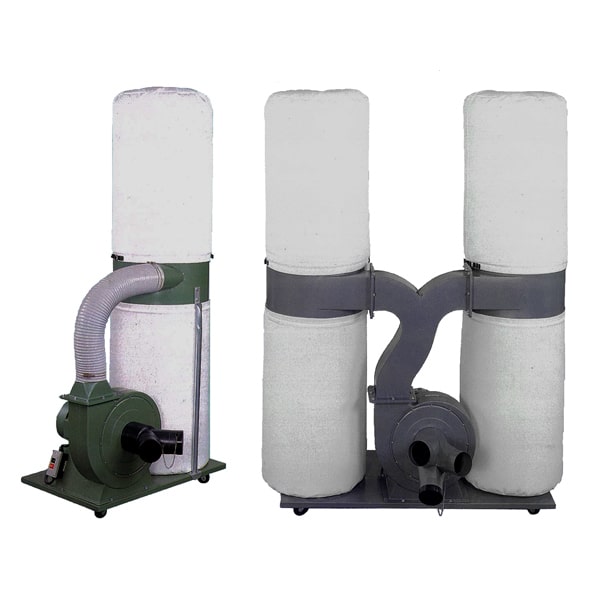
For facilities evaluating individual coletor de pó portátil industrial units, the maintenance question to resolve before procurement is not whether the unit is serviceable — it is who is responsible for each unit’s filter and bin, and whether that accountability is built into the production team’s workflow or left informal.
Decide who owns filter service and dust disposal
The ownership question for dust disposal is clearer in a central system because there is only one discharge point. One person, one team, or one scheduled task covers all the dust generated across every connected station. That consolidation simplifies both the logistics and the accountability assignment — it is straightforward to confirm whether the bin was emptied and when.
Portable units, by contrast, each carry an individual bin. Design figures from the inputs put portable bin capacity at roughly 5 to 30 gallons per unit, against more than 140 gallons for a central system’s single container. That capacity difference directly affects emptying frequency: a fleet of portable units in active use may require daily attention at every station, while the central bin operates on a less frequent cycle. At volume production, that daily-per-unit burden across multiple stations adds up to real labor hours that are not visible in the initial equipment cost comparison.
| Aspecto do descarte | Sistema central | Portable Collectors |
|---|---|---|
| Bin capacity | >140 gallons (single bin) | 5–30 gallons each |
| Emptying frequency | Infrequent, large volume | Daily, multiple bins |
| Labor & ownership clarity | Single disposal point simplifies ownership assignment | Multiple bins require clear responsibility for each unit; risk of missed emptying |
The operational risk on the portable side is not that bins are small — it is that accountability for each bin is often left ambiguous. When the operator at a station is responsible for their unit’s bin, emptying tends to happen. When disposal is assigned to a centralized maintenance crew that covers multiple zones, bins that are inconveniently located or out of sight get missed. Before deploying a portable fleet, the disposal ownership structure should be as defined as the maintenance schedule — station operator, shift team, or maintenance crew — and that structure should be confirmed workable against the actual floor layout, not assumed in planning.
Select the system that stays balanced in real use
A central system’s automatic pulse-jet cleaning is a meaningful operational advantage under real-use conditions because it responds to actual filter loading rather than a fixed schedule. When filters become loaded and pressure drop begins to rise, the cleaning cycle triggers to restore airflow, preventing the gradual capacity degradation that characterizes manually cleaned systems under variable production loads. This is not a maintenance-free characteristic — ductwork, fan components, and hopper discharge still require periodic attention — but it removes the single most frequent failure mode in portable filter management from the daily operational picture.
The condition that determines whether the central system actually stays balanced is whether the duct network was designed for the production load as it runs, not as it was planned. That requires sizing against actual simultaneous station use, pre-installed branch dampers for flow control, and a documented process for rebalancing whenever a station is added, relocated, or taken out of service. A central system with those elements in place tends to maintain extraction performance with predictable maintenance inputs. Without them, it drifts toward imbalance in ways that are difficult to diagnose at the station level.
For detailed guidance on calculating airflow requirements against actual concurrent station use before committing to either configuration, the CFM calculation methodology for multi-station workshops is a useful pre-selection reference.
The portable system that stays balanced in real use is the one where repositioning actually happens, filters are serviced on schedule, and bins are emptied before they overflow. Those outcomes are staffing and workflow design outcomes, not equipment outcomes. Portable collectors are capable tools for the conditions they are suited to; the question is whether the operational discipline required to realize that capability is reliably present in your facility — and whether the answer to that question is the same across every shift, every production zone, and every unit in the fleet.
The decision between central and portable collection is not primarily a capacity or capital-cost decision — it is a decision about which operational discipline your facility can reliably sustain. Central systems require layout stability, documented rebalancing procedures, and modular design from the initial specification; portable systems require clear ownership of repositioning, filter service, and dust disposal across every unit in the fleet. The system that performs better in your facility is the one whose discipline requirements match the actual structure of your maintenance team and production workflow.
Before specifying either direction, confirm three things: the number of stations that genuinely operate simultaneously during a normal shift, how often your floor layout has changed over the past two to three years and whether that pattern is expected to continue, and who specifically is accountable for filter service and dust disposal for each unit or branch. If those three inputs are defined clearly, the equipment selection follows from them. If they remain assumptions, the selection risk doesn’t disappear — it moves downstream into commissioning, energy cost, or maintenance failure.
Perguntas frequentes
Q: Our facility runs a hybrid of dedicated lines and job-order cells — does that split mean neither system fits cleanly?
A: A hybrid configuration is likely the most defensible path. Dedicated lines with predictable simultaneous use are well-matched to a central system designed around that load; job-order cells that shift frequently are better served by portable units assigned to those zones. The risk is treating the whole floor as one decision when the operational conditions differ meaningfully by zone. Design the central system to serve the stable portion, include expansion taps near the flexible zones, and use portable units there until those areas stabilize — rather than forcing a single system type across dissimilar production patterns.
Q: After a central system is commissioned, what is the first maintenance-engineering task that most facilities skip and later regret?
A: Establishing a documented rebalancing procedure triggered by any floor change — machine addition, relocation, or decommission — is the step most commonly deferred and most commonly responsible for quiet performance degradation. Without it, each layout change slightly shifts pressure distribution across branches, and those deficits accumulate without a clear point of failure to diagnose. The procedure does not need to be elaborate: a baseline pressure reading at each branch tap at commissioning, and a repeat measurement whenever a station changes, is enough to catch drift before it compounds.
Q: At what portable fleet size does maintenance coordination overhead start outweighing the flexibility advantage?
A: There is no universal threshold, but the inflection point in practice tends to appear when a single technician is responsible for more than four to six portable units across separate production zones. Below that count, informal coordination is usually workable; above it, the routing time, filter replacement scheduling, and bin management across dispersed locations begins to consume hours that a centralized asset would not generate. The more relevant signal is whether your facility has had instances of portable units running with degraded filters or full bins unnoticed — if so, the coordination burden has already exceeded what the current staffing structure can absorb reliably.
Q: Is a cartridge-style central collector a meaningfully different trade-off compared to a pulse-jet central collector for a multi-station workshop?
A: Yes, primarily in how they handle variable dust loading across branches. Pulse-jet collectors trigger cleaning based on filter pressure drop, which makes them more self-regulating under fluctuating production loads across multiple simultaneous stations — a condition common in multi-station workshops. Cartridge collectors can handle fine particulates effectively and are compact, but in high-load or variable-load central configurations they typically require more attentive filter management to prevent premature blinding. For a multi-station central installation where simultaneous use varies by shift, the automatic cleaning response of a pulse-jet design tends to maintain more consistent airflow without manual intervention.
Q: If capital budget is the binding constraint, is it ever reasonable to start with portables and plan a central tie-in later, or does that path usually cost more in total?
A: It can be cost-effective, but only if the eventual central system is anticipated during the portable phase. The condition that makes the staged path viable is pre-positioning infrastructure — conduit runs, mounting provisions, and wall penetrations — before the portables are deployed, so the later central installation does not require opening finished walls or reorganizing ductwork around equipment that was placed without the tie-in in mind. If portables are deployed without that pre-positioning, the retrofit cost typically exceeds what a central system would have cost if specified from the start, because the installation work happens around a running facility rather than during initial fit-out.