A escolha de um coletor de poeira antes da caracterização do fluxo de poeira é uma das causas mais comuns de trocas forçadas de equipamentos em postos de trabalho com alto nível de poeira. Uma unidade de cartucho selecionada com base no espaço ocupado ou no orçamento — e depois instalada em um fluxo com alta carga ou partículas aglomerativas — começará a apresentar aumento na pressão diferencial em questão de semanas, executará ciclos de limpeza por pulsos continuamente sem recuperar um fluxo de ar estável e, por fim, exigirá uma atualização do meio filtrante ou uma substituição completa por um coletor de mangas com jato pulsado. A decisão sobre a especificação depende de duas variáveis que devem ser confirmadas antes do dimensionamento de qualquer equipamento: a distribuição do tamanho das partículas em toda a faixa gerada pelo processo e a taxa de carga mássica que o coletor enfrentará no pico de produção. Definir claramente esses dois parâmetros é o que diferencia um sistema que mantém um fluxo de ar estável por uma década de outro que exige manutenção de emergência desde o primeiro mês de operação.
Compare a carga de poeira e o comportamento das partículas antes da implementação
A área ocupada e o custo de capital são os dois fatores que, na maioria das vezes, determinam a escolha inicial do coletor — e ambos são um ponto de partida equivocado. As primeiras questões que determinam se um coletor de cartuchos ou um filtro de mangas com jato pulsante será adequado para uma determinada aplicação são: qual é a distribuição granulométrica das partículas e qual é a quantidade de poeira transportada pela corrente de ar em carga máxima.
A consequência operacional de um erro nessa escolha não se resume apenas a uma baixa eficiência de coleta. Um coletor de cartuchos utilizado incorretamente em um ambiente de carga pesada ou com poeira aderente apresenta um padrão de falha que se agrava com o tempo: o mecanismo de limpeza não consegue remover totalmente a camada de resíduos, a queda de pressão residual aumenta gradualmente, a frequência dos pulsos aumenta para compensar e, como resultado, o meio filtrante se desgasta mais rapidamente. Quando o problema se torna visível nos dados do processo, os elementos do cartucho já estão, muitas vezes, irreversivelmente obstruídos, e a substituição é a única opção. Esse não é um caso extremo raro — é o resultado previsível da aplicação de uma tecnologia fora de seus limites operacionais.
Pós pegajosos, viscosos ou aglomerantes representam uma restrição mais severa. Os meios filtrantes em cartucho podem sofrer obstrução que nenhuma estratégia de limpeza consegue reverter quando as partículas de pó se ligam ao substrato, em vez de formarem uma camada removível. Os filtros de mangas com jato pulsado, com sua geometria de filtro de tecido e dinâmica de limpeza, geralmente são mais adequados para esses fluxos — mas a decisão deve se basear na caracterização real do pó, e não em suposições.
| Fator | Coletor de pó de cartucho | Filtro de mangas com jato pulsante |
|---|---|---|
| Tamanho da partícula | Processa partículas finas/submicrônicas (<1 µm) | Processa partículas de granulometria maior (>5 µm) |
| Capacidade de retenção de poeira | Indicado para cargas de poeira baixas a moderadas | Suporta grandes volumes e cargas industriais pesadas |
| Pós pegajosos/aglomerantes | Risco de cegueira irreversível em caso de exposição | É capaz de lidar com poeiras pegajosas, viscosas ou aglomeradas de maneira eficaz |
Os dados relativos ao tamanho das partículas e à carga apresentados nesta tabela devem ser considerados como limites de equilíbrio técnico, e não como limites rígidos. Muitas correntes de poeira reais abrangem ambas as faixas, e é exatamente por isso que a caracterização é importante antes do dimensionamento: uma corrente com distribuição bimodal — partículas finas respiráveis e aglomerados mais grossos — pode exigir uma abordagem diferente daquela aplicada a cada um dos casos extremos isoladamente.
Verifique a área do material filtrante do cartucho e o desempenho da limpeza
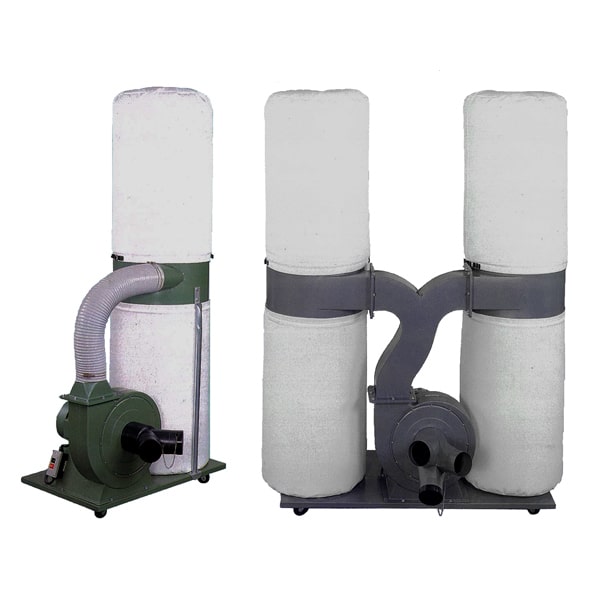
Os coletores de cartucho conquistam seu espaço em instalações com restrições de espaço porque o meio filtrante plissado concentra uma área de filtragem substancial em um compartimento compacto. Essa densidade é a vantagem do projeto — mas também é a fonte do erro de dimensionamento mais comum. Uma alta área de filtragem por unidade de volume não significa que o sistema seja automaticamente adequado à aplicação; significa que o sistema pode lidar com um alto volume de ar de forma eficiente quando a carga de poeira e as características das partículas estão dentro da faixa adequada.
A relação ar-tecido é a restrição oculta que muitas vezes só vem à tona durante o comissionamento. Um sistema de cartuchos operando fora de sua proporção de projeto para o tipo de poeira que está tratando reduzirá a velocidade de captura ou acionará pulsos de limpeza cíclicos em uma frequência que consome ar comprimido, acelera o desgaste do meio filtrante e ainda assim não consegue recuperar uma pressão diferencial estável. O controle de pressão diferencial sob demanda, discutido em uma seção posterior, ameniza esse problema — mas não corrige um erro fundamental de dimensionamento se a proporção estiver incorreta na especificação.
| Parâmetro | Especificação / Detalhes | Por que é importante |
|---|---|---|
| Proporção ar-tecido (poeira fina) | 1,0–1,5 cfm/pé² | Evita a queda excessiva de pressão e garante uma filtragem eficaz |
| Proporção ar-tecido (poeira grossa) | 2,0–3,0 cfm/pé² | Permite um rendimento otimizado, mantendo o desempenho de limpeza |
| Eficiência da filtragem | Até 99,91 TP3T a 0,3 µm | Atende aos rigorosos limites de exposição ocupacional e à conformidade regulatória |
| Orientação ideal | Orientação vertical do cartucho | Elimina a poeira com mais eficácia e minimiza a re-suspensão |
| Série de pulsos de limpeza | 0,1–0,15 segundos de ar comprimido | Otimiza o consumo de energia na limpeza e permite a operação contínua |
| Densidade de compactação do meio | O design plissado concentra uma grande área de filtragem em um volume reduzido | Permite uma ocupação compacta do espaço em instalações com restrições de espaço |
O valor de eficiência de filtragem de 99,9% para partículas de 0,3 µm reflete a capacidade de meios filtrantes em cartuchos bem selecionados sob condições adequadas, e vale ressaltar que as normas ISO 16890-1:2016 e ISO 16890-2:2022 estabelecem o quadro de testes que define como a eficiência em relação ao tamanho das partículas é medida e classificada para meios de filtragem de ar. Trata-se de normas de medição, e não de regras de projeto para coletores de pó industriais, mas elas fornecem a base para comparar as alegações de desempenho dos meios entre diferentes fornecedores. Para fins de aquisição, a implicação prática é solicitar dados de eficiência para a distribuição específica de tamanho de partículas do seu processo — um valor para 0,3 µm tem pouco significado se a sua principal preocupação em termos de exposição estiver na faixa de 1 a 5 µm.
A orientação dos cartuchos também é importante do ponto de vista operacional. Os cartuchos verticais liberam a camada de poeira na tremonha de forma mais confiável do que as configurações horizontais, o que reduz a carga sobre o ciclo de limpeza e ajuda a manter uma queda de pressão residual mais baixa entre os pulsos. Isso nem sempre é refletido nas tabelas comparativas dos fornecedores, mas tem um efeito mensurável no intervalo de limpeza e na vida útil do meio filtrante, particularmente em condições de carga moderada, nas quais o sistema opera por longos períodos entre as janelas de manutenção.
Para uma comparação mais detalhada sobre em que casos os mecanismos de limpeza do cartucho favorecem ou limitam a adequação da aplicação, o artigo Coletor de pó de jato de pulso vs. coletor de pó de cartucho: Quando escolher cada sistema para sua instalação aborda a lógica de seleção do ponto de vista operacional.
Utilize a capacidade do sistema de jato pulsado quando a carga pesada for predominante
Quando a carga de poeira é consistentemente alta e o processo opera de forma contínua, a vantagem operacional de um filtro de mangas com jato pulsado é a limpeza em linha — o sistema limpa as mangas filtrantes durante a operação, sem a necessidade de isolar compartimentos ou interromper o processo. Isso é importante em estações de trabalho com alto nível de poeira, onde tirar um coletor de operação para limpeza exigiria capacidade redundante ou forçaria uma pausa na produção.
Os filtros de mangas com jato pulsante também toleram relações ar-tecido mais elevadas do que os modelos com sacudidor ou de ar reverso, o que se traduz em um tamanho menor do recipiente para um determinado volume de fluxo de ar. Essa é uma vantagem em termos de custo de capital em aplicações de carga pesada, mas não deve ser interpretada como uma permissão universal para a redução do tamanho. A relação ainda precisa ser especificada corretamente para o tipo de poeira e a taxa de carga; o subdimensionamento em relação à carga máxima real cria a mesma instabilidade na queda de pressão que os sistemas de cartuchos mal aplicados produzem.
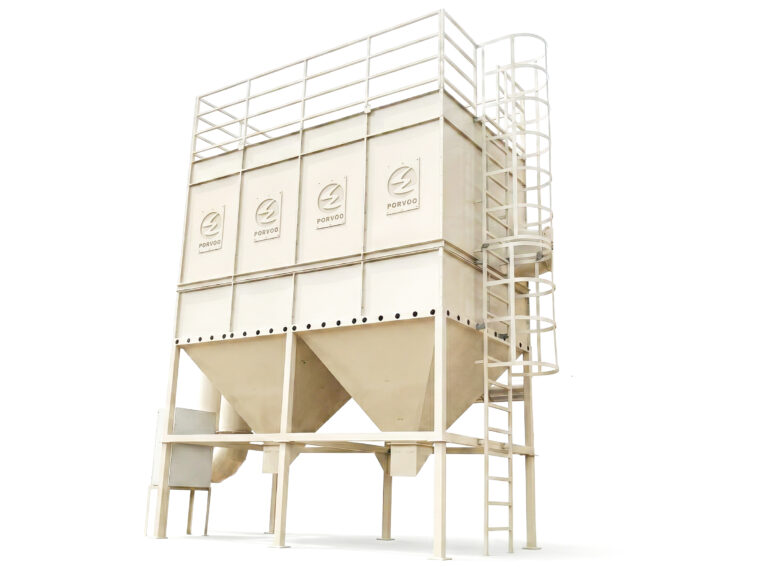
O Coletor de pó de jato de pulso Essa configuração é adequada para esses cenários de operação contínua e carga pesada, mas a escolha só se justifica se a qualidade do ar comprimido também for garantida — uma condição abordada na seção sobre funil e serviços de apoio, abaixo.
Um detalhe de planejamento que costuma ser negligenciado nas especificações dos filtros de mangas com jato pulsante é a consequência da contaminação do ar comprimido. A umidade ou o óleo na válvula de diafragma não causam uma falha imediata e visível. Eles reduzem gradualmente a eficácia do pulso de limpeza, permitem que resíduos de torta se acumulem nos filtros de mangas, e a perda de desempenho resultante se assemelha a uma carga elevada de poeira, em vez de um problema relacionado aos serviços de utilidades. Quando o entupimento dos filtros de mangas é confirmado, a causa real pode já estar presente desde o comissionamento.
Adicione uma pré-separação caso a poeira grossa reduza a vida útil do filtro
Em fluxos de poeira que contêm uma fração grossa significativa — especialmente partículas pontiagudas, abrasivas ou densas —, a questão relevante não é apenas se o coletor é capaz de suportar a carga, mas por quanto tempo o meio filtrante durará sob o impacto direto de partículas grandes. Trata-se de uma questão relacionada ao ciclo de vida, e ela tem uma resposta prática: a pré-separação.
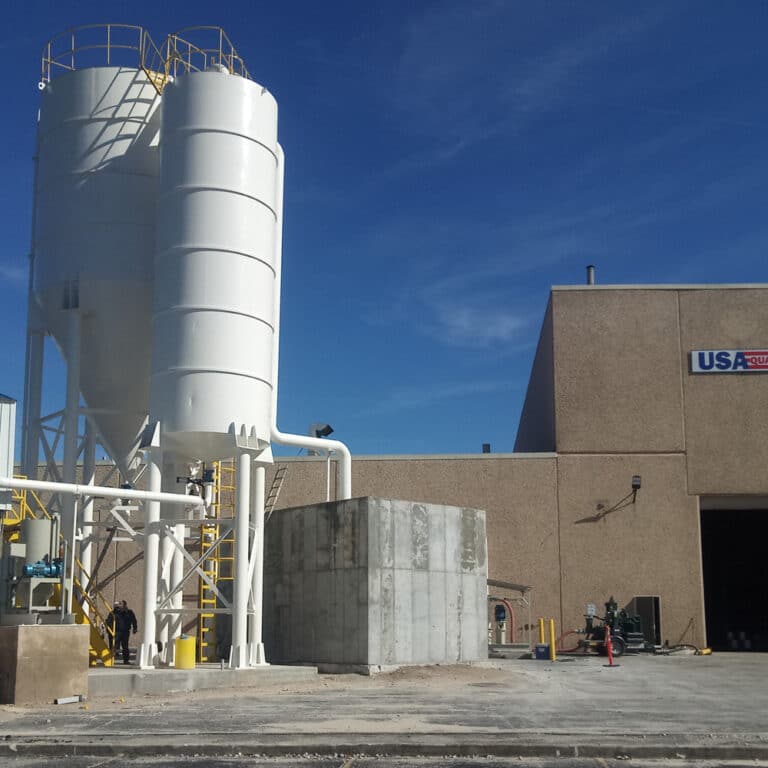
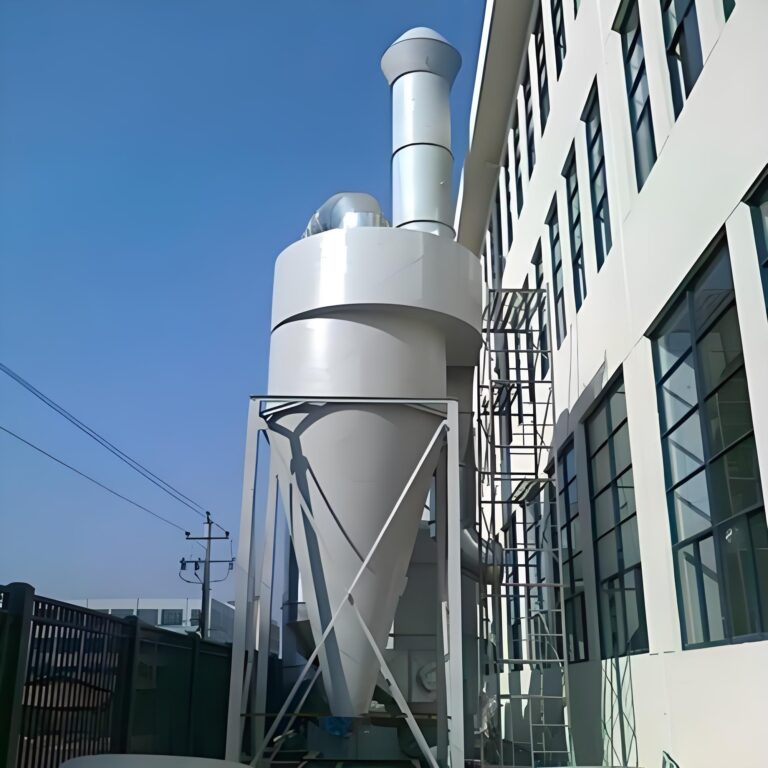
Um pré-separador ciclônico, posicionado a montante de um coletor de cartuchos ou de um filtro de mangas com jato pulsado, remove a maior parte das partículas grossas e pesadas antes que elas atinjam o meio filtrante. Para fluxos em que o impacto das partículas é o principal mecanismo de desgaste, isso pode prolongar substancialmente os intervalos de manutenção — o filtro lida com a fração residual fina para a qual foi projetado, enquanto o ciclone lida com a carga em massa de forma mais eficiente. O Coletor de pó industrial tipo ciclone funciona com base nesse princípio, utilizando uma geometria de entrada tangencial para pré-separar as partículas pesadas antes do estágio de filtragem a jusante.
A pré-separação deve ser considerada uma medida de proteção do ciclo de vida para fluxos nos quais o impacto de partículas grossas foi identificado como o fator causador de falhas — e não como um requisito para todos os fluxos combinados ou como um substituto para o dimensionamento correto do coletor primário. Ela reduz a abrasão e prolonga os intervalos de substituição; no entanto, não elimina o desgaste do filtro nem compensa um coletor primário subdimensionado.
A implicação em termos de aquisição é que os sistemas de duas etapas acarretam um custo de capital adicional e ocupam mais espaço para a instalação do equipamento. Essa escolha costuma se justificar quando a alternativa é a substituição de cartuchos ou sacos filtrantes em intervalos tão curtos que geram uma carga de manutenção que excede o custo do pré-separador ao longo da vida útil do equipamento.
Acompanhar a queda de pressão e os intervalos de substituição
A pressão diferencial é o sinal operacional que indica se um coletor está funcionando ou apresentando falha — e a forma como o sistema responde a esse sinal determina tanto o consumo de ar comprimido quanto a vida útil do filtro. O padrão de falha, nesse caso, não é drástico: trata-se de um aumento gradual na queda média de pressão operacional, geralmente atribuído à carga de poeira, e não à estratégia de limpeza, que, aos poucos, eleva os custos de energia e reduz a vida útil do filtro devido ao excesso de pulsos.
A solução prática consiste na limpeza sob demanda, acionada pela pressão diferencial real, e não por pulsos em intervalos fixos controlados por um temporizador. A pulsação em intervalos fixos dispara pulsos de limpeza em uma frequência predefinida, independentemente de o filtro precisar de limpeza — o que significa que ela ocorre desnecessariamente durante períodos de baixa carga, desperdiça ar comprimido e causa mais desgaste mecânico ao meio filtrante do que a própria carga de poeira exigiria. A limpeza acionada por ΔP só ocorre quando a queda de pressão atinge o limite definido, o que reduz o número total de pulsos por hora de operação e, consequentemente, prolonga a vida útil do filtro.
| Parâmetro | Limite / Diretriz | Impacto / Por que isso é importante |
|---|---|---|
| Gatilho de limpeza | Detecção de ΔP sob demanda (sem intervalo fixo) | Reduz a frequência de pulsação, prolonga a vida útil do filtro e economiza ar comprimido |
| Substituição do cartucho ΔP | >6 in. w.g. | Indica entupimento irreversível; ultrapassar esse limite aumenta os custos de energia |
| Atualização da mídia do saco | Os sacos com membrana de PTFE duram o dobro do tempo que os sacos comuns | Fluxo de ar mais consistente, menor custo de substituição ao longo da vida útil |
| Risco relacionado à frequência cardíaca | Pulsando com muita frequência | Desperdiça ar comprimido, reduz a vida útil do filtro e aumenta os custos |
Para sistemas de cartuchos, o limite de substituição quando a pressão diferencial ultrapassa 6 in. w.g. é um indicador prático de entupimento irreversível: a operação contínua além desse ponto aumenta o consumo de energia sem recuperar o desempenho de captura. Para sistemas de sacos, vale a pena avaliar os sacos filtrantes com membrana de PTFE como uma atualização em relação aos sacos de feltro padrão quando a aplicação envolve poeiras difíceis ou exige intervalos de substituição prolongados. O valor de vida útil duplicada é uma referência da prática do setor, não um resultado garantido, mas a justificativa para a atualização está bem estabelecida em aplicações de alta utilização, nas quais a troca de sacos representa um custo significativo de manutenção.
O artigo Qual sistema de coleta de poeira lida melhor com poeira grossa de alto volume? Cartuchos ou filtros de mangas? fornece mais informações sobre como a seleção de mídia interage com as condições de carga em aplicações de alto volume.
Planeje a descarga da tremonha e o abastecimento de ar comprimido
O serviço de ar comprimido é frequentemente subdimensionado no planejamento de coletores de pó, especialmente em instalações em que o coletor é acoplado a um coletor de ar comprimido já existente que não foi dimensionado levando em conta a demanda de limpeza por jato pulsado. Os dois problemas que decorrem disso são a queda de pressão no coletor durante pulsos de limpeza simultâneos e a contaminação por umidade ou óleo proveniente de um sistema compartilhado sem tratamento adequado.
A contaminação é o fator mais grave que leva à falha. A umidade que atinge as válvulas de diafragma causa danos à sede da válvula, fornecimento inconsistente de pulsos e obstrução acelerada do saco ou cartucho — nenhum desses fatores produz uma falha imediata e óbvia. A falha se acumula ao longo de semanas ou meses e, normalmente, se manifesta como um aumento da pressão diferencial que a equipe de manutenção atribui à carga de poeira, em vez da qualidade do ar. A contaminação por óleo proveniente do arrastamento do compressor, que não foi adequadamente separado, cria um padrão semelhante, com o problema adicional de promover a adesão de poeira às superfícies dos meios filtrantes.
| Aplicação / Mídia | Pressão do ar comprimido | Notas |
|---|---|---|
| Sistemas gerais de jato pulsado | 80–100 PSI | Requer ar limpo e seco; a umidade ou a contaminação por óleo causam o entupimento do filtro e sua falha prematura |
| Meio filtrante de feltro (típico) | ~70 PSI | Adequado para muitas aplicações padrão |
| Aplicações complexas | 100–120 PSI | Consulte um especialista quando a pressão for superior a 100 PSI; pressão insuficiente prejudica a eficácia da limpeza |
A faixa de pressão superior — de 100 a 120 PSI para aplicações complexas — não deve ser considerada como uma meta padrão de projeto. Ela representa um requisito para casos extremos, específico para combinações de meios e poeira que exigem análise de engenharia antes da definição das especificações; operar um sistema padrão nessa pressão sem confirmar as especificações da válvula de diafragma e do coletor acelera o desgaste dos componentes sem necessariamente melhorar a eficácia da limpeza.
A descarga da tremonha é outro detalhe operacional que afeta a confiabilidade do sistema. Uma tremonha cheia restringe a queda da camada de pó causada pelos pulsos de limpeza, faz com que o material coletado seja arrastado de volta para a corrente de ar e, progressivamente, neutraliza o mecanismo de limpeza. Válvulas rotativas de bloqueio de ar, transportadores helicoidais ou sistemas de descarga pneumática temporizada precisam ser dimensionados com base na taxa real de coleta em carga máxima — e não estimada a partir de números médios de produção — e confirmados como parte da aceitação do comissionamento.
Selecione o coletor que mantém um fluxo de ar estável
O coletor que mantém um fluxo de ar estável ao longo de sua vida útil é aquele em que a estratégia de limpeza, a seleção do meio filtrante e o sistema de ar comprimido foram adaptados às condições reais do processo, de acordo com as especificações — e não aquele com o menor custo de investimento ou a menor área ocupada no momento da compra.
A limpeza sob demanda baseada em ΔP mantém a pressão diferencial estável, pois responde ao desempenho real do filtro. A limpeza por pulsos em intervalos fixos trata o ciclo de limpeza como uma tarefa programada, independente da condição do filtro, o que significa que pode ocorrer limpeza excessiva durante períodos de carga leve e limpeza insuficiente durante períodos prolongados de carga pesada, caso o intervalo tenha sido definido de forma conservadora. A consequência no fluxo de ar decorrente do excesso de pulsos em intervalos fixos não é imediatamente evidente nos dados operacionais, mas se manifesta no consumo de ar comprimido, nas taxas de desgaste do meio filtrante e na frequência de substituição do filtro ao longo do ciclo de vida do equipamento.
Coletores de cartuchos bem conservados, com meios filtrantes adequados, proporções corretas de ar para tecido e limpeza acionada por ΔP, podem manter um fluxo de ar estável por mais de dez anos em aplicações adequadas. Esse número serve como referência prática para o planejamento na justificativa do custo do ciclo de vida — não se trata de uma garantia de produto ou de desempenho —, mas ilustra a importância de definir corretamente as especificações desde o início, em vez de corrigi-las após a instalação.
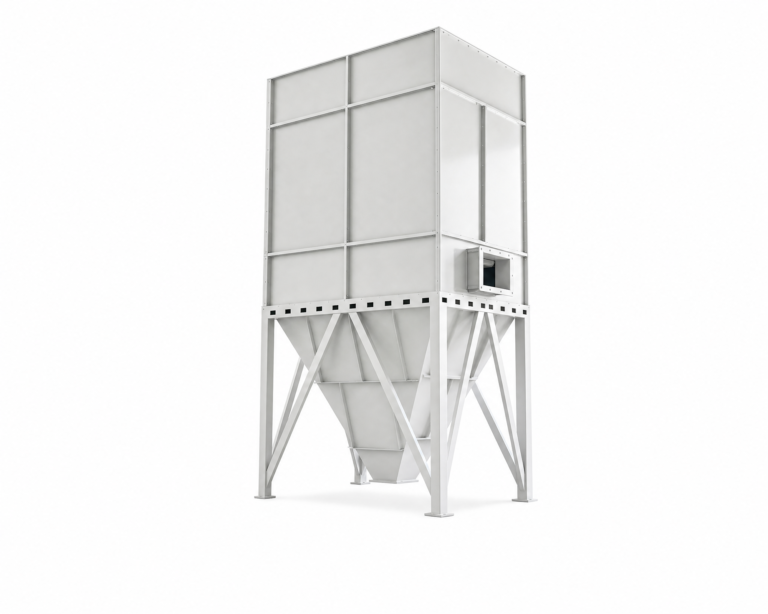
A questão da seleção, em última análise, resume-se a uma correspondência adequada entre as condições operacionais e o projeto do sistema. Se a poeira for fina, a carga for moderada e o processo priorizar uma pegada compacta e alta eficiência para partículas com tamanhos submicrométricos, um sistema dimensionado adequadamente Coletor de pó de cartucho é a opção mais adequada. Se a carga for consistentemente pesada, o pó for grosso ou aglomerante e for necessária uma operação contínua, a configuração do filtro de mangas com jato pulsante lida com essas condições de forma mais confiável. O que ambas as tecnologias têm em comum é a dependência da qualidade do ar comprimido, da seleção correta do meio filtrante e da estratégia de limpeza — e esses fatores determinam o desempenho a longo prazo mais do que a própria escolha da tecnologia.
O aspecto mais importante a ser confirmado antes de finalizar a seleção do equipamento é a distribuição real do tamanho das partículas e a taxa de carga de massa do seu processo específico — e não uma estimativa baseada em aplicações semelhantes. Esses dois dados determinam os requisitos de relação ar-tecido, a estratégia de limpeza, a necessidade de pré-separação e a vida útil realista do meio filtrante, e são as variáveis mais propensas a serem subestimadas quando uma especificação é elaborada com base em restrições de espaço ou orçamento. Se os dados de caracterização não estiverem disponíveis, coletá-los antes da aquisição é uma medida mais econômica do que descobrir a incompatibilidade tecnológica durante o comissionamento.
Uma vez confirmadas as características da poeira, as verificações secundárias — capacidade e qualidade do coletor de ar comprimido, dimensionamento da descarga da tremonha e configuração do monitoramento da pressão diferencial — são os fatores que determinam se um sistema corretamente especificado mantém seu desempenho projetado ao longo do tempo ou se degrada a ponto de se tornar um problema de manutenção. Ambos os coletores podem proporcionar uma operação confiável e de longo prazo quando essas condições são atendidas. O risco não está na tecnologia em si, mas na discrepância entre as condições especificadas e a realidade operacional efetiva.
Perguntas frequentes
P: E se não houver dados sobre a distribuição granulométrica disponíveis para o nosso processo — ainda assim podemos prosseguir com a seleção?
R: Proceda com cautela e considere provisória qualquer escolha feita sem dados de caracterização. Sem a distribuição granulométrica e a taxa de carga de massa confirmadas, a relação ar-tecido, a necessidade de pré-separação e o tipo de meio filtrante não podem ser especificados de forma confiável — o que significa que o coletor pode estar instalado corretamente, mas sendo utilizado de forma inadequada desde o primeiro dia. A opção de menor risco é coletar uma amostra de poeira para análise laboratorial antes da aquisição, e não depois. Se a pressão do cronograma tornar isso impossível, faça um dimensionamento conservador, incorpore o monitoramento da pressão diferencial desde o comissionamento e trate os dados operacionais iniciais como uma verificação, e não como uma confirmação presumida.
P: Após o comissionamento, qual é o primeiro sinal de que a estratégia de limpeza precisa ser ajustada?
R: Um aumento gradual e constante na pressão diferencial média de operação — e não um pico repentino — é o indicador confiável mais precoce. Se a ΔP de referência estiver subindo semana após semana, apesar de condições normais de carga de poeira, a frequência do pulso de limpeza, o limiar de acionamento ou o fornecimento de ar comprimido não estão adequados às condições reais do filtro. O próximo passo é verificar se o sistema está operando com controle de intervalo fixo ou acionado por ΔP, confirmar a pressão do ar comprimido e os níveis de umidade no coletor e verificar se há formação de pontes ou transbordamento na descarga do funil. Uma linha de base crescente atribuída a alta carga de poeira sem a verificação desses três fatores é o que leva os sistemas a um excesso de pulsos e ao desgaste acelerado do meio filtrante.
P: Essas recomendações ainda se aplicam se a concentração de poeira no local de trabalho for altamente variável — elevada durante os turnos de pico, mas baixa durante a madrugada?
R: A carga variável é exatamente a condição em que a pulsação em intervalos fixos causa o maior desgaste desnecessário e em que a limpeza acionada por ΔP oferece o benefício mais evidente. Durante períodos de carga leve, um sistema baseado em temporizador realiza a pulsação de acordo com a programação, independentemente da condição do filtro, sobrecarregando mecanicamente o meio filtrante e consumindo ar comprimido sem necessidade. Um sistema acionado por ΔP simplesmente não atua até que a queda de pressão atinja o limite — o que pode ocorrer com pouca frequência durante os períodos noturnos de baixa carga. Para coletores de cartucho em aplicações de carga variável, essa diferença de controle tem um efeito mensurável na vida útil do meio filtrante e deve ser confirmada como um requisito de especificação, não deixada como uma configuração padrão de comissionamento.
P: Um sistema de dois estágios, composto por ciclone e filtro de mangas, compensa o investimento adicional e o espaço ocupado em comparação com um filtro de mangas de estágio único, maior, dimensionado para toda a carga de partículas grossas?
R: O arranjo em dois estágios geralmente se justifica quando o impacto de partículas grossas — e não apenas a carga total de massa — é o principal fator causador de falhas. Um filtro de mangas de estágio único, maior e dimensionado para todo o fluxo, ainda expõe o meio filtrante à abrasão direta causada por partículas grossas pontiagudas ou densas; ele suporta a carga, mas não elimina o desgaste causado pelo impacto. O ciclone remove a fração grossa antes que ela alcance o meio filtrante, de modo que o filtro a jusante receba apenas a fração residual fina, que ele trata com maior eficiência. Se o fluxo de poeira for predominantemente grosso e abrasivo, o pré-separador prolonga os intervalos de substituição o suficiente para recuperar seu custo de capital ao longo da vida útil do equipamento. Se o fluxo for principalmente fino, com apenas um conteúdo grosso incidental, um filtro de mangas de estágio único corretamente dimensionado é a solução mais simples e econômica.
P: A partir de que ponto a troca para bolsas com membrana de PTFE deixa de ser economicamente viável em comparação com a substituição mais frequente das bolsas padrão?
R: A atualização é mais difícil de justificar quando os custos com mão de obra para substituição e com tempo de inatividade são baixos — por exemplo, em aplicações com fácil acesso aos sacos, tempo de troca curto e sacos de feltro padrão com preços de commodity. A justificativa para a membrana de PTFE se fortalece quando qualquer uma das três condições se aplica: a poeira é tão densa que os sacos padrão ficam obstruídos mais rapidamente do que sua vida útil nominal; a troca dos sacos exige tempo de inatividade significativo na produção ou entrada em espaços confinados; ou o processo opera continuamente com alta utilização, onde mesmo pequenas extensões nos intervalos de substituição se traduzem em redução mensurável dos custos de manutenção. O valor da vida útil duplicada é uma referência orientativa, não um resultado garantido; portanto, o ponto de equilíbrio real depende de intervalos de substituição confirmados em aplicações comparáveis, e não apenas da relação teórica.