Plants that buy filtration hardware before mapping their waste streams routinely discover the mismatch at commissioning—a dust collector sized for dry mineral fines starts receiving slurry carry-over from an adjacent wet grinding station, or a settling unit trips overload because no one quantified the grit loading coming in from upstream. The retrofit cost is not just the equipment swap; it is the downtime, the re-piping, and the months of unstable reuse water quality that follow. Getting this right means treating air and water as a linked system from the first planning conversation, where the decision that governs everything downstream is how you characterize and separate the waste streams before any equipment duty is assigned. By the end of this article, you will be better positioned to match capture method to workstation geometry, sequence a wastewater train that can actually sustain closed-loop reuse, and define acceptance criteria that hold under real operating conditions rather than only at initial commissioning.
Map stone cutting grinding and polishing waste streams
Every stone processing plant generates at least four operationally distinct waste categories, and the failure to treat them as distinct—rather than as a single “dust and water” problem—is the earliest planning error with the longest downstream tail.
Dry cutting and dry grinding produce airborne respirable mineral dust, with silica fractions that depend heavily on the stone type and tool speed. This stream is a capture-and-filter duty: the mass is relatively low, but particle size is fine and mobility is high, which means airborne migration happens faster than most plant layouts anticipate. Wet cutting and grinding produce slurry—a mixture of abrasive fines, stone particles, coolant water, and occasionally metalworking or tooling residues. Slurry behaves very differently from dry dust: it settles in drain channels, blocks pump inlets, and if allowed to dry on equipment surfaces, re-enters the air as secondary dust. Polishing operations generate a third category—fine swarf suspended in process water—that is chemically distinct from cutting slurry because it carries polishing compound residues and often has a different pH profile. Finally, all three wet streams eventually yield sludge: the dewatered solid fraction that must be collected, pressed, and disposed of or reclaimed.
The planning value of characterizing these streams early is that each one implies a different equipment duty. Dry dust implies source capture and filtration. Slurry implies grit separation before it reaches any settling or filtration stage. Process water implies a treatment train designed around reuse quality targets. Sludge implies a dewatering step whose capacity must be back-calculated from the incoming water and slurry volumes, not estimated from floor-space availability. Treating all four as a single waste category typically means under-specifying the grit removal stage, which loads the downstream settling equipment with particle sizes it was not designed to handle, shortens media and filter life, and drives unplanned maintenance at exactly the point in the process train where uptime matters most.
Separate dry dust wet slurry process water and sludge duties
Dry and wet systems share a physical plant but must be treated as segregated equipment trains. Mixing their duties—whether through shared ductwork, common drain lines, or undersized transition zones—creates conflicts that are difficult to diagnose once operations are running.
The most common conflict is moisture entry into dry extraction ducting. When a workstation transitions between dry cutting and water-cooled grinding, or when operators switch between dry and wet tools at the same bench, any shared extraction path becomes a condensation and slurry migration risk. Slurry that enters a dry dust collector fouls filter media, raises differential pressure, and shortens cleaning cycle effectiveness—problems that appear gradually and are often attributed to the wrong root cause until the media is inspected directly. The design decision that prevents this is maintaining separate extraction points and separate collection vessels for dry and wet duties, with clearly defined changeover protocols if the same workstation handles both.
Process water and sludge duties follow a different logic. Process water must be treated to a reuse standard that is determined by the quality requirements of the cutting and polishing operations it feeds back into—not by discharge limits alone. Turbid recycle water carries fine mineral particles that accelerate tool wear, contaminate polished surfaces, and introduce variability into finished stone quality. Sludge duty must be sized from the actual incoming solids load, which means knowing the dry solids concentration in the slurry before settling, not after. Plants that size their press capacity based on settling tank output rather than incoming slurry composition often run pressed sludge that is too wet for disposal, which signals a press undersized for the real solids load rather than a settling problem. Separating these duties at the planning stage—and assigning each a measurable design basis—is the condition that makes the downstream equipment selectable with confidence.
Match source capture to workstation geometry and dust behavior
Source capture fails most often not because the extraction system is undersized in total airflow terms, but because the capture point is positioned relative to equipment preference rather than actual dust release geometry. A well-specified collector connected to the wrong inlet location will consistently underperform, and the gap appears as persistent airborne dust levels in areas that the system nominally covers.
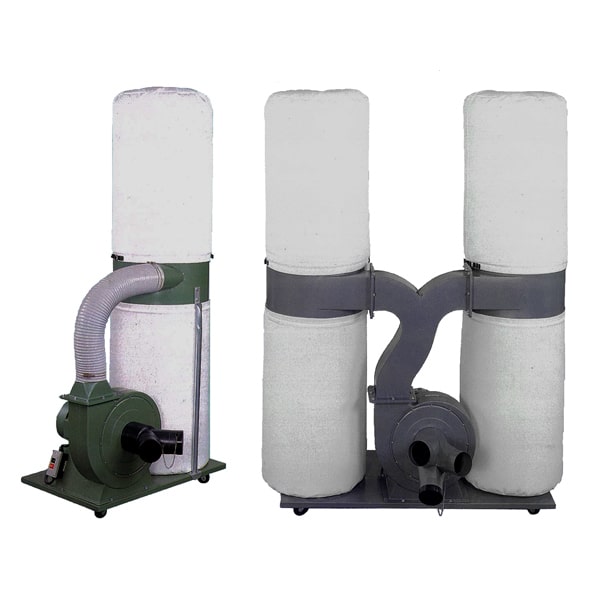
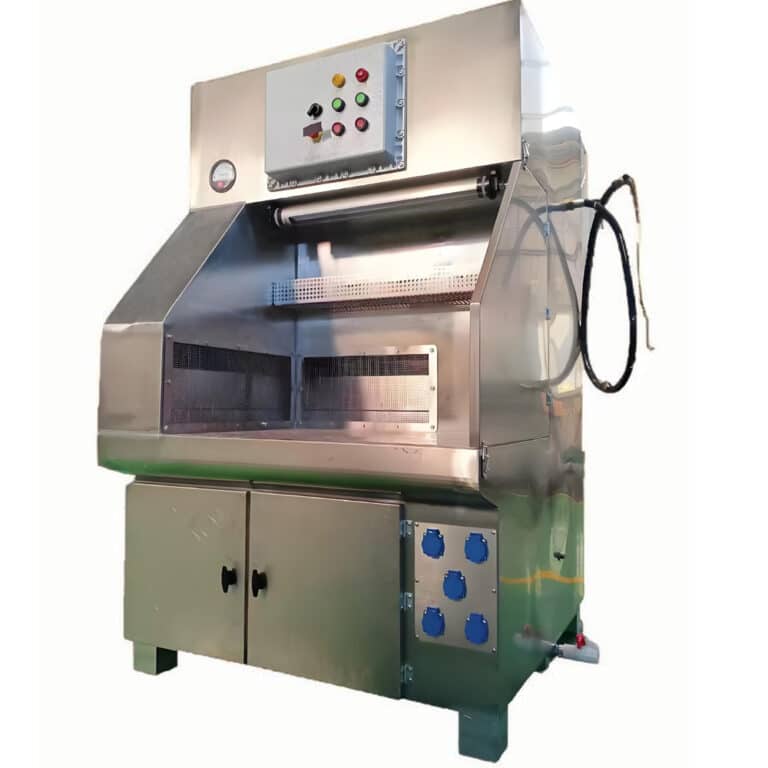
The OSHA-NIOSH Hazard Alert on worker exposure to silica during countertop manufacturing identifies source capture as the primary engineering control for reducing respirable silica exposure—but the practical implementation depends entirely on where and how dust is released at each workstation. At material transfer points—crusher outputs, screen decks, conveyor transfer zones—dust is released abruptly and at unpredictable angles, which argues for decentralized extraction positioned directly at the release point rather than relying on ambient room ventilation to dilute and carry the plume away. At fixed grinding or cutting benches where the workpiece and tool geometry are stable, a downdraft table geometry that draws airflow down through the work surface and away from the operator’s breathing zone is more appropriate than a lateral hood, which requires higher face velocities to achieve equivalent capture efficiency. A stół szlifierski z ciągiem ślimakowym handles both dry and wet station configurations at fixed benches, which makes it relevant for plants where the same workstation handles both stone types.
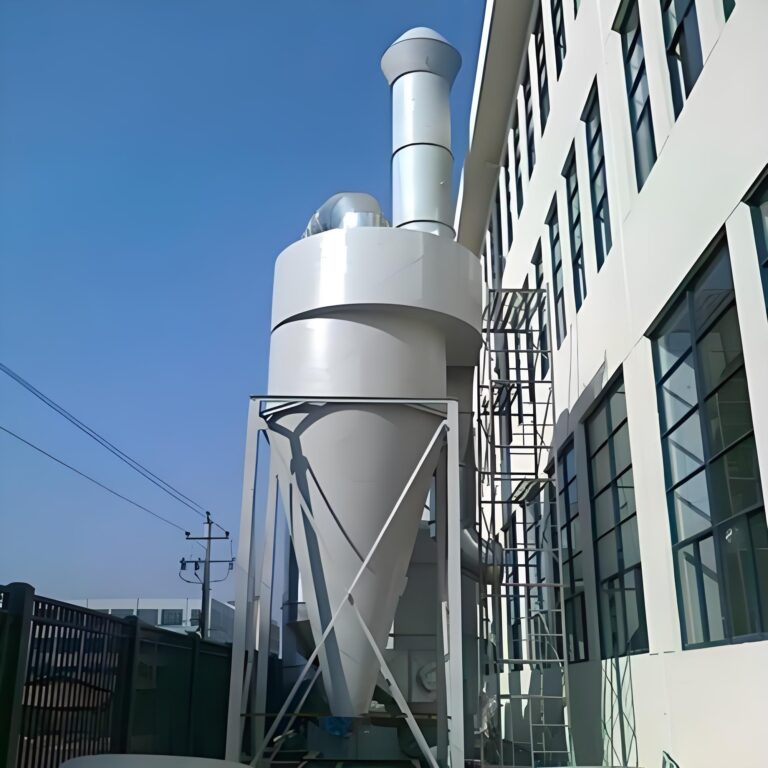
Where workstations have variable geometry, high mobility requirements, or are distributed across a large floor area, compact stand-alone spot dust filters offer integration flexibility that a centralized ducted system cannot match. Forcing centralized extraction onto these layouts creates dead zones—areas where fine mineral dust becomes airborne, migrates, and re-enters the breathing zone before the main extraction system can act on it. The capture decision should follow the dust behavior, not the duct routing plan.
| Capture Method | Typical Application in Stone Plant | Dlaczego to ma znaczenie |
|---|---|---|
| Decentralized extraction at crushers, screens, conveyor points | Material transfer points with abrupt dust release | Prevents dust migration and reduces operator exposure at the source |
| Compact stand-alone spot dust filters | Localized areas with continuous dust generation | Offers flexible placement and easy integration into the existing layout |
The ASHRAE guidance on industrial local exhaust systems reinforces this geometry-first principle: capture velocity must be calculated from the release geometry and dust mobility characteristics of each specific operation, not applied as a uniform face velocity across all hoods in a plant. That calculation is what separates an extraction layout that performs under real production conditions from one that only meets specification on the acceptance test day.
Build the wastewater train around grit dosing settling and pressing
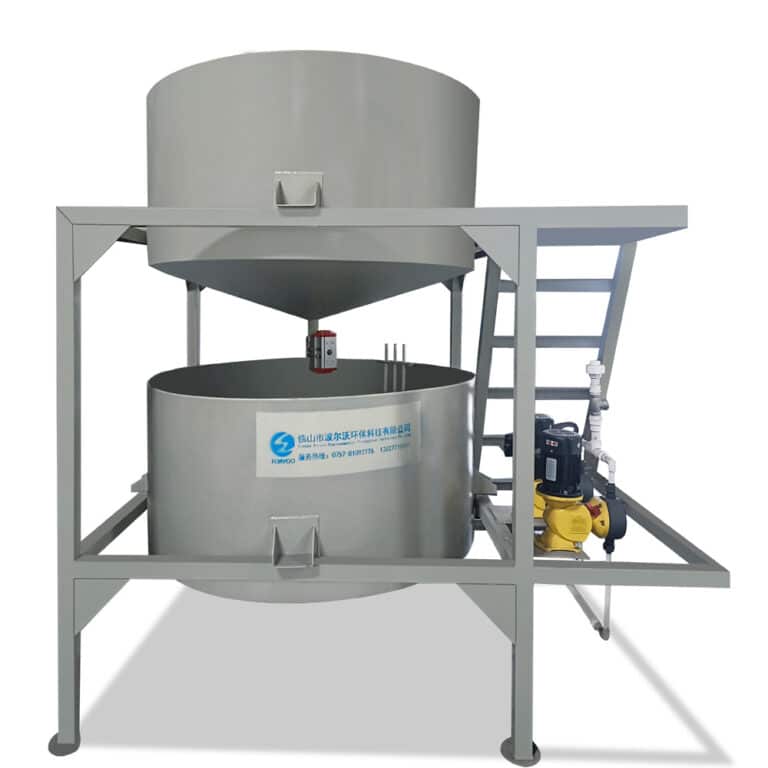
The sequencing of the wastewater train is not arbitrary. Grit removal must come first because coarse particles—typically fragments above 75 to 150 microns depending on stone type and cutting parameters—will rapidly damage pump impellers, settle in tank dead zones, and block the distribution inlets of any settling equipment downstream. Skipping or undersizing grit removal in favor of a larger settling tank is a false economy that shortens the service life of every mechanical component downstream.
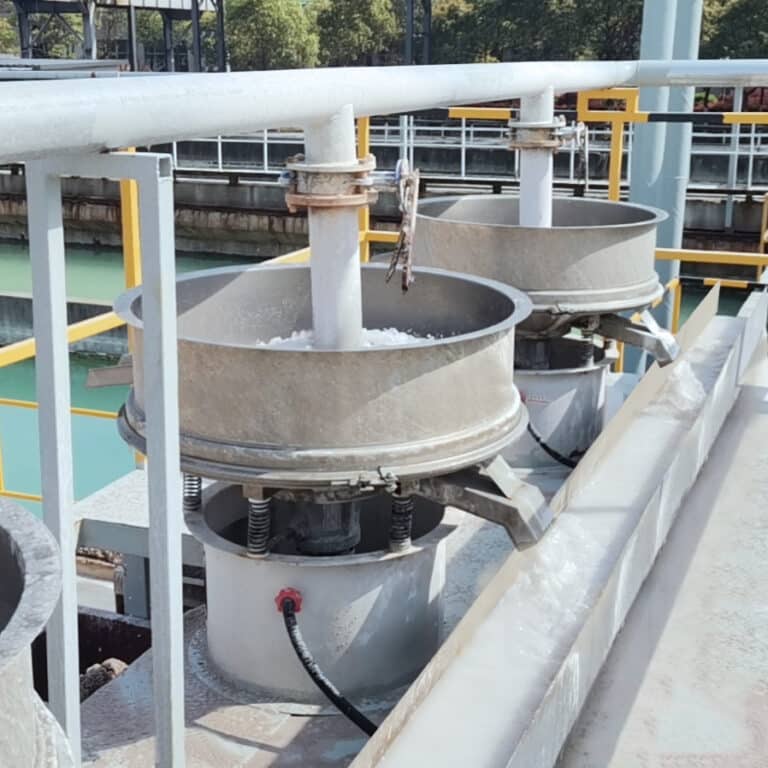
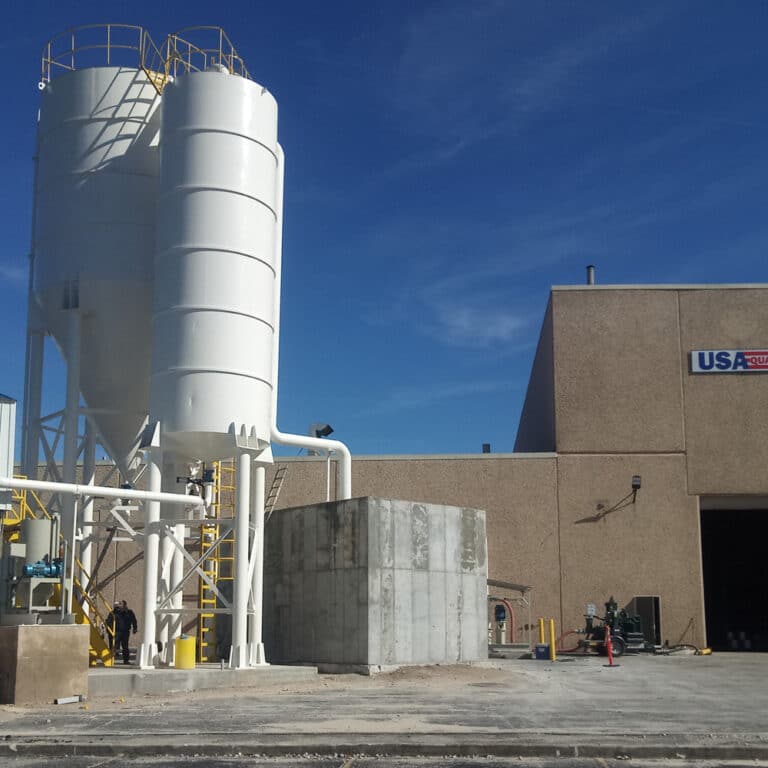
After grit separation, the settling stage must be designed around the actual particle size distribution and incoming solids concentration of the clarified slurry, not around a generic sedimentation rate. A pionowa wieża sedymentacyjna configuration concentrates settled solids at the base while allowing clarified overflow to feed a reuse circuit—an arrangement that suits stone plant geometries where floor space is constrained and vertical stacking is more practical than wide-footprint basin designs. The key operating variable at this stage is the flocculant or coagulant dosing rate, which must be matched to the influent turbidity and surface charge characteristics of the stone fines. Under-dosing produces a cloudy overflow that fails reuse quality targets; over-dosing increases chemical cost and can destabilize the sludge for downstream pressing.
The EPA’s water reuse resource guidance for industrial applications establishes a consistent principle: closed-loop reuse viability depends on treating water to the quality standard required by the process it feeds, not to a generic discharge standard. For stone plants, that means the reuse quality target is set by tool wear tolerance, surface finish requirements, and the pH range the coolant system can handle—operational parameters that should be defined before the treatment train is specified, not after the settling tank is already installed.
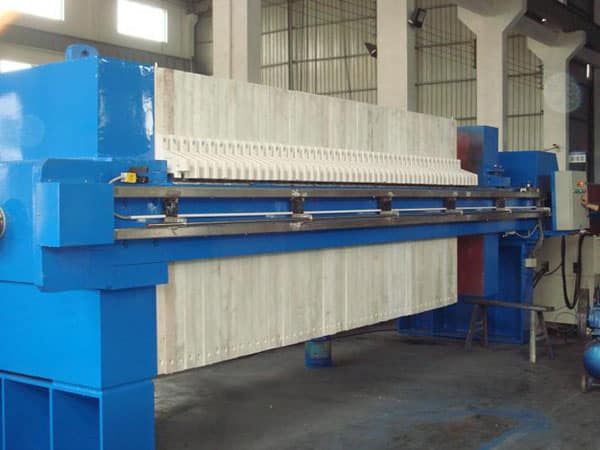
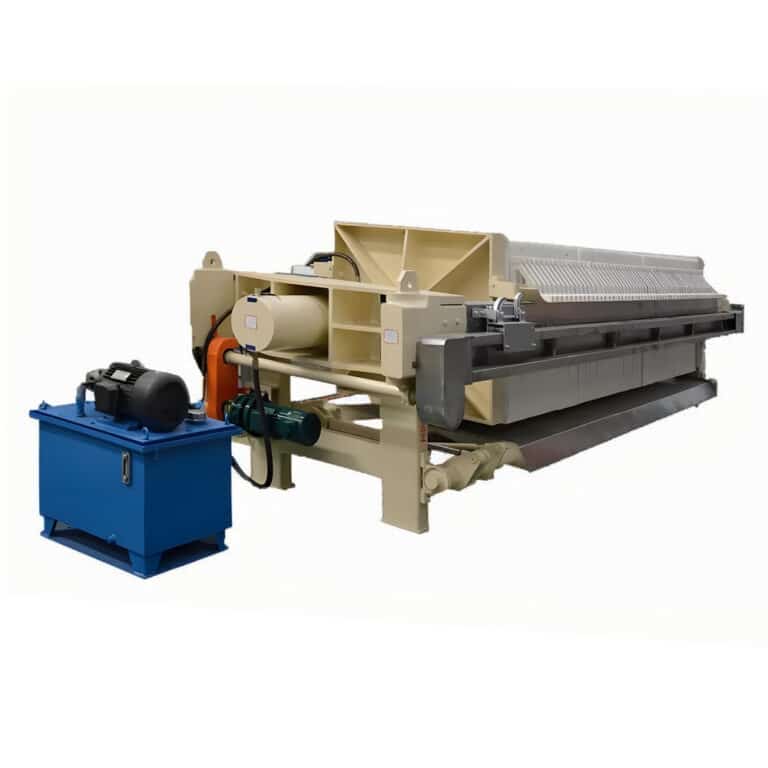
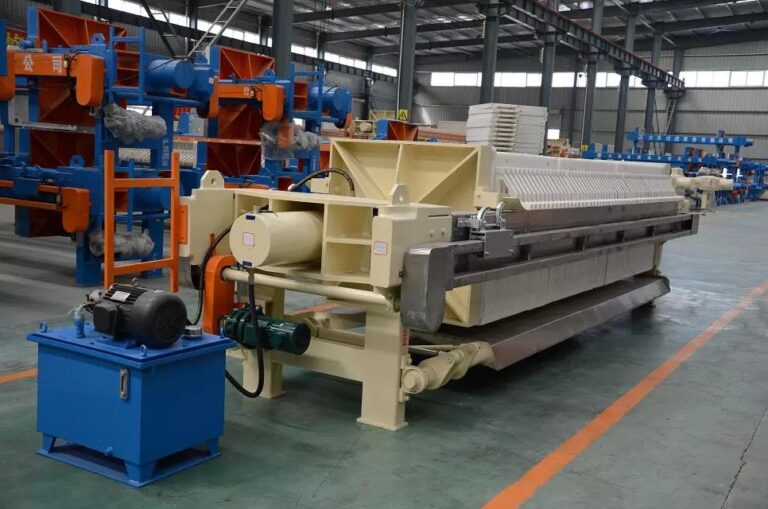
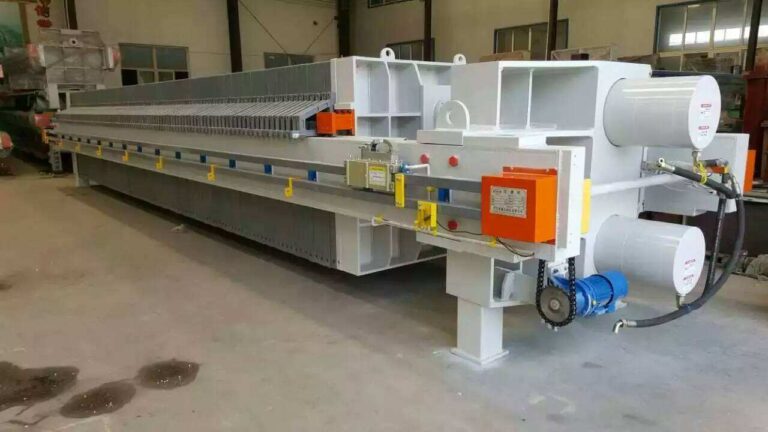
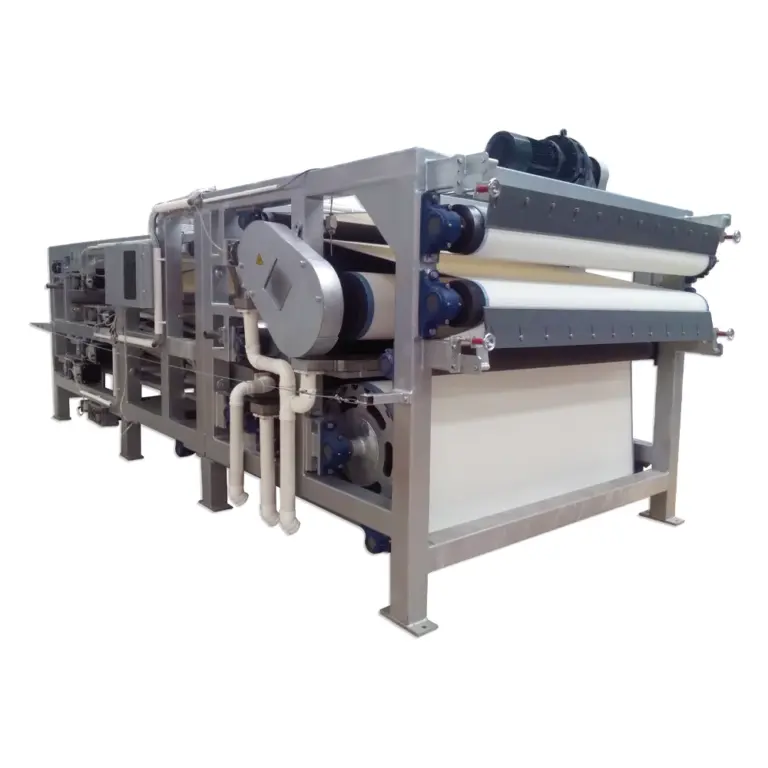
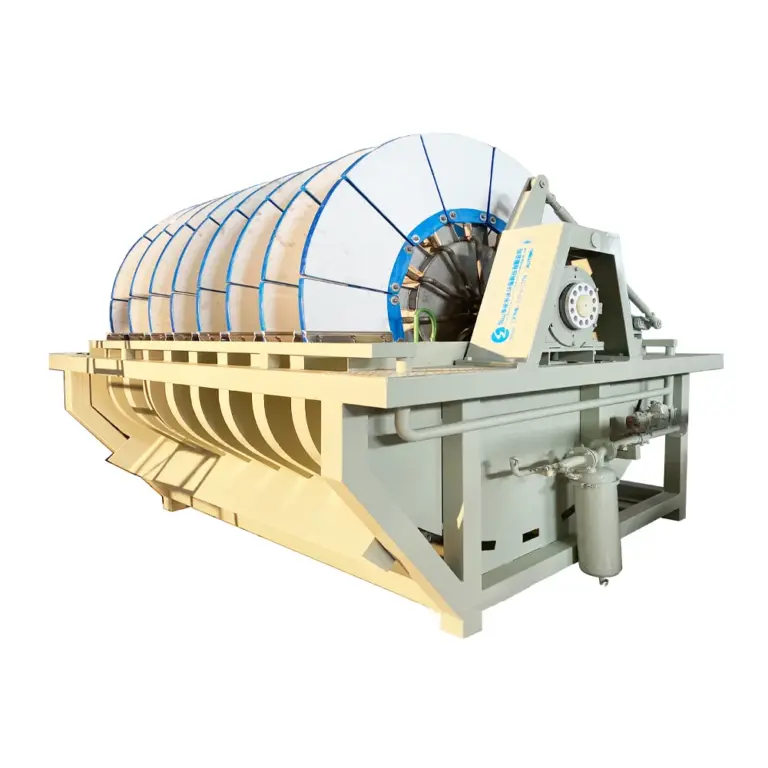
Press capacity is the bottleneck that most frequently causes problems late in the design process. The sludge volume arriving at the press depends on the incoming slurry solids load, the settling efficiency, and the flocculant dosing performance—all of which are variable under real production conditions. Press sizing should be based on peak incoming solids load with a margin, because a press operating continuously at design capacity has no headroom to recover from a production surge or a settling efficiency drop. Pressed cake moisture content is the practical acceptance metric: if the cake is too wet for handling or disposal, the problem traces back to either press pressure, cycle time, or incoming sludge consistency—each with a different remediation path.
Tie silica and emissions references to risk control not blanket compliance
Silica exposure risk in stone processing is not uniform across operations, and using the same engineering control standard for all workstations regardless of dust generation rate and particle size distribution is both over-engineered in some areas and under-engineered in others. The OSHA-NIOSH Hazard Alert on silica exposure during countertop manufacturing documents elevated respirable crystalline silica concentrations specifically in dry cutting, dry grinding, and dry polishing operations—with engineered stone products generating particularly high silica fractions due to their quartz content. That finding is relevant to equipment selection because it establishes that capture efficiency requirements at dry cutting stations are not the same as at wet polishing stations, and mixing them into a single exposure control category produces a specification that does not align with actual risk distribution.
The practical implication for plant engineers is to use silica fraction and dust generation rate at each workstation as the primary inputs to capture efficiency requirements—not a single plant-wide permissible exposure level applied uniformly. A workstation producing fine dry silica dust at high generation rates needs higher capture efficiency, faster cleaning cycles, and finer filter media than a wet polishing station where the primary exposure pathway is secondary dust from dried slurry residue. That differentiation drives equipment selection more reliably than a blanket compliance standard that does not distinguish between these conditions.
Emissions thresholds and permissible exposure limits should function as risk-control benchmarks that confirm whether engineering controls are performing adequately under real production conditions. They do not replace the engineering judgment about what capture method, filter efficiency, and cleaning frequency is appropriate at each workstation. A control strategy that demonstrates stable capture efficiency across variable production conditions is more defensible—and more durable—than one that passes an initial test but degrades as production volume or material type shifts.
Define acceptance checks for both air and water systems
Acceptance testing that relies on qualitative sign-off—visual dust levels, subjective turbidity assessment, or a single commissioning-day measurement—does not provide a defensible baseline for ongoing performance monitoring. The acceptance criteria that matter are measurable thresholds that can be trended over time and that flag degradation before it becomes a compliance or operational problem.
For air systems, the relevant measurable characteristics align with filter design and cleaning mechanism choices, not just with capture airflow volume.
| Acceptance Check Item | Measurable Characteristic | Decision / Benefit for Acceptance |
|---|---|---|
| Open tubular cell filter design | Lower pressure drop, reduced internal dust build‑up | Supports stable filtration and easier maintenance checks |
| Nanofibre filter media | Efficient surface capture of very fine mineral dust, lower pressure drop, longer filter life | Sets an efficiency benchmark for fine dust control; extends service intervals |
| Electromechanical pulse‑cleaning | Absence of compressed air infrastructure | Reduces installation complexity, operating cost, and eliminates condensation risks |
The design logic behind each row matters for what the acceptance check actually confirms. Open tubular cell filter geometry is worth verifying at acceptance because it affects how pressure drop trends over time—a filter design that minimizes internal dust bridging will show a stable differential pressure curve under cyclic pulse cleaning, whereas a design prone to blinding will show a rising baseline that accelerates toward the cleaning trigger. Nanofibre media surface capture is worth specifying as an acceptance criterion because it determines whether fine mineral dust—including respirable silica fractions—is captured at the filter face or driven into the media depth, where it increases resistance and is harder to dislodge. Establishing a pressure drop baseline on the commissioning day and trending it through the first two to three weeks of production provides early warning of media loading behavior that differs from specification.
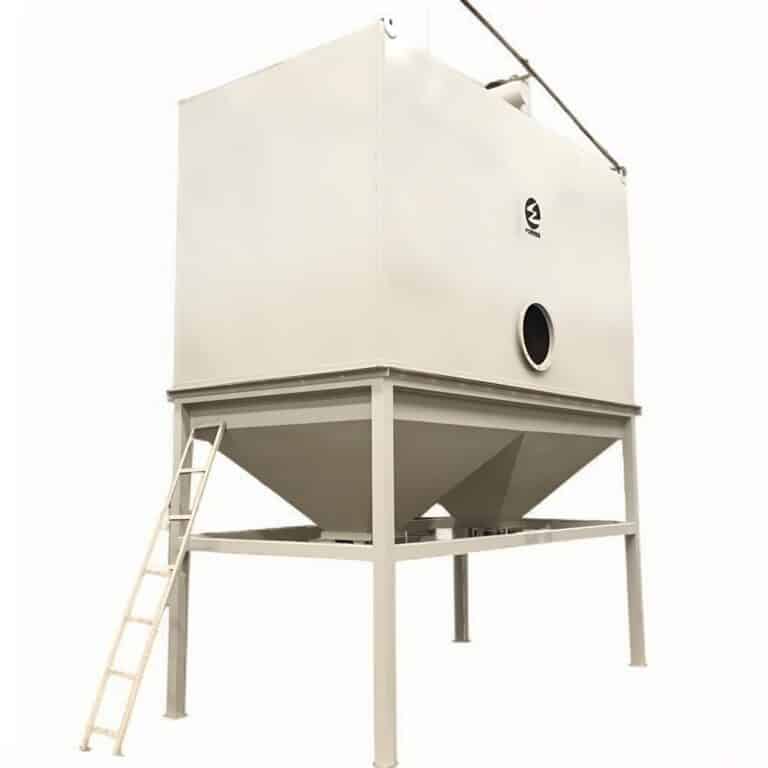
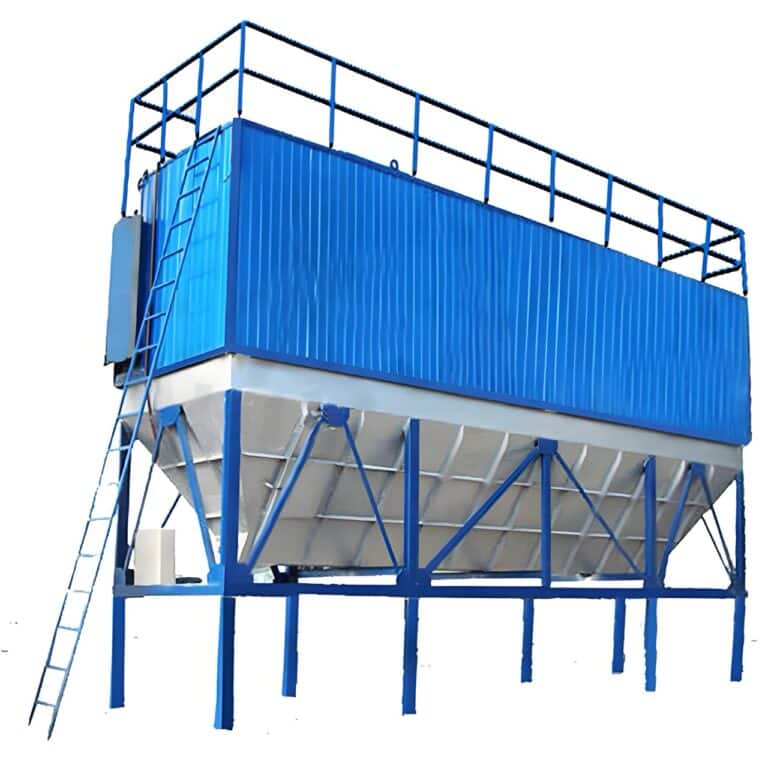
The pulse-cleaning mechanism choice has a downstream consequence that acceptance testing should confirm explicitly. A odpylacz nabojowy using electromechanical pulse-cleaning removes the dependency on compressed air supply, which eliminates one of the main sources of condensation-related media failure in wet or thermally variable plant environments. At acceptance, the relevant check is not whether compressed air is present, but whether the cleaning cycle restores differential pressure to baseline after a defined number of pulses under representative dust loading conditions. If it does not, the issue traces to either cleaning frequency, cleaning energy, or filter cake characteristics—not to the mechanism type—and the acceptance test surfaces that before the system is handed over.
For water systems, acceptance thresholds should include clarified water turbidity after settling, press cake moisture content at design throughput, and grit removal efficiency expressed as particle size retention above the design cutoff. Measuring these at commissioning establishes the baseline; checking them after the first month of production confirms whether operating conditions match the design basis or whether dosing, cycle time, or capacity adjustments are needed.
Choose the next page by the plant bottleneck
The next equipment or process decision in a stone plant should be governed by where the real constraint sits, not by a default sequence that starts with air and finishes with water or vice versa. Plants that identify their bottleneck correctly at the planning stage avoid the more costly pattern of addressing symptoms—high airborne dust readings, turbid reuse water, wet pressed sludge—rather than the underlying system constraint.
If the primary problem is airborne silica at dry cutting or grinding stations, the next decision is source capture geometry and filter media specification, and the relevant upstream question is whether workstation layout allows decentralized extraction or requires stand-alone spot filtration. If the primary problem is unstable reuse water quality, the next decision is the wastewater train sequencing and dosing logic, starting with whether grit removal capacity is correctly sized for the actual incoming particle load. If the primary problem is sludge handling—volume, moisture content, or disposal frequency—the next decision is press sizing and feed consistency, which traces back to settling performance and flocculant dosing before it traces back to press specification.
A plant where multiple constraints are active simultaneously needs a sequence: typically, grit removal and source capture are addressed first because they protect downstream equipment from damage modes that are difficult and expensive to reverse. For readers whose constraint is primarily on the water side, the article on industrial wastewater treatment equipment and reuse stability in ceramic and stone plants provides the module-level treatment logic in more depth. For readers whose constraint is source capture sizing at specific workstations, the downdraft table CFM sizing calculator provides a method for matching airflow capacity to workpiece dimensions and material type before equipment is specified.
Identifying the bottleneck correctly is not the same as identifying the loudest problem. The loudest problem in many stone plants is high airborne dust, but the underlying constraint is sometimes slurry carry-over into dry extraction paths, which means solving the air system in isolation will not hold. Asking where the system fails under peak production load—not where it performs acceptably under normal conditions—is the question that locates the real constraint.
The central judgment this article supports is that stone processing air and water problems are linked at the process level, even when they appear as separate equipment failures. A plant that maps its waste streams before specifying equipment can assign each duty to a system designed for it; a plant that skips that step discovers the mismatches under operating load, where corrections are more expensive and take longer to implement without disrupting production.
Before the next equipment procurement decision, the most useful pre-check is to verify three things: that the grit removal stage is sized from incoming slurry solids data rather than from settling tank capacity, that source capture geometry at each workstation reflects actual dust release behavior rather than duct routing convenience, and that acceptance criteria for both air and water systems are defined as measurable thresholds with baselines established at commissioning. Those three checkpoints address the failure modes that most reliably cause rework, and they are each resolvable at the planning stage without adding significant cost to the project.
Często zadawane pytania
Q: Our plant only does wet cutting and polishing — does the dust control advice still apply?
A: Yes, because wet operations create a secondary dry dust exposure pathway that most wet-only plants underestimate. Slurry that dries on equipment surfaces, drain channels, and floor areas re-enters the air as respirable mineral dust — often with a higher silica concentration than the original wet stream because lighter particles remain suspended longer before settling. Source capture requirements at wet stations are lower than at dry cutting benches, but they are not zero, and acceptance criteria for airborne dust should still be established at commissioning to detect secondary re-entrainment before it becomes a measurable exposure problem.
Q: After commissioning is complete, how soon should the first performance check be run?
A: Run the first trending check two to three weeks into production, not at the end of a longer break-in period. Filter pressure drop behavior, clarified water turbidity, and press cake moisture content all establish their real operating baselines during the first weeks under actual production load — which frequently differs from the commissioning-day conditions used to set initial dosing rates and cleaning frequencies. Catching deviation early means adjustments are still inexpensive; the same deviation discovered after two months of production typically requires more disruptive corrective action.
Q: At what point does a centralized ducted extraction system stop being the right choice for a stone plant floor layout?
A: Centralized extraction becomes the wrong choice when workstation positions change frequently, when the floor area is large enough that duct runs create dead zones between transfer points, or when more than two or three distinct stone types are processed at variable throughput rates. These conditions increase the probability that a centralized system delivers adequate face velocity at the design workstations while leaving adjacent release points — conveyor transfers, screen decks, secondary cutting positions — outside effective capture range. Stand-alone spot filtration units become the more reliable choice in these layouts because capture geometry can be repositioned to follow actual dust release points without re-engineering the duct network.
Q: Is a vertical sedimentation tower a better choice than a wide-footprint settling basin, or does it depend on something specific?
A: It depends on floor space constraints and incoming solids concentration rather than being universally superior. A vertical sedimentation tower is the stronger choice when plant geometry makes wide-footprint basins impractical and when incoming slurry solids concentration is high enough to benefit from the concentrated underflow geometry — conditions common in stone plants where cutting and grinding run continuously. A wide-footprint basin can offer longer hydraulic residence time at lower solids loads, but that advantage disappears if the basin develops dead zones from coarse grit settling before grit removal upstream is correctly sized. Either configuration performs to specification only when the grit removal stage preceding it is handling the particle fraction it was designed to remove.
Q: How do we know whether persistent turbid reuse water is a settling problem or a dosing problem?
A: Sample and measure the clarified overflow turbidity immediately after the settling stage while simultaneously recording the flocculant dosing rate and incoming slurry solids concentration. If turbidity is high while dosing is at or above the design rate, the problem traces to settling capacity or hydraulic loading — the tank is receiving more solids or flow volume than it was designed for, and the fix is upstream grit removal or flow balancing, not more chemical. If turbidity improves when dosing is increased beyond the design rate, the problem is under-dosing relative to the actual influent surface charge characteristics, which means the dosing rate was set against a different slurry composition than the plant is currently producing. These two failure modes look identical at the reuse outlet but require completely different interventions.