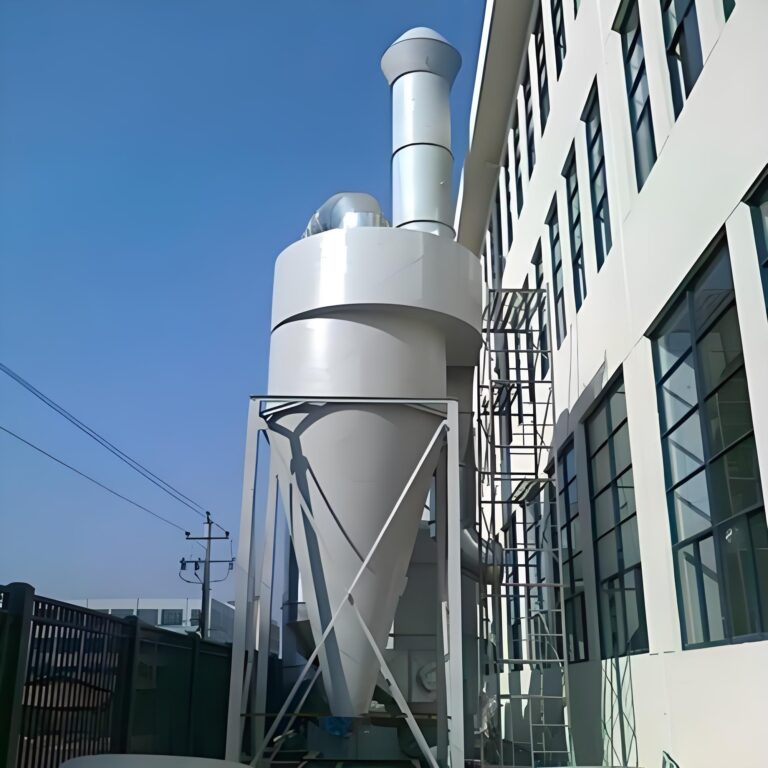
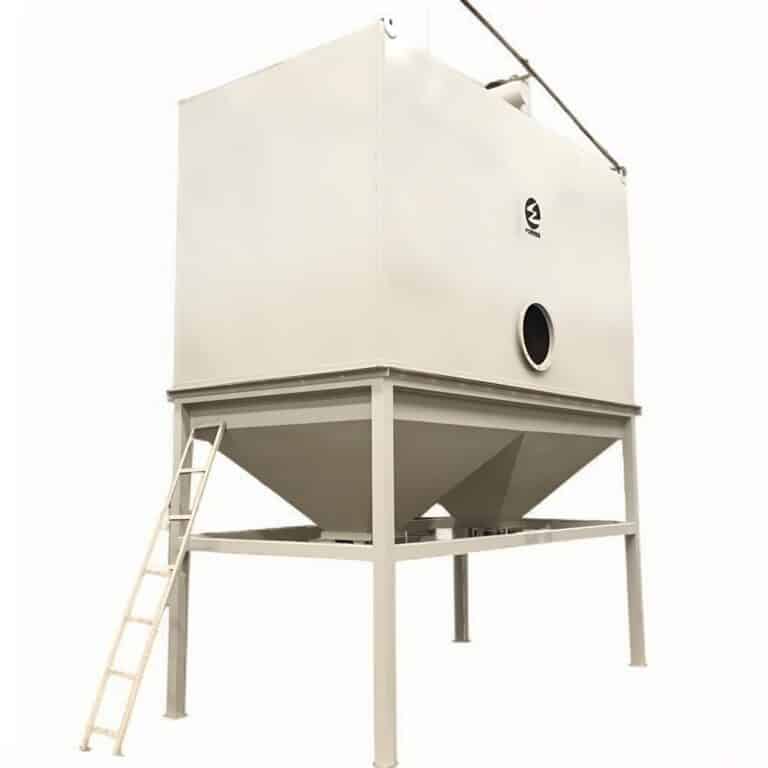
Para los ingenieros y jefes de planta que especifican sistemas de captación de polvo, la elección entre limpieza por aire reversible o por chorro pulsante es una decisión de diseño fundamental. Esta elección se vuelve crítica cuando las temperaturas de proceso superan los 400°F, donde las limitaciones de los materiales y la dinámica térmica dictan la viabilidad del sistema. Elegir el mecanismo de limpieza incorrecto puede provocar fallos prematuros en los filtros, tiempos de inactividad excesivos y riesgos catastróficos para el cumplimiento de la normativa.
Hay mucho en juego porque las aplicaciones de alta temperatura, desde la fundición de metales hasta la producción de negro de humo, exigen más que soluciones estándar. El método de limpieza influye directamente en la selección del medio filtrante, el diseño estructural y los costes operativos a largo plazo. Un análisis metódico y centrado en la temperatura es esencial para evitar un costoso exceso de ingeniería o una especificación insuficiente.
Reverse-Air vs. Pulse-Jet: Mecanismos básicos comparados
Definición de las principales acciones de limpieza
La divergencia operativa es fundamental. La limpieza por aire reverso es un proceso suave, fuera de línea. Se aísla un compartimento y un flujo inverso a baja presión de gas limpio colapsa las mangas filtrantes contra anillos anticolapso, desalojando la torta de polvo. Esto impone una tensión mecánica mínima, lo que resulta ventajoso para los materiales textiles más rígidos. En cambio, la limpieza por chorro pulsado es un proceso agresivo en línea. Un breve pulso de aire a alta presión desciende por un tubo de soplado, flexionando la bolsa bruscamente contra su jaula de alambre interna para desprender el polvo. Esto permite un funcionamiento continuo, pero somete al filtro a importantes fuerzas físicas.
Impacto en los medios filtrantes y durabilidad
Esta diferencia mecánica bloquea los requisitos específicos de los medios. Los sistemas de aire reversible suelen utilizar vidrio tejido u otros tejidos rígidos que pueden mantener su forma durante el colapso. Los sistemas de chorro pulsado requieren fieltros punzonados, que son más flexibles y pueden soportar flexiones repetidas. La elección no es sólo operativa, sino que dicta su cadena de suministro de bolsas de recambio. Los expertos del sector recomiendan evaluar las características del polvo: los polvos abrasivos combinados con una limpieza por chorro pulsado agresiva pueden degradar rápidamente incluso los fieltros más duraderos, lo que cambia el análisis coste-beneficio.
Implicaciones estratégicas para el diseño de sistemas
Comparamos los dos y descubrimos que la elección del mecanismo afecta a todo el diseño del sistema. La acción más suave de un sistema de aire reversible suele permitir un suministro de aire de limpieza más sencillo y accionado por ventilador, pero requiere una mayor compartimentación para la limpieza fuera de línea. La limpieza continua de un sistema de chorro pulsado ocupa menos espacio, pero requiere un sistema de aire comprimido limpio y seco. La implicación estratégica es clara: el método de limpieza es la primera ficha de dominó en una cadena de decisiones de diseño que afectan a la huella, los servicios y los protocolos de mantenimiento.
Análisis de costes: Capital, funcionamiento y coste total de propiedad
Desglose de los costes iniciales y operativos
Una mirada superficial a los gastos de capital puede inducir a error. Aunque los colectores de chorro pulsado suelen tener un coste inicial más bajo debido a la mayor relación aire/tela, no se tienen en cuenta los sistemas auxiliares críticos. El sistema de aire comprimido necesario para la limpieza por chorro pulsado, que incluye compresores, secadores y almacenamiento, representa un importante coste de capital y de energía de funcionamiento. Los sistemas de aire reversible utilizan aire de ventilador a baja presión, que suele ser menos costoso de generar y mantener. Algunos detalles que se pasan por alto fácilmente son el coste a largo plazo de las fugas de aire comprimido y el programa de mantenimiento de las válvulas de impulsos frente a las compuertas de aire inverso.
El papel dominante de los costes de los medios filtrantes
En aplicaciones de alta temperatura, el medio filtrante suele ser el componente de mayor coste a lo largo de la vida útil del sistema. Los fieltros especiales para chorro pulsante o las telas tejidas para aire reversible pueden costar múltiplos de los medios estándar. Un modelo de coste total de propiedad (TCO) que no proyecte con precisión los intervalos y costes de sustitución de los medios filtrantes es fundamentalmente erróneo. Según las investigaciones de los análisis del ciclo de vida de la industria, la sustitución de los medios puede igualar o superar el coste inicial del filtro de mangas en unos pocos años para un servicio severo.
Un marco para comparar con precisión el coste total de propiedad
Para hacer una comparación válida, hay que hacer un modelo basado en las condiciones reales de funcionamiento. En la tabla siguiente se resumen los principales factores de coste de cada sistema, destacando dónde residen los riesgos y las oportunidades financieras.
| Categoría de costes | Sistema Pulse-Jet | Sistema de aire reversible |
|---|---|---|
| Coste de capital | Menor coste del colector | Mayor coste del colector |
| Coste de los medios de comunicación | Alta (fieltros especiales) | Alta (tejidos especiales) |
| Energía de explotación | Alta (aire comprimido) | Inferior (aire del ventilador) |
| Mantenimiento | Sustitución de válvulas y jaulas | Integridad del marco y las juntas |
| TCO Conductor | Vida mediática, energía | Vida mediática, estructura |
Fuente: Documentación técnica y especificaciones industriales.
Rendimiento y capacidad: Relación aire/tela y huella del sistema
Entender la relación aire/tela
La relación aire/tejido (ACR) es la principal medida para dimensionar un filtro de mangas. Representa el volumen de gas filtrado por pie cuadrado de medio filtrante por minuto. Un ACR más alto significa que se necesita menos tejido para un volumen de gas determinado, lo que se traduce en un recipiente colector más pequeño y menos costoso. Los sistemas de chorro pulsante funcionan con un ACR que suele duplicar el de los sistemas de aire reversible. Este rendimiento se debe a la limpieza agresiva y continua que mantiene una torta de polvo más fina y permeable en la superficie del filtro.
El compromiso de la huella
El mayor ACR de la tecnología de chorro pulsado se traduce directamente en una huella compacta, una ventaja decisiva en instalaciones con limitaciones de espacio o proyectos de modernización. Un sistema de aire reversible que gestione los mismos CFM requerirá una estructura físicamente más grande con más compartimentos. No se trata sólo de una cuestión de espacio, sino que afecta a los requisitos de acero estructural, los tendidos de conductos y la complejidad de la instalación. En mi experiencia, la promesa de un menor espacio ocupado suele inclinar prematuramente los proyectos hacia el chorro pulsado, sin una evaluación completa de si las propiedades del gas y el polvo son compatibles con los medios de alta temperatura requeridos.
Cuantificación de la diferencia de rendimiento
Los parámetros de rendimiento están codificados en normas de ingeniería. La tabla siguiente cuantifica las diferencias operativas que dictan el tamaño del sistema y la filosofía de limpieza.
| Parámetro | Sistema Pulse-Jet | Sistema de aire reversible |
|---|---|---|
| Relación aire/tela | De 3:1 a 6:1 pies/min | 1,5:1 a 3:1 ft/min |
| Huella del sistema | Compacto | Más grande |
| Acción de limpieza | Flexión agresiva | Colapso suave |
| Modo operativo | Continuo (en línea) | Aislamiento de compartimentos |
| Estrés del medio filtrante | Elevada tensión mecánica | Tensión mecánica mínima |
Fuente: JB/T 10341 Impulso Jet Baghouse. Esta norma especifica los requisitos técnicos para los filtros de mangas de chorro pulsante, que rigen el diseño de los sistemas que funcionan con las elevadas relaciones aire/tela y los ciclos de limpieza continua detallados en la tabla.
¿Qué método es mejor para aplicaciones de 400°F a 500°F?
El punto dulce de Pulse-Jet
Para el intervalo de 400°F a 500°F, la limpieza por chorro pulsado suele ser la opción óptima. Esta banda de temperatura coincide con los límites de servicio continuo de fieltros sintéticos avanzados como la aramida (Nomex), el sulfuro de polifenileno (PPS/Ryton) y la poliimida (P84). Estos materiales poseen la resistencia a la tracción y la flexibilidad necesarias para soportar la flexión repetida de los ciclos de limpieza por chorro pulsado. Las ventajas del método -funcionamiento continuo, alto ACR y diseño compacto- son totalmente realizables aquí sin aventurarse en medios exóticos.
Selección y control de medios críticos
Success hinges on precise media selection paired with stringent operational controls. Aramid is excellent to about 400°F but suffers in presence of moisture and SOₓ. PPS offers strong acid resistance but has a lower thermal ceiling. The operational imperative is tight temperature management: staying well above the acid dew point to prevent condensation and filter blinding, while ensuring peak temperatures do not exceed the media’s thermal degradation limit. This often requires robust instrumentation and control logic.
Design and Operational Recommendations
Implementing a pulse-jet system in this range requires attention to component specifications. The following framework outlines the key design factors for reliable operation.
| Factor de diseño | Recommendation & Rationale |
|---|---|
| Método preferido | Pulse-jet |
| Typical Media | Aramid, PPS, P84 felts |
| Temperatura | Up to ~400°F (Aramid) |
| Key Operational Control | Precise temperature management |
| Critical Risk | Acid dew point condensation |
Fuente: Documentación técnica y especificaciones industriales.
Which Method Is Better for Applications Above 500°F?
The Domain of Advanced Inorganics
When temperatures consistently exceed 500°F, the cleaning method debate ends—pulse-jet is the only viable path. Organic fibers degrade; only inorganic media like ceramic fibers (e.g., alumina-silica) or sintered metal fabrics survive. These materials are inherently brittle and cannot withstand the bending or collapse of a reverse-air system. They are exclusively designed for use with internal cages and pulse-jet cleaning.
Engineering for Fragility
The engineering focus shifts from selecting a method to meticulously customizing the pulse system to protect the fragile, high-value filter elements. The pulse pressure, duration, and frequency must be carefully tuned. Too weak a pulse leads to blinding; too aggressive a pulse causes mechanical failure. This necessitates specialized components: stainless steel cages to prevent corrosion-induced weld failures, high-temperature diaphragm valves, and often insulated blowpipes to prevent heat loss in the cleaning air.
System Specifications and Cost Implications
The leap to temperatures above 500°F represents a quantum increase in system cost and complexity. Procurement becomes a collaborative engineering effort. The table below specifies the non-negotiable requirements for these extreme applications.
| Factor de diseño | Specification & Implication |
|---|---|
| Mandatory Method | Pulse-jet |
| Required Media | Ceramic fibers, sintered metal |
| System Focus | Protecting fragile media |
| Component Specs | Stainless steel cages, valves |
| Implicaciones financieras | Quantum leap in expense |
Fuente: GB/T 6719 Bag Filter – General Technical Conditions. This standard provides the foundational technical framework for bag filter design, under which the integration of advanced, high-temperature media like ceramics and metals into pulse-jet systems must be engineered for reliable operation.
Key Design Factors: Thermal Expansion and Component Specs
Mitigating Thermal Stress
Accommodating thermal expansion is the paramount mechanical design challenge. While a circular collector shape promotes more uniform stress distribution, it cannot eliminate differential expansion between the hot gas zone and the ambient-temperature outer shell. Design must incorporate strategic stiffening rings, expansion joints, and calculated use of insulation to manage heat flow and minimize distortion. Failure here leads to air leaks at tube sheet seals or door gaskets, compromising efficiency and creating safety hazards.
Specifying the Critical Path Components
Every component in the cleaning air and dirty gas path must be temperature-rated. For pulse-jet systems, this means specifying diaphragm valves with high-temperature elastomers, using 300-series stainless steel for cages and blowpipes, and ensuring gasket materials are rated for continuous service temperature. For reverse-air, damper seals and compartment isolation mechanisms must be designed to remain functional despite thermal cycling. The selection of a high-temperature pulse-jet dust collector is just the start; its integration with correctly specified ancillary components determines long-term success.
Strategies for Resilient Design
The goal is a system that remains sealed and functional through thousands of thermal cycles. This requires a resilience-focused approach, as outlined below.
| Design Challenge | Estrategia de mitigación |
|---|---|
| Thermal Expansion | Stiffeners, insulation |
| Collector Shape | Circular (uniform stress) |
| Critical Seals | Resilient, high-temp materials |
| Pulse System Components | High-temperature rated valves |
| Structural Goal | Leak-free thermal cycling |
Fuente: GB/T 6719 Bag Filter – General Technical Conditions. This standard establishes general technical requirements for bag filters, mandating design considerations for structural integrity and component specifications to handle operational stresses like thermal expansion in high-temperature environments.
Operational & Maintenance Considerations for Longevity
Mastering Transient Phases
Long-term reliability is won or lost during startup, shutdown, and process upsets. Strict protocols are non-negotiable. The baghouse must be preheated with ambient air before introducing hot process gas to prevent thermal shock and condensation on cold filters. During shutdown, a controlled cooldown period with induced airflow may be necessary to purge acidic condensates. These procedures must be automated and interlocked to prevent operator error.
Implementing Predictive Maintenance
Given the high cost of filter assets and the risk of unscheduled downtime, a run-to-failure maintenance strategy is unacceptable. Continuous monitoring of differential pressure across the filter compartments is the primary indicator of bag condition. Integrating Industrial IoT (IIoT) sensors to track pressure trends, inlet/outlet temperatures, and even valve actuation counts allows for predictive maintenance. This data-driven approach enables media replacement during planned outages, not during a compliance crisis.
The Role of Performance Testing Standards
Operational performance is grounded in standardized testing. Media selection and expected pressure drop characteristics should be validated against methods like ISO 11057 Air Quality – Test Method for Filtration Characterization of Cleanable Filter Media, which simulates cleaning cycles. This provides a empirical basis for predicting bag life and setting maintenance intervals, moving beyond guesswork to managed asset planning.
Decision Framework: How to Select the Best Cleaning Method
Step 1: Anchor on Temperature and Media
Define the continuous and peak gas stream temperature with certainty. This is the first and most critical filter. Below 500°F, evaluate if robust felts (Aramid, PPS, P84) compatible with pulse-jet cleaning meet chemical resistance needs. Above 500°F, pulse-jet with ceramic or sintered metal media is the default path. This step narrows the field decisively.
Step 2: Evaluate Spatial and Performance Constraints
Analyze spatial limitations and the required air-to-cloth ratio. If footprint is severely constrained, the compact nature of pulse-jet technology becomes a powerful driver, provided the media selected in Step 1 can withstand the cleaning mechanism. For large, open sites, the larger footprint of a reverse-air system may be acceptable if its gentler cleaning promises longer media life for a particular dust.
Step 3: Conduct a Rigorous TCO Analysis
Build a 10-year TCO model that heavily weights filter cost, expected life, replacement labor, and energy consumption for the cleaning system. Use realistic media life estimates from suppliers with experience in your specific application. This financial model often reveals that the system with a slightly higher capital cost but significantly longer media life offers the lowest risk and total cost.
Step 4: Assess Operational Capabilities and Partner Selection
Finally, honestly assess your team’s capability to manage the required operational controls, particularly precise temperature and dew point management. Then, select a supplier not as a vendor, but as a strategic technical partner with proven expertise in high-temperature applications. Their depth of experience in system design, component specification, and startup protocol is your final insurance policy.
The optimal cleaning method is not an isolated choice but the core of an integrated system designed for high-temperature resilience. It balances mechanical action with material limits, upfront cost with long-term operational expense, and compact design with maintenance accessibility. The decision framework prioritizes temperature, then evaluates constraints and costs, ensuring the selected system aligns with both technical requirements and business objectives.
Begin by solidifying your temperature data and gas composition analysis. This foundation informs every subsequent decision. For complex applications involving abrasive dusts, acid gases, or thermal cycling, a detailed review with an application engineer is prudent. Need professional guidance to specify a high-temperature dust collection system? PORVOO provides engineered solutions backed by technical expertise in severe-service filtration. For a direct consultation, you can also Póngase en contacto con nosotros.
Preguntas frecuentes
Q: How do you calculate the true total cost of ownership for a high-temperature baghouse?
A: A complete TCO analysis must shift focus from the initial collector cost to long-term media and maintenance budgets. High-temperature filter media can equal or exceed the vessel’s price, especially for ceramics or metals above 500°F. You must model filter lifecycle, replacement frequency, and the energy costs of the cleaning air supply. This means facilities with consistent high-temperature operation should prioritize filter durability and cleaning energy efficiency in their financial models over the upfront equipment price.
Q: What is the primary technical limitation for using reverse-air cleaning above 500°F?
A: Above 500°F, the cleaning method is dictated by available filter media, not operational preference. Only advanced inorganic materials like ceramic fibers or sintered metals are viable, and these are almost exclusively used in pulse-jet designs. Their material properties are incompatible with the mechanical demands of reverse-air systems. For projects where temperatures consistently exceed this threshold, expect to pursue a highly customized pulse-jet system as the default and only practical path forward.
Q: Which standardized test methods help qualify filter media for high-temperature pulse-jet service?
A: Laboratory performance under simulated cleaning cycles is critical. The ASTM D6830 standard characterizes pressure drop and filtration efficiency, while ISO 11057 evaluates filtration and regeneration performance, including residual pressure drop. These tests provide benchmarks for comparing media durability and efficiency. If your operation requires reliable high-temperature filtration, plan to specify that media suppliers provide performance data validated against these standards during the qualification process.
Q: How does the required air-to-cloth ratio influence the choice between pulse-jet and reverse-air systems?
A: The air-to-cloth ratio directly dictates system footprint. Pulse-jet designs operate at higher ratios (3:1 to 6:1 ft/min), enabling a compact collector, while reverse-air systems need lower ratios (1.5:1 to 3:1 ft/min) and a larger structure for the same gas volume. This performance trade-off is linked to cleaning aggression. If your operation has severe space constraints, you should validate that available high-temperature media can withstand the more aggressive cleaning required by a compact, high-ratio pulse-jet design.
Q: What are the critical operational protocols for maintaining a high-temperature baghouse?
A: Longevity depends on strict procedures for transient phases, especially startup and shutdown, to prevent damaging condensation. This requires preheating the baghouse with ambient air and controlling cooldown rates. Continuous monitoring of differential pressure and temperatures is essential for predictive maintenance. This means facilities must invest in IIoT monitoring and condition-based scheduling to protect high-value filter assets and ensure continuous compliance with emissions regulations.
Q: Why is component specification so critical for pulse-jet systems above 500°F?
A: Every element in the cleaning air pathway must withstand extreme heat to prevent system failure. This mandates high-temperature diaphragm valves, stainless-steel cages and blowpipes to resist corrosion, and often insulated ductwork. The JB/T 10341 standard outlines technical requirements for pulse-jet baghouses, including these components. If your application exceeds 500°F, plan for a quantum leap in component cost and require certified temperature ratings for all critical parts from your supplier.
Q: How should you select a vendor for a baghouse in a 400°F to 500°F application?
A: Selection requires a partner with expertise in thermal management and material science, not just a standard equipment vendor. They must understand precise temperature control to stay above the acid dew point and below the thermal limit of felts like aramid or PPS. Evaluate their experience with the GB/T 6719 general technical framework for bag filters and their ability to design for thermal expansion. This means you should prioritize suppliers who offer collaborative engineering and proven references in your specific temperature and chemical environment.