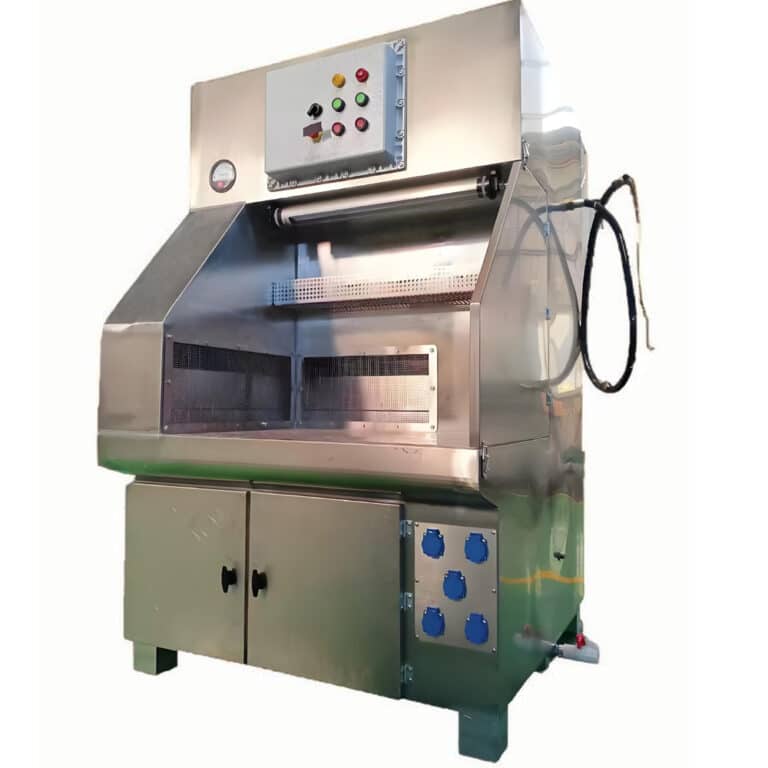
Elegir el sistema de filtración adecuado para su mesa de tiro descendente en seco es una decisión operativa crítica, no sólo un detalle de compra. La elección entre un sistema de filtro de cartucho estándar y uno con posfiltro HEPA influye directamente en la eficacia de la captura, los costes a largo plazo y el cumplimiento de la normativa. Un malentendido en esta elección puede conducir a un gasto excesivo en tecnología innecesaria o, lo que es peor, a una protección insuficiente de su personal frente a partículas peligrosas.
Esta comparación es esencial para las instalaciones que procesan materiales incombustibles como metales o materiales compuestos. Con unas normas de calidad del aire cada vez más estrictas y una atención creciente a la salud laboral, la selección de un sistema basado en su perfil específico de partículas es una inversión estratégica en productividad y seguridad. El filtro adecuado equilibra el rendimiento con el coste total de propiedad.
Filtros HEPA frente a filtros de cartucho: Definición de las principales diferencias
La base de las normas de filtración
La principal diferencia radica en la certificación y el índice de eficiencia. Los filtros de cartucho son filtros primarios, normalmente con una clasificación MERV 11-15. Un filtro MERV 15 captura entre 85 y 95% de partículas en el rango de 0,3-1,0 micras. Los filtros HEPA son posfiltros secundarios, certificados para capturar al menos 99,97% de partículas en el tamaño de partícula más penetrante de 0,3 micras. Esto convierte al HEPA en un componente especializado para partículas ultrafinas y peligrosas que escapan a la filtración primaria.
Aplicación en la arquitectura de sistemas de corriente descendente
En una mesa de aspiración descendente de varias etapas, estos filtros desempeñan funciones distintas. El filtro de cartucho es el caballo de batalla, ya que se encarga de la mayor parte de la carga de polvo. El posfiltro HEPA, situado a continuación, pule el aire hasta un nivel excepcionalmente alto antes de la recirculación o la extracción. Es importante señalar que todo este debate se aplica únicamente a los sistemas secos para materiales no combustibles. En el caso de los polvos combustibles, la recogida húmeda es obligatoria por ley, por lo que la elección de este filtro es irrelevante.
El papel de la clasificación de materiales
El primer paso en cualquier selección es una evaluación de riesgos de las instalaciones para clasificar todos los materiales. Este paso fundamental, que a menudo se pasa por alto por las prisas, dicta toda la arquitectura del sistema. Elegir entre filtros HEPA y de cartucho es una decisión secundaria que sólo se toma después de confirmar que un sistema seco es legal y seguro para sus operaciones específicas.
Comparación de costes: Inversión de capital frente a gastos operativos
Analizar los costes iniciales y recurrentes
El análisis financiero debe ir más allá de la orden de compra. Un sistema con filtros de cartucho de alta MERV suele requerir una inversión de capital menor. Sin embargo, su coste total de propiedad (TCO) incluye los gastos recurrentes de las sustituciones de filtros y la mano de obra de los cambios manuales. Por el contrario, añadir un posfiltro HEPA aumenta significativamente los costes iniciales e introduce una unidad de filtro sellado más cara para su sustitución periódica.
La economía del mantenimiento automatizado
Los sistemas equipados con limpieza automática por impulsos inversos contrarrestan directamente los costes operativos. Esta función, ahora estándar en los sistemas premium, desaloja el polvo de los filtros de cartucho, mantiene estable el flujo de aire y prolonga la vida útil. Ofrece un retorno de la inversión cuantificable al reducir los costes de mano de obra y consumibles. Los posfiltros HEPA no pueden limpiarse por impulsos; se sustituyen como unidades selladas, por lo que su vida útil depende de la eficacia de los filtros primarios para evitar una carga prematura.
Modelización del coste total de propiedad
Un análisis riguroso del coste total de propiedad en un horizonte de 5-10 años no es negociable. Las operaciones de gran volumen pueden encontrar que los costes a largo plazo de un sistema seco con cambios frecuentes de filtro rivalizan con otras soluciones. En la tabla siguiente se desglosan los principales componentes del coste para una comparación clara.
| Componente de coste | Sistema de filtro de cartucho | Sistema de posfiltro HEPA |
|---|---|---|
| Inversión de capital | Menor coste inicial | Precio inicial considerablemente más alto |
| Sustitución del filtro primario | Costes recurrentes y mano de obra | Costes recurrentes y mano de obra |
| Sustitución del filtro secundario | No aplicable | Unidad sellada, sustitución costosa |
| Función clave de ahorro | Limpieza automática por impulsos inversos | No aplicable |
| Coste total de propiedad (TCO) Horizonte | Imprescindible un análisis a 5-10 años | Imprescindible un análisis a 5-10 años |
Fuente: Documentación técnica y especificaciones industriales.
Enfrentamiento de rendimiento: Eficacia de captura por tamaño de partícula
Eficacia según la distribución del tamaño de las partículas
El rendimiento viene dictado por el tamaño de las partículas del contaminante. Para el polvo visible y los humos de más de 1 micra procedentes de procesos como la molienda estándar, los filtros de cartucho MERV 15 son muy eficaces. Su eficacia disminuye para las partículas inferiores a una micra. Los posfiltros HEPA están diseñados específicamente para este ámbito submicrónico, capturando partículas finas peligrosas como sílice o humos metálicos tóxicos que escapan a los filtros estándar.
El papel fundamental de la velocidad de la cara
La eficacia nominal de un filtro no tiene sentido sin una captura eficaz de la fuente. El sistema debe generar una velocidad frontal suficiente (medida en FPM) en la superficie de trabajo para arrastrar los contaminantes hacia la corriente de filtración. Comparar las especificaciones de FPM entre sistemas es, por tanto, un indicador de rendimiento crítico que garantiza que la capacidad clasificada en laboratorio del filtro se cumple en la práctica.
Validar el rendimiento con normas
Los datos de rendimiento de los filtros se validan mediante métodos de ensayo normalizados. Los índices de eficiencia de los filtros MERV y HEPA se basan en rigurosas pruebas de laboratorio que miden la captura en rangos específicos de tamaño de partículas. Comprender la fuente de estos datos es clave para hacer una comparación informada.
| Gama de tamaños de partículas | Filtro de cartucho MERV 15 | Filtro posterior HEPA |
|---|---|---|
| 0,3 - 1,0 micras | 85-95% eficacia de captura | ≥99,97% eficacia de captura |
| Más de 1 micra | Muy eficaz | Muy eficaz |
| Partículas peligrosas submicrónicas | Menor eficiencia | Diseñado para la captura |
| Métrica crítica de rendimiento | Velocidad de la cara (FPM) en la fuente | Velocidad de la cara (FPM) en la fuente |
Fuente: ANSI/ASHRAE 52.2 Método de prueba de la eficacia de eliminación por tamaño de partículas de los dispositivos generales de limpieza del aire de ventilación. Esta norma proporciona el método de ensayo fundamental para evaluar la eficacia de eliminación de partículas por tamaño, directamente relevante para los datos de rendimiento MERV y HEPA.
¿Qué filtro es mejor para su proceso de material específico?
Adaptación del filtro al contaminante
La selección depende directamente del material y del proceso. Para la mayoría de las aplicaciones no combustibles, como la fabricación de acero o la carpintería, un sistema con filtros de cartucho MERV 15 es suficiente y rentable. La integración de un posfiltro HEPA está específicamente justificada cuando los procesos generan partículas peligrosas conocidas por debajo de 1 micra, como berilio o cromo hexavalente, o cuando las normas internas de calidad del aire exigen una eliminación casi total.
Características de seguridad no negociables
Para la fabricación de metal, el parachispas integrado es una característica de seguridad obligatoria en cualquier sistema seco, independientemente de la elección final del filtro. Este componente impide que las chispas calientes entren en la cámara del filtro, mitigando el riesgo de incendio. Pasar por alto esta característica y centrarse únicamente en la eficacia de la filtración es un descuido común y peligroso.
Configuración específica del proceso
La configuración óptima del sistema depende en gran medida del proceso. Una instalación que realiza un desbarbado ligero en aluminio tiene necesidades muy diferentes a las de una que rectifica titanio en seco. Especificar el sistema mesa de desbaste industrial requiere una comprensión clara de estas variables para evitar una protección insuficiente o un costoso exceso de ingeniería.
Mantenimiento y vida útil: Limpieza por pulsos frente a sustitución sellada
Protocolos de mantenimiento divergentes
Las estrategias de mantenimiento difieren fundamentalmente. Los filtros de cartucho de los sistemas de primera calidad utilizan una limpieza automática por impulsos inversos. Esta tecnología desaloja el polvo, mantiene estable el flujo de aire y prolonga la vida útil, reduciendo los costes de mano de obra y consumibles. Estos filtros se sustituyen periódicamente en función de la caída de presión. Los posfiltros HEPA son unidades selladas que se sustituyen en su totalidad cuando disminuye su eficacia.
Impacto en el flujo de trabajo operativo
La intensidad de la mano de obra y el tiempo de inactividad asociados a cada método varían. Los sistemas de cartuchos con limpieza por pulsos permiten intervalos más largos entre intervenciones manuales. La sustitución del HEPA es un cambio completo de la unidad, una tarea más sencilla pero más cara. Su frecuencia depende en gran medida de la eficacia de los filtros primarios; un filtro primario defectuoso obstruirá rápidamente y destruirá una costosa unidad HEPA.
Planificación de la vida útil y los costes
Comprender estos ciclos de mantenimiento es crucial para la planificación operativa y la elaboración de presupuestos. El mayor precio de compra de los filtros HEPA hace que su sustitución suponga un gasto importante.
| Aspecto del mantenimiento | Filtros de cartucho (con pulso) | Filtros posteriores HEPA |
|---|---|---|
| Método de mantenimiento del núcleo | Limpieza automática por impulso inverso | Sustitución de la unidad sellada |
| Beneficio principal | Prolonga la vida útil | Garantiza la integridad |
| Intensidad laboral | Reducción de la intervención manual | Se requiere un cambio de unidad completo |
| Determinante de la duración de la vida | Eficacia de la limpieza por pulsos | Protección del filtro primario |
| Impacto en los gastos operativos | Menor coste de consumibles y mano de obra | Mayor coste por unidad |
Fuente: Documentación técnica y especificaciones industriales.
Diseño e integración de sistemas: Consideraciones sobre espacio y potencia
Huella física y eléctrica
La elección del filtro influye directamente en el diseño del sistema. Un posfiltro HEPA requiere un módulo separado y sellado en el lado de aire limpio, que no todos los diseños de mesas pueden acomodar. Esta adición aumenta la caída de presión estática del sistema, lo que a menudo requiere un motor de ventilador más potente para mantener la velocidad crítica de la superficie, aumentando así el consumo de energía y los requisitos eléctricos.
Configuración y especificaciones
Muchos proveedores ofrecen configuraciones a medida para necesidades de filtración avanzadas. Esta flexibilidad permite una adaptación precisa, pero hace recaer en el comprador la carga de la especificación exacta. Es necesario planificar cuidadosamente el espacio, la tensión y el caudal de aire para evitar un rendimiento insuficiente o costosas adaptaciones.
Integración en la infraestructura existente
El sistema seleccionado debe integrarse con la capacidad eléctrica y la distribución de su taller. Un sistema que requiera una conexión de 480 V es inútil en una instalación que sólo disponga de un servicio de 240 V. Del mismo modo, el espacio físico debe tener en cuenta el acceso de servicio para los cambios de filtro.
| Factor de diseño | Sistema sólo cartucho | Sistema con posfiltro HEPA |
|---|---|---|
| Huella física | Tamaño estándar del módulo | Requiere un módulo sellado adicional |
| Presión estática | Resistencia estándar del sistema | Aumento de la pérdida de carga |
| Requisitos del motor del ventilador | Potencia estándar | Se necesita un motor más potente |
| Consumo de energía | Línea de base | Normalmente más alto |
| Flexibilidad de configuración | Estándar o a medida | Normalmente se fabrican por encargo |
Fuente: Documentación técnica y especificaciones industriales.
Cumplimiento y seguridad: Cumplimiento de las normas de OSHA y del sector
Requisitos reglamentarios estratificados
El cumplimiento es polifacético. En el caso de materiales no combustibles, los límites de exposición admisibles (PEL) de la OSHA para partículas se cumplen a menudo con filtros de cartucho de alto contenido en MER. Los posfiltros HEPA se utilizan cuando se aplican normas más estrictas, como los principios ALARA (As Low As Reasonably Achievable) para polvos tóxicos o los mandatos específicos de la industria aeroespacial o farmacéutica.
Validación del rendimiento de alta eficiencia
Cuando se especifican filtros HEPA, su rendimiento debe validarse de acuerdo con normas internacionales reconocidas. Los filtros deben probarse y clasificarse según ISO 29463 o ES 1822, que definen los rigurosos procedimientos de ensayo de los filtros HEPA y ULPA. Esta certificación es fundamental para las aplicaciones que deben cumplir la normativa.
Gestión holística de riesgos
Un sistema conforme aborda todos los peligros. El parachispas integrado gestiona el riesgo de ignición en el trabajo con metales. Los silenciadores de escape integrados cumplen las normas de ruido de la OSHA. El verdadero cumplimiento significa gestionar los peligros primarios (polvo), los riesgos secundarios (incendio) y los contaminantes auxiliares (ruido) como un paquete unificado.
| Requisito | Solución típica | Norma/función clave |
|---|---|---|
| Partículas en general (PEL) | Filtros de cartucho High-MERV | Directrices de la OSHA |
| Partículas Tóxicas/Ultrafinas | Filtro posterior HEPA | Principios ALARA |
| Validación del rendimiento del filtro | Pruebas de filtros HEPA | ISO 29463 / EN 1822 |
| Control de encendido (Metalurgia) | Antichispas integrado | Elemento de seguridad no negociable |
| Ruido en el lugar de trabajo | Silenciadores de escape incorporados | Normas sobre ruido de la OSHA |
Fuente: ISO 29463 Filtros y medios filtrantes de alta eficacia para la eliminación de partículas en el aire y EN 1822 Filtros de aire de alta eficiencia (EPA, HEPA y ULPA). Estas normas internacionales definen la clasificación y los ensayos de los filtros HEPA, que son fundamentales para validar el rendimiento en aplicaciones que exigen el cumplimiento de la normativa.
Marco de decisión: Seleccionar el sistema adecuado para su taller
Un proceso de selección estructurado
Siga un marco disciplinado. En primer lugar, realice un análisis de combustibilidad del material. En segundo lugar, caracterice el tamaño de las partículas y la toxicidad de los contaminantes generados. En tercer lugar, especifique la velocidad frontal requerida y ordene la detención de chispas para el trabajo del metal. En cuarto lugar, modelar el coste total de propiedad en un horizonte de 5-10 años, sopesando el coste de capital frente a los gastos a largo plazo en filtros, mano de obra y energía.
Evaluación de las capacidades de los proveedores
Examine las especificaciones y los datos de ensayo del proveedor. Solicite las hojas de certificación de los filtros, especialmente los HEPA. Verifique la potencia del motor y la velocidad frontal declaradas. Evalúe la calidad de fabricación del mecanismo de limpieza por impulsos y del sistema antichispas. Estos detalles separan los sistemas adecuados de los fiables y de alto rendimiento.
Planificar la preparación para el futuro
Considere la evolución operativa. ¿Cambiarán los procesos? ¿Podría aumentar la toxicidad de los materiales? Elegir un sistema modular o con posibilidades de actualización puede proteger su inversión. Asociarse con un proveedor que ofrezca asistencia técnica y una hoja de ruta clara para las actualizaciones del sistema puede proporcionar valor a largo plazo más allá de la venta inicial.
La decisión entre la filtración de cartucho y la HEPA depende de un conocimiento preciso de su perfil de partículas, las exigencias normativas y los costes operativos totales. No existe una mejor opción universal, sino la solución óptima para sus parámetros de proceso específicos y su tolerancia al riesgo. Dé prioridad a los sistemas que ofrezcan datos de rendimiento validados, funciones de seguridad sólidas como la detención de chispas y una estrategia de mantenimiento clara para controlar los gastos a largo plazo.
¿Necesita asesoramiento profesional para especificar el sistema de filtración descendente adecuado para sus instalaciones? El equipo de ingenieros de PORVOO puede ayudarle a superar estas disyuntivas técnicas y económicas. Ofrecemos soluciones configurables adaptadas a su proceso de materiales y a sus requisitos de conformidad. Si desea una consulta detallada, también puede Póngase en contacto con nosotros directamente para hablar de su solicitud.
Preguntas frecuentes
P: ¿Cómo se determina si es necesario un posfiltro HEPA para una mesa de tiro descendente en seco, o si basta con cartuchos de alto MERV?
R: La decisión depende del tamaño de las partículas y de la toxicidad de los contaminantes del proceso. Para polvo y humos visibles de más de 1 micra, los filtros de cartucho MERV 15, que capturan 85-95% de partículas de 0,3-1,0 micras, suelen ser adecuados. Los posfiltros HEPA, certificados para capturar 99,97% de partículas de 0,3 micras, son necesarios específicamente para partículas submicrométricas peligrosas conocidas, como el sílice o el cromo hexavalente. Esto significa que las instalaciones que procesan materiales tóxicos deben integrar HEPA para cumplir unos límites de exposición más estrictos, mientras que los talleres de fabricación general pueden confiar en los filtros primarios de alto MERV.
P: ¿Cuáles son los principales factores de coste operativo entre los filtros de cartucho con limpieza por pulsos y los recambios HEPA sellados?
R: Los sistemas con limpieza automática por impulsos inversos para filtros de cartucho reducen significativamente los costes de mano de obra y consumibles a largo plazo al prolongar la vida útil del filtro y mantener el flujo de aire. Por el contrario, los posfiltros HEPA son unidades selladas no limpiables que requieren una sustitución completa, lo que representa un mayor gasto recurrente. Su vida útil también depende de la eficacia de la limpieza previa del filtro primario. Para proyectos con grandes volúmenes de polvo, es fundamental realizar un análisis del coste total de propiedad a lo largo de 5-10 años, ya que los cambios frecuentes de cartucho pueden rivalizar con el gasto de sistemas con otras tecnologías.
P: ¿Qué especificación de rendimiento es más importante validar al comparar modelos de mesas de tiro descendente?
R: Más allá de la eficiencia nominal del filtro, debe verificar la velocidad frontal del sistema (FPM) en la superficie de trabajo. Un filtro de alta eficacia es ineficaz si el flujo de aire es insuficiente para capturar y arrastrar los contaminantes al sistema. La comparación de las especificaciones de FPM garantiza que la capacidad de filtración anunciada se cumpla en la práctica. Si su operación implica una gran generación de partículas, dé prioridad a los modelos que documenten una velocidad frontal alta y estable para garantizar el rendimiento de captura en origen.
P: ¿Cómo se aplican normas internacionales como ISO 29463 y EN 1822 a la selección de filtros para estos sistemas?
R: Normas como ISO 29463 y ES 1822 proporcionan el marco definitivo de pruebas y clasificación para filtros de alta eficacia (EPA, HEPA, ULPA). Validan el rendimiento de eliminación de partículas de un filtro en tamaños específicos, lo que es esencial para el cumplimiento en entornos controlados. Cuando su aplicación exige filtración de nivel HEPA para finos peligrosos, especificar filtros probados según estas normas no es negociable para garantizar el rendimiento y la documentación reglamentaria.
P: ¿Qué características de seguridad son obligatorias para una mesa de tiro descendente en seco utilizada en la fabricación de metales, independientemente del tipo de filtro final?
R: El parachispas integrado es una característica de seguridad fundamental y no negociable para cualquier sistema seco que manipule polvo metálico o chispas. Este componente controla el riesgo de ignición en la fuente, evitando incendios dentro del sistema de recogida. El cumplimiento de la normativa y la seguridad exigen gestionar este riesgo primario junto con la exposición a partículas. Esto significa que cualquier taller metalúrgico debe verificar que la protección contra chispas está incluida en el diseño del sistema antes de considerar la eficacia o el coste de la filtración.
P: ¿Cómo afecta la adición de un posfiltro HEPA al diseño físico y eléctrico de una mesa de tiro descendente?
R: La incorporación de un módulo HEPA aumenta la presión estática del sistema, lo que suele requerir un motor de ventilador más potente para mantener la velocidad frontal necesaria, lo que aumenta el consumo de energía. También requiere un espacio físico específico para una carcasa de posfiltro sellada, que no todos los diseños de mesas estándar admiten. Para las operaciones que planean una actualización o una configuración personalizada, debe tener en cuenta estas demandas de espacio, voltaje y flujo de aire durante la especificación para evitar un rendimiento inferior.
P: ¿Cuál es el primer paso en el marco de selección para evitar un error crítico de cumplimiento?
R: El primer paso es clasificar definitivamente todos los materiales procesados como combustibles o no combustibles. Los sistemas de filtración en seco, ya utilicen filtros de cartucho o HEPA, sólo son adecuados para polvos no combustibles. Para los polvos combustibles, la ley obliga a la recogida húmeda u otros métodos. Esto significa que una evaluación de riesgos de las instalaciones conforme a las normas NFPA debe preceder a cualquier comparación de filtros para garantizar que la arquitectura del sistema principal es conforme y segura.