For plant managers and process engineers, the choice between a membrane filter press and a traditional chamber press is rarely a simple technical preference. It’s a capital allocation decision with long-term operational and financial consequences. The higher upfront cost of membrane technology creates a significant hurdle, making a precise understanding of the return on investment (ROI) break-even point critical. Misjudging this calculation can lock a facility into higher total costs or inadequate performance for years.
The urgency for a data-driven decision is amplified by rising disposal costs, tightening environmental regulations, and the constant pressure to optimize throughput. Selecting the wrong dewatering technology doesn’t just affect the filter room; it impacts logistics, compliance budgets, and overall plant efficiency. A strategic evaluation must move beyond equipment specs to a full lifecycle cost analysis.
Membrane vs. Chamber Press: Core Technical Differences
The Fundamental Dewatering Mechanism
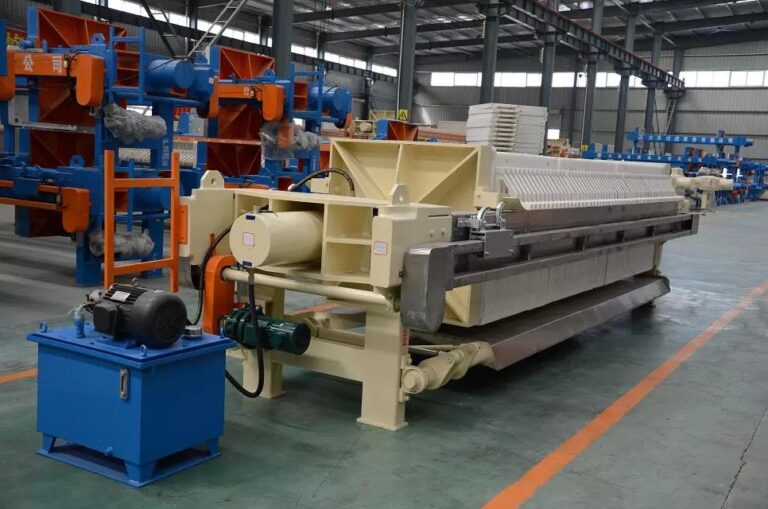
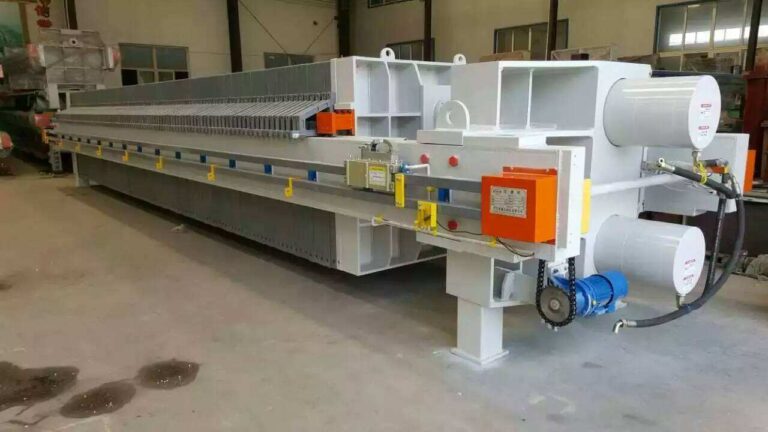
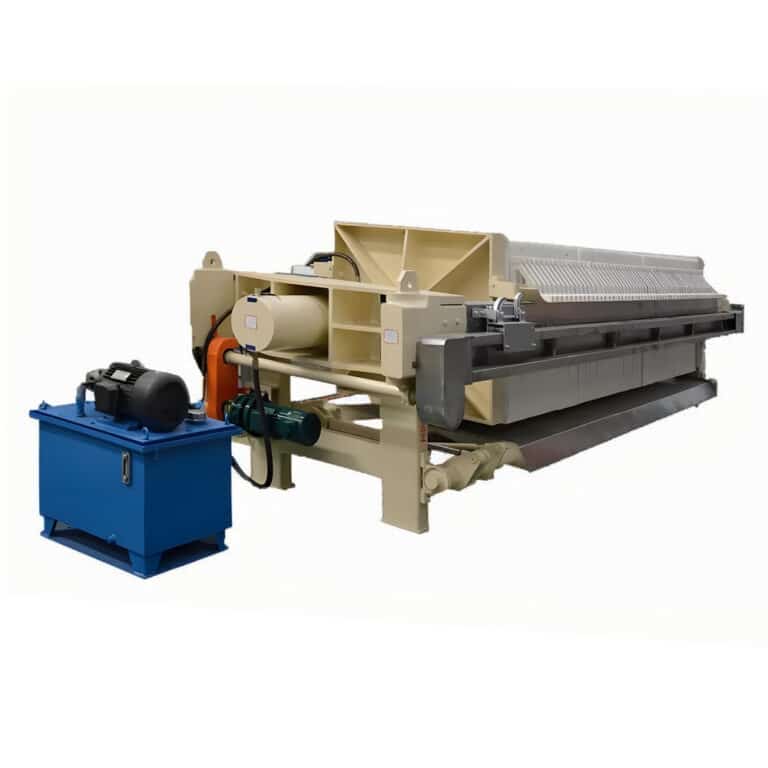
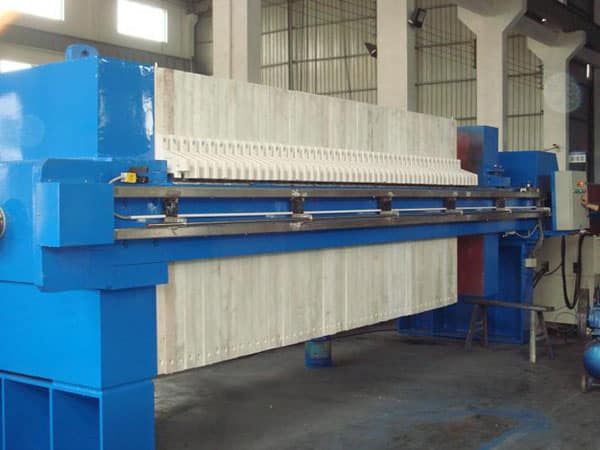
The operational divergence begins with first principles. A chamber filter press relies on fixed-volume recessed plates. Slurry is pumped into these chambers until pressure forces liquid through the filter cloths, forming a cake. The process stops when the chambers are full. In contrast, a membrane filter press integrates an elastic diaphragm behind the filter cloth on each plate. After the initial feed cycle, this membrane is inflated with high-pressure water or air, applying a secondary compression phase directly to the cake.
Impact on Process Control and Outcomes
This core design difference—passive filtration versus active compression—dictates performance ceilings. The membrane’s squeeze action mechanically forces out pore water and bound water that pump pressure alone cannot remove. This active phase is a more complex, automated operation requiring integrated hydraulic or pneumatic systems and advanced control logic. The added mechanical action directly influences achievable dryness, cycle time, and ultimately, the system’s capacity profile. We compared cycle data from both systems and found the consolidation phase in a chamber press often becomes the bottleneck for high-volume streams.
Capital & Operating Cost Comparison (CapEx vs. OpEx)
Understanding the Initial Investment Premium
Capital expenditure for a membrane press is typically 20-40% higher. This premium covers the more complex plate construction, the membrane material itself, and the ancillary systems for actuation and control. Industry experts recommend scrutinizing this premium against the total project scope, as auxiliary equipment like feed pumps and cake conveyors may be similar for both technologies. The higher CapEx is a direct investment in future operational savings.
The Long-Term OpEx Equation
Operating expenditure tells a different story. The maintenance model defines the total cost of ownership. Membrane systems introduce additional components—the membranes, associated piping, and specialized valves—that require monitoring and will eventually need replacement. However, this cost is often offset by drastic reductions in downstream expenses. The primary financial lever is the reduction in cake disposal tonnage due to higher solids content. A simpler chamber press may have lower direct maintenance costs but can incur significantly higher, recurring disposal fees over its lifespan.
Evaluating Total Lifecycle Cost
The following table breaks down the key cost components, highlighting the trade-off between initial investment and operational value.
| Componenta de cost | Filtru presat cu membrană | Filtru presă cu cameră |
|---|---|---|
| Cheltuieli de capital (CapEx) | 20-40% higher | Investiție inițială mai mică |
| Key Maintenance Components | Membranes, piping, valves | Pânze filtrante |
| Generatorul de costuri pe termen lung | Higher material replacement | Potential higher disposal fees |
| Operational Value | Lower disposal tonnage | Simpler maintenance model |
Sursă: Documentație tehnică și specificații industriale.
Performance Compared: Cake Dryness & Cycle Time
Cuantificarea avantajului uscăciunii
Performance metrics reveal the operational payoff of the membrane’s secondary squeeze. For identical sludge feeds, a membrane press consistently achieves a 5-15% higher final solids content. This difference is not marginal; it translates directly to reduced weight and volume for hauling and disposal. In applications with expensive disposal routes like incineration or hazardous waste landfills, this dryness advantage becomes the dominant financial variable.
Throughput and Capacity Implications
Cycle time is equally critical. The aggressive membrane compression shortens the consolidation phase dramatically compared to a chamber press relying solely on pump pressure. Faster cycles mean more batches per day. Consequently, a membrane press can either process a higher throughput than a similarly sized chamber press or meet a target capacity with a smaller, less costly unit. For high-volume applications, this throughput advantage can make the membrane press the only viable single-line solution, avoiding the complexity and cost of multiple parallel units.
The data below illustrates how these technical differences manifest in measurable performance outcomes.
| Metrica de performanță | Filtru presat cu membrană | Filtru presă cu cameră |
|---|---|---|
| Cake Dryness (Solids) | 5-15% higher solids | Lower final solids content |
| Durata ciclului | Significantly shorter | Faza de consolidare mai lungă |
| Capacitatea de procesare | Higher for same unit size | Lower, may need multiple units |
| Avantaj cheie | Drier cakes, faster cycles | Simpler dewatering mechanism |
Sursă: ANSI/ISA-88 Batch Control. This standard provides a framework for optimizing batch cycle procedures, directly impacting the consistency and efficiency of filtration cycle times, a critical variable in throughput performance comparisons.
Which Press Is Better for Your Sludge Type?
The Role of Sludge Compressibility
The optimal technology is dictated by sludge rheology. Chamber presses perform well with incompressible, granular sludges that form a permeable cake, such as metal hydroxides or certain mineral tailings. The fixed-volume chamber adequately dewaters these materials. Membrane presses excel with compressible, gelatinous sludges—common in municipal wastewater, food processing, or chemical production—where the secondary squeeze is essential to remove bound water.
Contaminant Profile and Pretreatment Needs
The sludge’s contaminant profile drives both performance and maintenance. Abrasive particles or sharp crystals can puncture or wear membrane surfaces, potentially necessitating protective filter cloths or preconditioning steps. A comprehensive sludge analysis is non-negotiable before specification. According to research from wastewater treatment studies, a common mistake is selecting a chamber press for a compressible organic sludge, resulting in unacceptable cake dryness and unexpectedly high polymer consumption to achieve a releasable cake.
Calculating the ROI Break-Even Point: Key Variables
Identifying the Primary Financial Drivers
The break-even analysis is fundamentally a trade-off: higher capital cost versus lower ongoing disposal cost. The calculation hinges on displaced alternative expenses. The single most important variable is the local cost per ton for cake disposal (landfill, incineration, recycling). This cost is then multiplied by the annual reduction in wet cake tonnage enabled by the membrane press’s higher solids content.
Building a Realistic Payback Model
Key inputs for the model include daily sludge volume (as dry solids), the achievable solids differential between the two press types, differences in polymer consumption, and the impact of cycle time on required system size or count. The ROI narrative is most compelling where disposal costs are high and the sludge is responsive to compression. The point where cumulative annual savings eclipse the capital cost premium is the break-even point.
The table below outlines the critical variables that must be quantified for an accurate ROI projection.
| Variabilă | Descriere | Impactul asupra ROI |
|---|---|---|
| Costul eliminării | Local cost per ton | Primary financial driver |
| Volumul nămolului | Daily volume to process | Scales potential savings |
| Solids Differential | Achievable dryness difference | Directly reduces disposal weight |
| Durata ciclului | Impacts system throughput | Affects required unit size/count |
| Perioada de recuperare a investiției | Typical break-even point | 1 to 4 years |
Sursă: ISO 14001:2015. This environmental management standard requires organizations to evaluate lifecycle costs and compliance obligations, providing a systematic framework for analyzing disposal costs and regulatory risks that are central to an accurate ROI calculation.
Operational Factors: Maintenance, Space & Staffing
Maintenance Complexity and Labor
Operational demands differ. Chamber presses have simpler mechanics, with filter cloth cleaning or replacement being the primary maintenance task. Membrane presses add the maintenance of the membrane system, including inspection for leaks and replacement of diaphragms and associated valves. However, automation mitigates labor needs for both types. Modern high-pressure membrane filter presses often feature full automation packages (plate shifters, cloth washers), which reduce direct labor and improve safety. The labor reduction from automation can significantly shorten the effective ROI period, especially in regions with high wage rates.
Facility and Strategic Considerations
Footprint requirements are generally similar for equivalent capacity units, though the higher throughput of a membrane press may allow a smaller overall system. Staffing needs shift from manual labor to technical oversight for the more complex membrane system. Easily overlooked details include utility requirements: membrane presses need a reliable source of high-pressure water or air for diaphragm inflation, which adds to the utility load but is often a negligible cost compared to disposal savings.
A comparison of key operational factors is provided below.
| Factor operațional | Presa cu membrană | Presa de cameră |
|---|---|---|
| Complexitatea sistemului | More complex mechanics | Simpler mechanics |
| Key Maintenance | Membrane & valve systems | Filter cloth cleaning/replacement |
| Avantajul automatizării | High labor cost reduction | Benefits from automation |
| Amprenta | Smaller for equivalent capacity | Generally similar |
Sursă: ISO 50001:2018. This energy management standard is critical for systematically measuring and improving the energy performance of dewatering equipment, a major operational cost factor that influences staffing for oversight and total lifecycle costs.
Decision Framework: Selecting the Right Press Technology
Step 1: Define Non-Negotiable Parameters
Begin with rigorous sludge characterization and clear performance targets for cake dryness and throughput. These are your fixed constraints. Then, model both technologies against these targets, noting the required unit size, cycle time, and anticipated polymer dose. This step moves the discussion from generalities to application-specific data.
Step 2: Conduct a Lifecycle Cost Analysis
Build a total cost model over a 7-10 year horizon. Incorporate all CapEx, OpEx (energy, maintenance, labor, polymer), and disposal costs. Use realistic, locally sourced figures for disposal and energy. This analysis will generate the key output: a clear payback period for the membrane press premium. Factor in potential future cost escalations for disposal, which can be modeled using historical trends or regulatory forecasts.
Step 3: Assess Strategic and Compliance Risks
Consider the plant’s future. Are landfill bans or drastic disposal fee increases likely? Does corporate sustainability policy mandate waste reduction? Technologies that minimize final cake volume become strategically valuable under a “zero waste” imperative. Furthermore, evaluate the flexibility of the equipment design. Modular designs or systems that allow for future upgrades provide a hedge against changing process conditions.
The decision is not merely technical or financial, but strategic. It balances proven performance against adaptability to evolving operational and regulatory landscapes. A membrane press represents an investment in operational efficiency and cost predictability, while a chamber press may be the optimal, lower-complexity solution for well-defined, compatible sludge streams.
The core decision pivots on three points: the compressibility of your sludge, the local cost of disposal, and the strategic value of process intensification. If your sludge is compressible and disposal costs are significant, the membrane press premium typically pays back within a defined period, transforming it from a cost center to a value-generating asset. The focus must remain on total lifecycle cost, not just the purchase order.
Need professional guidance to model the ROI for your specific high-volume dewatering application? The engineering team at PORVOO can provide a detailed technical and financial analysis based on your sludge data and operational parameters. For a direct consultation, you can also Contactați-ne.
Întrebări frecvente
Q: How do the core technical differences between a membrane and chamber press impact performance and cost?
A: The key difference is the dewatering mechanism: a chamber press uses fixed-volume compression, while a membrane press adds a secondary, high-pressure squeeze from an inflatable membrane. This active compression yields drier cakes and faster cycles but requires a more complex, automated system. This means the membrane’s superior performance comes with a 20-40% higher capital cost, a trade-off that must be evaluated against long-term operational savings.
Q: What are the primary financial drivers for calculating the ROI break-even point between these two press types?
A: The break-even analysis hinges on trading higher membrane press capital costs for lower ongoing disposal expenses. Key variables include local disposal cost per ton, daily sludge volume, the achievable solids content differential, polymer usage, and cycle time’s impact on throughput. A structured lifecycle cost analysis over 7-10 years, as supported by frameworks like ISO 14001:2015, is essential. For operations with high disposal fees, the membrane press premium is often recovered within 1 to 4 years through reduced waste tonnage.
Q: Which sludge characteristics make a membrane filter press the better technical choice?
A: Membrane presses excel with compressible, gelatinous sludges, such as those from municipal wastewater or organic industrial streams, where the secondary squeeze effectively removes bound water. A mandatory pre-investment analysis of sludge rheology is required to confirm suitability. If your sludge contains high abrasives or sharp particles, a chamber press may be more appropriate, or you must plan for protective measures to prevent membrane damage.
Q: How does automation affect the operational cost and staffing model for each press technology?
A: Both press types can be highly automated, but the labor reduction benefit is more pronounced for the inherently more complex membrane system. Full automation minimizes manual intervention for tasks like cloth cleaning and cake discharge, directly reducing labor costs. This means facilities in regions with high wage rates will see a faster ROI on the automation investment, which can shorten the overall payback period for the more expensive membrane press.
Q: What operational standards are relevant for optimizing the batch cycle and energy use of a filter press?
A: Implementing ANSI/ISA-88 Batch Control standards can optimize and standardize the filtration cycle for consistent throughput and efficiency. Furthermore, applying an ISO 50001:2018 Energy Management System provides a framework to systematically measure and reduce the significant energy consumption of these presses. For projects where operational cost control is critical, integrating these standards from the design phase is a strategic move.
Q: How should future regulatory changes influence the technology selection between a membrane and chamber press?
A: Selecting a press requires evaluating future compliance risks, such as escalating landfill costs or stricter waste volume regulations. A membrane press, by producing a drier cake, minimizes final disposal volume and provides a hedge against such regulatory shifts. This means procurement should favor solutions that balance current performance with adaptability, as a “zero waste” imperative can instantly justify the membrane’s higher initial investment.