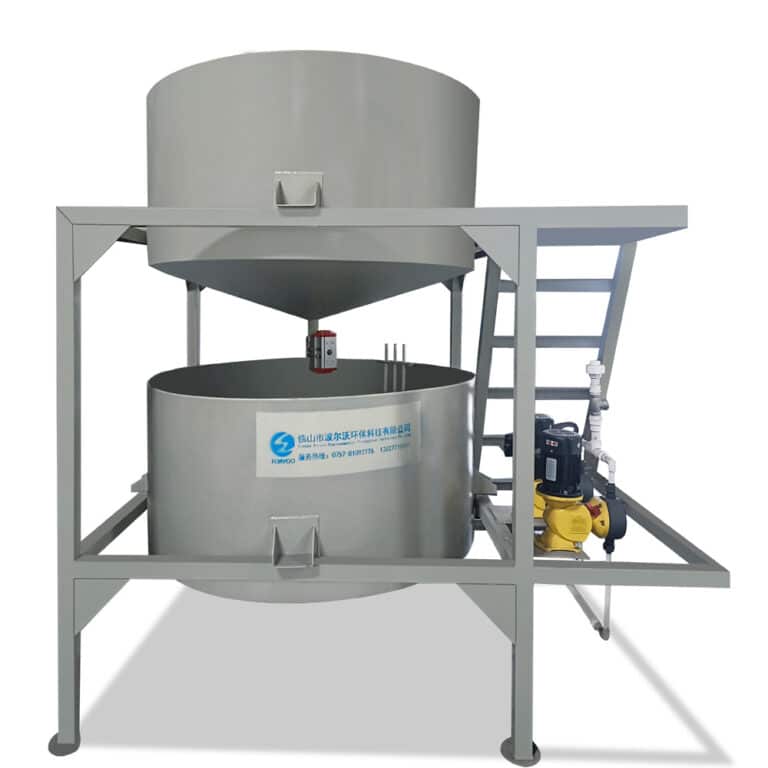
Plants that struggle through their first operating year rarely failed at the engineering stage — they failed at the data stage, months before a drawing was produced. The most common version of this problem is a design basis built on average daily flow figures that quietly excluded peak washdown events, shift-change flushes, and batch discharge cycles. When those peaks arrive in operation, civil tanks sized to the mean are hydraulically overwhelmed, compliance margins collapse, and the retrofit work that follows costs more than the data collection that could have prevented it. What separates a plant that performs from one that enters a chronic retrofit cycle is the discipline of freezing six specific production inputs before any layout work begins — and understanding exactly why each one gates the decisions that come after it.
Which production data matters before plant sizing starts
Peak flow is the single input where inaccuracy propagates furthest. An error in average flow affects tank residence time. An error in peak flow affects the hydraulic capacity of every unit operation in sequence — inlet works, primary settlement, biological stage, final clarification, and sludge handling — because each must pass the worst-case hydraulic load without failure. Plants sized to underreported peaks do not simply underperform; they create chronic compliance exposure on the days that most threaten the permit, which are the same days when regulators are most likely to be monitoring.
Pollutant source identification is the second input that shapes everything downstream. Sampling along all drainage points to locate the precise origin of each waste stream allows diversion or pre-treatment at the source, which is categorically more efficient than attempting to manage all streams together in a common treatment train. Where contaminated streams are mixed unnecessarily, the treatment system must handle combined loading that could have been reduced before the streams ever reached the plant boundary.
Industrial category classification is the third input that must be resolved before treatment targets are set. Under frameworks such as GB 8978-1996, applicable discharge limits are determined by category, and a misidentification means the treatment technology is selected against the wrong target. Discovering that error during detailed design forces a technology change; discovering it after procurement forces a capital write-off.
Each of these three inputs is structurally different from the others, but they share a common failure mode: errors compound across the full design rather than staying isolated in the unit they directly affect.
| Date de intrare | De ce este important | Consequence of Inaccuracy |
|---|---|---|
| Peak flow | Most critical sizing parameter; determines hydraulic capacity of all unit operations. | Chronic compliance failures due to undersizing or wasted capital from oversizing. |
| Pollutant source identification | Pinpointing origins through drainage sampling allows source reduction and targeted treatment. | Overloaded treatment systems and harder compliance without diversion at generation. |
| Industrial category classification | Dictates technology‑based discharge limits, shaping treatment targets. | Non‑compliance with applicable standards, requiring costly redesign. |
How peak washdown and batch discharge distort average-flow design
Average-flow design is not inherently wrong. It is inadequate when batch discharge cycles or washdown events are uncharacterised, because those events can generate instantaneous flows that are multiples of the daily mean compressed into short windows. A facility running a cleaning cycle at shift change, or a batch process that dumps a full reactor in a controlled decant, does not distribute that load evenly across twenty-four hours. The civil tanks receiving that discharge see it as a surge, and if the design did not account for it, the hydraulic retention time collapses.
For batch processes such as sequencing batch reactors, the cycle timing data — fill, react, settle, decant, and idle periods — is a required design input, not a secondary operational detail. Using average daily flow to size an SBR tank without knowing the fill rate and decant volume will produce a tank that either floods during the fill phase or provides excessive idle volume that adds cost without adding treatment capacity. The cycle data must come from the specific process, not from generic design guides.
A practical cross-check that is often skipped is comparing measured flow data against known facility operations to identify discrepancies. If metered flows are consistently lower than the sum of known inputs — water supply, chemical additions, cleaning volumes — the shortfall may reflect unknown drainage routes, evaporative losses, or flows bypassing the measurement point. That kind of balance discrepancy is a signal that the design basis is incomplete, and it is far better to resolve it before layout than to discover it during commissioning. The flow balance check is a defensibility step, not a formal audit requirement, but it is one of the few tools available to confirm that the numbers being used for sizing reflect what the wastewater line actually sees.
Where civil tank volume and equipment capacity should be separated
The decision to separate civil tank volume from equipment capacity sizing is not primarily a technical choice — it is a judgment about how confident the design team is in the loading data and how much flexibility the project can carry. Getting this decision wrong in either direction has downstream consequences that are difficult to undo once civil drawings are committed.
A modular civil layout distributes tank volume across phases, allowing capacity to track actual demand growth rather than committing to ultimate design volume at the outset. That flexibility has value when the loading profile is uncertain or when future production volumes are genuinely unknown. The cost is increased complexity in phasing, additional interfaces between stages, and, in some configurations, reduced hydraulic efficiency compared to a single continuous tankage arrangement. A centralised fixed layout carries the opposite risk profile: it demands accurate upfront capacity assumptions, but it eliminates phasing complexity and can be more cost-effective where the basis is genuinely well-defined.
The equipment technology choice carries a separate but equally important consequence for civil volume. Selecting a membrane bioreactor over conventional activated sludge with a separate clarifier reduces the total tank footprint by combining aeration and filtration in a single vessel, but it ties membrane module specifications to tank geometry from the start. That integration means scaling the system later requires either additional membrane cassettes — if the tank geometry allows it — or an additional tank. Conventional activated sludge preserves more flexibility in equipment specification but demands more total civil volume and introduces separate return sludge pumping and clarifier mechanisms. Neither configuration is inherently superior; the choice must be resolved before layout begins because the wrong assumption leads to a civil drawing that is already partially wrong before it is issued.
| Alegerea designului | Civil Tank Volume Impact | Equipment Capacity Consequence |
|---|---|---|
| Decentralized modular civil layout | Tanks can be phased to match demand, reducing initial over‑sizing risk. | Equipment can be added incrementally; avoids large upfront capacity commitments. |
| Centralized fixed civil layout | Full tank capacity must be built upfront, increasing risk of overcapacity or undercapacity. | Equipment must be specified for ultimate design capacity at the start, limiting flexibility. |
| Membrane bioreactor (MBR) | Reduces total civil volume by combining aeration and filtration in one tank. | Membrane modules and integrated aeration tied to tank geometry; scaling may require additional membrane cassettes or tanks. |
| Conventional activated sludge (CAS) with separate clarifier | Requires larger total tank volume (aerator + clarifier). | Separate clarifier mechanisms and return sludge pumps increase equipment footprint and cost. |
Deferring the decision to separate these two sizing exercises — treating tank volume and equipment capacity as a single undifferentiated number — is the more common error. The consequence is that the civil design reflects equipment assumptions that have not been validated, and when the equipment specification changes, the tanks change with it.
Why sludge disposal planning belongs in the first layout pass
Sludge handling is consistently the element that project teams defer longest, and it is the one that most reliably forces civil rework when it arrives late. The deferral usually happens because sludge volumes feel like an output to be calculated after the treatment train is defined, rather than a constraint that shapes the layout from the start. That sequence is wrong.
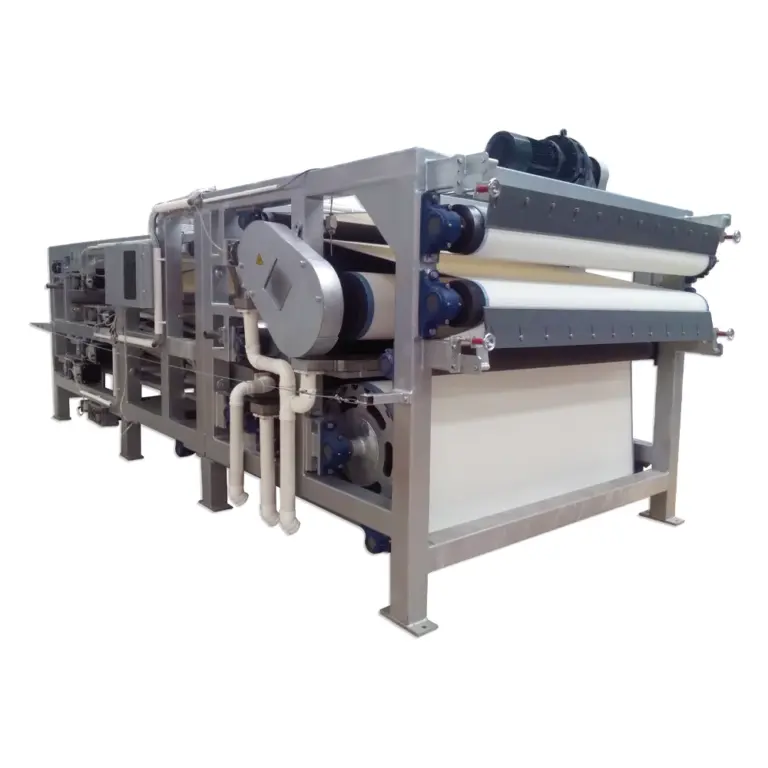
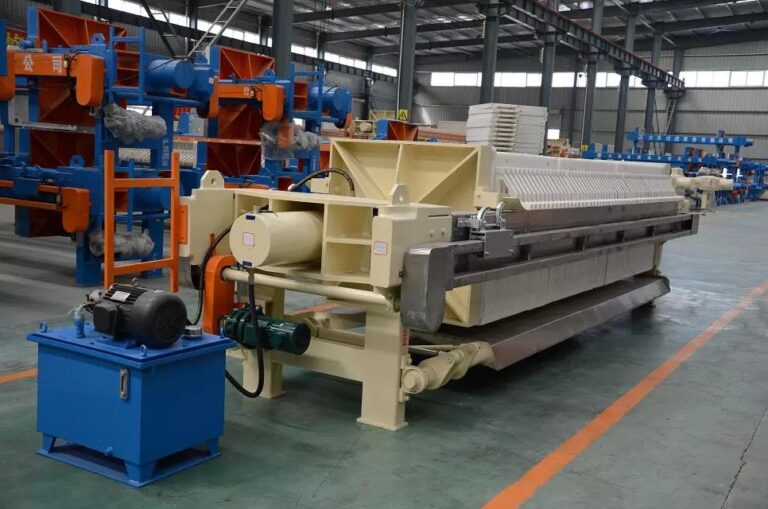
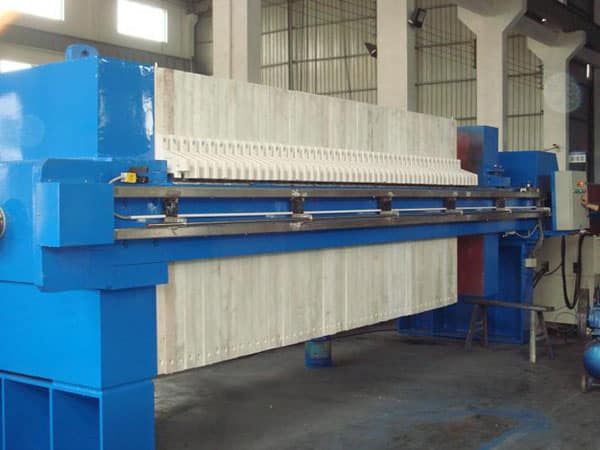
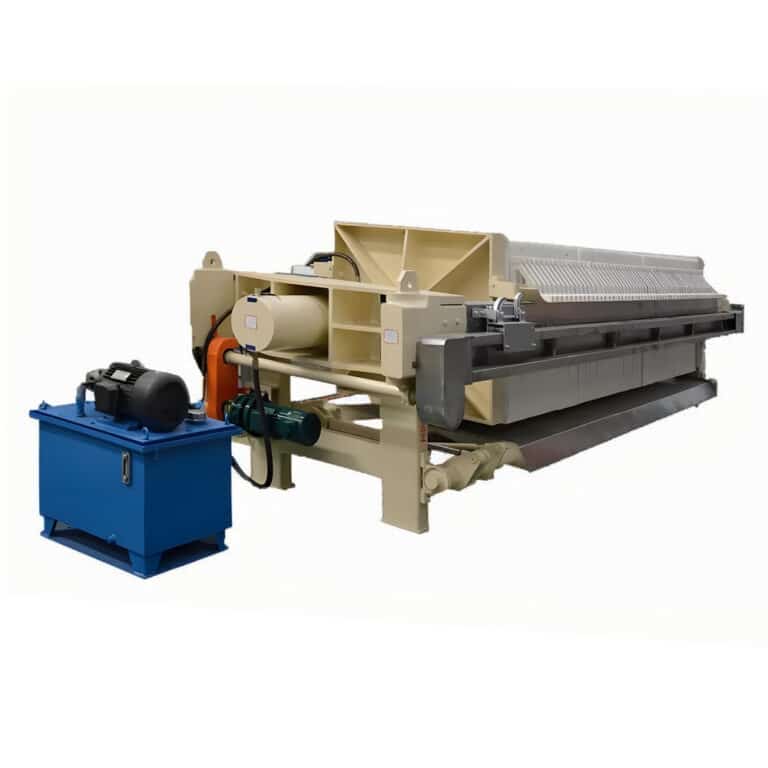
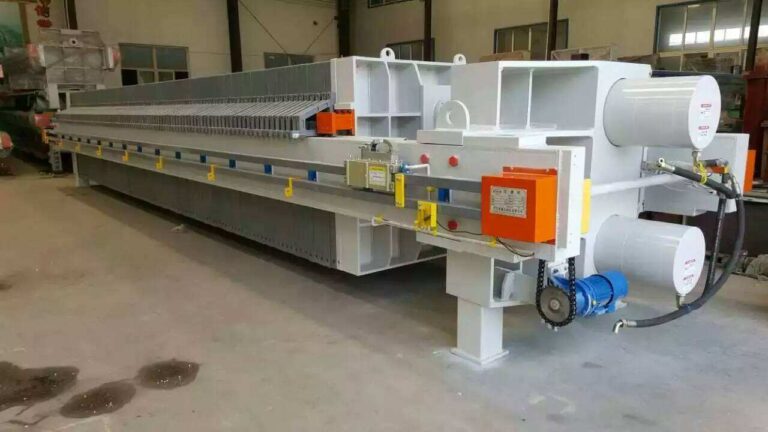
The sludge dewatering path — from the point of generation through thickening, mechanical dewatering, and either landfill disposal or reuse — is a physical sequence that occupies space and requires access. A bandă filtru presă or similar dewatering unit needs a structural slab, wash water supply, chemical dosing, cake transport access, and a return liquor route back to the head of the works. Each of those connections ties back to a location in the civil layout. If the primary and secondary tanks have already been positioned without accounting for the dewatering building footprint and haul route, the first layout pass must be revised to accommodate them — and by that point, site boundary conditions and utility routing may have already constrained the available space.
The sludge disposal method — whether the dewatered cake goes to licensed landfill, agricultural reuse, or thermal treatment — also affects how the layout handles containment, vehicle access, and storage. A project targeting landfill disposal needs a designated loading area with vehicle turning radius. Agricultural reuse may require temporary storage capacity for seasonal application windows. Thermal treatment often requires a pre-drying step that adds a unit operation and increases the footprint. None of these can be resolved in a layout that treats sludge as an afterthought.
The practical implication is that the dewatering path, haul route, and disposal method should be part of the brief given to the civil designer at the start of the first layout iteration — not added as a supplement after the primary tankage positions are fixed.
How to validate the real loading profile before drawings freeze
A design basis is only as strong as the data that built it, and two validation methods are available before drawings are committed. Neither is a substitute for a well-designed loading study, but together they substantially reduce the risk of a basis that real wastewater behaviour will contradict.
A scaled-down bench treatability study runs a representative sample of the actual wastewater through candidate treatment processes under controlled conditions. Its value is not in producing precise sizing numbers — bench scale does not translate directly to full scale — but in exposing contaminant behaviour that the design assumptions did not anticipate. Unusual pH buffering capacity, unexpected emulsification from cleaning chemicals, or inhibitory compounds that interfere with biological treatment are the kinds of findings that emerge at bench scale at a fraction of the cost of discovering them at commissioning. Where treatability studies are conducted, parameters such as turbidity and pH — measurable under frameworks like ISO 7027-1:2016 and ISO 10523:2008 respectively — provide the empirical baseline against which treatment performance can be evaluated.
Historical compliance sampling and laboratory records serve a different function. Permit-required monitoring data, if it spans multiple years and multiple seasons, contains the closest available evidence of true worst-case loading. Reviewing that record for outlier events — high solids after a production upset, elevated COD following a chemical change, peak flows tied to a known cleaning schedule — provides an empirical envelope for the design basis that is more defensible than interpolation from process mass balances. Where purpose-collected loading data is not feasible before design, historical records are the strongest available substitute, though they should be treated as supporting evidence rather than equivalent to a purpose-designed loading study.
Omitting both methods means the design basis rests on assumptions that have not been tested against the behaviour of the actual wastewater. That position is difficult to defend if the plant underperforms, and it transfers the discovery risk to commissioning — the most expensive point in the project at which to find it.
| Metoda de validare | What It Verifies | Risk If Omitted |
|---|---|---|
| Scaled‑down bench treatability study | Identifies unexpected contaminant behavior and treatment pitfalls under controlled conditions. | Substantial rework and cost overruns when real wastewater behaves differently than assumed. |
| Review of historical compliance sampling and lab records | Provides empirical worst‑case loading data from permit‑required monitoring records. | Design basis relies on guesswork or averaged data, missing true peak loads and causing underperformance. |
When the plant basis is strong enough for procurement
Procurement should not follow design; it should follow validated design. The distinction matters because equipment performance claims are stated against specific loading conditions, and the gap between the claimed envelope and the actual feed conditions is where expensive re-specification, membrane fouling, and compliance failures originate.
Ultrafiltration systems treating oily water can achieve up to 98% volume reduction without chemical addition — but that figure applies within a defined feed concentration and flow range. Before a UF unit is procured, the actual oily water loading, including volume, concentration variability, and temperature, must be confirmed against the performance envelope of the specific membrane configuration being specified. If the actual loading is intermittent, highly variable, or contains surfactants from cleaning agents that can foul the membrane, the claimed reduction may not be achievable without pre-treatment or operational controls that were not included in the original scope.
Reverse osmosis systems capable of removing up to 99.5% of dissolved salts carry a similar validation requirement. The feed water salinity, scaling ion concentrations, and temperature directly govern whether a given membrane array will meet that figure or require more aggressive pre-treatment, more frequent cleaning cycles, or a higher membrane replacement rate than the capital budget assumed. Specifying RO against an unvalidated or averaged salinity figure transfers the performance risk to the owner at a point in the project when there is no practical remedy other than adding pre-treatment equipment that should have been scoped from the start.
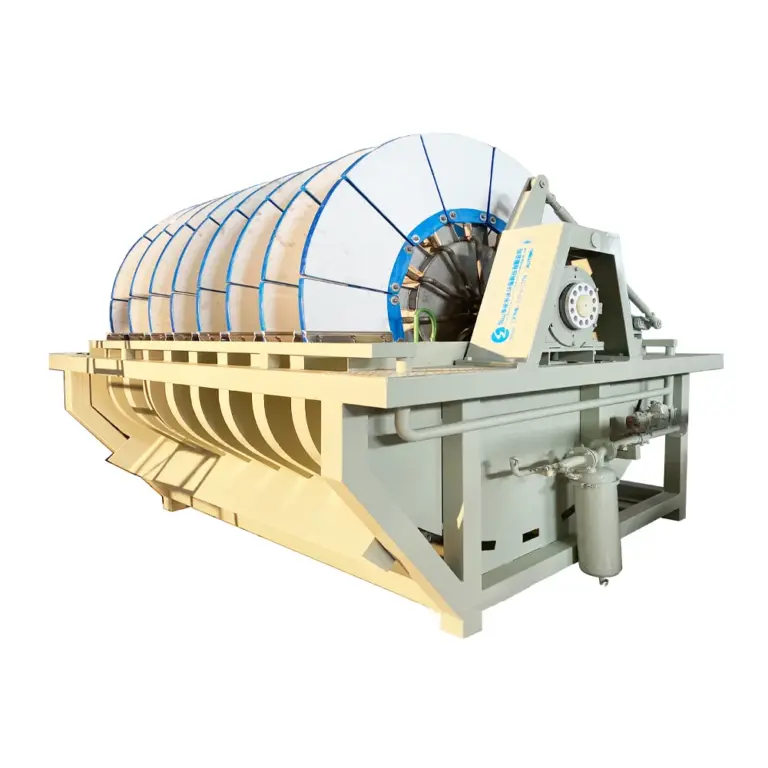
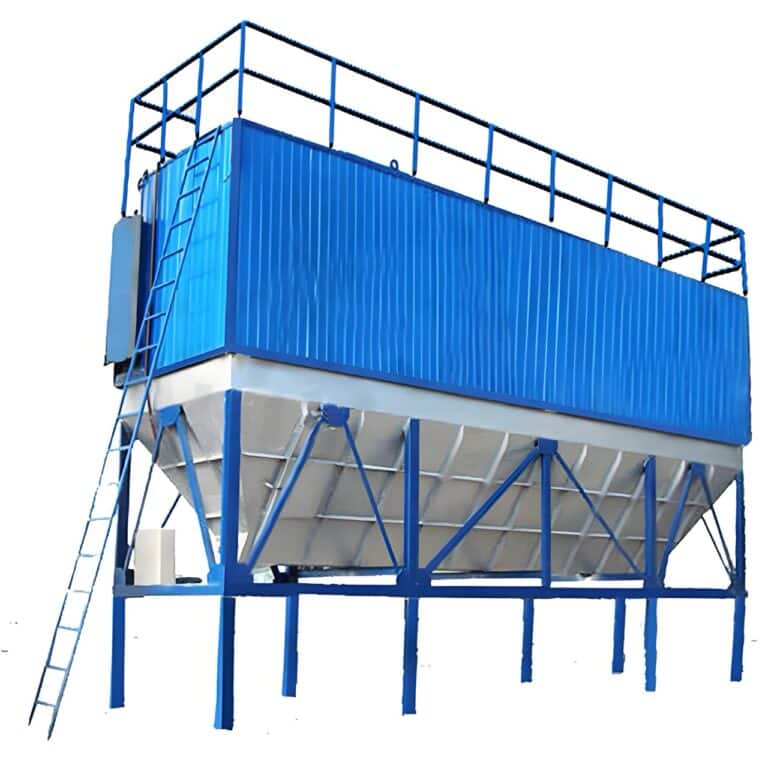
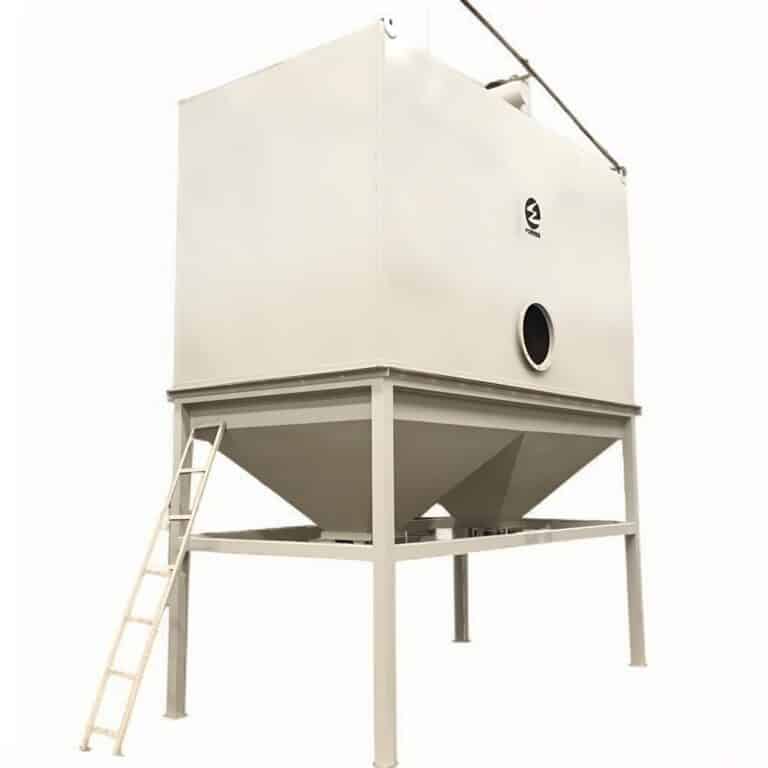
The procurement gate principle is straightforward: the basis is strong enough for equipment procurement when the actual loading data has been confirmed against the performance envelope of the candidate equipment — not before. For more complex separation and clarification processes, the turn vertical de sedimentare selection decision similarly depends on confirmed solids loading, not estimated averages, before equipment sizing is locked.
| Tip echipament | Performance Claim | What to Verify with Real Loading Data | Risk If Unvalidated |
|---|---|---|---|
| Ultrafiltration (UF) (oily water) | Up to 98% volume reduction without chemicals | Confirm actual oily water loading and volume match design assumptions; verify concentration range. | Equipment may be oversized or fail to achieve claimed reduction, leading to disposal inefficiency. |
| Reverse osmosis (RO) | Up to 99.5% removal of dissolved salts | Validate feed water salinity and contaminant profile align with RO membrane specifications. | Misaligned expectations cause expensive re‑specification, membrane fouling, or compliance failure. |
The six inputs that must be frozen before layout work begins — peak flow, solids concentration range, batch discharge timing, chemical use, reuse target, and sludge disposal method — are not a planning checklist in the general sense. They are the specific variables whose uncertainty, if unresolved, converts every subsequent engineering decision into a compounding assumption. A civil tank sized to an uncertain peak flow carries that uncertainty into hydraulic calculations, retention time, and overflow rate in sequence. A sludge disposal method left undefined carries its uncertainty into civil positioning, access routing, and storage design in parallel. The errors do not stay isolated.
Before committing civil drawings, the most useful confirmation a project team can make is whether each of those six inputs was derived from verified operational data — flow measurement, batch cycle records, actual cleaning chemical inventory — or from utility drawings and operator estimates. Where the provenance is the latter, the design basis should be treated as provisional, and the validation steps described here should be completed before procurement begins. That discipline rarely adds meaningful time to a project. Discovering its absence during commissioning reliably does.
Întrebări frecvente
Q: What if we don’t have historical compliance sampling records — can we still freeze the design basis before drawings are issued?
A: Yes, but the basis should be treated as provisional until a bench treatability study is completed. Historical records are the strongest substitute for purpose-collected loading data, but where they don’t exist, a bench-scale test on actual wastewater samples is the minimum validation step before drawings are committed. Proceeding without either method transfers the discovery risk to commissioning, which is the most expensive point in the project to find loading assumptions were wrong.
Q: Once the six inputs are frozen and the design basis is validated, what is the first concrete action before issuing civil drawings for tender?
A: Confirm that the sludge dewatering path — including equipment footprint, haul route, return liquor connection, and disposal method — is part of the civil designer’s brief before the first layout iteration is issued. This is the element most commonly added as a late supplement, and by the time primary tank positions are fixed, site boundary and utility constraints often leave inadequate space for the dewatering building and vehicle access.
Q: Does the advice to separate civil tank volume from equipment capacity sizing still hold when the project has a hard footprint limit?
A: No — footprint constraints change the decision. When available land is the binding constraint, the priority shifts to selecting equipment with the highest treatment density first, such as a membrane bioreactor over conventional activated sludge with a separate clarifier, and then sizing civil volume around confirmed equipment geometry. The separation principle is most valuable when loading data is uncertain; a tight site with well-validated data and a footprint limit justifies an equipment-led layout provided the operating controls and monitoring are strong enough to manage reduced hydraulic buffer.
Q: Is a modular civil layout always the lower-risk option compared to a centralised fixed design?
A: Not always. Modular layouts reduce the risk of premature capacity commitment, but they introduce phasing complexity, additional interfaces between stages, and potentially lower hydraulic efficiency. Where the loading profile is well-validated and future production volumes are genuinely predictable, a centralised fixed layout can be more cost-effective and operationally simpler. The modular approach earns its value specifically when data quality is low or demand growth is uncertain — not as a universal default.
Q: How should a project team assess whether the budget allocated for data collection and bench testing is justified against the cost of simply over-sizing the civil tanks as a precaution?
A: Over-sizing civil volume does not resolve the underlying data problem — it only masks it for unit operations that are volume-sensitive. Equipment such as pumps, membranes, and dewatering units must still be specified against a loading envelope, and oversized tanks will not protect those items from mis-specification if peak flow, solids variability, or chemical composition remain uncharacterised. The cost of a bench treatability study and a metered loading survey is typically a fraction of a single equipment re-specification or compliance retrofit, making the data investment defensible in most industrial wastewater treatment plant projects where the loading profile is genuinely uncertain.