Odwadnianie przemysłowe jest krytycznym, ale złożonym wyzwaniem operacyjnym. Wybór niewłaściwego sprzętu może wiązać się z wysokimi kosztami utylizacji, nadmiernym zużyciem chemikaliów i zawodną wydajnością. Wiele decyzji zakupowych opiera się na porównaniu wielkości maszyny lub ceny, pomijając niuanse inżynieryjne, które określają długoterminowy zwrot z inwestycji i rentowność operacyjną. Takie podejście często prowadzi do niedostatecznie wyspecyfikowanych systemów, które zmagają się ze zmiennością paszy lub nadmiernie wyspecyfikowanych jednostek, które zawyżają nakłady kapitałowe, nie zapewniając proporcjonalnych korzyści.
Presja na optymalizację separacji ciał stałych od cieczy jest coraz większa. Zaostrzone przepisy środowiskowe dotyczące utylizacji biosolidów, rosnące koszty energii i polimerów oraz strategiczne przesunięcie w kierunku operacji predykcyjnych opartych na danych wymagają bardziej zaawansowanego procesu wyboru sprzętu. Zrozumienie podstawowych zasad, całkowitego kosztu posiadania i wymagań integracyjnych taśmowej prasy filtracyjnej nie jest już tylko zadaniem inżynieryjnym - jest to imperatyw finansowy i operacyjny dla zrównoważonego zarządzania zakładem.
Jak działa taśmowa prasa filtracyjna? Podstawowe zasady i strefy projektowe
Strefowy proces odwadniania
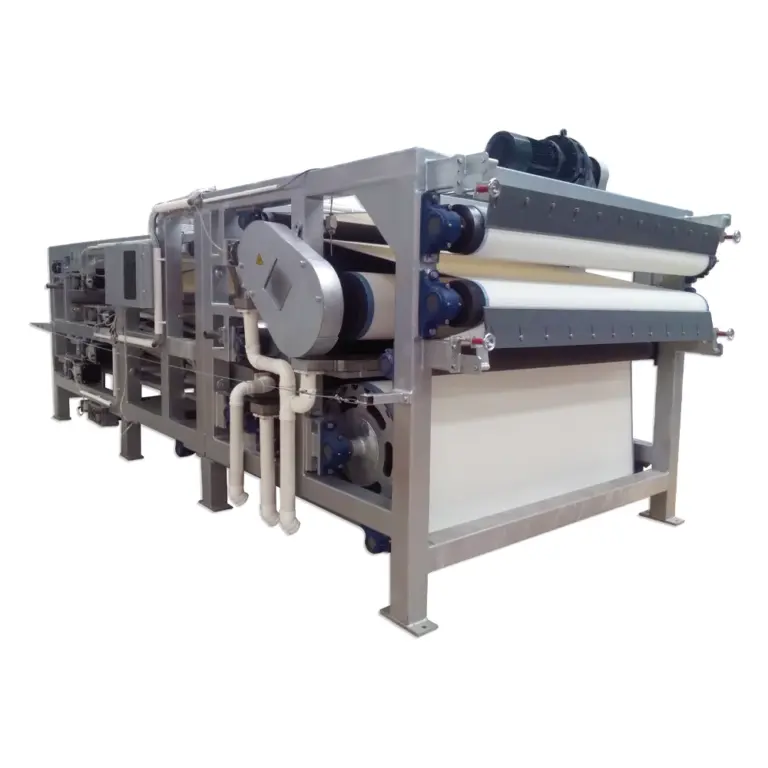
Taśmowa prasa filtracyjna działa na zasadzie sekwencyjnego, strefowego odwadniania, stosując kontrolowane ciśnienie mechaniczne do chemicznie kondycjonowanej zawiesiny. Proces rozpoczyna się od kondycjonowania polimeru, który aglomeruje drobne ciała stałe. Uzdatniona zawiesina jest następnie podawana do prasy, gdzie jej podróż przez trzy różne strefy - grawitacyjną, klinową i ciśnieniową - decyduje o ostatecznej suchości placka i klarowności filtratu. Ta modułowa konstrukcja jest podstawową dźwignią umożliwiającą dostosowanie wydajności do określonej reologii szlamu, dzięki czemu szczegółowa analiza wsadu jest niezbędnym pierwszym krokiem w każdej specyfikacji.
Szczegóły techniczne w każdej strefie
W Strefa grawitacji, wolna woda spływa przez porowatą taśmę. Wydłużone długości taśm lub niezależne grawitacyjne zagęszczacze taśmowe zwiększają czas przebywania, co ma kluczowe znaczenie dla rozcieńczonych osadów w celu osiągnięcia początkowego zagęszczenia. Materiał wchodzi następnie do Strefa klina, gdzie zbiegające się pasy stosują delikatne ściskanie, aby przygotować strukturę ciasta i zapobiec migracji krawędzi. Ostatnim i najbardziej krytycznym etapem jest Strefa ciśnienia. W tym miejscu serpentynowa ścieżka rolek o malejących średnicach stopniowo zwiększa ciśnienie i siły ścinające w celu usunięcia związanej wody. Zaawansowane rozwiązania techniczne w tej strefie, takie jak duży, samoczynnie opróżniający się pierwszy bęben zapobiegający ponownemu zwilżaniu, są kluczowym czynnikiem wyróżniającym, pozwalającym osiągnąć wyższą końcową zawartość cząstek stałych w placku. Z mojego doświadczenia wynika, że zaniedbanie specyficznej inżynierii strefy ciśnieniowej jest najczęstszym powodem, dla którego maszyny nie osiągają gwarantowanej docelowej suchości.
Wpływ projektu specyficznego dla strefy
Podejście strefowe oznacza, że wybór sprzętu nie dotyczy ogólnego rozmiaru, ale konfiguracji każdej strefy dla określonego strumienia odpadów. Prasa zoptymalizowana pod kątem rozcieńczonego, aktywowanego odpadami komunalnymi szlamu będzie miała radykalnie inną sekcję grawitacyjną niż ta zaprojektowana dla grubego, ściernego odpadu mineralnego. Ta specyfika bezpośrednio determinuje przepustowość i końcową suchość. Dlatego też porównywanie maszyn wyłącznie na podstawie szerokości taśmy lub mocy napędu jest mylące. Prawdziwe porównanie polega na tym, w jaki sposób projekt każdego producenta odnosi się do wyzwań związanych z odwadnianiem w każdej strefie dla unikalnej charakterystyki osadu.
Wybór prasy filtracyjnej taśmowej: Kluczowe konfiguracje i czynniki wpływające na wydajność
Konfiguracja rdzenia: Systemy z dwoma i trzema paskami
Podstawowym wyborem strategicznym jest wybór między standardową prasą dwutaśmową a systemem trójtaśmowym. Prasa trójtaśmowa zawiera niezależny grawitacyjny zagęszczacz taśmowy (GBT), który wstępnie zagęszcza rozcieńczoną paszę, często 4-10 razy, zanim trafi ona do sekcji prasy. To zintegrowane podejście do zagęszczania i odwadniania może znacznie zwiększyć obciążenie masowe taśm prasy i może zmniejszyć lub wyeliminować potrzebę stosowania polimeru na etapie odwadniania. W przypadku zakładów o bardzo zmiennych lub rozcieńczonych strumieniach zasilających, konfiguracja z trzema taśmami zapewnia doskonałą stabilność i często mniejszą ogólną powierzchnię niż oddzielne jednostki zagęszczające i odwadniające.
Krytyczne cechy wydajności i trwałości
Poza liczbą taśm, kilka cech technicznych ma decydujący wpływ na wydajność i całkowity koszt posiadania. Są to Konstrukcja strefy ciśnienia, w szczególności liczba i rozmieszczenie walców, może zwiększyć końcową suchość ciasta o 2-5%. Konstrukcja ramy Wykorzystanie stali ocynkowanej ogniowo lub stali nierdzewnej ma zasadnicze znaczenie dla odporności na korozję i długoterminowej trwałości w trudnych warunkach. Systemy pomocnicze, takie jak zautomatyzowane przygotowanie polimerów i jednostki dozujące, nie są opcjonalnymi dodatkami, ale mają fundamentalne znaczenie dla spójnego kondycjonowania chemicznego i optymalnej wydajności. Niższy koszt początkowy maszyny z mniej wytrzymałymi komponentami lub gorszymi elementami sterującymi stanowi kompromis wysokiego ryzyka, ponieważ awaria komponentów i niespójne działanie bezpośrednio zwiększają koszty konserwacji i utylizacji w całym okresie eksploatacji.
Decyzja o zakupie oparta na partnerstwie
Wybór taśmowej prasy filtracyjnej jest ostatecznie decyzją partnerską. Zdolność dostawcy do przeprowadzenia reprezentatywnych testów pilotażowych z użyciem rzeczywistego osadu nie podlega negocjacjom w celu ograniczenia ryzyka związanego z wydajnością. Co więcej, wsparcie inżynieryjne w zakresie integracji systemu oraz kompleksowość usług i warunków gwarancji są równie ważne, jak specyfikacje sprzętu. Właściwy partner zapewnia nie tylko maszynę, ale gwarantowany proces odwadniania.
Wybór prasy filtracyjnej taśmowej: Kluczowe konfiguracje i czynniki wpływające na wydajność
| Konfiguracja | Główne cechy | Typowy wpływ |
|---|---|---|
| Prasa dwutaśmowa | Standardowa konstrukcja | Niższy koszt początkowy |
| System z trzema paskami | Zintegrowany GBT | Stężenie paszy 4-10x |
| Konstrukcja strefy ciśnieniowej | Więcej rolek | 2-5% zwiększona suchość |
| Konstrukcja ramowa | Cynkowana ogniowo | Wyższa trwałość |
Źródło: Dokumentacja techniczna i specyfikacje branżowe.
Analiza zwrotu z inwestycji w taśmową prasę filtracyjną: Koszty, oszczędności i okres zwrotu
Kluczowe wskaźniki wydajności zwiększające wartość
Zwrot z inwestycji w taśmową prasę filtracyjną zależy od trzech powiązanych ze sobą wskaźników wydajności: Stałe składniki ciasta (suchość %), Współczynnik przechwytywaniaoraz Przepustowość (kg-DS/godz./m). Ciała stałe w postaci placka mają najbardziej bezpośredni wpływ finansowy, ponieważ każdy punkt procentowy wzrostu suchości zmniejsza masę materiału wymagającego kosztownego transportu i utylizacji. Współczynnik wychwytywania powyżej 95% jest niezbędny, aby zapobiec recyrkulacji ciał stałych i utrzymać wydajność procesu oczyszczania. Przepustowość określa wymagany rozmiar sprzętu. Optymalizacja tych wskaźników razem, a nie osobno, jest kluczem do maksymalizacji zwrotu z inwestycji.
Pełne równanie kosztów: Capex vs. Opex
Kompleksowa analiza ROI musi wykraczać poza wydatki kapitałowe. Całkowity koszt posiadania obejmuje bieżące wydatki operacyjne: zużycie polimeru, zużycie energii na tonę przetworzonej suchej masy, rutynową konserwację i robociznę. Wyższa początkowa inwestycja w bardziej wydajną, zautomatyzowaną prasę często zapewnia szybszy okres zwrotu dzięki znacznej redukcji tych zmiennych kosztów. Na przykład, zaawansowana automatyzacja stabilizuje jakość wyjściową, zmniejszając zmienność suchej masy, która prowadzi do nieprzewidywalnych kosztów obsługi. Ta zmiana powoduje również przesunięcie siły roboczej z ciągłego ręcznego dostosowywania na monitorowanie i optymalizację systemu.
Modele pozyskiwania strategicznego
Uzasadnienie finansowe powinno również uwzględniać elastyczne modele akwizycji. Rynek przesuwa się w kierunku modeli wydatków operacyjnych, takich jak wynajem lub długoterminowy leasing. Opcje te zapewniają większą elastyczność w zarządzaniu zmiennymi strumieniami odpadów, pilotowaniu nowych technologii lub poruszaniu się po restrykcyjnych cyklach budżetowych, dzięki czemu wysokowydajne odwadnianie jest dostępne bez dużych początkowych nakładów kapitałowych.
Analiza zwrotu z inwestycji w taśmową prasę filtracyjną: Koszty, oszczędności i okres zwrotu
| Współczynnik ROI | Metryczny | Cel/wpływ |
|---|---|---|
| Ciasto stałe | % Suchość | Zmniejsza masę utylizacji |
| Współczynnik przechwytywania | Wydajność | >95% niezbędny |
| Przepustowość | kg-DS/godz. | Określa rozmiar sprzętu |
| Korzyści z automatyzacji | Realokacja siły roboczej | Zmniejsza zmienność wyników |
Źródło: Taśmowa prasa filtracyjna do odwadniania osadów. Analiza studium przypadku oczyszczalni ścieków zapewnia praktyczny wgląd w wyzwania operacyjne i wskaźniki wydajności, takie jak szybkość wychwytywania i przepustowość, które bezpośrednio wpływają na obliczenie zwrotu z inwestycji w systemy taśmowych pras filtracyjnych.
Doskonałość operacyjna: Konserwacja, optymalizacja i protokoły bezpieczeństwa
Podstawowe praktyki operacyjne
Utrzymanie najwyższej wydajności zależy od starannej codziennej pracy. Kondycjonowanie chemiczne optymalny dobór polimeru i precyzyjne dozowanie mają kluczowe znaczenie dla tworzenia stabilnych kłaczków, które łatwo uwalniają wodę. Konserwacja paska wymaga ciągłego mycia pod wysokim ciśnieniem przefiltrowaną wodą, aby zapobiec oślepianiu i utrzymać przepuszczalność. Automatyczne systemy śledzenia i napinania taśmy są niezbędne do zapewnienia spójnego działania i zapobiegania kosztownym uszkodzeniom taśmy. Zaniedbanie tych podstaw to najszybsza droga do spadku wydajności i wzrostu kosztów operacyjnych.
Od reagowania do przewidywania dzięki danym
Nowoczesne sterowniki PLC z integracją SCADA przekształcają taśmową prasę filtracyjną z samodzielnej maszyny w węzeł danych w sieci zakładu. Telemetria prędkości taśmy, naprężenia, nacisku rolek i dawki polimeru tworzy podstawę danych. Umożliwia to przejście od zaplanowanej, reaktywnej konserwacji do strategii predykcyjnych opartych na stanie. W najbliższym czasie dane te pozwalają na alerty optymalizacyjne w czasie rzeczywistym. Patrząc w przyszłość, przygotowuje to grunt dla algorytmów opartych na sztucznej inteligencji, które mogą stale dostosowywać prasę do maksymalnej wydajności w oparciu o charakterystykę paszy, zmniejszając zużycie energii i środków chemicznych, jednocześnie zapobiegając nieplanowanym przestojom.
Bezpieczeństwo i dostępność bez zastrzeżeń
Niezbędny protokoły bezpieczeństwa obejmują liny zatrzymania awaryjnego o pełnej długości, automatyczne wyłączanie w przypadku niewspółosiowości lub pęknięcia pasa oraz alarmy niskiego ciśnienia wody myjącej. Co więcej, konstrukcja, w której priorytetem jest dostępność do serwisowania rolek, łożysk i dysz natryskowych, nie jest luksusem. Bezpośrednio skraca średni czas naprawy, obniża koszty robocizny związane z konserwacją i zwiększa ogólną dostępność sprzętu, co czyni go krytycznym czynnikiem w wydatkach operacyjnych.
Taśmowa prasa filtracyjna a inne technologie odwadniania: Porównanie
Definiowanie niszy operacyjnej BFP
Taśmowa prasa filtracyjna zajmuje specyficzną niszę w krajobrazie technologii odwadniania. Doskonale radzi sobie z szeroką gamą osadów, szczególnie przy średnich i dużych objętościach, oferując zrównoważone połączenie Umiarkowane koszty kapitałowe, prostota obsługi i efektywność energetyczna. W przypadku wielu osadów komunalnych zwykle wytwarza bardziej suchy placek niż wirówka i ma niższe zapotrzebowanie na polimer niż prasa płytowo-ramowa. Wymaga jednak więcej miejsca na podłodze i spójnego kondycjonowania paszy, aby działać optymalnie.
Zalety systemów zintegrowanych
Ewolucja w kierunku zintegrowanych jednostek GBT+BFP “combo units” wzmocniła pozycję konkurencyjną BFP. Systemy te skutecznie radzą sobie ze zmiennością paszy i mogą zaoszczędzić miejsce w porównaniu z oddzielnymi pociągami do zagęszczania i odwadniania. Jak zauważono w autorytatywnych analizach zarządzania osadami ściekowymi, takich jak te znalezione w Ostateczne oświadczenie EPA o oddziaływaniu na środowisko dotyczące projektów kanalizacyjnych, Niezawodna, stała wydajność sprzętu do odwadniania ma kluczowe znaczenie dla powodzenia projektu. Niezawodność ta, w połączeniu ze zdolnością do wytwarzania większej ilości suchej masy, staje się krytyczną zaletą w zakresie zgodności z przepisami, ponieważ przepisy dotyczące zarządzania biosolidami stają się coraz bardziej rygorystyczne.
Wybór technologii
Wybór między technologiami nie polega na znalezieniu “najlepszej”, ale najbardziej odpowiedniej dla konkretnych ograniczeń zastosowania. Wirówka może być preferowana w przypadku bardzo ograniczonej przestrzeni, podczas gdy prasa płytowo-ramowa może być niezbędna w przypadku osadów wymagających absolutnie najwyższej możliwej suchości placka, niezależnie od kosztów i złożoności operacyjnej. Siłą BFP jest zapewnienie solidnego, opłacalnego odwadniania dla szerokiego zakresu zastosowań przemysłowych i komunalnych.
Taśmowa prasa filtracyjna a inne technologie odwadniania: Porównanie
| Technologia | Koszt kapitału | Kluczowa zaleta |
|---|---|---|
| Taśmowa prasa filtracyjna | Średni | Prostota działania |
| Wirówka | Wysoki | Mniejszy ślad |
| Prasa płytowa i ramowa | Wysoki | Najwyższa suchość ciasta |
| Prasa śrubowa | Niski-średni | Niskie zużycie energii |
Źródło: Sprzęt do odwadniania prasy filtracyjnej taśmowej. Niniejszy dokument EPA Final Environmental Impact Statement omawia zastosowanie technologii taśmowej prasy filtracyjnej w projektach gospodarki ściekowej, zapewniając autorytatywny kontekst dla jej porównania z innymi metodami odwadniania w oparciu o czynniki takie jak koszt i charakterystyka operacyjna.
Rozważania dotyczące lokalizacji: Wymagania dotyczące przestrzeni, użyteczności i integracji
Wymagania fizyczne i użytkowe
Pomyślna instalacja wymaga skrupulatnego zaplanowania miejsca. Sprzęt musi pomieścić nie tylko prasę, ale także system przygotowania/dozowania polimeru, pompy zasilające, panel sterowania i przenośnik placka. Wymagania dotyczące mediów są znaczne: niezawodne źródło wody pod wysokim ciśnieniem do mycia taśmy, odpowiednia moc elektryczna dla wszystkich napędów i elementów sterujących, a często także powietrze roślinne dla komponentów pneumatycznych. Niedoszacowanie tych potrzeb podczas planowania prowadzi do kosztownych zleceń zmian i wąskich gardeł operacyjnych.
Integracja systemu sterowania
Nowoczesne taśmowe prasy filtracyjne są sterowane przez programowalne sterowniki logiczne (PLC) ze standardową łącznością Ethernet. Taka konstrukcja ułatwia płynną integrację z istniejącym w zakładzie rozproszonym systemem sterowania (DCS) lub siecią SCADA w celu scentralizowanego monitorowania i sterowania. Planowanie tej integracji z wyprzedzeniem - w tym listy punktów danych, protokołów komunikacyjnych i wymagań dotyczących ekranu HMI - jest niezbędne do osiągnięcia korzyści z gromadzenia danych w całym zakładzie i optymalizacji predykcyjnej.
Projektowanie z myślą o dożywotniej obsłudze
Priorytetem układu musi być dostępność. Łatwy dostęp do rolek, łożysk, dysz natryskowych i mechanizmu prowadzenia taśmy ma kluczowe znaczenie dla skutecznej rutynowej konserwacji i wymiany podzespołów. Konstrukcja, która wymusza dłuższe przestoje na proste czynności serwisowe, bezpośrednio zwiększa koszty operacyjne i zmniejsza ogólną efektywność sprzętu. Koszt posiadania w całym okresie eksploatacji zależy w dużej mierze od tego, jak dobrze serwisowalność została zaprojektowana w maszynie i uwzględniona w układzie zakładu.
Rozważania dotyczące lokalizacji: Wymagania dotyczące przestrzeni, użyteczności i integracji
| Wymóg | Kategoria | Kluczowa potrzeba |
|---|---|---|
| Przestrzeń | Ślad | Prasa + systemy pomocnicze |
| Użyteczność | Woda | Mycie wysokociśnieniowe |
| Użyteczność | Moc | Napędy i sterowanie |
| Integracja | Systemy kontroli | Sterownik PLC z łącznością Ethernet |
Źródło: Dokumentacja techniczna i specyfikacje branżowe.
Zastosowania branżowe i wyzwania związane ze strumieniem odpadów
Oczyszczanie ścieków komunalnych
W zastosowaniach komunalnych taśmowe prasy filtracyjne zwykle odwadniają osady wstępne, osady z aktywacji odpadów (WAS) i osady przefermentowane. Każdy strumień stanowi unikalne wyzwanie. WAS, jako rozcieńczony i galaretowaty, często najbardziej korzysta z systemu trójtaśmowego z rozszerzoną strefą grawitacyjną do wstępnego zagęszczania. Głównym celem jest uzyskanie spójnej masy stałej nadającej się do utylizacji lub dalszego przetwarzania, takiego jak spalanie lub kompostowanie, przy jednoczesnym spełnieniu surowych norm środowiskowych dotyczących zarządzania biosolidami.
Zróżnicowane krajobrazy przemysłowe
Zastosowania przemysłowe są bardzo zróżnicowane. Celulozownie i papiernie mają do czynienia z włóknistymi, ściernymi szlamami wymagającymi solidnej ochrony taśm i walców przed zużyciem. Przetwórstwo żywności generuje organiczne, często bardzo wytrzymałe zawiesiny, które mogą być rozcieńczone i wymagają starannego doboru polimerów. Przetwórstwo minerałów obsługuje ścierne odpady, które wymagają specjalistycznych, utwardzonych materiałów konstrukcyjnych. Różnorodność ta podkreśla segmentację rynku na poziomy wyposażenia; uniwersalna maszyna będzie zmagać się ze specyficzną reologią odpadów przemysłowych, podobnie jak zbyt wyspecjalizowana jednostka jest marnotrawstwem dla prostego zadania.
Konieczność charakterystyki osadów ściekowych
Tak szeroki zakres zastosowań uniemożliwia zastosowanie jednego uniwersalnego podejścia. Kluczem do sukcesu we wszystkich sektorach jest rygorystyczna charakterystyka osadu - pomiar zawartości ciał stałych, rozkładu wielkości cząstek, pH i zawartości substancji organicznych - w celu dopasowania stref projektowych prasy do specyficznych właściwości osadu. Ten krok jest jedynym sposobem na uniknięcie kosztownych błędów związanych z zawyżoną lub zaniżoną specyfikacją.
Zastosowania branżowe i wyzwania związane ze strumieniem odpadów
| Przemysł | Typ osadu pierwotnego | Uwzględnienie naciśnięć klawiszy |
|---|---|---|
| Miejski | Odpady aktywowane (WAS) | Zalety systemu z trzema paskami |
| Masa celulozowa i papier | Odpady włókniste | Solidna ochrona przed zużyciem |
| Przetwarzanie żywności | Zawiesina organiczna | Obsługa rozcieńczonej paszy |
| Przetwarzanie minerałów | Odpad ścierny | Specjalistyczna konstrukcja |
Źródło: Sprzęt do odwadniania prasy filtracyjnej taśmowej. W tym dokumencie EPA autorytatywnie omówiono zastosowanie taśmowej prasy filtracyjnej do oczyszczania osadów, potwierdzając jej przydatność w różnych zastosowaniach komunalnych i przemysłowych, z których każde wiąże się z różnymi wyzwaniami związanymi ze strumieniem odpadów.
Wybór odpowiedniej taśmowej prasy filtracyjnej: Ramy decyzyjne
Zacznij od osadów, a nie specyfikacji
Pierwszym i najbardziej krytycznym krokiem jest przeprowadzenie szczegółowej, reprezentatywnej charakterystyki osadu. Należy zdefiniować parametry wsadu (stężenie ciał stałych, pH, temperatura, zmienność) i ustalić jasne, realistyczne cele dla ciał stałych i przepustowości. Dane te stanowią niezbywalną podstawę dla wszystkich późniejszych decyzji i dyskusji z dostawcami. Bez nich określasz sprzęt na podstawie założeń, a nie dowodów.
Ocena podstawowej inżynierii pod kątem celów
Dysponując danymi dotyczącymi osadu, należy ocenić konfiguracje sprzętu pod kątem określonej objętości i docelowej suchości. Wybór między systemem dwutaśmowym a trójtaśmowym stanie się jasny. Dokładnie przeanalizuj inżynierię strefy ciśnieniowej - liczbę rolek, ich rozmieszczenie i włączenie funkcji, takich jak bęben samowyładowczy, ponieważ jest to główna dźwignia do osiągnięcia maksymalnej redukcji ciał stałych. Priorytetem są projekty, które są solidnie zbudowane dla środowiska zakładu, aby zapewnić długowieczność.
Analiza całkowitego kosztu posiadania i partnerstwa z dostawcami
Skonstruuj model całkowitego kosztu posiadania, który uwzględnia koszty kapitałowe, oczekiwane zużycie polimeru i energii, szacowane koszty konserwacji oraz oszczędności związane z utylizacją placka suszarniczego. Następnie należy ocenić możliwości dostawcy. Chęć i zdolność do przeprowadzenia testów pilotażowych, wsparcie inżynieryjne w zakresie integracji oraz model obsługi poinstalacyjnej są wskaźnikami prawdziwego partnerstwa. Wreszcie, należy wziąć pod uwagę czynniki strategiczne, takie jak dostępność danych do przyszłej optymalizacji i elastyczność modeli akwizycji w celu dostosowania do strategii finansowej.
Optymalny wybór taśmowej prasy filtracyjnej opiera się na trzech powiązanych ze sobą priorytetach: ostatecznej charakterystyce osadu, analizie całkowitego kosztu posiadania, która ceni oszczędności operacyjne ponad najniższą ofertę, oraz partnerstwie z dostawcą opartym na testach pilotażowych i wsparciu w całym cyklu życia. Ramy te przenoszą decyzję z prostego zakupu sprzętu na strategiczną inwestycję w niezawodność procesu i kontrolę kosztów.
Potrzebujesz rozwiązania w zakresie odwadniania dostosowanego do konkretnego strumienia odpadów i celów finansowych? Eksperci z firmy PORVOO może poprowadzić Cię przez testy pilotażowe, analizę konfiguracji i modelowanie ROI dla przemysłowych urządzeń do separacji ciał stałych i cieczy. Kontakt aby omówić dane aplikacji i opracować ukierunkowaną propozycję.
Często zadawane pytania
P: W jaki sposób trójstrefowa konstrukcja taśmowej prasy filtracyjnej wpływa na wybór sprzętu dla różnych osadów?
O: Konstrukcja trójstrefowa - grawitacyjna, klinowa i ciśnieniowa - jest główną dźwignią umożliwiającą dostosowanie wydajności do określonej reologii osadu. Rozcieńczone pasze wymagają rozszerzonej strefy grawitacyjnej lub oddzielnej taśmy zagęszczacza, podczas gdy osiągnięcie wysokiej zawartości ciał stałych w placku zależy od zaawansowanej inżynierii strefy ciśnieniowej z wieloma rolkami. Oznacza to, że zakłady muszą rozpocząć wybór od szczegółowej charakterystyki osadu, ponieważ optymalna konfiguracja dla każdej strefy bezpośrednio dyktuje osiągalną przepustowość i końcową suchość, a nie tylko rozmiar maszyny.
P: Kiedy powinniśmy wybrać trójtaśmową prasę filtracyjną zamiast standardowego systemu dwutaśmowego?
O: W przypadku przetwarzania rozcieńczonych strumieni osadu należy wybrać system trójtaśmowy ze zintegrowanym grawitacyjnym zagęszczaczem taśmowym (GBT). GBT wstępnie zagęszcza paszę 4-10 razy, co zwiększa obciążenie masowe i może zmniejszyć zużycie polimeru na etapie odwadniania. Podejście to zostało udokumentowane w odniesieniu do przetwarzania osadów ściekowych w projektach poddanych przeglądowi przez U.S. EPA. W przypadku projektów o bardzo zmiennym lub niskim stężeniu nadawy, ta zintegrowana konstrukcja pozwala zaoszczędzić miejsce i koszty operacyjne w porównaniu z oddzielnymi jednostkami zagęszczającymi i odwadniającymi.
P: Jakie są kluczowe wskaźniki operacyjne do obliczania zwrotu z inwestycji w taśmową prasę filtracyjną?
ROI zależy od trzech wskaźników: Cake Solids (%), Capture Rate (>95%) i Throughput (kg-DS/hr/m). Wyższa suchość placka bezpośrednio zmniejsza masę i koszty transportu, podczas gdy wysoki wychwyt minimalizuje straty produktu. Studium przypadku dotyczące działalności zakładu omawia praktyczne wyzwania związane z utrzymaniem tych wskaźników Taśmowa prasa filtracyjna do odwadniania osadów. Jeśli operacja wymaga zminimalizowania kosztów utylizacji, priorytetem jest sprzęt zdolny do dostarczania wyższych i bardziej spójnych cząstek stałych placka, nawet przy wyższych kosztach kapitałowych, w celu szybszego zwrotu inwestycji.
P: W jaki sposób automatyzacja zmienia konserwację i optymalizację prasy filtracyjnej?
O: Nowoczesna integracja PLC i SCADA przekształca konserwację z reaktywnej w predykcyjną poprzez gromadzenie w czasie rzeczywistym danych o naprężeniu paska, ciśnieniu i zużyciu polimeru. Ta podstawa danych umożliwia algorytmy predykcyjne i ciągłą optymalizację, redukując nieplanowane przestoje. W przypadku operacji mających na celu przeniesienie pracy z ręcznych regulacji na monitorowanie systemu, inwestowanie w te elementy sterujące jest niezbędne do ustabilizowania jakości produkcji i obniżenia długoterminowych wydatków operacyjnych.
P: W jakich scenariuszach taśmowa prasa filtracyjna przewyższa wirówkę do odwadniania?
O: Taśmowe prasy filtracyjne zazwyczaj uzyskują bardziej suchy placek niż wirówki dla wielu osadów komunalnych, takich jak odpadowy osad czynny, jednocześnie pracując z większą wydajnością energetyczną i niższym zapotrzebowaniem na polimer. Doskonale sprawdzają się w zastosowaniach o średniej i dużej objętości, w których ceniona jest prostota obsługi. Jeśli jednak zakład ma poważne ograniczenia przestrzenne, mniejsza powierzchnia zajmowana przez wirówkę może być konieczna, pomimo potencjalnie wyższego zużycia energii i bardziej mokrego placka.
P: Jakie są krytyczne wymagania dotyczące instalacji prasy taśmowej?
Pomyślna instalacja wymaga niezawodnej wody pod wysokim ciśnieniem do mycia taśmy, wystarczającej mocy elektrycznej dla napędów i elementów sterujących oraz często sprężonego powietrza dla elementów pneumatycznych. Należy również zaplanować powrót filtratu i integrację przenośnika placka. Oznacza to, że zakłady oceniające BFP muszą przeprowadzić audyt mediów na wczesnym etapie planowania, aby zapewnić odpowiednią wydajność i uniknąć kosztownych modernizacji, ponieważ te media nie podlegają negocjacjom w celu zapewnienia trwałej pracy.
P: Jak powinniśmy oceniać możliwości dostawców podczas procesu zakupu prasy filtracyjnej?
O: Ocena usług testowania pilotażowego dostawcy, wsparcia inżynieryjnego systemu i warunków gwarancji jest równie krytyczna, jak specyfikacja sprzętu. Testy pilotażowe z rzeczywistym osadem zmniejszają ryzyko związane z wydajnością, a silne wsparcie zapewnia długoterminową niezawodność. Oznacza to, że wybór dostawcy jest decyzją partnerską; niższy koszt początkowy od dostawcy bez tych możliwości stanowi znaczące ryzyko dla rentowności operacyjnej projektu i całkowitego kosztu posiadania.