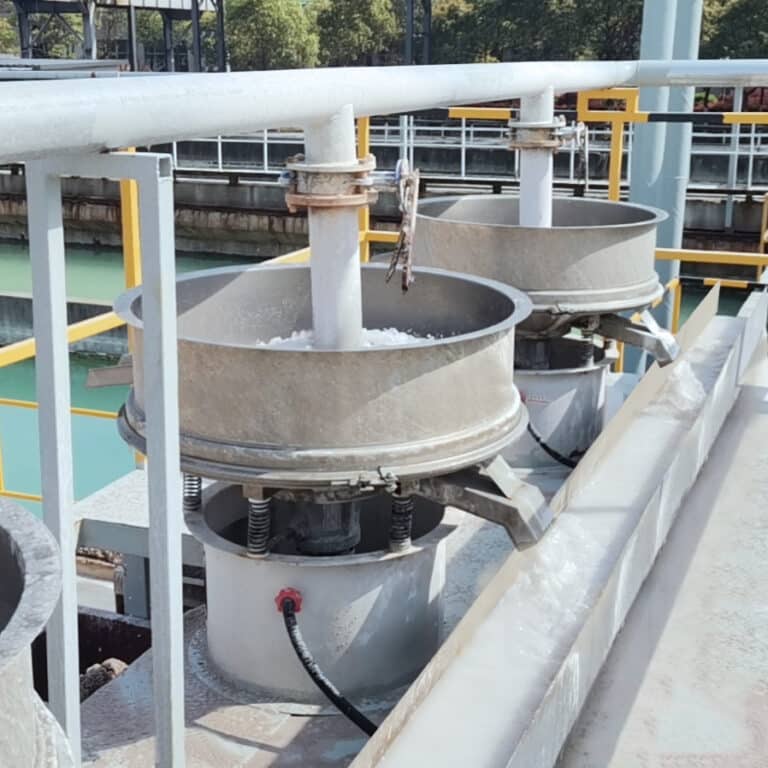
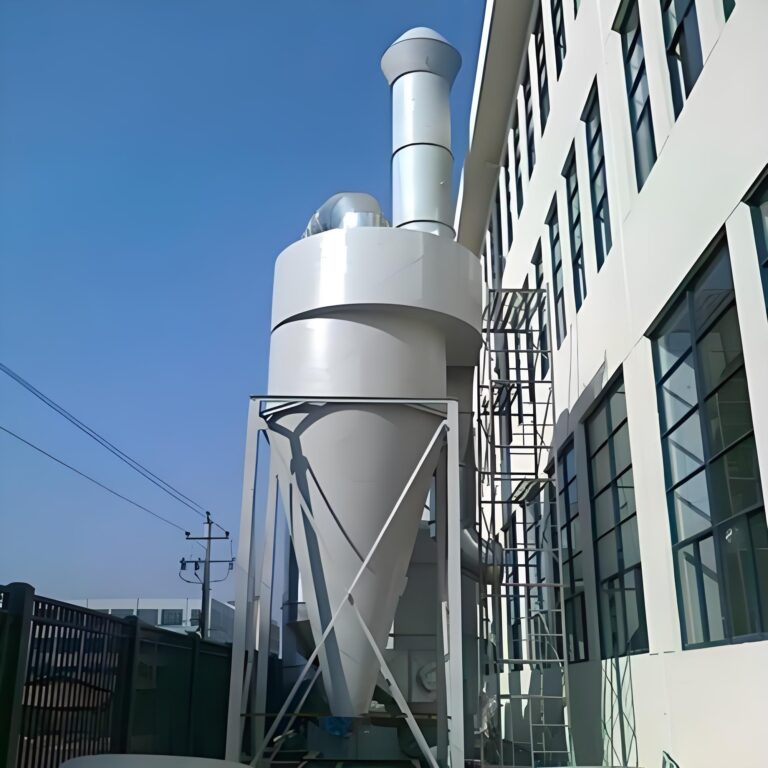
Plants that commission a dosing skid before completing wastewater characterization typically discover the mismatch at startup — coagulant demand doesn’t match pump capacity, the clarifier is either underloaded or overwhelmed, and sludge withdrawal can’t keep pace with what settling is generating. Fixing that sequencing failure after equipment is bolted in place means either retrofitting control architecture or accepting permanent manual correction as an operating cost. The decision that prevents it is straightforward but often deferred: treat dosing design, clarifier sizing, and sludge handling as a single integrated problem, not three sequential purchases. By the end of this article, a process or project engineer should be able to sequence the five technical checkpoints that lock those systems together before any procurement is placed.
Dlaczego dozowanie i klarowanie muszą być zaprojektowane jako jeden proces
Dosing and clarification share a load relationship that breaks down when they are specified independently. The coagulant dose determines floc formation rate and particle density. Particle density determines the settleable solids the clarifier must handle. Settleable solids determine sludge accumulation rate and, by extension, the withdrawal frequency and capacity the sludge handling system needs. When those three parameters are sized against different assumptions — which is exactly what happens when the dosing skid is procured first — the result is a system that cannot reach steady state.
The failure pattern is well documented in practice: manual or semi-automatic dosing without feedback control tends to produce chemical waste when operators over-dose to compensate for uncertainty, and inconsistent effluent quality when they under-dose during production swings. Neither outcome is acceptable in a reuse loop, where influent to the dosing stage is also process water being returned to production. The consequence is not just compliance exposure — it’s product quality risk and increased cost of chemistry per cubic meter treated.
The practical framing for design teams is that the dosing range, clarifier surface loading rate, and sludge withdrawal schedule need to be derived from the same baseline wastewater data. That baseline must be frozen before any of the three subsystems are specified, because changing it afterward requires resizing at least one and often all of them. For a deeper look at how PAM and PAC dosing chemistry behaves across different automation architectures, the Systemy dozowania chemikaliów | Przewodnik automatyzacji PAM PAC covers that interaction in practical terms.
Jakie dane dotyczące ścieków należy zamrozić przed wyborem sprzętu?
Defining the wastewater stream is not a preliminary step — it is the constraint that bounds every equipment decision downstream. Two parameters in particular function as hard limiters: flow rate and pressure requirements for the dosing pump, and the corrosiveness of the dosing chemical itself.
Flow rate and pressure are not just hydraulic specifications. They define whether a given pump can deliver accurate, stable dosing across the full range of process conditions, including peak flow events and low-production periods. A pump sized for average flow will underperform at peak demand; one sized for peak may not achieve the turndown ratio required to dose accurately at minimum flow. Getting this wrong doesn’t fail immediately — it shows up as dosage drift, particularly during shift changes or production rate adjustments.
Chemical corrosiveness is the second constraint that must be locked before pump head and piping materials are selected. Ferric chloride, aluminum sulfate, and polymer solutions behave very differently against stainless steel, PVC, and PVDF wetted surfaces. Specifying materials as a downstream detail — after the pump model is already chosen — often means re-procurement of pump heads or injection points when chemical compatibility testing reveals incompatibility. Beyond material selection, teams should confirm at this stage: suspended solids concentration range, pH range and variability, temperature at point of dosing, and whether the stream carries oil or surfactants that interfere with floc formation. These variables constrain jar testing protocol and prevent the test from being run against an unrepresentative sample.
W jaki sposób testowanie słoików definiuje zakres dawkowania i oczekiwania dotyczące osiadania
Jar testing is the analytical step that converts wastewater characterization data into a working dosage range. Without it, coagulant type and dose are educated guesses — and guesses built into pump sizing carry the error forward into clarifier loading and sludge volume projections.
The foundation of effective jar testing is contaminant identification. Streams with high phosphate concentrations, for example, often require iron-based coagulants at dosages that differ substantially from what would be used for colloidal turbidity alone. Identifying the dominant contaminant type before testing determines which coagulant families are worth trialing and prevents wasted test runs. ISO 11923:1997 provides a measurement framework for suspended solids that supports baseline characterization before jar testing begins, and ISO 7027-1:2016 gives equivalent support for turbidity measurement — both are useful for establishing the influent baseline the jar test must represent.
What jar testing actually outputs is a dosage range, not a single set point. The upper bound defines the maximum coagulant demand under worst-case influent conditions; the lower bound defines the minimum effective dose at best-case influent quality. That range is the design input for pump turndown ratio and tank sizing. It also generates the first settling velocity data for the specific floc the coagulant produces in this wastewater — which is the direct input to clarifier surface loading calculations. A jar test that is run on a grab sample during normal production but not during production transitions will underestimate the upper dosage bound, and the clarifier will be undersized for the solids load it actually receives during those periods.
Gdzie ładowanie osadnika i usuwanie osadu zaczynają kolidować ze sobą
The clarifier’s job is to take the settleable solids that dosing creates and separate them cleanly from the effluent. The conflict emerges because dosing-generated floc is not a fixed quantity — it varies with influent concentration, coagulant dose, and pH — and the clarifier’s hydraulic retention time and surface loading rate are fixed at design.
When dosing rates increase during production swings or influent quality shifts, solids loading to the clarifier rises. If the withdrawal rate is not adjusted to match, sludge blanket depth increases. A rising sludge blanket compresses the clarification zone, reduces hydraulic retention time effectively, and eventually carries solids over the weir into the effluent — at exactly the moment the plant most needs effluent quality to hold. This is the mechanical reason loading and withdrawal come into tension: they are physically coupled through the sludge blanket, but operationally they are often controlled independently.
The practical consequence for design is that sludge withdrawal capacity needs to be specified against the upper end of the dosing range, not the average. Designing for average sludge generation creates a system that performs adequately most of the time but fails precisely when process variance is highest. Withdrawal timing — whether timer-controlled, level-controlled, or density-controlled — also affects whether operators can respond fast enough when dosage changes. Timer-controlled withdrawal is the least expensive option but the most vulnerable to drift; it assumes sludge generation is consistent, which it rarely is in plants with variable production schedules. For design considerations that address this directly, Projektowanie zbiorników sedymentacyjnych: Rozważania krytyczne covers the interaction between loading rate and withdrawal strategy in more detail.
Jak cele recyklingu wody zmieniają dozowanie i wybór zbiornika
Recycle water targets tighten the entire system. A plant treating wastewater for discharge to drain tolerates effluent variability that a plant returning water to a process line cannot — suspended solids carryover that passes a discharge permit will contaminate a recirculating cooling loop, cause fouling in a heat exchanger, or affect product quality in a wash stage. The threshold shift from discharge to reuse changes the acceptable variance band on effluent turbidity and suspended solids, and that tighter band drives the control architecture decision.
For continuous, high-precision reuse applications, a fully automatic system with closed-loop feedback and PLC control is the appropriate specification. Closed-loop feedback — typically drawing from an inline turbidity or suspended solids sensor in the clarifier effluent — allows the dosing pump to adjust in real time as influent quality changes, rather than waiting for an operator to detect drift and manually change pump settings. The EPA Guidelines for Water Reuse provides useful reference framing for the effluent quality expectations that drive this specification, though the specific control architecture decision remains an engineering judgment based on the plant’s variance profile and reuse stream sensitivity.
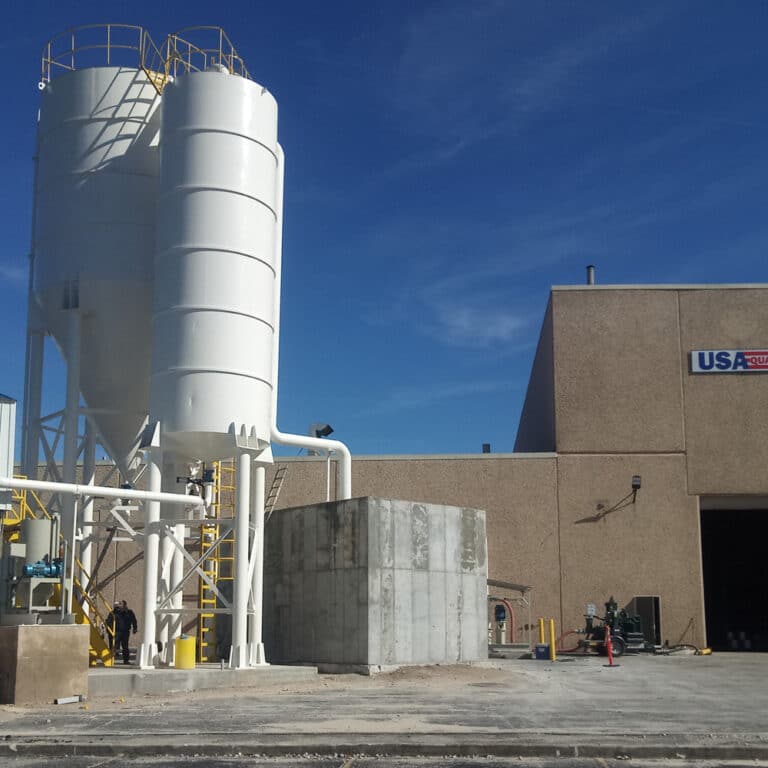
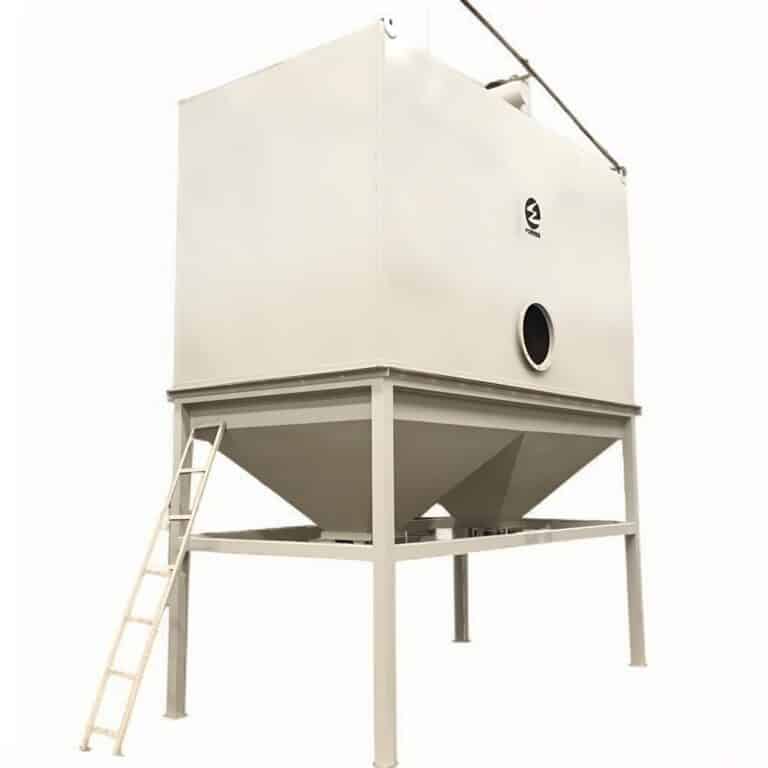
Tank selection is also affected. Higher recycle quality targets often justify a vertical sedimentation tower over a conventional flat-bottom clarifier, because the tower geometry concentrates the sludge blanket more efficiently and can achieve finer solids separation at the same footprint. The Pionowa wieża sedymentacyjna do recyklingu ścieków addresses this configuration directly for plants building toward stable reuse. The key planning checkpoint is to define the recycle water quality specification before tank geometry is selected — not after — because once a flat-bottom clarifier is installed, achieving the suspended solids target for a sensitive reuse loop often requires adding a polishing stage that the vertical geometry would have made unnecessary.
Która ścieżka produktu pasuje do stabilnej aktualizacji przemysłowej?
The core selection logic between a simpler dosing package and a fully integrated clarification and dosing line is whether the wastewater stream’s variance justifies the control overhead. A low-variance stream — consistent influent quality, predictable flow rate, limited production shifts — can often be managed with a semi-automatic or proportional dosing package at meaningfully lower upfront cost. A high-variance stream managed the same way carries a hidden instability cost: more frequent manual intervention, higher chemistry consumption from over-dosing as a buffer, and effluent quality that drifts at exactly the moments production demands it most.
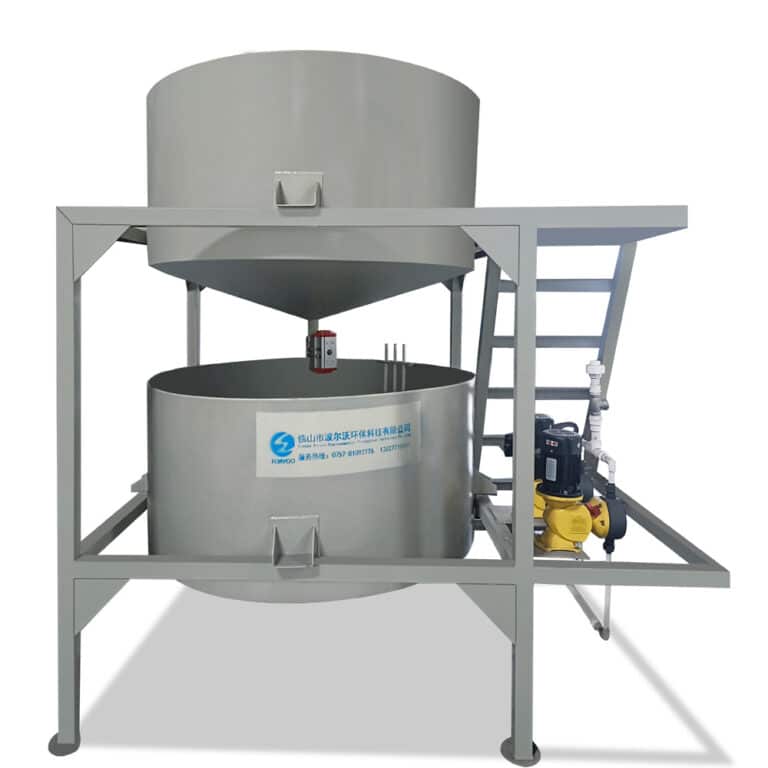
For corrosive or viscous coagulants — ferric chloride, concentrated polymer solutions — peristaltic pumps are a practical choice because they offer good accuracy, handle shear-sensitive fluids without degrading floc-forming chemistry, and tolerate abrasive and corrosive media without wetted valve components. They are not the only valid pump choice for reuse upgrades, but they carry a maintenance profile that suits continuous-operation environments where minimizing downtime from pump head replacement matters.
The automation-to-complexity principle is the governing criterion:
| Cecha | Simpler Dosing Package | Fully Integrated Dosing & Clarification Line |
|---|---|---|
| Poziom automatyzacji | Semi-automatic or manual, proportional to low process complexity | Fully automatic with closed-loop feedback and PLC control |
| Podstawowa korzyść | Niższy koszt początkowy | Tighter water quality control and fewer manual corrections |
| Odpowiedni dla | Simple, low-variance wastewater streams | Complex streams requiring stable recycle water or compliance margins |
| Typical Pump Consideration | Peristaltic pumps for viscous, corrosive, or shear-sensitive chemicals | System design emphasizes integration, but peristaltic pumps may still be used for chemical handling |
Choosing integration for a genuinely low-variance stream is over-engineering that adds cost without adding process stability. Choosing a standalone skid for a variable stream is the more expensive long-run mistake, because the manual correction burden accumulates and the effluent quality window narrows as production demands increase. The Inteligentny system dozowania chemikaliów PAM/PAC represents the integrated path for plants that have confirmed their variance profile warrants closed-loop control.
Jaką listę kontrolną zatwierdzeń należy zamknąć przed zamówieniem
Procurement initiated before the technical checklist is closed tends to produce one of two outcomes: scope changes during fabrication that extend lead time, or equipment arriving that is incompatible with the process conditions it was specified for. Neither is recoverable without cost and delay.
The four items that must be confirmed and closed — not deferred — before any purchase order is placed are chemical compatibility, flow rate and pressure alignment, control method and automation level, and ease of maintenance with available spare parts. Leaving chemical compatibility open until commissioning is the most common version of this failure: a pump head or injection fitting that was not specified against the actual coagulant arrives incompatible, requires re-procurement, and holds up startup. Leaving maintenance and parts availability unconfirmed is the longer-cycle version: a system that performs well at commissioning but becomes difficult to service when a replacement diaphragm or peristaltic tube requires a 12-week lead time from an overseas supplier.
| Checklist Item | What to Confirm | Ryzyko, jeśli niejasne |
|---|---|---|
| Kompatybilność chemiczna | Confirm all wetted materials are compatible with the dosing chemical | Corrosion, premature wear, and system failure |
| Flow Rate & Pressure | Confirm pump specifications match process requirements | Inaccurate dosing, overloading, or underdelivery |
| Control Method & Automation | Confirm the automation level matches process complexity and accuracy demands | Manual errors, process instability, and inability to meet targets |
| Ease of Maintenance & Parts | Confirm system is service-friendly with easily replaceable parts and modular design | High downtime, difficult repairs, and increased long-term operating costs |
The consequence of leaving any of these items unresolved is not just procurement friction — it shapes the long-term operating economics of the system. A modular design with locally available consumables reduces unplanned downtime; a non-modular system with proprietary parts creates maintenance dependency that compounds over the system’s operating life.
The sequencing problem this article describes — dosing, clarification, and sludge handling specified against different baselines — is avoidable, but only if the five checkpoints are run in order: wastewater characterization first, jar testing second, dosage range definition third, clarifier loading review fourth, and sludge withdrawal capacity last. Each step constrains the next, and compressing the sequence to accelerate procurement shifts the cost of that compression into commissioning and long-term operation.
Before procurement, the questions worth confirming are: Is the wastewater variance profile documented across production shifts, not just at steady state? Does the jar test dosage range match the pump turndown ratio being specified? Is the sludge withdrawal design sized against peak solids load rather than average? And does the automation level match the tightness of the recycle water target the plant is actually chasing? Those four confirmations narrow the range of downstream surprises considerably.
Często zadawane pytania
Q: What happens if the plant already has a clarifier installed — can the dosing system still be designed around it?
A: Yes, but the design sequence runs in reverse and introduces constraints. With a fixed clarifier, the surface loading rate and hydraulic retention time are already set, which means the jar testing phase must be used to find a dosage range that keeps solids loading within what the existing tank can handle — rather than sizing the tank to the dosage range. If the clarifier is undersized for the coagulant demand the wastewater actually requires, the options narrow to either accepting reduced throughput, adding a polishing stage, or upgrading the sedimentation unit. The key step is running jar tests against the real influent variance profile before assuming the existing clarifier can absorb the solids load the dosing chemistry will generate.
Q: How should a plant document its wastewater variance profile if production schedules shift frequently?
A: Sampling must span production transitions, not just steady-state operation. A single grab sample taken during normal production will underrepresent the influent quality swings that occur during shift changes, product changeovers, or cleaning-in-place cycles. The practical approach is to collect composite or timed grab samples across a full production cycle — including startup, peak load, and shutdown periods — and use that range to define the upper and lower bounds for suspended solids, pH, and flow rate. Those bounds are what the dosage range, pump turndown ratio, and clarifier loading calculations must be sized against. A variance profile built only from steady-state data produces equipment specifications that perform well under normal conditions and fail when the plant most needs them to hold.
Q: At what point does adding closed-loop feedback control stop paying for itself?
A: Closed-loop control stops returning its cost when influent quality is genuinely stable and low-variance across all operating conditions. If suspended solids concentration, pH, and flow rate remain within a narrow band regardless of production schedule, a proportional or semi-automatic dosing package can maintain effluent quality with far less control overhead. The investment in PLC integration, inline sensors, and feedback architecture is justified by variance — the wider the swing between best-case and worst-case influent, and the tighter the reuse water quality target, the faster that investment recovers through reduced chemistry consumption and fewer manual corrections. Plants that over-specify closed-loop control for a genuinely simple stream pay for instrumentation and commissioning complexity that adds no process stability.
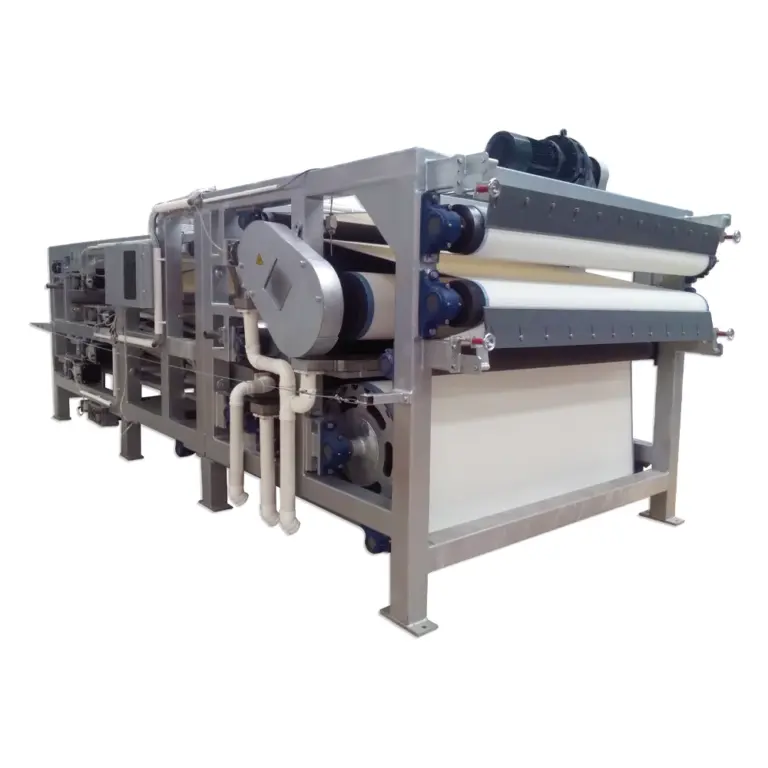
Q: Is a belt filter press the right sludge dewatering choice for all clarifier configurations, or does it depend on the upstream process?
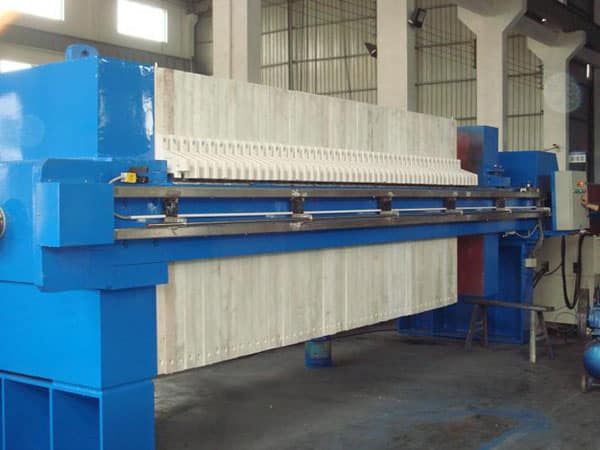
A: It depends on sludge characteristics, which are directly shaped by the coagulant type and dose. Belt filter presses perform well with sludges that respond to polymer conditioning and have sufficient solids content to form a handleable cake. Sludges generated by high polymer doses in variable-load applications can be gelatinous and difficult to dewater on a belt without conditioning adjustments. Before selecting dewatering equipment, the sludge’s dewaterability should be tested — ideally using sludge produced during jar testing rather than assumed from generic data — because coagulant choice, dose level, and influent chemistry all affect the filterability and cake solids content the press will actually achieve in operation.
Q: If procurement is already partially complete, which checklist item carries the highest correction cost if left unresolved?
A: Chemical compatibility carries the highest correction cost at that stage. Flow rate and control method mismatches can sometimes be addressed through programming changes or pump head swaps, but a pump body, injection fitting, or pipe run specified from an incompatible material against the actual coagulant typically requires full component re-procurement and may delay commissioning by weeks. It also creates a safety exposure if incompatibility is discovered during chemical charging rather than pre-commissioning review. If procurement is already underway and only one item can be prioritized for immediate verification, confirming that every wetted surface — pump head, tubing, injection quill, and fittings — is rated for the specific coagulant at the operating concentration and temperature is the action with the greatest risk reduction per hour spent.